If you want one simple answer: a <a href="#bird-feeder-you-can-see-inside">tube feeder</a> filled with black-oil sunflower seed is the single best starting point for most backyards. It attracts the widest range of common feeder birds, holds up well outdoors, and it is what Audubon recommends if you are only putting out one feeder. But if you want to pull in specific species, or you have figured out that one type is not cutting it, then knowing the full range of feeder options makes a real difference. Here is a plain-language rundown of the most practical bird feeder examples, what birds each one attracts, how to set them up, and what to watch out for.
Bird Feeder Examples: Best Types and What Each Attracts
Marcus Hendricks
20 Mar 2026
Tube Feeders: The All-Around Go-To
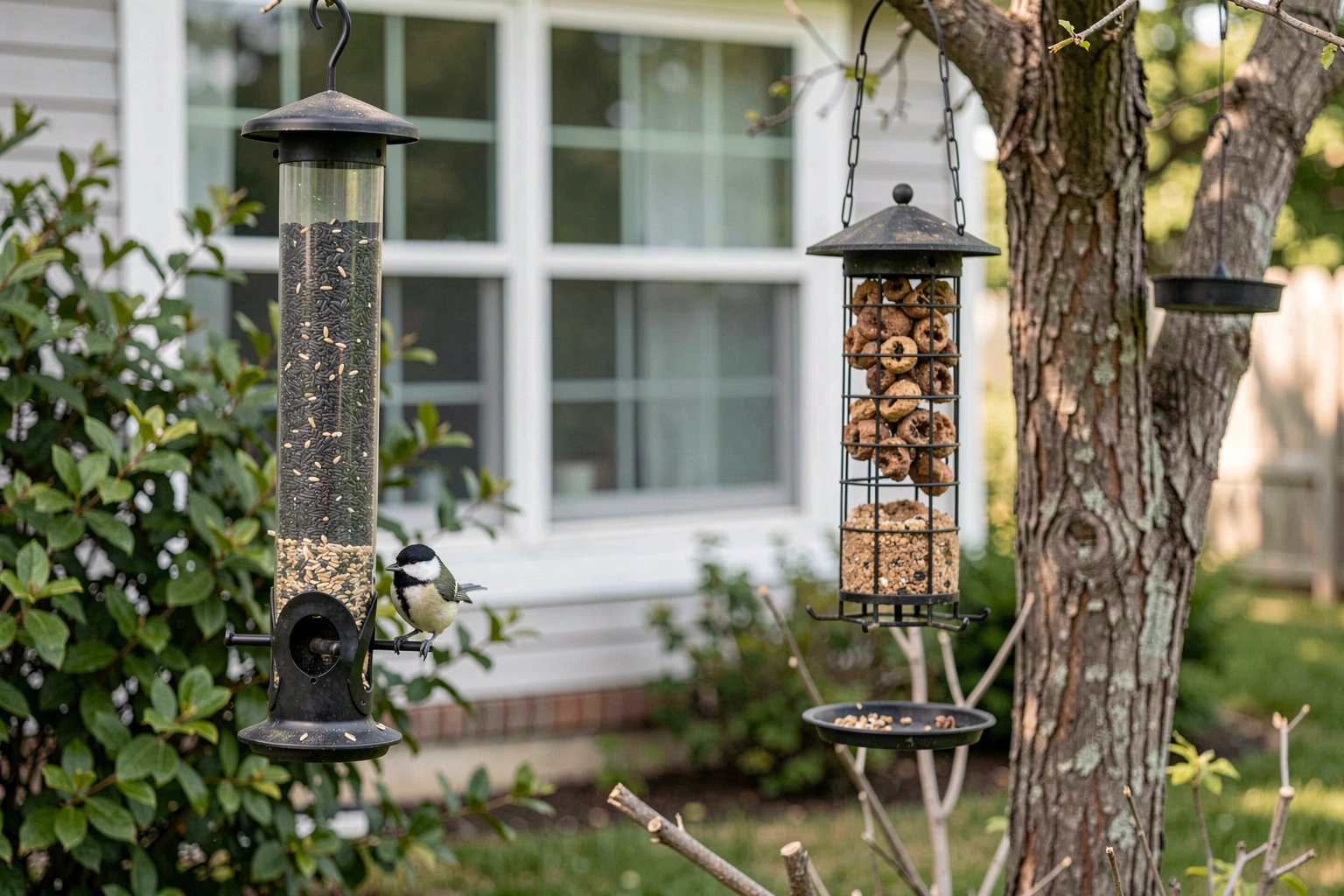
Tube feeders are exactly what they sound like: a clear hollow cylinder, usually plastic or glass, with multiple feeding ports and small perches spaced around the outside. Birds land on a perch, reach into a port, and pull out a seed. The design limits how much seed is exposed at once, which keeps things cleaner and reduces waste compared to open tray styles.
In terms of who shows up, you can expect chickadees, nuthatches, titmice, and finches as the regulars. Pair the feeder with black-oil sunflower seed and you will also start seeing cardinals, jays, and even red-winged blackbirds. The sunflower seed is really the key ingredient here. UF/IFAS Extension describes it as the best all-around seed attractant for backyard birds, and in my experience that holds up. I have tried mixes with millet and milo, and the tube feeder with straight sunflower always draws more consistent traffic.
One thing worth spending a little more on: metal ports and perches instead of plastic. Squirrels will chew through plastic ports surprisingly fast, especially if the feeder is positioned near a tree. Metal hardware costs more upfront but lasts significantly longer. If squirrel pressure is heavy in your yard, look for tube feeders with short perches and no catch tray at the bottom, since both features make it harder for larger animals to get comfortable.
Where to hang a tube feeder
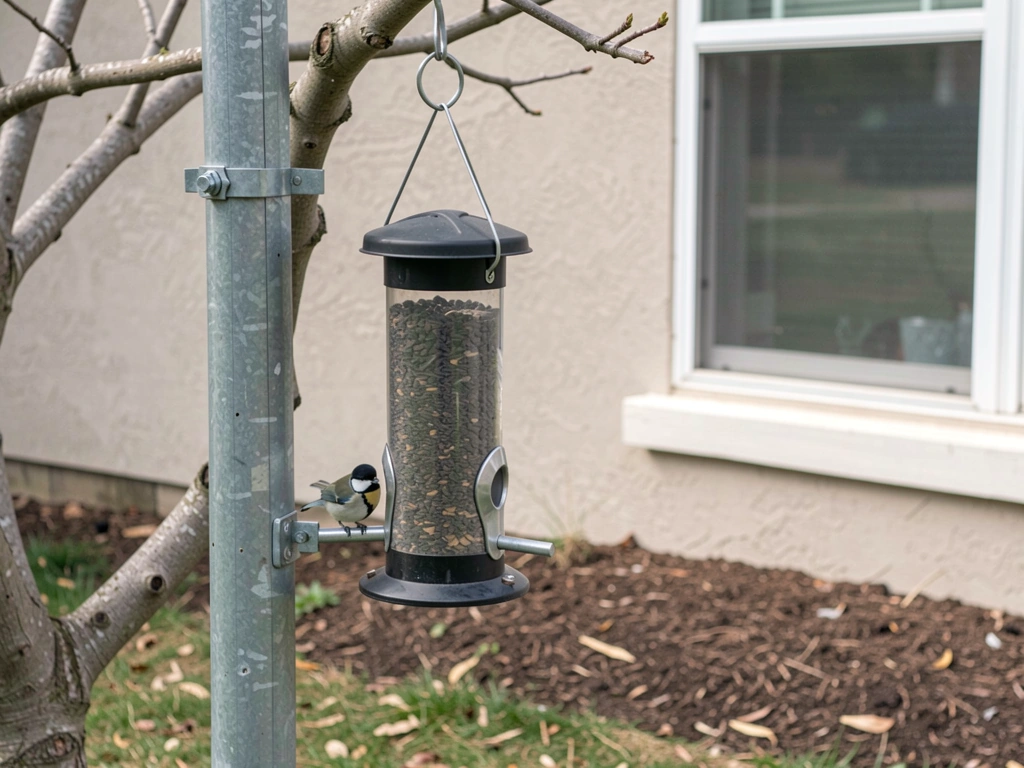
Audubon recommends hanging tube feeders at least 5 feet off the ground. That height makes it harder for ground-level predators and squirrels to reach the feeder from below. For placement near your house, the window-collision rule is worth knowing: position the feeder either closer than 3 feet from a window or farther than 30 feet away. That distance guideline comes from both Audubon and the U.S. Fish and Wildlife Service, and it works because a bird that launches from very close to a window does not have enough speed to cause fatal impact if it veers toward the glass. Homes with feeders are roughly twice as likely to have window-strike incidents as homes without them, so this placement detail genuinely matters.
Hopper Feeders: More Capacity, More Visitors
A hopper feeder looks like a small barn or house with clear side panels. Seed fills the interior and funnels down through the bottom as birds eat, so fresh seed is always available at the openings. The big practical advantage is capacity. Where a tube feeder might hold enough seed for a day or two during a busy stretch, a hopper can go several days without a refill, depending on traffic.
The bird list for hopper feeders is broad. They attract everything a tube feeder does, plus larger species like jays, grackles, red-winged blackbirds, and cardinals are especially drawn to the wider feeding ledges. If you have been trying to attract cardinals specifically and struggling, a hopper feeder is often the upgrade that makes the difference. The wider perch and more exposed seed suits their feeding style better than a small tube port.
The tradeoff is squirrels. More seed means more squirrel interest. Position the hopper on a pole about 5 feet off the ground, away from branches or structures a squirrel can leap from. A squirrel baffle below the pole is the most reliable deterrent I have found. Hanging the feeder from a tree branch works too, but tree-hung feeders are harder to squirrel-proof without a separate cage or baffle setup.
Platform Feeders: Simple, Accessible, and Worth the Extra Cleaning
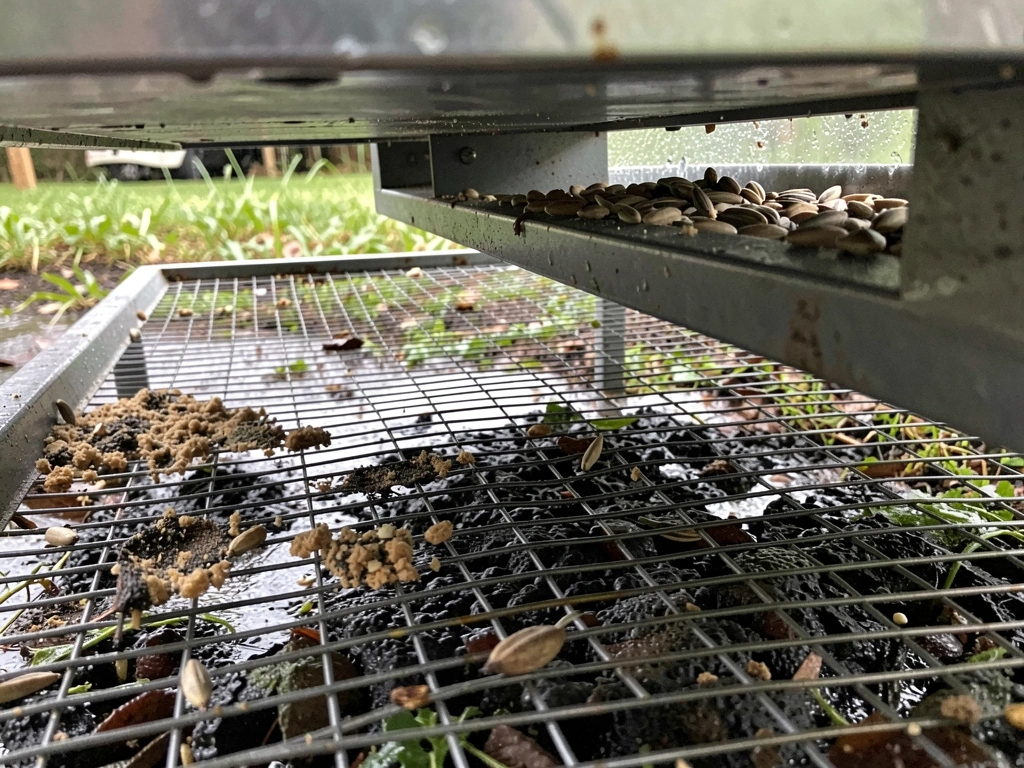
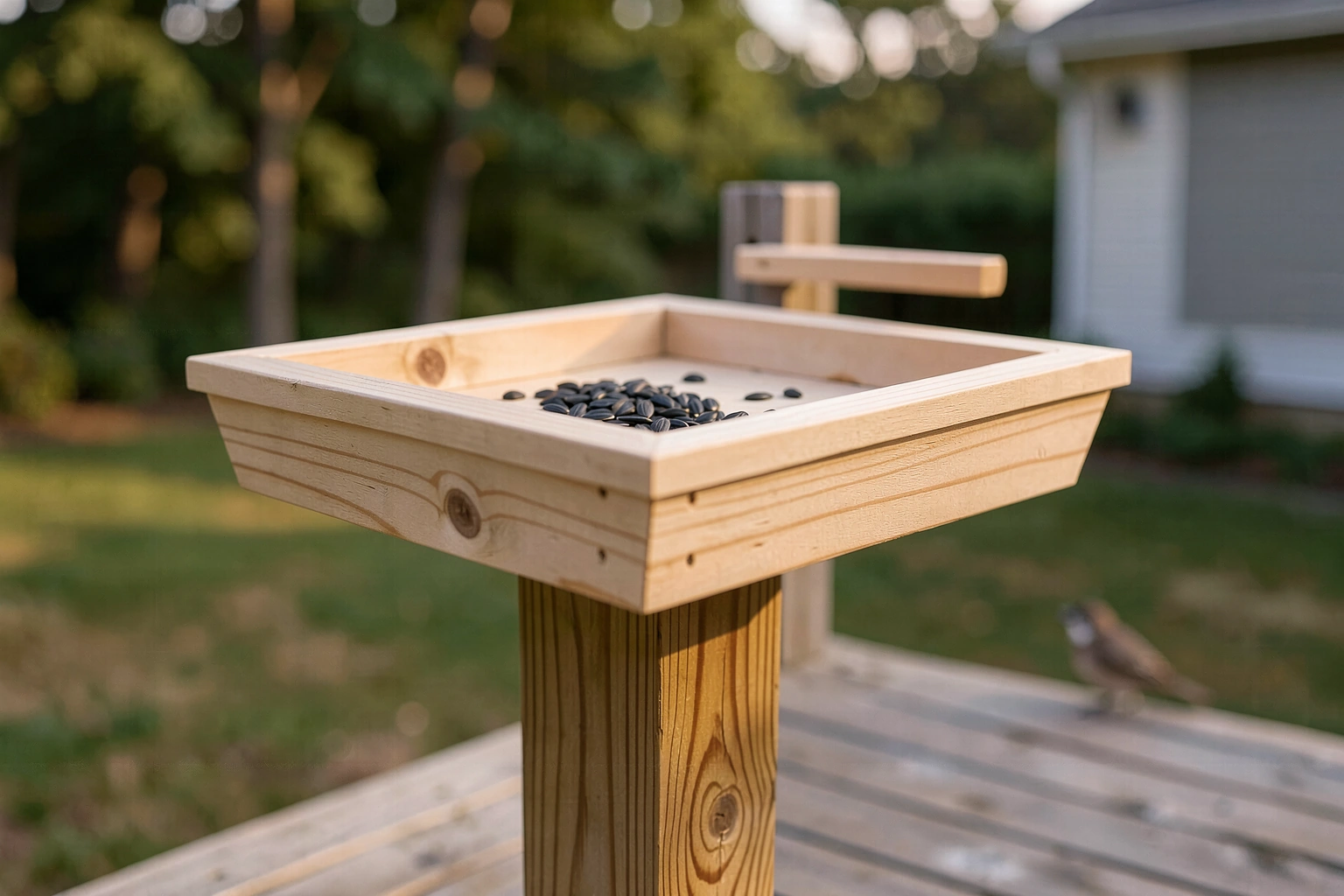
Platform feeders, sometimes called tray feeders, are just a flat raised surface with low or no walls. Birds can land from any direction, which makes them comfortable for ground-feeding species like mourning doves, juncos, and sparrows that are not great at clinging to tube ports. They are also accessible for larger birds that struggle on small perches.
The main downside is hygiene. Because droppings can land directly in the seed, platform feeders carry a higher disease-transmission risk than enclosed feeders. UF/IFAS research specifically flags this. The practical fix is to look for a platform feeder with a wire mesh bottom rather than solid wood or plastic. Rain drains through the mesh and takes droppings with it. Even so, you still need to clean the platform more often than other feeder types, probably every few days during heavy use or wet weather.
Suet Feeders: The Woodpecker Magnet
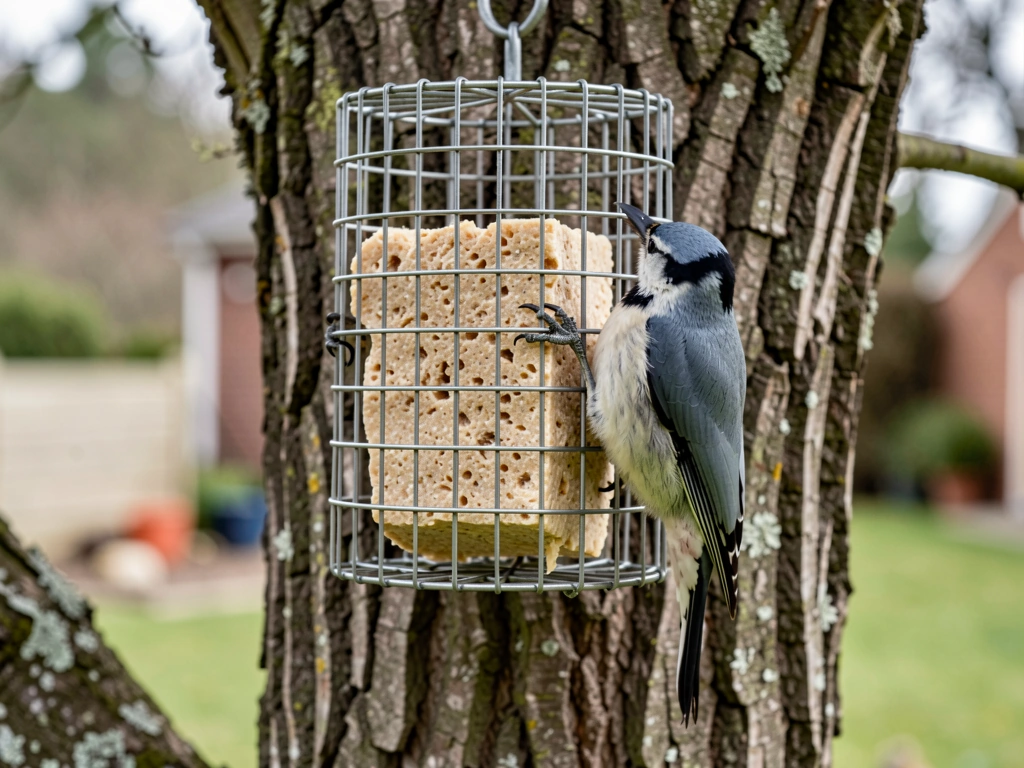
Suet feeders are a wire cage or mesh basket that holds a solid block of suet (rendered animal fat, often mixed with seeds or berries). Birds cling to the outside and peck through the mesh. They are incredibly simple, inexpensive, and highly effective for a specific group of birds.
The regular visitor list includes woodpeckers, bluebirds, cardinals, chickadees, blue jays, nuthatches, titmice, and wrens. Woodpeckers especially seem to find suet feeders fast. I put one up in early winter last year and had a downy woodpecker within 48 hours. That kind of quick response is common because suet is a high-calorie fat source that birds actively seek out in cold months.
Suet can go rancid in warm weather, so this feeder type is most appropriate from fall through early spring in most climates. If you want to run a suet feeder year-round, look for no-melt suet formulas designed for higher temperatures. Hang the cage on a tree trunk or a post at roughly eye level so you can actually watch the woodpeckers work. They are worth seeing up close.
Nyjer Feeders: Small Holes for Small Finches
Nyjer feeders (also called thistle feeders) are tube-style feeders with very small feeding ports, designed specifically for the tiny seeds of the nyjer plant. The small holes are intentional: they make the seed accessible only to small-beaked birds. American goldfinches, purple finches, pine siskins, and common redpolls are the main targets. Almost no other backyard birds can feed from nyjer feeders effectively, which makes them ideal if you want to attract finches without feeding everything else.
One thing to avoid: the disposable mesh bags sold as a budget alternative to proper nyjer feeders. Squirrels can tear into the mesh easily, and since nyjer seed is one of the more expensive seed options, that wasted seed adds up fast. A proper tube-style nyjer feeder with solid metal ports is worth the cost. Goldfinches in particular will return to the same feeder reliably once they find it, so the investment pays off over a season.
Nectar Feeders: Hummingbirds and Orioles
Nectar feeders hold liquid sugar water and attract hummingbirds, orioles, and other nectar-eating birds. They are one of the most rewarding feeders to set up because hummingbirds are genuinely exciting to watch up close. The feeder itself is a bottle or reservoir with small feeding tubes or ports at the bottom where birds hover and sip.
Making the nectar yourself is easy and cheaper than buying pre-made solutions. The Audubon-recommended ratio is 1 part white granulated sugar to 4 parts water. Bring the mixture to a boil to dissolve the sugar fully and sterilize the water, then let it cool before filling the feeder. Do not use honey, brown sugar, or artificial sweeteners. Plain white sugar is what works.
The maintenance commitment is real though, and it is non-negotiable. Nectar feeders need to be cleaned every 2 to 3 days in warm weather to prevent mold and fungus from building up inside. That means emptying the old nectar, rinsing with hot tap water, and scrubbing the inside of the reservoir with a bottle brush. Skip cleaning and the mold can harm the birds. If that schedule is hard to keep up with, a smaller feeder that empties faster is better than a large one you end up neglecting.
Quick Comparison: Which Feeder for Which Bird
| Feeder Type | Best For | Top Seed or Food | Main Tradeoff |
|---|---|---|---|
| Tube Feeder | Chickadees, nuthatches, finches, cardinals | Black-oil sunflower seed | Squirrels can damage plastic ports |
| Hopper Feeder | Cardinals, jays, grackles, wide variety | Black-oil sunflower or mixed seed | Attracts more squirrels; needs regular refill check |
| Platform/Tray Feeder | Doves, juncos, sparrows, ground feeders | Mixed seed or millet | Higher disease risk; needs frequent cleaning |
| Suet Feeder | Woodpeckers, nuthatches, wrens, bluebirds | Suet cake (seed or berry mix) | Goes rancid in summer; use no-melt formula in warm months |
| Nyjer Feeder | Goldfinches, siskins, purple finches, redpolls | Nyjer (thistle) seed | Expensive seed; avoid mesh bags that squirrels destroy |
| Nectar Feeder | Hummingbirds, orioles | 1:4 white sugar to water solution | Requires cleaning every 2-3 days to prevent mold |
Placement Tips That Actually Make a Difference
The 3-feet-or-30-feet rule for window placement is the single most important thing most people overlook. Birds that collide with windows at low speed from very close range usually survive. Birds that build up momentum from a longer approach often do not. Keeping feeders within arm's reach of the glass is counterintuitive but genuinely safer for the birds. Thirty feet or more creates enough distance that birds are less likely to fly toward the house in the first place.
Beyond the window rule, positioning feeders near natural cover like shrubs or small trees gives birds a place to retreat when they feel threatened. They will visit the feeder more confidently if a quick escape route is close by. University of Wisconsin Extension specifically calls this out in its feeding guidance: cover nearby is a key factor in whether birds feel safe enough to keep coming back.
If you are mounting a feeder on a pole, keeping that pole at least 10 feet from the nearest branch or fence line cuts down on squirrel access significantly. Add a baffle below the feeder if squirrels are a persistent problem in your yard. Project FeederWatch notes that squirrel pressure is one of the most common reasons birds stop visiting a particular feeder, so managing it is worth the effort.
A Simple Way to Pick Your First Feeder (or Your Next One)
Start with a tube feeder and black-oil sunflower seed if you are new to feeding or just want consistent traffic with minimal fuss. Add a suet cage to the nearest tree in fall and you will bring in a whole second wave of species without much extra work. If you are specifically chasing goldfinches, a dedicated nyjer feeder is worth adding. And if hummingbirds are in your area, a nectar feeder during migration season and into summer is one of the most satisfying setups you can have, as long as you are honest with yourself about keeping up the cleaning schedule.
You do not need to start with six feeders. Two well-maintained feeders with good seed will outperform five neglected ones every time. Pick the type that matches the birds you most want to see, get the seed right, and keep it clean. That is really the whole setup.
FAQ
What bird feeder examples work best if I only want to buy one feeder today?
Start with a tube feeder filled with black-oil sunflower seed. If you know squirrels are your biggest issue, choose one with metal ports and shorter perches, or add a squirrel baffle instead of switching immediately to a hopper, which tends to attract more squirrels because it offers more exposed seed.
I see the “right” feeder, but birds are not showing up. What should I check first?
Seed choice and seed freshness. Black-oil sunflower works broadly, but if the seed is old or has gotten wet, birds will often ignore it. Also give it a few days of consistent filling, since birds are not always immediate, especially if there are no nearby feeders or if weather has been cold or stormy.
Can I mix seeds in a tube or hopper, or should I keep it simple with one seed?
Keep it simple at first. A mix can lead to waste if certain seeds spoil, get shelled differently, or attract less of the birds you want. If you want more variety later, add one additional seed type at a time, observe which birds use it, then adjust rather than doing a complex blend from day one.
How do I stop squirrels without making the feeder impossible for birds?
Use one barrier strategy, not five. For tube feeders, metal ports help and a squirrel baffle on the hanging setup prevents them from climbing to the food. Avoid placing feeders where squirrels can launch from a nearby branch, and keep distance from roofs or decks where they can jump down onto the feeder.
Are platform (tray) feeders really that risky for disease, and what’s the practical way to reduce the risk?
They can be higher risk because droppings can mix with seed. The practical fix is frequent cleaning, a mesh bottom so rain helps move droppings away, and using only as much seed as you can reasonably replace before it gets contaminated. If you are seeing droppings piled up or wet, switch feeders or pause feeding until you can clean thoroughly.
How often should I clean different bird feeder types?
As a rule of thumb, enclosed feeders like tubes can go longer between deep cleans, while platforms usually need more frequent attention due to direct droppings contact and slower drying. If you notice clumping, mold smell, or wet seed, clean immediately, dump the remaining seed, and let the feeder fully dry before refilling.
What’s the easiest way to attract cardinals beyond “just put out a feeder”?
Match the feeder to their feeding style. If you are not getting cardinals with a tube feeder, try a hopper feeder with wider perches and more exposed seed at the openings. Also ensure black-oil sunflower is the main seed, since it drives the traffic that cardinals are likely to follow.
Which feeder examples attract finches specifically?
Tube feeders with black-oil sunflower will bring many finch species, and a nyjer (thistle) feeder targets small finches like goldfinches and pine siskins. If you add nyjer, don’t expect “most birds” to use it, nyjer is specialized for small beaks, so it may look empty even when birds are around.
My nyjer feeder uses a disposable bag, is that okay?
Avoid disposable seed bags as the main setup. Squirrels can tear holes and you lose expensive seed quickly, which also increases waste and cleanup. Prefer a proper nyjer feeder design that dispenses seed through a holder, so squirrels can’t easily access the whole bag content.
What’s a good placement strategy if I want to see birds from a window but also prevent window strikes?
Follow the distance guideline: place feeders either very close to the window (under about 3 feet) or far away (over about 30 feet). If you need a middle distance for viewing, consider using window film or decals, because the safest “single-step” approach is reducing the bird’s chance to build speed toward the glass.
How high should I hang a feeder if I live near cats or other predators?
Use the general guidance of hanging at least 5 feet off the ground, and avoid placing it near cover that lets predators ambush. If you can, combine height with a baffle and choose a feeder style that doesn’t offer easy access from the ground, since predators often succeed when the feeder is reachable from below.
Which feeder example is best for woodpeckers and similar birds?
Suet feeders. They’re designed for cling-and-peck behavior, and birds like woodpeckers and nuthatches often use them frequently when placed in an accessible, protected spot from rain. If your yard is very wet, consider a suet holder with good drainage and shelter so the suet stays firm.
How do I choose between a hopper and a tube feeder if I’m trying to reduce mess?
Choose a tube feeder when mess and waste are your priority, because less seed is exposed at once and ports are more controlled. Choose a hopper when your priority is refill frequency and attracting larger species, but expect more squirrel activity and plan on squirrel-proofing before you switch.
What should I do if birds start acting sick at my feeders?
Stop feeding temporarily, remove and discard seed that’s been sitting, and clean feeders thoroughly. While cleaning, reduce the chance that birds share contaminated seed by using gloves and washing the area where droppings collect. Restart only after everything is dry and you’ve corrected the feeder hygiene routine, especially for tray platforms.
Next Article
Bird Feeder Plans for Beginners: Simple Build and Setup
Build easy beginner bird feeder plans with exact measurements, tools, setup tips, and avoid common mistakes fast