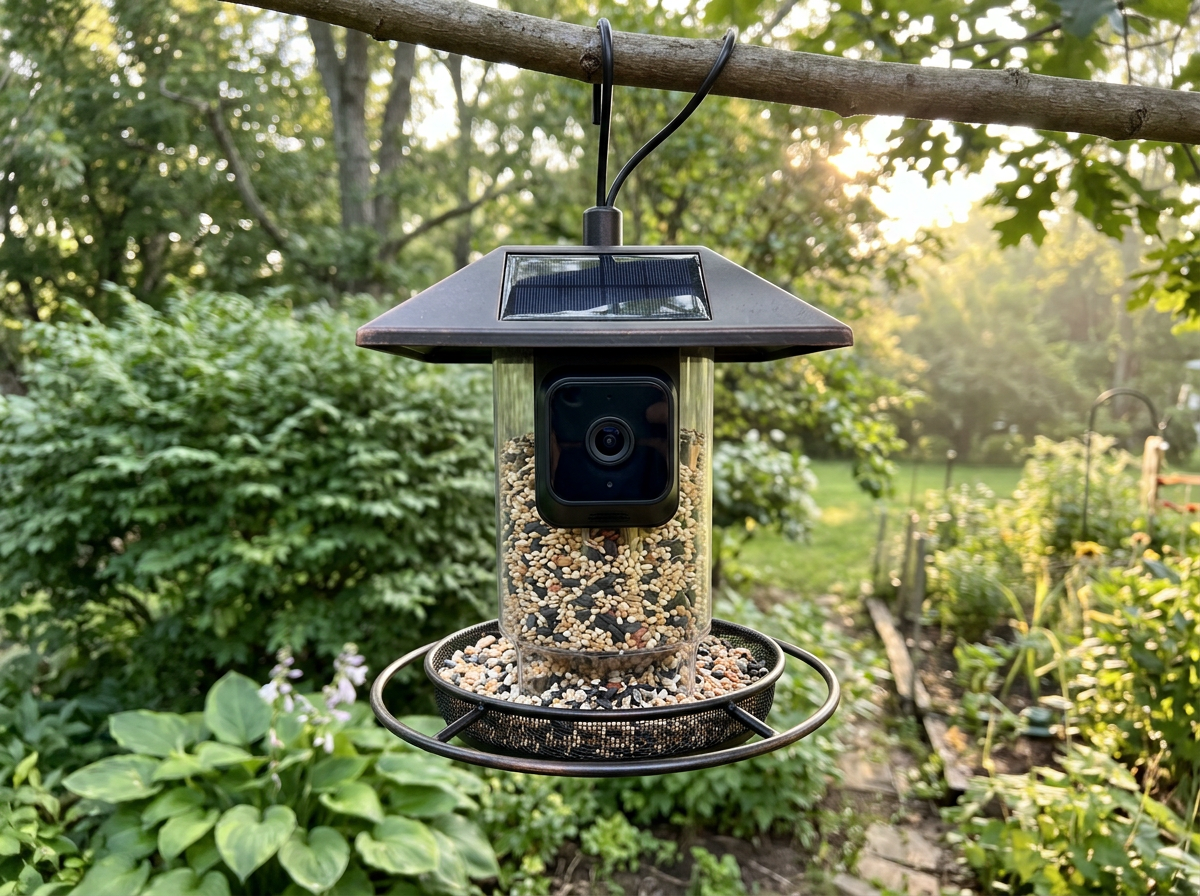
Getting started with bird feeders is genuinely simple, and you do not need a lot of gear to make it work. Pick one feeder, fill it with sunflower seeds, hang it in the right spot, and birds will find it faster than you expect. The tricky part is not the feeder itself. It is knowing where to place it safely, what to put in it, and how to keep it clean enough that it actually helps birds rather than hurting them.
Bird Feeders for Beginners: Types, Placement, and First Setup
Marcus Hendricks
19 Mar 2026
The three feeder types worth knowing about
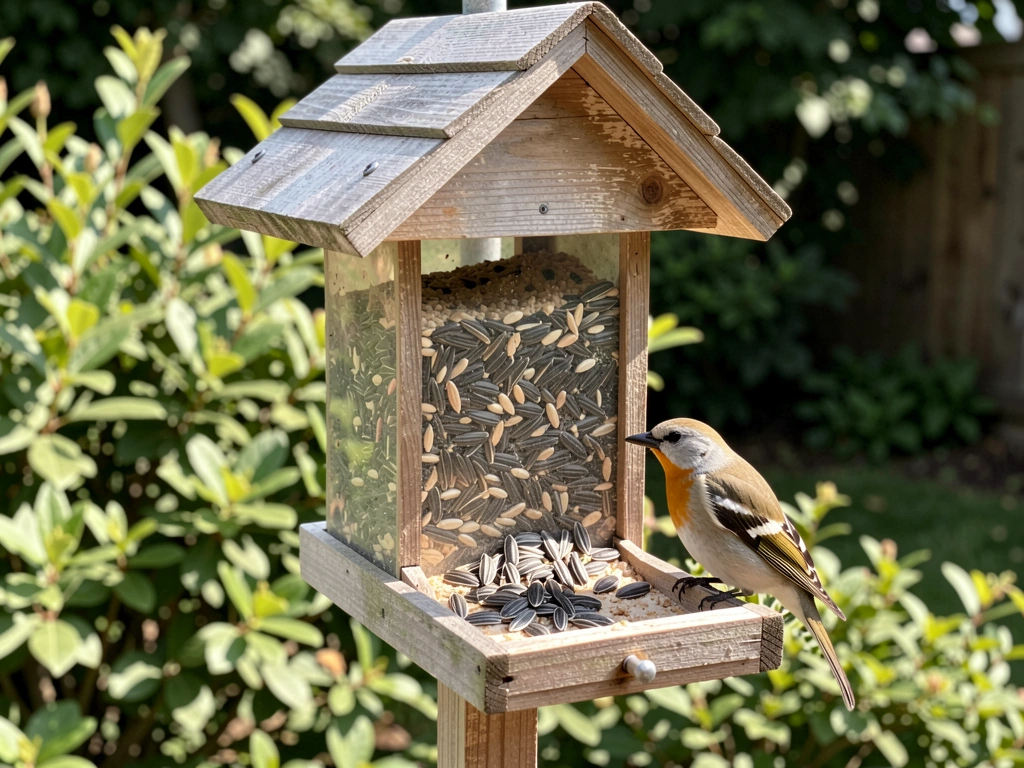
There are dozens of feeder designs on the market, but as a beginner you really only need to understand three: hopper feeders, tube feeders, and tray or platform feeders. Everything else is a variation on one of these.
Hopper feeders (also called house feeders)
Hopper feeders look like little houses with a roof and a seed reservoir in the middle. Seed flows down by gravity onto a small feeding tray around the base. They hold a good amount of seed, they work in rain without getting completely waterlogged, and they attract a wide range of common backyard birds including cardinals, chickadees, nuthatches, and finches. If you only want to start with one feeder, a hopper is usually the easiest all-around choice.
Tube feeders
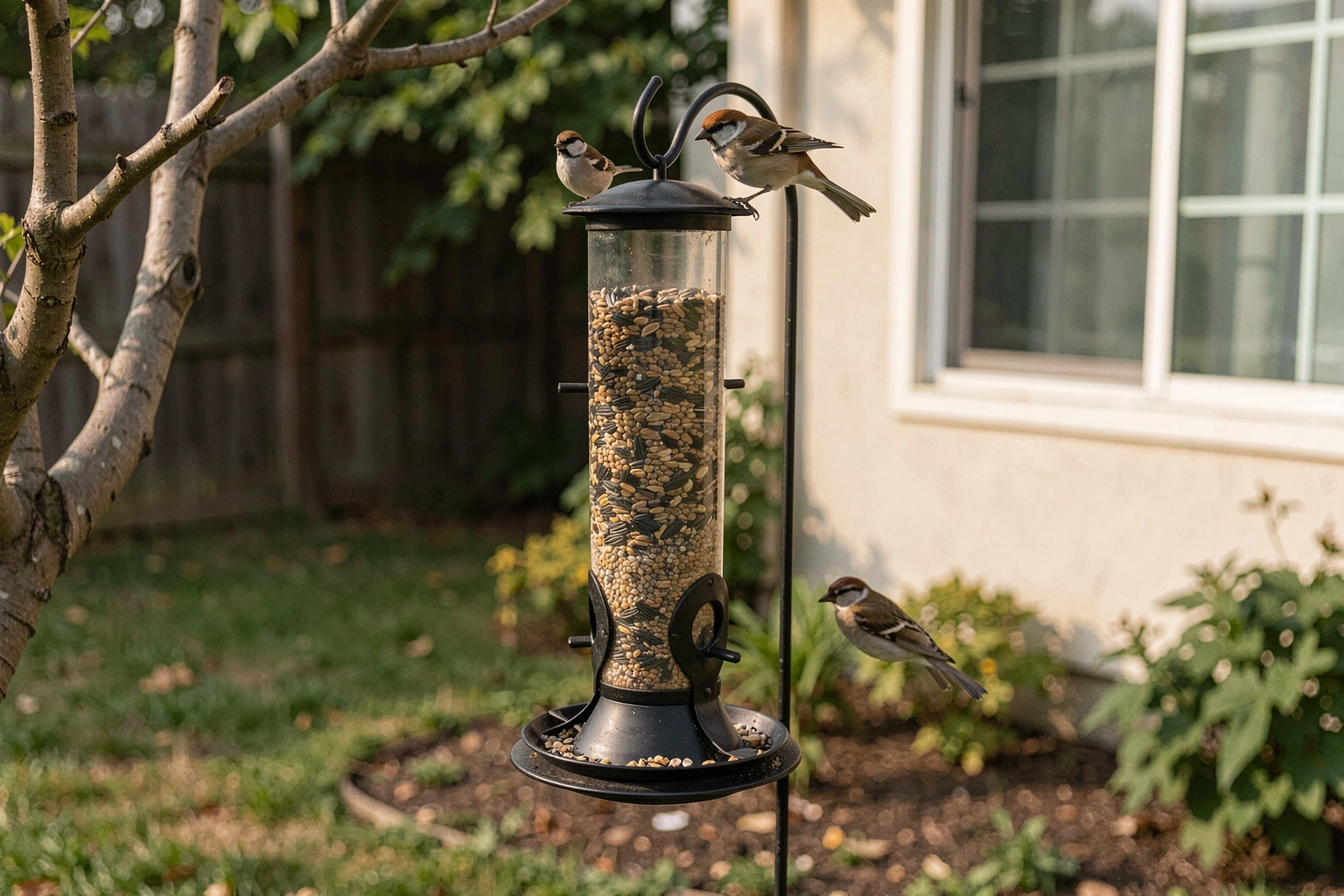
Tube feeders are typically clear or translucent plastic cylinders with multiple feeding ports and perches. They are great for sunflower seeds and nyjer (thistle) seeds, and they naturally limit access in a way that helps keep squirrels from emptying the whole thing in one afternoon. When you are shopping, look for a tube feeder with a quick-clean removable bottom. That one feature makes regular maintenance dramatically less frustrating, especially for a beginner.
Tray and platform feeders
Platform feeders are basically open trays that sit close to the ground or hang at low height. Birds that naturally feed on the ground, like juncos, doves, sparrows, and towhees, feel most comfortable at these. The downside is they are exposed to rain, so seed can get soggy and moldy quickly. If you use one, choose a model with drainage holes built in, and only put out as much seed as birds will eat in a day or two.
Which feeder is best for a true beginner
Honestly, a tube feeder filled with black-oil sunflower seeds is the single best starting point for most people. Sunflower seeds attract more species than almost any other seed, and a tube feeder keeps things tidy, reduces waste, and makes it harder for squirrels to take over. Once you have that dialed in and you know which birds visit your yard, you can add a platform feeder or a suet cage to pull in different species. If you want to attract insect-eating birds like woodpeckers and nuthatches from the start, add a simple suet feeder at the same time. They are cheap, low-maintenance, and very effective.
Where to hang your feeder (this matters more than most people think)
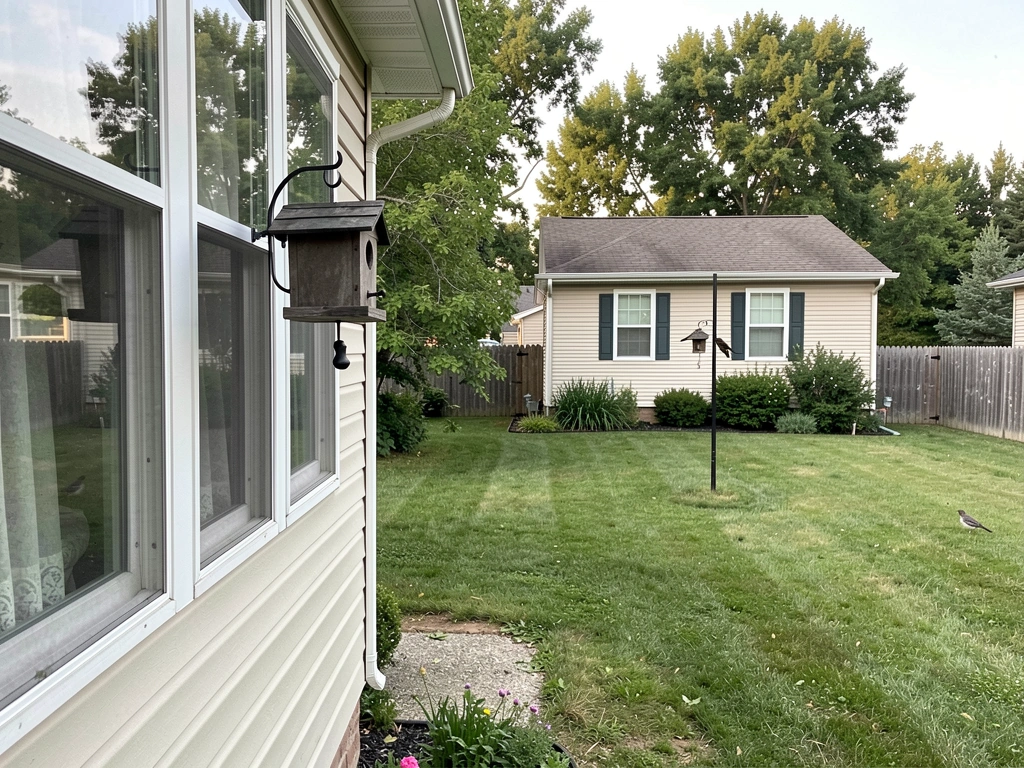
Placement is where a lot of beginners go wrong, and it affects both how many birds you attract and how safe those birds actually are. Height, distance from cover, and distance from windows all play a role.
Height and distance from cover
Aim for at least 4 to 5 feet above the ground. That height makes it harder for cats and other ground predators to easily reach feeding birds. You also want the feeder at least 10 feet away from trees, fences, or anything a squirrel can launch from. Ten feet sounds like a lot, but squirrels are remarkably athletic and will surprise you at shorter distances.
The window collision problem (and the two-distance rule)
Window strikes are one of the most underappreciated hazards in backyard bird feeding. More than a billion birds die from window collisions every year in the United States, and a poorly placed feeder directly next to a window is a real contributor to that number. The good news is the solution is simple once you know it: either place your feeder within 3 feet of a window, or place it at least 30 feet away.
Those two distances are not arbitrary. If a feeder is within 3 feet of the glass, a startled bird cannot build up enough flying speed to cause a fatal impact when it flushes. If it is 30 or more feet away, birds have room to see the window as a distinct object and steer around it. The dangerous middle zone is anywhere between 3 and 30 feet, where birds can accelerate to full speed and still hit the glass head-on. A lot of people hang feeders right outside a window because it seems like a nice view, which it is, but only if you keep that 3-foot distance.
Using height and location to attract more variety
One of the most reliable ways to see more species is to set up multiple feeders at different heights and in different parts of the yard. A tube feeder hung at 5 feet, a suet cage on a nearby tree trunk, and a low platform feeder near the ground will pull in birds with very different feeding habits. You do not need all of these on day one, but it is good to know that variety in location matters as much as variety in seed type.
What to put in the feeder
Black-oil sunflower seeds are the place to start. They have a thin shell that most birds can crack easily, they are high in fat and energy, and they attract a wider range of species than any other single seed. Nyjer seed (sometimes sold as thistle) is worth adding if you want to bring in goldfinches and pine siskins specifically. It needs its own feeder with small ports because the seeds are tiny.
Suet is a solid option for fall and winter. It is high in calories and pulls in woodpeckers, nuthatches, and other insect-eating birds that might ignore a seed feeder entirely. Avoid mixes with a lot of filler seeds like milo or red millet if you are trying to keep things tidy. Most birds kick those aside and they just pile up below the feeder and attract pests.
Setting up your feeder step by step
- Choose your spot first. Confirm you are within 3 feet of a window or more than 30 feet away. Make sure the location is 4 to 5 feet off the ground and at least 10 feet from squirrel-accessible surfaces.
- Hang or mount the feeder securely. Use a pole with a baffle (a cone or cylinder that blocks squirrels) for the best results, or hang it from a wire strung between two points with distance from the ends.
- Fill the feeder about two-thirds full to start. You will get a sense of how fast your local birds eat through seed once you have been at it for a week or two.
- Give it a few days. Birds need time to discover a new food source, especially in warmer months. In winter, you may see visitors within hours.
- Note what visits and from what angle. This helps you decide whether to add more feeders or adjust placement for better sightlines.
Keeping the feeder clean (do not skip this part)
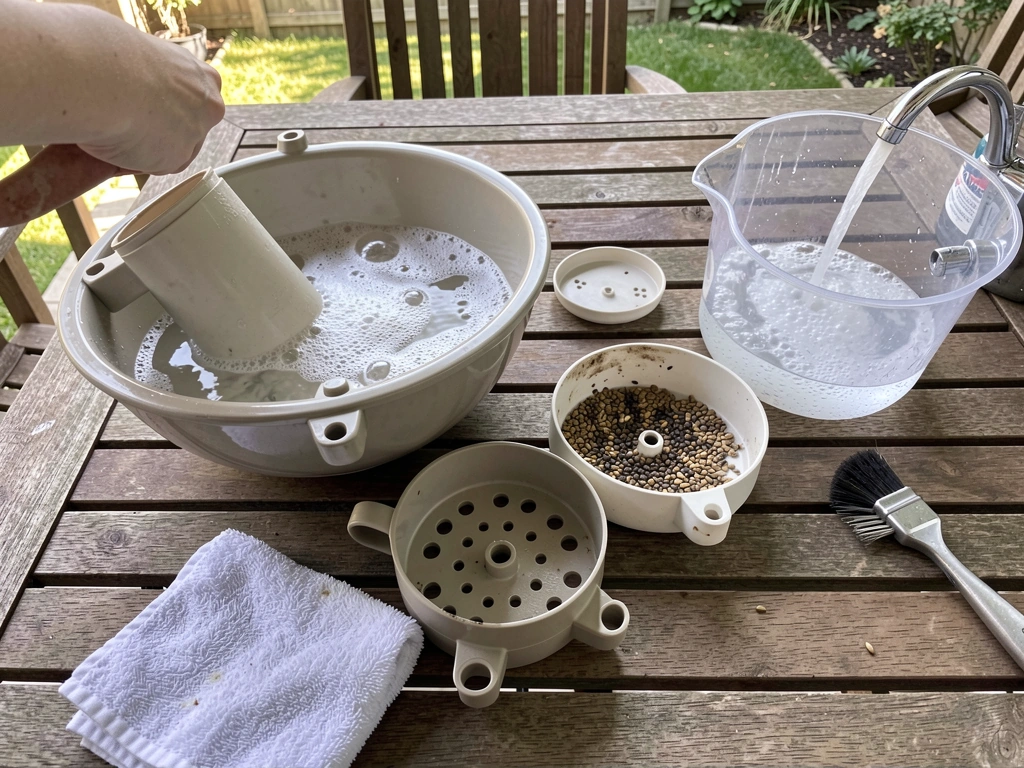
A dirty feeder is genuinely harmful. Wet seed molds quickly, moldy seed can make birds sick, and sick birds at a shared feeder can spread illness to healthy ones. Cleaning feels like a chore, but it is actually the most important thing you can do once the feeder is up.
Clean your feeder roughly every two weeks under normal conditions. If you are having a wet stretch, if you are going through seed quickly with a lot of bird traffic, or if you notice any birds that look fluffed up, lethargic, or unwell, clean it sooner. Take the feeder apart, wash it with hot soapy water or run it through the dishwasher on a hot cycle, then disinfect with a dilute bleach solution. The ratio to use is 1 part bleach to 9 parts water, which is mild enough to not damage most feeders but strong enough to kill pathogens. Rinse thoroughly and let it dry completely before refilling. Putting wet seed back into a damp feeder just restarts the problem.
Also sweep up or rake the area below the feeder every week or two. Seed shells and dropped food on the ground can attract rodents, and a buildup of wet hulls can grow mold at the base of your setup.
A few things that trip up beginners
The most common mistake is overfilling the feeder and not checking it often enough. Seed at the bottom of a full feeder can go unnoticed for weeks, get damp, and clump into a solid mass. Check the bottom of the feeder every time you refill the top. If anything looks caked or dark, clean before refilling.
Another thing people underestimate is squirrels. If squirrels are emptying your feeder daily, the solution is a pole-mounted baffle, a squirrel-proof tube feeder design, or both. Relocating the feeder far enough from launch points (10 feet at minimum from trees and fences) helps a lot. Trying to fight squirrels without changing the setup usually just leads to frustration.
Finally, if birds stop visiting after a few weeks of consistent traffic, check the seed first. Old or damp seed loses its appeal quickly. Dump it, clean the feeder, and start fresh with new seed. Nine times out of ten, that is all it takes to bring them back.
When to expect birds and what to watch for
Activity peaks in early morning and again in late afternoon. Winter is often the best time for beginners to start because natural food sources are scarce and birds are more motivated to visit feeders. That said, spring and fall migration (when billions of birds are moving across North America, mostly at night between 10 PM and 4 AM) can bring surprise visitors to feeders during the day as migrants refuel.
Keep a simple notebook or use a free app like Merlin Bird ID to log what you see and when. Paying attention to patterns makes it easy to notice if something is off, like a sudden drop in visits that might signal a problem with the seed or the feeder itself. It also makes the whole thing a lot more satisfying once you start recognizing individual species and connecting them to different times of year.
FAQ
I put up my feeder, but no birds are showing up yet. What should I do first?
Start with black-oil sunflower seeds in a tube feeder. If you do not see regular visitors after about 3 to 7 days, try two quick adjustments, refill consistently (birds learn patterns), and slightly change placement within the same safe zone (for example, move 5 to 10 feet, not to a new window distance). Avoid switching seed types every day, that resets the learning curve.
Can I use multiple feeder types right away, or should I stick to one?
Yes, but only if you keep it simple and tidy. Use a tube or hopper feeder for seed, and if you add suet, place it where it can be cleaned and accessed safely. Do not add wet foods like bread or kitchen scraps, they spoil fast and can attract unwanted pests. If you want variety without complexity, add one new feeder type at a time (for example, suet cage after your sunflower feeder is working).
How do I keep squirrels from taking over my bird feeder?
If you have squirrels, a tube feeder with small ports and perches plus sunflower seed is your best beginner combo. Also check that the feeder is mounted so it cannot be climbed easily (a simple baffle can help). Never rely on “squirrel-proof” tricks that are loose or easy to defeat, squirrels learn fast.
How often should I clean my bird feeder, and what triggers more frequent cleaning?
Clean on a schedule that matches your conditions. A good default is every two weeks, but do it sooner if it is raining a lot, seed is getting damp, or you see clumped, moldy seed. After wet weather, empty and refill, then wipe and fully dry before refilling to prevent lingering mold.
What is the safest way to clean and disinfect a feeder without harming birds?
Do not spray disinfectant while birds are actively feeding. Take the feeder down, disassemble if possible, wash with hot soapy water, then do a disinfecting step (like a dilute bleach solution) only after washing, and let it dry completely before reinstalling. Wet surfaces can spread bacteria and fungi.
How much seed should I put out, and do I need to clean up spilled seed?
Yes, and it is a common mistake. In general, leave enough seed to avoid tempting ground predators with spillage, and keep the area clean so you are not feeding mice and rats. If you use a platform or hopper, use less seed than you think at first (refill based on what birds actually consume in a day or two), and sweep up hulls regularly.
What should I do if one bird seems to dominate the feeder and others avoid it?
If you see aggressive chasing, empty feeder takeovers, or birds feeding reluctantly, it is often a placement or spacing issue. Try adding cover nearby for smaller birds (within safe distance from the feeder), and consider using multiple feeders at different heights so one bully cannot dominate everything. Avoid putting all feeders within a few feet of each other.
If I want to attract more bird species, should I change the seed or the feeder first?
Switching seeds can help, but do it strategically. If your tube feeder is used for sunflower and you want more variety, add a separate feeder instead of changing the main one immediately. For example, keep sunflower as your “reliability feeder,” then add suet for insect-eating birds or a specialized feeder for thistle if you are in the right region.
My feeder is near a window. What is the quickest way to make it safer today?
The easiest fix is to correct placement using the two-distance window rule. Do not put it in that dangerous middle zone between 3 and 30 feet from glass. If you cannot change the location, consider bird-safe window options, like exterior mounted barriers or window films, before you keep feeding there.
What should I do when it rains a lot and the seed seems to get soggy?
If your feeder is for seed, prioritize drainage or choose a model designed for it (especially for tray/platform setups). In wet weather, empty the feeder, discard damp seed, and let everything dry fully. Damp seed is where mold starts, and mold can quickly become harmful.
Do I need a different setup for summer versus winter feeding?
In winter, you can keep feeders filled more consistently, but watch for freezing and blockages in tube feeders. In very cold snaps, check ports more often, and make sure water does not pool at the bottom of the feeder. In warmer months, reduce how much you put out at once and clean more frequently to prevent spoilage.
Next Article
Best Solar Bird Feeder With Camera: 2026 Buyer’s Guide
2026 guide to the best solar bird feeder with camera: specs, top models incl Feit Electric, setup, troubleshooting, wint