A slow bird feeder controls how quickly birds can access seed, either by limiting port size, restricting how many birds feed at once, using weight-activated closures, or metering seed flow from a hopper. The goal is simple: reduce waste, discourage seed-hogging species, slow down aggressive feeders like house sparrows or starlings, and make your seed last longer without accidentally shutting out the birds you actually want. The right setup depends on which birds you're targeting, what seed you're using, and how bad your squirrel problem is.
Slow Bird Feeder Guide: Types, Setup, Troubleshooting
Marcus Hendricks
5 Jun 2026
What a slow bird feeder actually does
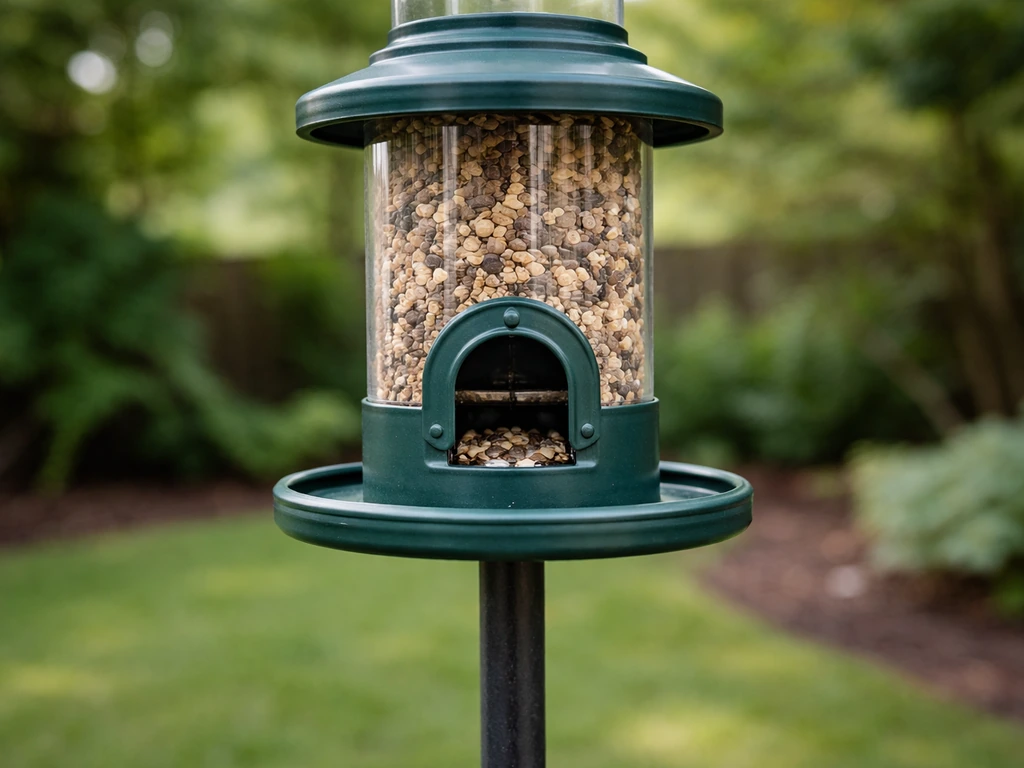
"Slow" in feeder design refers to any mechanism that controls, limits, or meters how seed gets to birds. There's no single standard, so you'll find the term applied to several very different designs. Understanding what each mechanism actually does helps you pick the right one instead of just buying whatever shows up first in search results.
The most common slow mechanisms are: small or restricted ports that physically limit how much seed can exit at once; weight-activated closures that shut off access when something heavier than a small bird (read: squirrel) lands; adjustable port openings that let you tune flow rate up or down; and port count reduction, where fewer feeding stations mean fewer birds crowd in simultaneously. Some feeders combine two or three of these approaches.
Small-port tube feeders are the clearest example. Nyjer (thistle) seed is so fine that it requires feeders with very small slit-style ports specifically designed to prevent spillage. Those tiny ports are inherently slow: birds extract seed one piece at a time, waste drops dramatically, and larger bully species simply can't get leverage at the port. Platform and hopper feeders with adjustable baffles or closures work differently, physically shutting off seed access based on weight or time. Weight-activated feeders like the Droll Yankees Yankee Flipper use a motorized spinning perch that kicks squirrels off while letting lightweight birds feed freely. The Brome Squirrel Buster line takes a similar approach with an adjustable spring tension dial, letting you fine-tune which weight triggers the seed closure so you can exclude squirrels without blocking larger target birds like cardinals.
One related design worth knowing: slow-release feeders dispense seed gradually over time rather than leaving a full reservoir exposed. A slow release bird feeder accomplishes the same goal by dispensing seed gradually rather than leaving it fully accessible. These are worth comparing if your main problem is birds burning through a full feeder in a single morning.
Choose the right slow feeder type for your target birds and seed
Matching the feeder mechanism to your specific birds and seed type is where most people go wrong. A finch feeder is a terrible choice for cardinals, and a weight-activated squirrel-proof feeder set to the wrong tension will exclude the birds you want just as effectively as the squirrels you're trying to block. Here's how to think through the match.
Small-port tube feeders for finches and small songbirds
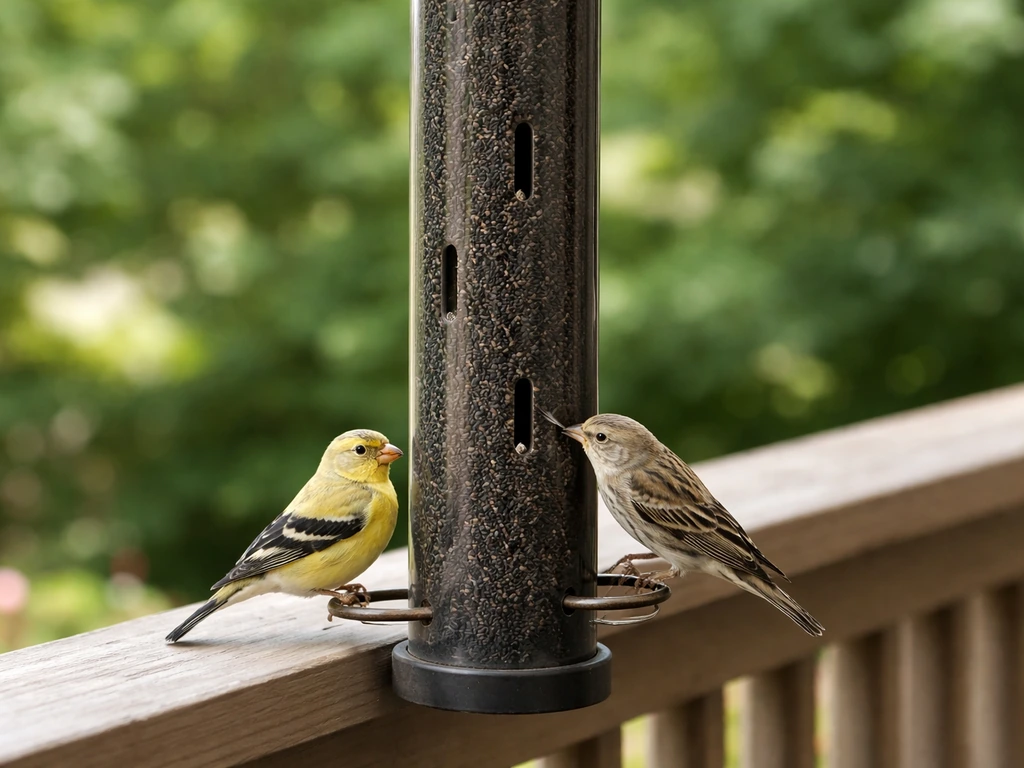
If you're targeting goldfinches, house finches, pine siskins, or common redpolls, a nyjer tube feeder with very small slit ports is your best starting point. Some DIY options like a soda can bird feeder can also help control seed access, but you still need to manage port size and cleanup to prevent waste nyjer tube feeder. Offer nyjer by itself rather than in a mix, pure nyjer prevents waste and keeps the port flow predictable. Designs like the Perky-Pet Classic Flexport use flexible rubber port covers that resist clogging while maintaining the small opening size that controls seed flow. Port count matters here too: a 6-port feeder allows more simultaneous feeding than a 2-port design. If crowding is your problem, drop to fewer ports.
Weight-activated feeders for cardinals, chickadees, and mixed species
Weight-activated feeders are the most practical slow-feeding solution for mixed backyards. The Brome Squirrel Buster Nut Feeder's adjustable tension dial lets you set the closure threshold so a cardinal (roughly 1.5 oz) can feed while a squirrel (12–20 oz) triggers the shutdown. This is key: out of the box, many weight-activated feeders are calibrated for small birds only, which means cardinals and mourning doves can accidentally trigger them. Dial in the tension carefully before declaring the feeder "broken." The Brome recommends 18 inches of clearance when hanging so squirrels have to actually land on the perch to trigger the mechanism rather than reaching from a nearby surface.
Hopper and platform feeders with port or baffle controls
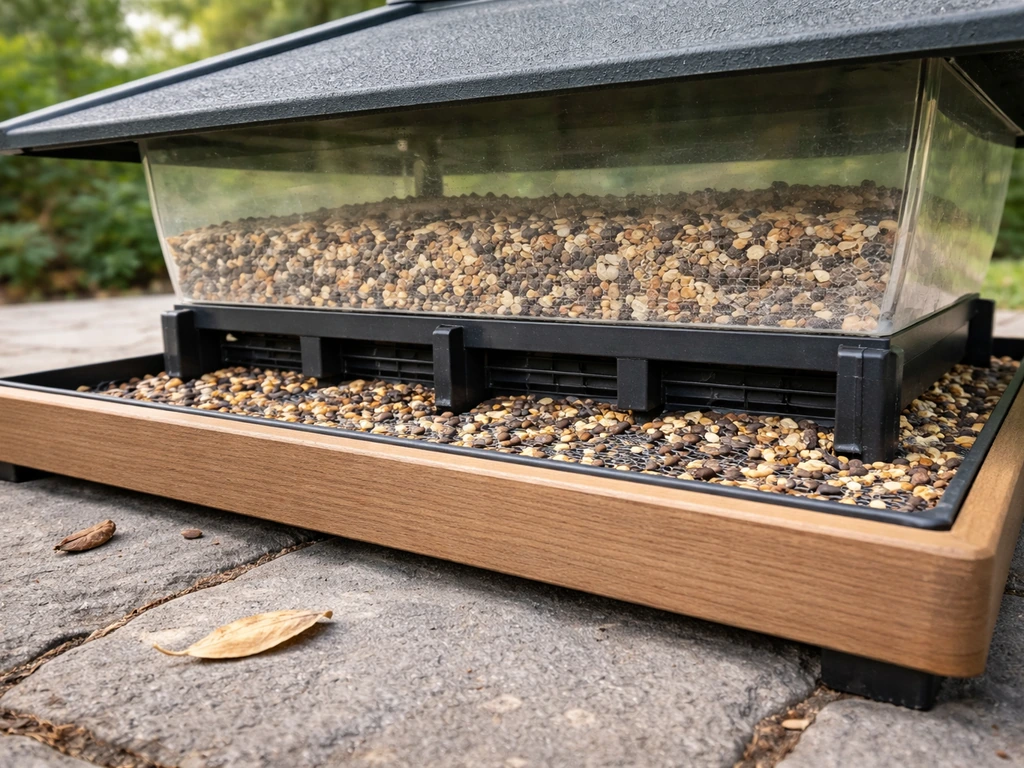
Doves, juncos, sparrows, and towhees prefer ground-level or low platform feeding. A platform feeder doesn't lend itself to the same port-restriction approach as tube designs, so slowing things down here means controlling access differently: smaller platforms that limit how many birds crowd in at once, cage surrounds that let small birds through while blocking larger species, or placing the feeder where only certain birds will feel comfortable landing. Hopper feeders with adjustable slide gates can meter seed release if you're careful, but they're harder to tune precisely.
Suet feeders
Suet is inherently a slower-feeding format because birds have to cling and peck rather than scoop. Woodpeckers, nuthatches, and chickadees all work at it steadily rather than consuming large quantities quickly. Upside-down suet cage designs slow things down further by making it harder for starlings (which struggle to hang inverted) to dominate the cage. If starlings are your problem, an upside-down suet feeder is one of the most effective passive deterrents available.
| Feeder Type | Best Birds | Slow Mechanism | Best Seed | Main Trade-off |
|---|---|---|---|---|
| Small-port nyjer tube | Finches, siskins, redpolls | Tiny slit ports limit seed exit | Pure nyjer only | Won't work for larger birds |
| Weight-activated tube/hopper | Chickadees, cardinals, nuthatches | Closure triggers on squirrel weight | Sunflower, safflower, mixed | Tension calibration takes practice |
| Port-limited seed tube | Most small-to-medium songbirds | Fewer ports reduce simultaneous access | Sunflower chips, mixed | Larger birds may still dominate |
| Cage-surrounded platform | Small sparrows, finches, chickadees | Cage excludes larger species | Mixed, millet | Excludes cardinals and doves |
| Upside-down suet cage | Woodpeckers, nuthatches, chickadees | Inverted design deters starlings | Suet cakes | Slower to fill; limited to suet |
Placement, setup, and when to start
Where you put a slow feeder matters as much as which one you buy. Squirrel-proofing mechanics fail immediately if the feeder is positioned where squirrels can bypass them entirely, and birds won't use a feeder that feels exposed or unsafe no matter how well it's designed.
Distance from trees and structures
For any weight-activated or squirrel-resistant feeder, placement in open space on a pole is the standard recommendation. Gardening Know How also advises placing squirrel-resistant feeders in open space on a long pole with a baffle rather than in or near trees, so squirrels cannot climb or shimmy up effectively placement in open space on a pole. UF/IFAS guidance puts the pole at least 10 to 15 feet from tree trunks and overhanging limbs. If you're hanging from a branch rather than a pole, Perky-Pet recommends at least 12 feet from the trunk and 4 feet off the ground. The logic is the same either way: squirrels need a launch point, so deny them one. Putting a weight-activated feeder three feet from a fence rail is a waste of money.
At the same time, birds feel more comfortable feeding when there's nearby cover to escape to. WVU Extension also advises placing feeders close to natural cover so birds have resting and escape space, but you must ensure squirrels cannot jump onto the feeders birds feel more comfortable feeding when there's nearby cover to escape to. Wisconsin Extension recommends feeders 5 to 6 feet above the ground near trees or shrubs. UNH Extension notes that birds visit feeders near branches more readily than those in completely open spaces. The practical solution is a compromise: place the feeder in a position where birds can see nearby cover and reach it quickly, but squirrels can't use that same cover to access the feeder directly. A baffle-equipped pole 10 feet from a shrub achieves both.
How many feeders and where to space them
Multiple feeding stations reduce crowding more effectively than a single large feeder. Two or three stations spaced 10 to 15 feet apart allow subordinate birds to feed without constant competition from dominant species. If you're using a slow feeder specifically to control aggressive species like house sparrows, spreading stations out also means a single aggressive individual can't guard all the food. A nyjer tube on one side of the yard and a sunflower-chip feeder on the other is a simple starting configuration that works well.
Seasonal timing
Starting a feeder in fall or early winter is ideal because birds are actively searching for reliable food sources as natural supplies dwindle. Once birds locate a feeder, they return consistently. That said, if you introduce a new slow feeder design (particularly one with restricted ports or a new mechanism), do it gradually. UNH Extension points out that birds can be slow to adapt if feeding is interrupted or changed suddenly. During winter, keeping your feeder reliably stocked matters more than optimizing the flow rate. In summer, seed spoils faster in heat and humidity, so smaller seed loads and more frequent cleaning become the priority.
Maintenance, clogs, and common problems
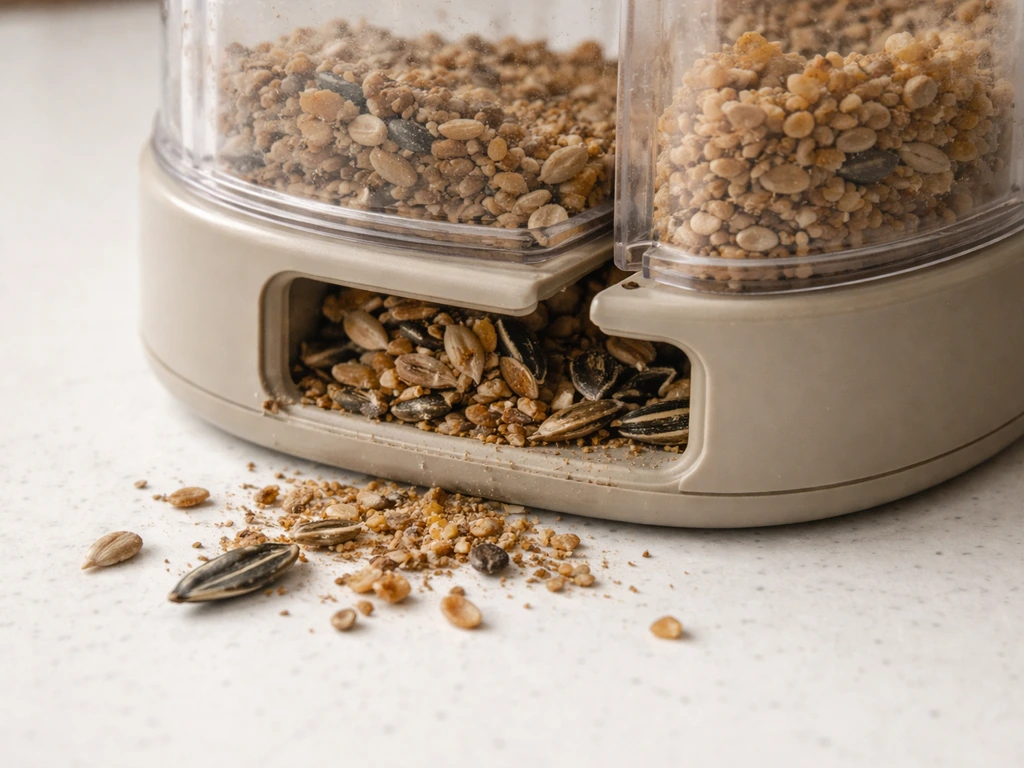
Slow feeders have more mechanisms to fail than simple open-platform designs. The good news is that most problems have a direct fix once you know what to look for.
Clogging and seed bridging
The most common failure in any port-limited or tube feeder is clogging. In nyjer feeders, the tiny ports can pack with seed oil and debris until flow stops entirely. In hopper-style feeders, seed bridging happens when seed clumps together inside the hopper and stops flowing to the port even though seed is still present. Moultrie's feeder troubleshooting data identifies bridging as a top cause of dispensing failure, usually triggered by seed that's too large, too moist, or outside the feeder's designed seed size range. Fix: check that you're using the correct seed size for the feeder, and tap the hopper gently to break up bridges. If clogging is chronic, clean the ports with a small brush and switch to fresh, dry seed. Perky-Pet's flexible rubber port covers (Flexport design) are engineered specifically to resist this failure mode, and they work noticeably better in humid conditions than hard plastic ports.
Birds won't use the feeder
If birds have been using a spot and suddenly stop, run through this list in order: Is the feeder out of seed or bridged? Is the port clogged with debris or old seed? Is the weight-activation mechanism triggering for the birds themselves rather than just squirrels? Has the feeder been moved? A position change, even a few feet, can make birds treat it as new and unfamiliar. Give a relocated feeder at least a week before concluding birds have rejected it. If you've introduced a slow feeder to replace an open one, expect a 3 to 7 day adjustment period while birds learn the new access method.
Uneven feeding and dominant species crowding
If one or two aggressive species are monopolizing a slow feeder, the flow-control mechanism alone won't solve it. Add a second station with a different seed type to split the crowd, or switch to a cage-surrounded feeder that physically excludes larger birds. Reducing port count is another option: a 6-port feeder that's being dominated by a group of house sparrows often improves with a switch to a 2 or 3-port model, simply because fewer birds can crowd in at once.
Cleaning schedule
Clean tube and port-style feeders every 2 weeks in cool weather and every week in summer or after rain. Disassemble fully, flush ports with warm water, scrub with a bottle brush, and let dry completely before refilling. Wet seed in a slow-port feeder clumps and blocks flow faster than in open designs, so thorough drying matters more here than with a basic tray feeder.
Squirrel-proofing, pests, and humane deterrence
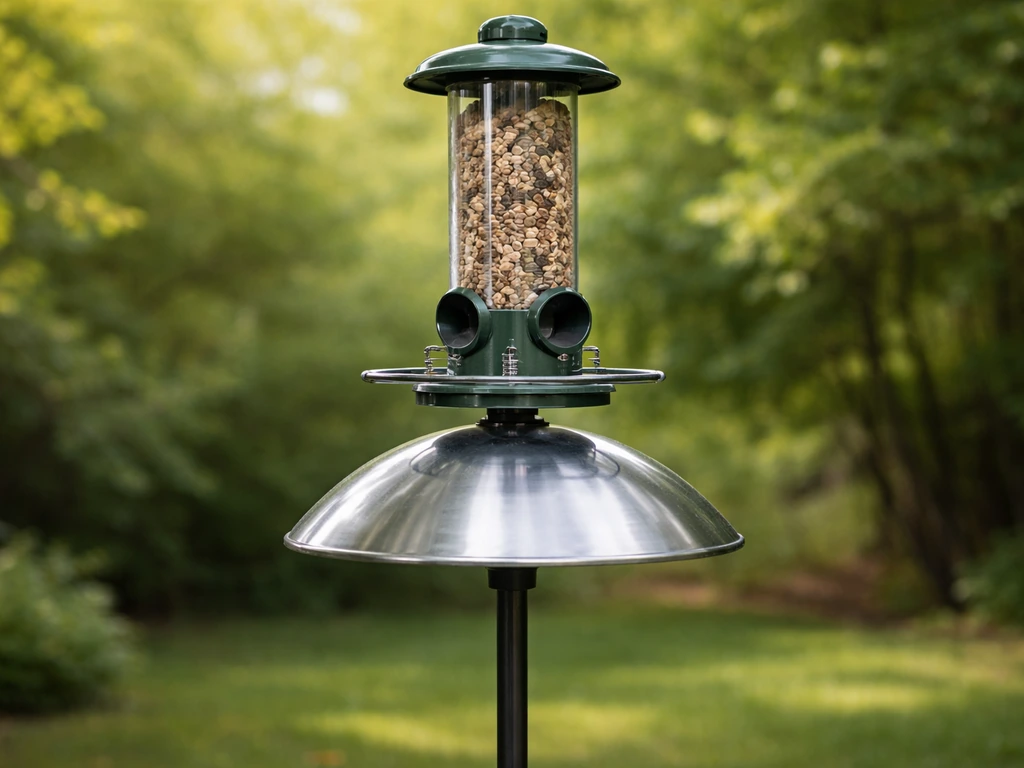
Squirrels are the main reason most people look into slow or controlled-access feeders in the first place. A squirrel can empty a standard tube feeder in under an hour, making any slow-feeding strategy irrelevant if the feeder isn't also squirrel-resistant. Here's what actually works.
Weight-activated mechanisms
Weight-activated feeders are the most reliable squirrel deterrent when placed correctly. The Droll Yankees Yankee Flipper uses a battery-powered spinning perch that physically throws squirrels off when they land. The Brome Squirrel Buster series uses spring-loaded seed shields that close under heavier weight. Both work well; the Flipper is more dramatic and entertaining, while the Squirrel Buster is more adjustable and doesn't require batteries. The Brome's adjustable tension is particularly useful if you want cardinals or mourning doves (heavier birds) to still access the feeder while excluding squirrels.
Baffles and pole placement
A pole-mounted baffle (dome or cylinder style placed below the feeder) is the most consistent long-term deterrent, especially if you're not using a weight-activated feeder. The pole needs to be in open space, at least 10 feet from any launch surface. Nebraska/OSU Extension guidance puts that minimum at 7 to 8 feet from fences, decks, or branches. A baffle positioned about 4 to 5 feet up the pole stops ground-based climbing. Squirrels can eventually habituate to passive deterrents according to OSU Extension research, so if a baffle alone stops working, combining it with a weight-activated feeder usually closes the gap.
Rats and other pests
Rats are attracted by seed that falls to the ground under feeders, not usually by the feeder itself. Reducing ground spillage is the most effective rat deterrent: use no-waste seed mixes (hulled sunflower chips, pure nyjer), add a seed-catching tray under tube feeders, and clean up fallen seed regularly. Metal feeder construction, metal ports, and metal hanging hardware prevent gnawing damage that plastic-heavy feeders often suffer over time. If rats are already present, temporarily stopping feeding for a week or two removes their food incentive while you address the broader problem.
Humane approach to deterrence
Weight-activated spinners and spring-loaded closures don't harm squirrels: they startle or inconvenience them. That's the goal. Avoid glue traps or anything that physically injures animals. If squirrels are persistent despite good placement and a weight-activated feeder, the honest answer is that no feeder is 100% squirrel-proof in all conditions. Some people find it easier to offer squirrels a separate corn feeder away from bird feeders as a distraction, which genuinely reduces feeder visits when positioned thoughtfully.
What to look for when comparing slow feeder brands and models
Marketing copy for bird feeders is optimistic. "Squirrel-proof" on a package means nothing without understanding the actual mechanism. Here's the practical checklist I use when evaluating any slow or controlled-access feeder.
- Port size and adjustability: Is the port size fixed or adjustable? Fixed small ports work well for specific seeds (nyjer) but limit versatility. Adjustable ports let you tune flow rate and switch between seed types.
- Weight-activation threshold: Is it adjustable? What is the factory calibration weight? Check whether your target birds (especially cardinals at ~1.5 oz or doves at ~4 oz) will accidentally trigger the closure.
- Weatherproofing: Do ports seal against rain? Flexport-style rubber covers outperform hard plastic ports in wet conditions. Look for UV-resistant materials if the feeder will sit in direct sun year-round.
- Squirrel-proofing mechanism: Weight-activated closure, spinning perch, or cage surround? Cage surrounds are passive and reliable but exclude larger birds. Weight-activation is more versatile but requires correct placement (18-inch clearance minimum for Brome designs).
- Material durability: Metal ports and metal hardware outlast plastic significantly. Full metal construction adds cost but matters if squirrels are gnawers. Check for rust-resistant coatings on any metal parts.
- Ease of cleaning: Feeders that fully disassemble clean more thoroughly and last longer. Avoid any design where the port area can't be reached with a small brush.
- Port count: Fewer ports mean slower overall feeding and less simultaneous crowding. Match port count to how much activity you want: 2 to 3 ports for slow and controlled, 6 or more for maximum capacity.
- Seed compatibility: Confirm the feeder is rated for your target seed. A nyjer feeder will clog instantly with standard sunflower seed; a sunflower feeder wastes nyjer through oversized ports.
- Warranty and replacement parts: Reputable brands (Brome, Droll Yankees, Perky-Pet) offer warranties and sell replacement parts. Avoid unbranded feeders where a broken port or mechanism means replacing the whole unit.
If you're just starting out, a small-port nyjer tube feeder (2 to 4 ports) for finches and a weight-activated sunflower feeder for mixed species is a practical two-feeder setup that covers most backyard birds, controls seed waste, and gives squirrels a real challenge. For a reliable option, the best slinky for bird feeder setups is one that blends slow dispensing with squirrel-resistant access. If you want to cut both seed waste and plastic waste, a recycled can bird feeder can be a budget-friendly option as well. A beer can bird feeder is one popular homemade option, but it still needs the same attention to seed flow and squirrel-proofing as purpose-built slow feeders. Add a pole baffle to both and place them at least 10 feet from any tree or fence, and you'll have a genuinely functional slow-feeding system from day one. From there, you can adjust port size, swap seed types, and add stations as you learn which birds are actually visiting your yard.
One DIY note: if budget is a factor, a recycled can bird feeder or similar homemade design can serve as a starting feeder while you figure out which species you're working with. An aluminum can bird feeder can be an inexpensive DIY starting point, but it may not match the port precision and weatherproofing of purpose-built slow feeders recycled can bird feeder. Just know that homemade designs rarely replicate the port precision or weatherproofing of purpose-built slow feeders, so treat them as temporary or supplemental rather than your main solution. If you are thinking about a soup can bird feeder as a DIY option, treat it as a temporary supplement and focus on safe, controllable access to avoid waste and pests.
FAQ
Will a slow bird feeder make birds visit less, or just eat more slowly?
Yes, but “slow” can also mean birds will take longer to empty seed. Expect slower refill cycles and plan to check ports and seed levels more frequently during the first 1 to 2 weeks, especially when you switch to nyjer or very small-port designs that are prone to oil buildup and clogging.
How can I tell if my slow bird feeder is too restrictive for the birds I want?
Use an easy baseline test: observe for 20 to 30 minutes in the morning when birds are most active. If target birds never get leverage at the port, you have an opening that is too restrictive or misaligned with the species’ feeding style, such as using nyjer slit ports for larger seed eaters.
What’s the safest way to adjust a slow feeder if birds stop using it?
If you are using adjustable ports, make only one change at a time (for example, widen by a small increment) and give birds 2 to 3 days to relearn. Changing both seed type and port size in the same day makes it hard to know which variable helped.
Why would a weight-activated slow feeder shut off for birds I actually want?
Not always. Weight-activated feeders can be triggered by other heavy visitors such as larger doves, group feeding behavior, or even landing patterns that place weight on the wrong part of the perch. Re-check the clearance and confirm the feeder is calibrating to “landing weight” rather than “reach weight” from a nearby surface.
My slow tube feeder clogs often, what should I change first?
Cleanliness matters more than people expect for slow ports. If nyjer is involved, port oil and fine debris can harden quickly in humid weather. Use a small brush to clear each port and fully dry all parts before refilling, then consider pre-drying seed if your area is very damp.
What causes hopper bridging, and how do I prevent it long-term?
Bridging usually means the hopper is seeing seed that clumps due to moisture or seed size mismatch. Tap the hopper gently, then verify the feeder’s designed seed range and keep the hopper dry. If bridging continues, switch to a seed that has consistent particle size for that hopper model.
How long should I wait before concluding birds rejected my new slow bird feeder?
Yes, but with a caveat. Birds can adapt slowly to new access methods, so do not judge performance on day one. If you replaced a basic feeder, plan on 3 to 7 days for adjustment, then revisit port settings and placement if usage is still low after that window.
Do slow bird feeders help with rats, or is it mostly about spillage?
Choose seed and placement to reduce spill. Rats are mostly after fallen seed, so a tray or seed-catching collection under tube and port feeders, combined with frequent cleanup, usually works better than changing the feeder mechanism. If rats are already established, pause feeding briefly while you address entry points and attractants.
If squirrels keep trying, what’s the most common overlooked fix?
Many “squirrel-proof” systems will still be tested by a determined squirrel, especially if there is an alternate launch route. Run a quick obstacle check: remove nearby accessible footholds (railings, thick branches, stacked items) within the feeder’s access zone and verify the baffle and placement match the feeder’s required clearance.
Should I use seed mixes or pure seed with a slow bird feeder?
Mixing aggressive seed types can backfire on purpose-built slow feeders. For example, sunflower chips or mixed seeds may attract bully species faster and overwhelm limited port access. If you are targeting finches, offer pure nyjer instead of blends to keep flow predictable and waste lower.
Do squirrels eventually adapt to a baffle, and what then?
Passive deterrents like baffles can eventually be bypassed through learning, especially in neighborhoods with persistent squirrels. If a baffle alone stops working, combine it with a weight-activated closure and re-check placement so squirrels cannot land, sit, or climb in a way that avoids the mechanism.
Will adding a second feeding station actually reduce bullying, or does it just feed more birds at once?
Yes. Add a second station only if it will meaningfully split the competition. Use a different seed type and location 10 to 15 feet away so subordinate birds have a less guarded feeding opportunity, and so one aggressive individual is less able to monopolize all access points.