A pole bird feeder is the most versatile setup you can build in your backyard, and the best one for you depends on two things: the birds you want to attract and how much grief you're willing to put up with from squirrels. The short answer is that a sturdy metal pole (at least 1 inch in diameter, 5 to 8 feet tall) paired with a quality feeder and a cylindrical squirrel baffle covers about 90% of backyard situations. The rest of this guide walks you through how to pick the right combination, what features actually matter, and which setups work best for specific birds.
Best Pole Bird Feeders: Buying Guide and Top Picks
Marcus Hendricks
13 Apr 2026
What a "pole bird feeder" actually means
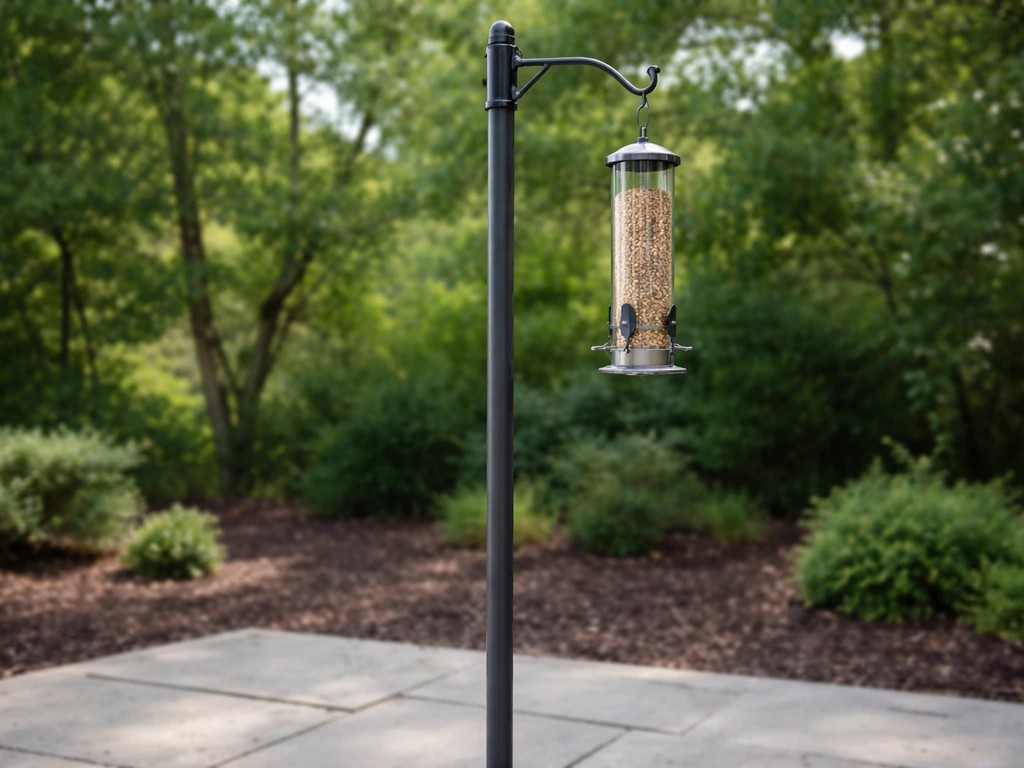
When people search for "pole bird feeders," they usually mean one of two things: the complete system (pole plus feeder together) or just the mounting pole for a feeder they already own. Both interpretations are valid, and it's worth understanding the difference before you buy anything.
A complete bird feeding pole system typically includes the pole itself, a ground anchor or auger stake, one or more mounting arms, and sometimes a baffle. You attach whatever feeder you want to the top or the arms. The alternative is a "pole-mounted feeder," which is a feeder specifically designed to sit directly on top of a pole rather than hang from a hook. Both work well; the key difference is flexibility. A pole system with arms lets you run multiple feeders at different heights, while a single top-mount setup is simpler and easier to manage.
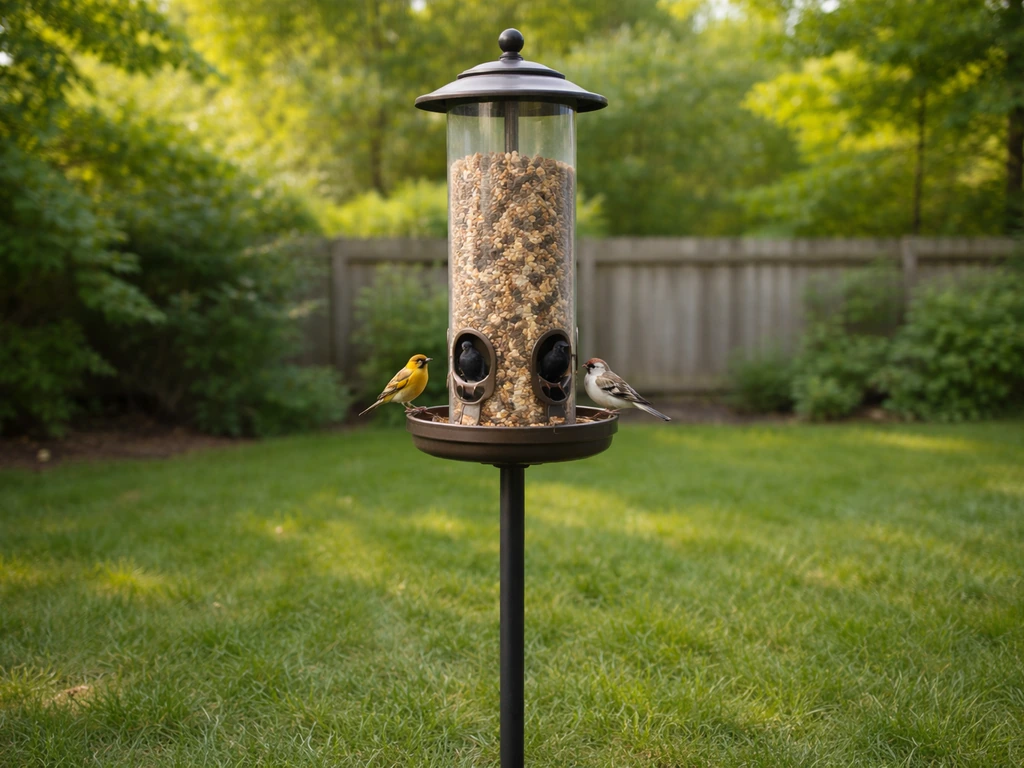
Feeder types that work well on poles include tube feeders (great for nyjer and mixed seed), hopper feeders (high capacity, good for cardinals and jays), platform or tray feeders (open access for ground-feeding species), and suet cage holders. What doesn't translate as well to poles: window-cling feeders (obviously) and most hummingbird feeders, which tend to hang better from dedicated shepherd's hooks or brackets near nectar-friendly plantings.
How to pick the right pole setup for your yard
Height and stability
Most standard bird feeder poles run between 5 and 8 feet above ground once installed. That height keeps feeders accessible for refilling while staying out of easy reach for cats and other ground predators. If you're in a windy area, stability matters more than height. Wild Birds Unlimited's Advanced Pole System has been tested to hold its position in wind gusts up to 35 MPH (about 56 km/h), which is genuinely reassuring if you live somewhere that gets strong spring or fall winds. The APS hardware is also rated to support around 40 lbs. of total weight, so you can load it with multiple feeders and seed without worrying about the whole thing tipping over.
For most backyards, a best heavy duty bird feeder pole option made from powder-coated steel is the right call. Thin aluminum poles look nice but flex in wind and tend to work loose over time, especially in soft or sandy soil. If the pole wobbles, squirrel baffles don't work reliably, and the whole point of the system breaks down.
Placement relative to windows and structures
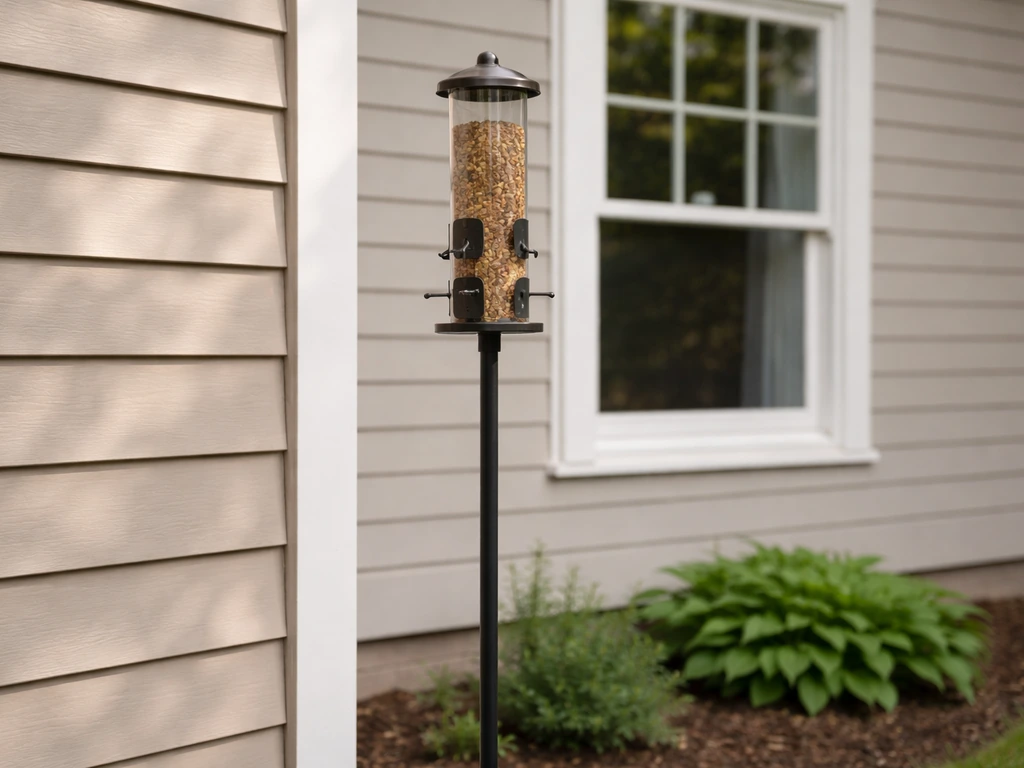
Where you place your pole matters a lot for bird safety. The rule of thumb used by most ornithologists is the "3 feet or 30 feet" guideline: place feeders either within 3 feet of a window (so birds can't build up lethal speed before impact) or more than 30 feet away (so they have time to identify the glass as a barrier). Anything in between, roughly 4 to 29 feet from a window, is the danger zone for window strikes. You can also mount feeders over a deck railing, near a garden border, or adjacent to shrubs that provide quick cover for birds after feeding.
Pole diameter and feeder compatibility
This is a detail that trips up a lot of buyers. Not every feeder fits every pole. Brome's pole adapter for the Squirrel Buster Plus, for example, requires a pole that is exactly 1 inch in outside diameter or slightly less. Go larger than that and the adapter won't seat properly. If you're building a system around a specific feeder, check the mounting hardware specs before buying the pole, not after.
Best pole bird feeders by target bird and feeding style
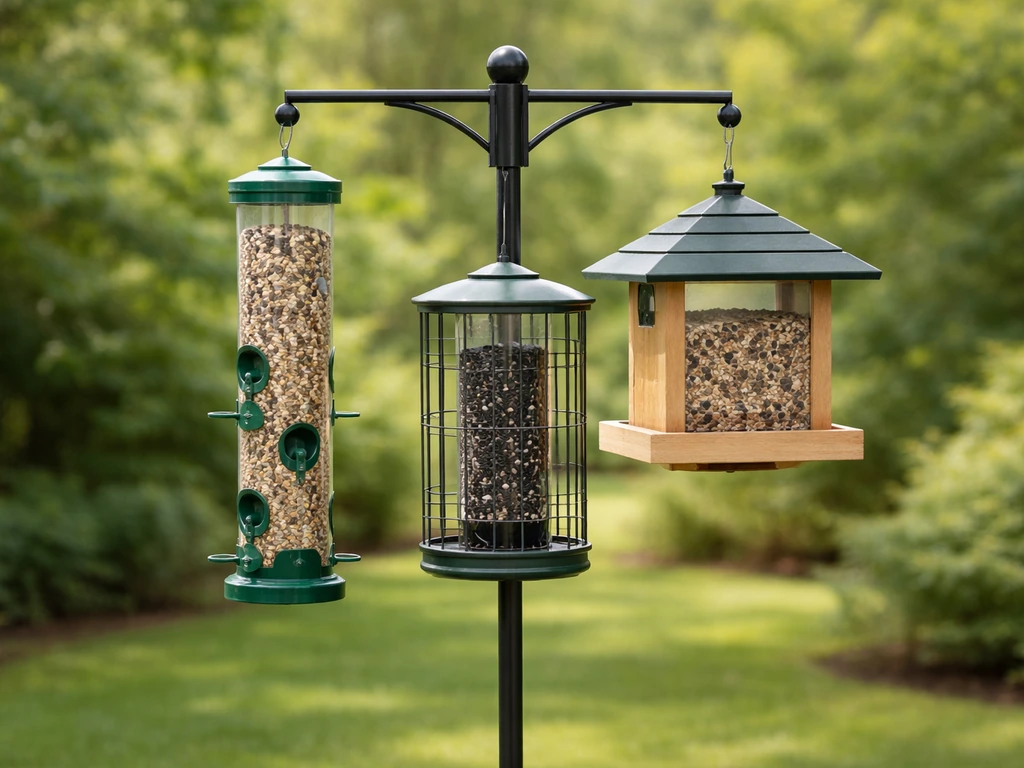
Different birds have very different feeding preferences, and a one-size-fits-all approach usually means you end up attracting house sparrows and starlings instead of the species you actually want. Here's how to match feeder style to your target birds in a pole-mounted setup.
| Target Bird | Best Feeder Style for Pole | Recommended Seed/Food | Notes |
|---|---|---|---|
| Finches (goldfinch, house finch) | Tube feeder with small ports | Nyjer (thistle), fine sunflower chips | Use a dedicated nyjer tube; standard ports are too large |
| Cardinals | Hopper or large platform feeder | Safflower, sunflower (black oil) | Cardinals prefer wide perches; avoid narrow tube ports |
| Blue jays | Hopper or open platform | Whole peanuts, sunflower, corn | Jays need large feeder openings; platform works great on a pole arm |
| Woodpeckers | Suet cage or peanut feeder | Suet cakes, peanuts in shell | Mount suet cages on a pole arm or offset bracket |
| Orioles | Hanging oriole feeder with nectar/fruit ports | Grape jelly, orange halves, nectar | Pole-hang from shepherd's hook arm; not ideal as top-mount |
| Bluebirds | Mealworm dish or open platform | Live or dried mealworms | Low, open platform works; position away from dense shrub cover |
| Doves (mourning) | Large open platform or hopper base tray | Mixed seed, millet, safflower | Doves prefer low or ground-level feeding; use a low-hung tray |
| Hummingbirds | Nectar feeder on hanging arm | Sugar water (4:1 water:sugar) | Shade placement helps slow nectar fermentation in summer |
For mixed-species yards, the most practical approach is a pole system with multiple arms at staggered heights: a hopper or tube feeder up top for cardinals and finches, a suet cage on a side arm for woodpeckers, and a tray or platform feeder lower down for doves and juncos. If you want to go deep on mounting a bird feeder on top of a pole vs. hanging it from an arm, the positioning actually affects which species feel comfortable using it, so it's worth thinking through before you drill anything.
Weatherproofing, cleaning, and durability checks that actually matter
What to look for in weatherproof construction
Powder-coated steel poles and feeders hold up far better than painted or bare metal over multiple seasons. UV-stabilized polycarbonate or thick acrylic tubes resist cracking in cold weather better than thin plastic. Look for sealed seams and drainage holes in any tray or platform component: standing water in a feeder is a fast route to mold and seed spoilage. Brome's Weather Guard accessory for the Squirrel Buster Plus is a good example of a purpose-built weather solution. It shelters birds while they eat and actively keeps rain and snow off the feeding ports, which in a wet spring or snowy winter makes a real difference in how often you need to dump and refill wet seed.
How often and how to clean
Cleaning frequency is one area where most casual bird watchers fall behind. The U.S. Fish and Wildlife Service recommends cleaning feeders at least weekly, and more often during wet or high-use periods, to reduce the risk of salmonella and mold. Cornell's All About Birds suggests using a dilute bleach solution, up to a 1:9 bleach-to-water ratio, when you're dealing with visible mold or disease concerns. For routine cleaning without contamination signs, Clemson's HGIC recommends a vinegar solution with thorough scrubbing at least every two weeks. After any cleaning method, rinse all parts for at least 10 seconds to remove residue before refilling.
Tube feeders specifically need disassembly for a proper clean. Models like the Droll Yankees tube feeders are designed with removable ports and bottom caps for exactly this reason. If your tube feeder doesn't come apart, you're not cleaning it properly, and seed will compact and mold in the base. Tray and platform areas should be cleared of hull buildup at least once a month to reduce mold accumulation and avoid attracting rodents. If you can run your feeder through a dishwasher on a hot setting, that's the easiest option and perfectly effective for most plastic and metal components.
Pests and safety: squirrel and rat control done right
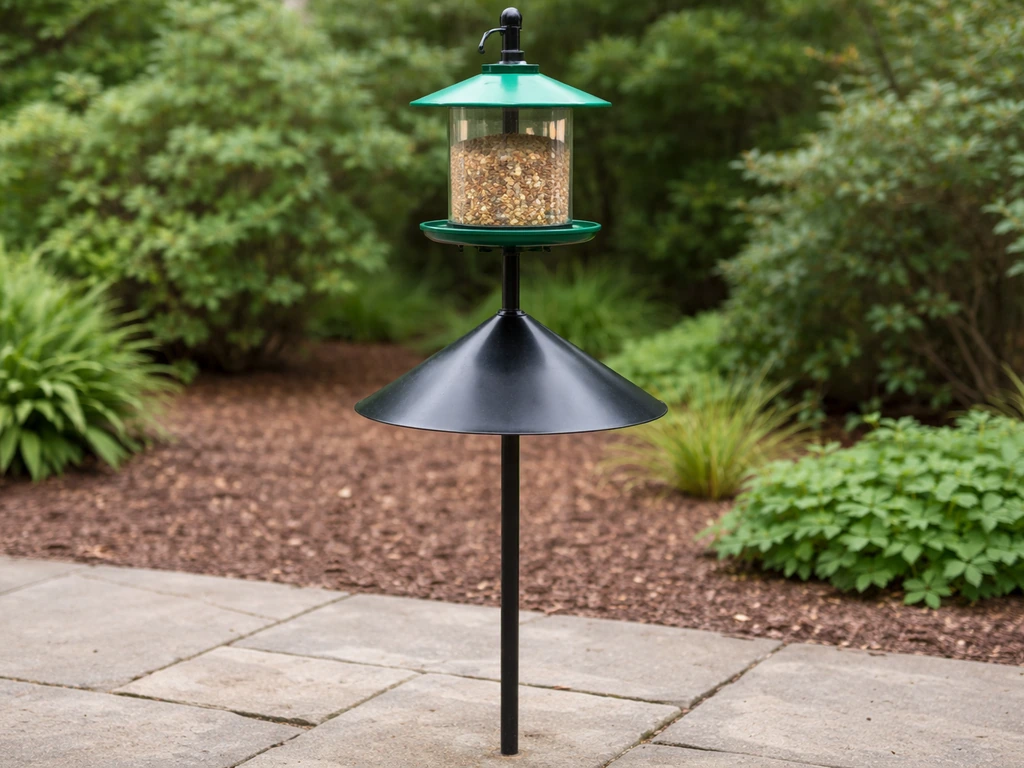
Squirrel-proofing a pole feeder comes down to three things: baffle placement, pole position, and feeder design. A cylindrical baffle mounted on the pole below the feeder, at least 4 to 5 feet off the ground, blocks squirrels from climbing up. The Birds Choice complete pole set is a good example of an all-in-one solution: it includes black steel tubing, a ground twister anchor, a cylindrical squirrel baffle, and two mounting flanges, so you're not sourcing parts separately. For the feeder itself, Brome's Squirrel Buster Plus (which was named best squirrel-proof feeder by Popular Science in 2018) uses a weight-sensitive shroud that closes off feeding ports when a squirrel's weight is detected. With the right pole adapter, it mounts cleanly on a 1-inch pole.
Pole placement matters just as much as the hardware. Squirrels can jump horizontally up to 10 feet and vertically up to 4 feet from a flat surface. Keep your pole at least 10 to 12 feet away from any fence, tree branch, deck railing, or roof overhang. If you're in a spot where that's not possible, lean harder on the feeder-level squirrel-proofing (weight-sensitive shroud or cage) rather than relying entirely on the baffle.
Rats are a different problem. They're drawn to spilled seed on the ground, not usually to the feeder itself. The fix is twofold: use a seed tray catcher on the pole to reduce spillage, and rake up shells and hulls regularly. Switching from mixed seed (which contains lots of millet that birds toss aside) to straight black oil sunflower or safflower dramatically reduces ground spillage and, with it, rat interest.
Seasonal feeding and adjusting for winter
Pole feeders face their toughest conditions in winter: frozen ground makes re-seating a ground auger difficult, wet snow clogs hopper openings, and suet goes rancid faster in warm winter spells. A few adjustments make a big difference.
- Switch to high-fat foods in winter: suet cakes, peanuts, and black oil sunflower seed are all high-energy options that cold-weather birds actively seek out. Nyjer is less effective in deep winter since goldfinches reduce activity.
- Use a feeder with wider drainage holes in winter: snow can pack into narrow slots and seal the feeding ports entirely. Open hopper or platform designs handle snow better than enclosed tube feeders.
- Keep the pole anchor tight before the ground freezes: once the soil hardens, a loose pole becomes very difficult to re-set without tools. Tighten the ground anchor in late fall.
- In freeze-prone areas, bring hummingbird and nectar feeders in at night or switch to a heated feeder designed for winter use, since sugar water freezes at around 27°F.
- In spring, increase cleaning frequency as migrating birds arrive and feeder traffic spikes. More birds means faster seed turnover but also faster buildup of shells, droppings, and mold.
One thing that's easy to overlook: pole systems with extension poles let you adjust the height seasonally. Running the feeder higher in summer (when foliage provides natural squirrel launch points) and lower in winter (for easier refilling in bad weather) is a practical trick that a good top flight universal bird feeder pole makes simple with its modular design.
Top picks and how to finalize your purchase today
Here's a practical shortlist based on common backyard setups. These aren't ranked against each other, since the "best" really does depend on your situation, but each one represents a strong choice in its category.
- Best all-around system for mixed species: Wild Birds Unlimited Advanced Pole System (APS). Tested to 35 MPH wind resistance, rated for 40 lbs., stackable squirrel baffle accessory available, modular arm and extension system. Solid choice if you want to run 2 to 4 feeders from one pole.
- Best squirrel-proof feeder for a pole: Brome Squirrel Buster Plus with the pole mount kit. The powder-coated die-cast adapter and stainless steel mid-ring give you a secure pole mount on any 1-inch pole, and the weight-sensitive shroud handles squirrels without any extra baffle required.
- Best complete budget kit: Birds Choice Complete Bird Feeder Pole Set. Includes steel pole, ground twister, cylindrical baffle, and dual mounting flanges. Everything you need to hang two feeders with squirrel protection, no sourcing individual components.
- Best for bad weather: Brome Squirrel Buster Plus with the Weather Guard accessory. The Weather Guard keeps seed dry in rain and snow, extending the time between refills and reducing mold risk without having to build a shelter over the pole.
- Best for woodpeckers and high-fat winter feeding: Any sturdy single-arm pole setup with a wire suet cage on the arm and a hopper feeder on top. Simple, easy to manage, and you can swap suet flavors quickly.
To finalize your purchase today, work through these questions in order: What birds do you want to attract? That determines feeder type. Do you have a squirrel problem? That determines whether you need a weight-sensitive feeder, a baffle, or both. What's your soil like? Hard clay or rocky ground may require a deck-mount or in-ground sleeve rather than a standard auger. How much weight do you plan to load? If you want multiple feeders, go with a heavy-duty rated pole from the start rather than upgrading later. And finally, check your pole diameter before buying any feeder-specific mount adapter, it's the single most common compatibility mistake.
If you're still working out which pole configuration suits your specific yard, the breakdown in our guide to the best bird feeding pole system covers multi-arm layouts, deck mounts, and in-ground sleeve options in more detail. Most buyers end up between two or three systems once they've narrowed down their feeder type and pest-control needs, so use that comparison to make the final call with confidence.
FAQ
Can I use the best pole bird feeders if my yard is close to windows?
Yes, you can use a pole feeder in a small yard, but you’ll need to plan around the window-strike “danger zone” by choosing either very close placement (within 3 feet of glass) or far placement (more than 30 feet). If neither is possible, prioritize a baffle and add visual deterrents on the window, because squirrels and birds will still test “in-between” distances.
Are pole bird feeders a good option for hummingbirds?
For hummingbirds, a true pole setup is usually less effective because most hummingbird feeders are designed to hang and wobble less when mounted with dedicated brackets. A practical compromise is keeping hummingbird nectar plants and hooks near flowers, while using the pole system for seed and suet species (finches, cardinals, woodpeckers).
What should I do if my ground is soft, sandy, or hard to anchor?
If you’re dealing with weak soil, avoid relying only on a standard auger stake. Consider a deck-mount, an in-ground sleeve made for your soil depth, or a ground anchor designed to grip firm layers, because a loose base lets the baffle “miss” squirrels and increases feeder sway during wind.
How do I stop rats from coming when I use a pole bird feeder?
Skip mixed seed if rats are showing up. Use a catcher tray to reduce hulls on the ground, switch to straight black oil sunflower or safflower, and keep a regular cleanup cadence (rake shells and hulls at least a few times per week). Rats adapt to easy food sources, so consistency matters more than one-off fixes.
How often should I refill and maintain a pole-mounted feeder during rainy or snowy weather?
It depends on the feeder type and how much moisture you get. Hopper and tube feeders need fast attention after rain or wet snow because seeds can clump and rot in openings. Tray feeders usually require more frequent hull clearing since debris builds up and supports mold faster.
Can I add extra feeder arms later on a pole system I already bought?
Yes, but only if the pole system is rated for that total loaded weight and the connections are tightened correctly. If you add multiple arms, verify the hardware’s total weight rating and account for extra sway, because “rated” sometimes assumes a single feeder centerline load, not multiple offset loads.
What’s the most common pole-and-feeder compatibility mistake besides baffle placement?
Many adapters are sized to a narrow pole diameter range, so don’t assume “1 inch pole” means universal fit. Before buying, confirm the adapter’s required outside diameter and whether it accepts powder-coated walls, because coating thickness and measurement method can make a compatible adapter suddenly not seat.
What’s the best way to clean tube vs tray feeders on a pole system?
For cleaning, remove parts that contact seed, disassemble tube feeders fully, and scrub seed-contact surfaces so residues do not turn into a biofilm. If you see mold, treat that feeder as a higher-risk item by cleaning immediately, rinsing thoroughly, and letting it dry completely before refilling.
How do I know my baffle placement is actually working?
If the baffle is high or positioned too close to the feeder, squirrels can use launch points and climb around it. Aim for a baffle height that’s at least 4 to 5 feet off the ground and keep the pole clear of horizontal footholds within squirrel reach, because fences, railings, and nearby branches defeat many baffles.
If birds keep hitting my windows, what changes help besides moving the feeder?
You can reduce impact damage by relocating slightly to avoid the window “danger zone,” or by mounting over shrubs and using a perch-cover layout that encourages birds to approach more cautiously. If shifting placement isn’t possible, combine the distance rule with window visual treatments, since distance alone doesn’t solve every strike scenario.