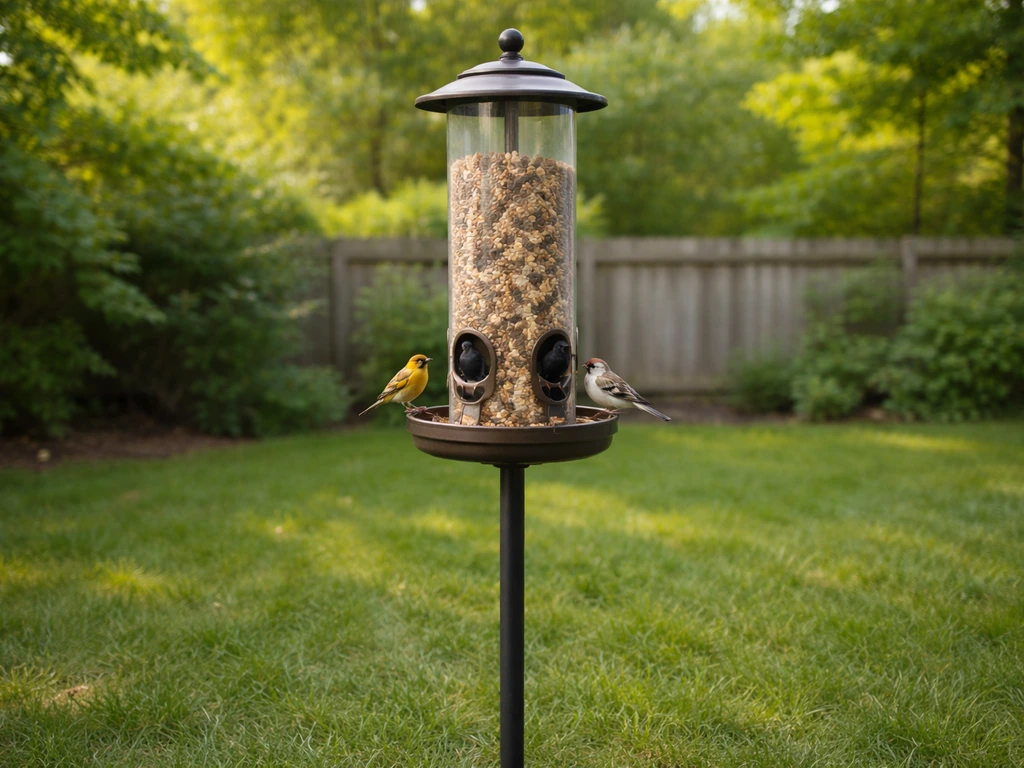
The best heavy duty bird feeder pole for most backyard setups is a galvanized or powder-coated steel pole with at least a 1-inch diameter, 16-gauge wall thickness (or heavier), and a ground-socket or screw-in mounting system that keeps it stable even in wind and wet soil. If you want the short answer: go with a steel pole rated for at least 12 feet of height, pair it with a clamping squirrel baffle, and choose a feeder with a rust-resistant finish. Everything below explains exactly how to pick the right combination for your yard, your birds, and your local weather.
Best Heavy Duty Bird Feeder Pole Buying Guide and Specs
Marcus Hendricks
16 Apr 2026
What 'heavy duty' should actually mean for a pole-mounted feeder
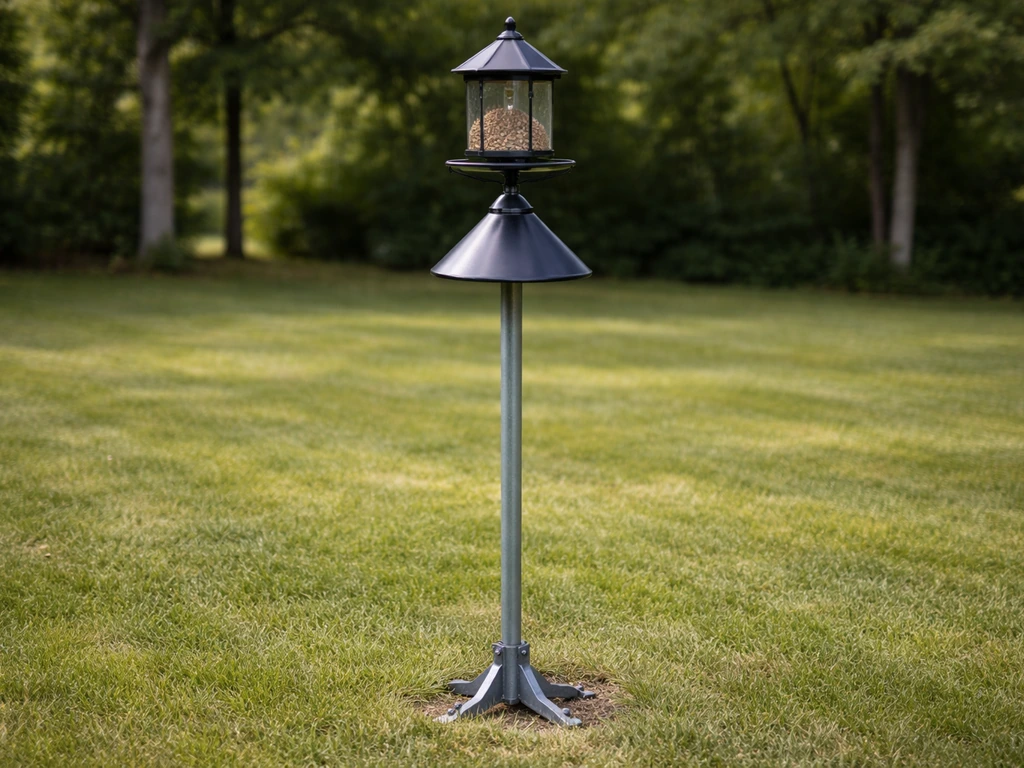
The phrase 'heavy duty' gets slapped on a lot of products that frankly don't earn it. For a bird feeder pole, it should mean three things: structural strength that won't bend under a loaded feeder and wind pressure, a stable mounting system that stays planted in soft or frozen ground, and materials that genuinely resist rust, UV breakdown, and freeze-thaw cycles over multiple seasons.
On structural strength, wall gauge matters a lot more than the marketing name. A 16-gauge steel wall is meaningfully stiffer than the thin-walled 20-gauge or higher tubes found on budget poles. The Birds Choice Erva system specifies a 16-gauge wall, and you can feel the difference the moment you pick it up. For taller setups, base diameter is equally critical: the Birds Choice heavy-duty 12-foot telescoping pole has a base section diameter of 2.
197 inches, which is why it doesn't wobble the way a standard 1-inch pole does at full extension. Engineering data from structural pole systems uses a benchmark of load deflection no higher than 3% of pole height under maximum design loading, which is a useful real-world standard to keep in mind when comparing specs.
Stability comes from the ground anchor. A bare spike driven into soft lawn will shift over time, especially after frost heave. A ground socket (a separate sleeve you cement or drive deeply into the ground) lets you remove the pole in winter while keeping a solid anchor in place. Ground twisters, the corkscrew-style anchors included in kits like the Birds Choice complete pole set, work well in most soil types and are far more secure than a simple straight spike. For heavier multi-feeder setups, a flange bolted to a deck or post is even more reliable.
Weather durability means galvanized or powder-coated steel, not raw iron or chrome plating. Galvanized steel handles rain and humidity well; a quality powder coat adds UV resistance on top of that. Avoid poles described only as 'metal' without specifying the finish, because uncoated steel will show rust within one season in humid climates.
Key specs to look for when comparing heavy duty poles
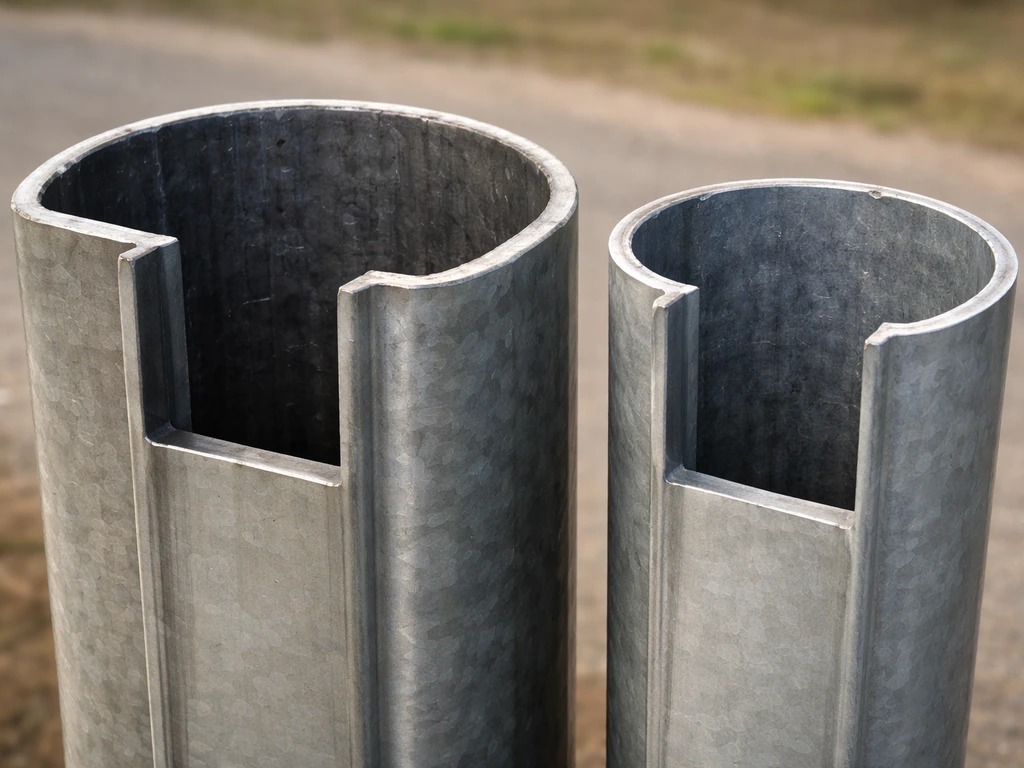
When you're reading product listings, here are the numbers that actually matter and what to look for in each.
| Spec | Minimum to Look For | Why It Matters |
|---|---|---|
| Wall gauge | 16 gauge or lower number (thicker) | Resists bending under feeder weight and wind |
| Base diameter | 1" for standard setups, 2"+ for 10+ ft poles | Taller poles need wider bases to stay stable |
| Pole height | 6–8 ft for most yards, 10–12 ft for tall setups | Keeps feeders out of squirrel jump range and accessible to birds |
| Finish | Galvanized or powder-coated steel | Prevents rust and UV degradation over seasons |
| Ground anchor | Ground socket, flange, or ground twister | Determines long-term stability in varying soil |
| Arm/hook capacity | Rated for combined feeder + seed weight | Prevents sagging or arm failure mid-season |
| Baffle compatibility | 1" pole OD for most baffles and adapters | Many baffles and adapters only fit 1" poles exactly |
That last point on baffle compatibility is worth flagging early. Brome's Squirrel Buster Plus pole adapter, for example, is designed for a pole with an outside diameter of exactly 1 inch (or slightly less). If your pole is wider, the adapter simply won't fit. So if you're building a system around a specific feeder or baffle brand, check the pole OD requirement before you buy anything.
For a deeper look at how complete pole systems are packaged and what accessories come bundled, the guide on the best bird feeding pole system options covers several kits worth comparing alongside standalone poles.
Top heavy duty pole setups: steel vs. other materials
Steel is the right material for a heavy duty pole. That's not a debate worth spending much time on. Aluminum poles are lighter and won't rust, but they flex more under load and are generally not available in the heavier gauges you need for tall or multi-feeder setups. Wood posts work in a rustic garden setting, but they rot, attract insects, and can't be fitted with slip-on baffles easily. Plastic or composite poles exist but should be avoided for anything described as heavy duty since UV degradation and cold-temperature brittleness are real problems. Stick with steel.
Within steel poles, the main choice is between a single-section pole (simple, no joints to fail), a multi-section threaded pole, and a telescoping pole. Here's how they compare:
| Type | Best For | Trade-offs |
|---|---|---|
| Single-section steel pole | Short setups under 6 ft, permanent installs | Harder to transport/store, no height adjustment |
| Multi-section threaded pole | Most backyard setups, 6–8 ft height | Joints can loosen over time, need occasional re-tightening |
| Telescoping galvanized pole | Tall setups, 10–12 ft, versatile placement | Heavier base section needed (2"+ OD), higher cost |
| Shepherd's hook pole (light steel) | Single feeder, decorative use | Not truly heavy duty, flexes with heavier feeders |
The Birds Choice 12-foot heavy-duty telescoping pole is a strong pick for serious setups. It's made from heavier galvanized steel, extends to a full 12 feet, and comes with a ground socket for a secure buried anchor. For a more modular approach, the Erva complete pole set includes 1-inch black steel tubing at 16-gauge, a 14.5-inch cylindrical squirrel baffle, two flat-topped mounting flanges, a ground twister, and multiple pole sections in one package, which is a genuinely good value if you're starting from scratch.
If you want to compare several pole-mounted feeder brands side by side before committing, the roundup of best pole bird feeders covers both the poles and the feeders designed to work with them.
Which feeder types actually work best on poles
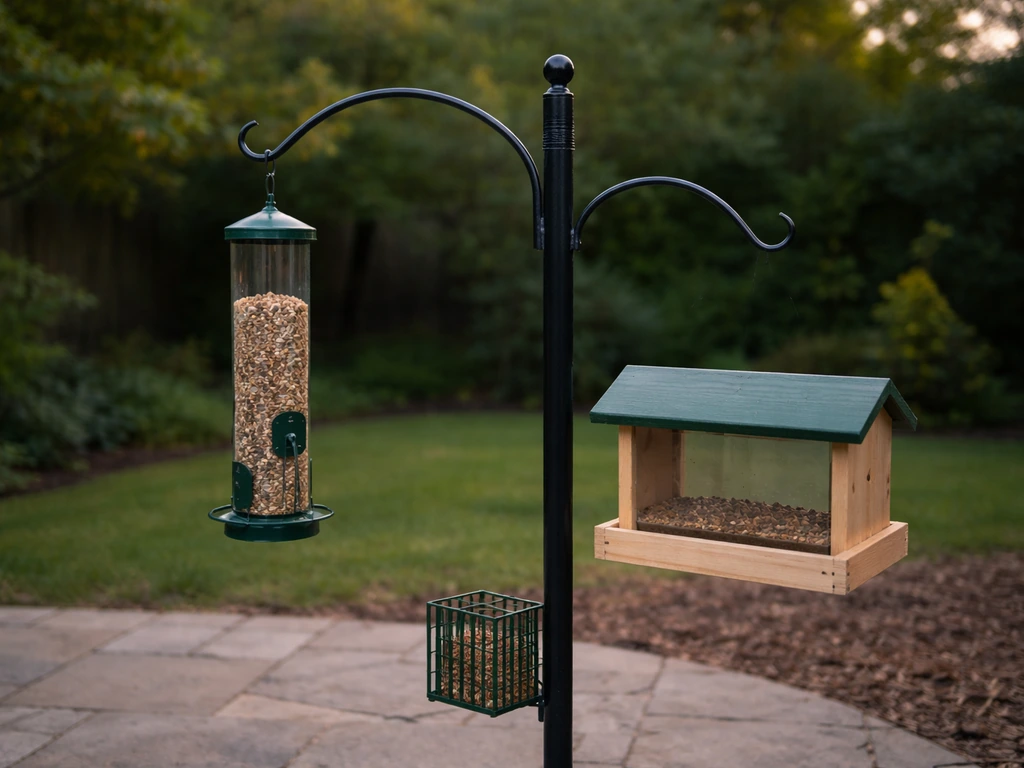
Not every feeder is a good candidate for pole mounting. The feeder needs to be stable enough not to swing excessively in wind, compatible with the pole's arm or hook diameter, and ideally weighted in a way that doesn't put asymmetric stress on the arm. Here's how the main types perform:
Tube feeders are the most pole-friendly option. They're typically cylindrical, hang straight, and are available in metal or UV-stabilized polycarbonate. On a pole with a hooked arm, a tube feeder filled with nyjer or sunflower chips is stable even in moderate wind. They're ideal for finches, chickadees, and nuthatches.
Hopper feeders work well on pole arms too, especially when they have a flat base that rests on a platform bracket rather than hanging freely. The domed or roof design of most hoppers sheds rain well, and the enclosed seed reservoir keeps seed dry longer. Cardinals, jays, and grosbeaks especially take to hopper-style feeders. A standard tube or hopper feeder paired with a domed baffle above is one of the most effective pest-deterrent combos you can run.
Platform feeders mounted on pole tops are excellent for ground-feeding species like doves, juncos, and sparrows that you want to elevate off the ground. A flat platform on a pole bracket gives them the open sightlines they prefer while keeping seed away from ground-level pests. The main downside is that platform feeders offer no rain protection for seed, so they need frequent refreshing in wet weather.
Suet cages can be hung from pole arms and are particularly good for woodpeckers, nuthatches, and starlings. Metal suet cages are the right choice here since plastic cages become brittle in cold and squirrels can chew through them faster. Cage-style suet feeders are also easy to clean and refill year-round.
For anyone thinking about mounting a specific feeder style at the top of a pole rather than on a side arm, the article on bird feeder on top of pole setups explains the hardware options and stability trade-offs in detail.
Keeping squirrels, rats, and weather out of your setup
Squirrel and rat deterrence
A heavy duty pole only protects your feeders if you also address pest access. The rules here are well-established and they work when followed precisely. The baffle should be positioned at least 4 to 5 feet above the ground on the pole.
USDA National Extension guidance for selective bird feeding recommends placing baffles at least 4 feet off the ground and also provides siting guidance to keep poles away from jump-access points such as fences and decks placed at least 4 to 5 feet above the ground on the pole. The pole itself needs to be placed at least 10 feet away from any tree, fence, bush, or other surface a squirrel could jump from.
Some sources suggest even more distance: 15 feet is the safer margin if there are large trees nearby. If you're within 8 feet of a roof or fence line, squirrels will make the jump reliably.
For the baffle itself, smooth metal cylinder baffles that squirrels can't grip are the most effective style for pole mounting. They work by making it physically impossible for a squirrel to climb past a certain point on the pole. The Birds Choice Erva kit includes a 14.5-inch cylindrical baffle specifically for this purpose, with a steel collar to hang it at the right height. Dome-shaped baffles also work when mounted correctly, particularly as over-feeder protection against squirrels dropping down from above.
For rats, the approach is the same: baffles plus placement distance. Rats are better climbers than squirrels in many respects but worse jumpers, so pole distance from walls and fences is the most important factor. Avoid leaving spilled seed on the ground beneath the feeder, which is what attracts rats in the first place. A tray or catch pan under the feeder helps enormously.
Rain, rust, and wind resistance
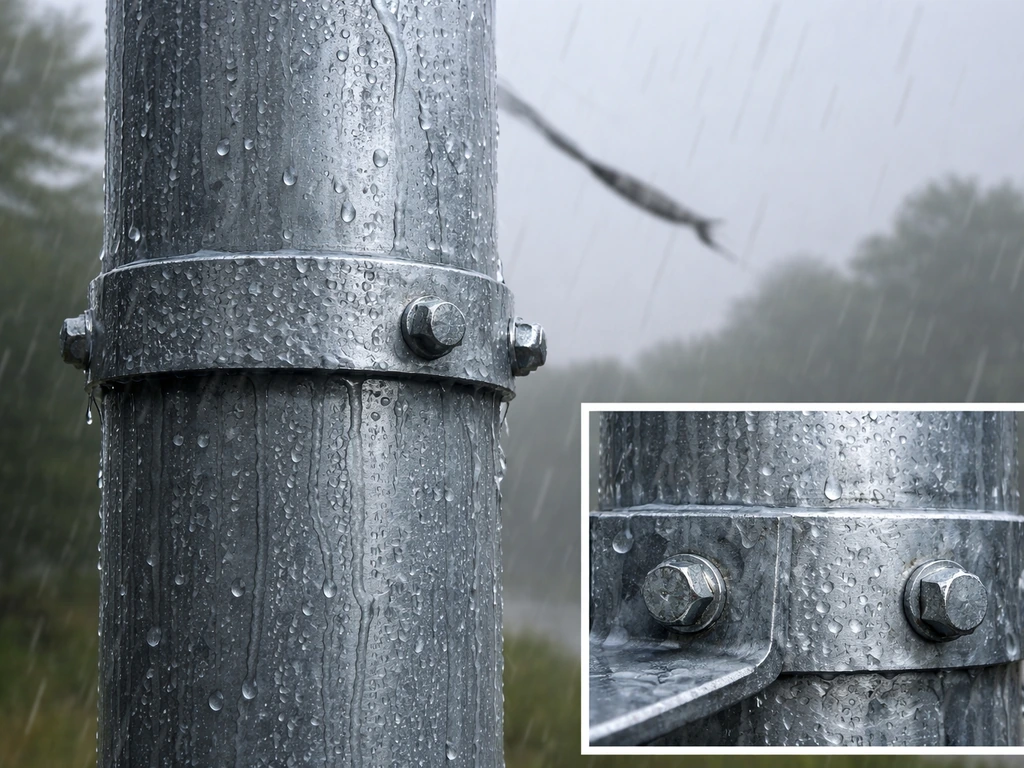
Rust is the primary long-term enemy of a steel pole. A properly galvanized pole will typically hold up for 10 or more years outdoors, but surface scratches can create rust entry points. Inspect the pole once a year and touch up any scratched or chipped areas with a zinc-rich primer before moisture gets in. Powder-coated poles add a second line of defense against both rust and UV fading.
Wind resistance is mostly a function of the pole's base stability and the feeder's weight distribution. A pole that isn't driven deep enough into the ground will rock in wind and will eventually loosen its anchor further. The ground socket systems on heavy-duty poles are designed to be driven or cemented at a depth that prevents this. For very exposed yards, orient multi-arm poles so the dominant wind direction hits the narrowest profile of the setup.
In winter, freeze-thaw cycles can work a ground spike loose over time. A ground socket setup where the socket itself is set deeply (18 to 24 inches) handles this much better than a spike. It also lets you pull the pole and feeders out in late fall and re-insert them in spring without disturbing the anchor.
Matching your pole and feeder to your birds and yard
Height matters more than most people realize, and it's species-specific. Cardinals, grosbeaks, and jays generally prefer feeders between 5 and 6 feet off the ground. Finches are comfortable at 5 to 7 feet. Woodpeckers often prefer suet mounted higher, in the 6 to 8-foot range, since they're more comfortable feeding at trunk height. Doves and sparrows actually prefer low to mid-height platforms. A telescoping pole gives you the flexibility to set exact heights without buying a different pole for each target species.
Orioles and hummingbirds need pole-mounted feeders with specialized nectar-capable hardware. Orioles do well with a feeder arm at 5 to 6 feet; hummingbirds will use a variety of heights but prefer feeders near shrubs or flowers they're already visiting. For these species, feeder placement near natural cover matters as much as pole height.
Placement relative to windows is worth getting right for safety reasons. The rule most ornithologists recommend is the 3-30 rule: put feeders either within 3 feet of a window (so birds don't build up speed if they veer toward the glass) or more than 30 feet away. Anything in between puts birds at collision risk because the glass looks like open sky from certain angles.
For winter feeding, the main adjustment is feeder height and baffling. Snow can pile up on platform feeders, blocking access. High-fat seeds like black oil sunflower and suet become more critical as birds need the caloric density. A pole-mounted hopper with a good roof and a baffle stays functional through most winter conditions; a platform feeder needs more frequent clearing.
If you're comparing dedicated pole systems for specific bird setups, the detailed look at the top flight universal bird feeder pole is worth a read for understanding how universal mounting systems handle multiple feeder types at different heights.
Installing, maintaining, and troubleshooting your pole setup
Installation
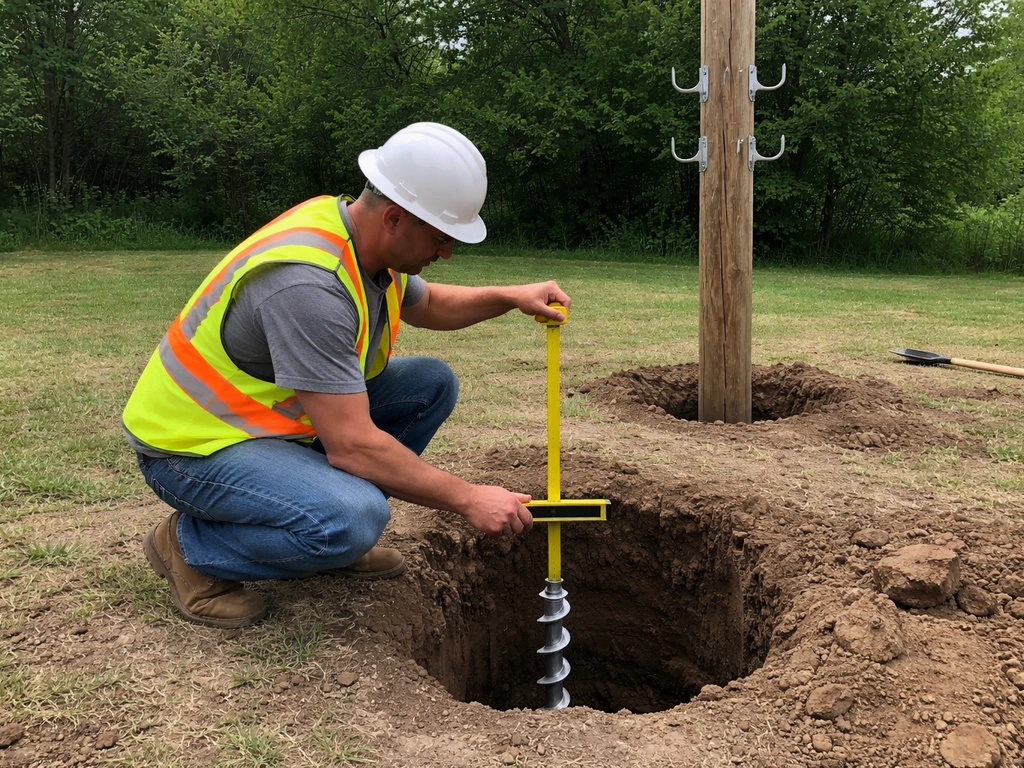
Start by planning placement before you dig. Mark your chosen spot and check the 10-to-15-foot clearance from trees, fences, and rooflines in all directions. Use a post-hole digger or ground auger to drive a ground socket 18 to 24 inches deep. If you're using a ground twister, drive it fully vertical because a tilted anchor will cause the pole to lean over time. For pole heights over 8 feet, check the pole for plumb with a level before the anchor sets.
Attach arms and hooks before raising the pole to full height where possible. Thread the baffle onto the pole before assembly if it's a slip-on style, since you can't add a cylindrical baffle after the arms are in place. Set the baffle at 4 to 5 feet above the ground after the pole is installed.
Maintenance routine
- Clean feeders every 1 to 2 weeks in warm weather (mold and bacteria grow fast in wet seed), and monthly in winter when seed dries out more slowly.
- Inspect pole joints and arm connections at the start of each season. Re-tighten any threaded sections that have worked loose.
- Check the pole finish annually for scratches or chips. Touch up bare steel spots with zinc primer or rust-inhibiting paint immediately.
- Remove the pole from the ground socket in late fall if you're in a region with hard freezes, and re-insert in early spring.
- Reposition the squirrel baffle if you notice gnaw marks or if squirrels are making successful runs at the feeder.
Troubleshooting common problems
- Pole leaning over time: the ground anchor is too shallow or the soil is too loose. Re-drive the anchor deeper or switch to a concrete-set ground socket.
- Squirrels still reaching feeders: recheck your clearance distances (remember, 10 to 15 feet from any jumpable surface) and verify the baffle is positioned at 4 to 5 feet above ground, not lower.
- Rust appearing on joints: water is pooling inside the pole sections. Drill a small drain hole at the lowest point of each section and apply corrosion inhibitor to the joints.
- Feeders swinging excessively in wind: switch from a hanging hook to a fixed arm bracket, or add a second hook point lower on the feeder to reduce pendulum motion.
- Seed clumping or molding inside feeders: the feeder's drainage is inadequate for your climate. Look for feeders with bottom drainage ports, or drill additional drainage holes yourself.
- Birds not finding the feeder: give it 1 to 2 weeks after installation. Scatter a small amount of seed on the ground nearby to draw birds' attention upward to the feeder.
The bottom line on buying a heavy duty bird feeder pole
For most backyards, a 16-gauge galvanized or powder-coated steel pole at 6 to 8 feet with a ground twister or socket anchor, a cylindrical squirrel baffle set at 4 to 5 feet, and a tube or hopper feeder on a clamping arm is the setup that delivers reliability season after season. If you're running multiple feeders or need more height, the Birds Choice 12-foot heavy-duty telescoping pole with its 2.197-inch base is as solid as anything in this category. Just make sure your feeder-to-pole adapter matches the exact pole OD before ordering, especially if you're pairing with a brand-specific feeder like the Squirrel Buster Plus, which requires a 1-inch pole outside diameter.
Match the feeder type to your target birds (tube for finches, hopper for cardinals and jays, suet cage for woodpeckers, platform for doves), follow the 3-30 window rule for placement, and stay religious about the 10-to-15-foot clearance from jump surfaces. Do those things and you'll have a feeding station that's genuinely pest-resistant, weatherproof, and worth the investment.
FAQ
What is the minimum pole height I should choose for pole-mounted feeders?
Beyond “tall enough,” you need enough clearance so the baffle can sit 4 to 5 feet above ground and still block access from the feeder. If you plan to mount the baffle at 5 feet and your feeder arm puts the feeder roughly 6 to 8 feet high, a 10 to 12 foot pole is usually the practical minimum.
Is a screw-in ground anchor or a ground socket better for a best heavy duty bird feeder pole setup?
A ground socket is more forgiving in freeze-thaw climates because the pole can be removed seasonally without disturbing the anchor, and it is typically set deeper (about 18 to 24 inches). A screw-in anchor can work well too, but confirm it’s long enough for your soil and won’t “spin out” over time in soft or rocky ground.
How deep should the anchor be installed to prevent wobble?
For heavy duty performance in winter, aim for a socket set about 18 to 24 inches deep. After installation, test for movement by pushing the pole sideways near the top of the arm, if you feel noticeable rocking, it usually indicates the anchor depth or soil type isn’t sufficient.
Can I use the same baffle on any 1-inch pole?
Not always. Many baffles and adapters specify a required outside diameter (OD) range, some are designed for exactly 1 inch (or slightly less). Measure your pole’s OD (not just the label “1-inch”) and confirm the baffle collar or adapter compatibility before buying.
What happens if my feeder is a little heavier than the pole system is rated for?
Even if the pole doesn’t bend immediately, heavy or top-heavy loads can increase flex at the arm, loosening clamps and causing the baffle to shift alignment. To avoid drift, recheck all fasteners after the first week of use, and choose feeder weights that keep the arm’s load as balanced as possible.
Do I need a baffle if my pole is far from trees and fences?
Distance helps, but it usually does not replace baffling. Squirrels can still reach the pole from unexpected routes (low bushes, roof edges, or even tall shrubs close by), and a baffle is what blocks climbing, so treat distance rules as additional layers, not a substitute.
How often should I inspect and maintain a galvanized or powder-coated steel pole?
At least once per year, look for scratches, chips at joints, and any loosening around the arm clamp. If you find exposed steel, touch up with a zinc-rich primer promptly, because rust starts at tiny bare spots even if the rest of the pole is well protected.
Is powder-coated steel always better than galvanized steel?
Powder coating adds strong UV and cosmetic protection, but galvanized can still be extremely durable if it’s not heavily scratched. In practice, the “best” option is the one with the most complete finish coverage and minimal damage risk during installation and seasonal handling.
What should I do if my pole leans after installation?
First check that the anchor was installed vertically (especially for twist anchors) and that the hole or socket base is level. A slight lean usually worsens as the system is loaded by wind and feeder weight, so correct it early before the baffle and feeder alignment becomes inconsistent.
Can I mount multiple feeders on one pole without making the setup unstable?
Yes, but balance matters. Use a multi-arm arrangement with symmetrical placement when possible, avoid stacking heavy feeders on one side, and confirm the arms are rated for the combined load. Also, keep the baffle centered and at the correct height so one feeder doesn’t “pull” the system into a climbable angle.
How close can the pole be to a wall or fence before rats become an issue?
The key is spacing from vertical surfaces that rats can climb. If you are close to a fence, wall, or shed edge, treat it as higher risk even if squirrels are deterred, and use a catch tray under the feeder to prevent spilled seed from creating an easy food source.
What bird feeder types work best in snow and heavy rain on a pole?
A pole-mounted hopper with a roof and a properly positioned baffle is typically the most winter-stable. Platform feeders often need frequent cleaning in wet weather because seed gets exposed, and tube feeders can keep working, but they still need protection from heavy precipitation buildup.
Next Article
Best Pole Bird Feeders: Buying Guide and Top Picks
Compare best pole bird feeders: stability, capacity, bird access, pest-proofing, and winter durability with top picks.