The most common bird feeder birds in North American backyards are Northern Cardinals, Black-capped or Carolina Chickadees, Dark-eyed Juncos, House Finches, American Goldfinches, Downy Woodpeckers, White-breasted Nuthatches, Tufted Titmice, Mourning Doves, and Blue Jays. If you live in the eastern half of the country, you'll almost certainly see at least six of those ten on a regular basis. West of the Rockies, swap in House Sparrows, Lesser Goldfinches, and Anna's Hummingbirds depending on elevation and season. What you actually get depends on your region, your habitat, and what you're putting out. The good news: a well-chosen feeder with the right seed in the right spot will reliably pull in most of these birds within a week or two.
Common Bird Feeder Birds: Identify, Attract, and Fix Problems
Marcus Hendricks
23 Mar 2026
How to identify the common feeder birds near you
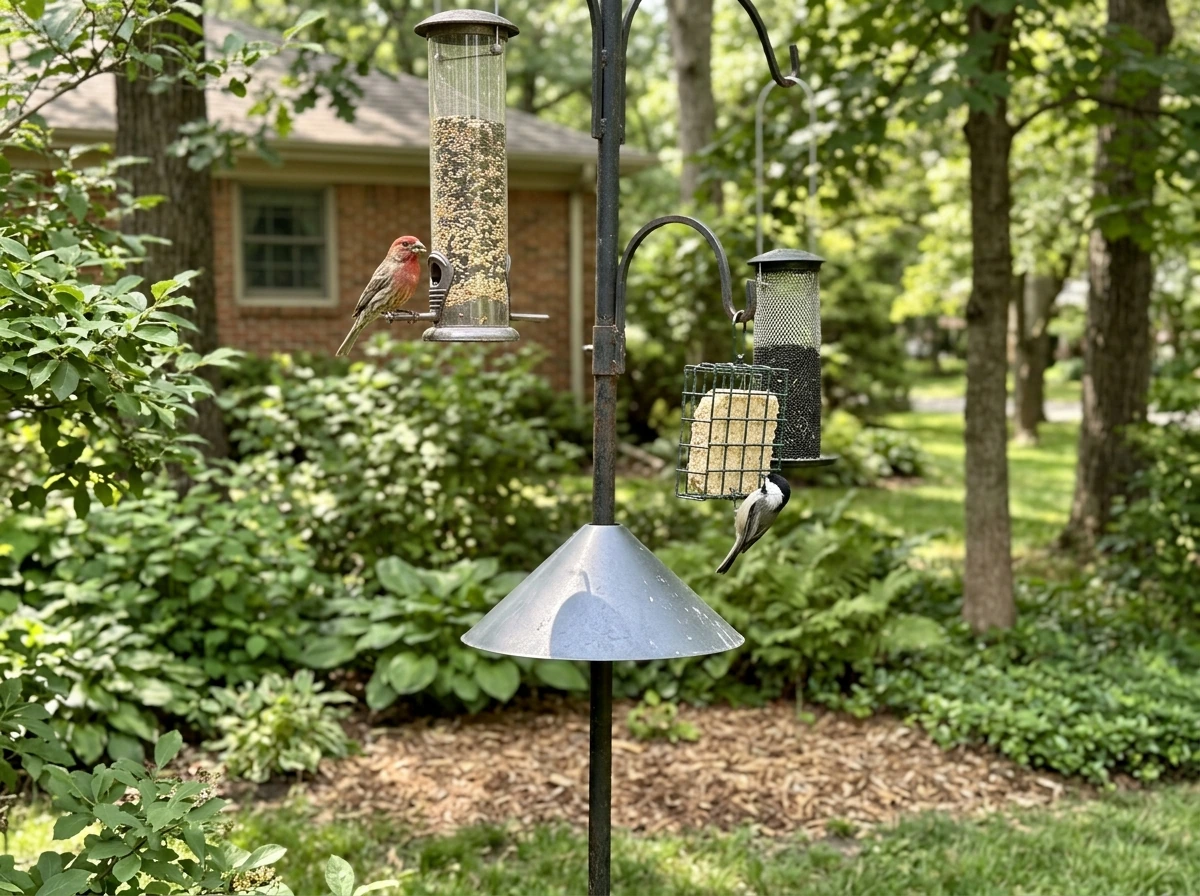
The Audubon Society's approach to quick feeder-side ID is smart: start with overall shape and posture before you try to nail down plumage details. A bird clinging to a suet cage moves and holds its body very differently from one perching on a platform tray. Once you've got the shape, then look at size, beak structure, and the one or two field marks that actually show at distance.
Here's a fast cheat sheet for the birds you're most likely seeing right now. Cardinals are unmistakable: the male is solid red with a crest, and the female is warm buff-brown with red tinges and the same crest. Chickadees are tiny and round with a clean black cap and bib. Juncos in winter look like a bird dipped halfway in dark gray paint, with white outer tail feathers that flash when they fly.
Tufted Titmice are small and gray with a spiky crest they raise and lower constantly and a smudge of black directly above their stubby beak. House Finches show a rosy-red wash on the male's head and breast; Purple Finches (less common) are more raspberry-soaked all over. American Goldfinches in winter molt to an olive-yellow, which trips up a lot of people, but the wingbars stay white.
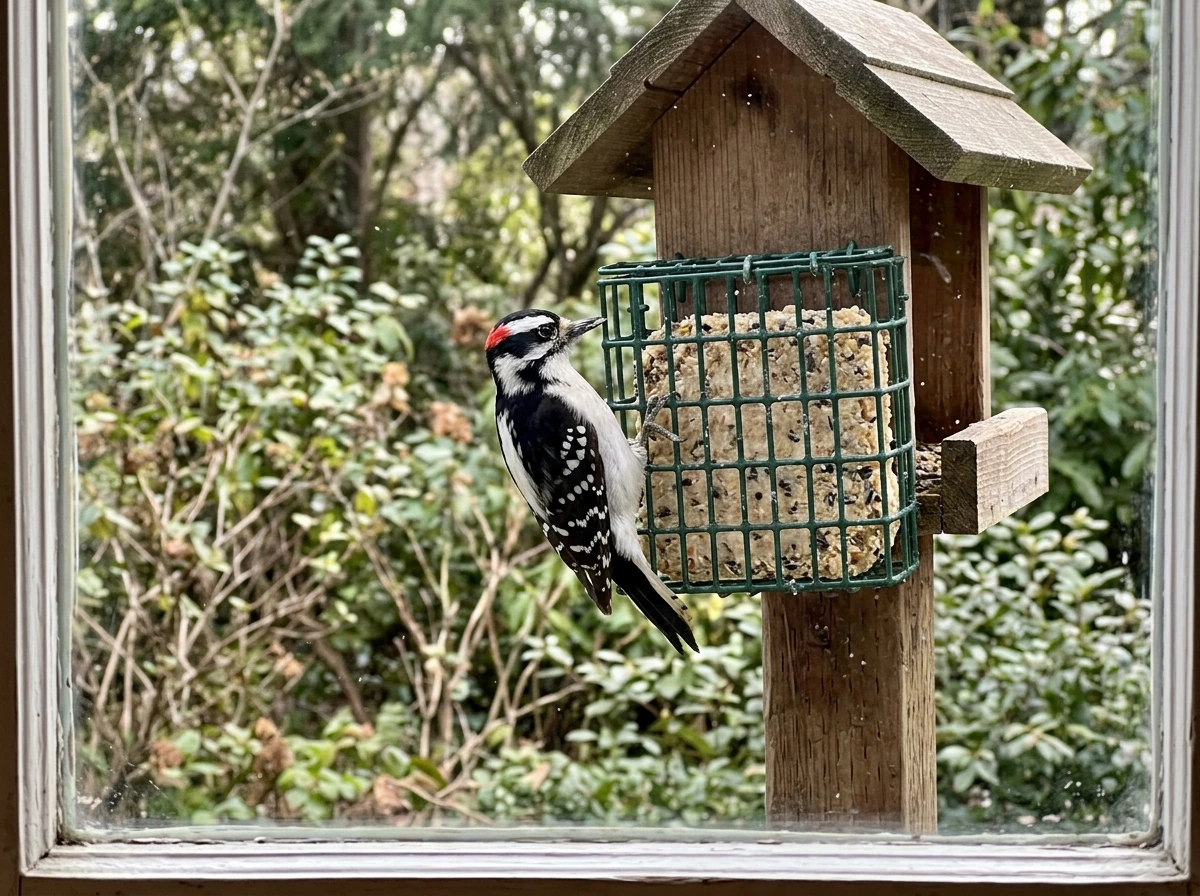
Downy Woodpeckers are the small ones with a ladder-back pattern and, on males, a small red patch on the back of the head. White-breasted Nuthatches are the birds that walk headfirst down the trunk.
If you want to take your identification further, Cornell Lab's Project FeederWatch is genuinely worth joining. It's a long-running cooperative program that collects winter feeder counts and produces solid data on what's actually showing up in yards like yours. You report your counts, and in return you get a clearer picture of whether your sightings are normal for your area and season.
Feeder types that attract the most common species
Different birds feed in different ways, and matching the feeder style to the bird's natural behavior is the single biggest factor in whether it shows up. Here's how the main feeder types map to common species.
| Feeder Type | Best For | Trade-offs |
|---|---|---|
| Hopper/House Feeder | Cardinals, Blue Jays, Chickadees, Titmice, Finches | Holds more seed but can trap moisture; needs regular cleaning |
| Tube Feeder (standard ports) | Chickadees, Finches, Titmice, Nuthatches | Less accessible to large birds; good pest deterrent with metal ports |
| Tube Feeder (nyjer/thistle) | American Goldfinches, House Finches, Pine Siskins | Small ports exclude larger birds; nyjer goes stale fast, so use what you refill often |
| Platform/Tray Feeder | Mourning Doves, Juncos, Sparrows, Cardinals | Most accessible feeder style; exposed to weather and droppings |
| Suet Cage | Downy/Hairy Woodpeckers, Nuthatches, Chickadees, Titmice | Can attract starlings; upside-down style helps filter them out |
| Window Feeder | Chickadees, Titmice, Finches (curious species) | Great for close-up views; keep within 3 feet of glass to reduce strike risk |
| Pole-Mounted Feeder | Almost everything | Best squirrel control with proper baffle; most versatile setup |
If I had to pick one starter setup, it would be a hopper feeder filled with black-oil sunflower on a pole with a baffle, plus a suet cage hung nearby. That combination covers the broadest range of common feeder birds with the least complexity. From there you add a nyjer tube if you want to specifically target goldfinches and siskins.
Best seed and food for each common bird
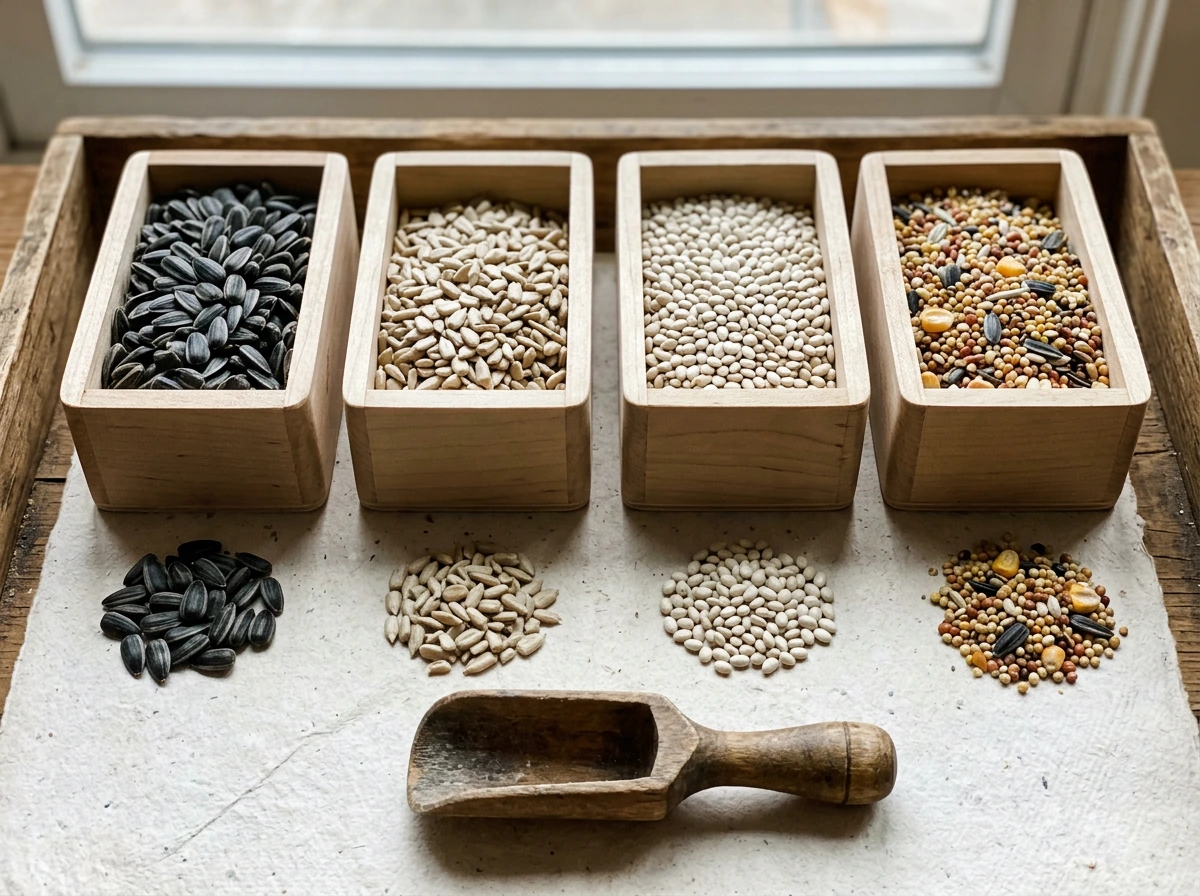
Black-oil sunflower seed is the anchor of any serious feeder setup. Cornell Lab's All About Birds makes this point plainly: it attracts the widest variety of birds of any single seed type, and it does so because the shells are thin enough for small-beaked birds to crack while still being nutritionally dense with fat. If you're only going to stock one seed, make it blank" rel="noopener noreferrer">black-oil sunflower.
Safflower is the second seed worth keeping on hand. It has a thicker shell that many squirrels and House Sparrows find less appealing, but cardinals love it. If your feeder gets hammered by sparrows or squirrels and you can't solve it with hardware alone, switching to safflower in that specific feeder can reduce the pressure significantly without losing your cardinals.
Nyjer (sometimes listed as thistle, technically Guizotia abyssinica) is the specialized seed for finches. It needs to go in a dedicated finch feeder with small ports, which naturally screens out larger birds. One important note: nyjer goes rancid and clumpy faster than sunflower. If birds are ignoring your nyjer feeder, the seed is probably stale. Replace it every two to three weeks and store the bag in a cool, dry spot.
Suet deserves its own mention. It's high-fat, high-calorie food that mimics the insects and grubs woodpeckers and other insectivores naturally seek out. In winter especially, suet cakes give birds like Downy Woodpeckers, nuthatches, chickadees, and titmice the energy they need to survive cold nights. Plain beef suet or suet cakes mixed with seeds or berries both work well. Avoid suet with artificial dyes or heavily processed additives. suet bird feeder news For more timely ideas on what works, check suet bird feeder news alongside the basic suet guidance above.
| Bird | Preferred Food | Feeder Style |
|---|---|---|
| Northern Cardinal | Black-oil sunflower, safflower | Hopper, platform |
| Black-capped/Carolina Chickadee | Black-oil sunflower, suet | Tube, suet cage, hopper |
| American Goldfinch | Nyjer, black-oil sunflower | Nyjer tube, tube feeder |
| House Finch | Black-oil sunflower, nyjer | Tube feeder, hopper |
| Downy Woodpecker | Suet, black-oil sunflower | Suet cage, hopper |
| White-breasted Nuthatch | Suet, black-oil sunflower | Suet cage, tube feeder |
| Tufted Titmouse | Black-oil sunflower, suet | Hopper, tube, suet cage |
| Dark-eyed Junco | Millet, black-oil sunflower (hulled) | Platform, ground scatter |
| Mourning Dove | Millet, sunflower | Platform, ground scatter |
| Blue Jay | Peanuts (in shell or out), sunflower, corn | Hopper, platform |
Placement, height, and habitat tips to pull in visitors
Where you put the feeder matters almost as much as what you put in it. Birds want food near cover so they can retreat quickly if a hawk shows up. That means placing feeders within about 10 feet of shrubs, trees, or dense plantings while keeping enough open space that the birds can see approaching predators. A feeder buried in thick brush isn't safe; one planted in the middle of a wide-open lawn feels exposed and stressful to small birds.
Window strikes are a real hazard, and the placement rule here is straightforward. Research cited by the U.S. Fish and Wildlife Service shows that feeders positioned 15 to 30 feet from windows create the highest strike risk because birds build up enough speed to cause fatal impacts. The solution: place feeders either within 3 feet of a window (birds can't gain dangerous speed) or more than 30 feet away. The window feeder category, when properly mounted flush against the glass, is actually one of the safer setups for exactly this reason.
Height varies by species but a general working range of 5 to 6 feet off the ground serves most common feeder birds well. Platform feeders for ground-feeding species like juncos and doves can sit lower, around 2 to 3 feet, or you can scatter some seed directly on the ground below a hanging feeder since juncos naturally forage there anyway. If you're running multiple feeders, space them at least 5 to 10 feet apart to reduce crowding and territorial squabbling, especially between jays and smaller birds.
Your yard's habitat is a big variable. If you have mature trees, dense shrubs, or water features, you'll naturally attract more species and more traffic. If your yard is mostly open lawn, try planting native shrubs near the feeder area or adding a simple birdbath. Water draws birds in even faster than seed in some conditions, especially during dry stretches.
Pest control: squirrels, rats, and unwanted species
Squirrels
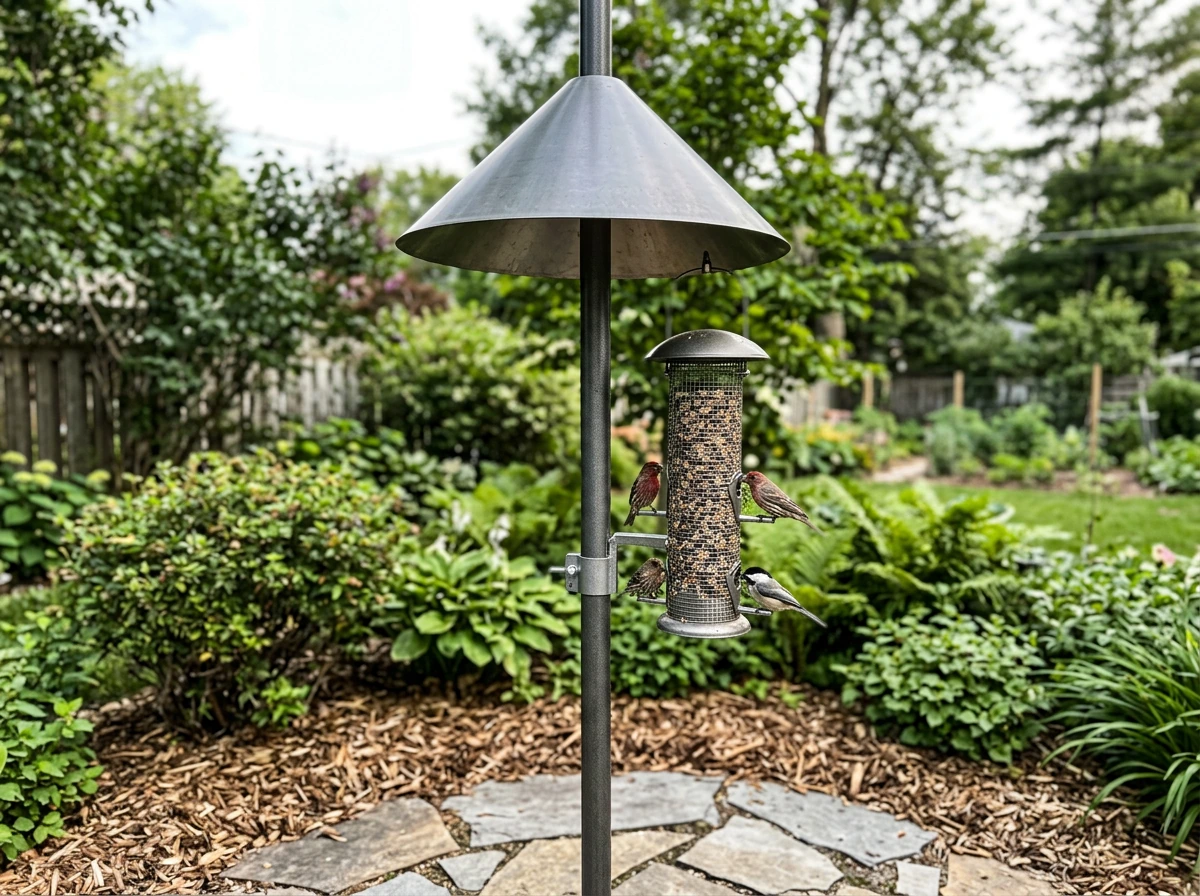
Squirrels are the most persistent feeder pest, and the only approach that reliably works is a physical barrier, not a deterrent. Audubon's recommendation is straightforward: mount your feeder on a smooth metal pole with a baffle, and position the feeder so that squirrels can't jump to it from any nearby branch, fence, or deck rail.
audubon recommended bird feeders The distance rule from University of Nebraska Extension puts it at 8 feet of clearance from the nearest branch, fence, or deck rail. That sounds like a lot, but squirrels are strong jumpers and will consistently beat anything shorter. The baffle needs to be at least 17 inches in diameter and positioned about 4 to 5 feet up the pole so squirrels can't climb past it.
Metal feeding ports (instead of plastic) also matter because squirrels chew through plastic ports in a matter of days. bird feeder alternatives
Rats
Rats are attracted to fallen seed on the ground more than to the feeder itself. If you're seeing rats, the fix starts with what's underneath the feeder. Switch to hulled sunflower or shelled peanuts so there are no shells dropping. Use a seed catcher tray under the feeder and clean it daily. Don't use platform feeders at ground level if rats are a problem. Also check that you're not leaving seed out overnight, as that's peak rat foraging time.
Unwanted bird species
European Starlings and House Sparrows are the two species most backyard birders want to discourage. Starlings are aggressive, travel in large flocks, and can strip a suet cage in hours. Minnesota DNR notes that starlings struggle to feed in certain awkward orientations, which is why upside-down suet feeders (where the bird has to cling to the bottom and reach up to feed) are effective at filtering them out while still serving woodpeckers and nuthatches. For sparrows, switching from millet-heavy mixes to straight safflower or black-oil sunflower reduces their interest significantly. Nyjer tube feeders with small ports also exclude them naturally because their beaks are too big for the ports.
A note on feeder hygiene: moldy or wet seed is a health risk for birds and a magnet for pests. Clean your feeder every two weeks at minimum, and more often in hot or humid weather. The routine is simple: empty it, scrub it with a 10% bleach solution or hot soapy water, rinse thoroughly, and let it dry completely before refilling. Minnesota DNR specifically flags mold and bacteria risk from wet accumulated seed hulls, and that buildup also makes feeders smell like food to rats and raccoons. A clean feeder is a safer feeder for everyone involved.
Winter vs summer setup and seasonal expectations
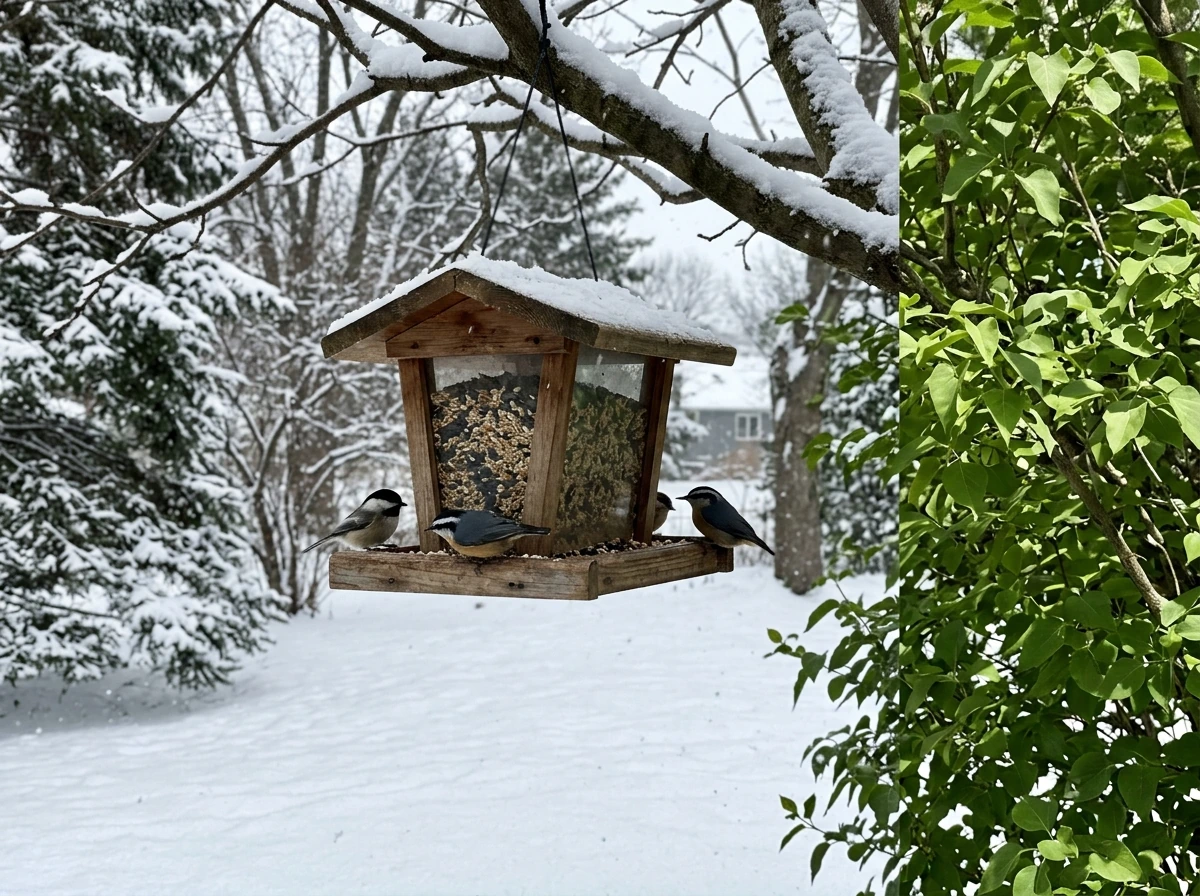
Winter is when feeders matter most. Natural food sources are at their lowest, temperatures are at their most demanding, and birds like chickadees, nuthatches, and woodpeckers are burning through calories just staying warm. Suet becomes essential in winter, not optional. Black-oil sunflower fills the energy gap for seed-eaters. Audubon emphasizes this directly: high-fat foods like suet are critical winter offerings because birds are relying on feeders to bridge gaps that natural food can't fill between November and March.
In winter you'll also see species that don't show up the rest of the year. Dark-eyed Juncos are a classic example: they breed in northern forests and Canada, then move south to backyards across most of the U.S. for winter. White-throated Sparrows, American Tree Sparrows, and Fox Sparrows follow a similar pattern depending on your region. If you want to track what's normal for your area and season, Project FeederWatch's data is a useful benchmark.
Spring brings a different dynamic. Resident birds shift focus toward nesting, which means their protein needs go up and they may feed less consistently at your feeder as they forage for insects and build nests. You'll also see migrants passing through in April and May, potentially including warblers, orioles, and Rose-breasted Grosbeaks, which can be attracted with specific offerings like orange halves and grape jelly for orioles or hulled sunflower for grosbeaks.
Summer feeding is a genuine topic of debate. Some state wildlife agencies, including Connecticut DEEP, advise against feeding during spring, summer, and fall due to concerns about disease transmission and habituation. Others recommend continuing with clean feeders and fresh seed. If you do feed in summer, switch to smaller quantities and clean the feeder more frequently since heat accelerates mold growth. Pull suet in hot weather or switch to no-melt suet formulas, as standard beef suet goes rancid quickly above 70 degrees.
For feeder hardware, winter weather durability should be a real factor in what you buy. Plastic feeders crack in freeze-thaw cycles, and cheap metal ports rust after a wet winter. Look for feeders with metal or UV-stabilized polycarbonate components, sealed roof edges that shed snow and ice, and wide drainage holes that don't trap standing water in the seed tray. If you're evaluating specific models, our coverage of the best overall bird feeders and best suet feeders goes into those specs in detail.
Your practical next steps
You don't need a complex setup to attract and keep the most common feeder birds. If you want up-to-date ideas on feeder setups and what birds are showing up, check bird feeders news from reliable local and national birding outlets. Start with these steps, in this order.
- Put up a hopper or tube feeder on a pole with a baffle, filled with black-oil sunflower seed. This one move will attract cardinals, chickadees, finches, titmice, and nuthatches.
- Add a suet cage within a few feet of the main feeder. Use a plain or seed-mixed suet cake and hang it at roughly the same height. Woodpeckers, nuthatches, and chickadees will find it fast.
- Position everything within 10 feet of shrubs or trees for cover, and either within 3 feet or more than 30 feet from any window.
- If you want goldfinches and siskins, add a dedicated nyjer tube feeder. Refresh the nyjer every two to three weeks.
- Set a cleaning reminder every two weeks. Empty, scrub, rinse, dry completely, then refill.
- In winter, double up on suet and make sure your feeders are weatherproofed. In summer, reduce quantities, increase cleaning frequency, and swap to no-melt suet if temperatures are above 70 degrees.
- If squirrels are raiding the feeder, verify that it's at least 8 feet from any jump-off point and that the baffle is in place and properly sized. Metal ports are non-negotiable if squirrels are persistent.
That's really the whole system. Once it's running, the birds train you more than you train them. You'll start noticing which species show up at what time of day, which seeds disappear fastest, and which feeder positions get the most traffic. That feedback loop is what makes backyard bird feeding genuinely addictive, and it starts working faster than most people expect.
FAQ
How long should I wait before assuming a feeder setup is not working?
Even with the right seed and feeder style, most common bird feeder birds take time to find a new food source. Plan on 1 to 2 weeks of consistent offerings before making changes, then troubleshoot one variable at a time (seed type, feeder location, and cleanliness). If you get zero traffic after two weeks, try moving the feeder closer to cover and confirm the seed is fresh.
What’s the fastest way to stop birds from ignoring the feeder?
Check two common culprits: seed freshness and feeder cleanliness. Nyjer is especially time-sensitive and often goes stale quickly, but sunflower can also become stale or moldy if it gets wet. Replace seed, scrub the feeder, and keep it dry, then observe for 2 to 3 days to see if activity returns.
Should I use mixed seed blends, or stick to one seed for the most common feeder birds?
For the broadest mix of common bird feeder birds, black-oil sunflower is usually the best single-anchor choice. Seed blends can work, but they often get heavily skewed toward what’s easiest for dominant species to crack or consume. If you want more balanced variety, use sunflower as the base and add a separate finch feeder for nyjer, rather than mixing everything into one hopper.
Why do some birds show up while others disappear, even when I refill the feeder?
Feeder crowding and competition can selectively exclude smaller birds, especially when jays or sparrows monopolize perches or trays. Spacing multiple feeders 5 to 10 feet apart helps reduce territorial pressure, and using dedicated feeder types (a baffle-hopper for general birds, a separate finch tube for nyjer) can also prevent one species from dominating the whole setup.
My feeder gets lots of birds but they don’t bring their “usual” ones. What should I adjust first?
Start with seed and feeder placement. If you’re trying to attract suet users like downy woodpeckers or nuthatches, ensure you have suet available near a suitable perch zone, not only sunflower. Then confirm the feeder is near protective cover (about 10 feet to shrubs or trees) while still having open sightlines so birds feel safe approaching.
How do I feed during extreme weather without harming birds?
In heat and humidity, switch to smaller, more frequent refills and consider removing or limiting suet if you see softening, sour smells, or fast-rancid behavior. In snow or freezing rain, choose hardware designed for winter (sealed roof edges and drainage holes) so seed and suet do not pool. Pooled food spoils faster and increases mold risk.
What seed should I use if squirrels are dominating my feeders?
Hardware barriers are the main fix, but seed choice can reduce pressure on the same feeder. Safflower often draws fewer squirrels than sunflower, and using metal feeding ports helps because squirrels chew through plastic quickly. If you still see squirrels, re-check baffle height and clearance from nearby branches, rails, or fences.
Do I need to take feeders down at night?
Usually, no, but you should manage waste and pest attraction. If rats are an issue, remove the easy “food source” on the ground by using hulled seed, a seed catcher tray, and clearing fallen hulls. Many people also use timed attention during heavy pest periods, but the more reliable approach is keeping the area under the feeder clean daily.
How often should I clean my feeder, and what’s the safest routine?
Clean at least every two weeks, and more often in hot or humid weather when mold and wet hull buildup happen quickly. Empty the feeder, scrub with a hot soapy wash or a diluted bleach solution, rinse well, and let it fully dry before refilling. Also clean any seed catcher tray, not just the feeder body, because hulls and debris attract pests.
Is it safe to put feeders close to windows, and what’s the rule of thumb?
Yes, but distance matters. Place feeders either very close (within about 3 feet) so birds cannot build dangerous speed, or farther away (more than 30 feet) so they can adjust in flight. If you’re tempted by the “in-between” 15 to 30 foot range, that spacing is associated with higher strike risk.
What feeder height works best across different common bird feeder birds?
A practical starting point is 5 to 6 feet for many perching species, then adjust for ground-feeders. For juncos and mourning doves, a lower platform feeder at about 2 to 3 feet can help, or you can scatter some seed on the ground under a hanging setup. If you’re running multiple feeder types, make sure the positions do not put smaller birds in a single crowded access point.
Should I stop feeding in summer to prevent disease and habituation?
Policies vary by location, but if you do feed during warmer months, reduce risk by using smaller quantities, cleaning more frequently, and avoiding rancid or moldy foods. Suet is a special case, standard suet can go rancid quickly above about 70 degrees, so consider no-melt suet formulas or temporarily switch away from suet in peak heat.
How do I deter European starlings without chasing away woodpeckers and nuthatches?
An effective approach is using feeder designs that change access, not just adding more food. Upside-down suet feeders can make it harder for starlings that prefer different feeding positions, while still letting woodpeckers and nuthatches reach the suet. If you’re using a variety of feeders, dedicate the suet setup to woodpecker-friendly styles rather than leaving suet on a simple open platform.
Why are my finch-attracting feeders failing, even though I use nyjer?
Nyjer feeders often fail due to stale seed or incorrect hardware. Nyjer goes rancid and clumpy faster than sunflower, so replace it every 2 to 3 weeks and store it cool and dry. Also use a dedicated finch feeder with small ports, because larger beaks cannot access it, which improves results and reduces competition.
Next Articles
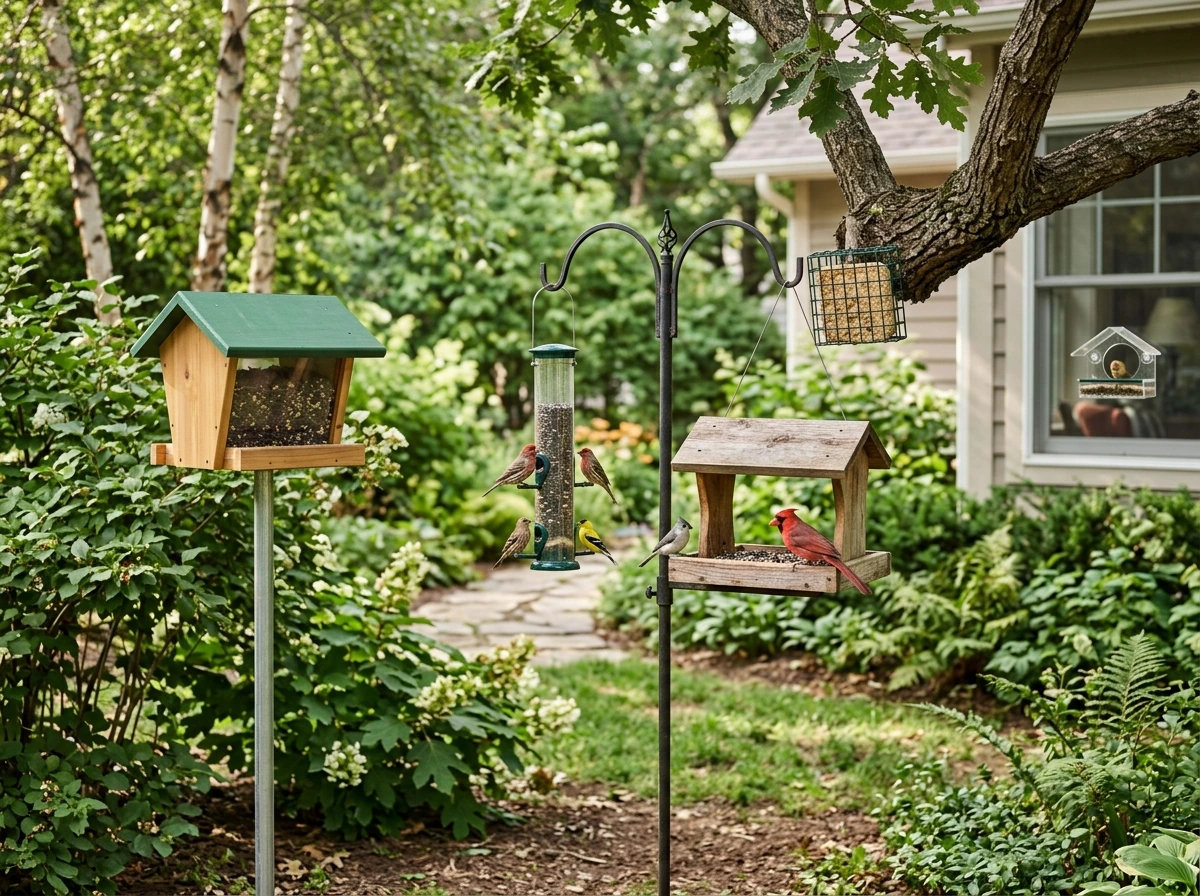
Bird Feeder Alternatives: Pick the Right Option for Any Backyard
Find the best bird feeder alternatives for your yard, pests, weather, and target birds with clear placement and tradeoff
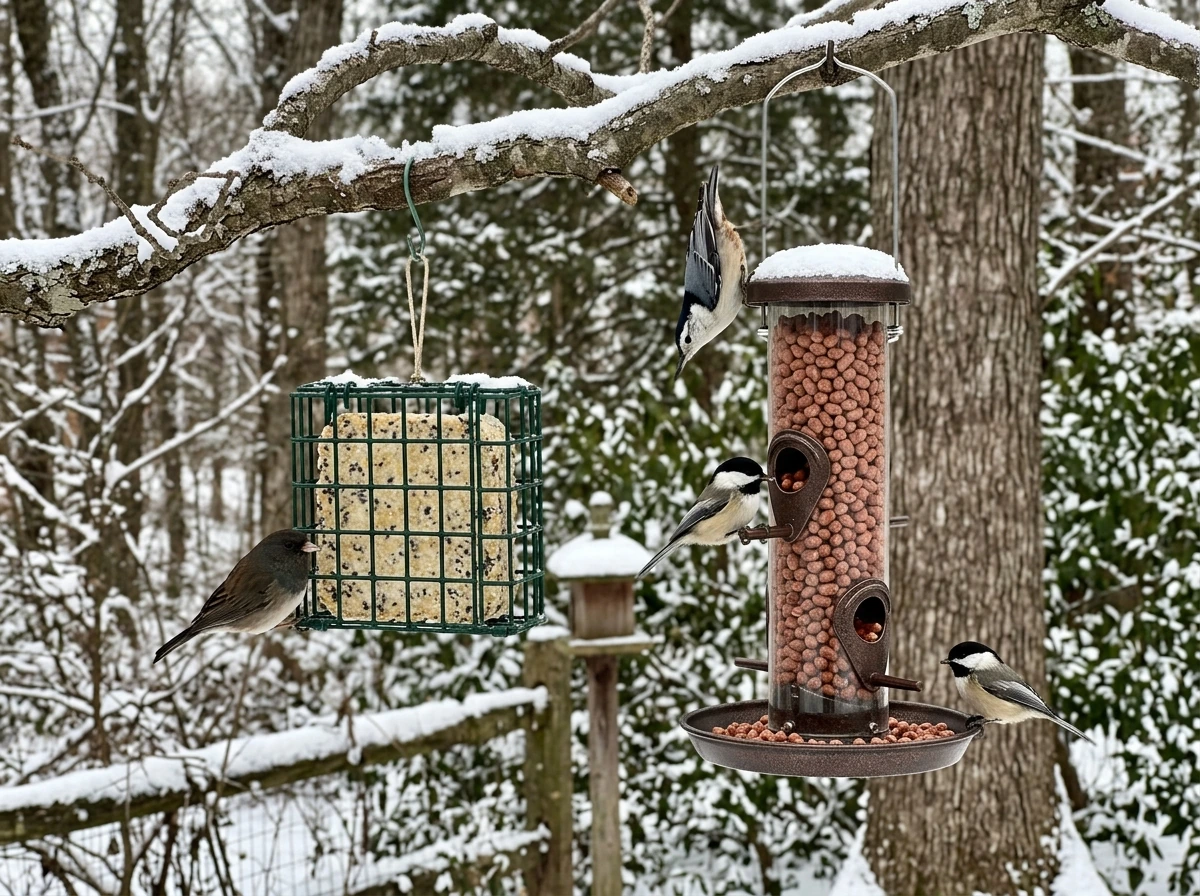
Best Suet Bird Feeders: Buying Guide for Pellets and Chunks
Choose the best suet bird feeders for pellets or chunks, with weatherproofing, drainage, safety, and placement tips.
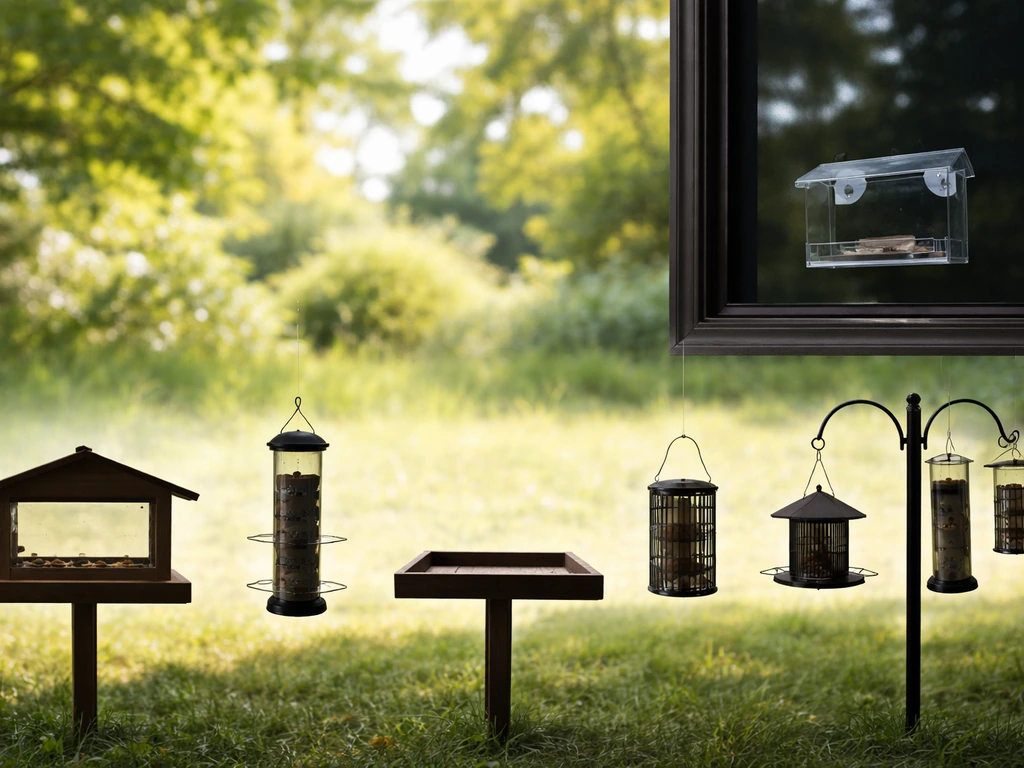
What Does a Bird Feeder Look Like? Types and Visual Cues
See common bird feeder silhouettes and visual cues, plus features for choosing and troubleshooting fast.