If your current bird feeder isn't working, you don't need to give up on backyard feeding. You need a different feeder. "Bird feeder alternatives" really just means switching to a feeder style that better matches your target birds, your yard setup, or the specific problem you're trying to solve, whether that's squirrels, rain-soaked seed, birds ignoring what you've got, or a pest issue pushing you to redesign the whole setup. This guide walks you through every major feeder type, which birds each one actually attracts, where to put it, and how to deal with the messy real-world problems like spills, rodents, and winter weather. Project FeederWatch also describes key feeder categories, including tube, hopper, and platform or tray feeders, and how selecting a feeder type supports different bird sizes and feeding behaviors every major feeder type.
Bird Feeder Alternatives: Pick the Right Option for Any Backyard
What counts as an alternative feeder (and when to actually switch)
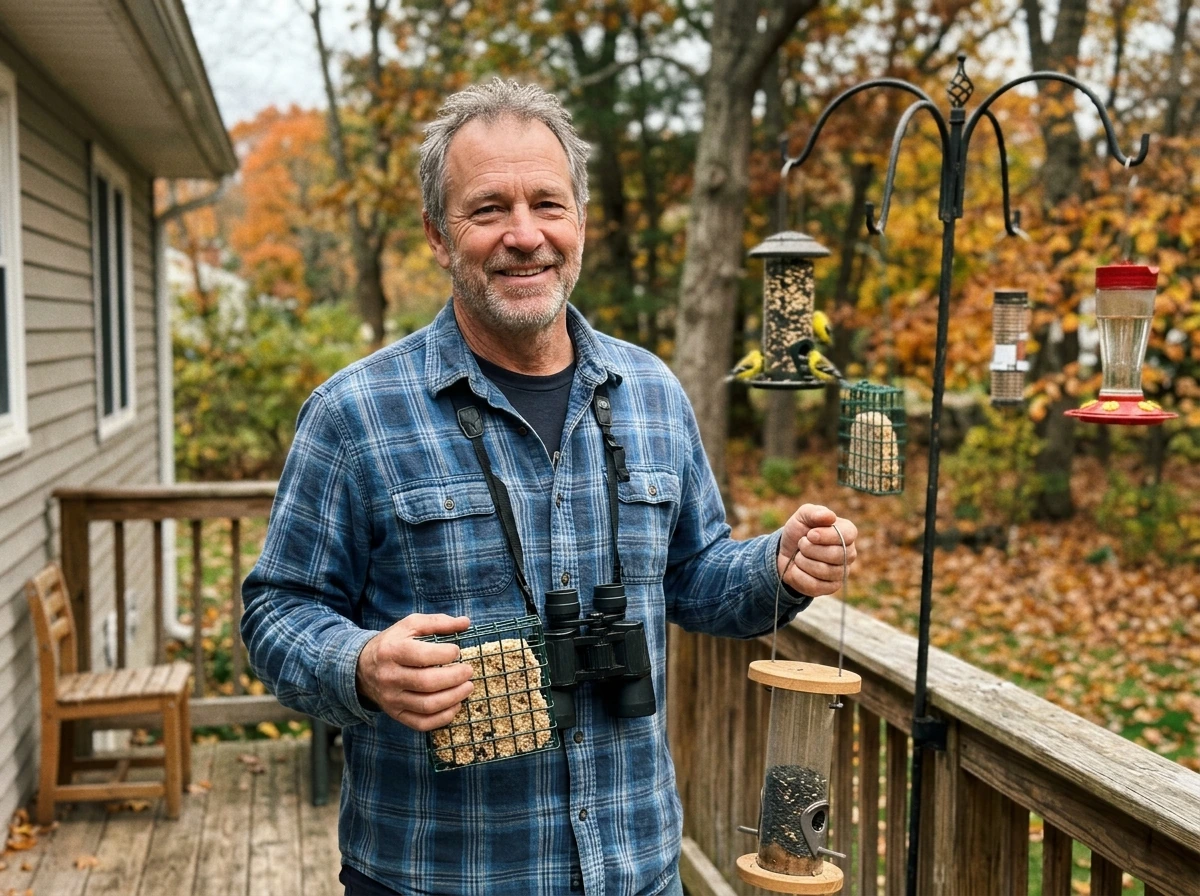
An "alternative feeder" isn't some exotic product. It's any feeder style that's different from what you're already using. If you've got a basic tube feeder and cardinals won't touch it, a hopper or platform feeder is your alternative. If squirrels are destroying a hanging feeder, a pole-mounted setup with a baffle is the alternative. The point is matching feeder design to your specific situation rather than defaulting to whatever's cheapest at the hardware store.
Here are the most common reasons people need to switch feeders, and each one points toward a specific solution covered in this guide:
- Squirrels or rats are raiding the feeder and you can't stop them with your current setup
- Seed keeps getting wet, moldy, or compacted (hopper or tube with poor drainage)
- The birds you want won't use the feeder you have (wrong design for their feeding behavior)
- Waste seed on the ground is attracting rodents or creating a mess
- You're in a small space (balcony, apartment window) and need a compact format
- You want to attract a specific species you're not currently seeing
- Your feeder isn't surviving winter (freezing ports, cracking plastic, mold in wet seed)
Most of these problems have a direct fix tied to feeder type. The sections below map each issue to a practical solution.
Match the feeder to the bird you actually want
This is where most beginners go wrong. They buy one feeder, fill it with mixed seed, and wonder why only house sparrows show up. Different species have different feeding behaviors: some cling, some prefer a flat surface, some need to face downward to feel safe. Here's how to match feeder type to the birds you're trying to attract.
| Target Bird(s) | Best Feeder Alternative | Best Seed/Food | Notes |
|---|---|---|---|
| Northern Cardinals | Hopper or wide platform feeder | Safflower, sunflower | Cardinals need a wide perch; tube ports are too narrow for comfort |
| American Goldfinches | Tube feeder with small ports | Nyjer (thistle) | Goldfinches cling and feed upside down; small ports reduce waste |
| Chickadees | Tube feeder or hopper | Black-oil sunflower | Adaptable birds that visit almost any feeder style |
| Blue Jays | Hopper or platform feeder | Sunflower, cracked corn, peanuts | Jays are large and dominant; they do best with open, generous feeders |
| Woodpeckers | Suet cage feeder | Suet cakes | Woodpeckers cling vertically; suet feeders are the clearest alternative to platform setups |
| Bluebirds | Platform feeder or mealworm dish | Live/dried mealworms | Bluebirds rarely touch seed; a low platform with mealworms is the go-to |
| Mourning Doves | Ground-level platform or tray feeder | Millet, cracked corn, sunflower chips | Doves are ground feeders; elevate the tray just slightly to reduce rodent access |
| Orioles | Oriole-specific nectar or jelly feeder | Orange halves, grape jelly, nectar | Orioles don't use standard feeders; you need a dedicated oriole setup |
| Hummingbirds | Nectar feeder (tube reservoir style) | Sugar water (4:1 water:sugar) | No standard feeder works; hummingbirds require a purpose-built nectar feeder |
| Juncos, Sparrows, Towhees | Low platform or scattered ground feeding area | White millet | These birds prefer the ground; a covered low tray works better than hanging feeders |
| Nuthatches, Titmice | Suet cage or tube feeder | Suet, sunflower seeds | Both species visit suet feeders reliably alongside woodpeckers |
If you're attracting woodpeckers in particular, link to the best suet bird feeders are the single clearest feeder-type switch you can make. best suet bird feeders Audubon consistently lists woodpeckers as the primary visitors to suet setups, alongside nuthatches, chickadees, and titmice. A suet cage is also one of the cheapest and lowest-maintenance alternatives you can add to an existing feeding station.
A plain-English breakdown of every feeder type
If you're not sure which feeder category you currently have (or which one to switch to), here's a straightforward description of how each type actually works and what it's good for.
Hopper feeders
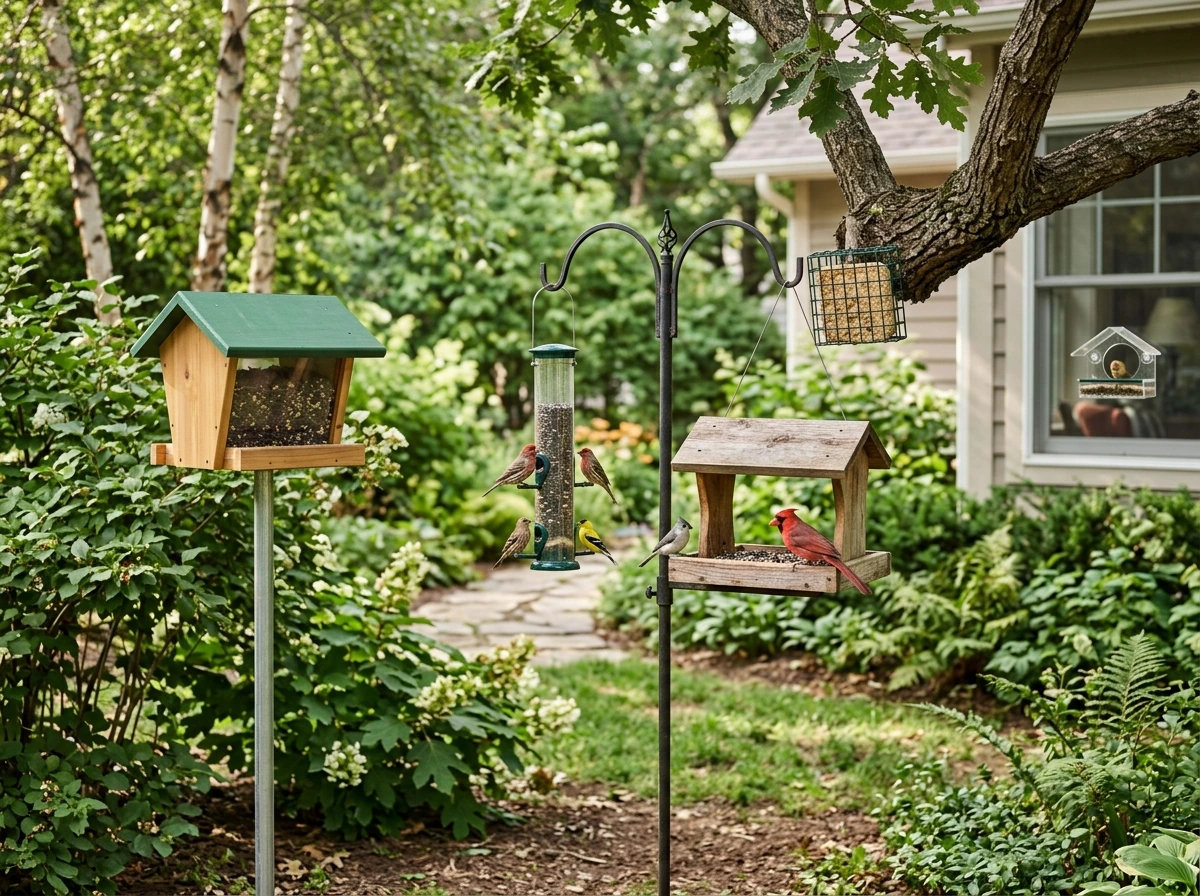
A hopper feeder has a central seed reservoir (the "hopper") with a roof over it and a tray or ledge at the bottom where birds perch and feed. The roof keeps seed dry, which is the main practical advantage. Hoppers hold a lot of seed, look attractive in a yard, and attract a wide range of species including cardinals and jays that can't comfortably use narrow tube feeders. Audubon notes that hopper feeders attract everything tube feeders do, plus larger birds. The tradeoff: they can collect moisture at the bottom tray and seed can clump if not cleaned regularly.
Tube feeders
Tube feeders are hollow cylinders with multiple small ports and perches along the side. They're designed for clinging birds like goldfinches, chickadees, and siskins. If you switch to a tube feeder with very small ports and fill it with nyjer seed, you'll dramatically increase goldfinch visits while filtering out larger, bully birds. The downside is that wet seed can compact inside the cylinder and mold if ports don't drain well. Look for tubes with drainage holes at the base or removable bases for cleaning.
Platform and tray feeders
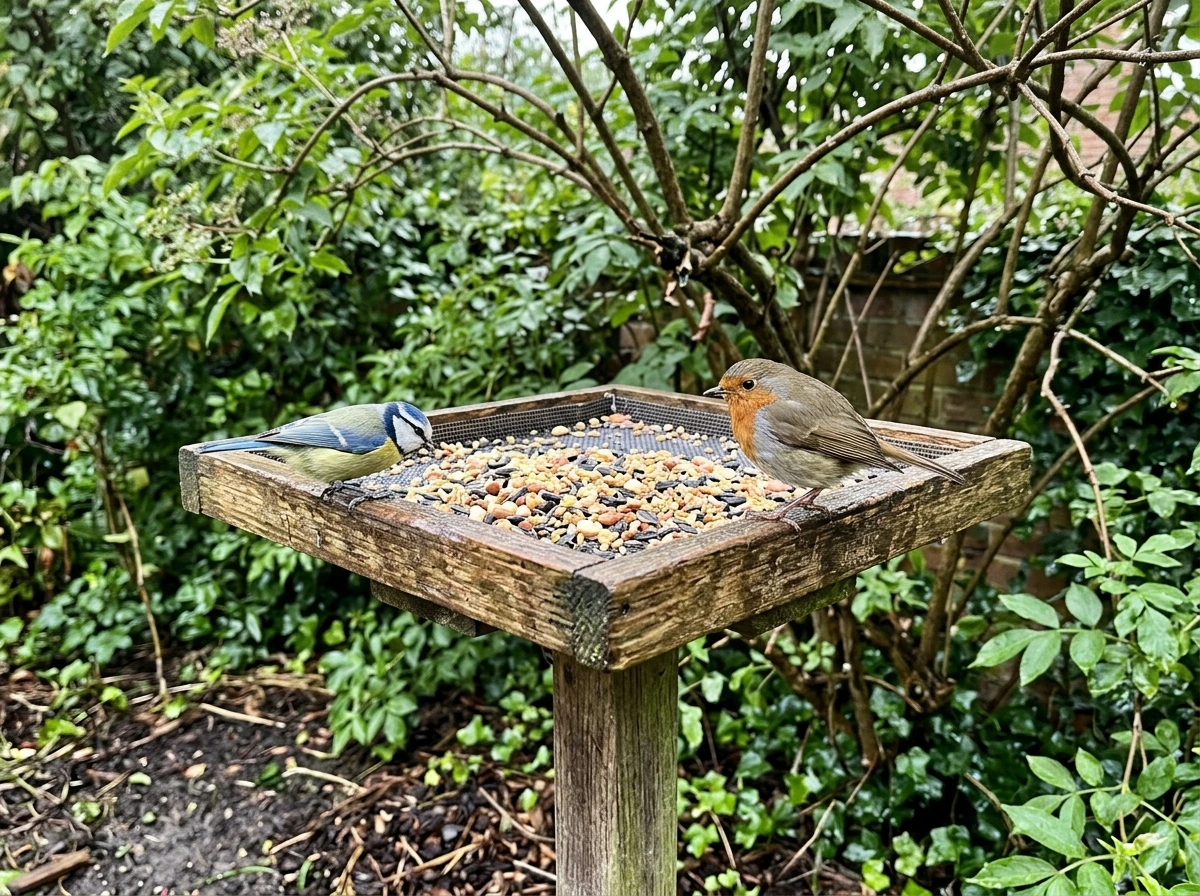
A platform feeder is exactly what it sounds like: a flat, raised surface where food is spread out. No walls, no ports, just open access. This is the most versatile feeder type for species diversity because almost any bird can use it. Low platforms close to the ground attract doves, juncos, towhees, and sparrows. Elevated platforms attract cardinals, jays, and larger birds. The problem with open platforms is exposure to weather, seed waste, and contamination. If you use one, choose a platform with mesh or screen bottom so water drains through rather than pooling.
Suet cage feeders
Suet feeders hold compressed fat-and-seed cakes inside a wire cage. Birds cling to the outside of the cage and peck through. These feeders are particularly effective in fall and winter when high-fat food helps birds maintain energy in cold weather. Woodpeckers, nuthatches, and chickadees are among the common bird feeder birds, but you'll also see titmice and occasionally bluebirds. The cages themselves are cheap and simple. The main maintenance task is replacing suet cakes before they go rancid, which happens faster in hot weather (suet can melt and become a mess in summer). bird feeders news If you want more bird-feeding updates and seasonal tips beyond just suet cages, check bird feeders news.
Window feeders
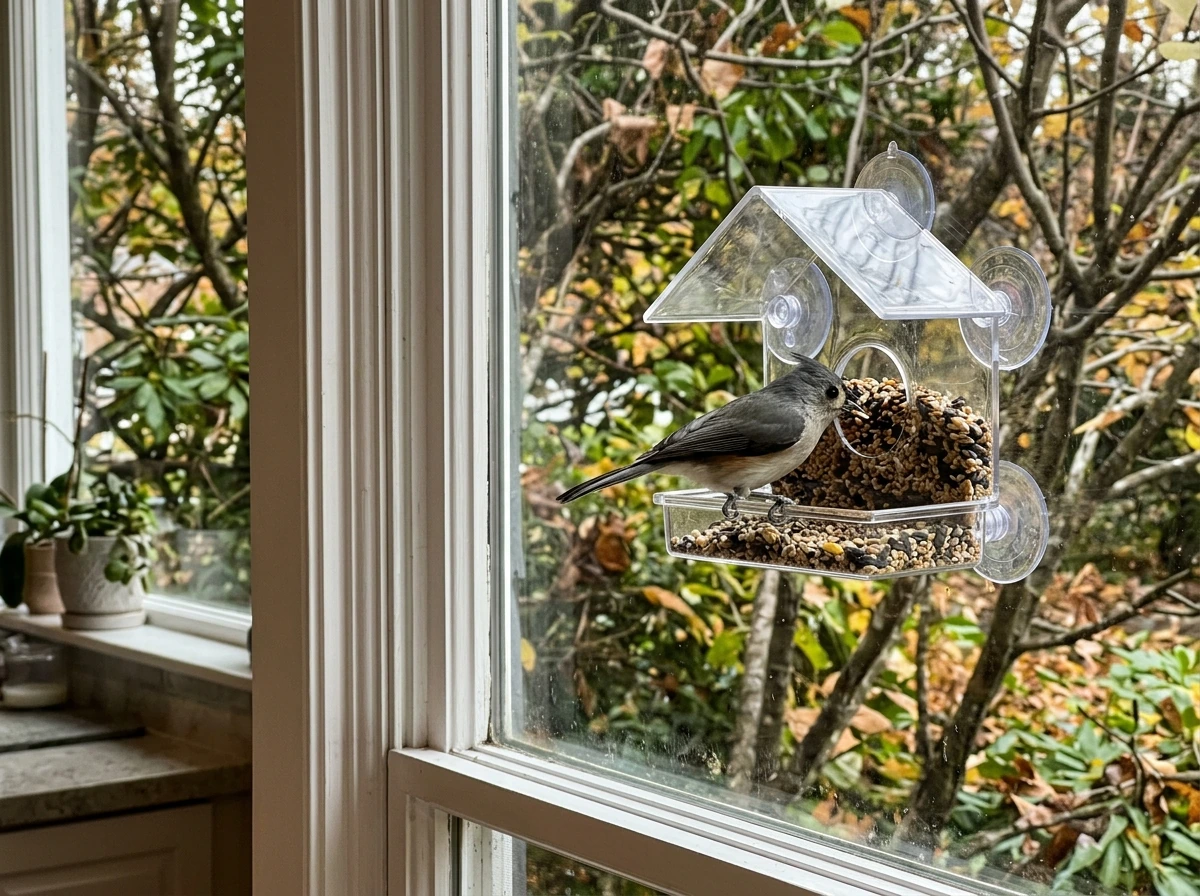
Window feeders attach directly to your window glass with suction cups. They're the best option for small spaces, apartments, or anyone who wants a close-up view. The key placement rule: place them within 3 feet of the window or more than 30 feet away. The reasoning is collision safety. Birds flying from a feeder less than 3 feet from glass don't have enough speed to injure themselves on impact. If the feeder is 10 to 30 feet out, birds can build up enough speed to hit the window hard. This is a well-documented finding from Cornell Lab, Audubon, and the U.S. Fish & Wildlife Service, and it's worth taking seriously.
Pole-mounted feeders
A pole-mounted feeder system isn't a feeder type on its own, but it's the most important setup change for pest control. Any feeder type can be mounted on a smooth metal pole with a baffle (a dome or cylinder that blocks climbing animals). This is the closest thing to a real squirrel-deterrent solution that actually works in practice, and it's covered in detail in the pest-proofing section below.
Where to put your feeder in different backyard environments
Feeder placement matters as much as feeder type. You can have the perfect hopper feeder for cardinals and get almost no visits if it's in the wrong spot. The general principle from Cornell Lab and Audubon: place feeders near natural cover (trees, shrubs, brush piles) so birds have a safe place to wait between feeding trips. Birds are prey animals. They won't consistently visit an exposed feeder in the middle of an open yard with no nearby shelter.
Small yard or suburban lot
Place the pole 10 to 12 feet from the nearest shrub or tree line so birds can hop between cover and the feeder without feeling exposed, but far enough from branches that squirrels can't leap onto it laterally. Add a low platform feeder near ground-cover plantings if you want to attract doves and sparrows. bird feeder best Place the pole 10 to 12 feet from the nearest shrub or tree line so birds can hop between cover and the feeder without feeling exposed, but far enough from branches that squirrels can't leap onto the feeder. Add a low platform feeder near ground-cover plantings if you want to attract doves and sparrows.
Apartment, balcony, or small patio
Window feeders and small hanging tube feeders are your main options here. Mount a window feeder within 3 feet of the glass for both safety and viewing. If you have a railing, a clamp-mounted hopper or platform feeder can work, but skip the suet in warmer months to avoid mess. Keep portions small so you're refilling more frequently, which means less seed sitting out long enough to go bad.
Large yard or rural property
With more space, you can run multiple dedicated feeding stations for different species. A hopper or tube feeder near the tree line for songbirds, a suet cage hung from a tree at eye level for woodpeckers, and a low platform tray in an open spot with some nearby brush for ground feeders. Spreading stations out also reduces competition and dominance issues where larger birds crowd out smaller ones.
Wooded or heavily shaded property
Suet feeders and tube feeders with black-oil sunflower seed do best in wooded settings, because the birds those feeders attract (woodpeckers, nuthatches, chickadees) are forest species. Platform feeders can get overlooked by ground-feeding species in heavily wooded yards unless you clear a small open patch near the feeder.
Dealing with squirrels, rats, and seed waste
This is the section most people actually need when they search for feeder alternatives, because squirrels and rats are the number one reason people abandon a feeder setup. Let's be direct: no feeder is truly squirrel-proof. Audubon says this explicitly. What you can do is make your setup significantly harder to raid through a combination of feeder design, placement, and hardware.
The pole-and-baffle system
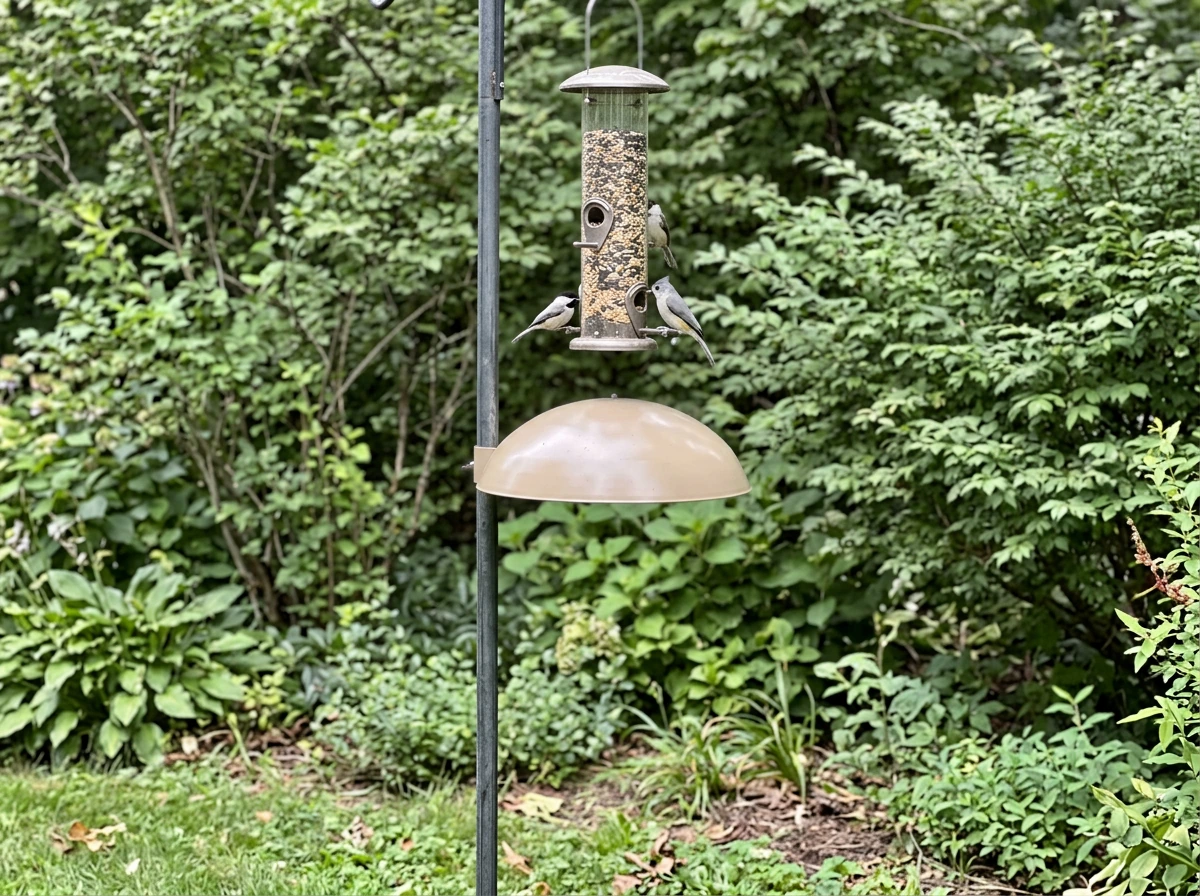
The most effective approach is a smooth metal pole with a squirrel baffle (a dome or cylinder barrier) mounted below the feeder. The pole needs to be at least 5 feet tall, and the feeder should be placed far enough from any structure or tree that squirrels can't jump onto it laterally. Audubon recommends at least 10 feet from any jumping-off point. The National Wildlife Federation notes that once squirrels are blocked from the main feeder, many will shift to ground feeding below the feeder instead, which is a reasonable tradeoff for most birders.
Feeder design choices for squirrel resistance
Weight-sensitive feeder mechanisms (where a squirrel's heavier weight triggers a closing mechanism over the seed ports) work reasonably well as a supplemental deterrent, especially for tube and hopper designs. They won't replace the pole-and-baffle setup, but they add a layer of protection if squirrels do reach the feeder. Caged feeders, where the seed is surrounded by a wire cage with openings sized for small birds only, are another solid option for keeping large birds and squirrels out while letting chickadees and finches through.
Reducing spill and ground waste to deter rats
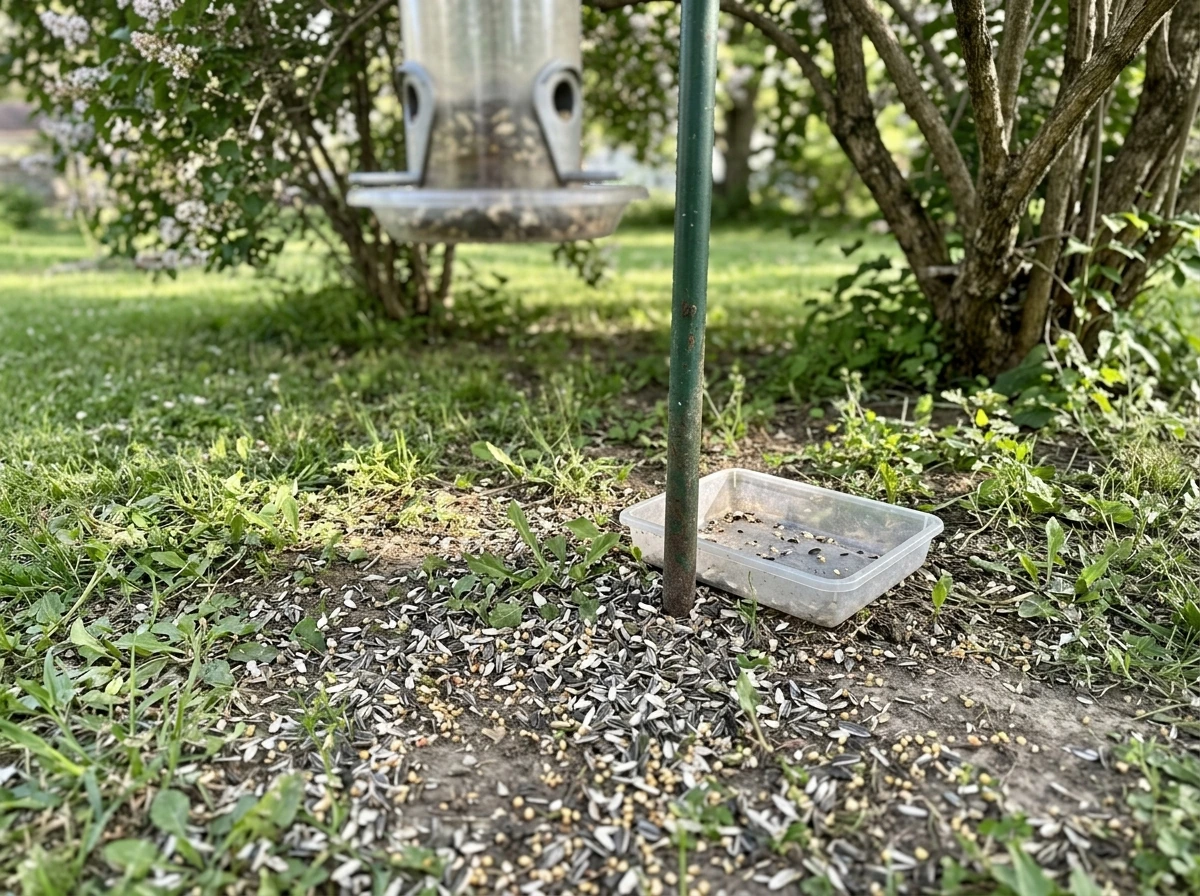
Rats are attracted to spilled seed and hulls on the ground, not typically to the feeder itself. The U.S. Fish & Wildlife Service advises against letting food accumulate at ground level. Practical fixes:
- Switch to no-waste seed mixes or shelled seed (no shells to drop) to reduce ground litter
- Add a seed tray catcher beneath the feeder to collect spills and remove it regularly
- Rake up and dispose of hulls and uneaten seed at least once a week
- Avoid filling feeders more than you expect birds to eat in 2 to 3 days, especially in warm weather
- Consider a platform feeder with a mesh bottom so rain can drain and seed doesn't mold into a pile rodents can hide under
Cleaning matters here too. Audubon's disease-prevention guidance and Cornell's recommendations both emphasize removing wet, moldy, or old seed promptly. A 9:1 water-to-bleach solution for scrubbing feeders, rinsed and fully dried before refilling, is the standard recommendation. This isn't just a health measure for birds. Removing moldy hulls and wet seed from the ground below your feeder also directly reduces what's attracting rodents in the first place.
Weatherproofing your feeder setup through winter
Winter is when feeder design really matters. Seed gets wet and freezes. Ports clog. Plastic cracks in hard freezes. Mold grows fast in a mix of moisture and cold. The feeders that hold up best in winter share a few consistent characteristics: a proper roof or cover, drainage at the base, and materials that don't trap moisture.
Best winter feeder types
Hopper feeders with a solid roof are the best all-around winter option. The roof keeps snow and rain off the seed reservoir, and the wider tray design means you can still get birds feeding even when temperatures drop. Audubon's winter feeding guide specifically calls out hopper feeders for their ability to keep seed dry and attract the larger birds (cardinals, jays) that stay through winter in most of North America.
Suet feeders are equally important in winter. Audubon’s winter bird feeding guide similarly highlights blank" rel="noopener noreferrer">suet cage feeders as a key cold-weather option and describes which birds commonly use suet. Suet provides high-fat calories that help woodpeckers, nuthatches, and chickadees maintain body heat. Unlike seed, suet doesn't freeze into an unusable block at typical winter temperatures. The Minnesota DNR's winter bird feeding guidance specifically lists suet cage feeders as a core winter setup alongside covered platform and hopper-style feeders.
What to watch for (and fix) in winter
- Tube feeder ports freezing shut: tap gently to dislodge ice, or switch to a hopper for winter months
- Seed clumping in wet hoppers: check the base drainage, remove clumped seed immediately, and reduce fill quantity during heavy rain or snow periods
- Suet going rancid in a warm spell: swap cakes more frequently and buy smaller cakes if a warm front is coming
- Plastic cracking in hard freezes: replace cracked plastic feeders with metal or UV-stabilized resin models before next winter
- Mold in the seed reservoir: clean with the bleach-water solution, dry completely before refilling, and never mix new seed on top of old wet seed
Audubon recommends cleaning feeders at a minimum every other week, but in wet winter conditions, once a week is more practical. The key is drying the feeder completely before refilling, which is the step most people skip and the one that causes the most mold problems.
Winter seed choices by feeder type
| Feeder Type | Best Winter Seed/Food | Why It Works in Winter |
|---|---|---|
| Hopper feeder | Black-oil sunflower, safflower | High fat content, stays dry under roof, attracts cardinals and jays |
| Tube feeder | Nyjer, black-oil sunflower | Small ports reduce waste, finches and chickadees active all winter |
| Suet cage | High-fat suet cakes | Doesn't freeze solid, critical for woodpeckers and nuthatches in cold |
| Platform/tray (covered) | White millet, cracked corn, sunflower chips | Ground-feeding winter birds (juncos, sparrows) stay active |
| Window feeder | Black-oil sunflower, safflower | Easy to monitor and refill; keep small and top off frequently |
Quick troubleshooting: fix the problem today
If you're trying to solve a specific problem right now, here's the fastest path to a fix.
Birds aren't using your feeder at all
- Check that the seed is fresh and hasn't clumped or molded. Birds won't eat old or wet seed.
- Move the feeder closer to cover (within 10 feet of a shrub or tree line) so birds feel safe approaching.
- Try a different seed. Black-oil sunflower attracts more species than anything else and is the safest default if you're unsure.
- Wait 1 to 2 weeks after any setup change before concluding it doesn't work. It takes time for local birds to discover a new feeder.
- Add a birdbath nearby. Water is a powerful draw and often gets birds comfortable with a new area faster than food alone.
Squirrels are taking over
- Move the feeder to a smooth metal pole with a baffle if it's currently hanging from a tree or structure.
- Make sure the pole is at least 10 feet from any branch, fence, or surface squirrels can jump from.
- Consider a weight-activated feeder as a backup if pole-mounting isn't possible in your space.
- Accept that some squirrels will feed on the ground below and remove that seed regularly to prevent rodent attraction.
Seed is getting wet and moldy
- Switch from an open platform or poorly-roofed feeder to a hopper with a solid roof.
- Reduce the amount of seed you add at each fill so seed turns over before it can sit and absorb moisture.
- Clean the feeder with a 9: 1 water-to-bleach solution, rinse thoroughly, and let it dry completely before refilling.
- Consider no-shell seed mixes that leave less wet debris behind.
You want a specific bird that isn't showing up
- Cardinals not coming: switch to a hopper or wide platform with safflower or sunflower seed
- Woodpeckers absent: add a suet cage feeder, hung from a tree at chest height or higher
- Bluebirds ignoring the feeder: replace or supplement seed with live or dried mealworms on a platform feeder
- Goldfinches not visiting: install a dedicated nyjer tube feeder and give it 2 to 4 weeks
- Orioles or hummingbirds missing: these require completely different feeder types (nectar/jelly feeders), not just a seed change
What to try over the next 1 to 2 seasons
If you're rethinking your whole setup rather than solving one immediate problem, the most useful thing you can do is build a multi-feeder station with one feeder optimized for each feeding behavior: a hopper or tube for clinging and perching songbirds, a suet cage for clinging woodpeckers and nuthatches, and a low platform or tray for ground feeders. That combination, placed near natural cover on a pole with a baffle, covers the widest range of common backyard birds and addresses the most common problems at once. You can refine from there based on what's actually visiting your yard, adding species-specific setups like a nyjer feeder for finches or a nectar feeder for orioles in spring migration.
The core principle is simple: if your current feeder isn't working, the solution almost always comes down to matching feeder design to bird behavior, improving placement relative to cover and pest-proofing, and keeping things clean enough that birds actually want to be there. A single well-placed, well-maintained hopper feeder with fresh black-oil sunflower seed will outperform a fancy neglected feeder every time.
FAQ
Do bird feeder alternatives work better if I use a single seed type instead of mixed seed?
Usually, yes. Mixed seed often encourages the wrong species and increases waste, which can attract pests. Start with one seed type matched to the feeder and target birds, for example black-oil sunflower for many songbirds on a hopper, and only add other seed types after you confirm what visits your yard.
How often should I clean and refill feeder alternatives to prevent mold and rodents?
In warm weather, check at least every 2 to 3 days and remove any wet, clumped, or moldy seed immediately. In cold, wet winters, weekly cleaning and drying before refilling is safer than relying on a long refill schedule, because trapped moisture in trays or tube bases is what leads to freezing and mold.
What’s the safest placement distance for window feeders, and does it change by season?
Use the same collision-safety rule year-round. Put the feeder within 3 feet of the glass for safe slow impacts, or keep it more than 30 feet away to prevent birds from building speed toward the window. If you have multiple feeders, place them so birds cannot “mix” flight paths that funnel toward a window.
If squirrels keep raiding the feeder, should I switch to a caged feeder or still use a baffle pole?
Prefer the baffle pole first, because no feeder is truly squirrel-proof. Caged feeders help with some raiding and can reduce damage, but squirrels often shift to ground feeding under the station once the main access point is blocked. A baffle plus correct pole distance from jump-off points is the most reliable combination.
Are platform feeders a bad choice if my yard gets a lot of rain?
They can become a problem unless water drains through. Choose a platform with mesh or a screen bottom, keep the tray slightly above soggy ground, and avoid overfilling. If the platform sits in a low spot where water pools, switch to a hopper with a solid roof to keep seed dry.
My tube feeder works, but only tiny birds show up. How do I adjust feeder alternatives without changing locations?
First, confirm the tube port size and seed choice. Small-port tubes plus nyjer tend to favor smaller finches, while larger birds may ignore them. If bigger visitors are the goal, move to a hopper or use a tube feeder designed with larger ports, then ensure there is nearby cover for waiting between visits.
Should I stop using suet feeders in warm weather if I’m switching feeder alternatives?
If temperatures are high or the suet cage sits in direct sun, reduce mess risk by switching to a covered feeder style or shorten the time you leave cakes out (swap more frequently). Suet can melt quickly and create a greasy cleanup problem, which also increases odors that can attract other animals.
How can I reduce seed waste and hull buildup under my feeder alternatives?
Choose feeders with waste-management features (drip or seed-catching designs, tube bases that minimize spillage) and use smaller fill amounts so seed does not sit. Also rake up hulls and remove old seed under the feeder, because rodents respond strongly to accumulation at ground level.
What feeder alternative is best for ground-feeding birds if my yard is near trees?
Try a low platform or tray placed near ground-cover plantings, but keep the feeding patch open enough that birds can safely approach. In heavily wooded yards, ground feeders may overlook a platform unless you clear a small open area right where they can land and feed, while still keeping some cover within a quick escape distance.
Can I mix multiple feeder types, or will birds compete and crowd each other?
You can mix, but spread feeding stations out. Run separate dedicated feeders at different spots, especially if larger birds bully smaller ones, and keep each station near appropriate cover for the species using it. The goal is to prevent one dominant feeder from becoming the only “destination.”