Never put milk in a bird feeder. Birds cannot digest dairy properly, milk spoils dangerously fast outdoors, and the residue left behind invites mold, bacteria, and pests. If you already tried it, the feeder needs a thorough clean before you refill it with anything. The good news is that swapping in the right food for the right feeder is straightforward, and your birds will be better off for it.
Milk Can Bird Feeder: Why Dairy Is Unsafe and What to Use Instead
Marcus Hendricks
13 May 2026
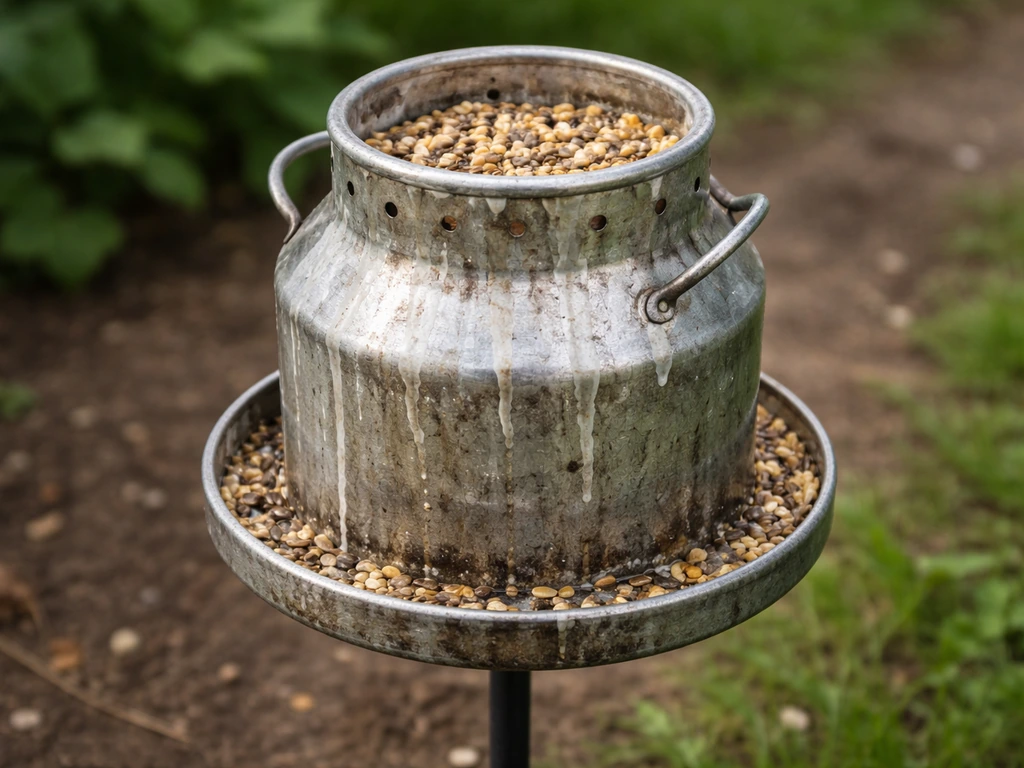
What actually happens if you put milk in a bird feeder
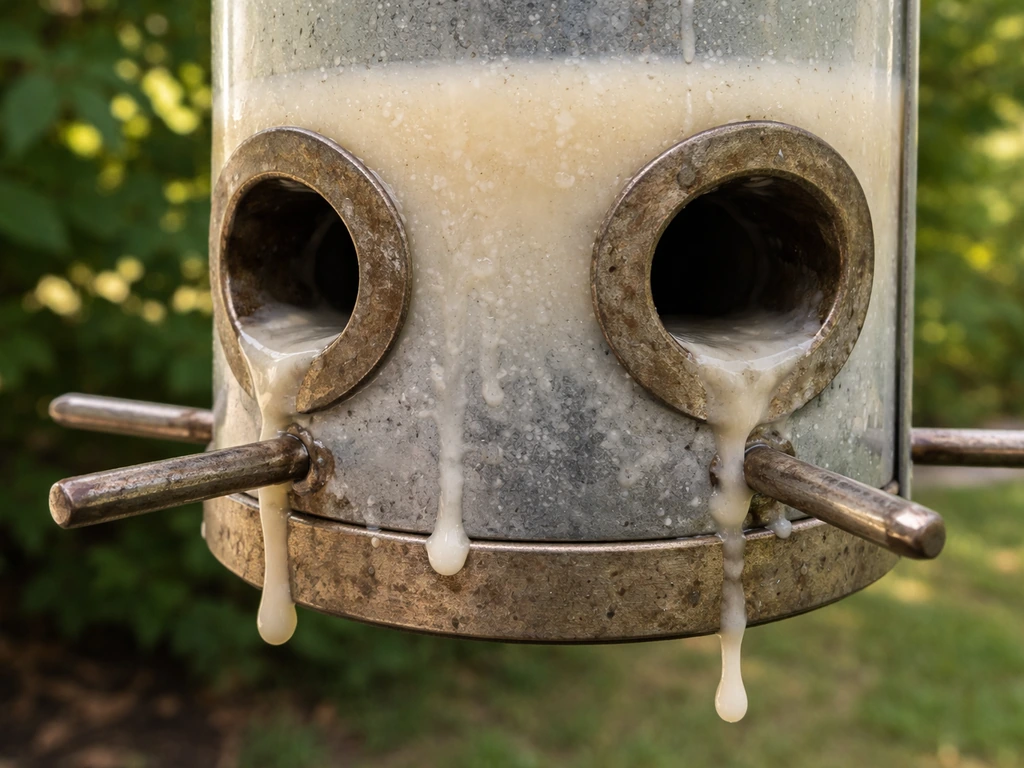
The idea is understandable. You have leftover milk, you want to do something nice for the birds, and a repurposed can or container seems like it should work. But birds and dairy are a genuinely bad combination. Most bird species lack the lactase enzyme activity needed to break down lactose, which means dairy passes through their digestive system without being properly processed. Avian veterinary guidance consistently flags dairy products including milk, cream, cheese, and yogurt as unsafe for wild birds, with diarrhea being one of the most documented outcomes. That might sound minor, but for a small songbird, dehydration from digestive distress can be serious.
Beyond the digestion problem, milk sitting in an outdoor feeder is a contamination event waiting to happen. Even pasteurized milk can carry residual bacteria, and raw milk can contain pathogens like Campylobacter, Salmonella, and Staphylococcus aureus. A real-world case report documented a Campylobacter outbreak traced directly to birds pecking at dairy in England, which shows this isn't a theoretical risk. Once that milk is out in your yard, it becomes a shared surface for every bird, squirrel, and insect that visits.
The real risks to birds: disease, digestion, and residue
The three risks stack on top of each other quickly. First, lactose intolerance-style digestive upset can cause diarrhea and weaken birds that visit your feeder. Second, any milk that sits in warm outdoor conditions becomes a bacterial incubator. The USDA's food safety guidelines put the bacterial danger zone between 40°F and 140°F, and bacteria can double roughly every 20 minutes in that range. On a mild spring or summer day, milk left in a feeder can become genuinely hazardous within hours. Third, even after the liquid evaporates or gets consumed, the residue coats the interior of the feeder and provides a growth medium for mold and additional bacteria. That residue then contaminates whatever you put in the feeder next.
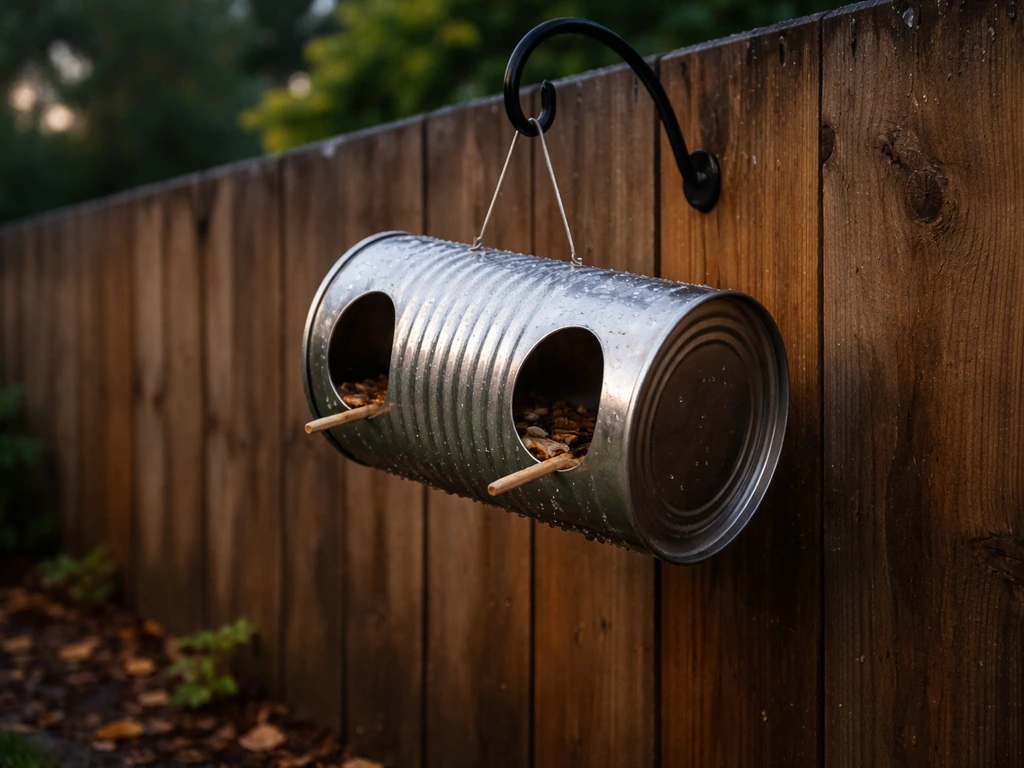
The contamination risk is especially acute for feeders with small openings, crevices, or rough interior surfaces where milk residue can hide and persist. A milk can or tin container repurposed as a feeder, for example, often has seams and inner ridges that are very difficult to rinse clean.
If you're thinking about using a pringle can as a bird feeder, skip it and choose a safer option made for feeding birds A milk can or tin container repurposed as a feeder. Similar issues apply to coffee cans, Pringles-style tubes, or any DIY feeder with a narrow interior. If you were planning to make a feeder from a plastic coffee can, skip it and choose a safer, bird-friendly option instead plastic coffee can bird feeder.
If milk ever went into one of those, assume every interior surface needs decontamination.
What to use instead: safer foods matched to your feeder type
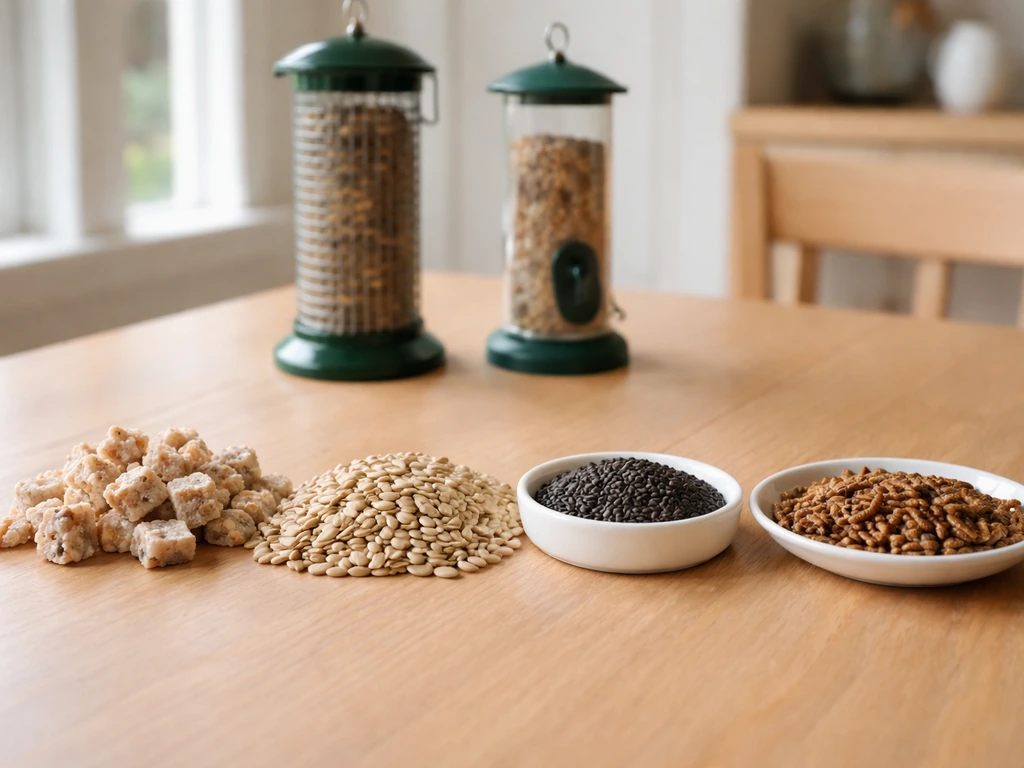
The good news here is that birds don't need dairy and won't miss it. There are proven foods for almost every species you're likely to attract, and matching the right food to the right feeder is the single best upgrade you can make. If you are thinking about making a plastic coffee can bird feeder, stick to safe, bird-appropriate foods and keep the container cleaned so nothing spoils or grows mold. All About Birds notes that blank" rel="noopener noreferrer">suet is especially attractive to woodpeckers, nuthatches, chickadees, jays, and starlings, which is why suet-cage feeders can be a good choice for attracting them.
| Target Birds | Best Food | Feeder Type |
|---|---|---|
| Cardinals, chickadees, finches, sparrows | Black-oil sunflower seed | Hopper, tube, or platform feeder |
| American Goldfinch and other finches | Nyjer (thistle) seed | Finch tube or sock feeder |
| Woodpeckers, nuthatches, jays, chickadees | Suet cake | Suet cage feeder |
| Bluebirds and other insectivores | Mealworms (live or dried) | Flat tray or mealworm feeder |
| Hummingbirds | Sugar water (1 part sugar to 4 parts boiling water, cooled) | Hummingbird nectar feeder |
| Orioles, thrushes, waxwings | Grapes, raisins, or orange halves | Platform feeder or fruit spike |
For hummingbird nectar, the ratio matters: mix one part plain white sugar with four parts water that has been brought to a boil, then let it cool completely before filling the feeder. Never use honey or artificial sweeteners. Nectar stored in the refrigerator stays good for up to a week, but anything left in the feeder longer than a few days in warm weather should be discarded and the feeder rinsed before refilling.
How to set up your feeder and where to place it
Placement matters more than most people realize, both for bird safety and for keeping your feeder in usable condition. The biggest placement risk is window strikes. A feeder positioned in the middle-distance from a window, somewhere between 3 and 30 feet away, gives birds enough speed to cause a fatal collision. The safer options are either within 3 feet of a window (so birds don't build momentum before hitting the glass) or at least 30 feet away. If your setup is currently somewhere in that dangerous middle zone, moving the feeder is worth doing today.
For platform feeders specifically, make sure there are drainage holes in the base. Without drainage, water pools on the platform, seeds get wet and moldy, and the whole setup becomes a disease transmission point. A feeder that drains properly and dries out between rains stays cleaner and safer with far less effort on your part.
Height and pole setup also matter for pest control. A smooth pole with a baffle mounted below the feeder is one of the most effective ways to block squirrels and reduce seed spillage onto the ground. Less seed on the ground means fewer rodents, which connects directly to sanitation.
How fast milk spoils outdoors and what to do about it
In practical terms, milk left in a feeder on a typical day above 40°F starts entering the bacterial danger zone immediately. On a warm afternoon at 70°F or higher, it can become a meaningful pathogen risk within two to four hours. In direct sunlight, that window is even shorter. Unlike seed or suet, there is no safe version of leaving milk out in a feeder for any extended period. If it was added in the morning and you're reading this in the afternoon, it needs to come out now.
Even in winter, milk in a feeder is not a safe workaround for providing birds with liquid water. If you're concerned about birds having access to water during freezing weather, a heated birdbath or a shallow water dish with a low-wattage heater is the correct solution, not dairy.
Cleaning a feeder that had milk in it
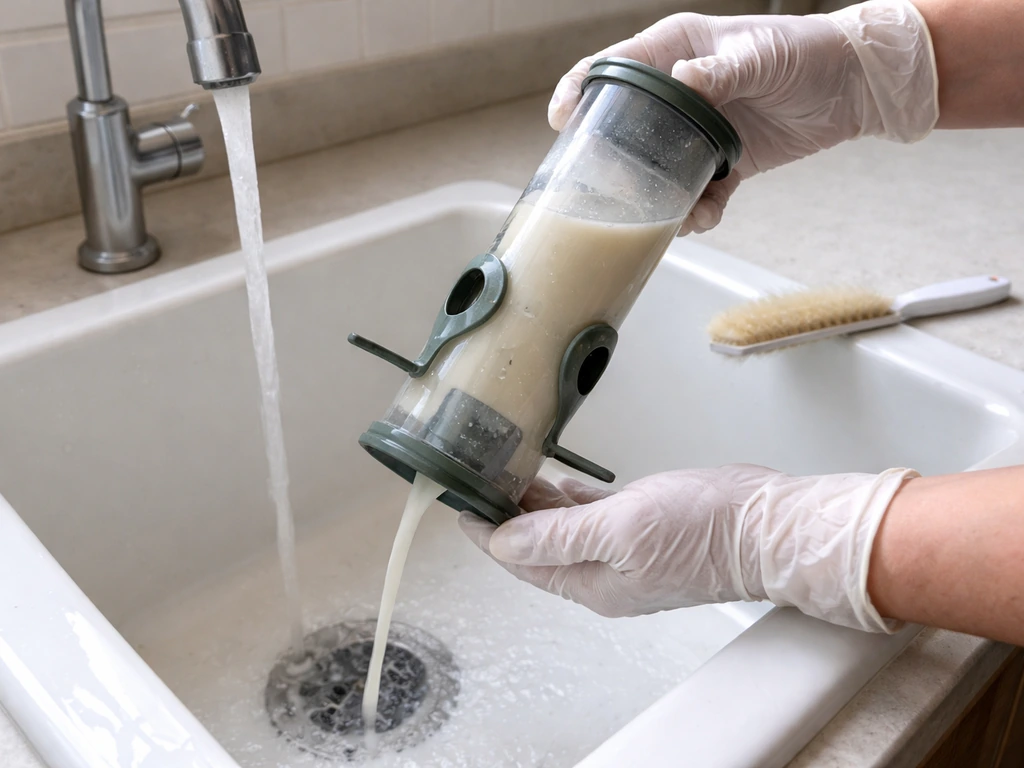
- Empty the feeder completely and discard any remaining milk or contaminated seed. Do not leave it for birds to consume.
- Rinse the feeder with hot water to remove loose residue.
- Scrub all interior and exterior surfaces with warm soapy water, paying attention to seams, corners, and any rough surfaces where residue can hide.
- Prepare a 10 percent bleach solution: 1 part household bleach to 9 parts water.
- Soak all feeder parts in the bleach solution for at least 10 minutes.
- Rinse thoroughly with clean water. Rinse again. Bleach residue is harmful to birds.
- Allow all parts to air dry completely before reassembling or refilling. Do not rush this step. A feeder refilled while still damp can develop mold quickly.
This is the same cleaning protocol recommended by ornithological organizations and wildlife agencies for regular feeder maintenance, so if you follow these steps after a milk incident, you're also setting yourself up with a good baseline cleaning habit. Monthly cleaning with a 10 percent bleach solution is a reasonable standard for most feeders.
Pests, mold, and sanitation: the downstream problems
Milk in or around a feeder creates exactly the conditions that attract rats and mice. Rodents are primarily drawn to spillage and decaying organic matter, and milk residue near a feeder checks both boxes. King County public health guidance directly links bird feeders to rat activity when food waste is present, and the fix is the same whether the attractant is spilled seed or dairy residue: eliminate the food source, clean the area, and redesign your setup to reduce spillage.
Mold is the other immediate concern. Milk residue in a feeder provides the nutrients mold needs to colonize, and once mold takes hold inside a feeder, it's very difficult to remove completely without the bleach soak protocol described above. Feeders with complex internal geometry, like some DIY tin or can feeders, may be difficult enough to clean thoroughly that replacement is the more practical option. If you can't confirm that all interior surfaces were reached during scrubbing and soaking, it's better to start fresh with a new feeder.
Insects are drawn to dairy residue as well, particularly in warmer months. Ants, flies, and wasps can all be attracted to sweet or protein-rich residues, and once they establish a presence at your feeder station they become a deterrent for many bird species. Keeping the feeder clean and the area underneath it tidy is the most direct way to prevent this.
If you already used milk: your action plan for today
If milk has already gone into your feeder, here's what to do right now, in order.
- Take the feeder down immediately and remove it from the feeding area.
- Discard any remaining milk and any seed or food that may have come into contact with it.
- Clean the ground or surface beneath where the feeder was hung. Rinse away any spilled milk and, if possible, remove and replace any heavily soiled substrate.
- Follow the full bleach soak cleaning protocol above on the feeder itself.
- Let the feeder air dry completely before refilling with an appropriate food.
- Refill with a species-appropriate food from the table above: sunflower seed for general songbirds, nyjer for finches, suet for woodpeckers, or nectar for hummingbirds.
- Check the feeder placement against the window-distance guidelines (within 3 feet or beyond 30 feet) and adjust if needed.
- Set a reminder to clean the feeder again in four weeks, or sooner if you notice any residue, mold, or unusual pest activity.
One thing worth knowing: if you're experimenting with repurposed containers as feeders, the material and construction of the container matter a lot for both hygiene and durability. Smooth, non-porous interiors clean up more reliably than seamed metal or textured plastic. Some people have good results with coffee cans, plastic containers, or similar DIY builds when they're used correctly with dry seed, but any container that held liquid dairy is worth replacing unless you can confirm it was fully cleaned and decontaminated.
The core takeaway is simple: birds do not benefit from milk and are genuinely harmed by it. If you want to set up a Dr. Who bird feeder, choose feeder-safe foods instead of dairy so birds stay healthy dr who bird feeder. The right foods are inexpensive, widely available, and matched to the birds you actually want to attract. Getting your feeder set up with the right food in a clean, well-placed feeder is one of the most satisfying small projects in backyard birding, and once it's running correctly, it takes very little ongoing effort to maintain.
FAQ
If I already put milk in a milk can bird feeder, what should I do before refilling with seed or nectar?
Remove the milk completely and treat the container as contaminated, even if it looks dry. Wash with hot water and detergent first, then use a bleach soak (10 percent bleach solution) and rinse thoroughly. Let it fully air-dry before adding any seed or nectar so you do not trap remaining residue inside.
Can I mix leftover milk with water or add more seed to make it safe?
Do not “rescue” the milk or dilute it with more liquid. If milk sat out for more than a short period, bacteria and spoilage toxins can be present even if the smell seems mild. Toss it, then follow the decontamination steps for every interior surface the milk touched.
Is a quick rinse enough if the milk can bird feeder was only used for a short time?
Rinsing alone is usually not enough, especially for DIY tins with seams, ridges, solder points, or rough interiors. Bleach soaking is the step that reaches microbes hidden in residue. If you cannot scrub every crevice reliably, the practical choice is to replace the feeder.
What if milk dripped to the ground around the feeder?
If milk got onto the ground or attracted ants, clean the surrounding area too. Remove spillage, wipe nearby surfaces, and re-check the feeder station for lingering sticky residue. This reduces both insect activity and rodent scouting behavior.
What can I offer birds for drinking in winter if I should not use milk for liquid water?
Yes, heated water setups are the safer substitute when it is freezing. Use a heated birdbath or a shallow dish with a low-wattage heater designed for outdoor wildlife, and keep the power and water level configured so birds can drink without getting trapped or chilled.
I have a milk can bird feeder, can I switch it to nectar or seeds, and how should I change the setup?
Use the right feeder-food pairing. If you want nectar, offer properly mixed sugar-water in a nectar feeder, and if you want to attract seed-eaters, use seed types appropriate for your region and species. Do not try to convert a seed feeder into a nectar system without changing the feeder and cleaning method.
Should I replace the milk can feeder entirely instead of cleaning it again and again?
Most DIY containers can be cleaned, but not all can be made hygienic enough to keep reusing after dairy exposure. If the can is textured, has hard-to-reach seams, or you cannot confirm complete contact during soaking, replace it. Using a feeder-safe container designed for birds reduces the odds of lingering mold or bacteria.
How do I prevent nectar spoilage once I switch away from dairy?
Yes, nectar can spoil too, but it is managed differently than milk. For sugar-water, refrigerate any prepared nectar and discard anything left in the feeder longer than a few days in warm weather. In hot sun, check and replace sooner, and rinse before refilling.
How can I tell whether the milk can bird feeder still has mold or contamination inside?
If you see clumping, fuzzy growth, sour smell, or slimy residue, do not just spot-clean. Do a full bleach soak, scrub all reachable surfaces, and rinse well. If you cannot access the interior completely, replacing the feeder is safer than trying to “hope it’s clean.”
What should I do if insects keep showing up after I cleaned the milk can bird feeder?
If ants, flies, or wasps show up, the issue is often residue plus standing mess under the feeder. Clean the station, remove any attractants, and reduce spillage using a baffle and proper feeder positioning. Persistent insect presence usually means food residue is still present somewhere nearby.
Does where I place the milk can bird feeder affect the risk of contamination and bird strikes?
Placement affects both safety and hygiene. If the feeder is in the 3 to 30 feet “window strike” zone, move it to within 3 feet or at least 30 feet. Also keep it positioned so rain can drain or the feeder can dry, because wet food and residue speed up mold growth.
Next Article
Coffee Can Bird Feeder Plans: Build, Hang, and Troubleshoot
Step-by-step coffee can bird feeder plans with mounting, drainage, bird placement, and fixes for mold, rust, and pests.