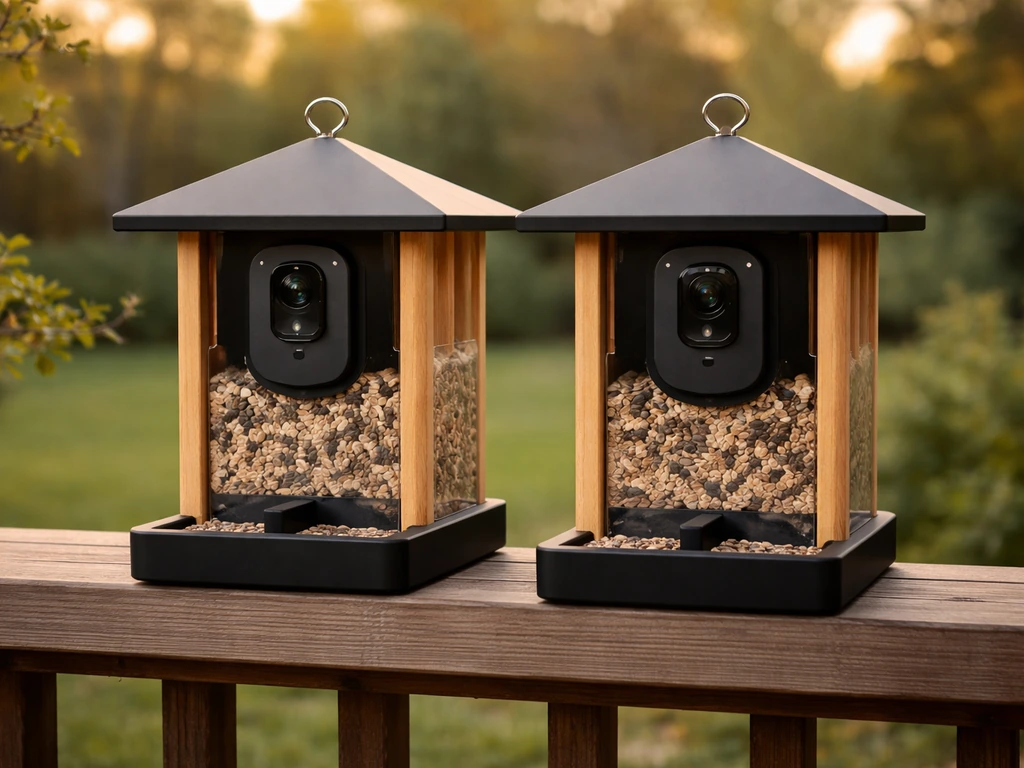
The Onlyfly bird feeder with camera is worth buying if you want a solar-powered, app-connected feeder that lets you watch and photograph backyard birds up close without constantly going outside. It combines a gravity-fed seed tray with a built-in 1080P HD camera, a 5200mAh battery backed by dual solar panels, and an app-controlled siren and spotlight to scare off squirrels. It's a solid pick for tech-savvy birders who want that watching experience baked right into the feeder. But if you're mainly after a rugged, low-maintenance seed station or you need guaranteed squirrel-proofing, there are better-matched options.
Onlyfly Bird Feeder Review: Pros, Cons, Setup, Pests
Marcus Hendricks
22 May 2026
What the Onlyfly feeder is and who it's designed for
The Onlyfly Bird Feeder with Camera (sometimes listed as the "No SD/TF Card" version on Onlyflydirect. com) is a smart camera bird feeder that launched in August 2023. The Onlyflydirect product listing for the “OnlyFly Bird Feeder with Camera - No SD/TF Card” describes it as a bird feeder with an integrated 1080P HD camera and a solar-powered setup launched in August 2023.
It's designed for backyard birders who want to observe wildlife passively through an app rather than sit outside with binoculars. The feeder itself is a reservoir-and-tray style unit: seed loads into a top reservoir and drops by gravity onto an open feeding tray as birds clear it off. The tray design means larger and smaller birds alike can access food at the same time, which is great for variety but can also mean faster consumption.
Onlyfly also sells a heavier-duty variant called the Heavy Duty Metal Smart Camera Bird Feeder, which uses a metal build rather than plastic. If longevity in harsh weather is your primary concern, that metal version is worth considering alongside the standard model. Both share the same solar-powered camera platform and app ecosystem.
Key specs and features that actually affect daily use
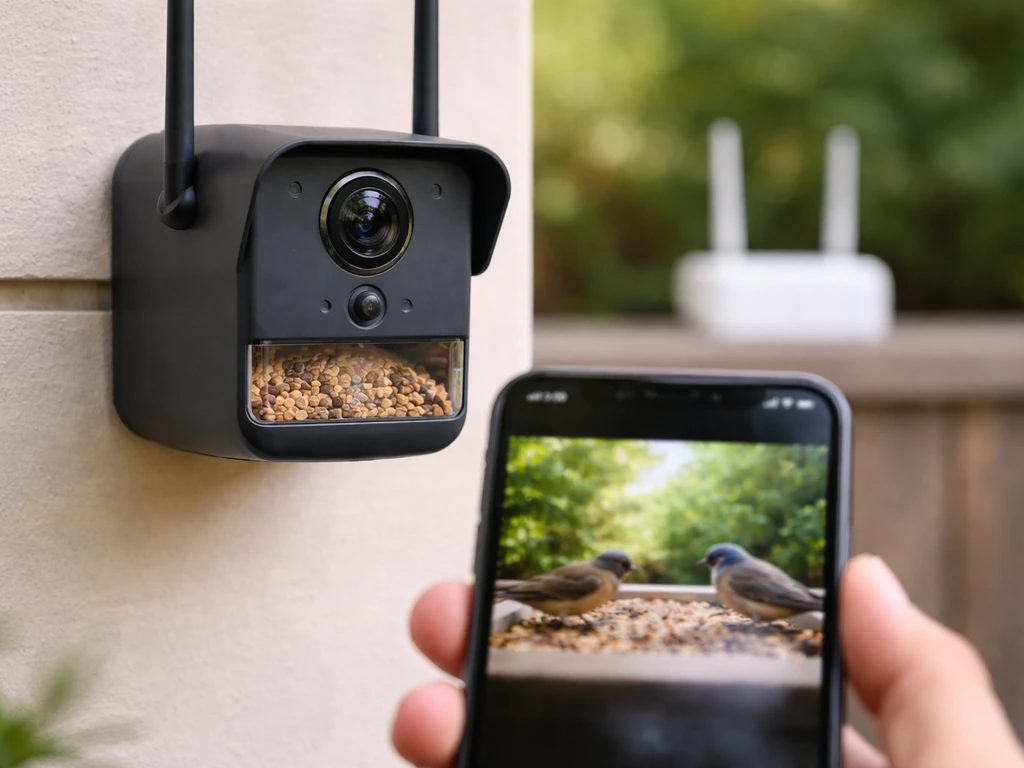
The camera is the headline feature, and it delivers a clear 1080P HD wireless feed to your phone. You connect it over a 2.4GHz Wi-Fi network (important: not 5GHz, so check your router settings before you buy). The integrated app lets you watch live, trigger the built-in siren and spotlight, and capture photos or video of visiting birds. If you want to compare models before buying, video bird feeder reviews can help you see real live feeds, image quality, and how well each feeder holds up video of visiting birds. There's no SD card required because footage streams directly to the app or cloud storage.
Power comes from two built-in solar panels paired with a 5200mAh lithium battery. In a sunny location, the panels keep the battery topped off continuously. The gravity-fed tray system means no mechanical parts to jam or break when dispensing seed, which is a genuine advantage over motorized feeders. Seed capacity is described as holding quite a lot, though with active visitors you can expect the tray to empty in an hour or two on a busy day.
| Feature | Onlyfly Camera Feeder | What it means in practice |
|---|---|---|
| Camera | 1080P HD wireless | Clear close-up footage in good light |
| Power | Solar + 5200mAh battery | Long runtime, but placement matters |
| Wi-Fi | 2.4GHz only | May need router adjustment for 5GHz users |
| Feed mechanism | Gravity-fed tray | Simple, no jams, fast consumption |
| Squirrel deterrent | App siren + spotlight | Active deterrent, not passive blockade |
| Mounting | Pole-top, ground spike, or hang | Flexible placement options |
| Food types supported | Seed, fruit, mealworms, nuts, water | Wide compatibility for most backyard birds |
Build quality, weather durability, and seasonal use
The standard plastic model is decent for three-season use but has some known weak points. Ground spikes (used when mounting directly in soil) have been reported to break on at least one occasion, though Onlyfly's customer service replaced them promptly. That's good customer support, but it's also a signal that the plastic components aren't bombproof under mechanical stress. If you're in a climate with heavy freeze-thaw cycles or strong winds, the Heavy Duty Metal variant is a smarter investment for long-term outdoor placement.
The solar charging is the other durability concern in winter or shaded yards. One reviewer explicitly warned that the feeder "wouldn't work under a tree or in the shade" because the panels can't generate enough charge. In regions with short winter daylight or persistent overcast, the 5200mAh battery will carry you for a while but will eventually need a supplemental USB charge. Positioning the feeder in direct sun exposure isn't just a preference here, it's a functional requirement.
For spring through fall feeding, the feeder performs well. The tray design handles most weather without clogging the way enclosed tube feeders can. Rain can potentially wet seed on an open tray, so if you're in a particularly rainy climate, you'll want to check and clean the tray after heavy rain events to prevent moldy seed from building up.
Which birds it attracts and the best food to use
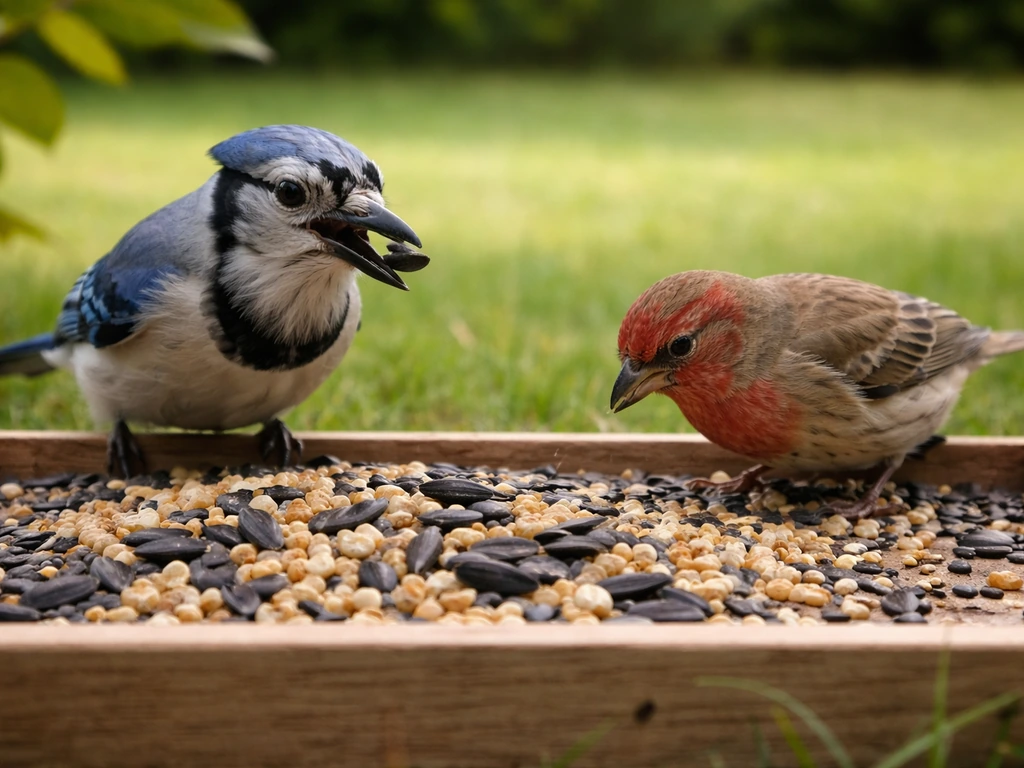
Because of its open tray design, the Onlyfly feeder is accessible to a wide range of birds including larger species. Real users have spotted blue jays landing on the tray and actively rummaging for their preferred seeds. Cardinals, sparrows, finches, and doves are all natural fits for this style of feeder. The open platform also works for mockingbirds and thrushes if you add fruit or mealworms.
For maximum variety, a mixed seed blend with black oil sunflower seed as the base will attract the broadest range of species. If you want to bring in cardinals specifically, sunflower seeds and safflower are the go-to. For finches, nyjer (thistle) seed works well but is best in a dedicated tube feeder alongside this one rather than on an open tray where it blows away easily. The Onlyfly's product page notes compatibility with fruit, mealworms, meat, nuts, seed, and water, so you can get creative depending on who's visiting your yard.
- Black oil sunflower seed: best all-around choice for mixed species
- Safflower seed: great for cardinals, and squirrels tend to avoid it
- Mealworms (live or dried): draws bluebirds, robins, and thrushes to the tray
- Cracked corn or peanut pieces: attracts blue jays, woodpeckers, and doves
- Fresh fruit halves: good for orioles and mockingbirds during migration seasons
Pest resistance: squirrels, rats, and what actually works
The Onlyfly is not a mechanically squirrel-proof feeder in the way a cage feeder or a weight-activated flipper feeder is. Its pest deterrence is app-based: you see a squirrel on the camera, you tap the siren or spotlight in the app, and hopefully the squirrel runs off. That works if you're actively watching, but squirrels are opportunistic and persistent, and they'll be back the moment things go quiet.
Reviewers who've had success keeping squirrels away report using a pole baffle in combination with the feeder. That's the right instinct. Mount the feeder on a smooth metal pole with a squirrel baffle below the feeder, and you remove the physical access route entirely regardless of whether you're watching the app. The app siren is then a backup for the occasional squirrel that finds another way in, not your first line of defense.
For rats, the strategy is the same: limit ground spillage (use a seed catcher tray beneath the feeder) and don't leave seed accessible overnight. Open tray feeders do tend to spill more than enclosed tube models, so a catcher tray paired with a nighttime feeding cutoff (bring the feeder in or use the app to trigger the deterrent) will help significantly. If rats are a serious problem in your yard, a fully enclosed tube feeder or a cage-style feeder is a more passive solution.
Setup, placement, and cleaning
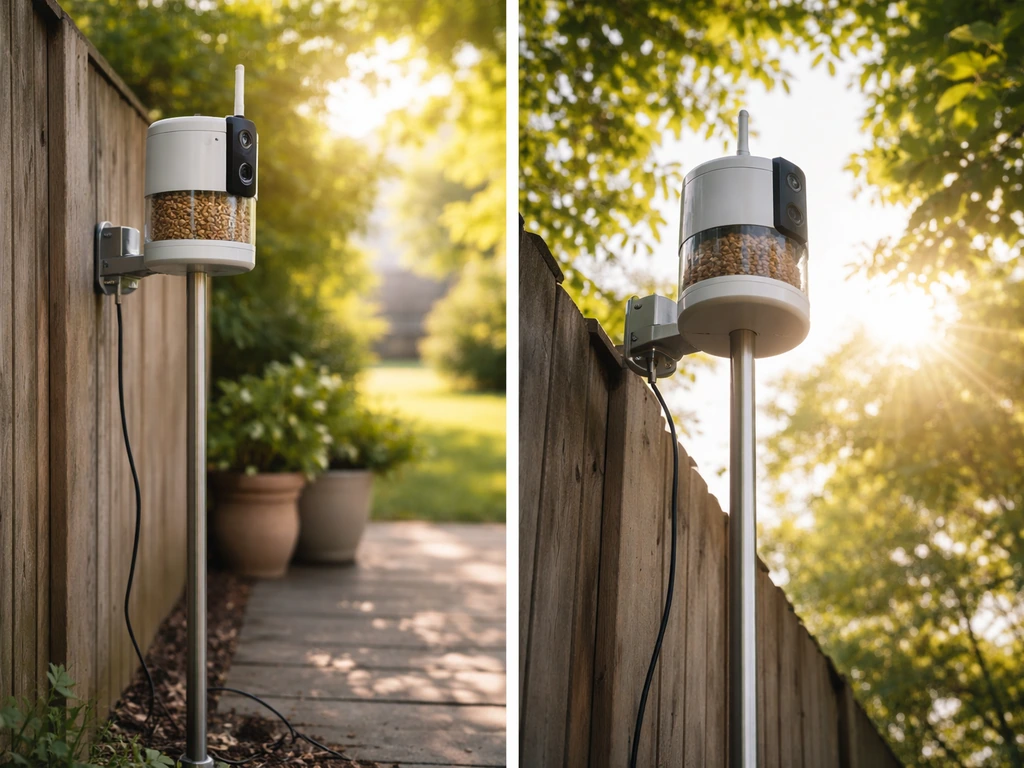
Getting it up and running
Setup is straightforward. Download the Onlyfly app, connect the feeder to your 2.4GHz Wi-Fi network, and mount it in your chosen location. The feeder supports multiple mounting options: top of a pole, ground spike installation, or hanging. Pole-mounting is the most popular choice because it keeps the camera at a useful viewing angle, positions it away from squirrel jump routes, and keeps the solar panels exposed to sky. Reviewers specifically mention pole mounting for better Wi-Fi signal proximity and camera framing.
The most important placement decision is sunlight access. Pick a spot that gets at least several hours of direct sun per day. South-facing positions are ideal in the northern hemisphere. Avoid dense tree canopy directly overhead, both for solar charging and because overhanging branches give squirrels easy launch points. Aim for the feeder to be roughly 10 feet from nearby trees or structures while still being visible from a window you actually look out of regularly.
Filling, cleaning, and maintenance
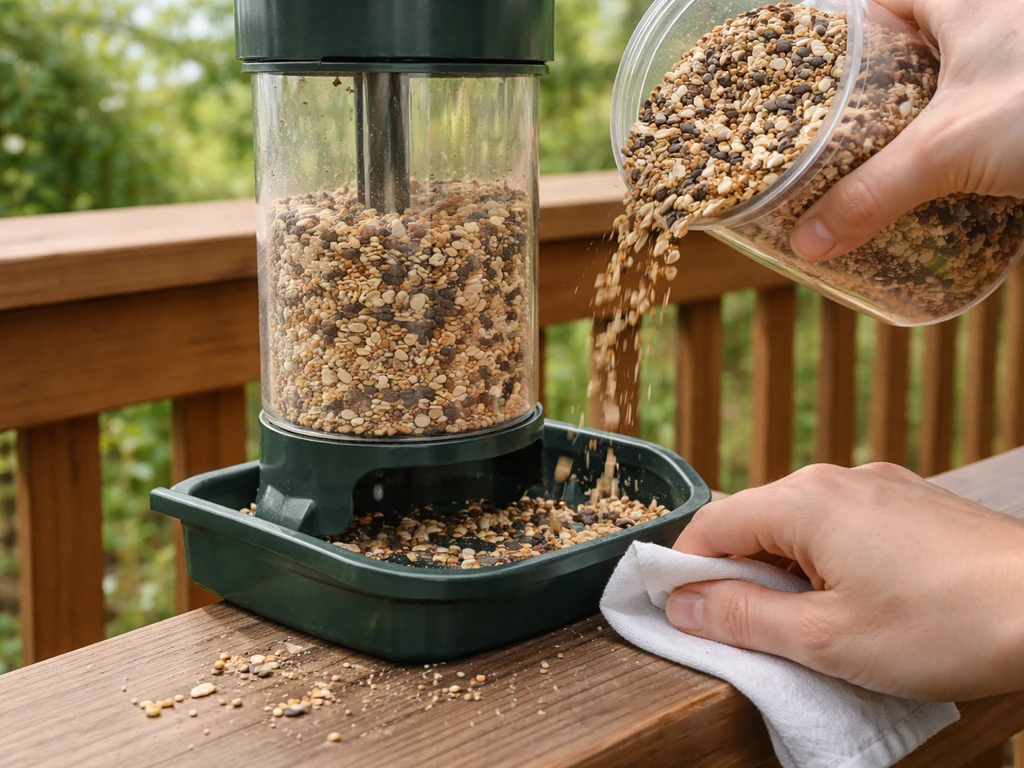
Filling is easy, which matters more than people realize when you're refilling every couple of days during peak season. The gravity feed mechanism keeps things simple, no complicated parts to disassemble. For cleaning, the open tray needs the most attention: rinse it down every one to two weeks, scrub off any wet seed residue or droppings, and let it dry before refilling. In warm weather, moldy seed is a real health risk for birds, so don't skip this. The reservoir should get a more thorough clean monthly. A bottle brush and a diluted white vinegar or unscented soap solution works well.
Troubleshooting birds not visiting
If birds aren't showing up in the first week or two, don't panic. Birds take time to discover new feeders, especially if you're starting fresh in a yard without an established feeding station. Placing the feeder near natural cover like shrubs or a tree line (while keeping the solar exposure) helps birds feel safe approaching. Switching to fresh, high-quality black oil sunflower seed eliminates the chance that stale or low-grade seed is the deterrent. If birds are visiting but leaving immediately, check whether the tray is wet or has moldy seed, whether large aggressive birds like blue jays are monopolizing it, and whether your Wi-Fi interference from the app or siren triggering is startling visitors away.
Honest pros and cons
- Pros: Integrated 1080P HD camera with live app viewing is the best reason to buy this feeder
- Pros: Solar plus battery power means no cords and genuinely long outdoor runtime in sunny spots
- Pros: Gravity-fed tray is mechanically simple with nothing to jam or break during dispensing
- Pros: Wide food compatibility attracts diverse bird species including larger birds like blue jays
- Pros: App-based siren and spotlight offer on-demand squirrel deterrence when you're watching
- Pros: Easy to fill and reviewers report the camera app works well right out of the box
- Cons: Not passively squirrel-proof, needs a baffle for reliable pest exclusion
- Cons: Solar performance is poor in shade or under tree canopy, limiting placement flexibility
- Cons: Open tray design can spill seed and create ground mess, attracting rats if unmanaged
- Cons: 2.4GHz-only Wi-Fi requirement is a friction point for some home network setups
- Cons: Plastic ground spikes have shown durability issues under stress
- Cons: Active bird visitors can empty the tray in one to two hours on busy days
Should you buy it, and what are the alternatives?
Buy the Onlyfly feeder if the camera experience is your main goal and you have a sunny, open placement spot with reliable 2. 4GHz Wi-Fi nearby. It genuinely delivers on the core promise of letting you watch and photograph birds through your phone without investing in a separate camera setup. If you are deciding between models, a harymor bird feeder review can help you compare camera features, bird access, and setup needs before you buy.
For a yard that already feeds birds well and just wants to add that viewing layer, it's a meaningful upgrade. If you want to go further, look up droll yankee bird feeder reviews to compare how other feeders perform in real backyard conditions. If you are comparing options, a vinguys bird feeder review can help you judge whether its features and build match the camera-feeder experience you want.
Skip it if you primarily want passive, low-maintenance squirrel-proofing. Feeders like the Yankee Flipper (which physically ejects squirrels using a motorized spinning perch) handle pest exclusion without any active monitoring on your part. If camera-enabled feeding is what you're comparing, it's also worth checking out Netvue and Feathersnap camera feeders, which have their own approaches to image quality, storage, and AI bird identification that may suit different priorities.
If you’re searching for netvue bird feeder reviews, this comparison is a helpful place to start before choosing your next camera feeder. If you want to compare options, look for Feathersnap bird feeder reviews to see how its camera and AI identification stack up Netvue and Feathersnap camera feeders. The Coolfly feeder is another solar-powered camera option in this same category worth stacking up against the Onlyfly before you commit.
If you are also considering the Coolfly bird feeder, these Coolfly bird feeder reviews can help you compare photo quality, app features, and real-world bird activity Onlyfly feeder.
If you go with the Onlyfly, pair it with a quality squirrel baffle, use black oil sunflower seed as your base, and make sure you're mounting it in full sun on a pole at least 10 feet from climbable structures. Do that and the feeder will reward you with close-up bird encounters and genuinely useful wildlife footage from day one.
FAQ
Why does my Onlyfly camera feeder show the live video but not send alerts reliably?
If you notice delayed or missing motion alerts, first confirm your phone is on the same 2.4GHz Wi-Fi band as the feeder during setup, then check whether your router uses separate SSIDs for 2.4GHz and 5GHz. Also verify you granted notification permissions to the Onlyfly app, since siren or spotlight controls can work while alerts stay muted.
If there is no SD card, where does the footage go, and what should I check if video quality is inconsistent?
Even though the feeder streams without an SD/TF card, you can still run into storage or buffering limits if your internet connection is weak where you mount the feeder. A practical test is to watch live video for 2 to 3 minutes in that location before fully relying on it, then consider relocating the router or using a Wi-Fi extender that specifically strengthens the 2.4GHz signal.
What mounting height and camera angle works best for getting clear close-up footage?
Pole mounting helps, but aim for camera angle too. Mount so birds land on the tray roughly centered in the camera view, and keep the lens away from direct glare at sunrise or sunset by slightly rotating the bracket. If you mount too high or too low, birds can end up partially out of frame even when the Wi-Fi works fine.
Will the 5200mAh battery be enough through winter, or should I plan for USB charging?
Yes, you may need to supplement power in winter or prolonged shade. If the app indicates low battery or live view drops during cloudy weeks, use the USB charging option before peak feeding days, then keep the feeder in the sunniest available spot (even if that means moving it temporarily season to season).
How can I prevent moldy seed on the open tray after rainy weather?
Open trays can get wet, so mold prevention comes from two things: drying time and cleaning cadence. If your area has frequent rain or fog, rinse more often (for example, weekly instead of every 1 to 2 weeks), remove clumped seed, and let the tray fully dry before refilling with fresh seed.
What is the most effective way to stop squirrels if the app siren and spotlight don’t fully solve the problem?
The siren and spotlight work best when you are actually watching or when you act quickly after the first visit. If you leave the area and squirrels keep returning, treat the app controls as a backup and add a physical barrier, such as a properly sized squirrel baffle plus a seed catcher tray to reduce easy jumping and access routes.
How do I reduce rat activity specifically with an open-tray feeder?
Rats are drawn to spilled seed, so your biggest win is containment. Place the feeder on a clean, level surface where you can install a catcher tray, keep the area under and around it clear, and remove uneaten seed promptly in the evening. If rats are active, consider switching to a more enclosed feeder model for nightly use.
Birds come near the feeder but don’t stay, what should I troubleshoot first?
If birds visit but seem to avoid feeding, start by adjusting seed type and portion. Use fresh black oil sunflower seed, and avoid mixing in lots of small debris seeds at first, since they can blow off and attract less desired species. Also check the tray for wet residue or stale smell after cleaning delays, since that can repel birds for days.
How can I prevent large birds like blue jays from taking over the tray?
If aggressive birds dominate, you can reduce monopolization by offering a blend that supports multiple species and by slightly widening the opportunity for different beak sizes. In practice, that means using sunflower as a base but adding smaller or more clinging options (depending on local birds), and cleaning promptly so birds do not get discouraged by compacted, old seed.
What are quick steps if live video is laggy or keeps disconnecting?
Connectivity problems often look like camera issues. If live video is choppy, shorten the time between app actions, confirm the feeder’s firmware is up to date in the app, and try a different mount location that is closer to 2.4GHz coverage while still keeping the solar panels exposed to direct sun.
Next Articles
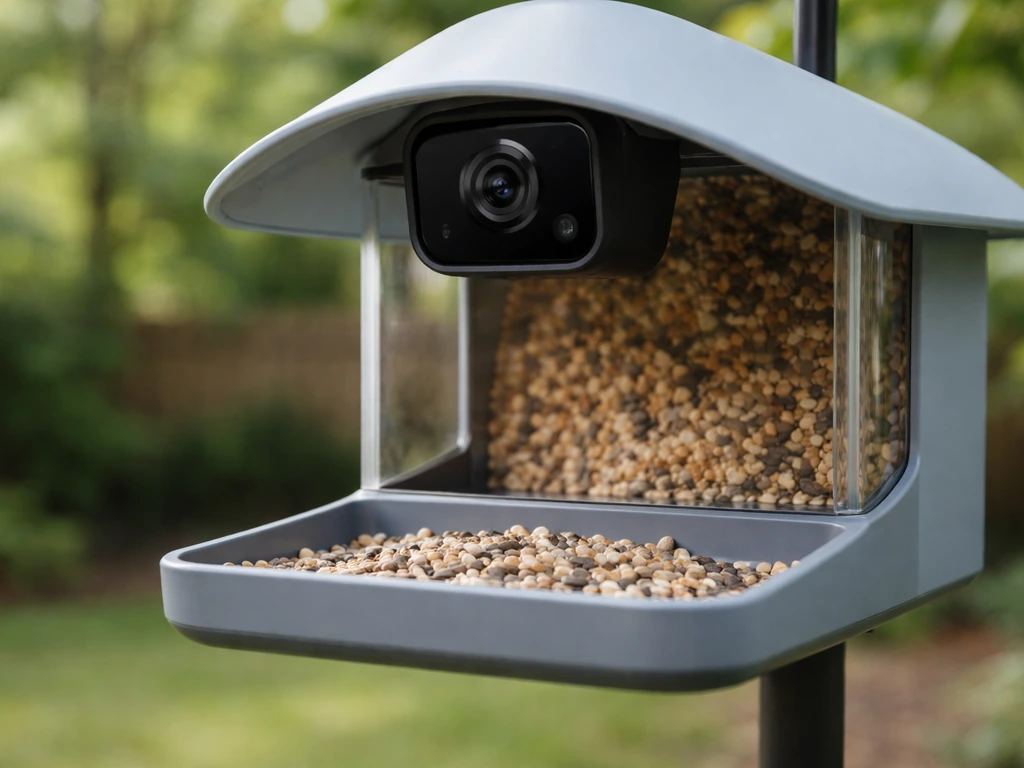
Video Bird Feeder Reviews: Best Picks, Features, Setup Tips
Top video bird feeder reviews with camera features, placement tips, pros and cons, and a buy shortlist.
Feathersnap Bird Feeder Reviews: Smart vs Scout Guide
Feathersnap bird feeder reviews comparing Smart vs Scout models for setup, reliability, cleaning, smart app, and bird us
Best Bird Feeder for Baltimore Orioles: Buyer Guide
Choose the best bird feeder for Baltimore orioles: styles, features, placement tips, and fixes for heat, pests, and acce