The PeckperK bird feeder is a smart, camera-equipped hopper-style feeder that pairs AI bird identification with live streaming and a squirrel deterrent alarm via a companion app. It holds 1.8 liters (about 7.5 cups) of seed, runs on a 3W solar panel with USB-C backup charging, carries an IP65 weatherproof rating, and operates between -5°F and 120°F. For a backyard birder who wants to watch and identify birds remotely from their phone, it has real appeal. But if your main goal is reliable pest deterrence or hassle-free winter feeding, the smart tech has some genuine limitations worth knowing before you buy.
PeckperK Bird Feeder Reviews: Honest Buying Guide
Marcus Hendricks
17 Jun 2026
First, make sure you're looking at the right product
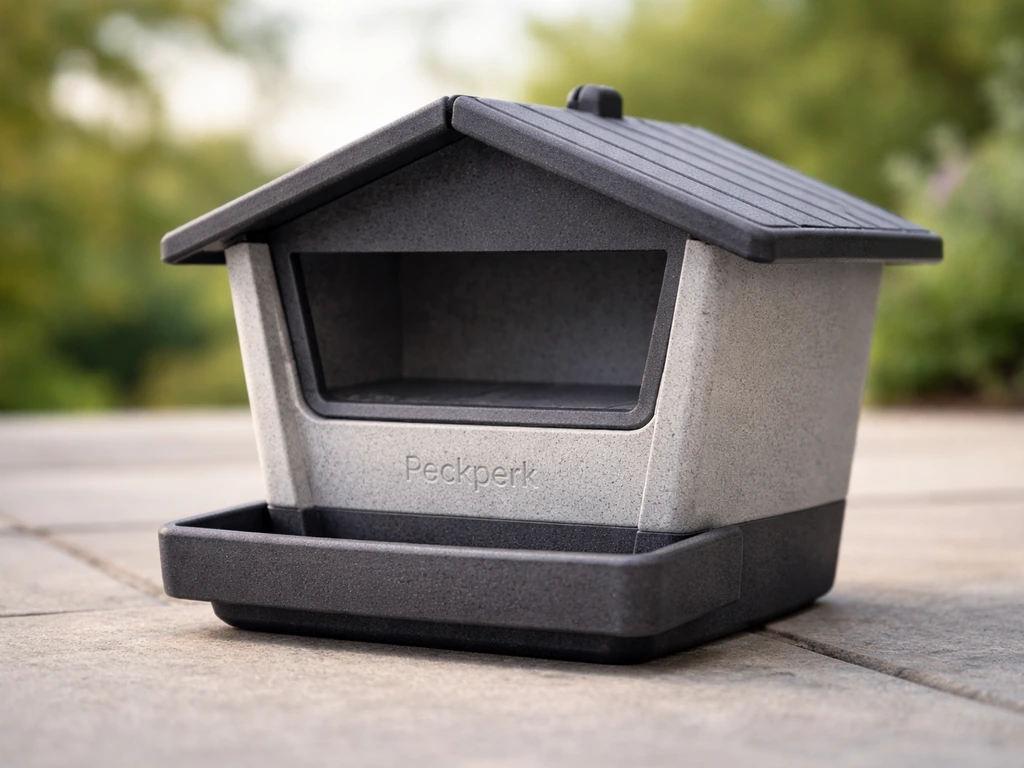
"Peckperk" is a phonetic spelling of the brand name PeckperK, and the confusion is understandable because the name doesn't follow an obvious pattern. The company makes one core product in several bundle tiers: a Smart Bird Feeder with an integrated AI camera. You'll see it listed as the Essential, Plus, or VIP/Premium model, with the main differences being what's bundled in the box (extra solar panel kit, fruit holders, mounting hardware, external antenna) rather than a change in the feeder's core design.
The feeder itself is a hopper-style unit made from BPA-free recycled plastics (ABS on the premium model). It measures roughly 10 inches tall by 7.7 inches wide by 8.2 inches deep, weighs about 1.45 lbs empty and 3.8 lbs when filled, and features a protective roof overhang, dual-sided seed viewing windows, and a snap-open rear door for refilling. The camera module sits at the front and connects to your home's 2.4GHz Wi-Fi network only. One thing to check before buying: if your router broadcasts on 5GHz only, the camera will not pair. That's a real gotcha for anyone with a newer mesh network setup.
What birds it attracts and what seed to use
Because it's a hopper-style feeder with a tray and perch access on multiple sides, the PeckperK feeder works well for a wide range of common backyard birds: house finches, goldfinches, chickadees, nuthatches, titmice, sparrows, and cardinals are the most likely regular visitors depending on your region. Larger perching birds like blue jays and mourning doves will also use it. The hopper format is less ideal for clinging birds like woodpeckers, who prefer a suet cage or a feeder with a vertical clinging surface, though downy woodpeckers may visit if you use shelled peanuts.
For seed, black-oil sunflower seed is your best all-around choice and the most universally attractive to the birds listed above. Shelled peanut pieces are excellent for chickadees, nuthatches, and jays. You can skip cheap mixed seed blends with milo or red millet, which most songbirds ignore and which just pile up in the tray and go moldy. The premium bundle includes fruit holders, which can hold orange halves or grape jelly for orioles if you time it right in spring migration. Just know that fruit is messy and needs changing every couple of days.
Real-world performance: what it's like to actually use it
Setup and daily use
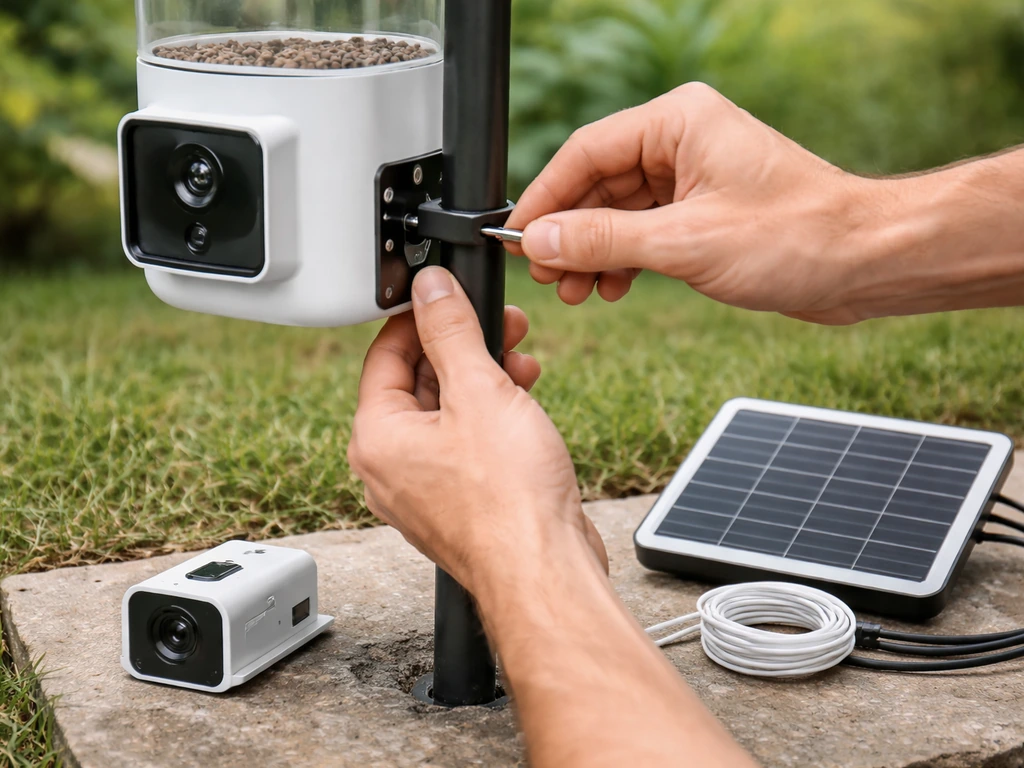
Assembly follows a guided installation process that walks you through mounting, camera connection, and solar panel setup. It's not complicated, but it's also not a five-minute job the first time. You need to charge the camera module for 2 to 4 hours via the included USB-C cable before the first use. LED indicators tell you where you are: blinking during charge, solid green when fully charged, blinking blue when it's ready to pair. Once paired to the app, live streaming works reasonably well on a stable home Wi-Fi connection. Filling is genuinely easy thanks to the snap rear door, and the hopper design lets you see seed levels through the side windows without opening anything.
The AI camera: the star feature, but with caveats
The companion app delivers live streaming, recorded bird clips, and AI species identification. When it works, it's genuinely fun and a great way to learn birds you'd otherwise miss. Independent reviews from Digital Camera World and TechRadar found that the AI identification stumbled in real conditions, including cases where the app reported no birds detected while a bird was clearly in frame. Squirrel alerts also fired without matching video evidence in some tests. These aren't catastrophic failures, but they do mean you can't fully rely on the smart alerts as a primary pest or identification system. Think of the AI as a helpful bonus rather than a precision tool.
Cleaning and maintenance
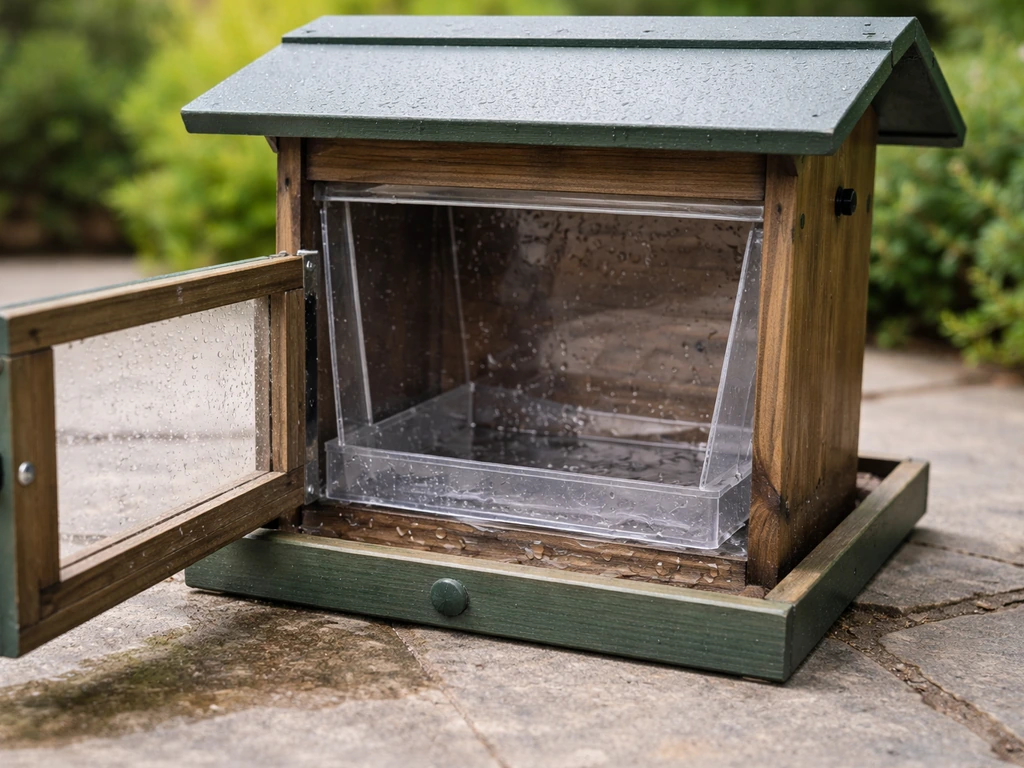
Cleaning a hopper feeder regularly is important to prevent mold and salmonella risk to birds. The PeckperK's snap-open rear door makes emptying and rinsing the seed compartment straightforward. The tray and perch areas need wiping down every couple of weeks, more often in wet weather when seed can clump and rot quickly. There's nothing unusual about the cleaning process here compared to other hopper feeders, and it's easier than most tube feeders with narrow ports.
Pest and animal resistance: what "squirrel-proof" actually means here
PeckperK markets this feeder as squirrel-proof, but the deterrence mechanism is software-based, not mechanical. When the AI camera detects a squirrel, it can trigger an alarm sound through the app to scare the animal away. There is no weight-sensitive port closure or cage barrier that physically blocks squirrels from accessing the seed. This is a meaningful distinction from mechanical squirrel-proof feeders that literally shut off seed access when a heavy animal lands on the perch.
In practice, the alarm approach has mixed results. Trustpilot reviewers echo the squirrel alarm concept positively in marketing terms, but independent tests have found the alarm doesn't reliably scare persistent squirrels and sometimes doesn't trigger at all. You would also need to be near your phone and actively monitoring for the alarm to work as intended. A squirrel at 2am is not going to get an alarm response from most users. For rats specifically, there is no targeted deterrence at all beyond general feeder placement hygiene.
The more practical route to actual squirrel resistance with this feeder is pole-and-baffle placement. Mounting it on a smooth metal pole at least 5 feet high with a dome baffle below the feeder keeps squirrels off more reliably than any camera alarm. Keep the feeder at least 10 feet from branches, fences, or structures a squirrel can jump from. That advice applies to almost every feeder on the market, and it's still the most reliable method available.
Weather and seasonal use
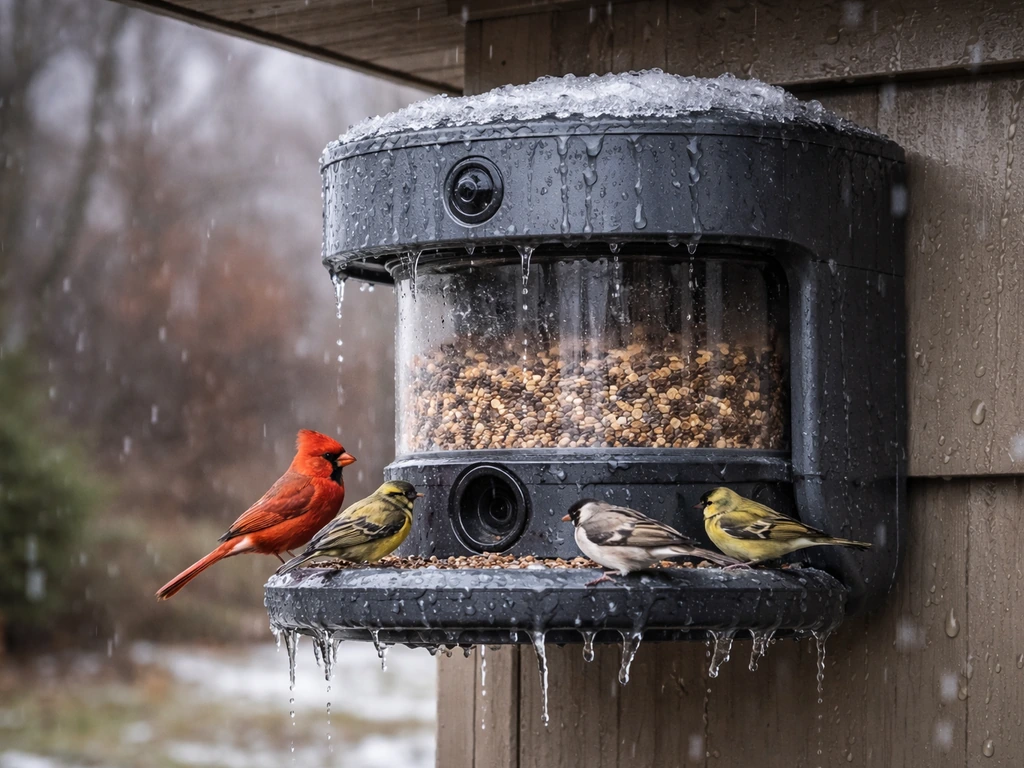
The IP65 rating means the feeder is protected against dust and low-pressure water jets from any direction, which covers rain and general outdoor conditions well. The operating temperature range of -5°F to 120°F (-20.5°C to 48.5°C) covers most of the continental U.S. through normal winter conditions. The marketing language of "rain, shine, or snow" is largely accurate for the feeder's physical structure.
Where things get more complicated is the camera and battery system in extreme cold. Snow accumulation on the solar panel reduces charging efficiency, and sustained temperatures at the low end of the operating range can shorten battery life between charges. PeckperK's own materials include a note that snow and extreme cold may challenge battery life and app reliability. TechRadar confirmed the solar panel worked well in spring conditions, but winter performance is less consistent. If you're in a region with regular hard freezes and heavy snow, plan to bring the camera module indoors during extended cold snaps or keep a USB-C charger accessible.
For winter feeding more broadly, the hopper design holds up fine and birds will absolutely use it year-round. High-fat seed like black-oil sunflower keeps well in cold and is especially valuable to birds in winter. If you want to add suet for woodpeckers during cold months, you'll need a separate suet cage since this feeder doesn't have a built-in suet holder.
Setup and placement tips to get the most visits
- Mount it on a smooth metal pole (at least 5 feet high) with a dome baffle below the feeder. This is your single best pest-prevention move.
- Position the feeder at least 10 feet away from fences, trees, rooftops, or anything a squirrel can use as a launch point.
- For window placement and bird-strike safety: place the feeder either within 3 feet of a window (so birds don't build up striking speed) or more than 30 feet away. The 3-foot rule is often underused and works extremely well.
- Keep the camera aimed toward a clear approach path rather than directly at a wall or dense shrubs, since the wide-angle lens works best with some open sky in the frame.
- Connect to a dedicated 2.4GHz Wi-Fi network or a router that broadcasts separately on 2.4GHz. If you only have 5GHz, the camera will not pair at all.
- Charge the camera module fully before first use (solid green LED = ready) and check the solar panel orientation so it gets direct sun for at least part of the day.
- Place the feeder near natural cover like shrubs or small trees within 10 to 15 feet so birds feel safe approaching, but not so close that squirrels can reach it directly.
Pros, cons, and who it's actually right for
| Pros | Cons |
|---|---|
| IP65 weatherproof rating handles rain and most conditions well | Squirrel deterrence is software-based, not mechanical, and works inconsistently |
| Solar-powered with USB-C backup keeps it running without constant battery swaps | Requires 2.4GHz Wi-Fi only, which rules out some modern routers |
| AI bird ID and live streaming are genuinely fun for identification and birdwatching | AI detection and species recognition had reliability issues in independent testing |
| 1.8L / 7.5 cup capacity means less frequent refilling than smaller feeders | No built-in suet holder limits appeal for woodpeckers |
| Easy snap-open rear door for refilling and cleaning | Cold weather can reduce solar charging efficiency and battery reliability |
| BPA-free recycled plastics are a good material choice | App dependency means the smart features stop working if Wi-Fi drops or phone is away |
The honest verdict
The PeckperK is a genuinely well-built hopper feeder with a fun tech layer on top. If you want to ID birds remotely, share clips with friends, or just watch your yard from your couch, it delivers that experience reasonably well for the price. If you are specifically comparing thistle bird feeder reviews, you can use the same checklist to judge how well each feeder performs with seed, placement, and maintenance. The build quality and weatherproofing are solid, filling is easy, and the seed capacity is practical for regular use. Where it falls short is in the "squirrel-proof" claim: this is not a mechanical lockout system, and if you have persistent squirrels or rats, the camera alarm alone will not solve your problem. You'll need smart placement and a baffle regardless of what feeder you buy.
Better alternatives depending on what you need
If the AI camera and remote viewing are not priorities for you, you can get equally solid or better bird attraction from a high-quality traditional feeder at a lower price point. Perky-Pet makes well-regarded hopper and tube feeders with mechanical squirrel-resistant ports that physically close under a squirrel's weight, which is more reliable than any camera alarm. If you are specifically comparing perky-pet bird feeder reviews, this mechanical approach is usually the main reason people prefer Perky-Pet over camera-based alarms Perky-Pet makes well-regarded hopper and tube feeders. If you're drawn to the smart camera angle but want to compare options, it's worth looking at how other brands in the smart feeder space handle AI reliability and squirrel resistance before committing. For woodpecker-focused feeding, a dedicated suet cage or a feeder with clinging surfaces will outperform the PeckperK. And if squirrel and rat resistance is your top priority, a bear-proof or mechanical squirrel-proof feeder with a weight-triggered closure is a fundamentally different (and more reliable) solution than camera-based deterrence.
Bottom line: buy the PeckperK if the smart camera and live bird ID features genuinely excite you and you have a stable 2. If you want more detailed opinions, you can also check the Nuttery bird feeder reviews to compare features and real user experiences. 4GHz Wi-Fi connection. Go into it knowing the squirrel alarm is a bonus, not a guarantee, and plan your pole and baffle setup the same way you would with any other feeder. If you just want the most birds for the least hassle, a simpler mechanical squirrel-resistant hopper will likely serve you better.
FAQ
Does the PeckperK feeder work with mesh Wi-Fi systems that may switch devices between networks automatically?
It pairs only to 2.4GHz Wi-Fi, so on mesh setups you must confirm the camera device stays on the 2.4GHz band (some systems name both bands similarly). If pairing fails, try creating a separate 2.4GHz SSID just for the feeder, and temporarily disable Wi-Fi band steering for that network.
What seed types should I avoid in the PeckperK to prevent mold and clumping?
Avoid cheap mixes heavy in milo and red millet, since those pieces tend to sit in the tray and can spoil faster. If you notice clumping, use black-oil sunflower as your base, empty and rinse on a tighter schedule after wet spells, and keep the feeder under any natural cover when possible.
How often do I actually need to clean a hopper feeder like this during winter?
Every couple of weeks is the minimum baseline, but in wet, freezing, or snowy weather you should wipe perches and tray areas more frequently because seed gets damp and decays faster. If you see dark residue or smell sourness, clean immediately, even if it is earlier than planned.
Will woodpeckers use the PeckperK, or do I need a different feeder?
It is not designed for clinging birds because the access is primarily through hopper and perch areas. Downy woodpeckers may visit if you offer shelled peanuts, but for consistent woodpecker feeding, a suet cage or a feeder with a true vertical cling surface is usually a better fit.
What is the best way to improve squirrel deterrence if the alarm is unreliable?
Use placement first: mount on a smooth metal pole at least about 5 feet high, add a dome baffle below the feeder, and keep the feeder away from branches, fences, and overhangs that squirrels can use as launch points. Treat the camera alarm as a secondary layer, not your main barrier.
Do I need to keep the phone nearby for squirrel alerts to work at night?
In practice, yes. The alarm is delivered through the companion app, so most owners will not respond if they are asleep or not actively monitoring. For persistent overnight visitors, placement and mechanical barriers outperform app alerts.
Does the feeder’s IP65 rating mean I can leave it out during heavy snow?
The IP65 rating covers dust and low-pressure jets, it does not guarantee the solar charging and camera performance will stay consistent under heavy snow accumulation. In hard freezes with lots of snow, plan for snow clearing or bring the camera module indoors during extended cold snaps to protect charging reliability.
How long will the camera need to charge before first use, and what happens if it runs low in winter?
Expect about 2 to 4 hours of USB-C charging for initial setup. In colder conditions, charging can be slower and battery life can shorten, so you may need to keep a spare charging option available, or reposition the feeder where the solar panel gets more direct light between storms.
Can I use the fruit holders for orioles all year?
Fruit is best timed to migration, and it is messy. Even during the season, expect to replace it about every couple of days to avoid spoilage, and do not rely on fruit as a long-duration setup during heat waves or prolonged rainy stretches.
Is the AI bird identification good enough to rely on for record-keeping?
It can be useful as entertainment and as a learning aid, but the article notes real-world misfires such as cases where birds are in frame but the app reports no detection. If you plan to log sightings, treat AI results as suggestions and confirm with your own observation or higher-quality footage before recording data.
Can the PeckperK help with rats, or is it only for squirrels?
There is no targeted rat deterrence built into the system beyond general feeder hygiene and placement. If rats are an issue, focus on controlling attractants (cleaning, seed management), and consider rodent-resistant mechanical feeder designs or broader yard tactics.
What is the simplest checklist to decide if the PeckperK is the right purchase for me?
Confirm your Wi-Fi is 2.4GHz capable, decide whether remote viewing and AI ID are top priorities, and be realistic about squirrel resistance (baffle and pole first). If your goal is maximum pest blocking with minimal setup, a mechanical squirrel-resistant feeder is typically the more reliable choice.
Next Article
What Does a Cardinal Bird Feeder Look Like: Design & Tips
Identify and choose the best cardinal bird feeder: shapes, colors, perches, seeds, placement, and winter tips.