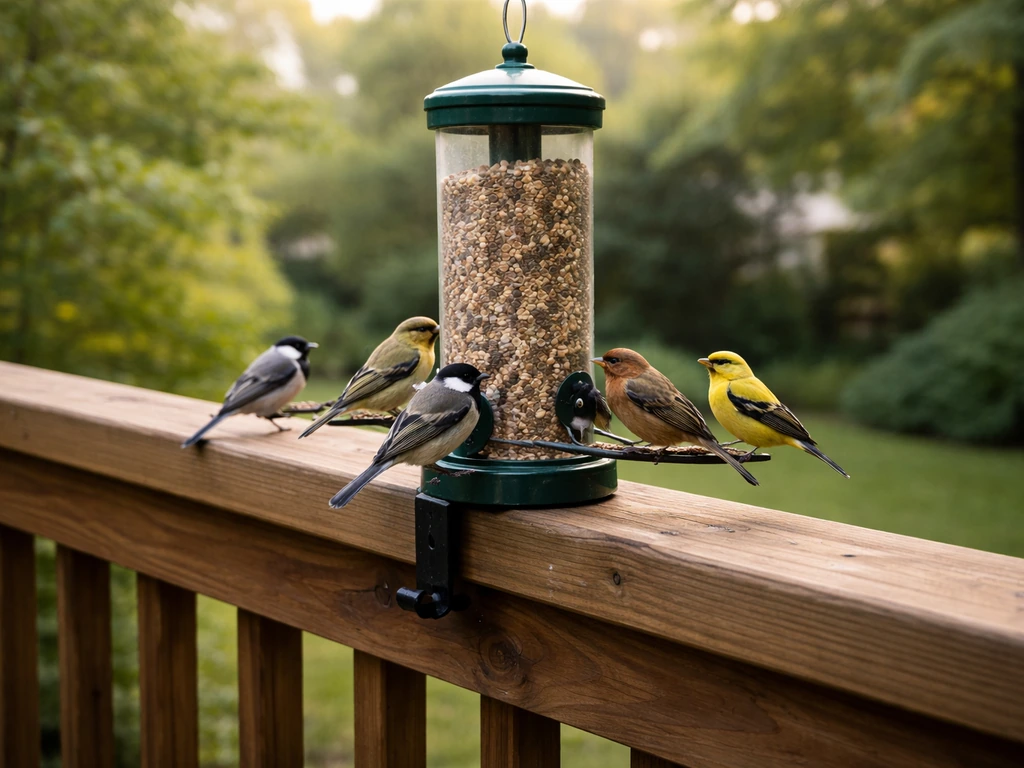
The best deck-mounted bird feeder for most backyards is a hopper or tube feeder clamped or rail-mounted to your deck railing, positioned within 3 feet of your house windows to prevent window strikes, at least 4 feet off the ground to allow baffle protection, and stocked with the seed or nectar that matches your target birds. If you want one recommendation to start: a powder-coated metal hopper feeder with a tray, a clamp-on deck mount, and a squirrel baffle covers the widest range of birds and problems with the least maintenance hassle. Many people end up treating a “happy place” deck feeder as their go-to setup for everyday enjoyment, like this is our happy place camper bird feeder.
Best Deck Mounted Bird Feeder: Pick the Right One
Marcus Hendricks
4 May 2026
What actually makes a deck-mounted feeder the "best"
Marketing copy on bird feeders is relentless, so let me cut through it. The features that genuinely matter for a deck-mounted setup are a little different from what matters for a pole-mounted feeder in the middle of a yard, because you're working with a fixed structure, close proximity to your house, and regular human foot traffic.
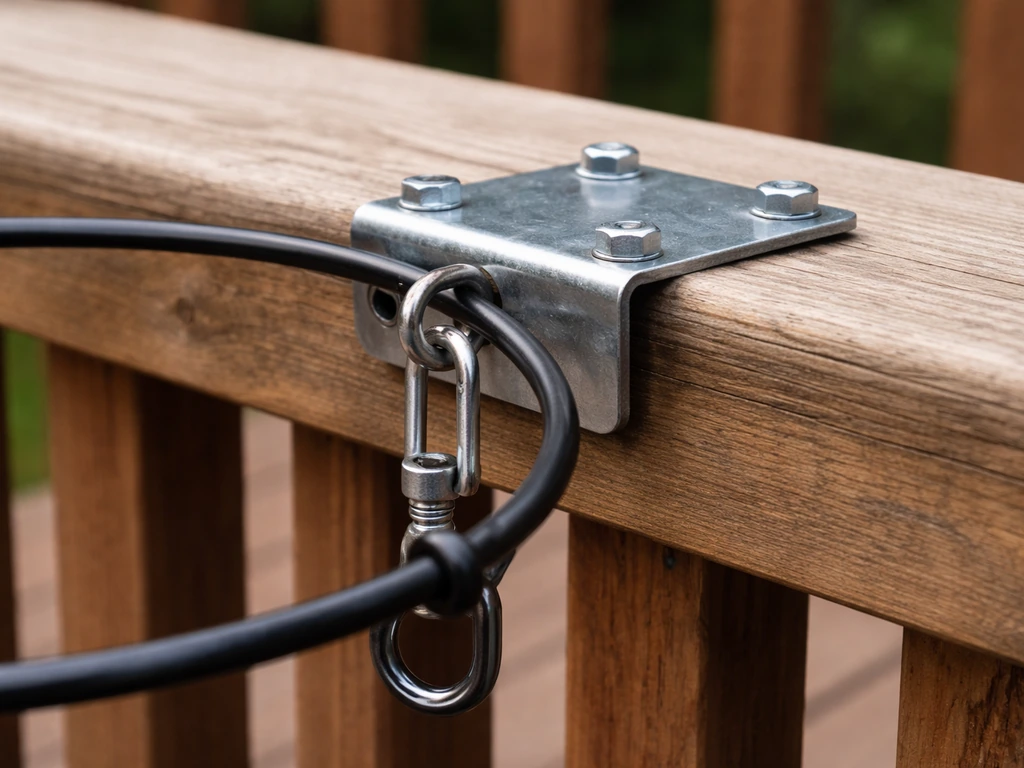
- Mounting compatibility: The feeder needs a clamp, bracket, or railing mount that locks firmly onto a standard 2x4 or 2x6 deck railing without wobbling. Wobbly feeders spill seed, waste money, and stress birds.
- Weather resistance: Deck feeders are exposed on all sides. Look for UV-stabilized polycarbonate or powder-coated steel construction. Cheap plastic cracks in winter; unsealed wood warps and harbors mold.
- Capacity vs. mess trade-off: Larger hoppers mean fewer refills, but if you have fewer birds, seed sits too long and goes rancid or moldy. Match capacity to your actual traffic.
- Seed port and tray design: Wide drainage holes in any seed tray are non-negotiable. Clogged, wet seed is the fastest way to make birds sick and keep them away.
- Ease of cleaning: You should be able to disassemble it in under a minute. If cleaning requires tools, you'll skip it, and that's a problem.
- Pest resistance: Weight-activated closures, baffles, and caged designs matter on a deck because squirrels have easy launch points from railings, furniture, and nearby branches.
- Window strike safety: The U.S. Fish & Wildlife Service recommends placing feeders within 3 feet of windows so birds don't gain enough speed for a fatal collision. On a deck, this is easy to achieve and worth doing deliberately.
Stability is the underrated factor. A deck is a high-traffic environment. Kids, wind, brushing past to water plants, these things knock poorly clamped feeders off railings. A feeder that falls once usually cracks or bends, so invest in a solid mount from day one.
Match your feeder type to your birds (and the right food)
The feeder type and the food inside it matter more than the brand name on the box. Different birds have different feeding styles, and putting the wrong food in the wrong feeder is the most common reason new setups go quiet.
| Target Bird | Best Feeder Style for Deck | Best Food |
|---|---|---|
| Cardinals | Hopper or platform/tray | Safflower seeds or black-oil sunflower seeds |
| Finches (goldfinch, house finch) | Tube feeder with small ports | Nyjer (thistle) seed |
| Chickadees and nuthatches | Tube or hopper | Black-oil sunflower seeds or mixed sunflower chips |
| Woodpeckers | Suet cage or hopper with suet holder | Suet cakes, peanuts, or shelled sunflower |
| Orioles | Oriole-specific nectar feeder or jelly feeder | Orange nectar or grape jelly (spring/summer) |
| Bluebirds | Platform/tray or mealworm feeder | Live or dried mealworms |
| Blue jays | Hopper or platform | Whole peanuts, shelled corn, sunflower |
| Mourning doves | Platform/ground tray or wide hopper with large tray | Millet, cracked corn, safflower |
| Hummingbirds | Nectar tube or dish feeder | 1:4 sugar-to-water solution, no dye |
If you want to attract multiple species, a hopper feeder stocked with black-oil sunflower seeds is your best starting point because it draws the widest variety. Then add a separate nyjer tube for finches and a suet cage nearby for woodpeckers. Trying to stuff all seeds into one feeder rarely works well, mixed blends with milo and millet often just pile up under the feeder as waste.
Setting up your deck feeder the right way
Placement and height
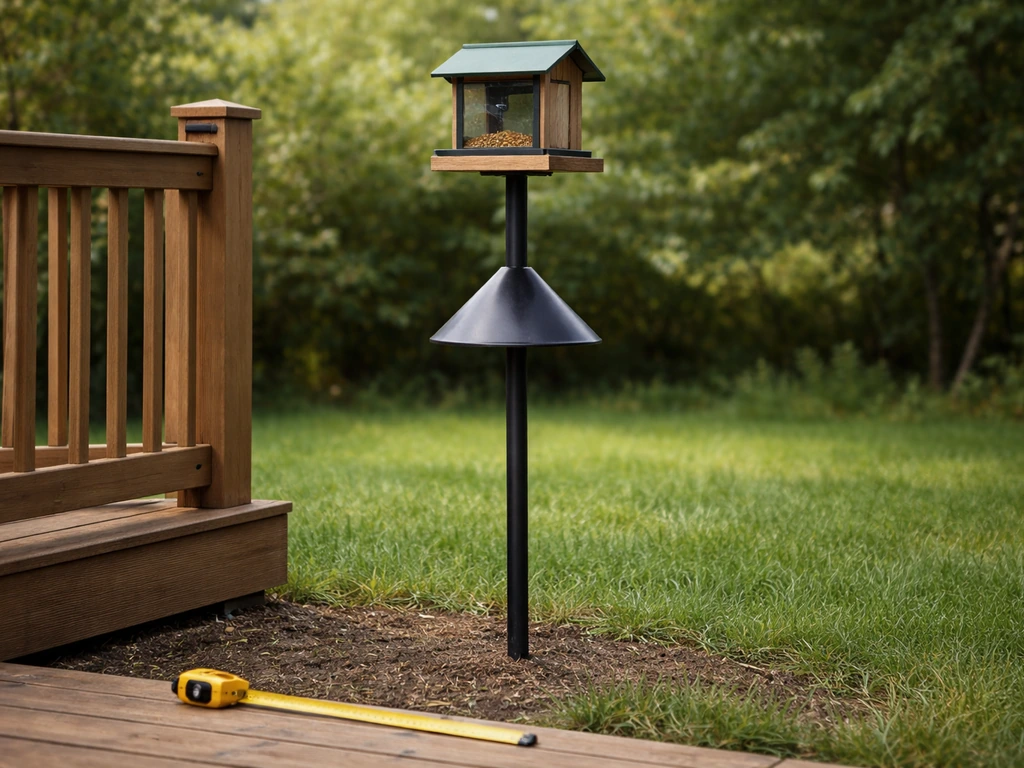
Height matters for two reasons: predator protection and baffle effectiveness. Audubon recommends placing baffles between 4 and 5 feet off the ground to block climbing squirrels. On a deck, this typically means mounting the feeder on a deck-rail-clamp pole that raises the feeder 4 to 5 feet above the deck surface, or at minimum above the railing height. If you mount directly on a low railing, baffles become much less effective because squirrels can simply jump from the deck surface.
For window safety, the 3-feet-or-closer rule from the U. Audubon also highlights window-placement options like “within 3 feet” and “more than 30 feet away” to reduce collision likelihood “within 3 feet” and “more than 30 feet away” window-placement options. S. Fish & Wildlife Service is easy to apply on a deck. Mount the feeder directly off the railing closest to your sliding door or kitchen window so birds can't build up speed. This placement also gives you a great view, which is the whole point.
Shelter, shade, and wind protection
Decks are exposed. A feeder in full sun all afternoon in summer will turn nectar toxic within hours and dry out seed faster. If your deck gets afternoon sun, position the feeder where your house overhang, a pergola, or a nearby tree provides afternoon shade. In winter, a south or east-facing position keeps the feeder visible and accessible without snow piling directly into seed ports. If you live somewhere with heavy snowfall, a hopper feeder with a roof design protects the seed far better than open platform styles.
Squirrel launch-point audit
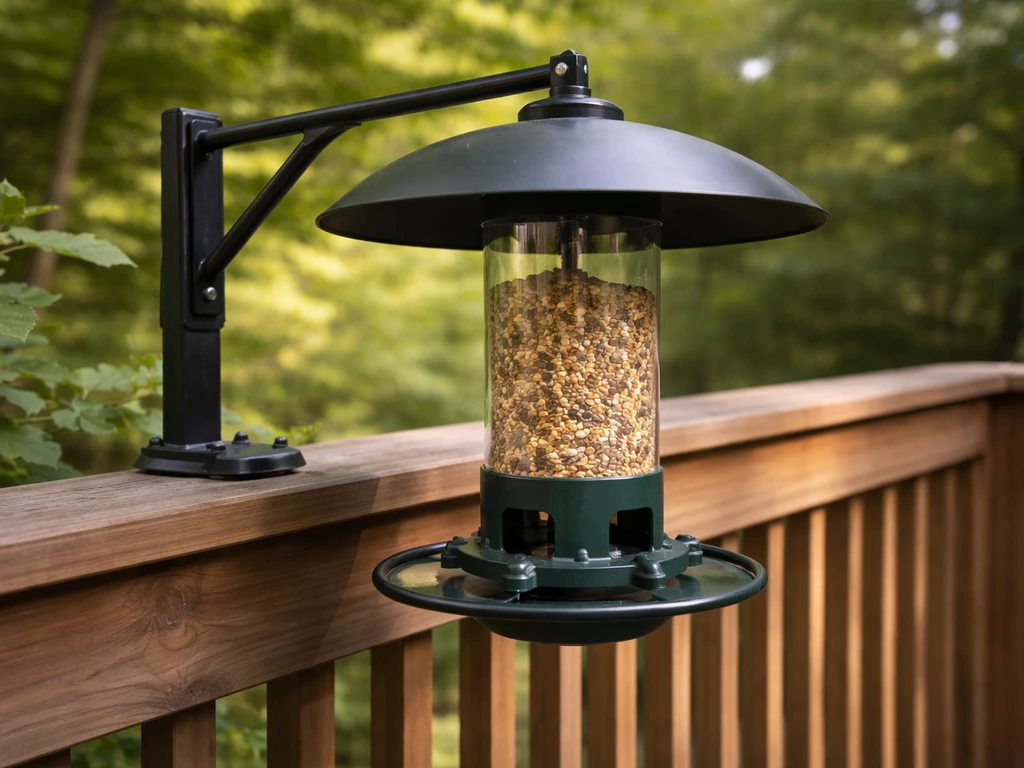
Before you finalize placement, walk around your deck and look for squirrel launch points. Perky-Pet's guidance for weight-activated feeders recommends keeping the feeder at least 8 feet away from any launch point like a branch, post, roof edge, or fence. On a typical deck, that's almost impossible to fully achieve, which is exactly why weight-activated feeders and baffles matter so much in this setting. The goal isn't to achieve a perfect perimeter; it's to combine placement with physical deterrents so squirrels can't win even if they get close.
Top deck-mounted feeder options by style
Hopper feeders
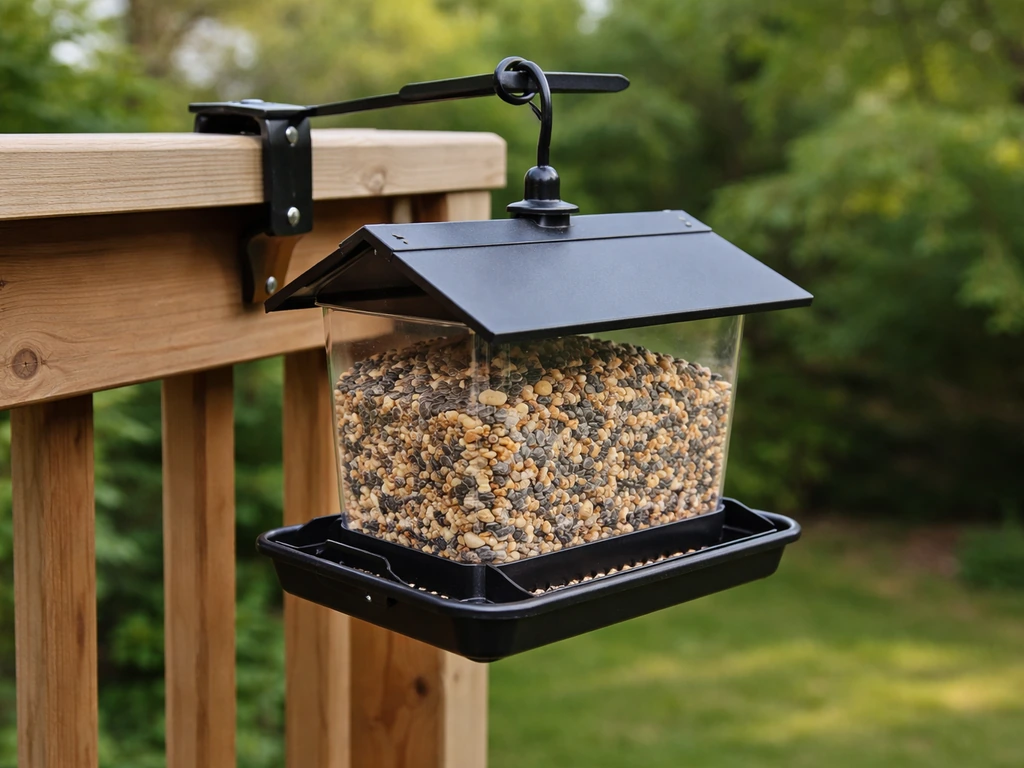
A hopper feeder with a deck-rail clamp mount is the most versatile choice for most people. The covered seed reservoir keeps rain and snow off the food, capacity is usually 2 to 4 pounds of seed (enough for several days of moderate traffic), and the wide perching ledge welcomes cardinals, jays, chickadees, and nuthatches simultaneously. Look for models with metal hardware (not plastic clips) and drainage holes in the floor tray. The best hopper feeders for decks have a removable bottom tray for cleaning and a mounting bracket that accepts both pole and railing clamps.
Tube feeders
Tube feeders are ideal if finches are your priority. Nyjer feeders with small mesh ports or narrow seed tubes work best for goldfinches and house finches, and their slim profile mounts easily on a deck post or railing arm. For a wider range of birds, go with a tube feeder that has metal-reinforced ports (squirrels chew through plastic ports quickly) and a removable base for thorough cleaning. Caged tube feeders, where a metal cage surrounds the tube, add squirrel and large-bird deterrence without blocking small songbirds.
Platform and tray feeders
Platform feeders are the go-to for doves, sparrows, and bluebirds. They're open, low-sided, and accessible for birds that don't cling. On a deck, a platform feeder works well as a secondary feeder mounted lower on the railing or placed on a small deck table. The downside is rain and contamination, seeds get wet, birds track feces across the tray, and cleanup is constant. Platforms with mesh or screen floors that let rain drain through are meaningfully better than solid-bottom trays. If you're comparing this approach with free-standing bird feeder stands, the deck mount wins on stability but loses on relocatability.
Suet feeders
A suet cage is cheap, simple, and the single best way to bring woodpeckers, nuthatches, and chickadees to your deck in fall and winter. A standard wire cage feeder costs under $10 and holds one standard suet cake. Hang it from a deck overhang hook or clip it to a rail-mount arm alongside your main hopper. In warm weather (above 50 degrees consistently), switch to no-melt suet formulas or peanut butter suet to prevent the fat from going rancid. Tail-prop suet feeders, which have an extended bottom panel, specifically attract larger woodpeckers that need to brace their tail while feeding.
Nectar feeders for hummingbirds and orioles
Decks are actually great for nectar feeders because you can keep a close eye on the solution level and change it before it ferments. Hummingbird nectar in hot weather (above 80 degrees) should be changed every 1 to 2 days. A small 8 to 12 oz bottle-style hummingbird feeder is plenty for a deck setting unless you have a large migration corridor, bigger isn't better when nectar goes bad faster than birds can drink it. Oriole nectar feeders should be placed out in early spring, as orioles are among the first migrants to arrive and will pass you by permanently if there's nothing there when they scout.
Smart and solar feeders
Smart bird feeders with built-in cameras have gotten genuinely good in the past couple of years. For a deck setup, they're a natural fit because you're already close to a power source and WiFi signal. The best camera feeders use AI bird identification, log species automatically, and send notifications when uncommon birds visit. Solar-powered feeders (typically with camera or LED features) work on a deck but are slower to charge under a roof overhang or in northern winter light, so check the battery specs before assuming solar is sufficient year-round. These feeders are a real upgrade for engaged bird watchers, but the core seed-and-mount decision still matters more than tech features.
Keeping pests out without deterring birds
Squirrels
Squirrels are the defining challenge of deck feeding because your deck gives them so many access routes. The most reliable strategy combines three things: a weight-activated feeder that closes ports when a squirrel's heavier body weight triggers the mechanism, a baffle on the mount pole, and thoughtful placement. Perky-Pet's weight-activated designs use an adjustable knob that lets you dial in the trigger weight, a lighter setting closes off squirrels but may close for large birds too, while a heavier setting stays open for jays and cardinals but may let small squirrels sneak through. A weighted-base free standing feeder can be a smart alternative when you do not want to clamp a feeder to your deck rail or pole weight-activated feeders. Test and adjust in the first week. Audubon's guidance reinforces that baffles need to be 4 to 5 feet above the ground to prevent climbing access, and they need a wide enough diameter (at least 15 to 18 inches) to prevent squirrels from reaching around them.
Rats and mice
Deck feeders can attract rats if seed is spilled on the deck surface and left overnight. The single most effective prevention is a seed catcher tray beneath your feeder, plus sweeping or vacuuming any spillage before dusk every day. Avoid putting any food directly on the deck floor or rail surface. Rats are attracted to the debris under feeders as much as the feeders themselves, so a clean deck surface matters as much as any feeder feature. If you see signs of rodent activity, switch to a no-waste blend (hulled sunflower chips, nyjer, peanuts in the shell) that birds consume cleanly without leaving husks and chaff.
Aggressive birds (starlings, grackles, house sparrows)
Starlings and grackles will mob open platform and hopper feeders. A caged feeder with a grid spacing of 1.5 inches blocks larger birds while letting chickadees, finches, nuthatches, and small woodpeckers through. For suet, an upside-down suet feeder requires birds to hang and feed from below, which woodpeckers and nuthatches do easily but starlings typically won't bother with. Switching from mixed blends with milo or cracked corn to straight safflower or nyjer also selectively attracts songbirds while deterring grackles and house sparrows, which rarely eat safflower.
Keeping your feeder clean and birds healthy
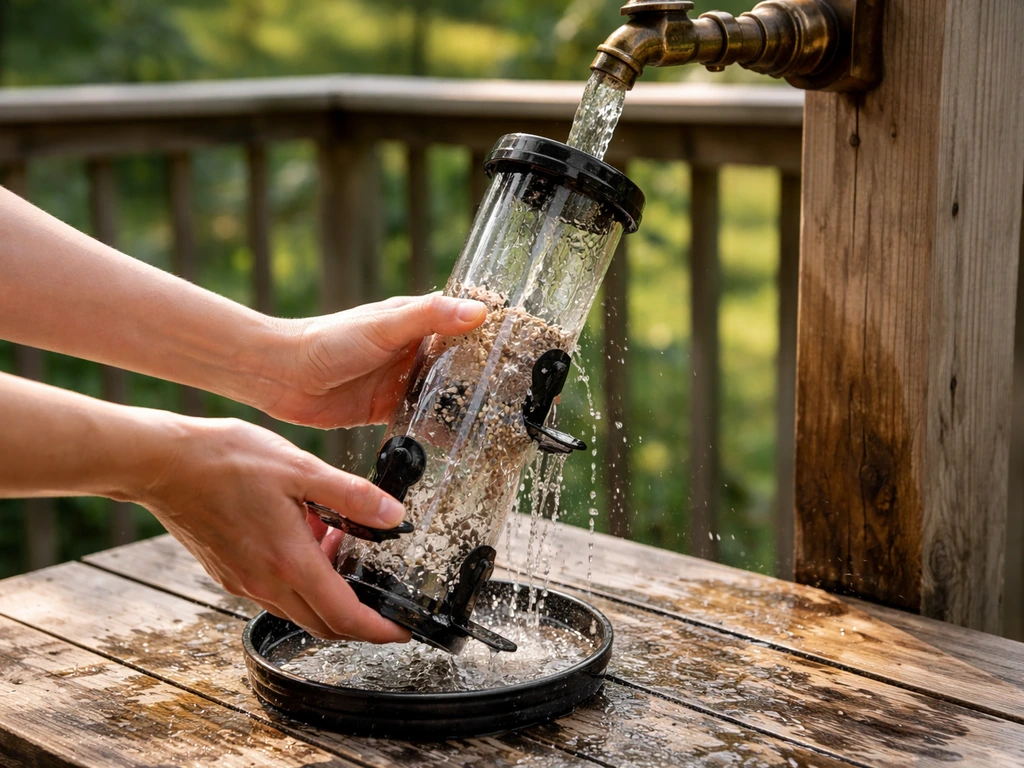
Project FeederWatch recommends cleaning seed feeders about every two weeks under normal conditions, and more frequently during warm or damp weather when mold grows fast. On a deck, this is actually easier than a yard-mounted feeder because you're right there. A quick scrub with a 9:1 water-to-bleach solution, a thorough rinse, and complete air drying before refilling is the standard. The air-dry step matters, refilling a damp feeder accelerates mold growth in the seed.
- Empty and rinse the feeder every 1 to 2 weeks (more often in summer or rainy periods).
- Scrub ports, perches, and trays with a bottle brush and mild bleach solution (9 parts water, 1 part bleach).
- Rinse thoroughly until there's no bleach smell remaining.
- Allow to air dry completely before refilling — at least 30 to 60 minutes in the open air.
- Discard any clumped, discolored, or foul-smelling seed rather than refilling on top of it.
- In winter, check for ice blocking seed ports after storms and clear them promptly.
Winter feeding on the deck
Winter is when deck feeders earn their keep. Birds are under caloric stress, and reliable feeders near the house often become a critical resource when natural food is buried under snow. High-fat foods like suet, black-oil sunflower seeds, and peanuts are the priority in cold months. Nyjer seed can freeze and clump in mesh feeders in severe cold, so check and break up clogs after hard freezes. If your deck is sheltered from wind on one side, position your winter feeder on that protected side. A hopper feeder with a roof keeps seed accessible even after a snowfall, which is a real advantage over open platform styles in winter.
Your quick buying checklist and what to do if birds don't come
Before you buy: measure and decide
- Measure your deck railing width and confirm the clamp mount fits (most standard clamps fit 1.5 to 2 inch railings).
- Decide on your primary target birds and cross-reference the feeder-type table above to choose your main feeder style.
- Check whether your deck gets afternoon sun and plan for a shaded position or no-melt seed/nectar if it does.
- Identify squirrel launch points within 8 feet of your planned feeder position and plan for a baffle or weight-activated feeder.
- Decide if you want a camera feeder (plan for WiFi strength and power access) or a traditional feeder.
- Buy a no-waste seed blend or hulled seed for your first fill to reduce deck mess and discourage rodents while birds discover the feeder.
If birds aren't showing up
Give a new feeder at least one to two weeks before worrying. Birds need time to find it, especially if there was nothing there before. If two weeks pass with no activity, work through this checklist before assuming the feeder is the problem.
- Check the seed: Is it fresh? Stale or old seed loses its scent cues that attract birds. Buy a fresh bag and do a full swap.
- Check placement relative to cover: Feeders placed in totally open exposed positions with no shrubs or trees within 10 to 15 feet feel unsafe to most birds. Add a potted shrub nearby or reposition closer to a hedge or railing post.
- Check for predator pressure: A cat that patrols your deck will keep birds away for days or weeks even after the cat is gone. Observe quietly for a few days.
- Check seed type vs. expected birds: If you're using generic mixed blends with lots of milo, many songbirds won't touch it. Switch to straight black-oil sunflower or nyjer.
- Check nearby competition: If a neighbor has an established feeder 30 feet away, birds are already habituated to that spot. Be patient and consistent.
- Check for window reflection issues: If your windows are highly reflective at certain times of day, birds may be confused or spooked. A feeder directly within 3 feet of the window reduces this risk.
Deck-mounted feeders sit in a sweet spot between convenience and bird access. For a great grab-and-go option, the best suction cup bird feeder can stick to smooth surfaces like windows or tiles without needing drilling. They're easier to maintain than pole-mounted feeders in the middle of the yard, more stable than hanging bird feeders in wind, and far more engaging than window-only setups because you can run multiple feeder styles side by side on the same railing. Get the mount right, pick the feeder for your target birds, keep it clean, and you'll have reliable bird traffic within a few weeks. A high quality bird feeder also makes it easier to keep seed dry and stable, which helps attract the birds you want.
FAQ
My deck feeder went quiet, how do I troubleshoot without replacing everything?
If you see seed piled up, wet clumps, or fewer birds than expected, the fix is usually the food-to-feeder match or the feed size. For example, use black-oil sunflower in a hopper, switch nyjer to the correct small-port tube for finches, and avoid mixing milo or cracked corn into your “main” feeder blend, since many blends waste more under a deck feeder.
Will a deck-mounted feeder work in rainy climates, or will it get too wet?
Yes, but only if the feeder is designed to drain and withstand damp conditions. Pick models with drainage holes in the tray or bottom, and use a covered hopper or a feeder with a roof. For platform feeders, prefer screen or mesh floors so rain can pass through, and plan on more frequent cleanup after storms.
How do I keep a deck feeder from creating a mess that attracts pests?
To protect birds and prevent long-term mess, avoid placing seed ports or drip paths where husks will fall onto the deck surface. Use a seed-catcher tray, choose a feeder with a removable bottom tray, and sweep or vacuum spillage before dusk. This reduces both rat attraction and slippery deck buildup.
How often should I clean a deck-mounted feeder during different seasons?
A good rule is to clean when birds are present and weather is manageable, then increase frequency when it is warm or damp. If you have heavy traffic or see damp seed, mold smell, or clumping, clean sooner than every two weeks. Also fully air-dry before refilling, partial drying can restart mold growth quickly.
What are common baffle mistakes that still let squirrels get to the food?
For baffles, vertical height matters, but so does diameter and “squirrel jump” geometry. Make sure the baffle is placed 4 to 5 feet above the ground, use a sufficiently wide baffle (around 15 to 18 inches), and ensure there is no nearby post, branch, or rail edge that gives squirrels a launch or bypass route.
My weight-activated feeder still allows some visitors, how should I adjust it?
If you see big birds or squirrels getting through, adjust the system rather than switching brands. For weight-activated feeders, dial the trigger weight in small steps during the first week, then re-test with different visitors. Remember that a setting that stops small squirrels might also unintentionally block heavier but “edge-case” birds, like larger jays.
How do I prevent hummingbird nectar from going bad on a sunny deck?
Avoid nectar spoilage by matching the feeder size to your climate and traffic. In hot weather above 80 degrees, smaller bottle-style feeders are easier to refresh frequently, and you should plan on changing nectar every 1 to 2 days. In cooler weather, you can extend intervals, but never wait if nectar looks cloudy or smells sour.
Are smart, camera, or solar feeders actually reliable on a covered deck?
Not necessarily. Many camera feeders need power and stable WiFi, and “solar” performance can drop under roof overhangs or in northern winter. If you buy one, check the battery capacity and charging time specs for your exact sun exposure, and consider a model that can run reliably even when solar recharge is weak.
If I want to change feeder height or location, how long until birds adjust?
Some birds like consistency and specific heights, so change placement gradually. If you need to move, relocate within the same general zone first, keeping the window-safety distance rule in mind, then wait about a week for birds to redevelop traffic. Sudden long-distance moves can reset the learning cycle for local birds.
What feeder changes reduce starlings and grackles without scaring away smaller birds?
If you are getting grackles or starlings, the easiest deck-level correction is to limit access. Use a caged feeder with small grid spacing for open feeder styles, or switch suet to an upside-down format. Also consider changing your base seed to safflower or nyjer to reduce preferences for common mobbers.
Does mounting on a low deck railing still work, even with a baffle?
Often yes, especially if your feeder is too low or lacks a deterrent. If your railing is short, baffles lose effectiveness because squirrels can jump from the deck. In that case, raise the feeder using a deck-rail clamp pole or position it so the baffle is still in the 4 to 5 foot zone relative to the access points squirrels can use.
What is the simplest “multiple species” setup for a deck without causing seed waste?
A starting step is to use one main hopper feeder for generalists, then add one specialized feeder near it for a second niche (finch tube for nyjer, suet cage for woodpeckers). Place feeders close enough to share your viewing area but keep the food types separate to avoid mixing seeds on the ground.
Next Articles
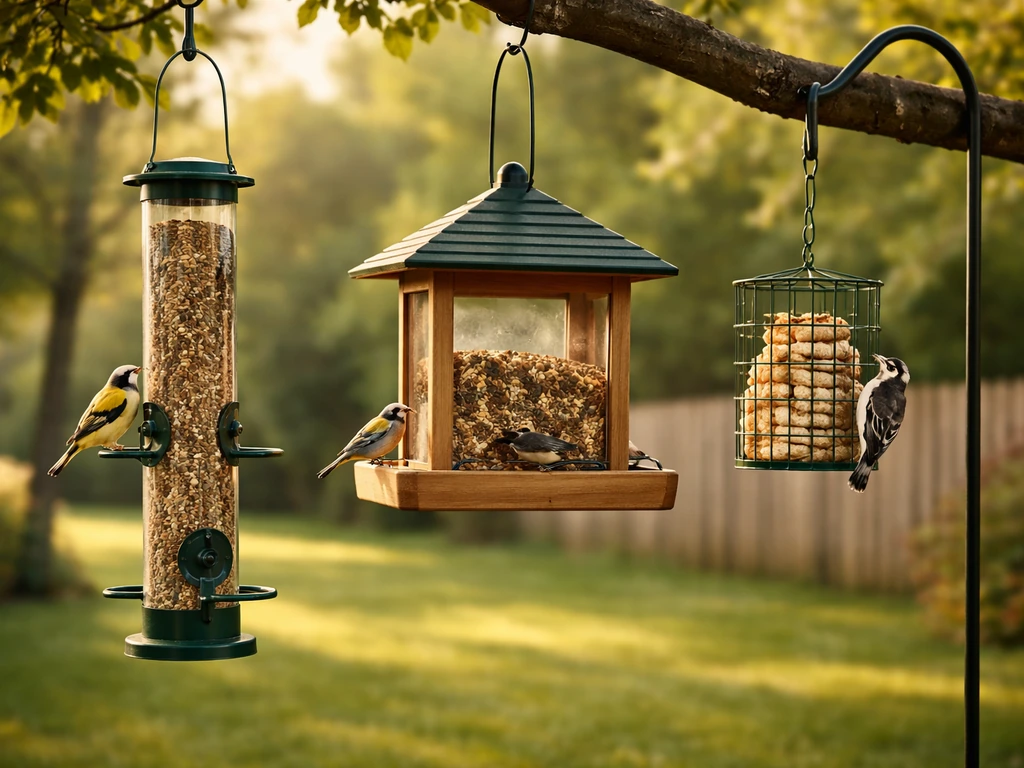
Best Hanging Bird Feeder Guide: Pick the Right Outdoor Feeder
Choose the best hanging bird feeder by yard, weather, cleaning ease, seed type, and bird targets like finches and cardin
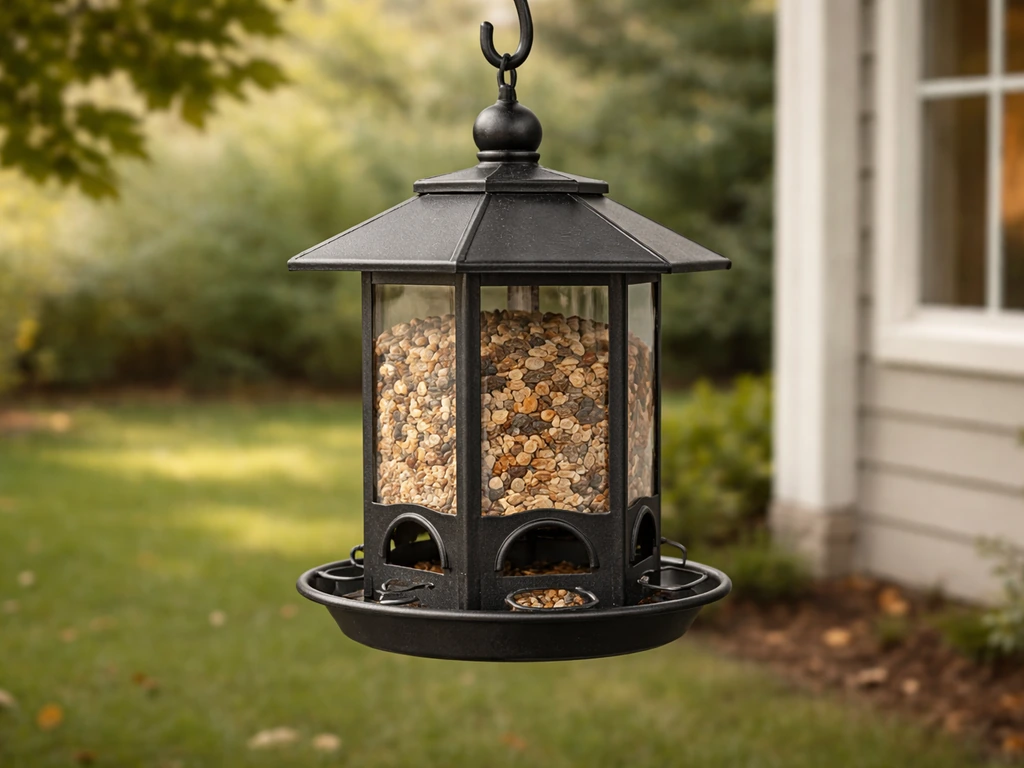
High Quality Bird Feeder Guide: Choose the Best Feeder
Learn what makes a high quality bird feeder: materials, weatherproofing, cleaning, pest control, and the best style for
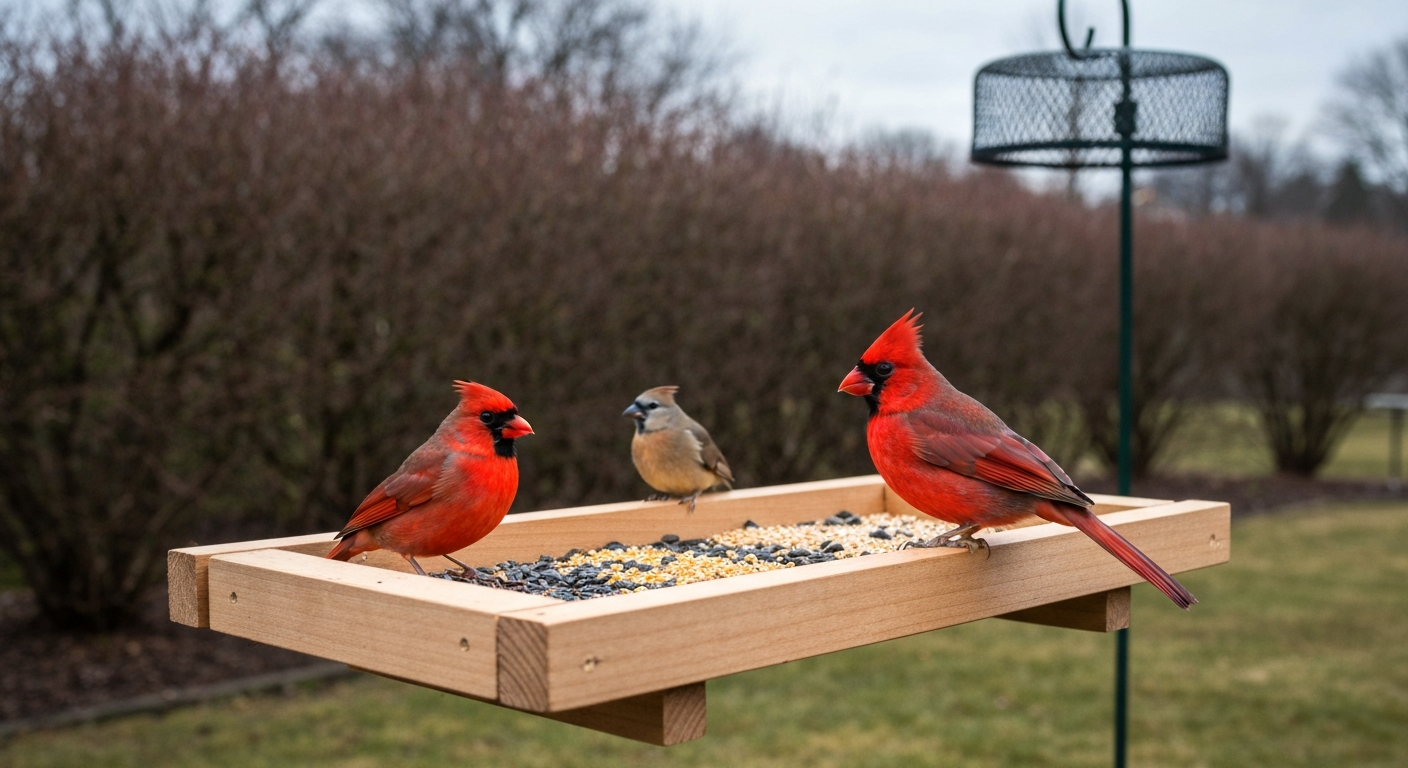
What Does a Cardinal Bird Feeder Look Like: Design & Tips
Identify and choose the best cardinal bird feeder: shapes, colors, perches, seeds, placement, and winter tips.