The best hanging bird feeder for your yard is the one that matches the birds you actually want to attract, survives your local weather, and doesn't become a nightmare to clean or a free buffet for squirrels. There's no single winner. A tube feeder loaded with nyjer seed is the right answer for a finch-heavy yard, while a large hopper with a wide roof is the better call if you're after cardinals and blue jays in a region that gets real winter. This guide cuts through the noise and tells you exactly what to buy, why, and how to set it up so it works from day one.
Best Hanging Bird Feeder Guide: Pick the Right Outdoor Feeder
Marcus Hendricks
18 Apr 2026
What 'best' actually means for a hanging feeder in your yard
Before you spend money, you need to answer four quick questions about your specific situation: What birds do you want? How exposed is your yard (wind, rain, snow)? Do you have an active squirrel or rat problem? And where are you actually going to hang it? Those four factors determine everything else, feeder shape, seed capacity, material, and how much you'll spend replacing it in two years.
A small urban balcony with one tree branch calls for a completely different feeder than a suburban backyard with a dedicated pole system, multiple species, and winter temperatures that drop below freezing for months. If you're setting up multiple feeders or a full station, it's worth thinking about how a hanging feeder fits alongside deck-mounted and freestanding options too, but for most people, a quality hanging feeder on a branch, shepherd's hook, or pole is the most flexible starting point.
- Small yards or single trees: go with a compact tube or window-mounted style that doesn't crowd the space
- Open, windy or wet yards: prioritize a feeder with a deep weather roof or covered hopper design
- Multiple target species: consider two smaller feeders over one large multi-port feeder — birds are territorial
- Active squirrel pressure: weight-activated or cage-style designs are non-negotiable before anything else
- Minimal maintenance lifestyle: look for wide-mouth or split-apart designs that rinse clean in under five minutes
Top picks by use case
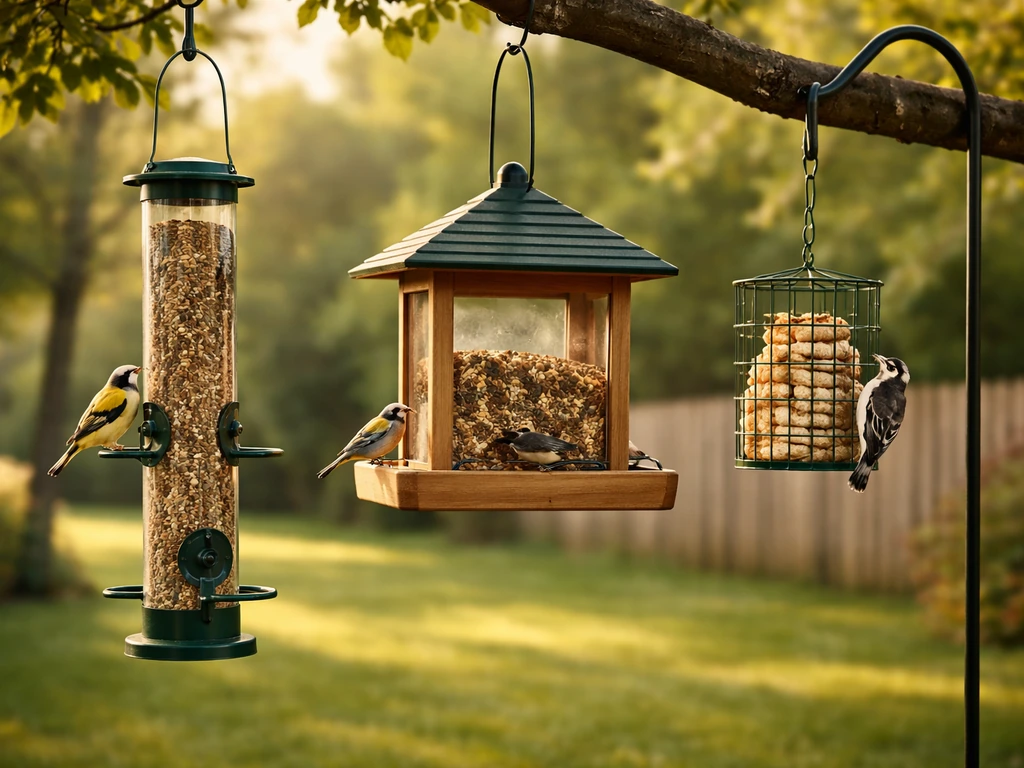
Instead of ranking feeders in a single list, here are the best hanging feeder types organized by the situation they actually solve best. I've used versions of all of these and the differences are real, not just marketing.
Best all-around hanging feeder: covered hopper with large capacity
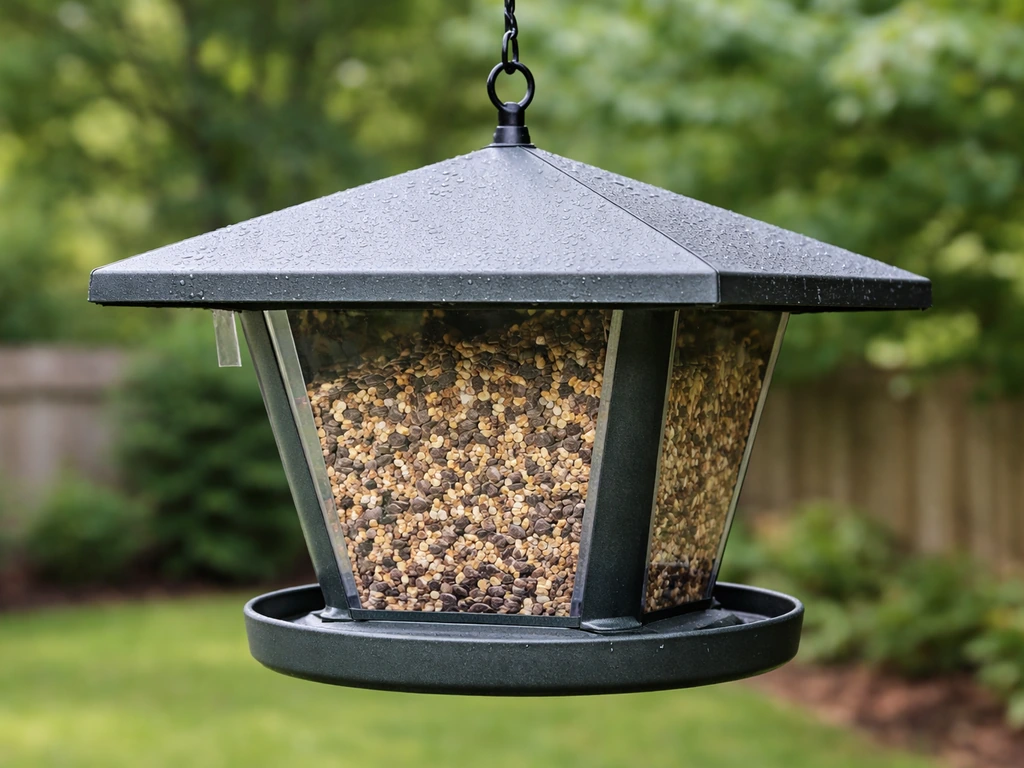
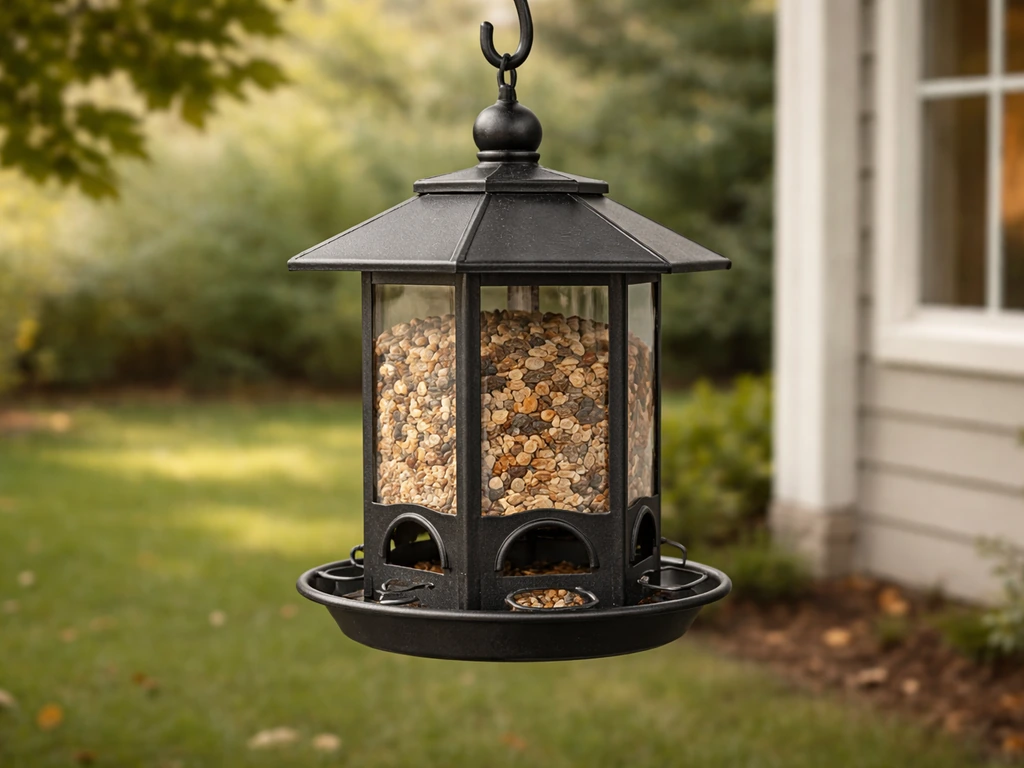
A hopper feeder with a solid roof and 4-to-6 pound seed capacity is the workhorse choice for most backyards. For many people, the best choice products bird feeder is a covered hopper that balances seed capacity, weather protection, and easy maintenance. It draws the widest variety of birds (cardinals, chickadees, nuthatches, blue jays, sparrows, and more), stays dry in rain, and doesn't need daily refilling.
Look for metal or UV-stabilized polycarbonate construction, a sloped roof with at least a 3-inch overhang, and a drainage slot in the seed tray so water doesn't pool and rot your seed. Brands like Woodlink and Perky-Pet consistently deliver here at the $25-to-$50 price point, and you can find well-built versions with metal roofs closer to $60-$80 that will outlast three of the cheaper ones.
Best for finches: nyjer tube feeder
If you want goldfinches, pine siskins, or house finches specifically, you need a nyjer (thistle) tube feeder with small ports. The Droll Yankees Onyx Clever Clean and the Aspects HummZinger-style finch feeders are the gold standard here. The key features are multiple small feeding ports, a UV-protected yellow or bright-accented tube to attract goldfinches visually, and a removable base for easy cleaning. Mesh-style sock feeders also work well for nyjer, but they degrade faster outdoors and don't handle wet weather as cleanly as a hard tube.
Best for hummingbirds: nectar hanging feeder
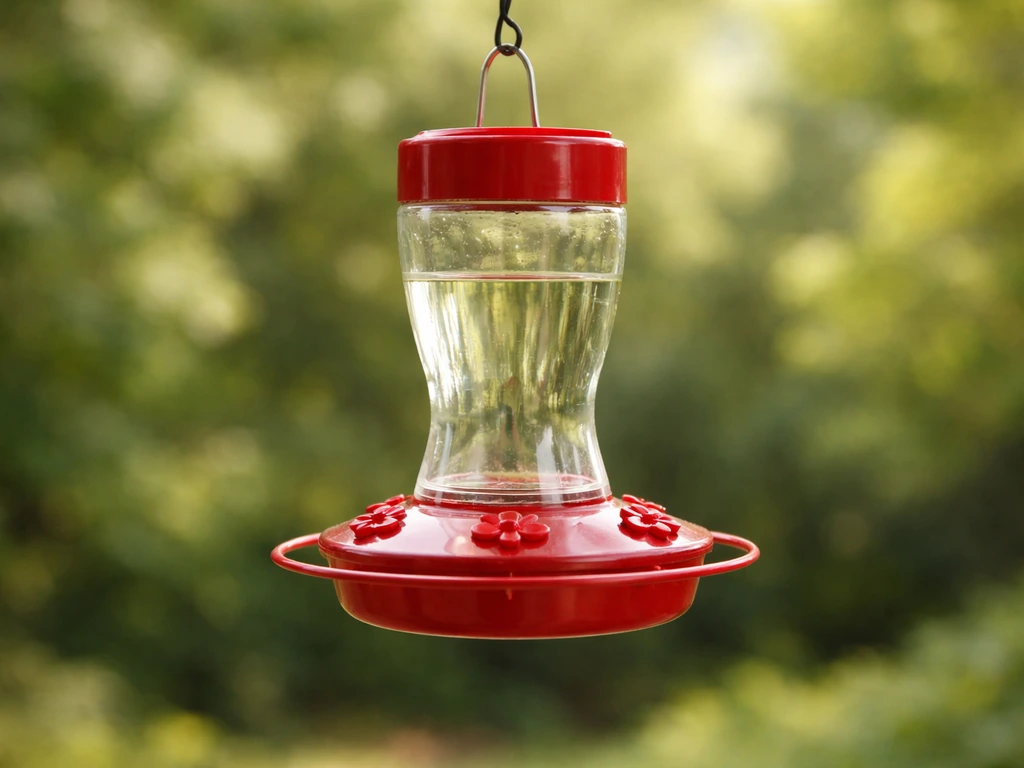
Hummingbird feeders are their own category entirely. The Aspects HummZinger Excel is consistently the easiest to clean and most reliable I've used, it has a built-in ant moat, wide mouth for no-mess filling, and a shallow reservoir that keeps nectar fresh without waste. Hang it in a spot with morning sun and afternoon shade so the nectar doesn't spoil as fast. In hot weather, you may be refilling every 2-3 days. Make your own nectar: 1 part white sugar to 4 parts water, boiled and cooled. Skip the red dye.
Best for orioles: orange-accented hanging feeder
Oriole feeders use the same nectar-or-jelly logic as hummingbird feeders but need wider ports and orange coloring to signal the right bird. Models from Perky-Pet and Birds Choice with built-in jelly troughs and orange plastic domes are the most effective. Get these out by late April, because orioles arrive early in migration and if they don't find your feeder in the first week or two, they move on.
Best for woodpeckers and suet: cage suet feeder
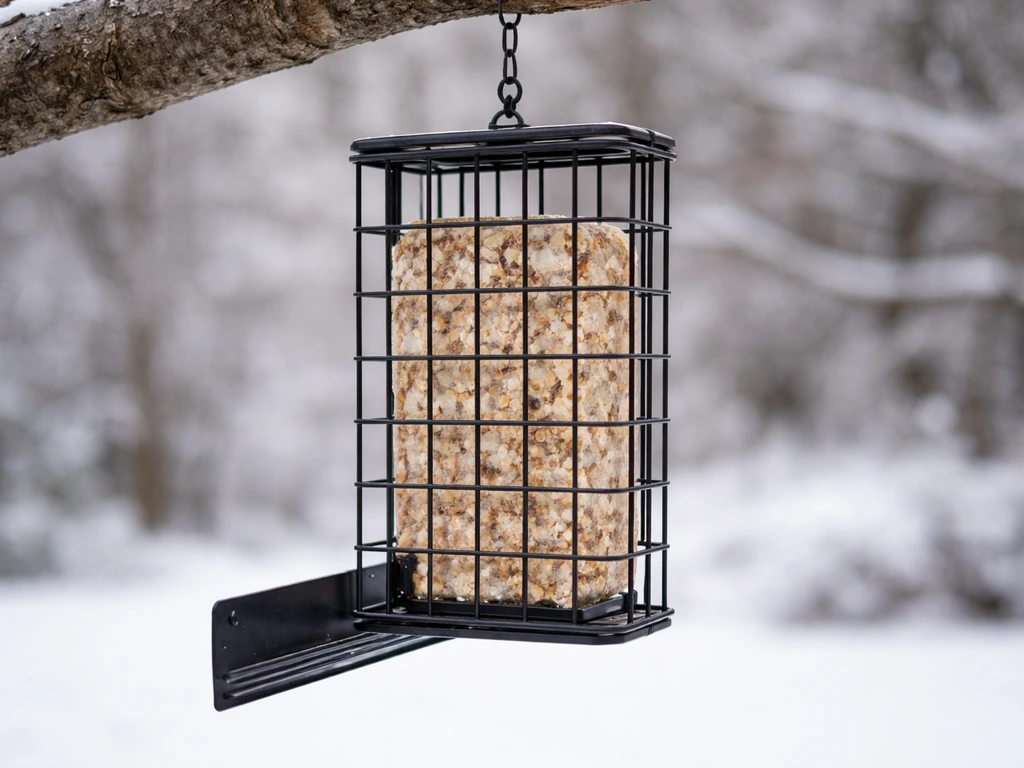
A simple metal cage suet feeder hung from a branch or pole is the best tool for woodpeckers, nuthatches, and chickadees during cold months. Look for a model with a tail prop (a bottom extension where woodpeckers can brace themselves) if you want to specifically attract larger downies or hairy woodpeckers. Double-cake designs let you go longer between refills. These are inexpensive ($8-$20) and virtually indestructible. The only real upgrade worth paying for is a roof to keep suet from going rancid faster in rain.
Best squirrel-resistant option: weight-activated hanging feeder
Weight-activated feeders like the Squirrel Buster Plus by Brome close their ports when a squirrel's weight triggers the mechanism. They're not cheap (usually $50-$80), but they genuinely work and pay for themselves compared to constantly restocking raided seed. The Brome lineup in particular is well-built, easy to disassemble for cleaning, and has replacement parts available so you're not buying a new feeder every season.
Best smart/camera feeder for tech-forward bird watchers
Bird feeders with built-in cameras (like the Bird Buddy or Netvue Birdfy) have improved significantly over the last couple of years and are worth considering if you want AI-assisted species identification alongside your feeding setup. They work best in yards with reliable Wi-Fi signal reach, consistent lighting, and where you're willing to deal with a charging or wiring routine. The cameras on current models can identify dozens of species reasonably well. Just know that the feeder itself is often secondary to the tech, seed capacity and weather sealing on camera feeders are sometimes compromised to fit the hardware. Think of them as a companion to a dedicated feeder, not necessarily a replacement.
Features that actually change the outcome
Marketing copy on bird feeders tends to oversell everything, so let me break down which features genuinely matter versus which ones are just packaging.
| Feature | Why It Matters | What to Look For |
|---|---|---|
| Weather roof/dome | Keeps seed dry and extends freshness; critical in rainy climates | At least 3-inch overhang; metal or thick poly roof over seed tray |
| Seed capacity | Determines how often you refill; bigger isn't always better — stale seed is a real problem | 2-4 lbs for moderate traffic; 6+ lbs only if you have high daily bird activity |
| Cleaning access | Directly impacts disease risk and bird safety; hard-to-clean feeders get skipped | Split-apart or wide removable base; dishwasher-safe parts are a bonus |
| Material durability | Determines lifespan in sun, rain, and cold; cheap plastic cracks in 1-2 seasons | UV-stabilized poly, powder-coated metal, or recycled poly lumber for frames |
| Port size | Controls which birds can feed and which get excluded | Small ports for nyjer/finches; large ports for sunflower/mixed seed and bigger birds |
| Pest deterrents | Weight-closing mechanisms or baffles save significant seed cost over time | Weight-activated closure or cage design; separate baffle for squirrel-heavy setups |
| Mounting hardware | Weak hooks and thin wire are the #1 reason feeders fall | Thick hanging wire or chain; rated mounting hook; consider a locking clasp in wind |
The feature most people underestimate is cleaning access. A feeder you can't easily pull apart and rinse is a feeder that will grow mold, spread disease, and stop attracting birds inside of a few weeks. Before buying anything, turn it over in your hands (or zoom into the product photos) and ask: can I get my hand or a bottle brush into every seed-contact surface? If the answer isn't obvious, it probably isn't easy.
Matching feeder type to the birds you want
Different birds have different feeding styles, preferred food, and comfort levels with feeder design. Here's a direct match-up so you're not guessing.
| Target Bird | Best Feeder Type | Best Seed or Food | Notes |
|---|---|---|---|
| Goldfinches / House Finches | Nyjer tube feeder or mesh sock | Nyjer (thistle) seed | Use yellow accents; perches below ports work well for goldfinches |
| Cardinals | Hopper or platform feeder | Safflower or black-oil sunflower | Cardinals prefer wide, stable perches; avoid small tube feeders |
| Blue Jays | Hopper or platform feeder | Whole peanuts, sunflower | Jays are bold and large; need sturdy perches and bigger feeder capacity |
| Chickadees / Nuthatches | Tube feeder or suet cage | Black-oil sunflower, suet | Will use almost any feeder; suet brings nuthatches more reliably |
| Woodpeckers | Cage suet feeder with tail prop | Suet, peanut butter suet cakes | Tail prop increases visit frequency for larger woodpecker species |
| Hummingbirds | Nectar feeder with ant moat | Homemade sugar water (1:4 ratio) | Clean every 2-3 days in heat; hang near flowers if possible |
| Orioles | Oriole nectar/jelly feeder | Grape jelly, orange halves, nectar | Put out by late April before migration window closes |
| Bluebirds | Mealworm platform or tray feeder | Live or dried mealworms | Bluebirds rarely use enclosed feeders; open tray or platform works best |
| Doves | Platform or ground tray feeder | Millet, cracked corn | Doves prefer low or ground feeding; a low-hung platform is a compromise |
| Sparrows / Mixed species | Hopper or platform | Mixed seed with millet and sunflower | High traffic; choose a feeder with a large drainage tray to reduce mess |
One thing to keep in mind: if you want cardinals, bluebirds, and hummingbirds all at once, you're going to need more than one feeder. Trying to serve all those birds with one feeder is like trying to serve pizza and sushi on the same plate, it doesn't really work. Two or three targeted feeders will out-perform one large multi-purpose model every time.
Where and how to hang it: height, shade, wind, and safety
Placement is one of the most overlooked parts of setting up a feeder, and it's free to get right. The biggest factor most people miss is window collision safety. Research from Cornell Lab's Project FeederWatch shows that feeder distance from windows is a primary safety variable. The practical rule: hang feeders either within 3 feet of a window (so a bird that startles doesn't build up fatal speed) or more than 30 feet away from any large glass surface. The zone between 3 and 30 feet is where most window strikes happen. If your only option is somewhere in that middle zone, applying window collision tape or decals on the glass itself is a worthwhile fix.
For height, most hanging feeders work well between 5 and 8 feet off the ground. Project FeederWatch also notes that about 10 feet can be a practical compromise when placing feeders as you design a feeding site. That's high enough to discourage casual squirrel jumps from the ground (squirrels can jump roughly 4-5 feet vertically from a standing position) and low enough that you can reach the feeder easily for cleaning and refilling without a stepladder. If you're using a shepherd's hook or pole, make sure you position it at least 10 feet away from any fence, tree trunk, or structure a squirrel can use to launch horizontally.
Sun and shade matter more than most people think. Morning sun with afternoon shade is the sweet spot: birds are most active in the morning, and direct afternoon sun in summer will spoil nectar and wet seed faster. Sheltered spots that block prevailing wind also help birds feel more comfortable landing. An exposed, swinging feeder in an open yard gets fewer visits than a slightly sheltered one near shrubs or a fence line where birds can perch and assess before approaching.
If you're hanging from a branch, use a proper S-hook or locking snap hook rated for the feeder's weight when full, a filled 6-pound capacity feeder with wet seed can weigh considerably more than the label suggests. If you want a no-drill option, the best suction cup bird feeder can let you mount a feeder on smooth surfaces like windows or patios while still keeping birds coming back. Thin wire or zip ties will fail, usually in the worst weather. If you don't have a good branch, a shepherd's hook with a ground anchor is a reliable and inexpensive solution that gives you full placement control.
Pest-proofing and fixing the most common problems
Squirrels
The only reliable long-term solutions for squirrels are weight-activated feeders (like the Brome Squirrel Buster line) and properly positioned baffles. A torpedo baffle or dome baffle mounted above the feeder on the hanging line will stop squirrels from climbing down from above. A wrap-around pole baffle positioned at least 4 feet high on a pole stops climbing from below. Safflower seed is also naturally less appealing to squirrels than sunflower, so switching your seed mix can reduce pressure without any hardware change.
Rats and mice
Rats are drawn to fallen seed under feeders more than to the feeders themselves. Keeping the ground clean under your feeder is the most effective deterrent. Use a seed catcher tray hung below the feeder to catch debris, switch to no-waste seed blends (hulled sunflower, shelled peanuts, nyjer) so there's less shell litter, and consider temporarily stopping feeding if you have a confirmed rat activity problem until the population settles. A tray feeder with drainage holes hung higher up is less accessible to rats than a low or ground feeder.
Mold and wet seed
Wet, moldy seed is a genuine health risk for birds and the most common feeder problem in humid climates or rainy seasons. The fix is a combination of design and habit. Choose a feeder with a roof and drainage, use smaller refills so seed turns over before it can go bad (2-3 days is the safe window in humid summer conditions), and do a full clean on a regular schedule. The U.
S. Fish & Wildlife Service recommends a diluted bleach solution of 1 part bleach to 9 parts water, soaking the feeder for 10 minutes, then rinsing thoroughly and letting it dry completely before refilling. Don't skip the drying step, putting seed into a damp feeder just accelerates the problem you're trying to solve.
Messy seed and ground litter
Seed hulls and dropped seed under a feeder create mess and attract pests. Three things help: switching to hulled or no-waste seed blends, adding a debris catcher tray below the feeder, and positioning the feeder over a garden bed or mulched area rather than a lawn where germinating seed becomes a weed problem. Some gardeners actually welcome a small feeder-garden bed combination and let native plants grow from dropped seed.
Clogged ports and stuck seed
This is especially common with nyjer tube feeders in wet weather. Nyjer is a fine seed that clumps when moist and can block ports entirely. The fix is to tap the feeder lightly when you check it, keep the tube out of direct rain exposure, and clean it thoroughly every two weeks. A bottle brush sized to the tube diameter is worth buying alongside the feeder, it makes cleaning a 3-minute job instead of a 20-minute one.
Seasonal strategy: winter vs spring and summer feeding
Winter feeding
Winter is actually the most valuable time to run a hanging feeder in cold-climate regions. Natural food sources are depleted and birds genuinely benefit from supplemental feeding when temperatures drop. For winter, prioritize high-fat foods: black-oil sunflower (the single most universally effective winter seed), suet cakes, and whole peanuts. These provide the caloric density birds need to stay warm overnight. Make sure your feeder material can handle freeze-thaw cycles, thin polycarbonate can crack, while metal and thick recycled poly hold up better. Shake the feeder after ice storms to break up any seed freeze or port icing.
In deep winter, birds will visit feeders most heavily in the two hours after sunrise and the hour before sunset. Positioning for these light angles helps you get the best views, and positioning near cover (dense shrubs or evergreens) helps birds feel safe enough to use the feeder consistently in cold weather when they're more cautious about energy expenditure.
Spring and summer feeding
Spring brings migration, which means a surge of new species at your feeder for a window of a few weeks. Get your nectar and oriole feeders out in late April and early May before migrants pass through. Summer feeding requires more maintenance: heat spoils seed and nectar faster, so smaller, more frequent refills beat large reserves sitting in the heat. Clean nectar feeders every 2-3 days in temperatures above 80°F.
Some experienced birders scale back or stop feeding in late summer to encourage birds to forage naturally and to align with reduced dependency ahead of migration. If you continue year-round, a mid-season deep clean in late summer (using the bleach solution method mentioned above) is a smart reset before fall migration and winter feeding ramp-up.
A simple maintenance calendar to keep things running
- Every 2-3 days (nectar and jelly feeders in summer): empty, rinse, and refill
- Weekly (seed feeders in humid weather): check for clumping, mold, or clogged ports; top off or replace seed
- Every 2 weeks (all feeders): full disassembly, scrub with a brush, rinse clean
- Monthly (deep clean): bleach solution soak (1:9 ratio), 10-minute soak, full rinse, air dry before refilling
- Seasonally (fall and spring): inspect hanging hardware, check for cracks or corrosion, replace worn parts before peak season
Your next step: narrow it down to one feeder today
If you're still deciding between options, here's the honest short version: most backyards do best starting with a quality covered hopper feeder for general mixed-seed feeding, adding a nyjer tube feeder if you want finches, and a suet cage for woodpeckers and winter. If you are mounting the feeder on posts or stands, choose the best bird feeder stands that stay stable and give you the safest placement height.
That three-feeder combination covers the majority of common backyard birds and costs less than $100 total if you buy mid-range. If you want the best bird feeder ever, a quality covered hopper is usually the safest, most rewarding place to start for mixed backyards. From there you can layer in a hummingbird or oriole feeder based on your region and season.
If you're comparing a hanging feeder to other mounting options, it's worth knowing that deck-mounted feeders and freestanding setups with weighted bases offer more stability in exposed locations but give you less flexibility on placement. If you want a freestanding option, focus on a weighted base so the feeder stays stable in wind and under heavier bird traffic best free standing bird feeder with weighted base.
If you want a more reliable solution on hard surfaces, look for the best deck mounted bird feeder options with sturdy placement and easy cleaning. Hanging feeders remain the most versatile choice for most yards because you can reposition them easily until you find the sweet spot. Once you know what works, you can invest in a more permanent setup. Start simple, observe what birds show up in the first few weeks, and let that guide your next purchase.
A reliable feeder can become your this is our happy place camper bird feeder spot, bringing the birds you love back day after day.
FAQ
How many birds can a hanging bird feeder handle at once?
Capacity depends on both seed volume and access. A covered hopper with a 4-to-6 pound capacity supports more visits before refilling, but crowded conditions also happen when there are few feeding ports or narrow perches. If you see long waits and dominant birds monopolizing the feeder, add a second feeder type (or the same feeder in a different spot) rather than only refilling more often.
What’s the best seed and feeder pairing for black oil sunflower?
Black-oil sunflower works extremely well with covered hoppers and most tube-style feeders meant for general seed. For mixed yards, stick to hulled or no-waste blends if you want fewer shells and less mess under the feeder, since dropped hulls can attract pests and create weed issues.
How do I prevent mold when temperatures are warm but humidity is high?
Use smaller refills so seed turns over faster, and make sure the feeder has a roof with real drainage so water cannot pool in the tray. Even with the right feeder, if you refill after a rainy stretch without fully checking for damp clumps, you can restart the problem. If you notice musty seed odor or web-like mold, dump it and do a full clean before refilling.
Is it safe to use red dye in hummingbird oriole nectar?
Generally no. Skip dye and focus on correct ratio (1 part sugar to 4 parts water) because dyes do not improve bird attraction enough to justify the potential downsides. Also avoid using honey, brown sugar, or artificial sweeteners, they can shorten nectar freshness and increase risk of fermentation.
How often should I clean a hanging feeder if I don’t see many birds?
Clean on a schedule based on moisture risk, not attendance. In humid weather, mold can start quickly even with low traffic, so plan for regular rinses and periodic deep cleans (more frequent for nectar and for tube feeders with nyjer). If birds are scarce, prioritize quick inspection for wet seed, clumping, and visible residue before you assume the feeder is working.
Can I move a feeder once birds start using it?
Yes, but do it gradually to avoid confusing newcomers. Small repositioning over a few days is better than relocating across a yard overnight. Keep the bird-friendly variables consistent, window-safety distance, morning sun to prevent nectar spoilage, and coverage for safety should not change drastically at the same time you move the feeder.
What should I do if squirrels still get to the feeder even with baffles?
First check placement. If the baffle is too low, squirrels can climb past it from nearby structures or tall grass. Then verify there is no accessible launch point from above, a torpedo baffle helps for top access and a wrap-around baffle helps for climbing from below. Finally, consider switching seed mix toward options squirrels dislike more, like safflower, to reduce repeat attempts.
Why is my nyjer tube feeder clogging?
Nyjer commonly clumps when it stays damp, which blocks ports and stops feeding. Keep the tube away from direct rain, tap it lightly when you check it, and clean thoroughly on a regular interval (every couple of weeks in many climates). If clogging keeps happening, your local weather may require a more sheltered hanging position or a feeder designed with easier access for port clearing.
Do I need to feed year-round, or should I stop at certain times?
You can, but it’s a tradeoff. Many people pause or reduce feeding late summer to encourage natural foraging and then ramp up again for colder months, especially if natural food is dropping. If you do stop, do a final clean first, and then return when temperatures and food availability make supplemental feeding truly helpful.
What’s the best way to reduce birds colliding with windows?
Follow the distance rule, place feeders within 3 feet of the window or more than 30 feet away from large glass. If you must use the 3-to-30 foot zone, add visual deterrents to the glass (tapes or decals) so birds perceive the surface earlier. Also avoid positioning the feeder directly along bird travel lines, like between trees and a window where birds rush straight in.
Next Article
High Quality Bird Feeder Guide: Choose the Best Feeder
Learn what makes a high quality bird feeder: materials, weatherproofing, cleaning, pest control, and the best style for