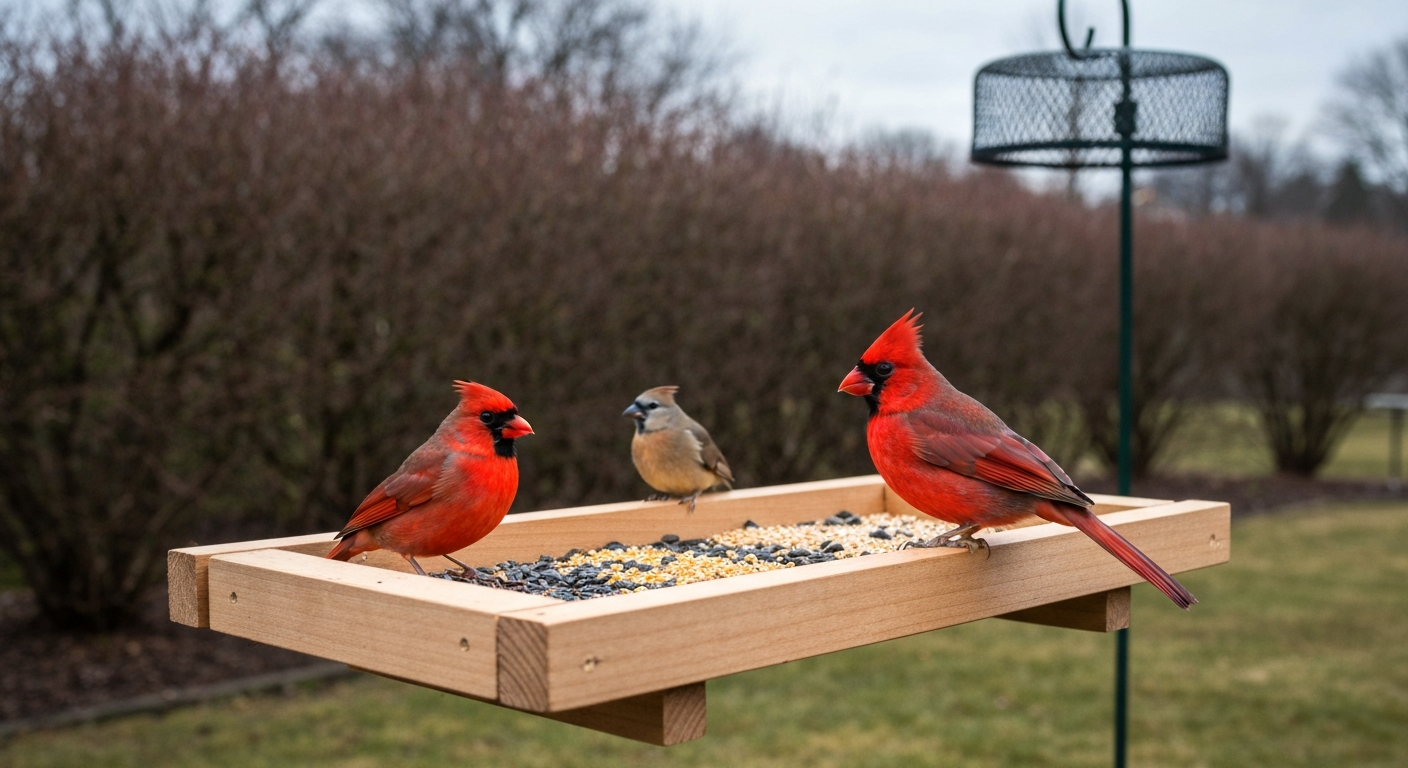
If you searched 'bird feeder AJ worth,' the most likely thing going on is that 'AJ' doesn't refer to a specific bird feeder brand or model at all. There's no widely recognized feeder nicknamed 'AJ,' and searches for the exact phrase mostly pull up unrelated results: a person named AJ Worth, celebrity net-worth pages, and Animal Jam (the online game) trading discussions. The most useful interpretation here is simply: 'Is this bird feeder worth it?' And that's a genuinely great question with a concrete, answerable framework behind it.
Bird Feeder AJ Worth: Is It a Good Buy and Why?
Marcus Hendricks
27 Apr 2026
What 'AJ worth' actually means in the feeder context
The phrase 'AJ worth' is almost certainly one of three things. First, it could be a typo or autocorrect misfire for 'any worth' or 'at worth,' meaning the person is simply asking whether a feeder is worth buying. Second, 'AJ' might refer to Animal Jam, the online game where players trade virtual items and frequently debate what something is 'worth' in AJ's trading economy. That's a totally separate world from backyard bird feeders. Third, someone may have seen a recommendation from a person whose initials or username is 'AJ' and is trying to track down the specific product.
None of those three scenarios points to a specific feeder brand you need to look up. What they all share is the same underlying need: a reliable way to judge whether any given bird feeder is actually worth the money. That's what the rest of this guide covers, in plain terms you can apply today. If you want a quick overview, this buyer’s guide walks you through the best bird feeders and how to choose the right one for your yard the rest of this guide covers.
How to judge a bird feeder's real value (price vs. features)
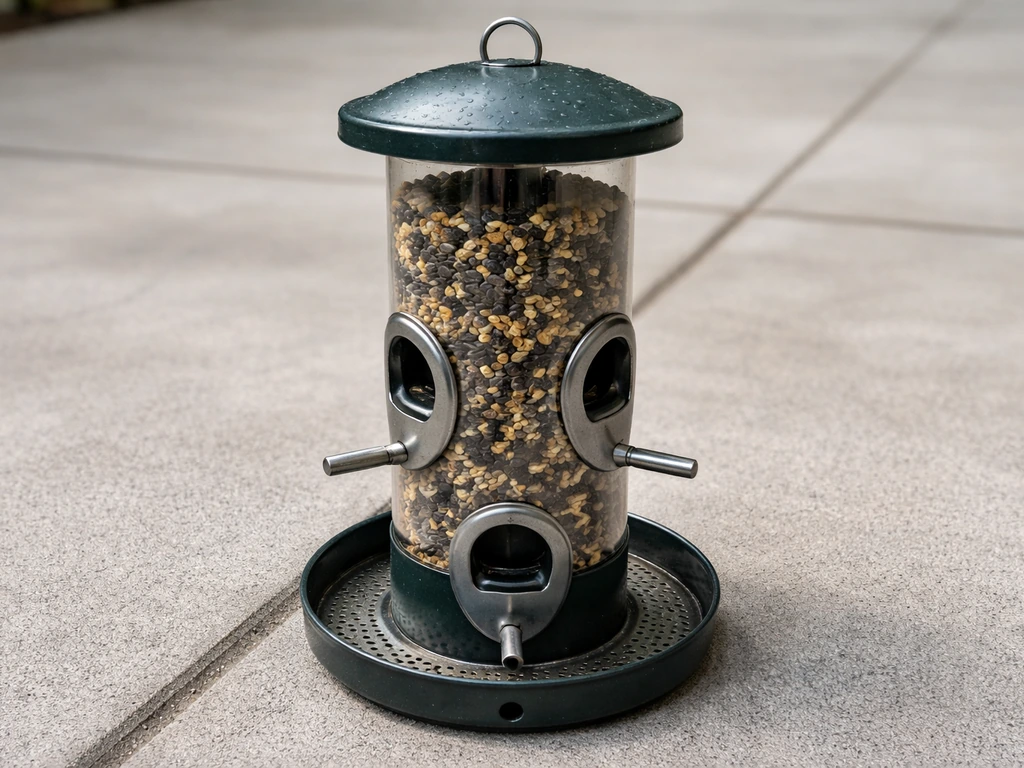
A feeder's sticker price tells you almost nothing about its value. A $12 plastic tube feeder that you replace every season costs more over five years than a $45 powder-coated metal feeder that just needs a good scrub twice a month. When I evaluate whether a feeder is worth buying, I run through six concrete criteria.
- Material durability: Metal (powder-coated steel or cast iron) outlasts UV-degraded plastic by years. Look for UV-stable polycarbonate if plastic is used, and stainless steel hardware so screws don't rust through.
- Ease of cleaning: If you can't fully disassemble the feeder and run it through a bucket of diluted bleach water (1 part bleach to 9 parts water) every two weeks, mold will build up and sicken birds. Wide openings and removable bases matter enormously.
- Seed compatibility: A feeder designed for nyjer seed will frustrate you if you're trying to attract cardinals (who need sunflower seeds and a wide perch). Match the feeder's port size and tray design to the seed type you plan to use.
- Capacity vs. refill hassle: Larger capacity sounds better, but seed sitting in a feeder for more than a few days in humid weather goes moldy. Match capacity to how many birds visit, not to how infrequently you want to refill.
- Pest resistance: Squirrel baffles, weight-sensitive perches, and caged designs aren't gimmicks. If squirrels or rats are a real problem in your yard, a feeder without these features will cost you in seed waste within weeks.
- Weather protection: Domed or hooded feeders keep seed dry. Wet seed clumps, blocks ports, and ferments fast. A $6 dome add-on can extend the usable life of any feeder dramatically.
The sweet spot for most backyard setups is a feeder in the $25 to $60 range that hits at least four of those six criteria. Below $15, you're usually getting thin plastic that cracks in cold weather. Above $80, you're often paying for aesthetics or smart-camera features that are fun but not necessary for good bird activity.
Best feeder types for common backyard birds
Choosing the right feeder style is the single biggest factor in whether birds show up. Matching feeder type to your target birds makes a bigger difference than brand, price, or color. Here's how the main types break down against the birds most people want to attract.
| Feeder Type | Best For | Seed/Food to Use | Key Advantage | Main Drawback |
|---|---|---|---|---|
| Hopper/House | Cardinals, blue jays, doves, sparrows | Sunflower seeds, safflower, mixed blends | High capacity, wide perch space | Harder to clean, can trap wet seed |
| Tube | Finches, chickadees, nuthatches | Nyjer (thistle), sunflower chips | Easy to clean, squirrel-resistant when hung | Small capacity, frequent refills |
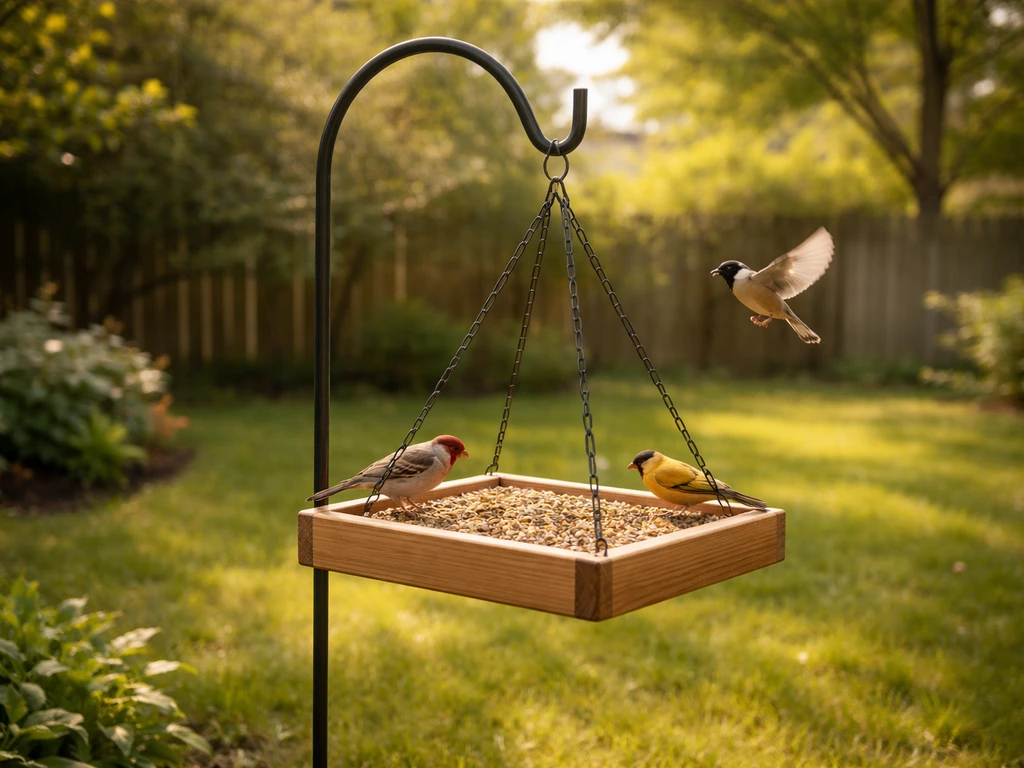
| Platform/Tray | Doves, juncos, blue jays, towhees | Mixed seed, millet, sunflower | Accessible for ground-feeding birds | No weather protection, mold risk in rain |
| Suet Cage | Woodpeckers, nuthatches, wrens | Suet cakes (rendered fat + seed) | Excellent winter energy source | Suet melts in heat above 90°F |
| Window Feeder | Chickadees, finches, nuthatches (close observation) | Sunflower chips, nyjer, mixed | Up-close viewing, easy monitoring | Small capacity, needs frequent cleaning |
| Nyjer/Finch Sock | American goldfinches, house finches, pine siskins | Nyjer seed | Cheap, lightweight, loved by finches | Degrades quickly, hard to clean |
| Oriole Feeder | Baltimore and Bullock's orioles | Nectar, orange halves, grape jelly | Highly specific attraction, seasonal | Only useful spring through early fall |
| Hummingbird Feeder | Ruby-throated, Anna's, rufous hummingbirds | 1:4 sugar-water solution | Attracts birds no other feeder does | Must be cleaned every 3 to 5 days in warm weather |
If you're not sure what birds are in your area right now, spend a few mornings watching your yard or a nearby park before buying anything. Buying a nyjer tube feeder because finches are pretty makes no sense if the birds coming through your yard are mostly doves and jays that need a platform or hopper. Starting with the bird, not the feeder, saves money and frustration.
Sizing, placement, and weather and pest-proofing for better results
Height and location
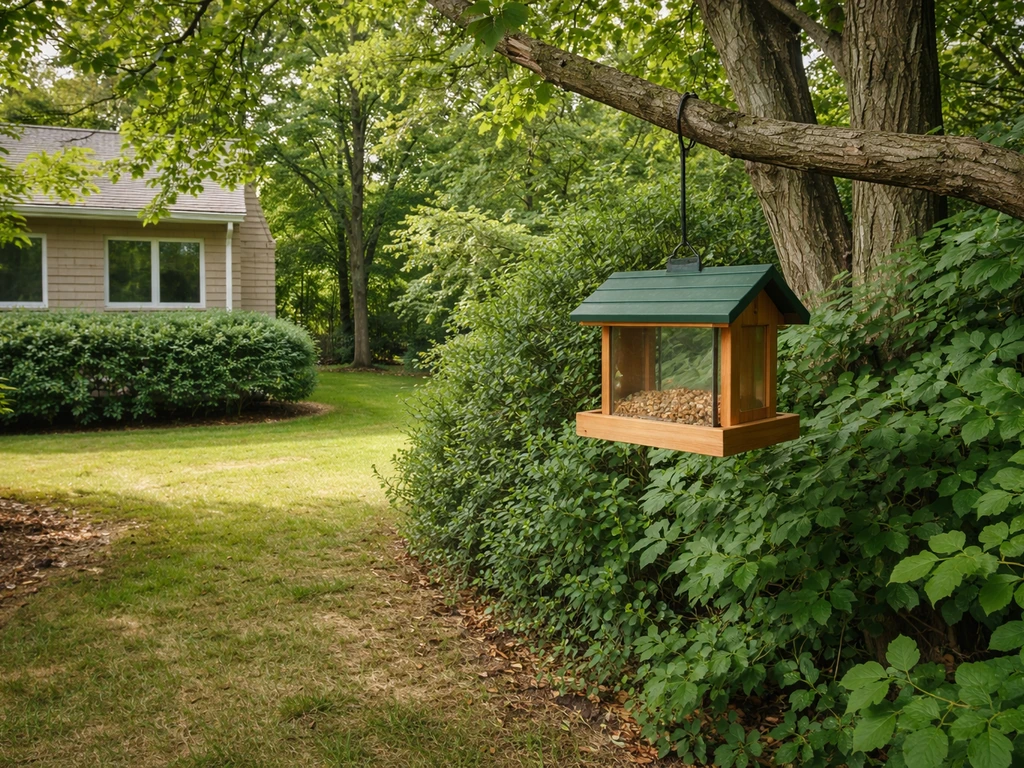
Placement makes or breaks a feeder setup, and most people get it wrong by putting feeders too close to the house or too far from natural cover. The general rule: hang or mount feeders either very close to a window (within 3 feet, so birds don't build up enough speed to injure themselves if they startle) or at least 10 feet away. Ground-level platform feeders work well for doves and juncos but should sit on a pole or tray stand rather than directly on soil, which attracts rats. For most perching birds, 4 to 6 feet off the ground is ideal, high enough to deter cats and low enough that you can refill and clean without a ladder.
Position feeders within 10 to 15 feet of shrubs, trees, or dense cover so birds have a quick escape route from predators. But don't place them right against a fence or tree trunk that a squirrel can leap from. A 10-foot clearance from any climbable surface is the minimum if squirrels are active in your yard.
Baffles and pest-proofing
A baffle is a dome or cylinder that physically blocks squirrels from reaching the feeder. Pole-mounted baffles go below the feeder on the pole (at least 4 feet off the ground) and should be at least 17 inches in diameter to stop most squirrels from reaching around them. Hanging baffles go above the feeder and work well on wire or chain setups. Weight-sensitive perch feeders close their ports when something heavier than a small bird lands, which is effective against squirrels and large starlings, but they cost more and can occasionally frustrate heavier songbirds like cardinals if the sensitivity isn't adjustable.
For rats specifically, the feeder design matters less than seed management. Rats are primarily attracted to seed that falls to the ground. Use a seed catcher tray underneath the feeder, sweep up fallen seed every two to three days, and avoid corn-based mixes that attract rodents more aggressively than sunflower or safflower. Avoid placing feeders near woodpiles, dense ground cover, or compost bins.
Weather protection
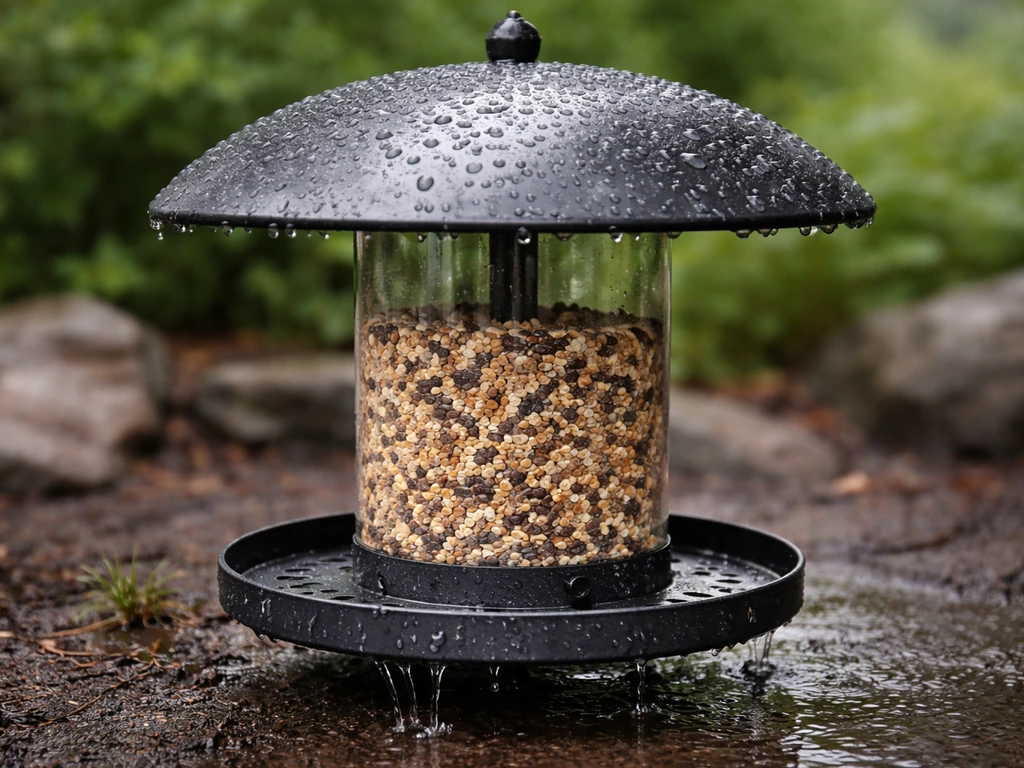
A domed cover over the feeder keeps seed dry in rain and extends its freshness significantly. In winter, feeders with larger drainage holes at the base prevent standing water from freezing and blocking ports. Suet is the MVP winter food because it doesn't freeze solid at typical backyard temperatures and provides the dense calories birds need in cold snaps. If you're in a region with serious winters, switching your tube feeder to an oil sunflower and nyjer mix (which stays looser than whole seeds in cold weather) reduces clogging.
Setup, maintenance, and troubleshooting
Basic maintenance routine
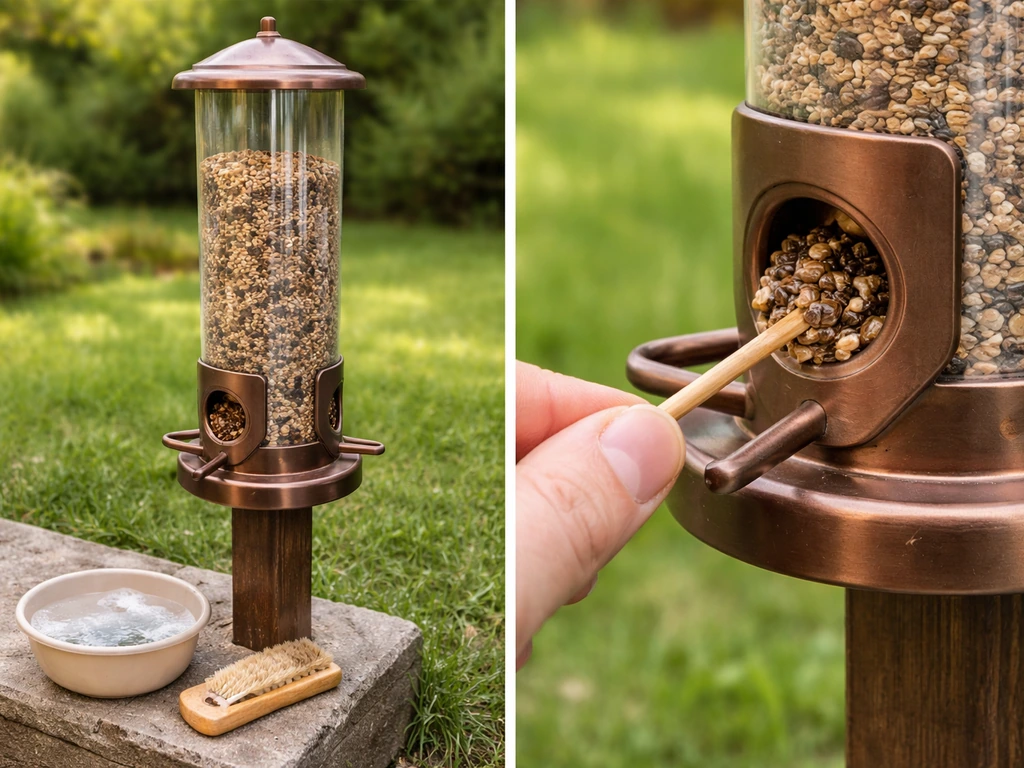
The minimum maintenance schedule that keeps birds healthy and feeders functional is: refill every two to four days (based on bird traffic), and deep clean every one to two weeks. For deep cleaning, Lowe’s recommends a 9-to-1 water-to-bleach solution (9 parts water to 1 part bleach) and scrubbing all bird-contact areas Birdbath and Bird Feeder Cleaning Tips.
A deep clean means fully disassembling the feeder, scrubbing all surfaces with a stiff brush in a 10% bleach solution, rinsing thoroughly, and letting it air dry completely before refilling. Wet seed introduced into a damp feeder is the fastest path to mold.
If you see black or gray buildup inside the seed ports, that's mold and it needs to be dealt with immediately, not next weekend.
Troubleshooting common problems
- Seed clumping or blocking ports: Usually caused by wet seed or humidity. Switch to a feeder with a weather dome, use smaller batch fills, and consider seed with less fine powder (nyjer 'sock' style feeders often clog less than rigid ports).
- Mold inside the feeder: Clean with 10% bleach solution, dry fully, and reduce fill amount so seed is consumed faster. In summer, refill every two days maximum.
- Squirrels defeating baffles: Check that the pole baffle is at least 4 feet off the ground and 10 feet away from any launch point. If squirrels are going over the baffle, the baffle diameter is too small or it's mounted too low.
- Rats at or under the feeder: Add a seed-catcher tray to collect fallen seed, switch to safflower (rats dislike it), and stop filling overnight. Bringing feeders indoors at night removes the late-night food source.
- Birds not coming: Give a new feeder at least two weeks. Birds are cautious around new objects. Place a small pile of seed on top of or near the feeder to signal it as a food source, and make sure the feeder is visible from a perch or nearby branch.
- Feeder rusting: Stainless hardware doesn't rust; cheap zinc screws do. If ports or hinges are rusting, replace the hardware or the whole feeder. Rust flakes are harmful to birds and signal the feeder is near end of life.
- Hummingbird feeder going cloudy fast: Nectar ferments in 3 to 5 days in warm weather. In temperatures above 80°F, change nectar every two to three days. Never use red dye; plain 1:4 sugar-to-water ratio is fine and safer.
DIY vs. buying: when it's worth it and what to build instead
DIY feeders can be genuinely good, but only for certain types. A simple platform feeder made from untreated cedar board with drainage holes drilled in the base works just as well as a $30 store-bought tray, costs about $5 in materials, and is easy to replace when it weathers out. Similarly, a log or pinecone smeared with suet and seeds works perfectly well as a suet feeder substitute, especially for woodpeckers, and costs essentially nothing.
Where DIY falls short is in tube feeders and any feeder requiring tight seed port tolerances or weighted pest-control mechanisms. The engineering on a weight-sensitive perch that closes reliably at 1.5 ounces but opens freely at 0.8 ounces is not something most people can replicate at home. Hummingbird feeders are another category where buying is almost always better: the seals need to be airtight to prevent leaks, and poor seals lead to ant and wasp infiltration that drives hummingbirds away.
| Feeder Type | DIY Viability | Approximate DIY Cost | Buy Instead When... |
|---|---|---|---|
| Platform/tray feeder | Excellent | $3 to $8 in cedar board | You want a tilting or covered design |
| Suet log or pinecone | Excellent | Under $2 | You want a wire cage that holds commercial suet cakes |
| Hopper/house feeder | Moderate | $15 to $30 in wood + hardware | You need pest-resistant ports or large capacity |
| Tube feeder | Poor | Hard to replicate port precision | Always: buy a quality tube feeder |
| Hummingbird feeder | Poor | Leaks and ant problems likely | Always: buy a sealed commercial version |
| Window feeder | Moderate | $5 to $10 in acrylic and suction cups | You want a model with a one-way mirror for undisturbed viewing |
The honest bottom line on DIY: build what's simple and replace what's engineered. A cedar platform feeder nailed together on a Saturday afternoon is a great project. Trying to DIY a squirrel-proof weight-sensitive perch will cost you more time and money than just buying one that works.
Your next steps, in plain terms
Start by watching your yard for a week and noting which birds actually visit or pass through. Then match feeder type to those birds using the table above, not the other way around. Once you know which feeder types attract your local species, you can narrow down the best choice for your yard match feeder type to those birds.
Pick a feeder that scores well on cleaning ease, weather protection, and material durability before worrying about capacity or looks. Set it up 4 to 6 feet off the ground with a baffle if squirrels are active, within 15 feet of natural cover, and either within 3 feet or beyond 10 feet from your windows.
Commit to a cleaning schedule every one to two weeks, and troubleshoot with the checklist above if birds aren't showing up or seed is spoiling fast. That framework applies to any feeder at any price point, regardless of who recommended it or what shorthand search brought you here. Use this guide to bird feeders to choose styles, placement, and maintenance that fit the birds you actually have.
To go a step further, the best bird feeder accessories can improve safety, cleanliness, and how well your feeder works season after season.
FAQ
When I search “bird feeder AJ worth,” what does “AJ” usually mean, and how can I tell if it refers to a real product?
If you see “AJ” in a listing, check whether it is actually a brand name, a seller username, or a shorthand note from a forum. Search for the exact product listing (photos plus dimensions), then verify the feeder style and material, because value comes from design and construction, not initials in the title.
How do I figure out if a feeder is worth it beyond the purchase price?
A feeder that looks sturdy can still be a bad buy if the ports clog easily or cleaning is difficult. Before purchasing, confirm the feeder can be fully disassembled for scrubbing, that ports are accessible, and that the base drains properly (especially for winter), since those factors strongly affect long-term value.
What is the correct distance from my windows if I’m trying to prevent bird injuries?
For perching birds, “closer to the window” or “farther away” is usually not flexible if you have safety concerns. If you want to reduce window strikes, mount within about 3 feet of the window or use the far option of 10 feet or more, and avoid mid-range placements that can leave birds no quick escape.
Can I use the same seed and feeder type for all birds if I’m not sure which species visit my yard yet?
Choose feeder type first, but also verify that your seed matches the feeder. A nyjer tube is not interchangeable with a platform or hopper setup, and the wrong pairing often leads to low visits, wasted seed, and faster spoilage from excess debris.
What should I do about squirrels if I already placed my feeder near shrubs or trees?
Place feeders near cover, but keep enough clearance so squirrels cannot launch from a nearby surface. A practical rule is at least 10 feet away from climbable surfaces, and if you have active squirrels, add a properly sized baffle rather than relying only on placement.
Are baffles enough, or do I need specific sizing and placement to make them work?
If you need squirrel-proofing, baffles only help if they are positioned correctly and sized to the pole or hanger system. Pole baffles should be below the feeder and elevated, with a diameter large enough to block access, while hanging baffles must be above the feeder on the right support setup.
Do I need a special rat-proof feeder, or is seed management the real solution?
Rats are mainly drawn by fallen seed and the availability of ground-level food. A seed catcher tray, frequent sweeping of spills, and avoiding corn-based mixes where rodents are an issue usually matter more than buying a more expensive feeder body.
What should I do if I notice mold or black buildup inside the feeder ports?
If mold appears, act immediately by emptying the feeder, scrubbing all internal surfaces, and letting everything fully air dry before refilling. Mold from damp seed can restart quickly if you refill before drying, so the “deep clean plus dry” step is what prevents a recurring problem.
How often should I refill and clean if birds are actively feeding?
Don’t rely on “one big clean” a season. A workable schedule is refill every 2 to 4 days depending on traffic, and deep clean every 1 to 2 weeks, with extra attention during humid weather when seed spoilage happens faster.
Which parts of bird feeding are actually worth DIY, and where should I buy instead?
DIY is safest for simple platform feeders and certain suet-style setups, like untreated cedar with drainage holes or pinecones/logs smeared with suet. Avoid DIY for tube feeders, hummingbird feeders, and anything that requires precise port tolerances or airtight seals.
If birds aren’t showing up, what are the most common first causes to troubleshoot?
The most common “no birds” mistake is placement that makes birds feel exposed or leads to incompatible seed demand. Re-check two things first: feeder height relative to perching birds, and whether the feeder is within the right distance of escape cover.
How can I reduce visits from larger birds while still attracting the birds I want?
If you get too many large birds at the feeder or frequent theft by starlings, consider designs that limit access by weight or adjust the perch mechanism to reduce oversized landings. Also confirm the seed mix is appropriate for your target species, because a mismatch can attract the wrong birds.