The short answer: buy the feeder that matches the birds you actually want to see, not just the one that looks nicest on a pole. A hopper feeder with black-oil sunflower seed will cover most backyards. A tube feeder loaded with nyjer will pull in goldfinches and siskins. A nectar feeder will bring hummingbirds. Once you know what you're aiming for, the rest of the decision falls into place pretty quickly. If you want a complete comparison before you buy, use this buyer's guide to the best bird feeders a buyer's guide as your next step a buyer's guide to the best bird feeders.
Bird Feeder Buying Guide: Choose the Right Feeder Fast
Marcus Hendricks
19 Mar 2026
The main feeder types and what they're actually good for
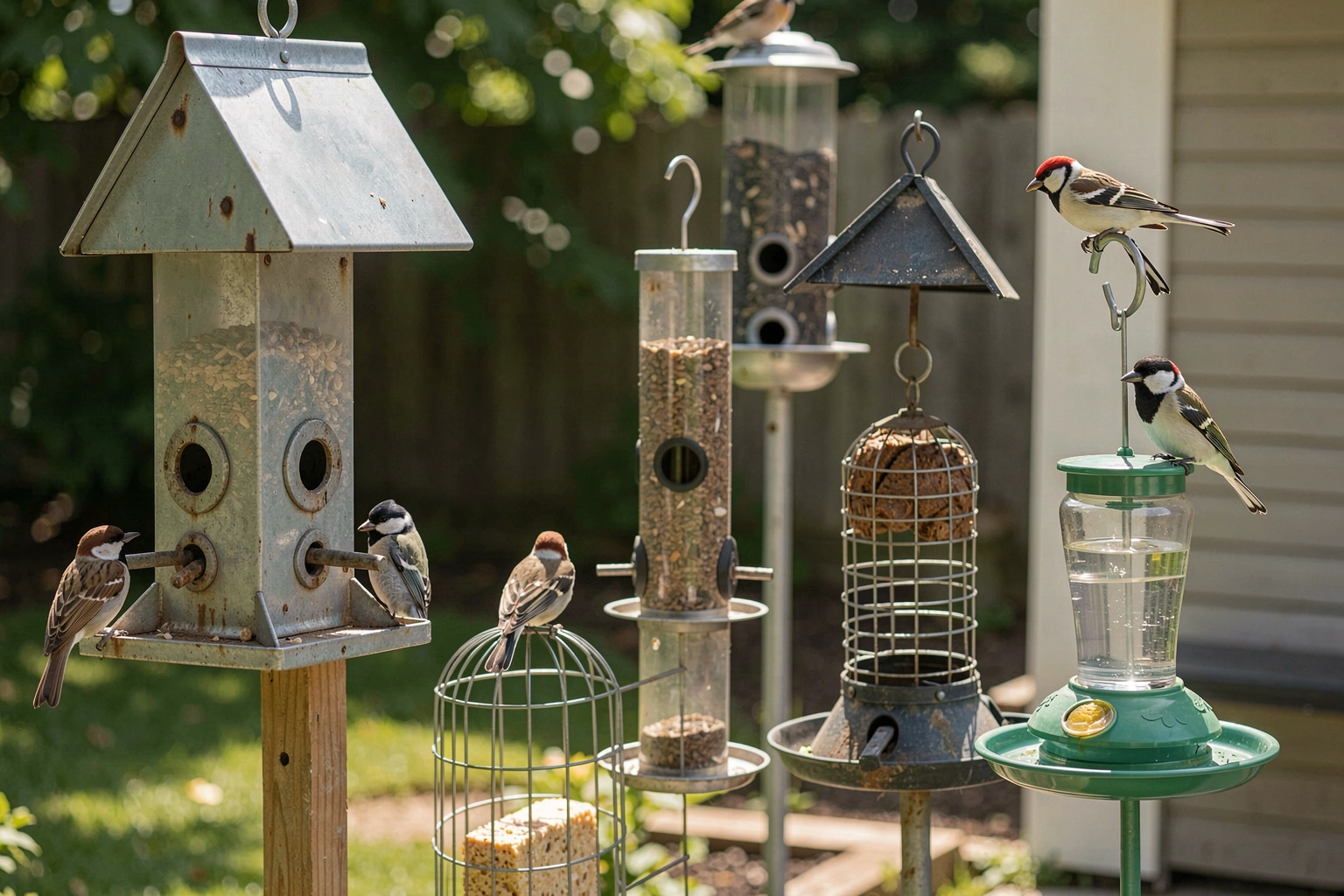
There are more feeder styles out there than you need to worry about, but a handful of designs do most of the work. Here's how to think about each one.
Hopper feeders
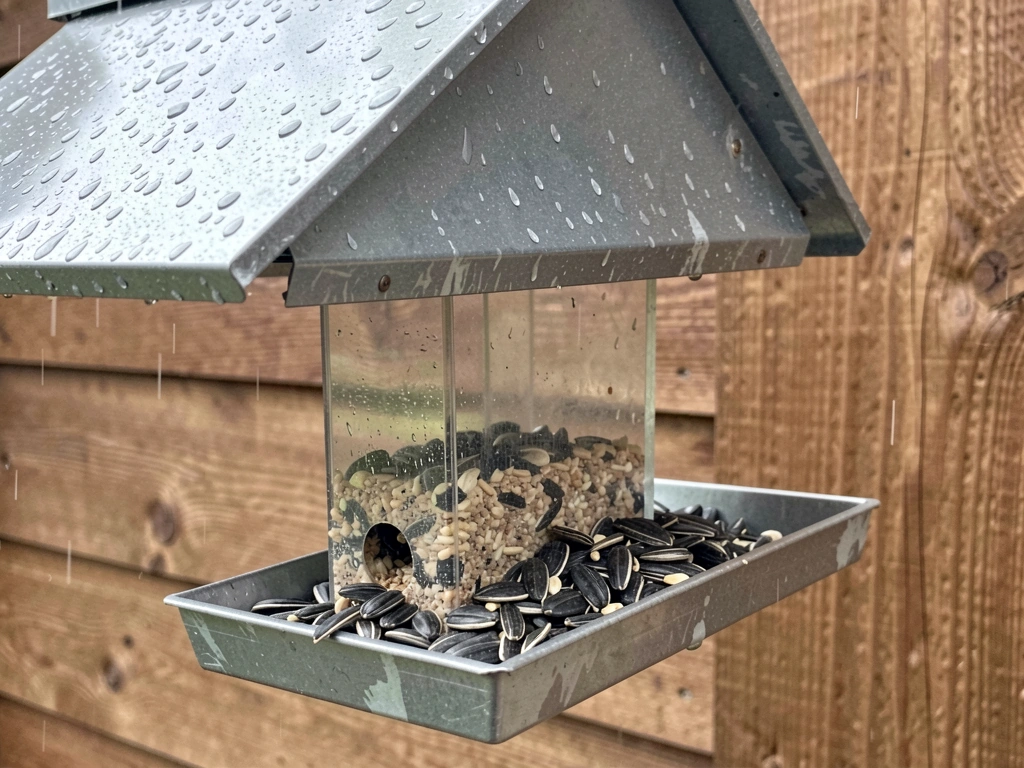
Hopper feeders are the classic house-shaped feeders with a seed reservoir that gravity-feeds down to a tray or ledge. They hold a decent volume of seed, so you're not refilling every day, and they attract a wide range of common backyard birds including cardinals, blue jays, chickadees, nuthatches, and sparrows. If you want one feeder that does a little of everything, a hopper is usually the right call. The main downside is that seed sitting in the hopper can get damp and clump, so the design and drainage matter. Look for one with a roof that actually sheds rain and a tray that drains well.
Tube feeders
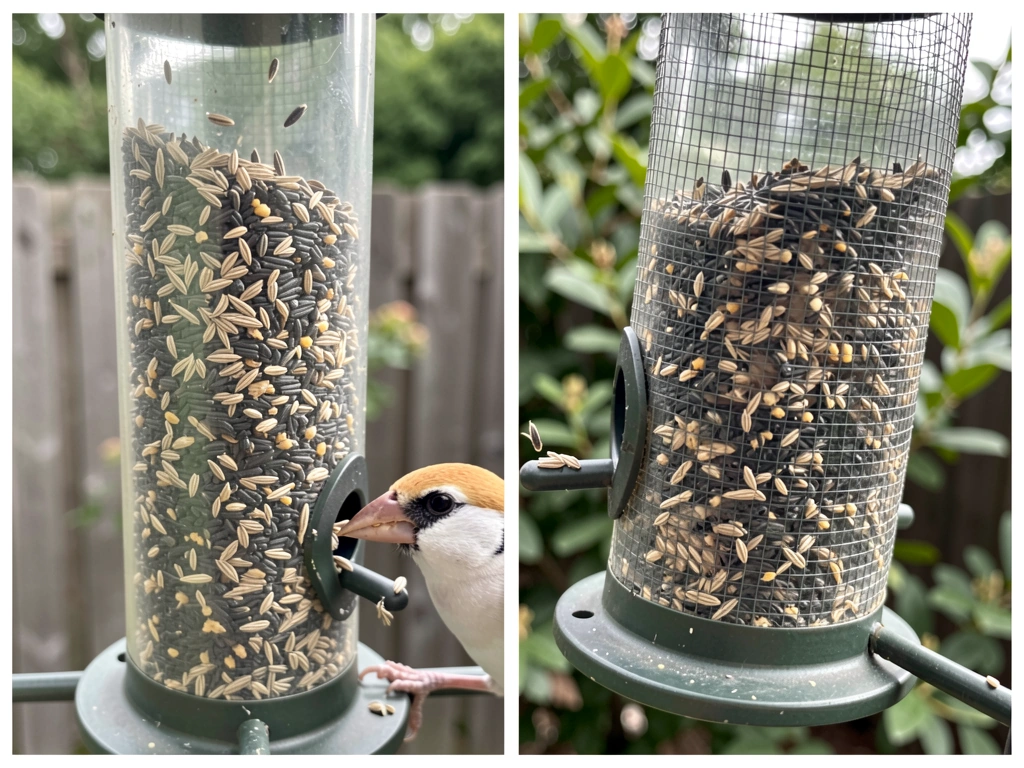
Tube feeders are long cylindrical feeders with multiple feeding ports. They work especially well for small seeds like nyjer (also called thistle) and fine sunflower chips. Goldfinches love them. So do house finches, pine siskins, and redpolls. If you fill a tube feeder with nyjer and add a mesh sock alongside it, you'll have a finch setup that's hard to beat. Tube feeders can also hold standard sunflower seed, but they really shine with smaller-seeded offerings. They're generally easier to squirrel-proof than hopper designs.
Platform and tray feeders
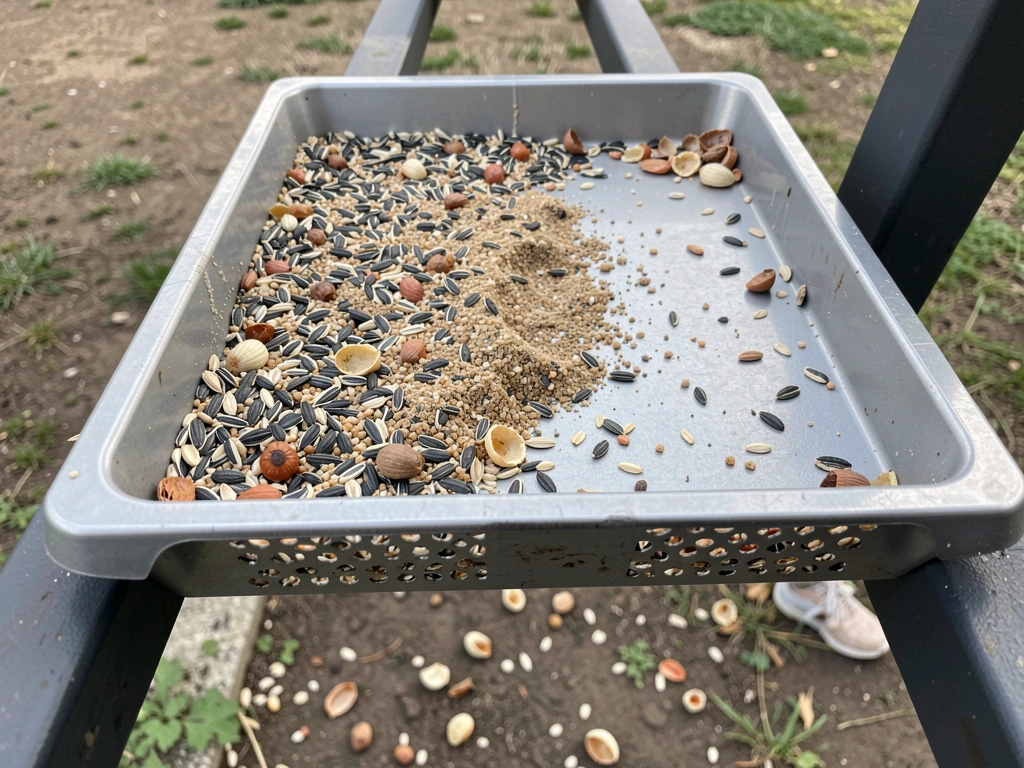
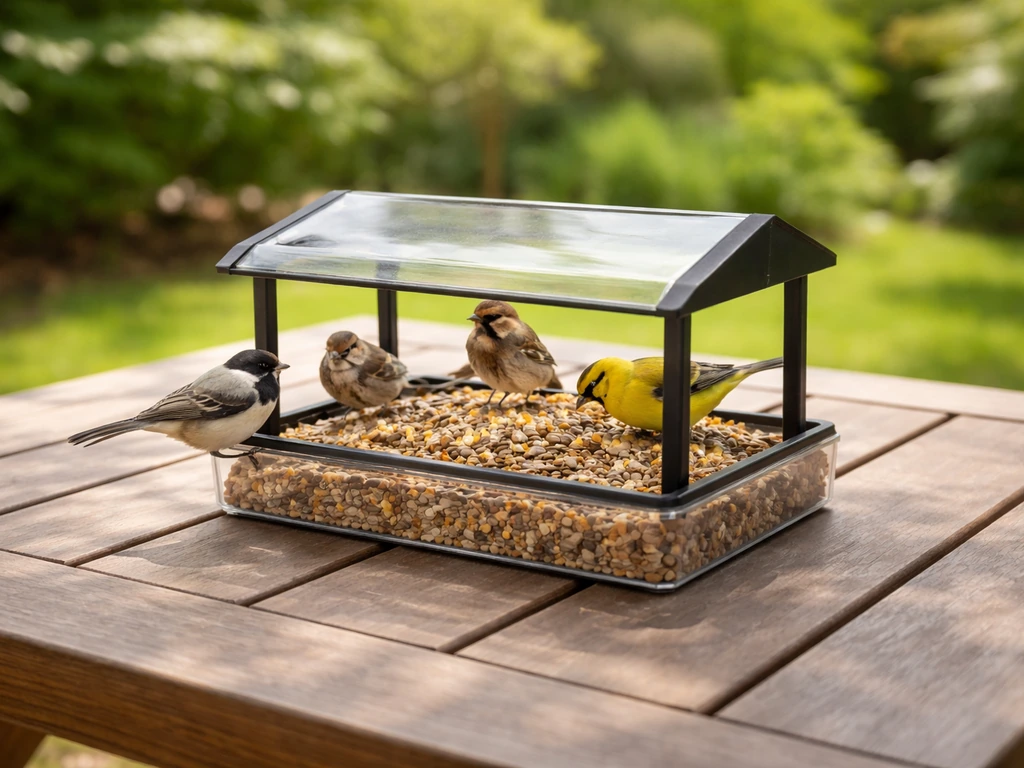
Platform feeders are flat, open trays. They're the most accessible design for the widest variety of birds because there's no perch size limit and no awkward port angle. Ground-feeding birds like mourning doves, juncos, and towhees especially appreciate them. The tradeoff is that open platforms expose seed to rain, so you'll need to check them more often for wet or spoiled seed. A tray feeder with mesh or drainage holes is better than a solid bottom. Some people use platform feeders as a catch-all supplement to a hopper, spreading a bit of mixed seed or peanuts there.
Hummingbird feeders
Hummingbird feeders hold a simple sugar-water solution (one part plain white sugar to four parts water, no dye needed). They come in saucer and bottle styles. Saucer feeders are easier to clean and less prone to dripping, which matters more than you'd think once you've dealt with a sticky feeder covered in ants. Bottle-style feeders hold more nectar, which is nice if you have a lot of hummingbird traffic but can actually be a problem if you're not changing the nectar fast enough. More on that in the cleaning section.
Suet feeders
Suet feeders are wire or mesh cages that hold a block of rendered fat mixed with seeds, nuts, or berries. They're excellent for woodpeckers, nuthatches, and wrens, particularly in fall and winter when high-fat food is most valuable. They're also some of the lowest-maintenance feeders you can own: drop a suet cake in, hang it up, done. In warmer months, look for no-melt suet formulas or skip suet entirely until the weather cools down.
Matching seed to feeder to bird
The feeder is just the delivery system. The seed is what actually brings birds in. Getting this pairing right makes a real difference in who shows up. Once you have your bird in mind, choosing the right feeder type becomes much easier how to select a bird feeder. If you need a broader walkthrough that ties everything together, see what makes a good bird feeder for the full checklist and comparisons how to select a bird feeder.
| Seed or food | Best feeder type | Birds it attracts |
|---|---|---|
| Black-oil sunflower seed | Hopper or tube | Cardinals, chickadees, nuthatches, finches, jays |
| Nyjer (thistle) | Tube or mesh sock | American goldfinches, pine siskins, house finches |
| Safflower seed | Hopper or platform | Cardinals, chickadees (squirrels tend to ignore it) |
| Peanuts (shelled) | Tube with large ports or platform | Blue jays, woodpeckers, nuthatches, titmice |
| Mixed seed blend | Platform or hopper | Sparrows, doves, juncos, a wide variety |
| Suet cake | Wire cage suet feeder | Woodpeckers, nuthatches, wrens, starlings |
| Sugar water (nectar) | Hummingbird feeder | Ruby-throated and other hummingbirds |
One practical note: cheap mixed seed blends often contain milo, wheat, or red millet that most songbirds ignore. That filler ends up on the ground and attracts rodents. Spending a little more on a cleaner mix (or straight black-oil sunflower) usually means less mess and more birds.
Where to put your feeder
Placement affects how many birds visit, how safe they are, and honestly how much you enjoy watching them. There are a few rules worth knowing.
The window collision rule
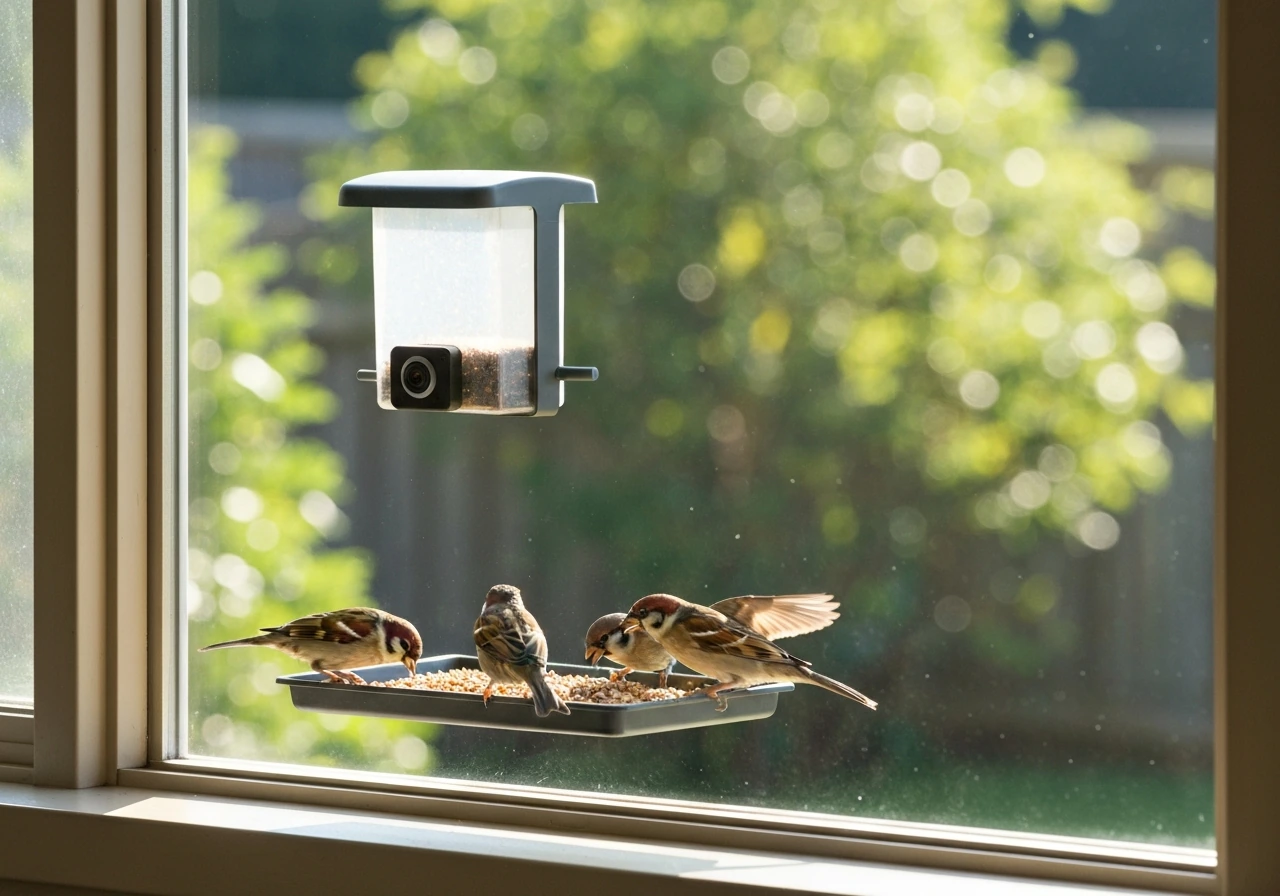
Window strikes are one of the leading causes of bird death around homes, and feeder placement plays a direct role. The rule of thumb from Audubon is simple: put feeders either within 3 feet of a window or more than 10 feet away from one. Feeders very close to windows mean that if a bird does flush off the feeder, it doesn't have enough room to build up dangerous speed before hitting the glass. Feeders more than 10 feet away give birds enough space to course-correct. The middle ground, roughly 4 to 9 feet from a window, is the most dangerous zone. Suction-cup window feeders that mount directly on the glass are a great option for close-up viewing and they naturally follow the under-3-foot rule.
Squirrels, cats, and other complications
If squirrels are a problem, placement is your first line of defense before you even think about feeder design. A pole-mounted feeder with a baffle below it, positioned at least 5 feet off the ground and 8 to 10 feet away from any tree or structure a squirrel could launch from, handles most situations. Weight-activated feeders add a second layer of protection: some designs use a spring-loaded mechanism that closes seed ports when anything heavier than a songbird lands on them. That kind of setup works well in yards where squirrels are relentless and repositioning the feeder isn't practical.
For cats, height matters. Ground platform feeders in yards with free-roaming cats put birds at real risk. Raising feeders on poles with good visibility around them gives birds time to spot a predator and escape.
Near cover, but not too close
Birds feel safer feeding when there's nearby shrub or tree cover they can dart into if they get spooked. Putting a feeder roughly 5 to 10 feet from a shrub or brush pile is a sweet spot. Too close to dense cover, though, and you're giving cats and hawks an easy ambush spot.
Keeping things clean (this matters more than people realize)
Dirty feeders are genuinely bad for birds. Moldy seed, accumulated hulls, and droppings on feeder trays can spread disease, and Salmonella is a real risk for some species. Spilled food under feeders also attracts rodents. Cleaning is probably the most neglected part of bird feeding, but it's not that hard once you build it into your routine.
Standard feeder cleaning
A good baseline is to clean feeders every two weeks. If you've had a stretch of wet or rainy weather, do it sooner, because damp seed goes bad fast. If your feeder gets heavy traffic, more frequent cleaning keeps things safer. The cleaning process itself is straightforward: empty the feeder, scrub it with a bottle brush and warm water, then disinfect with a diluted bleach solution (about 1 part bleach to 32 parts water works well). Rinse thoroughly and let it dry completely before refilling. Don't forget to clean up the ground below the feeder too, since fallen seed and hulls pile up quickly.
Hummingbird feeder cleaning is its own thing
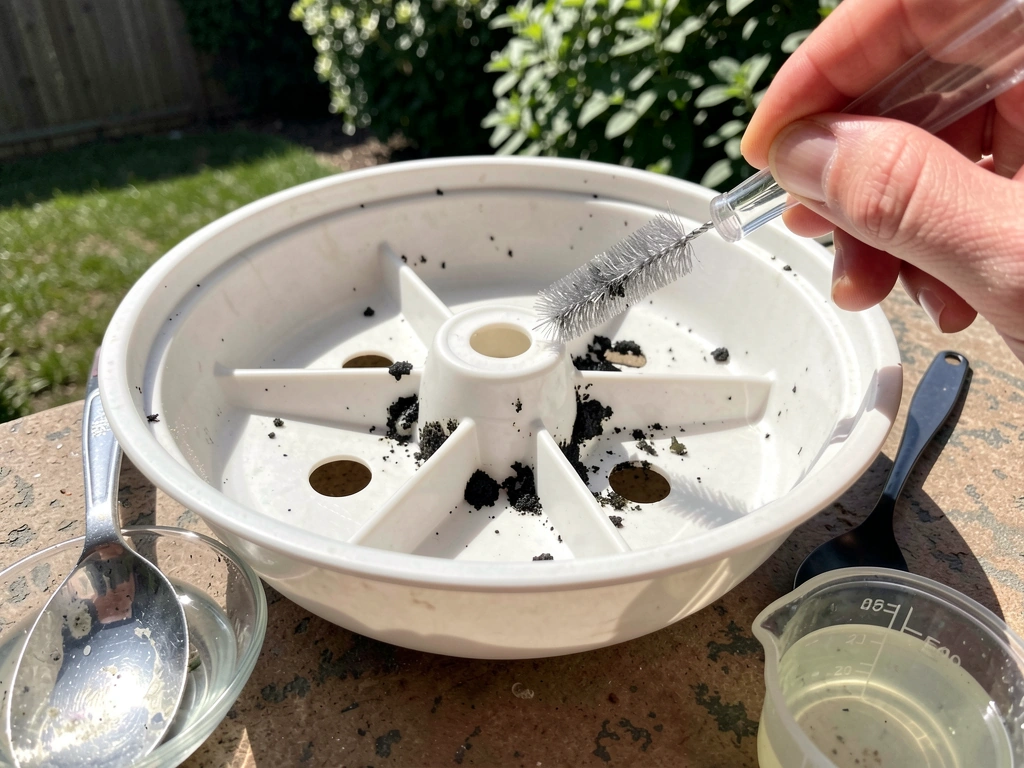
Nectar feeders need more attention than seed feeders because sugar water ferments and grows mold quickly, especially in warm weather. A good rule: change the nectar every 3 to 5 days as a baseline. When temperatures climb into the low 80s, aim for every 2 to 3 days. Once you're in the upper 80s or 90s, you may need to change it daily or every other day. When you clean a hummingbird feeder, use a small brush to scrub the feeding ports where black mold likes to hide. Soaking in warm water with white vinegar works well for breaking down residue. Skip soap and detergent, which can leave residue that's hard to rinse out completely and may irritate hummingbirds.
Budget vs. build quality: what actually matters
You don't need to spend a lot to attract birds, but buying something that falls apart after one winter or cracks in UV is also a waste of money. Here's where to spend and where to save.
Where quality pays off
Hopper feeders benefit from solid construction: a metal roof that won't warp, a bottom tray that drains properly, and ports or doors that seal well enough to keep seed dry. Cheap plastic hoppers tend to crack at the seams within a season or two, especially in cold climates. For tube feeders, look for UV-resistant polycarbonate rather than thin clear plastic, and metal ports rather than plastic ones that squirrels chew through. For hummingbird feeders, simple saucer designs with wide mouths are easier to clean than intricate bottle feeders with narrow necks, and that ease of cleaning is worth paying for.
Where you can save
Suet feeders are genuinely one place where a basic wire cage works just as well as an expensive decorative version. Platform feeders are similar: a simple cedar or recycled plastic tray does the job fine. Ground-level feeding trays don't need to be fancy at all.
| Feeder type | Budget pick works fine? | Worth spending more on? | Key quality feature to check |
|---|---|---|---|
| Hopper feeder | Not really | Yes | Metal roof, drainage tray, solid seams |
| Tube feeder | Sometimes | Yes if squirrels are active | UV-resistant tube, metal ports |
| Platform/tray feeder | Yes | No | Mesh or drainage holes in the base |
| Hummingbird feeder | Depends | Yes for saucer style | Wide mouth opening, easy to disassemble |
| Suet cage | Yes | No | Sturdy wire, tail prop for woodpeckers |
A quick recommendation by situation
If you're just starting out and want something that works for the most birds with the least fuss, get a metal-roofed hopper feeder, fill it with black-oil sunflower seed, and put it on a pole with a baffle. To help you choose the right one, start by matching feeder type to the birds you want to attract metal-roofed hopper feeder. If you want a complete guide to bird feeders, use the feeder type and placement tips above as your starting point. That setup covers about 80% of common backyard birds in most of North America and requires the least troubleshooting.
If you want to attract goldfinches specifically, add a nyjer tube feeder or a mesh sock feeder alongside whatever else you have. It's one of the most satisfying additions because goldfinches show up reliably and in numbers.
If you have hummingbirds in your area, a saucer-style hummingbird feeder is worth getting separately. If you’re wondering whether an animal jam bird feeder is worth it, start by matching the feeder type to the birds you actually want to attract animal jam bird feeder worth. Keep it clean, change the nectar on schedule, and put it where you can actually see it from a window. Hummingbirds are creatures of habit and will return to the same feeder year after year.
If squirrels are destroying everything you try, a weight-activated squirrel-resistant feeder combined with proper pole placement is your most reliable fix. Trying to outwit squirrels with feeder position alone sometimes works, but a mechanical deterrent handles the cases where relocation isn't possible.
A few mistakes worth avoiding
- Buying cheap mixed seed with a lot of filler: most birds pick out what they want and toss the rest on the ground, creating a rodent-attracting mess.
- Skipping the baffle on a pole-mounted feeder: squirrels will find a way up within days.
- Placing a feeder 4 to 9 feet from a window: that's the danger zone for window collisions.
- Letting nectar sit too long in warm weather: fermented sugar water can make hummingbirds sick.
- Using a feeder with a narrow tube or complicated ports for hummingbirds: you'll dread cleaning it and do it less often than you should.
- Ignoring the ground below feeders: accumulated hulls and droppings under the feeder attract rodents and spread disease to ground-feeding birds.
Bird feeding is genuinely one of the easier wildlife hobbies to get right. Once you match the feeder to the bird, put it in a sensible spot, and build a basic cleaning routine, the whole thing becomes pretty low-effort. For the best bird feeder accessories, consider add-ons like easy-clean trays, seed guards, and squirrel-resistant baffles to make maintenance simpler build a basic cleaning routine. The birds do the interesting part themselves.
FAQ
What’s the easiest feeder to buy if I don’t know what birds are around my yard yet?
Start with a hopper feeder filled with black-oil sunflower seed, then add a second option only if you want a specific bird later. After 3 to 7 days, you’ll usually see your “regulars,” and you can switch seeds or add a tube (nyjer) for finches if that’s the direction you want to go.
How do I choose between tube, hopper, and platform if squirrels keep showing up?
For many backyards, tube feeders are easier to squirrel-proof because their feeding ports are farther in. Still, you need a real squirrel deterrent (a baffle on the pole or a squirrel-resistant mount), and avoid oversized openings in platforms unless you pair them with hardware that blocks climbing and reaching.
Do I really need a feeder with drainage, or can I just hang anything?
Drainage matters most for hopper and platform styles because wet seed molds and clumps, and birds avoid it. Look for a design where the tray can be cleaned easily and where water can drain away instead of pooling under ports or ledges.
What should I do if birds stop visiting after I change the seed?
Give it a short adjustment window, about a few days, then check freshness and cleanliness. If you switched to a small seed like nyjer, make sure the feeder is compatible (tube or mesh sock), and confirm the ports aren’t blocked by seed bridging, which is common with cheap seed.
Is mixed seed really that bad?
Mixed seed is fine if it’s high-quality, but cheap blends often include fillers that birds ignore and that end up on the ground. That waste can attract rodents and increase mess, so consider buying a blend that lists ingredients clearly, or lean toward straight black-oil sunflower for a low-fuss option.
How often should I clean a feeder, and what’s different after wet weather?
Clean at least on a routine cycle, and clean sooner after rain or heavy use because wet seed, damp tray residue, and droppings build up fast. If you notice clumping, an off smell, or visible grime, treat it as a “clean now” moment even if you’re not at your usual schedule.
Can I use soap or detergent for cleaning, especially for hummingbird feeders?
Avoid scented soaps and detergents that leave residues, especially on hummingbird feeders. For nectar feeders, rinse thoroughly and focus on getting biofilm off with hot water and a gentle cleaning approach designed for hummingbird setups, then let everything dry completely before refilling.
How do I prevent ants at hummingbird feeders?
Use ant moats or predator guards designed for hummingbird stations, and keep the feeder area tidy so there’s no easy ant trail to food. Also, don’t let nectar leak onto nearby surfaces, because that residue becomes an ant attractant quickly.
When is suet a bad idea?
Skip or switch suet in hot weather unless you’re using a no-melt formulation, because softening and spoilage can happen fast. If you see grease running or the cake breaking down badly, swap it out and clean the holder so you do not create an odor or mess that discourages birds.
What feeder placement rule should I follow for window safety?
Use the “very close or far away” approach to reduce strikes. If you cannot place it safely very close to glass, you’ll need a location that’s far enough away, and you should also consider window treatments or barriers so birds have a clear escape route.
Do I need to add a tray to catch spilled seed?
If you feed from a hopper or tube, some hulls and seed will fall, and that can attract rodents. A simple catch tray can reduce the mess, but you still need to periodically remove waste from the ground and clean the area so you do not create a permanent “food source” for unwanted visitors.
How much feeder should I buy, one feeder or several?
If your goal is quick results, start with one feeder and one seed type, then add a second feeder after you identify who’s visiting. Multiple feeders too soon can make it harder to troubleshoot (for example, whether low traffic is a seed mismatch, a hygiene issue, or just seasonal timing).