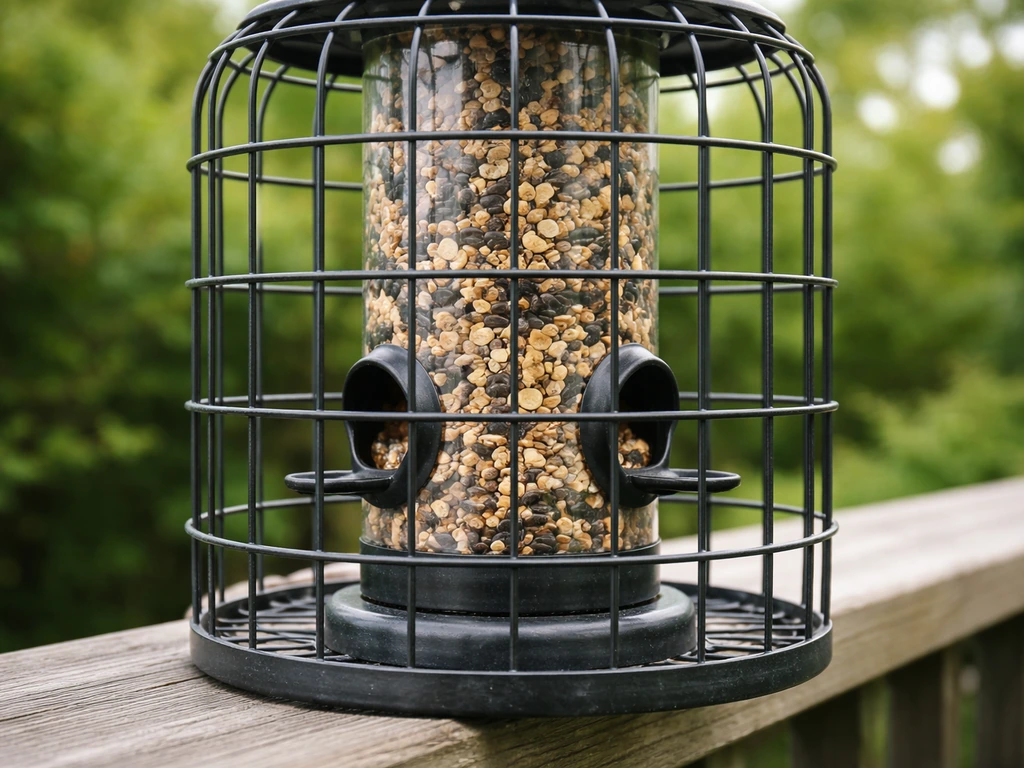
A caged bird feeder is a wire or metal grid enclosure wrapped around a seed tube, hopper, or suet block that lets small birds like finches, chickadees, and nuthatches feed freely while physically blocking squirrels, rats, large bully birds, and other pests. If you're dealing with squirrels raiding your feeders, starlings or jays monopolizing the seed, or rats cleaning up the spill, a caged feeder is usually the most effective, lowest-drama fix you can buy.
Best Caged Bird Feeder: Top Picks, Setup, and Tips
Marcus Hendricks
15 May 2026
What a caged bird feeder actually is (and when you really need one)
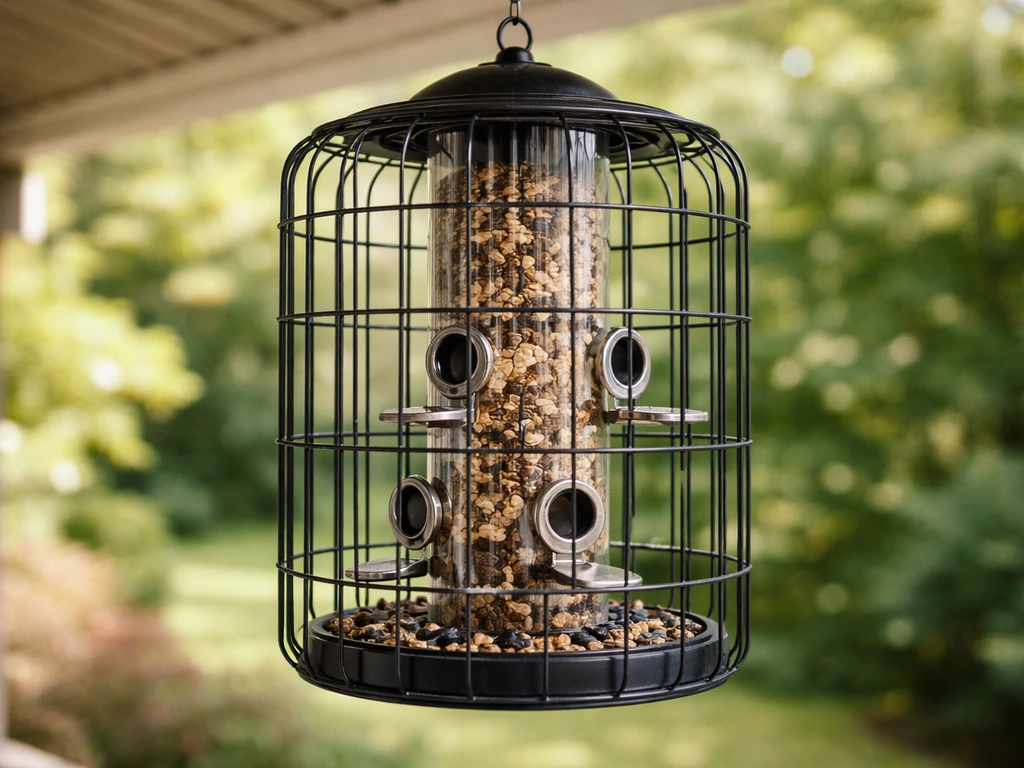
The term "caged bird feeder" gets used a few different ways, so it's worth being specific. In backyard birding, it almost always refers to a feeder, usually a tube or seed cylinder, surrounded by a metal cage or wire grid. The grid openings are sized to allow small songbirds through while blocking larger birds and mammals. Woodlink's caged tube feeders, for example, use a 1.
5-inch square metal grid around the seed tube. Woodlink describes its caged tube feeder with a [1. 5-inch square metal grid around the seed tube](https://www. wildbirdstoreonline.
com/products/woodlink-caged-tube-bird-seed-feeder), which is intended to control access by bird size. That gap is big enough for a chickadee or goldfinch to squeeze through, but a grey squirrel or a starling can't get past it.
This is a fundamentally different design from a simple squirrel baffle (which redirects animals away from a feeder) or a weight-sensitive port closer (which shuts off access when something heavy lands). The cage is a passive, always-on physical barrier. No batteries, no mechanics, no failure mode beyond rust or bent wire. That simplicity is a big part of why caged feeders are so popular.
Suet cages are a close relative, an open metal grid frame that holds a suet block. Project FeederWatch treats suet cages as their own established category, and they work on the same principle: the grid controls who gets access. Woodpeckers and nuthatches cling easily to the wire, but the open grid design doesn't exclude large birds the way a tube-enclosure cage does. If your goal is specifically to exclude squirrels and large birds from seed, the enclosed cage-around-a-tube design is what you want.
So when is a caged feeder the right call? It's the right choice when squirrels are emptying your feeder before the birds get a look in, when grackles, starlings, or jays are dominating your seed and chasing away smaller birds, when rats are a concern (the cage also limits ground-level spillage, and dedicated anti-rat feeders share similar design logic), or when you want to specifically attract small birds like finches, sparrows, or chickadees without the seed being dominated by larger species.
How to pick the best caged feeder for your birds and seed
The "best" caged feeder depends entirely on which birds you're trying to attract and what you're filling it with. The best nest bird feeder is often the one that matches your target birds and seed, which is why the “best” caged feeder depends on your species and what you're filling it with. To get the best crow-proof bird feeders, focus on tight cage spacing and port access that prevents crows from reaching inside best crow proof bird feeders. Here's how to think through the decision before you buy.
Match the cage opening to your target birds
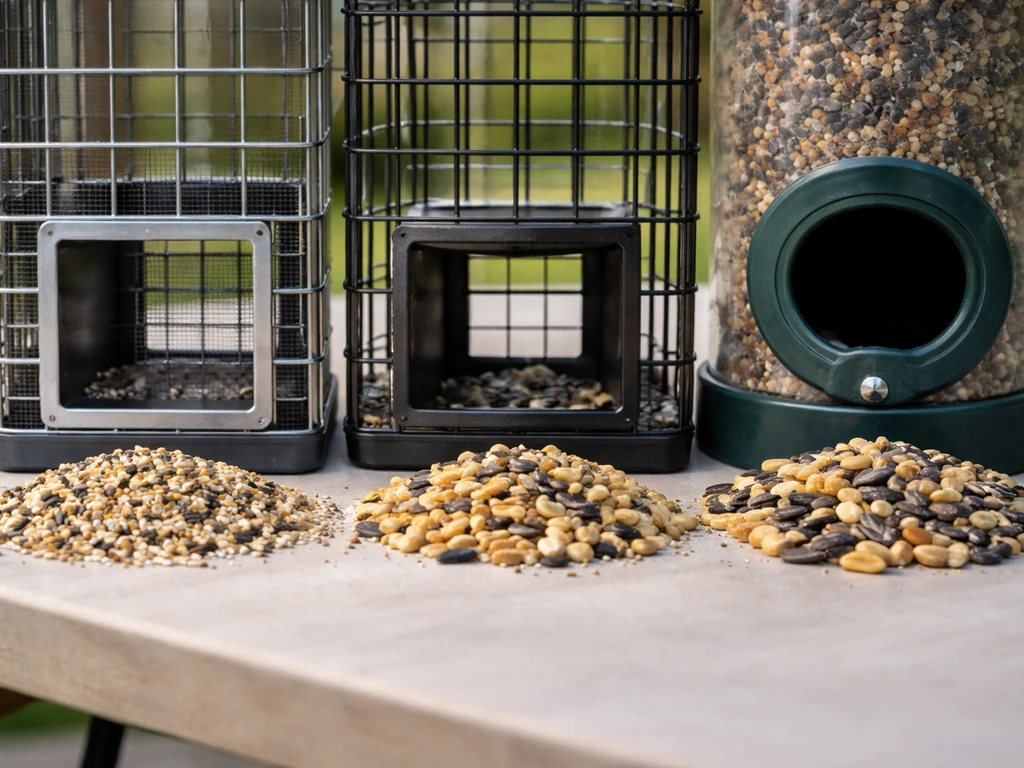
The 1.5-inch grid opening is the most common standard, and it works well for the small-to-medium backyard bird sweet spot: house finches, goldfinches, chickadees, nuthatches, titmice, and similar birds all pass through easily. Cardinals are borderline, a northern cardinal is usually too large for a 1.5-inch grid, which means a standard caged tube feeder will effectively exclude them. If cardinals are a priority for you, look for caged feeders with a 2-inch or wider grid, or use a caged platform or hopper style where the cage is more of a perimeter guard than a tight enclosure. Woodpeckers, doves, and blue jays are typically too large for any standard caged tube feeder.
Choose seed type to match feeder design
Most caged tube feeders work best with mixed seed, black oil sunflower, or sunflower chips. The tube and port design handles these well, and the cage protects the ports from being broken open or clogged by larger birds trying to force access. For nyjer (thistle) seed, look for a caged tube feeder with smaller ports, nyjer's fine texture needs tighter ports or a mesh sock design.
Suet goes in a suet cage rather than a tube cage, and that's a separate purchase. If you want to offer peanuts, look for a cage-style feeder with a mesh or grid body rather than a smooth tube, since peanuts need a wider-access mesh to feed through. The Audubon NACAGE, for example, is specifically listed as suitable for mixed seed, peanuts, and sunflower, which makes it more versatile than a pure tube design.
Evaluate these specs before you buy
| Feature | What to Look For | Why It Matters |
|---|---|---|
| Cage material | Powder-coated or galvanized steel; avoid thin wire that bends easily | Squirrels and raccoons will test it. Cheap wire bends or rusts within a season. |
| Seed capacity | 1 to 2 lbs minimum for a backyard tube feeder | Heath's 21806 holds 1.5 lbs, Audubon NACAGE holds 1 lb — smaller capacity means more frequent refilling |
| Port/opening design | Easy-open top or bottom for cleaning; removable tube from cage | Mold builds up fast inside tubes; if you can't clean it, don't buy it |
| Grid opening size | 1.5" for small birds only; 2"+ to include cardinals | Determines which birds can actually reach the seed |
| Rust resistance | Powder-coated exterior, stainless or rust-resistant hardware | All-weather feeders need this; Woodlink's caged feeders specifically note rust resistance |
| Mounting options | Pole-mount, hang, or both | Flexibility helps with placement away from squirrel launch points |
| Weight sensitivity | Optional; some caged feeders add a weight-closing port | Adds extra protection but also a failure/maintenance point |
Best caged feeder picks by use case
Rather than ranking feeders in a rigid top-ten list, it's more useful to match the right feeder design to the right job. Here are the categories that matter most and what to look for in each.
Best for squirrel-proofing: enclosed metal cage around a tube
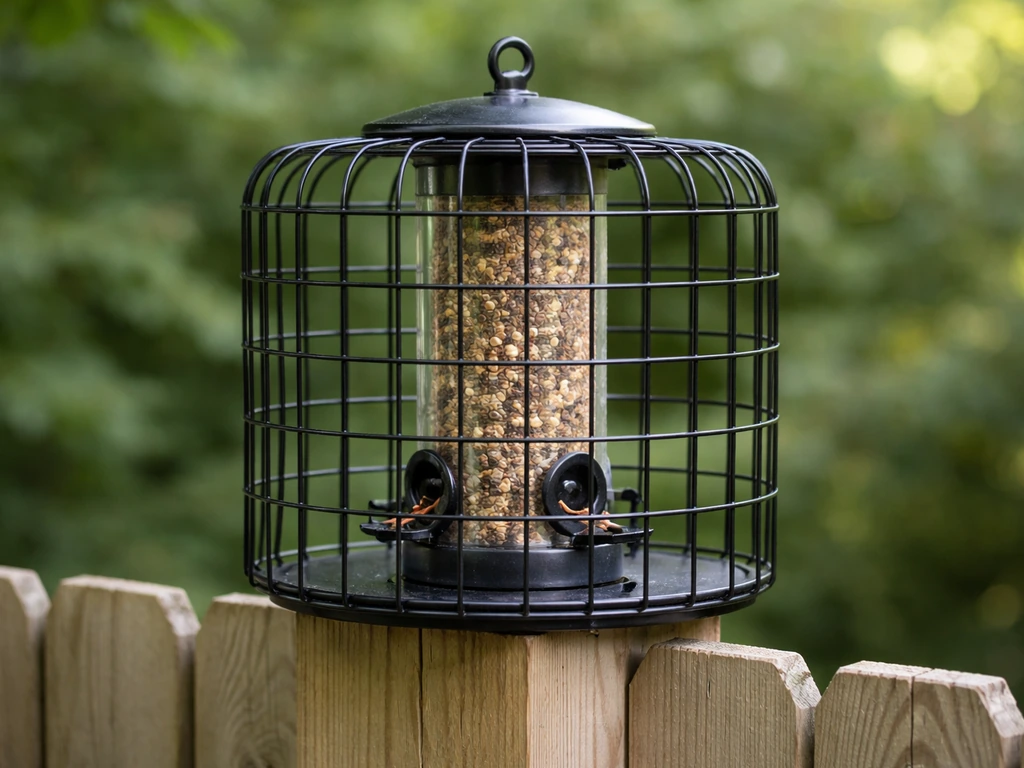
This is the core use case for caged feeders, and the Woodlink-style caged tube with a 1.5-inch powder-coated steel grid is the benchmark design. The cage sits a few inches away from the tube, so squirrels can grab the cage but can't reach the ports or seed. Look for welded (not twisted) wire joints, a tight-fitting top cap, and a base that locks or clips shut. Woodlink's copper-finish metal tube feeder with six ports is a commonly cited example of this format done right: rust-resistant, solid construction, and a grid that genuinely stops squirrels rather than just slowing them down.
Best for mixed seed and versatility: open-grid cage design
If you want to offer mixed seed, peanuts, and sunflower from one feeder, an open-grid cage body (rather than a smooth tube inside a cage) is more practical. The Audubon NACAGE-style feeder uses a metal grid cage as the primary seed container, holding up to 1 pound of seed. This works well for chickadees, nuthatches, and house finches, and the open grid means seed never gets trapped in a tube. The trade-off is slightly more exposure to weather, seed near the outer grid can get wet in heavy rain.
Best for finches specifically: caged nyjer tube
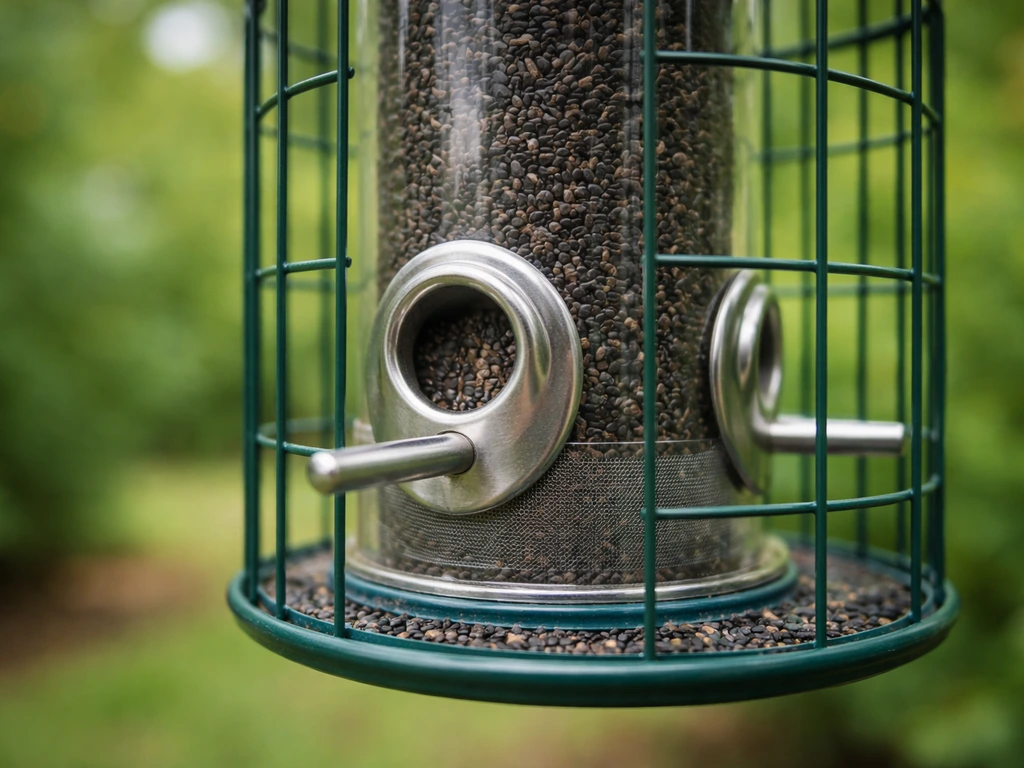
Goldfinches and house finches are exactly the birds a standard caged tube feeder is designed for. A caged nyjer feeder with fine ports keeps thistle seed from spilling while the cage keeps squirrels off. To get the best anti pigeon bird feeder results, choose a caged design that blocks larger birds while still allowing your target finches to feed comfortably caged nyjer feeder. If goldfinches are your goal, this is the most efficient feeder setup you can run, small birds, no competition, minimal waste.
Best for keeping large birds out without excluding cardinals: wider cage spacing
Cardinals need a bigger opening than the standard 1.5-inch grid allows. If you want to keep grackles and starlings out while still letting cardinals feed, look for a caged hopper or platform feeder with a wider cage perimeter rather than a tight tube enclosure. These designs act more like a fence around a feeding platform than a tube inside a cage, and the spacing can be set wider while still blocking the biggest pest birds.
Where and how to hang your caged feeder for the best results
Placement makes a bigger difference than most people realize. A good feeder in a bad spot will sit empty while the birds avoid it or pests raid it.
- Height: Hang or mount caged feeders between 5 and 6 feet off the ground. Too low and cats become a problem; too high and smaller birds may be less confident approaching.
- Distance from windows: The recommended distance is either under 3 feet or over 10 feet. Under 3 feet, birds don't build up enough speed to injure themselves if startled; over 10 feet gives them time to course-correct. The dangerous zone is 3 to 10 feet.
- Distance from squirrel launch points: Squirrels can jump roughly 10 feet horizontally and 4 feet vertically. Place the feeder at least 10 feet from trees, fences, rooflines, and anything else a squirrel can launch from. The cage helps, but reducing jump opportunities is still worthwhile.
- Shelter without cover: Birds like feeders near shrubs or trees they can dart to when startled, but not so close that predators use the vegetation as cover. Aim for a feeder 5 to 10 feet from a bush or low tree.
- Spacing from other feeders: Different bird species prefer different feeding heights and styles. If you're running multiple feeders, space them at least 5 feet apart so one dominant bird can't guard them all at once.
- Orientation: Face the seed ports away from prevailing wind if possible, especially in winter, to reduce seed getting wet and seed loss from wind.
For pole mounting, use a smooth metal pole with a squirrel baffle below the feeder even if you're already using a caged feeder. The cage stops squirrels from reaching the seed, but a baffle stops them from even getting to the cage, which reduces wear on the cage wire over time.
Keeping your caged feeder clean and weather-ready
Caged feeders have more surface area and more crevices than a plain tube feeder, which means more spots for mold, mildew, and old seed to accumulate. A consistent maintenance routine is the difference between a feeder that lasts five years and one that's rusting and clogged by the end of its first winter.
- Empty and clean the feeder every 2 to 4 weeks in dry weather; every 1 to 2 weeks in humid summer conditions or if you've had rain. Wet seed molds fast.
- Disassemble the feeder fully — remove the tube from the cage, take off caps and ports. Clean each part separately.
- Scrub with a bottle brush using a solution of 1 part white vinegar to 9 parts water, or a diluted bleach solution (1 part bleach to 9 parts water). Rinse thoroughly and let dry completely before refilling.
- Check the cage wire for bent sections, rust spots, and loose joints after every cleaning. Catch rust early with a light coat of rust-inhibiting spray on the outer metal (never inside where birds contact it).
- In winter, check ports weekly for frozen or clumped seed. Wet seed that freezes can block ports completely and is a common reason for sudden drops in feeder visits.
- If you use suet cages alongside your seed cage feeder, check suet weekly in summer — it goes rancid fast in heat above 90°F. Switch to no-melt suet dough in hot months.
- At the start of each season, inspect mounting hardware — hooks, screws, and wire hangers corrode and weaken. Replace anything that looks questionable before the feeder falls.
Powder-coated steel cages hold up better in winter than painted or bare metal, but no cage is fully immune to rust if water sits in joints. Storing feeders under an overhang or in a covered location during heavy multi-day rain events extends their life noticeably.
Troubleshooting: pests, poor visits, and common problems
Squirrels are still getting to the seed
If squirrels are still accessing seed despite the cage, they're either reaching through wider-than-standard grid openings or they've found a launch point close enough to knock the feeder around until seed falls. Check that your cage grid is genuinely 1.5 inches or smaller. Then audit your placement, squirrels are persistent problem-solvers and will figure out any pole they can shimmy up. Add a baffle below the feeder and recheck all distances from jump points.
Rats are visiting
Caged feeders reduce spillage, which is the main rat attractant, but they don't eliminate it entirely. If rats are a real problem, combine the caged feeder with a no-mess seed blend (hulled sunflower, for example), clean up spilled seed daily, and consider a weight-sensitive feeder that closes when something heavy (like a rat) lands on it. If you are specifically after the best anti rat bird feeder, pair a caged design with a no-mess seed approach and consider a weight-sensitive model to further reduce spills Anti-rat feeders. Anti-rat feeders designed specifically for this problem use some of the same cage-and-weight principles but with tighter tolerances.
Large birds are still getting in
Grackles and starlings are more persistent than most people expect. If they're squeezing through the cage, your grid openings may be slightly too large, or the birds are reaching their bills through the grid to access ports. Look for feeders with deeper port recesses or smaller grid openings. Some caged feeders have a secondary weight-sensitive mechanism specifically to handle this, the cage stops entry but the ports close if a heavy bird grips the cage and reaches in.
Birds aren't visiting the feeder at all
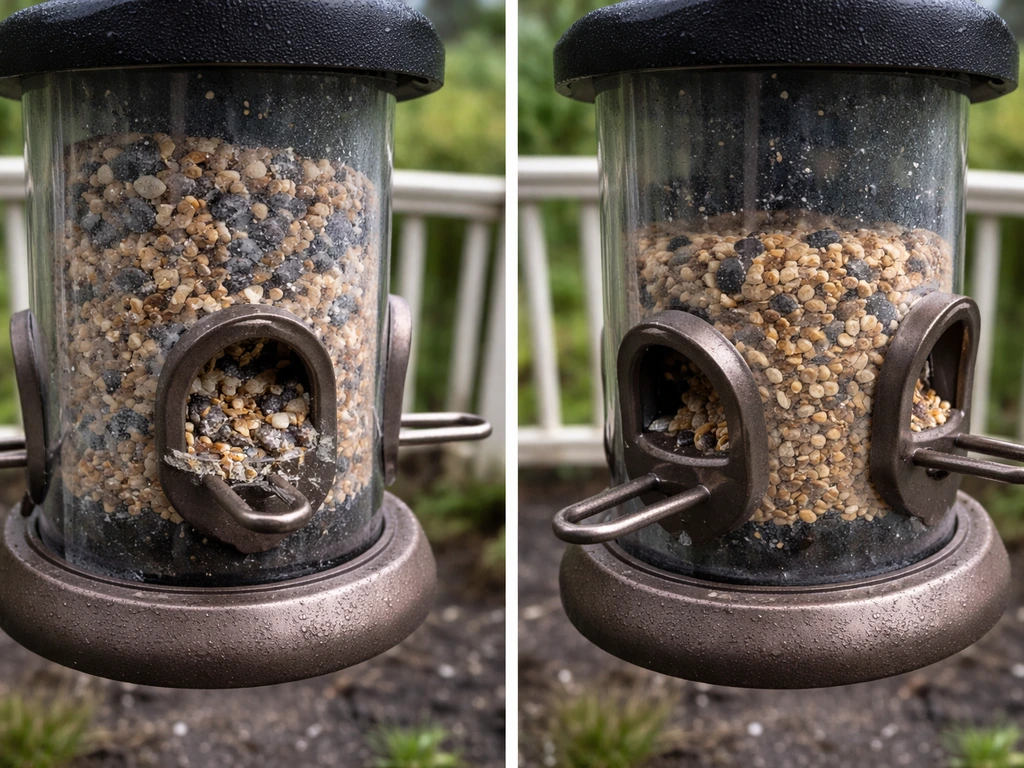
New feeders often take a week or two for birds to discover, especially if you've just set them up or moved them. If visits are slow, try placing the feeder closer to existing bird activity, scattering a small amount of seed on a nearby flat surface to draw birds in, or adding a water source nearby. Also check that seed hasn't gone stale or moldy, birds will avoid bad seed even when hungry. If you're seeing visits to other feeders in the yard but not the caged one, the birds may simply be opting for an easier-access feeder first.
Ports are clogged or seed is clumping
Clogged ports are usually a moisture problem. Rain or morning dew works into the tube, and seed swells or molds. Make sure port openings face away from prevailing rain, and never overfill, seed sitting at the port opening is more exposed to moisture than seed deeper in the tube. If you live somewhere with high humidity, switching to a mesh-body feeder rather than a smooth tube can help, since mesh allows air circulation around the seed.
Raccoons are damaging the cage
Raccoons are strong enough to bend or pry apart thin cage wire. If raccoons are a consistent problem, prioritize feeders with heavier-gauge welded steel cage construction rather than twisted lighter wire. Bringing feeders in at night (raccoons are nocturnal) is the simplest solution if the cage is getting damaged.
DIY and alternative setups if a store-bought caged feeder isn't right for you
Not everyone wants to buy a purpose-built caged feeder, and there are real DIY alternatives that work well. The most practical is building a simple cage frame around an existing tube feeder using hardware cloth, the 1/2-inch or 3/4-inch square galvanized mesh sold at hardware stores. Cut and shape it into a cylinder around your tube feeder with a few inches of clearance, attach it to the hanging wire above and a ring below, and you've essentially replicated the commercial design for a few dollars in materials. It takes maybe 30 minutes and a pair of wire cutters.
Another option is a cage-style suet feeder, which you can build from a simple wood frame with wire mesh stapled on each face. This works for woodpeckers and nuthatches and costs almost nothing to make. It won't block squirrels from the suet the way a seed cage does, but a no-melt suet plug placed inside a small wooden box with a mesh front is a genuinely effective and cheap solution for winter feeding.
If your main goal isn't squirrel-proofing but rather reducing bully-bird competition, a completely different approach works well: a smaller, enclosed feeder that physically fits only one or two birds at a time. This naturally limits access by larger birds simply through feeder geometry. Similarly, some feeders use a weighted perch ring rather than a cage, the weight of a squirrel or large bird closes the ports. This is less passive than a cage but more adjustable, and it's worth considering if you want to let cardinals through while blocking starlings.
It's also worth noting that if your pest problem is specifically crows, pigeons, or rats, caged feeder designs share a lot of overlap with anti-crow, anti-pigeon, and anti-rat feeders, those problems have their own dedicated solutions that might serve you better than a general caged tube feeder, depending on which pest you're dealing with most. If crows are the problem, focus on a caged feeder style that limits access to small birds while making it hard for crows to reach the ports and seed anti-crow, anti-pigeon, and anti-rat feeders.
FAQ
Will a best caged bird feeder keep rats away completely?
Yes, but placement still matters. If the cage is mounted on a line that sways, squirrels can use that movement to knock seed loose near the ports. Use a rigid mount and keep a squirrel baffle below the feeder, because the cage can stop direct access while the feeder’s wobble still creates a “launch point” for seed spills.
What should I do if squirrels still get seed even after switching to a caged feeder?
It will reduce the mess that draws rats, but it usually does not fully eliminate them. If rats are established, switch to hulled sunflower or other no-mess options, clean fallen seed daily, and consider a weight-sensitive feeder that closes when heavy animals land. That combination targets both access and food availability.
Can I use a best caged bird feeder to attract cardinals and also keep starlings out?
Start with species targeting and adjust the grid or the container style. Standard tube-style cages with 1.5-inch openings are typically too restrictive for northern cardinals, but wider-opening caged hoppers or platforms can work. If you want cardinals plus finches, you may need a wider-perimeter “fence” design rather than a tight tube enclosure.
What’s the best caged bird feeder setup for nyjer (thistle)?
Yes, in two different ways. First, some caged nyjer feeders use smaller ports or mesh socks to manage thistle’s fine texture. Second, if you use a standard-cage tube with nyjer without the right port size, seed can spill or clog. Match the feeder’s port size to thistle, then avoid overfilling so moisture does not sit at the ports.
Do I still need a squirrel baffle if I buy a caged feeder?
Use a baffle even when using a cage, because the baffle reduces wear and damage. Caged feeders have more crevices and wiring, so repeated contact from squirrels that can climb near the feeder will shorten the cage’s life. A baffle also helps prevent squirrels from chewing on the cage to reach feed or knock it loose.
Why are starlings or grackles still dominating a caged bird feeder?
Deeply check port recesses and grid spacing, not just the headline opening size. Bully birds sometimes reach inside through shallow ports, especially if the feeder has wide access points or the cage is slightly deformed. If starlings or grackles are getting in, switch to deeper port recess designs or smaller openings, and confirm the cage is straight and intact.
How can I prevent clogged ports on a caged bird feeder?
Yes. A cage can protect the tube and ports, but if you overfill or point ports into rain, moisture can still cause swelling and mold. Keep port openings facing away from prevailing weather, do not pack seed to the very top of the ports, and consider mesh-body designs for high-humidity locations to improve airflow around the seed.
What should I do if raccoons keep bending or prying the cage?
Don’t rely on the cage alone for persistent raccoons. Prioritize heavier-gauge welded steel cages instead of lighter twisted wire, and bring the feeder in at night if raccoons are regularly damaging it. In many yards, night storage is the simplest way to stop bending and prying.
How long does it take for birds to start using a new caged feeder, and what if they ignore it?
Wait a bit, then help the birds “find” it. New feeders often take 1 to 2 weeks because birds need to learn the access pattern. Place it near existing activity, add a nearby water source, and you can scatter a small amount of seed on a flat surface to draw birds in, but avoid piling seed where it will reward pests.
Can I DIY a caged feeder around my existing tube feeder?
DIY cage frames work best when you leave proper clearance and secure the connections. Use hardware cloth that is small enough to block your target pests, form a cylinder with a few inches of space around the tube, and attach the hanging hardware securely so the cage cannot rotate. If the cage can slide, animals can gain a gap at the ports over time.
Next Articles
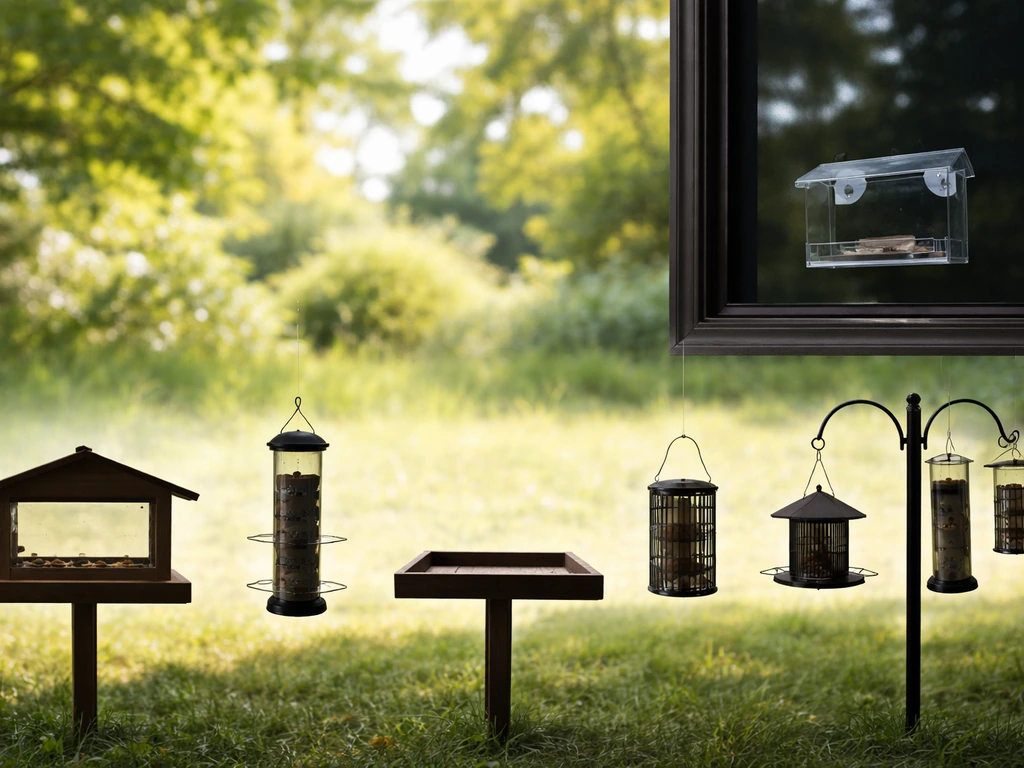
What Does a Bird Feeder Look Like? Types and Visual Cues
See common bird feeder silhouettes and visual cues, plus features for choosing and troubleshooting fast.
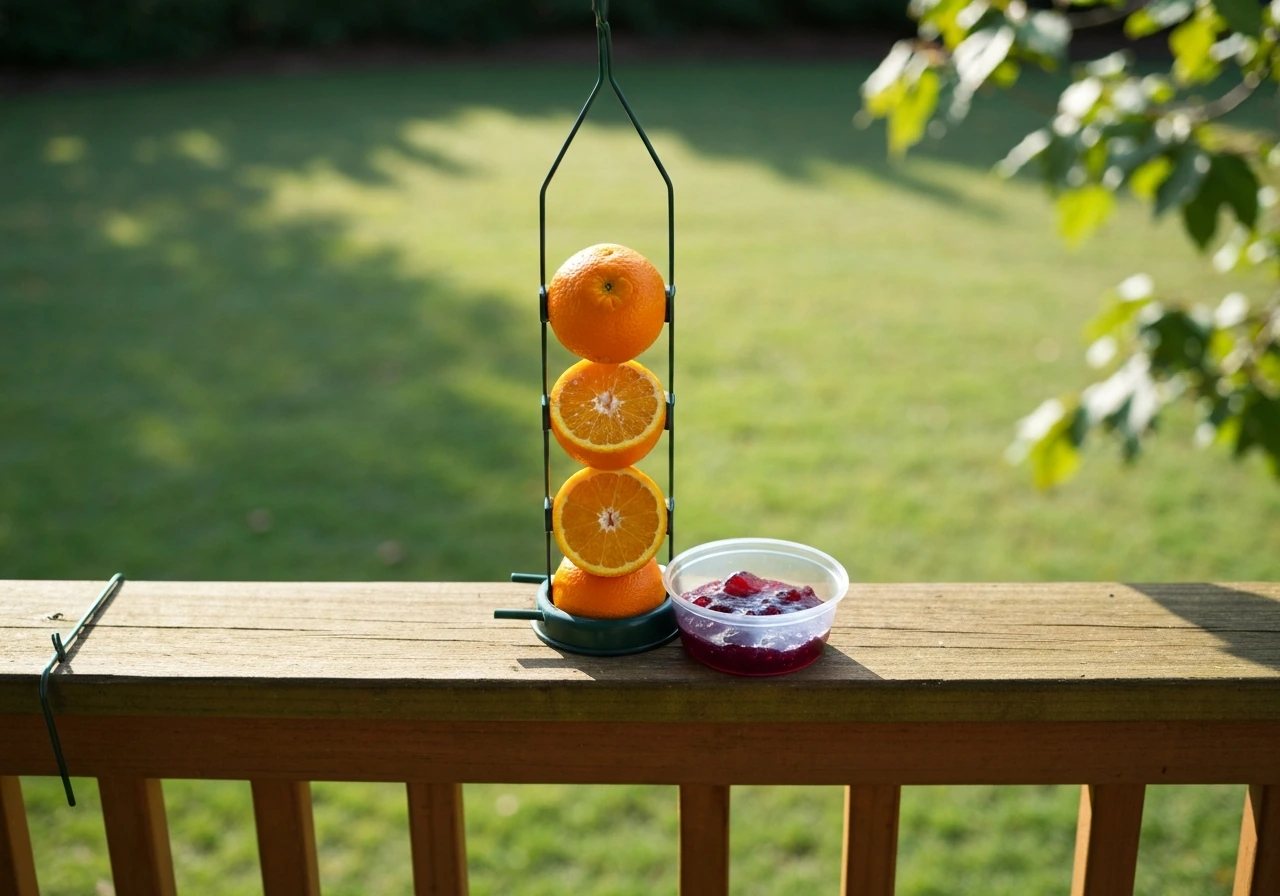
Best Oriole Bird Feeders: Buying, Setup, and Tips
Choose the best orioles feeders and set up jelly or nectar for backyard success, with pest-proofing and troubleshooting.
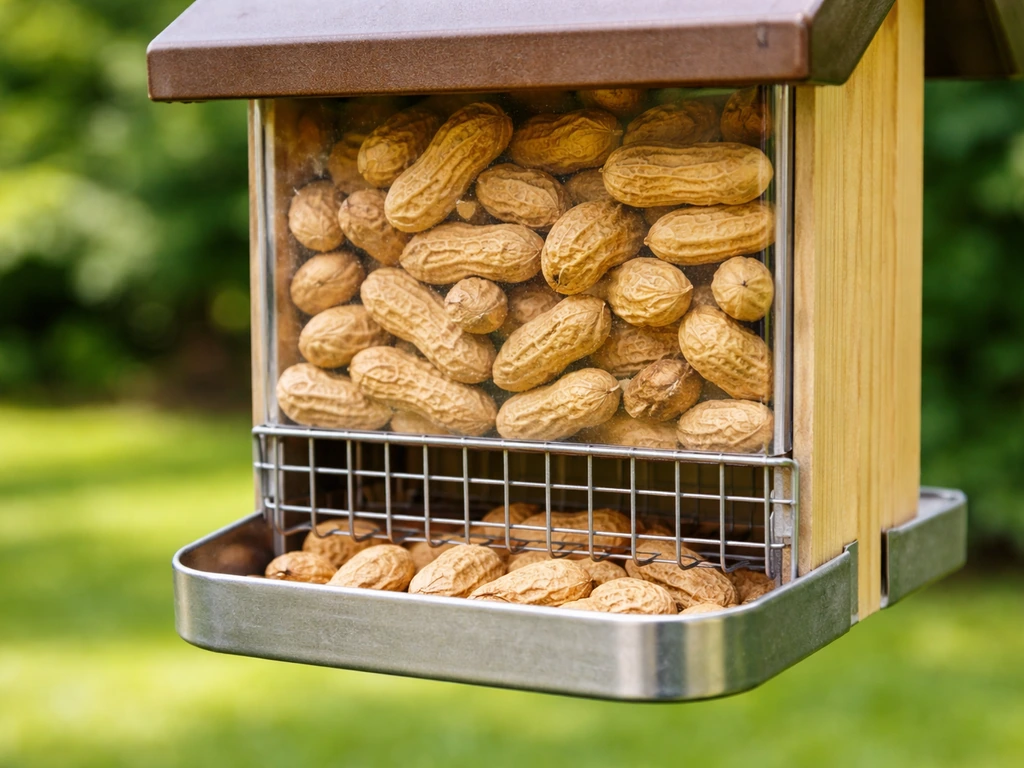
Best Peanut Bird Feeder Guide: Whole Peanut Options
Pick the best peanut bird feeder for whole peanuts: hopper, platform, or caged designs, with pest control and easy clean