
The most effective grackle-proof bird feeders are tube feeders with short or no perches, weight-sensitive feeders that close ports under heavier birds, and cage-style feeders with openings sized around 1.5 inches, which let chickadees, finches, and nuthatches through but physically block a grackle's body. No single feeder does everything, but combining the right feeder design with smarter seed choices and placement will cut grackle traffic dramatically without shutting out the birds you actually want.
Best Grackle Proof Bird Feeder: Designs That Work
Marcus Hendricks
28 Apr 2026
Why grackles take over feeders (and how they bypass common designs)
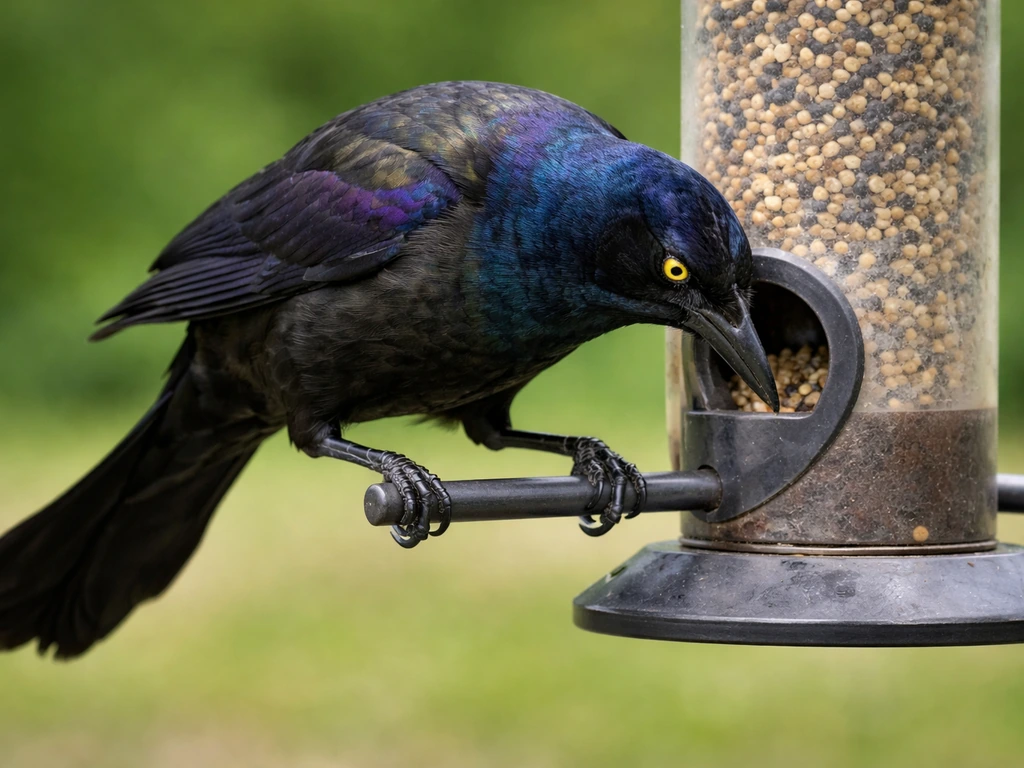
Grackles are big, bold, and built for opportunistic feeding. A Common Grackle weighs roughly 2.5 to 5 ounces, which is three to five times heavier than a house finch. They feed aggressively on the ground, at platform feeders, and anywhere they can land and hold position. Cornell Lab's All About Birds describes them as competitive feeders that will displace smaller birds simply by showing up in numbers, and the USDA Wildlife Damage Management Technical Series documents how grackle flocks can empty a feeder fast once they establish it as a reliable food source.
The designs that fail almost always share the same weaknesses: wide, open platforms that give a grackle a stable landing zone, large seed ports that fit their bill, long perches that let them balance comfortably, and feeder trays that catch spilled seed at the bottom. Hopper feeders with broad roofs and open sides are an easy target. Tray feeders and platform feeders are even worse because they offer unlimited landing space. Standard tube feeders with long perch rods and large ports don't do much better. Grackles figure all of these out in one visit.
What "grackle-proof" really means: access control features to look for
There's no such thing as a feeder that's 100 percent grackle-proof in every situation, so the useful framing is access control: making it physically difficult or unrewarding for a grackle to stay long enough to eat. If you are shopping for bird feeders that are rat proof, look for access control designs that make it physically difficult for larger animals to reach the food. Project FeederWatch at Cornell Lab puts it plainly: blank" rel="noopener noreferrer">use feeders with short perches that accommodate finches but exclude larger birds, or surround feeders with wire mesh openings small enough to block larger bodies. That's exactly the design logic to shop for.
Here are the specific features that actually matter when evaluating a feeder for grackle resistance:
- Weight-sensitive closing mechanism: A spring-loaded or counterbalanced port system closes seed access when a bird above a set weight lands. Most quality models close somewhere between 1.5 and 3 ounces, which excludes grackles but allows chickadees, finches, and small sparrows.
- Short or no perches: Perches under half an inch wide or shorter than half an inch long force small birds to cling while making it awkward for a grackle to hold on. No perch at all (clinging-only design) is even more effective.
- Small seed ports: Ports sized for nyjer (thistle) or small sunflower chips physically can't accommodate a grackle's larger bill. Standard sunflower ports are often too large on their own.
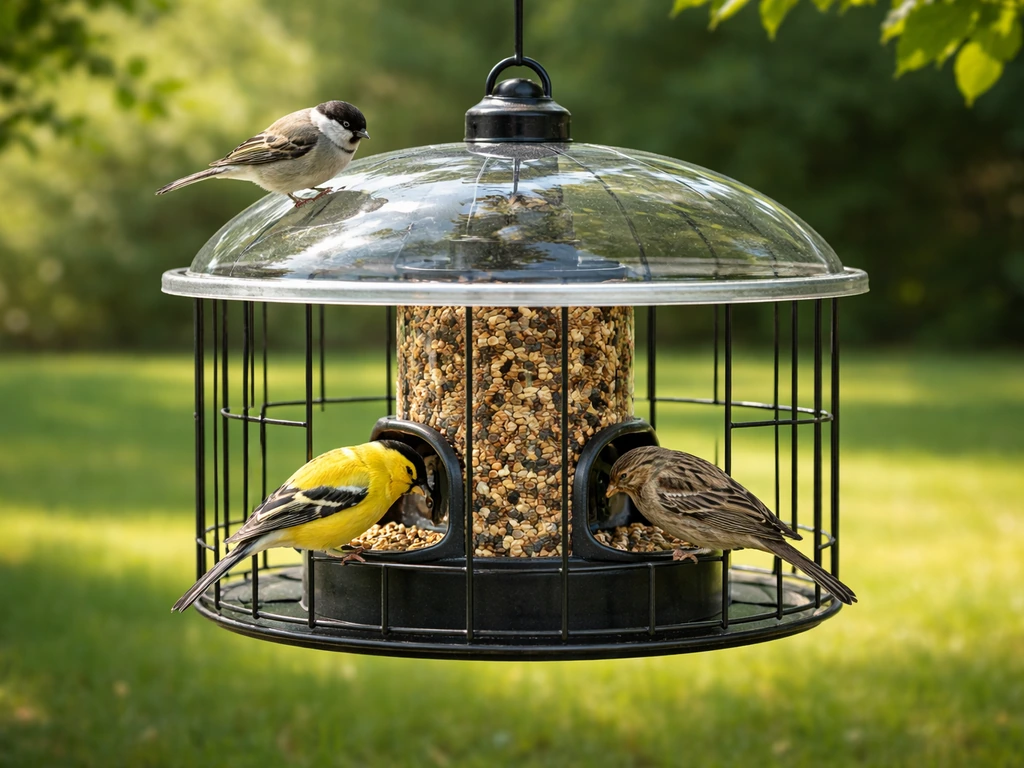
- Cage or wire shroud: A cylindrical wire cage surrounding the feeder body with approximately 1.5-inch openings lets small birds pass through while blocking grackles. UNL Extension specifically recommends this geometry for excluding larger birds.
- Enclosed or protected seed tray: If there's a catch tray at all, it should be enclosed within the cage or too small for a grackle to stand on.
- Dome or roof shroud: A large dome above the feeder reduces landing space and helps with weather protection.
Best feeder types for stopping grackles
Not every feeder type translates well to grackle resistance. If you want the best deer proof bird feeder option, use the same access control idea and choose a model that restricts entry while keeping it safe from larger animals best feeder types for stopping grackles. If you want to cut down on spill, consider pairing your grackle-resistant setup with a best no mess bird feeder style that keeps seed where it belongs. Here's how the main designs stack up and which variants are worth buying.
Weight-sensitive tube feeders
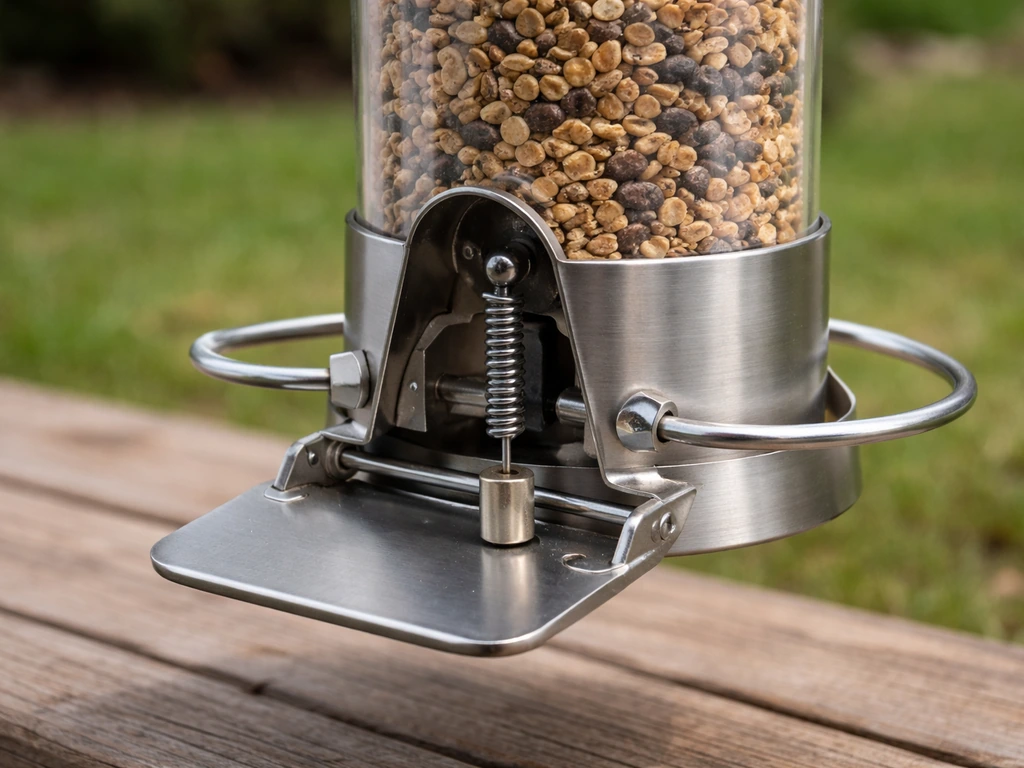
These are the gold standard for grackle exclusion. Models like the Brome Squirrel Buster Plus and the Droll Yankees Flipper use spring tension or counterweights to close ports when a bird over a set threshold lands. The Squirrel Buster line lets you adjust the closing sensitivity with a simple collar, so you can dial it in for your specific mix of birds. These feeders typically hold 1.5 to 3 quarts of seed, are easy to disassemble for cleaning, and hold up well in rain. The main downside is cost: expect to spend $45 to $90 for a quality weight-sensitive tube feeder. It's worth it.
Cage-style feeders
A cage feeder is essentially a standard tube or hopper feeder enclosed inside a welded wire cylinder. The Woodlink Caged Tube Feeder and Perky-Pet's cage series are common examples. Small birds fly through the cage openings to reach the inner feeder; grackles can't fit. Look for cage openings between 1.5 and 1.75 inches, which is the sweet spot for letting a chickadee or finch through while stopping a grackle. The Nebraska Extension publication on selective bird feeding recommends perch lengths of about 5/8 inch to exclude larger birds like grackles while still allowing smaller birds such as finches and chickadees cage openings between 1.5 and 1.75 inches. Wider than 2 inches and a determined grackle may squeeze its head in far enough to eat. These feeders are generally more affordable ($20 to $50) and are excellent for mixed sunflower or safflower seed.
Nyjer tube feeders (thistle feeders)
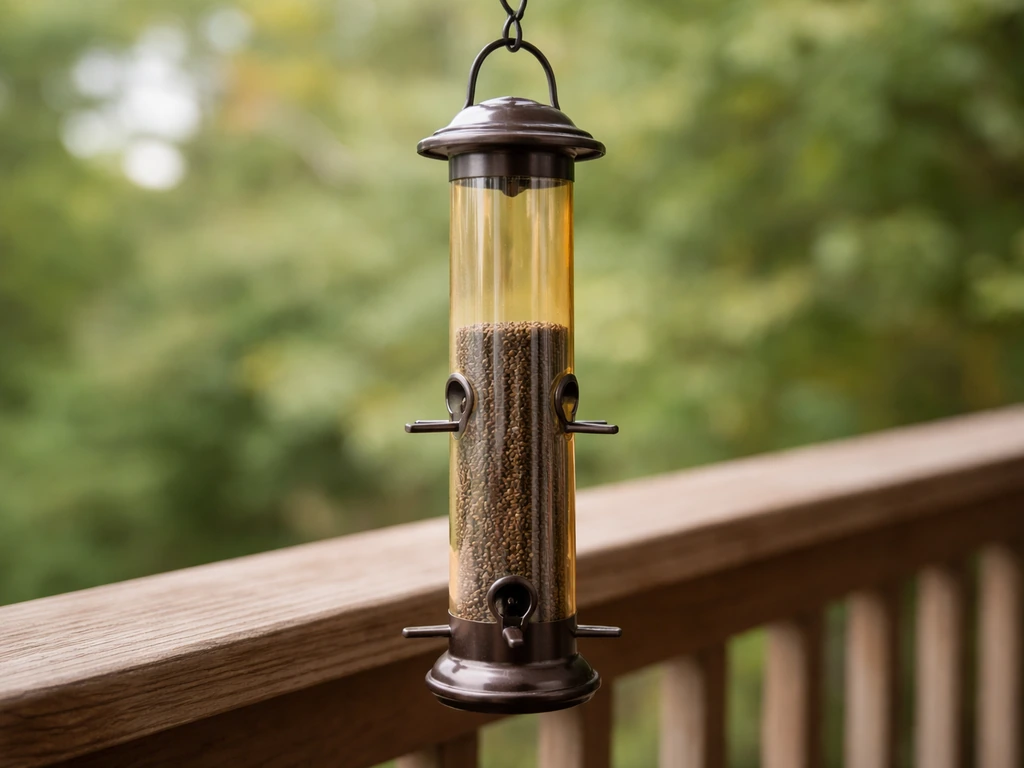
Nyjer-specific tube feeders have tiny, narrow ports sized for the small bills of goldfinches, siskins, and redpolls. Grackles rarely bother with nyjer in the first place, and they can't extract it efficiently from small ports even if they try. If your goal is mainly to attract finches while keeping grackles away, a nyjer tube feeder is the simplest solution with the least setup friction. Brands like Droll Yankees, Kaytee, and Perky-Pet all make reliable nyjer tubes in the $15 to $35 range.
Grackle-resistant hopper feeders
Standard hopper feeders are a grackle magnet, but a few hopper designs add enough restrictions to help. Look for hopper feeders with a weight-sensitive perch bar that closes the seed slot, or models enclosed in a cage shroud. Without one of these features, avoid hoppers if grackles are a serious problem in your yard.
Suet feeders
Upside-down suet feeders are genuinely effective at deterring grackles. Woodpeckers, nuthatches, and chickadees can cling and feed from below, but grackles have a much harder time hanging inverted. Models like the Aspects Upside-Down Suet Feeder and the Duncraft Upside-Down Suet Cage work well for this. If grackles are still managing to hang from a standard suet cage, switching to an upside-down design is a quick fix.
How the main grackle-resistant feeder types compare
| Feeder Type | Grackle Resistance | Best For | Price Range | Main Trade-off |
|---|---|---|---|---|
| Weight-sensitive tube | Excellent | Sunflower chips, safflower, mixed seed | $45–$90 | Higher cost upfront |
| Cage-style tube/hopper | Very good | Sunflower, safflower, mixed seed | $20–$50 | Cage can collect debris; clean regularly |
| Nyjer tube feeder | Excellent (grackles avoid nyjer) | Goldfinches, siskins, redpolls | $15–$35 | Limited species attracted |
| Upside-down suet cage | Good | Woodpeckers, nuthatches, chickadees | $10–$25 | Doesn't help with seed feeders |
| Standard hopper (no cage) | Poor | General use | $15–$60 | Open design invites grackles |
Seed, feeder placement, and setup tactics that reduce grackle success
The feeder itself is only part of the solution. Seed choice and yard setup can reduce grackle pressure before they even reach the feeder.
Seed choices that discourage grackles
Grackles strongly prefer cracked corn, millet, and standard black oil sunflower seeds. Switching to safflower seed is one of the most effective dietary deterrents: most grackles dislike the bitter taste and will pass it up, while cardinals, chickadees, and house finches eat it readily. Nyjer (thistle) is similarly unappealing to grackles. Sunflower chips (hulled sunflower pieces) offer less advantage on their own, but in combination with a weight-sensitive feeder they work well. Avoid mixes that contain millet or cracked corn if grackles are a serious problem, and don't use a ground-feeding tray.
Placement and yard layout
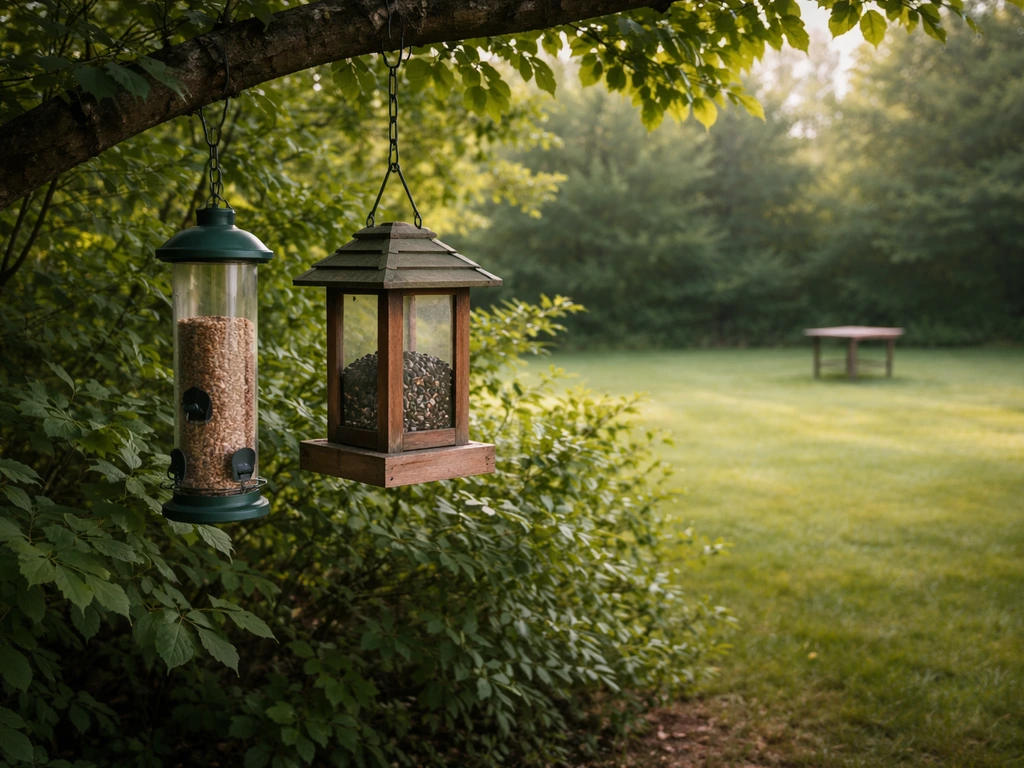
Grackles are more confident in open areas with clear sight lines and easy flight approaches. Hanging feeders closer to shrubs or tree cover (within 10 to 12 feet) gives smaller birds an escape route and makes the feeding area feel less exposed to grackle flocks. At the same time, you don't want the feeder too close to branches that grackles can use as launching pads: 5 to 8 feet from a branch is a reasonable balance. Mounting feeders higher, at 6 feet or above, also reduces ground-feeding spillover that grackles love. Remove or regularly sweep fallen seed under the feeder because spilled millet and sunflower is what keeps grackle flocks coming back day after day.
Using multiple feeders strategically
If you run several feeders, keep your grackle-resistant feeders in one location and don't put an open platform feeder nearby. A platform or tray feeder will undo all your work on the tube feeder because grackles will just anchor at the platform and eventually discover the other feeder. If you want to feed ground-feeding birds like doves, do it in a different part of the yard. Grackles and starlings share the same weakness for open access, so the same cage and weight-sensitive strategies that work for grackles will help with starlings too. Best starling-proof bird feeders use the same access-control ideas as grackle-resistant models, with smaller ports and tighter entry limits best starling proof bird feeders.
How to choose the right model: specs checklist and what to avoid
When you're comparing specific feeders, here's what to actually check before buying:
- Weight closure threshold (if weight-sensitive): Should close somewhere between 1.5 and 3 ounces. Below 1.5 ounces risks excluding heavier small birds like cardinals. Above 3 ounces may not stop grackles reliably.
- Adjustability: Can you change the closure weight? Models like the Brome Squirrel Buster Plus let you fine-tune this, which is genuinely useful.
- Cage opening size (if cage-style): Target 1.5 to 1.75 inches. Verify this in product specs, not just photos.
- Perch length and diameter: Short perches (under 0.5 inches) or no perches force clinging. Avoid feeders with long, wide perch rods.
- Port size: Nyjer ports should be 1 to 2 mm wide. Sunflower ports should be covered by a weight-sensitive mechanism or enclosed within a cage.
- Materials and weather durability: UV-stabilized polycarbonate or powder-coated metal holds up better than plain plastic, especially for year-round use.
- Ease of cleaning: Can you disassemble the feeder to scrub the tube and ports? Mold in a clogged port is a real problem, especially in wet weather.
- Seed capacity: 1.5 to 3 quarts is enough for most backyards without letting seed sit long enough to spoil.
What to avoid: any feeder marketed as "squirrel-resistant" but relying only on a dome or baffle without a weight closure or cage, wide open platform designs, tube feeders with large seed ports and long perch rods, and feeders with broad catch trays at the bottom that give grackles a landing platform even if they can't reach the ports.
Troubleshooting when grackles still get in
Even with the right feeder, you might still see grackles hanging around or finding ways to access seed. Here's how to close common gaps.
The weight threshold isn't closing for grackles
If you have a weight-sensitive feeder and grackles are still eating, the first step is to decrease the closing weight setting. On adjustable models, tighten the collar or spring to close at a lower threshold. If the feeder doesn't have an adjustable setting, check whether grackles are landing on the cage or dome instead of the perch, which bypasses the weight mechanism. In that case, adding a separate domed baffle above the feeder can remove that landing surface.
Cage openings are too large
If you have a cage feeder and grackles are still reaching through the wire, measure the opening size. If it's over 1.75 inches, grackles can extend their bill and head far enough to eat from the inner feeder. The fix is either a replacement cage with smaller openings or switching to a weight-sensitive tube feeder instead.
Ground feeding and spillage
Even if grackles can't access your feeders, fallen seed on the ground will keep the flock coming to your yard. A seed catcher tray that mounts below your feeder (within the cage on cage models) reduces spillage. Raking or sweeping under feeders every few days breaks the habit loop for grackle flocks. Audubon notes that grackles are heavy ground feeders, so eliminating ground-level access matters as much as feeder design.
Mounting and baffle issues
A pole-mounted feeder needs both an upper dome baffle (to block birds landing from above) and a lower cone or cylinder baffle (to block squirrels climbing from below, which also prevents grackles from using the pole as a staging area). The lower baffle should be at least 18 inches in diameter and positioned at least 4 feet off the ground. For hanging feeders, use a smooth, thin wire or monofilament rather than a chain, and make sure the hanging point doesn't give a grackle a surface to grip and perch above the feeder.
Feeder cleanup and mold
Clogged or moldy ports are a common issue with cage feeders and tube feeders in wet climates. Clean tube feeders every two to four weeks with a bottle brush and a mild bleach solution (one part bleach to nine parts water), rinse thoroughly, and let dry completely before refilling. Cage feeders can be rinsed with a hose but check for seed accumulation where the cage meets the feeder body.
Seasonal and bird-friendly balance: keep desired species coming
Grackle pressure isn't constant year-round. In many parts of the US, grackle flocks are most disruptive in late winter and early spring when large migratory groups move through, and again in late summer and fall when family groups gather before heading south. During these peak periods, temporarily removing open feeders for a week or two can break up the flock's attachment to your yard without permanently displacing your year-round birds. Weight-sensitive and cage feeders are worth keeping out year-round because they won't drive away the species you want.
Winter feeding considerations matter too. Metal components on cage feeders can ice up in hard freezes, which may temporarily jam the cage door or seed ports. UV-stabilized polycarbonate tubes handle cold better than thin plastic, and powder-coated steel cages resist rust better than galvanized wire over multiple winters. If you're in a cold-weather region, budget for a feeder with metal or high-quality polycarbonate parts rather than cheap plastic.
The bird-friendly balance piece is worth being intentional about. The goal isn't a grackle-free yard, it's a yard where smaller birds can actually eat without being displaced. A weight-sensitive tube feeder with safflower seed will attract cardinals, chickadees, nuthatches, and house finches reliably. A nyjer tube alongside it covers goldfinches and siskins. An upside-down suet cage handles woodpeckers and creepers. That combination covers most of the birds backyard birders want without handing grackles a free buffet. If you're also trying to attract doves or ground-feeding sparrows, keep those feeders in a separate area of the yard and be aware that open ground feeding in one spot will draw grackles regardless of what you're doing elsewhere. For the best results, choose a dove-friendly feeder design that also uses access control to prevent grackles from dominating the seed doves. For the best dove proof bird feeders, focus on designs that use access control to limit larger birds while still letting doves reach the seed. Similar logic applies to pigeon-proofing and rat-proofing your yard: the same open-access designs that invite grackles tend to invite other opportunistic feeders, so closing one problem often helps with the others. For the best pigeon proof bird feeder results, use the same access control approach: restrict entry for larger birds while keeping access open for the smaller species you want. If you want to deter rats as well, choose a rat-proof bird feeder with access control that keeps bait-like seed out of reach.
FAQ
What seed should I use with the best grackle proof bird feeder to keep finches coming too?
Pair a grackle-resistant tube or cage with safflower for general crowd control, then add a separate nyjer tube nearby for goldfinches and siskins. Keep the finch feeder away from open platforms, because grackles will learn to anchor where they can reach multiple food sources quickly.
Will a cage feeder with 1.5-inch openings always stop grackles?
Not always. If the cage is slightly bent, the spacing varies around welds, or the grackle can access from a weird angle, a grackle may extend its bill deeper than expected. If you see grackle activity, re-measure the openings at multiple spots and consider switching to a weight-sensitive tube if openings are effectively larger in practice.
My grackle proof tube feeder closes but grackles still eat. What’s the most common reason?
They are bypassing the closing mechanism by landing on the cage dome, baffle, or any landing surface adjacent to the ports. Add or tighten a baffle so there is no convenient “perch alternative,” and ensure the bird must put weight on the intended sensor area to access seed.
How do I choose the right weight setting on a weight-sensitive feeder for my yard?
Start more restrictive than you think, then loosen gradually after 2 to 3 days if small birds are not feeding. Adjust while watching several species, because some smaller birds weigh less but land differently, and you want them to trigger access without letting heavier grackles stay long enough to empty the feeder.
Should I put my grackle resistant feeders close to shrubs for safety?
Yes, but within a narrow range. Aim for about 10 to 12 feet from heavy cover so small birds have a quick escape, avoid placing the feeder so close that branches create a staging perch for grackles, and keep it high enough (often 6 feet or more) to reduce ground spill that attracts flocks.
How often should I clean a grackle proof feeder, and what’s different about wet weather?
Clean tube ports every 2 to 4 weeks, and more often if you get frequent rain or humidity. Grackles are persistent, but clogged ports stop smaller birds first, so you want consistent flow. For cage feeders, rinse and check seed buildup at the cage-to-body seam, then let everything dry fully before refilling.
Do grackles learn faster if there are multiple feeders in the same spot?
They can. If you run both a grackle-resistant feeder and an open platform feeder nearby, grackles may abandon the “hard” feeder once they establish a reliable landing and feeding pattern at the platform. Keep your access-controlled feeder in a dedicated location, and place ground-feeding setups elsewhere if you need them.
Can I reduce grackles without giving up all open feeding for other birds?
Yes by separating ground feeders and using access-controlled feeder types for the main canopy feeding zone. If you must offer a platform, place it far from your tube or cage feeder and avoid millet or cracked corn in that area, because those high-preference seeds increase flocks returning to the easiest access point.
What should I do in cold weather if my grackle proof feeder seems to jam?
If ports or doors feel sluggish, switch or choose models with UV-stabilized polycarbonate tubes and quality metal or high-grade polycarbonate components. Ice can temporarily block movement on weight-sensitive closures, so prevent freeze buildup by keeping the feeder clean and ensuring the mechanism area is dry when temperatures drop.
Is an upside-down suet feeder enough, or will grackles still find a way?
Upside-down suet cages often reduce hang-on behavior, but if grackles are already persistent, they may still attempt access from nearby perches or by probing openings. Make sure the suet cage has no easy landing ledge above or beside it, and consider adding a second line of defense with weight-sensitive seed feeders using safflower.
Next Articles
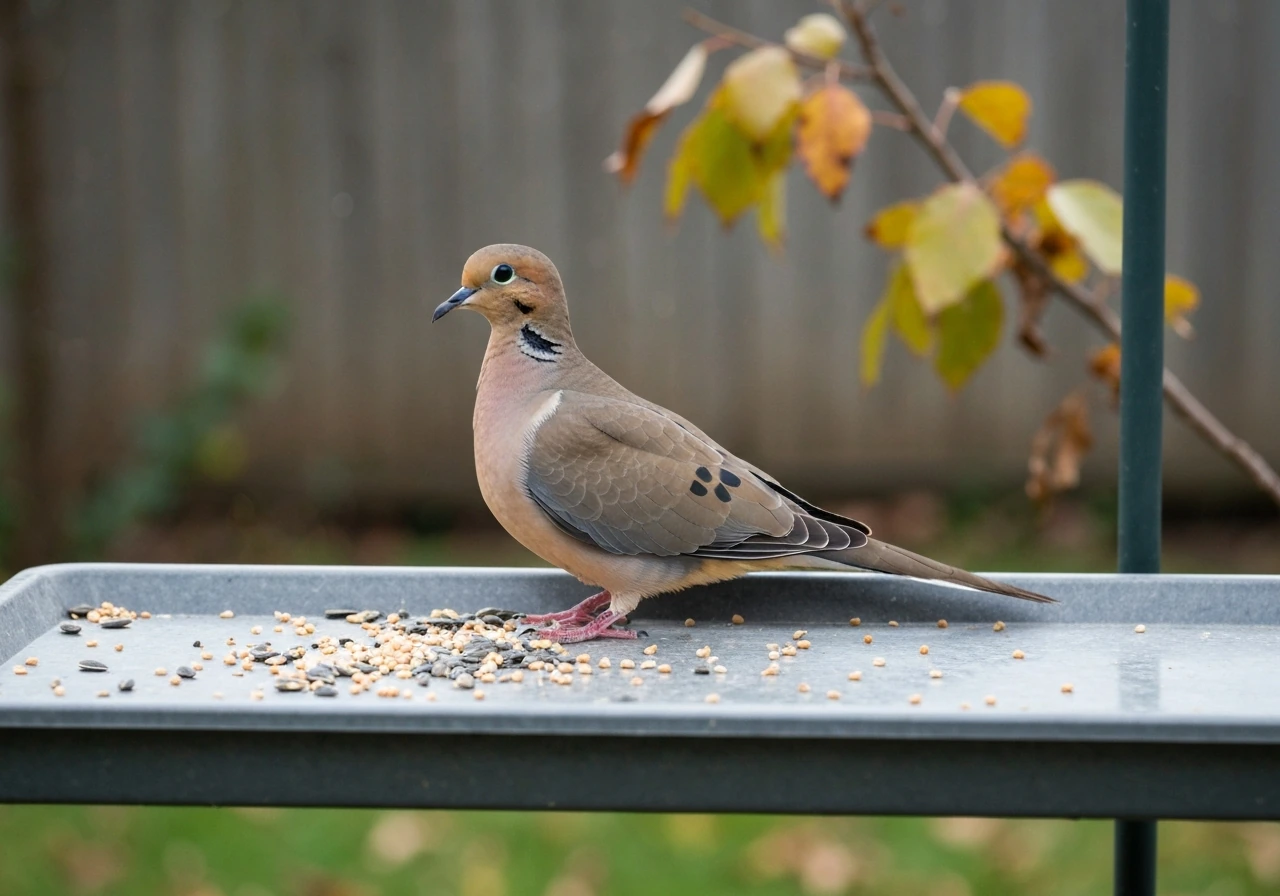
Best Bird Feeder for Doves: Buyer Guide and Setup Tips
Best feeder for mourning doves with dove-friendly design, placement tips, weatherproofing, and pest and mess control.
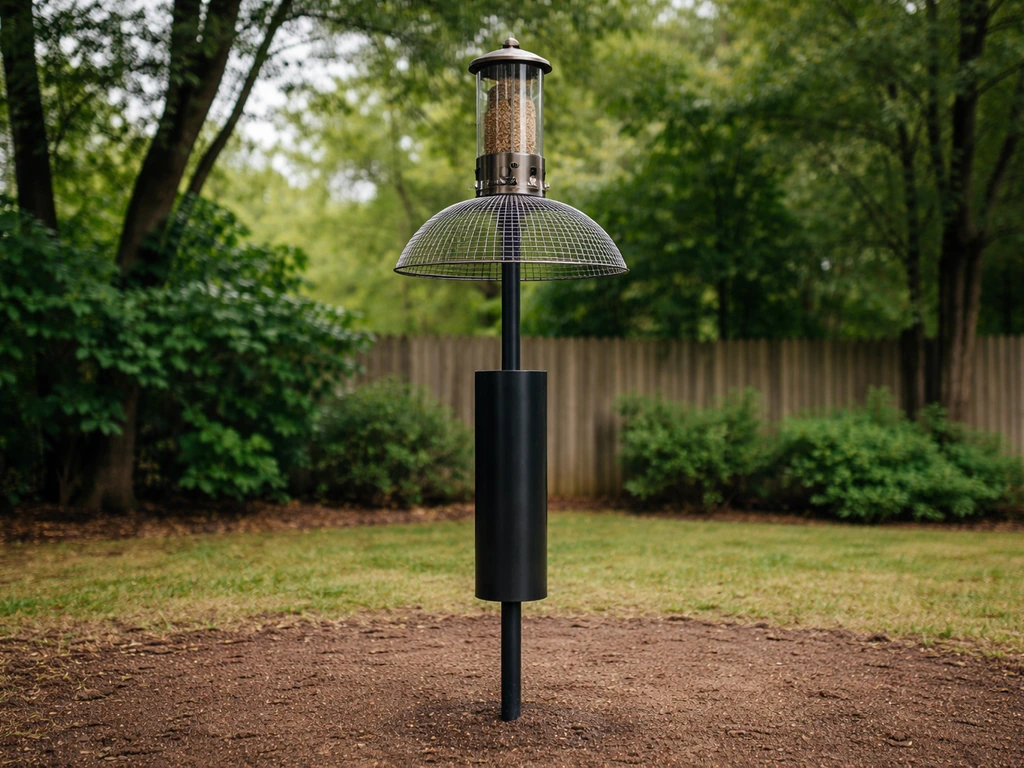
Bird Feeders That Are Rat Proof: Buy and Set Up Guide
Step-by-step guide to choose and install rat-proof bird feeders, baffling setup, placement, and winter adjustments.
What Does a Cardinal Bird Feeder Look Like: Design & Tips
Identify and choose the best cardinal bird feeder: shapes, colors, perches, seeds, placement, and winter tips.