The best bird feeder for Baltimore orioles is a dedicated oriole nectar feeder with wide feeding ports, sturdy perches, and orange-colored accents, paired with a separate jelly cup or fruit spike nearby. A single-purpose, orange-themed feeder like the Perky-Pet Oriole Feeder (Model 466-2) hits most of the right notes: three perches, bee guards, a no-drip vacuum reservoir, and a removable base that makes cleaning fast. But the honest answer is that the feeder is only half the equation. Placement, timing, and what you put in it matter just as much as the hardware.
Best Bird Feeder for Baltimore Orioles: Buyer Guide

Marcus Hendricks
5 Jul 2026
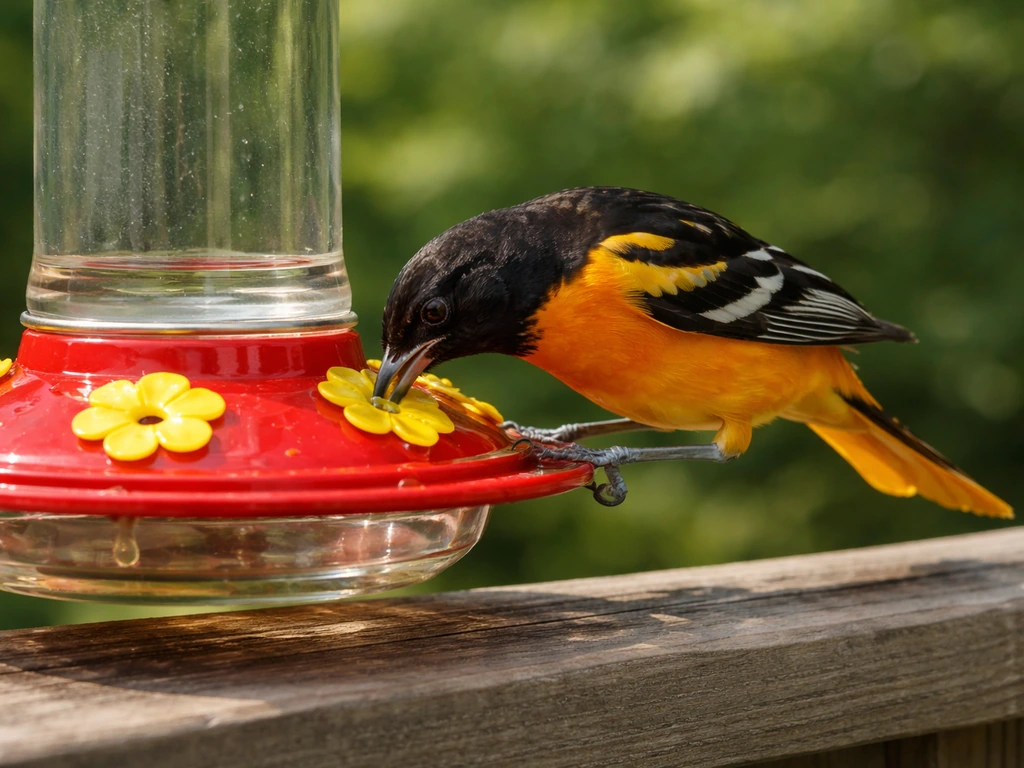
What Baltimore orioles actually eat at feeders
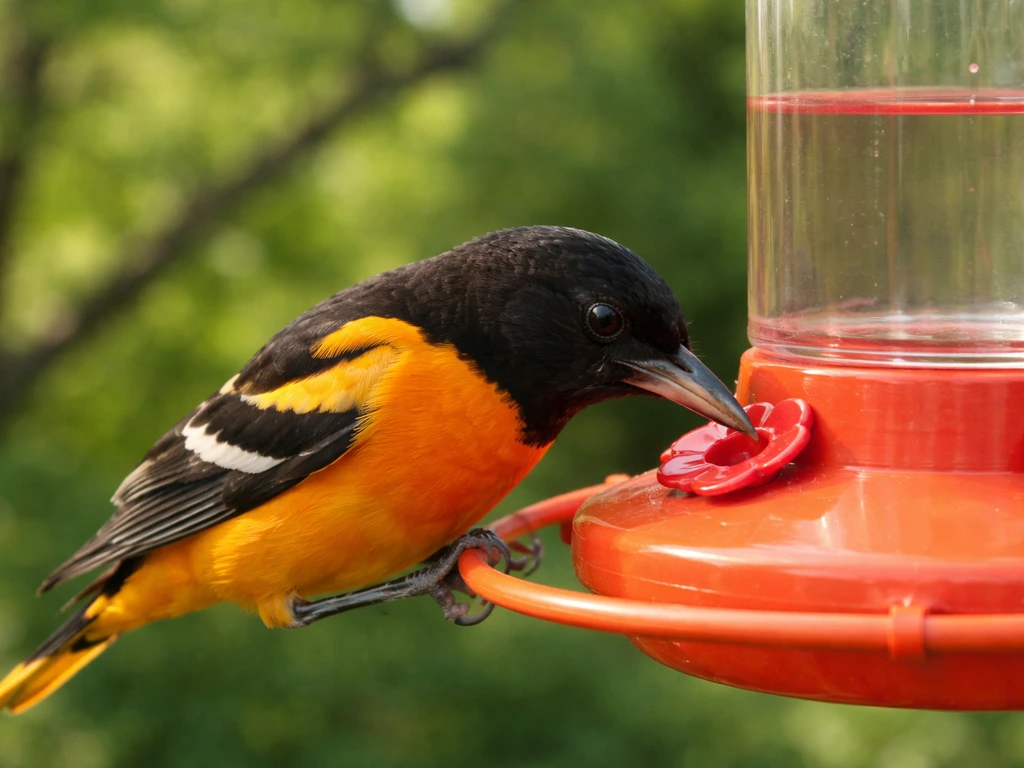
Baltimore orioles are not seed birds. If you put out a hopper or tube feeder loaded with sunflower seeds, they will fly right past it. What they want from a feeder is nectar, grape jelly, orange halves, and sometimes mealworms. In the Baltimore area specifically, Maryland DNR wildlife guidance calls out orange slices as an especially strong spring attractant, and they back up the broader pattern: orioles are fruit and nectar foragers, not granivores.
For nectar, the recipe is simple: blank" rel="noopener noreferrer">1 part plain white granulated sugar dissolved in 4 parts water. Do not use honey, brown sugar, artificial sweeteners, or red food dye. blank" rel="noopener noreferrer">The 1:4 ratio is standard across sources from Audubon to the Smithsonian National Zoo, and it closely mimics the natural sugar concentration in flower nectar. Make a fresh batch, let it cool, and fill your feeder. That is genuinely all there is to it on the food side.
Grape jelly is the other big draw, and many experienced oriole watchers argue it outperforms nectar for initial attraction, especially in spring when birds are establishing territory and hunting calorie-dense food. A tablespoon or two in a small cup feeder is plenty. Mealworms round things out if you want to create a real oriole buffet, though they require more frequent restocking and spoil quickly in heat.
Feeder types that work for orioles (and ones that do not)
Orioles have a specific feeding style that most standard feeders completely ignore. They need a perch to land on before eating, and they feed with a side-to-side probing motion rather than pecking straight down like a finch or cardinal. A finch bird feeder is typically a small seed feeder with perches, designed for pecking and easy access to mixed seed like a finch or cardinal. That rules out most tube feeders, hoppers, and platform feeders for nectar delivery. Here is how the main feeder types stack up:
| Feeder Type | Works for Orioles? | Why / Why Not |
|---|---|---|
| Dedicated oriole nectar feeder | Yes, best choice | Wide ports, perches, orange color, designed for nectar and jelly access |
| Hummingbird nectar feeder | Barely | Ports too small, perches too short or absent, orioles often can't access nectar well |
| Platform/tray feeder | Partially | Good for orange halves and jelly cups but no nectar reservoir; exposed food spoils fast |
| Hopper feeder | No | Seed-only design, no nectar ports, wrong food type entirely |
| Tube feeder | No | Wrong food, wrong port size, no usable perch configuration for orioles |
| Fruit/jelly cup feeder | Yes, as a supplement | Great for grape jelly and orange halves alongside a nectar feeder |
| Multi-food oriole station | Yes, best versatility | Combines nectar ports, jelly cups, and fruit spikes in one unit |
The takeaway: skip hummingbird feeders for orioles even though both birds drink nectar. The ports on most hummingbird feeders are designed for a bird that hovers, and the perches (when they exist) are too thin and short for an oriole. A dedicated oriole feeder has noticeably wider ports and more substantial perches. If you want to know more about what these feeders actually look like side by side, the differences in port size, perch width, and overall scale are pretty striking in person. If you are wondering what a bird feeder looks like in real life, the key differences are the port size, perch thickness, and overall shape what these feeders actually look like side by side.
Key design features to look for
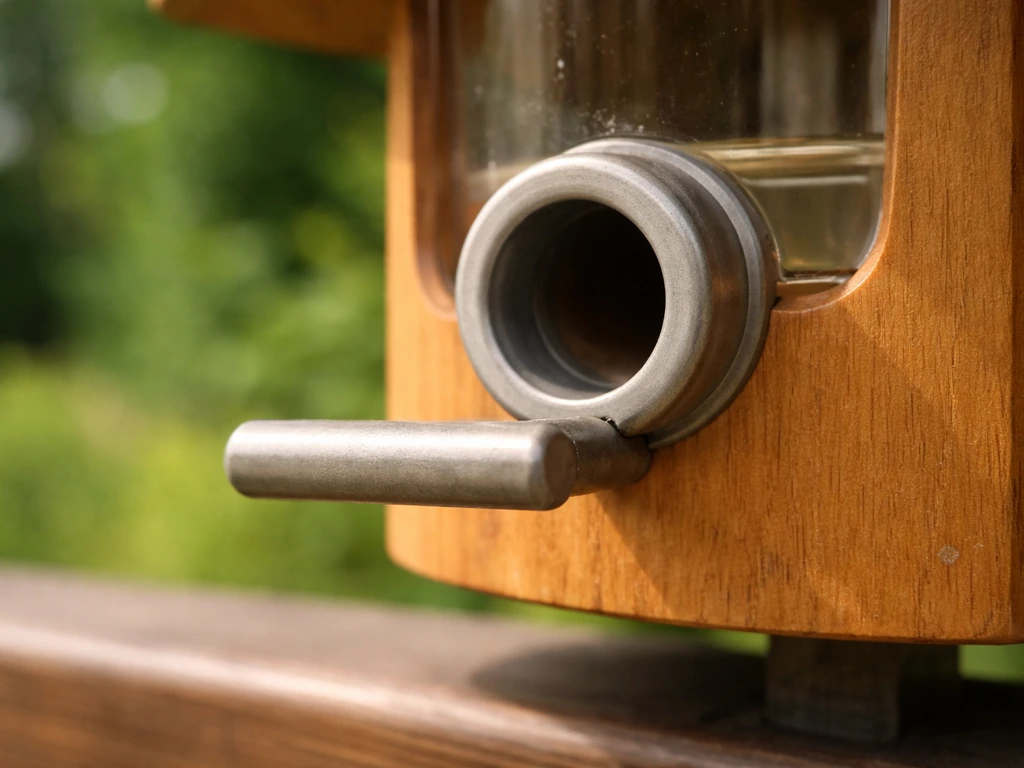
- Wide nectar ports (large enough for an oriole's thicker beak, typically 3/16 to 1/4 inch diameter or wider)
- Sturdy perches that extend at least 3/4 inch from the port so the bird can land comfortably
- Orange color or orange accents, since orioles are strongly attracted to orange and will investigate the feeder on sight
- Bee guards built into the ports to reduce wasp and bee access without blocking oriole beaks
- An ant moat at the top (a water-filled cup the hanger passes through) to stop ants before they reach the nectar
- A removable base or reservoir that separates cleanly for scrubbing, ideally dishwasher safe
- Built-in jelly cups or fruit spikes on the same unit if you want a single-station setup
- No-drip or vacuum-seal reservoir mechanism to reduce leaking, which attracts ants and wastes nectar
Top picks by yard situation
Best all-around: Perky-Pet Oriole Feeder (Model 466-2)
This is the one I keep coming back to for beginners and people who want a reliable, low-hassle setup. It holds 24 oz of nectar, has three feeding ports with built-in bee guards, three usable perches, and a clear reservoir that unscrews from the orange base for quick cleaning. The no-drip vacuum mechanism genuinely works when you assemble it correctly (the key is making sure the bottle is seated firmly and inverted before releasing). It is not fancy, but it does the job without constant fiddling.
Best for offering multiple foods: Perky-Pet Fruit Trio Oriole Nectar Feeder
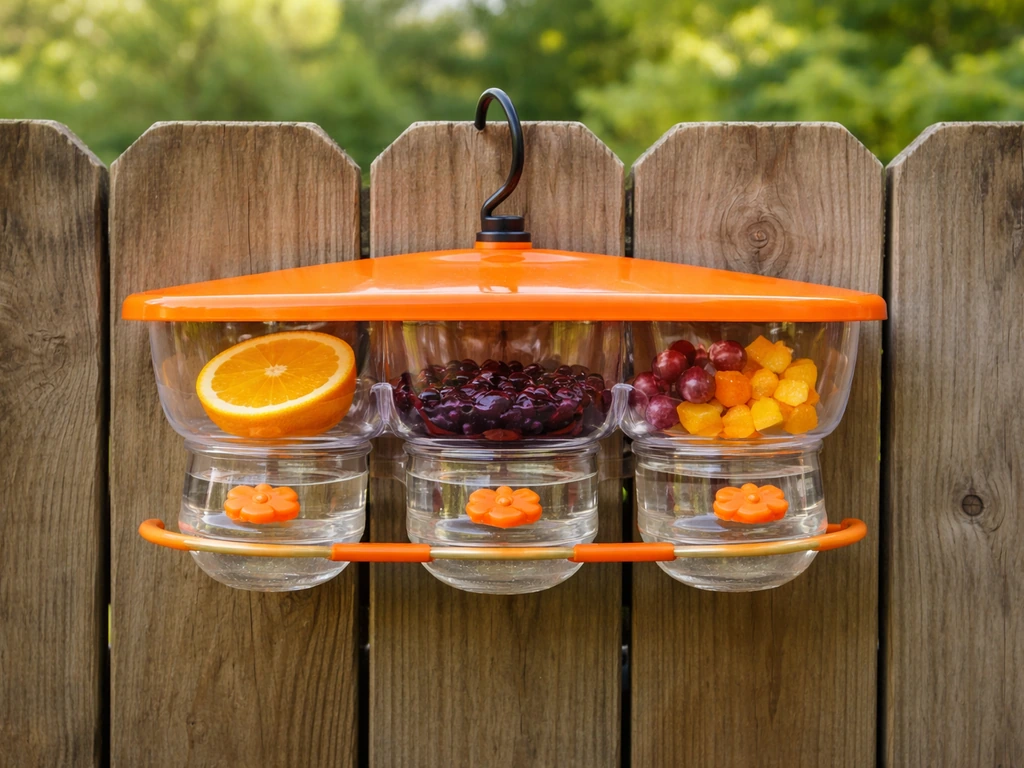
If you want to go all-in with nectar, jelly, and fruit in one unit, the Fruit Trio is worth a look. A cardinal bird feeder usually looks like a multi-port hopper or tray that lets you offer the foods cardinals like, such as seeds, fruit, or suet multiple food types together. It combines nectar ports with attachments for fruit and jelly, and the cap at the top doubles as an ant moat when you fill it with water. This is the kind of feeder that research supports: orioles in backyard settings respond to multiple food types together, and having everything in one spot reduces the number of separate feeders you need to maintain.
Best for small yards or apartments: Simple jelly cup plus orange spike
If you have a small balcony or a tight yard, a basic oriole jelly cup feeder hung at eye level near a railing does the job without taking up much space. Pair it with a simple skewer or orange half impaled on a branch or deck screw and you have a two-item setup that costs almost nothing and is easy to clean daily. This works especially well in early spring when orioles are first arriving and actively prospecting for food.
Quick recommendation by situation
| Your Situation | Best Approach |
|---|---|
| First-time oriole feeder, want something easy | Perky-Pet 466-2 nectar feeder plus a half orange on a nearby branch |
| Want to maximize attraction with multiple foods | Perky-Pet Fruit Trio or similar multi-food station feeder |
| Small yard or deck, minimal maintenance preferred | Jelly cup feeder plus orange half impaled on a screw or spike |
| Already have a hummingbird feeder and want to add orioles | Add a dedicated oriole feeder separately, do not try to share the hummingbird feeder |
| Had orioles before but they stopped coming | Prioritize cleaning frequency and add jelly, see troubleshooting section below |
When to put feeders out and where to hang them
In the Baltimore area, Baltimore orioles typically arrive in late April to early May during spring migration. The single most important timing tip: have your feeders out and filled by late April, before the birds arrive. Orioles establish feeding routes quickly. If your feeder is not visible and stocked when they first pass through, they may not return to check again. Early May is not too late, but April 25 is better.
For placement, hang the feeder 6 to 10 feet off the ground. That puts it at roughly canopy-edge height, which is where orioles naturally forage. More importantly, place it within about 10 to 15 feet of a tree with medium-sized branches. Orioles are cautious birds and want a staging perch nearby where they can land, observe, and decide it is safe before committing to the feeder. A feeder in the middle of an open lawn with no nearby tree cover gets fewer visits than one near a wooded edge or large shade tree.
Visibility matters too. Orioles use color to spot food sources from a distance. Hang your orange feeder where it can be seen from multiple angles, not tucked against a fence or behind dense foliage. A location that gets partial morning sun is ideal: the orange accents flash in the light and the feeder stays cooler in the afternoon, slowing nectar fermentation.
Cleaning, nectar freshness, and stopping spoilage in summer heat
This is where most people fail with oriole feeders. The nectar spoils faster than you think, especially in a Baltimore summer. Fermented or moldy nectar will drive orioles away, and it can actually harm them. Here is the honest schedule you need to follow:
| Temperature Range | How Often to Change Nectar | How Often to Scrub Feeder |
|---|---|---|
| Below 70°F | Every 4 to 5 days | Weekly minimum |
| 70 to 80°F | Every 2 to 3 days | Every 2 to 3 days |
| 80 to 90°F | Every 1 to 2 days | Every 2 days |
| Above 90°F | Daily | Daily or every other day |
Audubon recommends cleaning nectar feeders every two to three days in hot conditions, and the National Wildlife Federation recommends daily changes when temperatures are high. Baltimore summers routinely hit the 85 to 95 degree range from late June through August, so plan for daily or every-other-day maintenance during that stretch. If you cannot commit to that, fill the feeder with a smaller amount of nectar so it empties faster and you are refreshing it more often by default.
For cleaning, rinse with hot water and use a bottle brush to scrub the inside of the reservoir. Use a small port brush or pipe cleaner on the individual ports. Mild dish soap is fine occasionally but rinse thoroughly because soap residue will deter birds. Do not use bleach routinely, but a dilute bleach rinse (1 part bleach to 9 parts water) followed by a thorough fresh-water rinse works well for removing black mold if it develops. Let the feeder air-dry before refilling.
Jelly spoils even faster than nectar in heat. Start with a small amount, maybe a teaspoon, and check it daily. Discard and replace when it dries out, turns darker, or develops any film. Orange halves should be replaced every day or two in summer.
Why orioles are not coming to your feeder (and how to fix it)
This is genuinely the most common question I hear from backyard birders in the Baltimore area. You set up a feeder, filled it up, and nothing happened. Here are the most likely reasons and what to do about each one:
- Your feeder went up too late. Orioles arrive in late April and May and are most actively prospecting then. If you put the feeder out in June, the local birds have already established their routes. Keep it out through August for late-season visitors and plan to be ready earlier next year.
- The nectar has gone bad. Cloudy, yellowish, or sour-smelling nectar is the number one reason established birds stop visiting a feeder they previously used. Dump it, scrub the feeder, and refill with fresh 1:4 sugar water.
- There is no nearby staging perch. If your feeder is in open space with no tree or large shrub within 15 feet, orioles may look at it and keep flying. Move the feeder closer to a tree or add a nearby branch.
- The feeder is not visible enough. Move it to a more open location or a spot that catches morning light. Orange accents should be facing outward and unobstructed.
- Ants or wasps have taken over. If ants are crawling on the feeder or wasps are clustered at the ports, orioles will avoid the area entirely. See the pest section below.
- You are only offering nectar and no jelly or fruit. Adding a small cup of grape jelly dramatically increases initial attraction, especially in spring. Orioles that might ignore a nectar feeder will often stop for jelly first.
- The ports are too small. If you are using a hummingbird feeder, orioles literally cannot get their beaks in. Switch to a dedicated oriole feeder with wider ports.
- Too much nearby disturbance. Feeders placed close to high-traffic doors, loud HVAC units, or active play areas get fewer shy birds. Try a quieter corner of the yard.
Dealing with ants, wasps, squirrels, rain, and heat
Ants and wasps
Ants and wasps are the two biggest pest problems with oriole feeders, and Maryland DNR specifically warns about them when offering fruit. For ants, the best solution is an ant moat: a water-filled cup that the feeder hanger passes through, creating a barrier ants cannot cross. Many oriole feeders include a built-in ant moat, but if yours does not, you can buy a universal one for a few dollars and attach it above the feeder. Keep the moat filled, especially in dry weather when ants are more aggressive. Cornell confirms that ant moats are one of the most effective feeder pest controls available.
For wasps and bees, built-in bee guards at the nectar ports are the primary defense. These are small plastic inserts that allow an oriole's beak to pass through but block the shorter tongue of a bee or wasp from reaching the nectar. If you already have a feeder without guards, you can sometimes buy replacement port inserts. If wasps are clustered heavily on the outside of the feeder, move the feeder to a shadier spot: wasps are more active in full sun and warmth. You can also try reducing the nectar level so it sits further below the port, making it harder for wasps to reach from outside.
Squirrels and raccoons
Squirrels are less interested in nectar feeders than they are in seed feeders, but they will absolutely raid jelly cups and orange halves. Raccoons are more of a nighttime threat, especially in Baltimore-area suburbs where the raccoon population is dense. The most practical solution is to bring jelly cups and fruit offerings inside at dusk, since raccoons do most of their damage after dark. For squirrels during the day, a baffle on the pole or hanger above the feeder is the most reliable deterrent. A dome-shaped squirrel baffle placed 12 to 18 inches above the feeder blocks most squirrel approaches from above.
Rain and summer heat
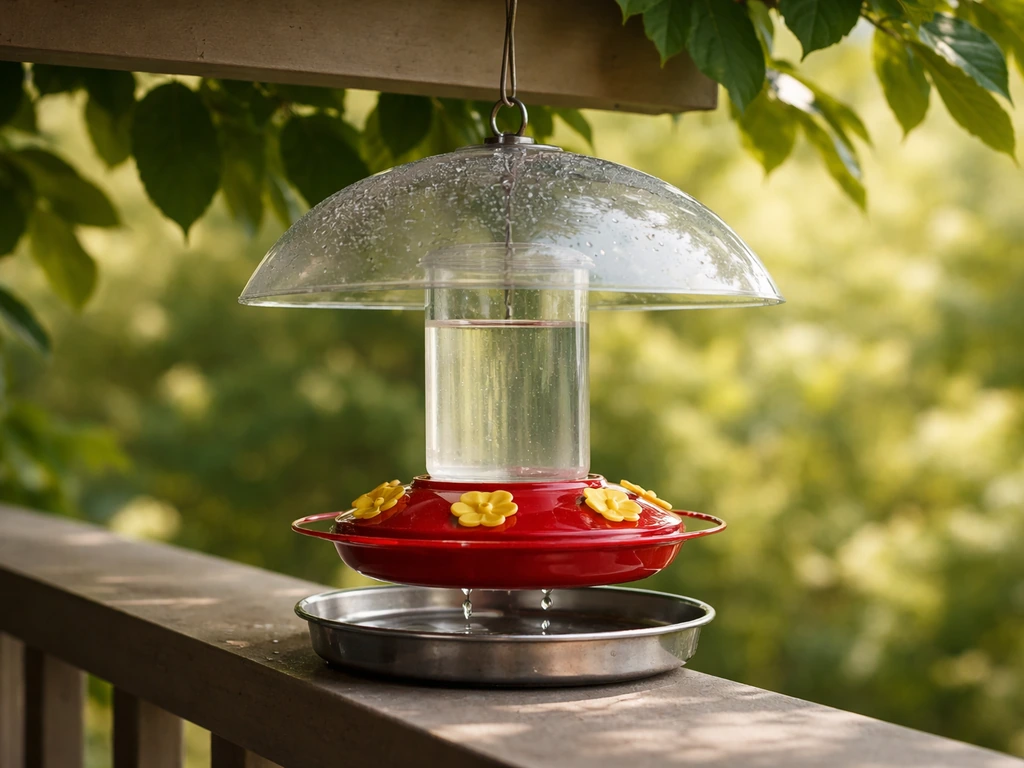
Rain dilutes nectar quickly, which accelerates fermentation because the sugar concentration drops below the level that naturally inhibits bacterial growth. If your feeder is in a fully exposed location, a small dome weather guard above the feeder (the same style as a squirrel baffle but used as a rain shield) helps a lot. After any heavy rain, check the nectar, and if it looks diluted or cloudy, replace it even if it has not been 24 hours.
Heat is the other enemy. Direct afternoon sun is the worst scenario for nectar freshness. Partial shade in the afternoon dramatically extends how long your nectar stays good, and it reduces the evaporation that can concentrate the sugar level and clog ports with dried residue. Morning sun is fine and helpful for visibility. Afternoon shade in Baltimore's July and August heat is genuinely important for both the nectar and for keeping the feeder comfortable for birds to approach.
FAQ
What is the best bird feeder for Baltimore orioles if I only want to offer nectar?
Choose an oriole-specific nectar feeder with wide feeding ports and solid perches, then size the nectar amount to your maintenance ability. If you cannot change nectar daily in late summer, pick a feeder that holds less than 24 oz or only fill it partway so it empties faster and you refresh more often.
Can I use the same nectar recipe for Baltimore orioles as for hummingbirds?
Do not switch to red dye or honey, and keep the ratio at 1 part white granulated sugar to 4 parts water. Hummingbird feeders often include drip control or very narrow ports designed for hovering birds, which can make it harder for orioles to feed even if the nectar itself is correct.
Do orioles need jelly, or will nectar alone bring them in?
Both work, but jelly often accelerates the first visits in spring. Start small, use a dedicated jelly cup, and refresh more frequently than nectar because jelly can mold quickly, especially when the feeder is in warm afternoon sun.
How close should the jelly cup or fruit attachment be to the nectar ports?
Keep it within the same “feeding station” footprint so a bird does not have to fly to a different spot to get calories. In practice, mount the jelly cup or skewer on the same hanger or within about 12 to 18 inches of the nectar feeder so orioles can switch foods between short landings.
What’s the safest way to handle fermentation or mold if I missed a cleaning?
If nectar looks cloudy, smells sour, or has any visible film, discard immediately and do not “top off” with fresh sugar water. Rinse with hot water, scrub the reservoir and ports with brushes, then air-dry before refilling so residue does not keep spoiling the new batch.
Can I put the feeder in full sun to help me see the birds?
Avoid full afternoon sun. Even if you see them more, direct heat speeds fermentation and can cause ports to clog with dried sugar residue. Partial morning sun with afternoon shade gives better feeding consistency and fewer unexpected disappearances.
How do I prevent ants if my feeder does not have a built-in ant moat?
Install a water-filled ant moat at the hanger point so it interrupts the travel path. Check it after dry spells and top off frequently, because ants quickly exploit any gap where the barrier dries out or the feeder shifts.
If wasps keep showing up, is it better to remove the nectar or just move the feeder?
Try relocation first, then adjust nectar depth. Move to a shadier location where the feeder is cooler, and keep nectar filled below the port openings if your design allows, so the nectar is harder for wasps to reach from outside.
What should I do about raccoons and squirrels around an oriole jelly feeder?
For raccoons, bring jelly cups and orange halves in at dusk since nighttime damage is common. For squirrels during the day, use a properly positioned dome baffle or pole baffle above the feeder (not touching the feeder), and consider reducing tempting fruit size so there is less loss.
How far off the ground should I hang the feeder in Baltimore?
Aim for 6 to 10 feet for typical yard setups, plus a staging tree within about 10 to 15 feet. If you live in a very open area, orioles may need additional nearby cover, like a medium branch they can land on while deciding whether it is safe.
What time of day are orioles most likely to use the feeder?
Often late morning through early afternoon, especially when the nectar is freshest and temperatures are moderate. If you have intermittent visits, refill in the morning and avoid late-day refills in hot weather, since the nectar can ferment overnight.