The best oriole bird feeders combine a jelly cup, orange-half pegs, and a wide perch into one easy-to-clean station. That combo works because orioles eat differently from most backyard birds: they want fruit, grape jelly, and nectar, not seeds. The U.S. Fish & Wildlife Service lists fruit and grape jelly as food that helps attract orioles orioles can be attracted with fruit and grape jelly. If you put out a seed feeder and wonder why no orioles show up, that's the whole problem right there. Get the food and feeder design right, hang it in the right spot before mid-April, and you have a real shot at making your yard a regular stop for Baltimore orioles and their cousins.
Best Oriole Bird Feeders: Buying, Setup, and Tips

Marcus Hendricks
12 Apr 2026
What orioles actually need from a feeder
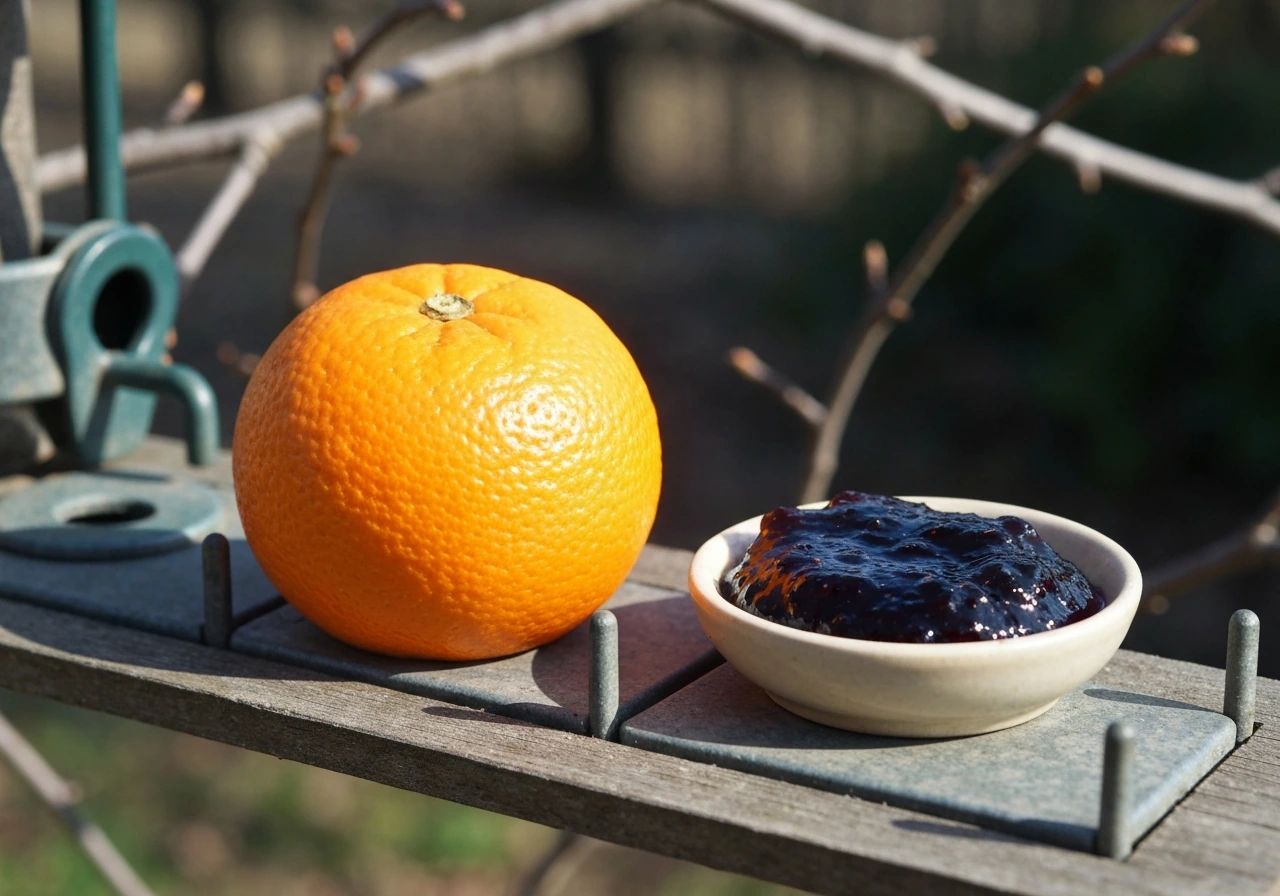
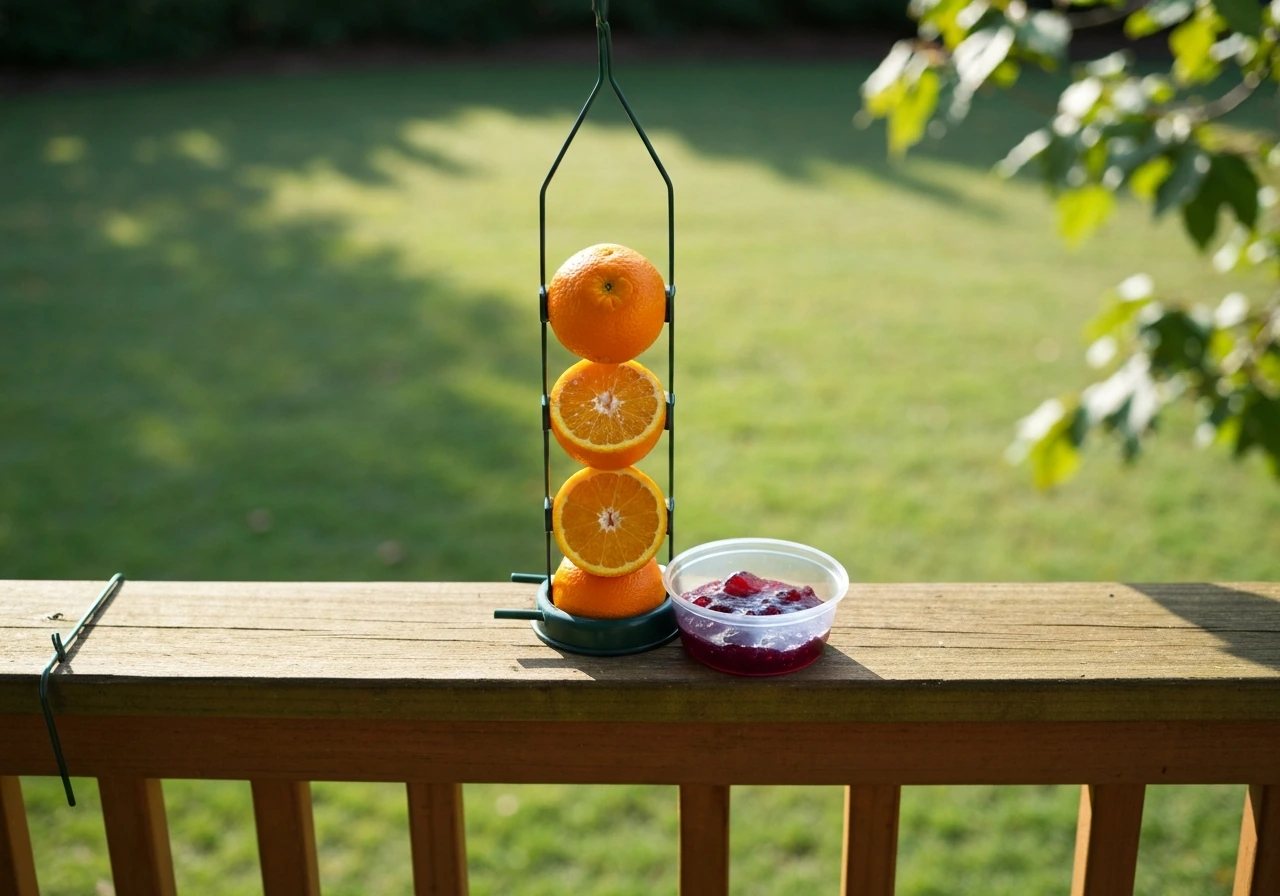
Orioles are especially attracted to citrus in spring. When they first arrive from migration, orange halves and grape jelly are their main draws before they shift more toward nectar as summer heats up. Baltimore orioles also supplement their diet with insects and berries, but at a feeder, you're competing for their attention with whatever the surrounding landscape offers, so jelly and oranges give you the strongest pull early in the season.
That means your feeder needs to physically accommodate both food types. A feeder with a small removable jelly cup (some hold around 3 oz of grape jelly) and pegs or spikes for orange halves is the most effective single-station setup. Nectar ports are a bonus: orioles will drink sugar water, and they'll sometimes visit hummingbird feeders, but nectar alone won't attract them as reliably as the jelly-plus-orange combination early in the season.
If you're new to oriole feeders and want to understand the overall design language before you buy, it helps to understand what an oriole bird feeder looks like so you know exactly what you're shopping for. The bright orange color that most oriole feeders use isn't just branding. It actually mimics the fruit orioles seek out and helps draw their attention to a new station.
Which feeder types work best (and which ones don't)
Orioles need wide, stable perches and open access to food. That eliminates most tube feeders right away. A standard tube feeder with small ports is designed for finches and similar birds that cling to narrow perches. Orioles are bigger birds with a different feeding posture, and they'll simply ignore a feeder that doesn't give them room to land comfortably. If you want to see how tube feeders compare to what orioles actually use, it's worth looking at what a finch bird feeder looks like side by side with an oriole feeder to see why the designs diverge so sharply.
Platform and tray-style feeders work reasonably well for orioles because they offer open perching, but they leave food fully exposed to rain and insects. Dedicated oriole feeders, which typically look like a small covered station with a central jelly cup, orange pegs, and sometimes nectar ports, are the best all-in-one solution. Some hopper-style feeders can work if you attach fruit trays, but they're really designed for seeds and you'll be fighting the design the whole time.
Window feeders are not a great match for orioles. Orioles are shyer than house sparrows or chickadees, and they tend to avoid feeders that put them in close, exposed proximity to a building. They prefer a bit of open airspace around the feeding station. Pole-mounted feeders with a separate dedicated oriole station are often the most practical setup for a backyard, especially if you want to add an ant moat above the feeder on the same pole system.
| Feeder Type | Oriole Suitability | Best Use Case | Main Drawback |
|---|---|---|---|
| Dedicated Oriole Station (jelly + orange pegs) | Excellent | Primary oriole feeder | Requires more frequent cleaning than seed feeders |
| Platform / Tray | Good | Supplemental fruit station | Food exposed to rain and insects |
| Nectar / Hummingbird Style | Moderate | Summer nectar option | Less attractive in early spring migration |
| Tube Feeder | Poor | Not recommended for orioles | Wrong port size and perch design |
| Hopper Feeder | Poor | Seed birds only | Not designed for fruit or jelly |
| Window Feeder | Poor | Not recommended for orioles | Too close to structure, orioles avoid it |
Features that actually matter when you're buying
Weatherproofing and durability
Oriole season runs from roughly mid-April through summer, which means your feeder will sit through spring rainstorms, hot July sun, and humidity. Look for feeders made from UV-resistant plastic or recycled plastic. Some feeders, like the Duncraft Deluxe Oriole Jelly Feeder, use durable clearview and orange recycled plastic with a rain-dome style roof that keeps jelly and nectar from getting diluted by rain. That dome detail matters more than it sounds because watered-down jelly goes bad faster and attracts fewer birds.
Wasp and ant control
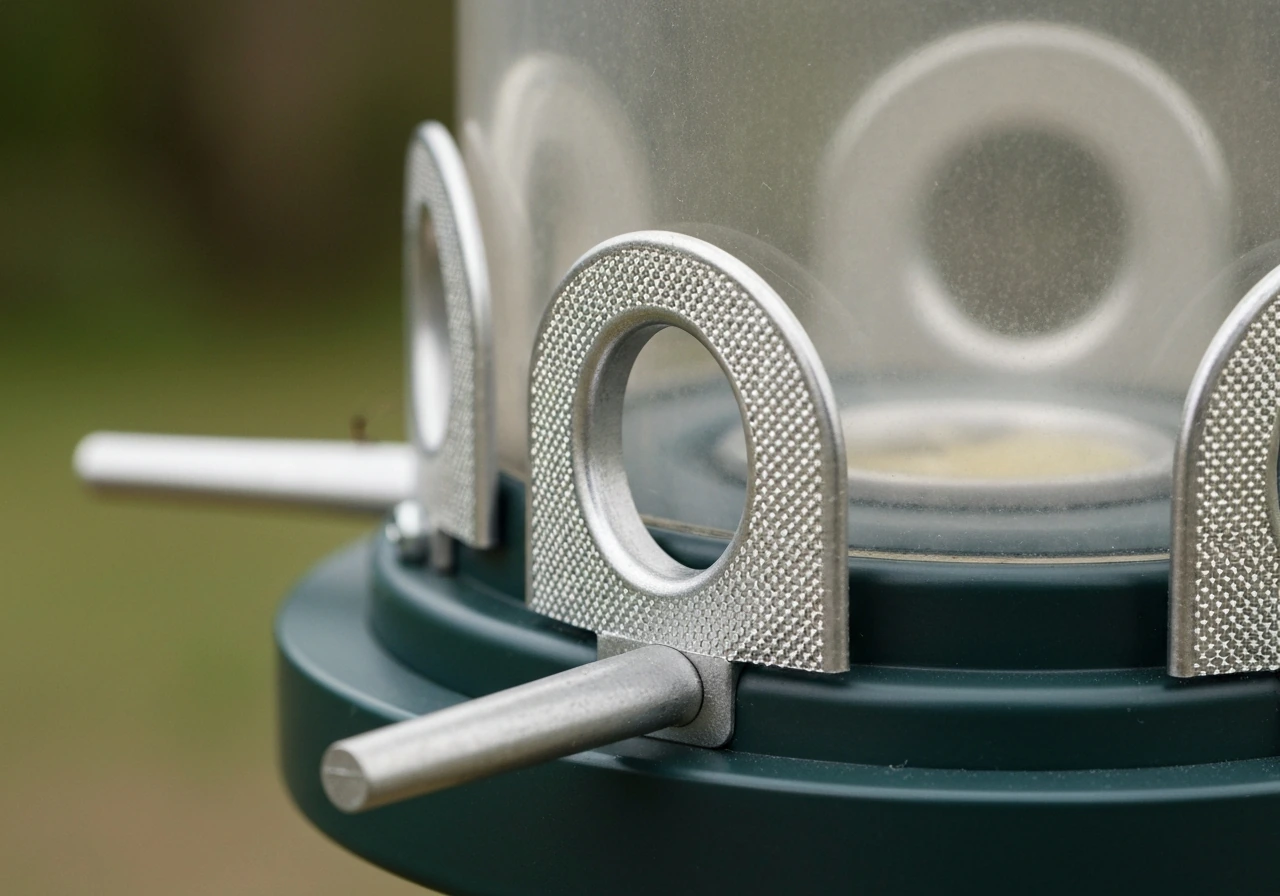
Wasps and ants are the most frustrating part of running an oriole feeder. The jelly and nectar you're offering is exactly what insects want too. Some feeders include built-in bee guards on the nectar ports (Perky-Pet's Vine Oriole Feeder and their 466-2 model both include patented bee guards) which physically block wasps from getting into the liquid while still letting orioles feed. For ants, the best solution is a water-filled ant moat hung above the feeder on the same hook.
Products like the Nectar Protector sit between your hook and the feeder and stop ants from crossing a small water barrier to reach the food. These are sold by several manufacturers and are worth adding as a standard part of your setup, not an afterthought.
Easy cleaning
Jelly goes moldy fast, especially in warm weather. Any feeder you're considering needs to fully disassemble so you can rinse and scrub every surface. The Perky-Pet Oriole Jelly Feeder (model 253) uses an inverted jelly jar with an open tray underneath, which makes wiping it clean straightforward. Avoid feeders where the jelly cup is glued in or hard to reach. You will be cleaning this feeder frequently, and a bad design makes a chore into a punishment.
Where to hang your oriole feeder
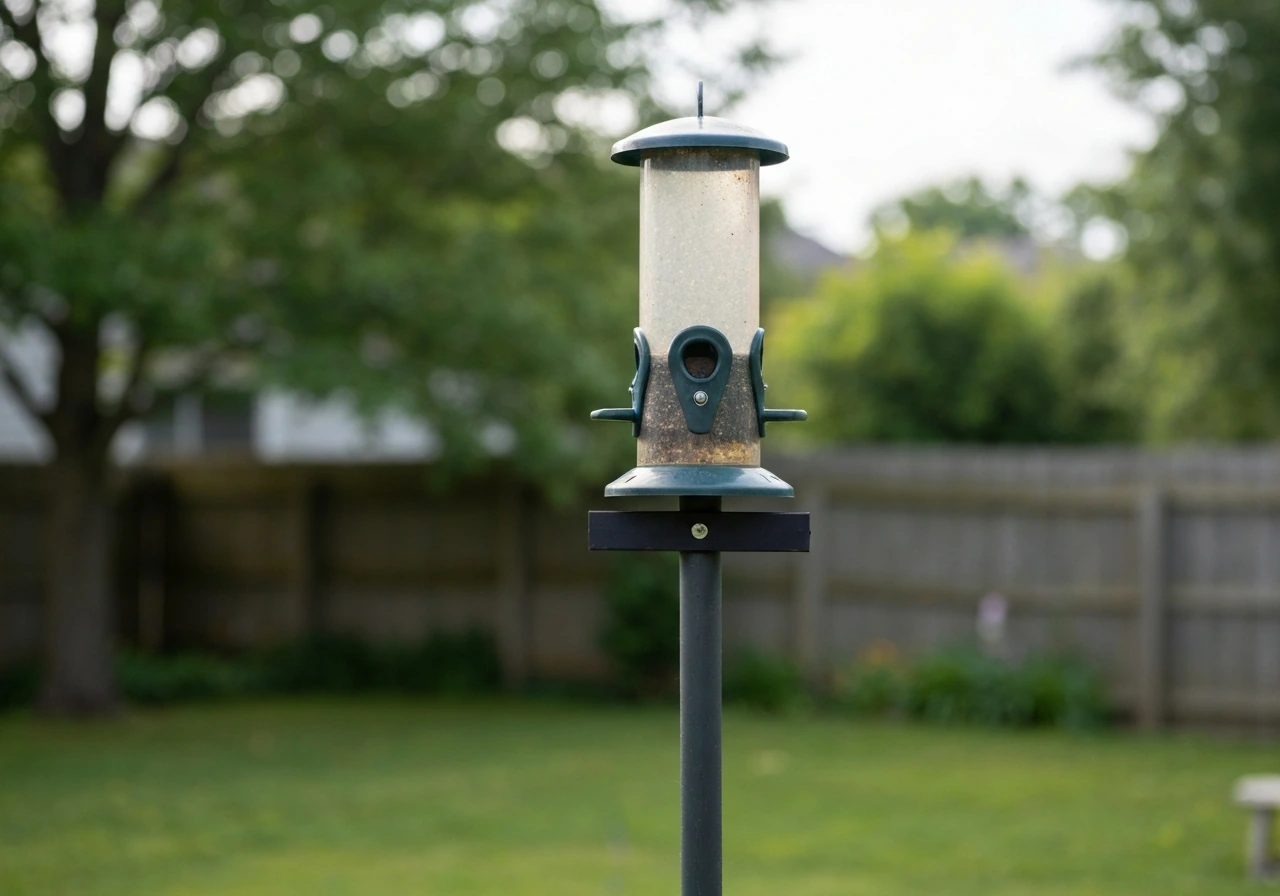
Placement is often the difference between an oriole feeder that gets used and one that sits empty all season. The general guidance from wildlife extension resources is to position feeders 10 to 15 feet from trees or bushes. That distance gives orioles a nearby perch to scout from before they commit to the feeder, while also keeping the feeder far enough from overhanging branches that cats and other predators can't use them as a launch point.
Height matters too. Orioles aren't ground feeders, so pole-mounted stations at around 5 to 6 feet off the ground tend to work well. Hanging the feeder from a shepherds hook in an open area of the yard, with some native shrubs or flowering trees 10 to 12 feet away, gives orioles the sightlines and safety margins they prefer. Avoid tucking the feeder into a corner or right against a fence. Orioles like to approach from multiple directions.
If you already have other feeders in the yard, keep your oriole station a bit separate. Cardinals, blue jays, and squirrels will investigate the jelly if it's right next to a seed station. And if you're thinking about how your whole feeding area is set up, it's useful to see examples of how different bird feeders look and are designed before you commit to a layout.
What to feed orioles and how to keep it fresh
Orange halves and grape jelly
Cut a navel orange in half and push it onto the feeder pegs so the flesh faces outward. That's it. Replace it every one to two days because fruit dries out quickly, and old orange halves stop being attractive. For grape jelly, use a small amount in the cup (2 to 3 oz is plenty). Don't fill it to the brim because jelly can spoil before the birds work through it, and some birds have gotten stuck in large piles of jelly. Keep portions small and refresh often.
Nectar for summer feeding
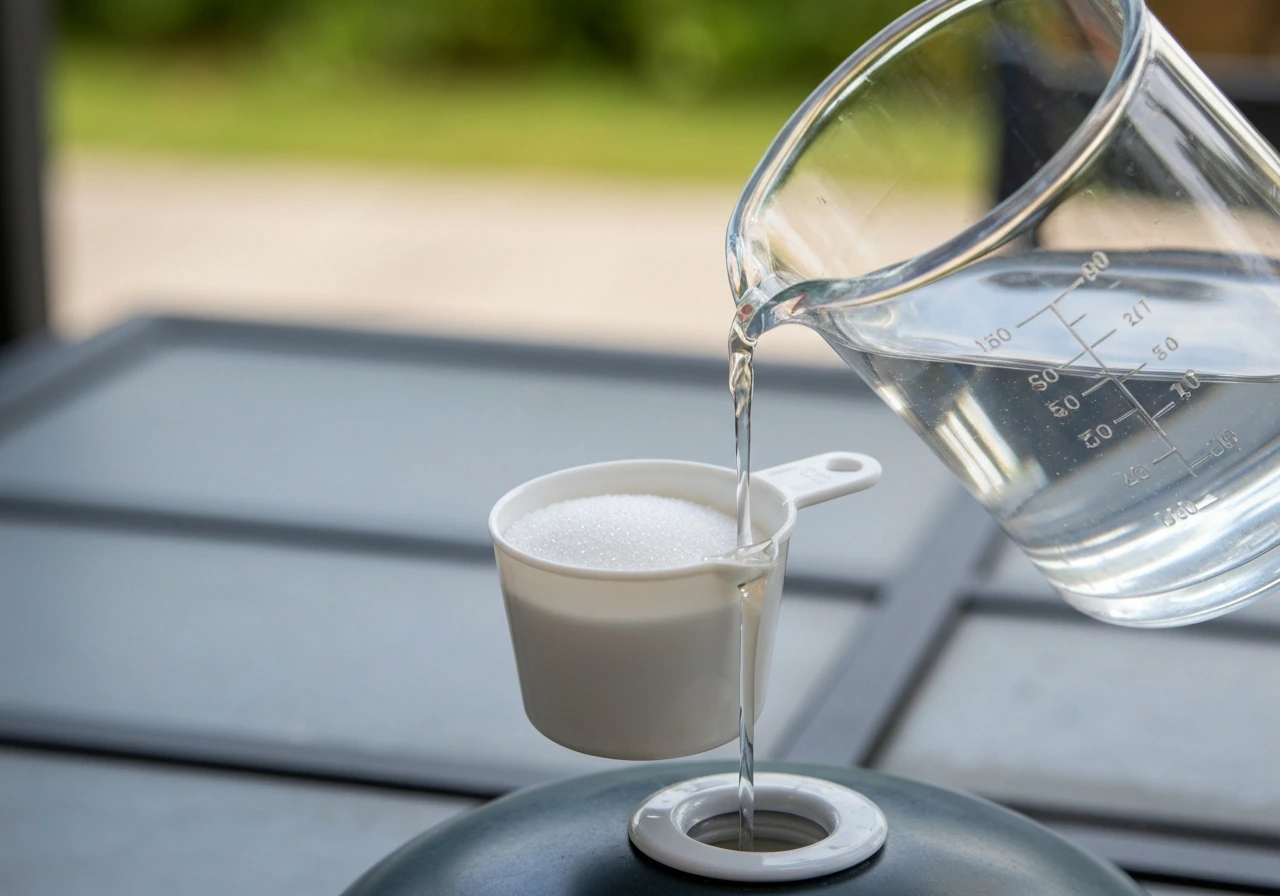
If your feeder has nectar ports, use a simple mix of blank" rel="noopener noreferrer">one part white granulated sugar to four parts water. blank" rel="noopener noreferrer">Don't use honey, brown sugar, or artificial sweeteners. In mild weather (low to mid-80s), change the nectar every two to three days. When temperatures climb into the upper 80s or 90s, clean and change it daily to every other day. Nectar ferments faster in heat, and spoiled nectar can make birds sick. This is the schedule that Wild Birds Unlimited consistently recommends and it's backed by real-world experience.
Timing: when to put the feeder out
Baltimore orioles typically arrive starting in mid-April across much of their eastern and central US range, with the peak migration window running from early April to late May depending on your region. Have your feeder out and stocked before they arrive. Orioles are scouts: they identify food sources as they pass through and often return to reliable spots. If your feeder goes up after they've already moved through your area, you've missed the window. Today is April 12, which means right now is exactly the right time to get a feeder up and filled.
The best oriole feeders compared
These aren't the only feeders on the market, but they represent the most practical options across different priorities. If you want a deep dive specifically into attracting Baltimore orioles, the dedicated guide on the best bird feeder for Baltimore orioles goes further into species-specific design considerations.
| Feeder | Best For | Food Types | Key Features | Cleaning |
|---|---|---|---|---|
| Birds Choice Recycled Oriole Feeder | Best Overall | Grape jelly (3 oz cup) + orange halves (pegs) | Made from recycled orange plastic, durable, multi-function design | Fully removable cup and pegs |
| Perky-Pet Vine Oriole Feeder (465-2) | Best for Pest Control | Jelly + nectar | Built-in ant moat, bee guards, fully disassembles | Comes apart for cleaning |
| Perky-Pet Oriole Jelly Feeder (253) | Best Value | Grape jelly | Inverted jelly jar keeps food covered, open tray | Simple wipe-clean tray |
| Duncraft Deluxe Oriole Jelly Feeder | Best for Weather Resistance | Grape jelly | Rain dome, recycled plastic, perches on all four sides | Easy wipe-clean design |
| JCS Wildlife Hourglass Jelly and Fruit Feeder | Best for Small Yards | Grape jelly (removable cup) + orange halves (pegs) | Compact hourglass design, accommodates both food types | Removable cup |
| Perky-Pet Oriole Feeder (466-2) | Best Nectar Option | Nectar (24 oz) | Patented bee guards, 3 perches, reversing funnel cap | Standard nectar feeder cleaning |
If you're picking just one feeder, the Birds Choice Recycled Oriole Feeder is the most practical all-rounder. It handles both grape jelly and orange halves in a durable, easy-to-clean design. If ants and wasps are your main concern, the Perky-Pet Vine (465-2) with its built-in ant moat is worth the extra cost. For a tight budget, the Perky-Pet 253 jelly feeder is a solid starting point, though you'll want to add orange halves on a separate peg or spike nearby.
Troubleshooting: when things aren't working
Orioles aren't showing up
First, check your timing. If it's before mid-April in your area, you may simply be waiting for migration to arrive. If timing is right and you're still not seeing any action after a week, consider moving the feeder to a more visible spot. Orioles need to actually see the feeder to discover it. Try hanging an orange half prominently in a tree nearby as a visual cue. Some birders tie a piece of orange surveyor's tape near the feeder too. These bright orange signals catch a migrating oriole's eye from a distance.
Also check whether there are native trees or flowering plants in your yard. Orioles are drawn to yards with natural food sources like flowering cherry, crab apple, or native berry shrubs. A bare lawn with a feeder in the middle is less inviting than a yard with some canopy. You don't need a forest, but a few native plants make a real difference in whether orioles treat your yard as a destination or just a flyover.
Ants taking over the feeder
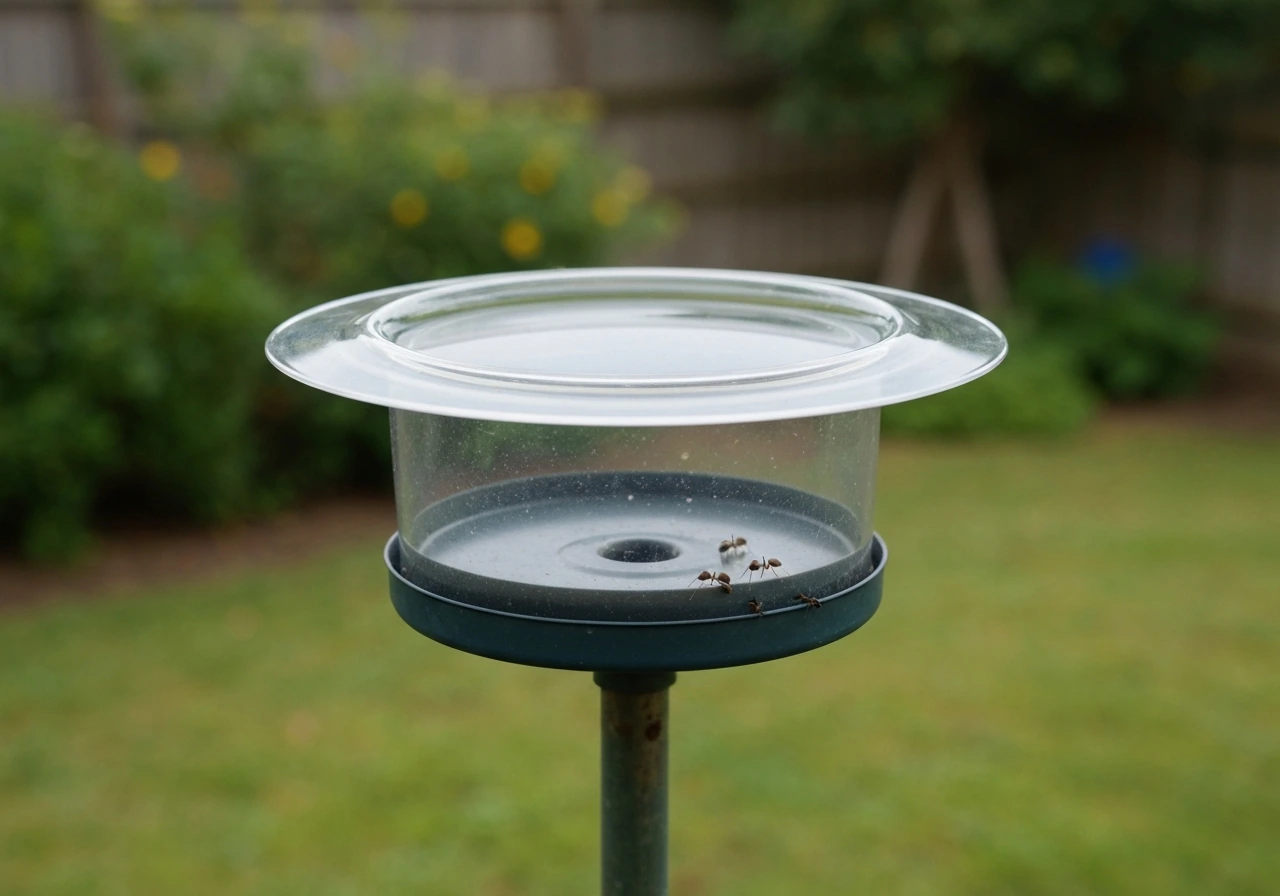
If you don't already have an ant moat above your feeder, add one immediately. Fill it with water (not oil, which can harm birds if they contact it). Clean and refill the moat every few days because it evaporates. If ants are already swarming the feeder, take it down, clean it completely with hot water, and re-hang it with the moat in place before refilling. Ants can make a feeder completely unusable within hours once they find it.
Wasps and bees at nectar ports
Look for feeders with physical bee guards over the nectar ports. If your current feeder lacks them, you can buy aftermarket guards for some models. You can also try moving the feeder to a shadier location temporarily. Bees and wasps prefer sunny spots. A location in dappled shade may reduce insect pressure while still keeping the feeder visible to orioles.
Squirrels getting into the jelly
Squirrels will absolutely eat grape jelly and orange halves if they can reach the feeder. A pole-mounted setup with a baffle below the feeder is your best defense. Make sure the pole is at least 5 to 6 feet from any structure a squirrel could jump from. A torpedo-style baffle mounted on the pole below the feeder stops most squirrels cold.
This setup is worth doing from day one rather than waiting until squirrels discover your jelly supply. If you want to compare how squirrel-proofing strategies differ across bird types, looking at what a cardinal bird feeder looks like and how those feeders handle large bird access is a useful frame of reference, since cardinals and orioles face similar pest challenges.
Jelly spoiling too quickly
In hot weather, jelly ferments fast. If you're seeing mold within a day or two, reduce the amount you're offering to just an ounce or so, and clean the cup every time you refill it. A feeder with a covered jelly cup (like the inverted-jar design on the Perky-Pet 253) slows spoilage a bit, but nothing replaces frequent refreshing in July and August. Treat oriole feeder maintenance more like keeping fresh fruit on the counter than like filling a seed feeder that you can top off once a week.
Your next steps right now
Given that Baltimore orioles are arriving across much of the eastern US starting this week, the move is to pick a feeder, order or buy it today, and get it up as soon as it arrives. While you're waiting, hang an orange half outside on a branch or nail to start signaling that your yard has food. Stock up on grape jelly (store-brand is fine) and a bag of navel oranges. Set a reminder to check and refresh the food every two days. That simple routine is the difference between a feeder that sits empty and one that becomes a regular stop for the most colorful birds in the backyard.
FAQ
Can I use an oriole feeder like a nectar feeder only, without jelly or orange halves?
You can, but it is usually less reliable early in the season. Orioles tend to test a new station with jelly and orange in spring. If you start with nectar-only, give it more time to draw birds and be extra consistent with clean, fast-changing sugar water, since nectar spoils quickly in heat.
How long should grape jelly stay on the feeder before I dump it?
Treat jelly like fresh fruit, do not wait for it to “look bad.” In warm weather, plan on refreshing at least every 1 to 2 days, and clean fully sooner if you see fermentation, cloudiness, or a strong sour smell. Small portions spoil faster if they are left too long, so use less and refresh more often.
What’s the safest way to clean an oriole feeder without damaging parts?
Fully disassemble and scrub every surface that touches jelly or nectar. Use hot water and a brush that reaches crevices, then rinse thoroughly so no sugar or residue remains. If your feeder uses a clearview or specific plastic dome, avoid abrasive pads that can scratch and make future cleaning harder.
Is it safe to put out both an oriole feeder and a hummingbird feeder in the same yard?
Yes, they can complement each other, but keep an eye on fluid contamination. Do not let nectar drip from one feeder onto the other, and do not place the feeders so close that spills attract ants to both. Also expect more insect traffic near nectar, so having bee guards and a moat strategy helps.
Do I need to worry about mold even if I’m using a covered jelly cup?
Covered designs slow spoilage, but they do not prevent fermentation or mold in hot, humid weather. If you see any surface fuzz, stickiness, or cloudy jelly, remove the cup, clean it completely, and refill with fresh jelly. Covered cups mainly buy you time, they do not replace frequent refreshing.
Why are orioles ignoring my feeder even though I used the right foods?
Three common causes are timing, visibility, and perch access. If you put it up after peak migration passes, you may miss the discovery window. Also, if the feeder is hidden in a tight corner or too far from open approach lines, orioles may never commit. Try moving it to a more open area, and ensure there is nearby cover for scouting.
How do I stop wasps and bees if my feeder does not have built-in bee guards?
You can reduce insect visits by placing the feeder in dappled shade, avoiding overly sunny spots, and using a separate aftermarket bee-guard system if your model supports it. Even without guards, keep jelly portions small and refresh on schedule, because sweeter residue and nectar drips attract wasps quickly.
What’s the best ant moat setup if I already have ants on my hook?
Use a water-filled ant moat, fill with water only (no oil), and keep it clean since evaporation and debris reduce effectiveness. If ants are already swarming, take the feeder down, wash the area thoroughly with hot water, rehang it with the moat in place, then refill. Also inspect the hook area for bridges ants can use to cross.
How can I deter squirrels from eating the jelly and oranges?
Use pole mounting plus a baffle, and position the pole so squirrels cannot jump from a nearby structure. The baffle should sit below the feeder to block their access from any height they can reach. If squirrels already learned the route, start squirrel-proofing immediately rather than waiting, because the “habit” forms fast.
What if my yard has a lot of nearby trees, should I move the feeder further away?
Aim for balance. Too close to heavy branches can make it easier for predators to launch, but too far from perching options can reduce discovery. Keep roughly 10 to 15 feet from trees or bushes as a starting guideline, then adjust based on how orioles approach from multiple directions in your specific yard.
How often should I replace orange halves, and should I remove peels too?
Replace orange halves every 1 to 2 days, because dried fruit becomes less attractive and can ferment. When you remove the halves, wipe the pegs and surrounding area so sticky residue does not build up. Fresh pulp-facing outward is what typically triggers repeated visits.
Can I use a different fruit instead of navel oranges?
Orange halves are the standard because they match what orioles search for during spring. Other fruits are not as consistently effective, and some can cause messier spoilage patterns. If you experiment, keep portions small and monitor for quick fermentation, mold, and excessive insect attraction.
What sugar-water ratio should I use for nectar, and what should I avoid?
Use 1 part white granulated sugar to 4 parts water. Do not use honey, brown sugar, or artificial sweeteners, since they can increase spoilage or create ingredients birds should not consume. Mix fresh batches when you clean and refill.
My nectar is getting cloudy fast, is the mix wrong?
Clouding usually indicates fermentation from warm temperatures or residue buildup. Clean the ports thoroughly at every refill, and switch to more frequent changes in heat, potentially daily in the upper 80s and 90s. Also ensure the feeder is not in full sun for extended periods.
Can I put the feeder higher or lower than 5 to 6 feet?
You can adjust, but start near 5 to 6 feet for typical backyard conditions. Going too low increases pest and predator risk, and going too high can reduce safe landing options. If you change height, keep it consistent for a few days so orioles have time to evaluate the new station.