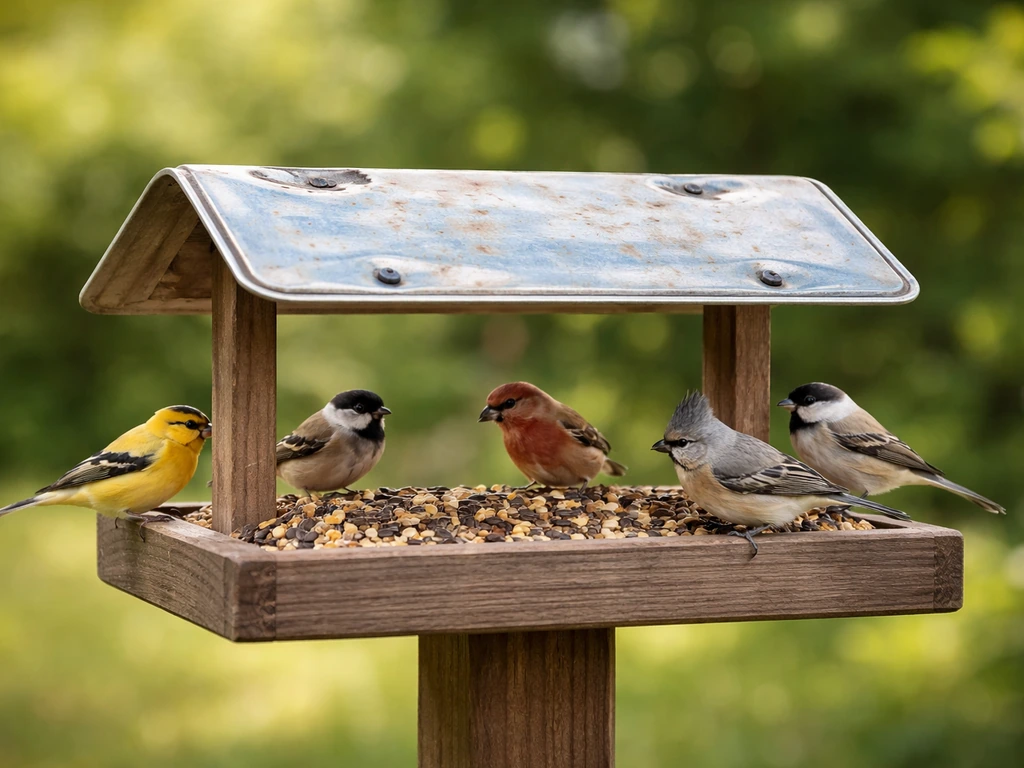
The best platform bird feeder for most backyards is a covered model with a mesh or perforated metal floor, good drainage, and a removable tray. That combination keeps seed dry in rain and snow, lets water escape fast so mold doesn't get a foothold, and makes the weekly wipe-down actually painless. If you're in a dry climate or just want maximum bird visibility, an open tray works great too, but you'll clean it more often. The rest of this guide will help you match the right feeder to your yard, your target birds, and the pests you're fighting.
Best Platform Bird Feeder: Covered Options, Features, Setup
Marcus Hendricks
29 Apr 2026
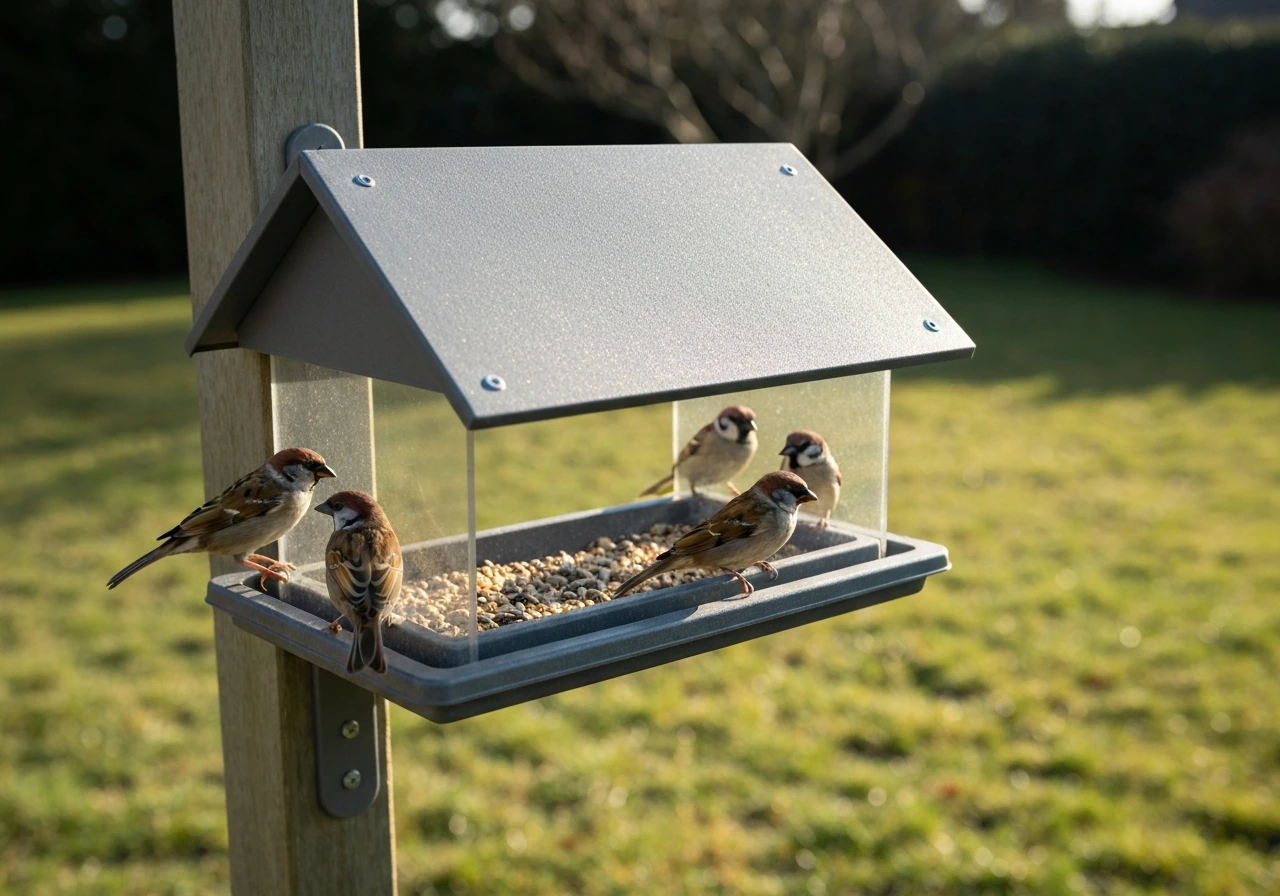
What a platform bird feeder actually is (and what a roof changes)
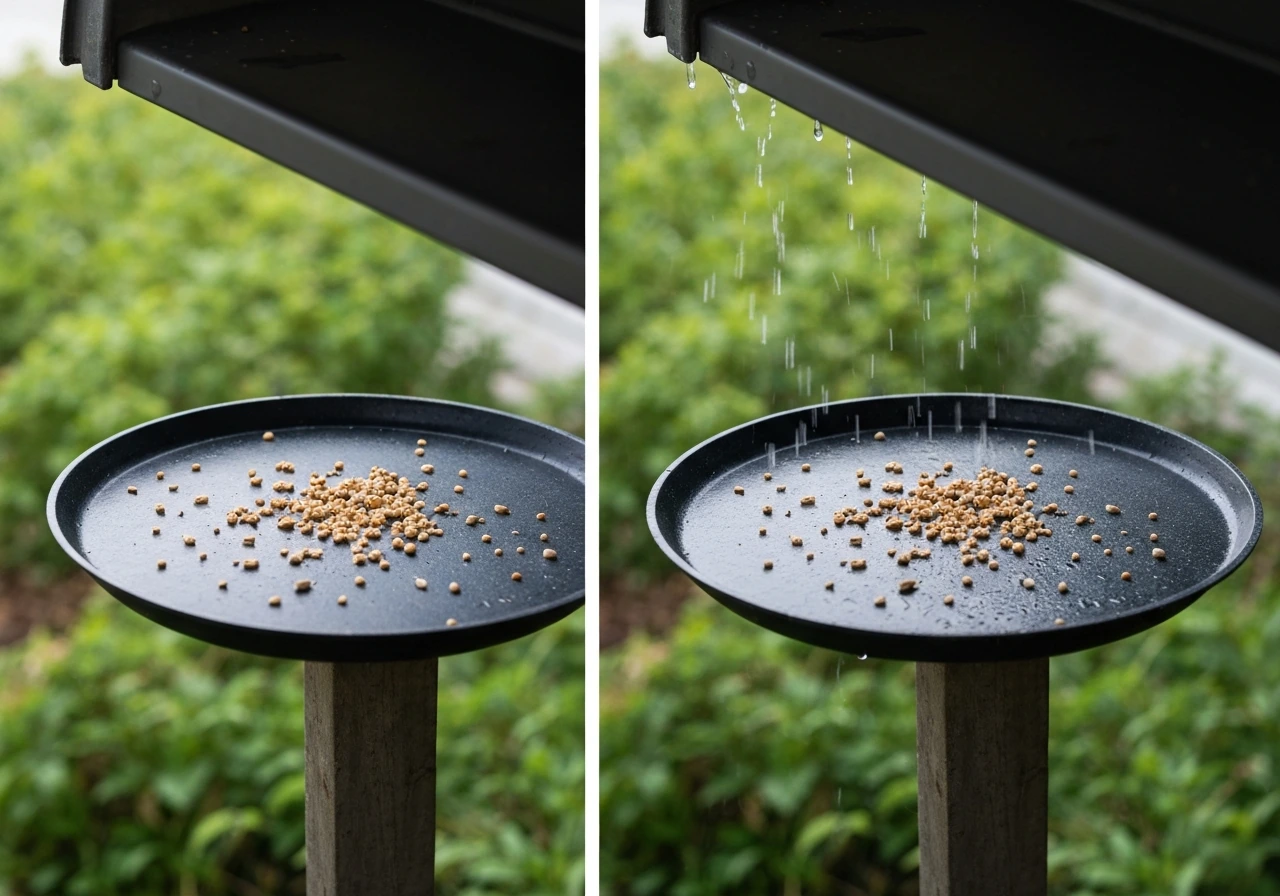
A platform feeder is exactly what it sounds like: a flat, raised surface where you spread seed directly. There are no tubes, no ports, no hoppers. Birds land on the deck, pick what they want, and leave. Project FeederWatch defines it as a flat surface onto which food is spread, and the key design requirement they flag is plenty of drainage holes to prevent water from pooling. That detail matters more than almost anything else when you're shopping.
An uncovered platform is just the tray, open to the sky. A covered platform adds a roof above the seed deck, typically on posts or chains. The roof does two things: it slows how fast seed gets soaked in a rainstorm, and it gives some birds a sense of shelter, which can actually increase visits. Some covered designs also use the roof as a structural element to support squirrel-deterrent hardware, like weight-sensitive covers or metal grid barriers. If you're in the Pacific Northwest, the upper Midwest, or anywhere that gets regular rain or heavy snow, a covered platform is almost always the better call.
It's worth knowing that the covered platform feeder overlaps in spirit with a covered hopper feeder, but they're not the same. A hopper bird feeder works differently by holding seed in an enclosed hopper and dispensing it through openings as birds land and feed. A hopper stores seed in an enclosed chamber and dispenses it through ports. A covered platform still has an open seed deck under the roof. Birds see the seed, land on a flat surface, and feed. If you're curious about hopper-style designs, that's a separate category worth exploring, but for this guide we're strictly in platform territory.
Features that actually matter when picking the best platform bird feeder
Not all platform feeders are built the same, and the spec that looks minor in a product listing can be the thing that drives you crazy six months later. Here's what I look at when evaluating these feeders.
Deck size and seed capacity
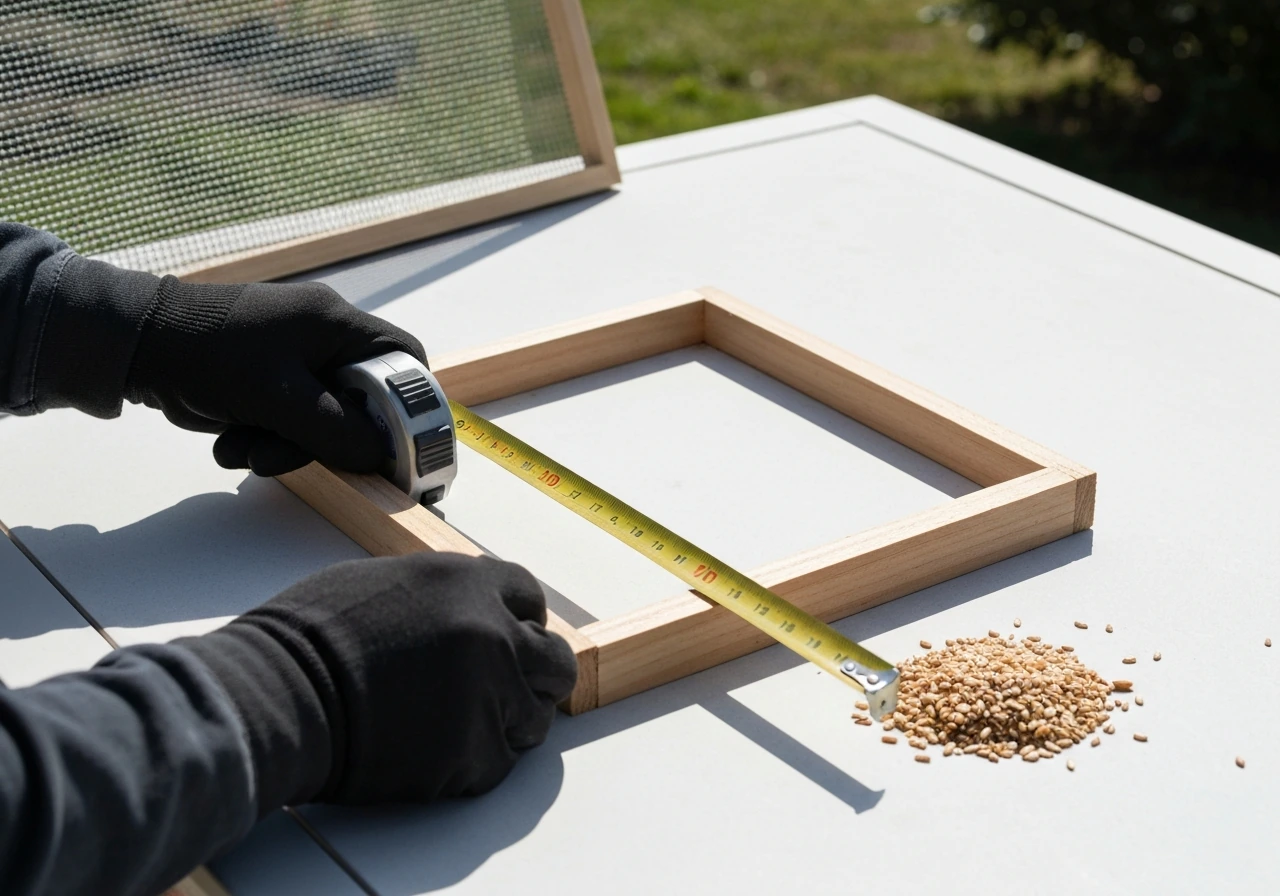
Bigger decks let more birds feed at once without crowding, which reduces the pecking-order drama that drives smaller birds away. A 12 x 18 inch wooden frame is a commonly cited baseline for a DIY or entry-level feeder, and a 12 x 12 inch mesh-bottom commercial model like the EcoPerch is workable for a single species focus. If you're trying to attract blue jays, grackles, or mourning doves alongside smaller birds, go larger. Larger decks also mean more seed exposure, so the drainage and roof situation becomes more important, not less.
Drainage design
This is the single feature I'd never compromise on. A screen-wire or perforated metal floor lets rainwater drain through immediately instead of pooling under the seed. The EcoPerch uses a mesh screen bottom specifically for this reason. Duncraft's squirrel-resistant platform feeder uses perforated metal flooring for the same purpose. Wooden slat floors with small gaps work in a pinch but rot faster. Avoid any flat solid-bottom platform unless it has obvious drain holes drilled in each corner, and even then, a mesh floor is better.
Materials and rust resistance
Rust ruins feeders fast, especially the hardware connecting roof to posts. Look for stainless steel hardware, powder-coated steel frames, or UV-stabilized polycarbonate roofs. Droll Yankees markets their feeders as made from UV-stabilized polycarbonate and rust-proof materials specifically to survive sun, rain, and snow without cracking or fading. Cedar and recycled plastic lumber are both solid choices for the deck frame if you're going wood, but untreated pine will warp and split within a season or two.
Removable tray and ease of cleaning
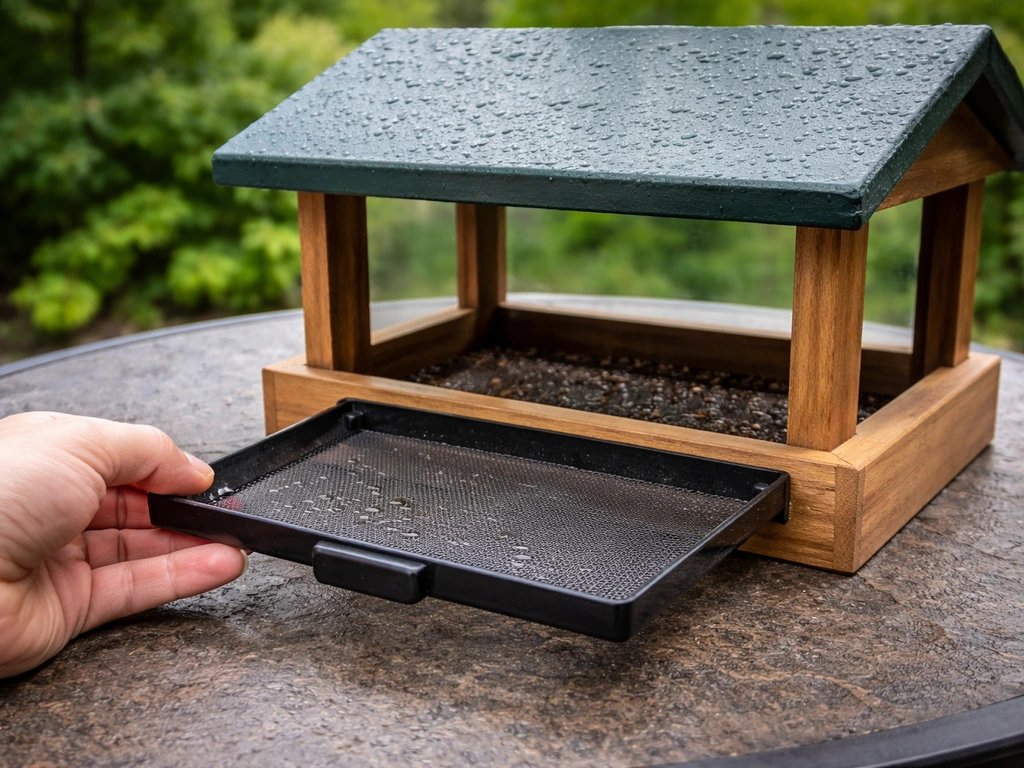
A removable tray is the difference between a feeder you actually clean and one you ignore until it grows mold. Project FeederWatch specifically recommends platform feeders with removable trays that can be brought inside and washed. Duncraft's platform feeder also has a removable bottom for exactly this reason. If the tray is fixed, cleaning means carrying the whole feeder to the hose, which means you'll do it less often. Given that All About Birds recommends cleaning seed feeders about every two weeks (and more often in wet weather), easy access isn't optional.
Stability and mounting options
Platform feeders catch wind, especially covered ones with a roof acting as a sail. Look for feeders that mount to a sturdy pole, attach via a shepherd's hook with a wide base, or include a hanging cable with a locking mechanism. Deck-rail mount models are handy for apartment or townhouse setups where you can't put a pole in the ground. A feeder that tips and dumps seed every time there's a gust is just a squirrel buffet on the ground.
Pest deterrence
Open platform feeders are squirrel magnets by design. The flat, easy-access surface is exactly what squirrels want. If you ever need to keep platform feed stations away from unwanted behavior or protect them from scavenging, a license plate bird feeder can offer a simple, handy alternative. There are a few approaches that actually work: Duncraft's two-grid metal barrier restricts squirrel access while still letting birds through. WoodLink's Mini Absolute II uses a weight-sensitive cover that closes when something heavy (like a squirrel or grackle) lands on it. Placement also matters: Perky-Pet recommends keeping pole-mounted feeders at least 4.5 feet off the ground and well away from any structure a squirrel can jump from. For raccoons, a baffle on the feeder pole is usually more effective than the feeder design itself.
Covered vs. uncovered: when each setup wins
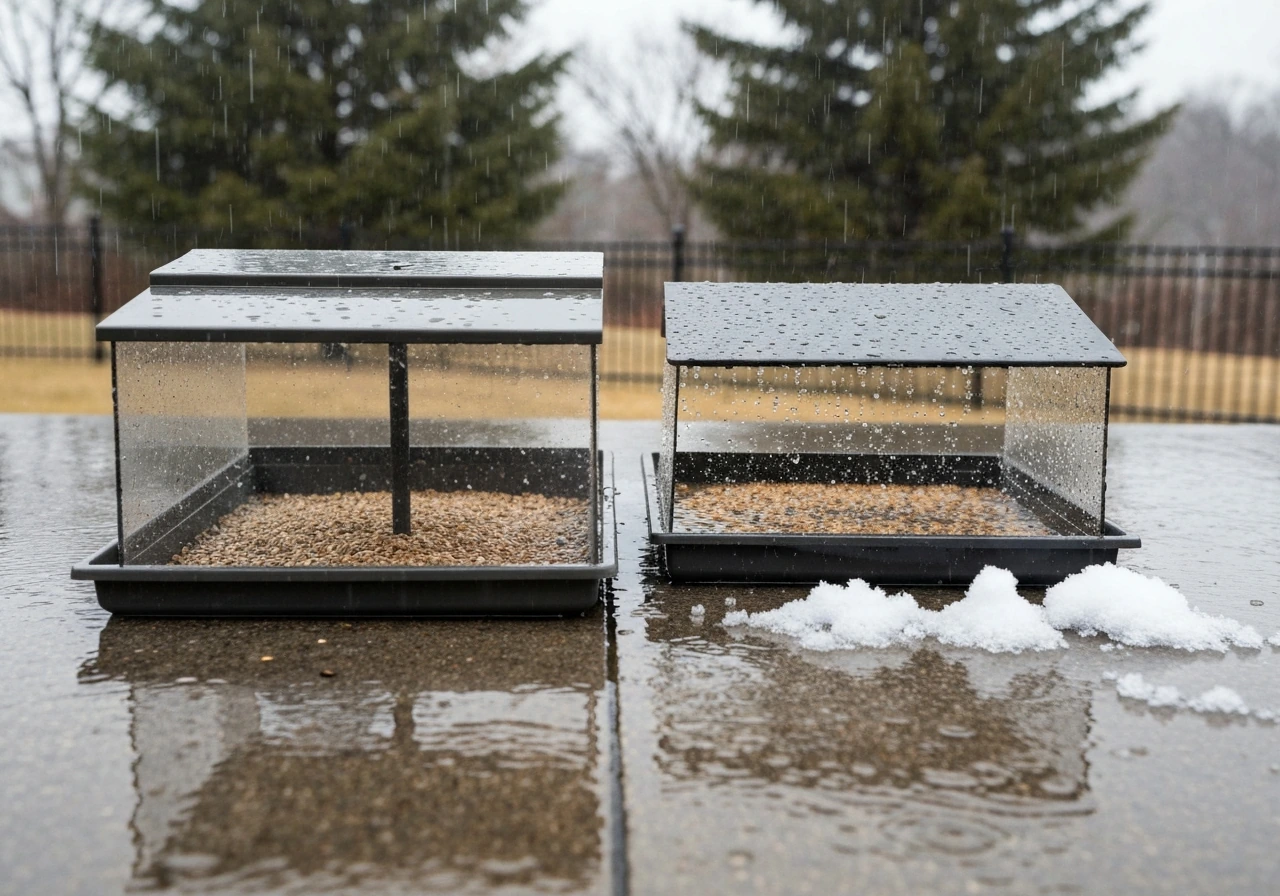
Here's a straightforward comparison to help you decide which version fits your situation.
| Factor | Covered Platform Feeder | Open/Uncovered Platform Feeder |
|---|---|---|
| Seed stays dry in rain | Yes, significantly better | No, seed soaks quickly |
| Snow accumulation | Mostly blocked by roof | Seed buried under snow |
| Bird visibility for watching | Slightly reduced | Clear, unobstructed view |
| Cleaning frequency needed | Every 2 weeks or so | More often in wet/humid weather |
| Mold and waste risk | Lower | Higher in humid climates |
| Squirrel deterrence options | More structural options available | Limited to placement and baffles |
| Best climate | Rainy, snowy, humid regions | Dry, arid, or mild climates |
| Cost | Generally higher | Generally lower |
| DIY friendliness | Moderate (roof adds complexity) | Easy to build or buy |
The recommendation: if you get more than 30 inches of annual rainfall or deal with snow winters, go covered. If you're in a dry western climate and want the maximum variety of bird species landing where you can see them, an open mesh-bottom tray does the job and costs less. A covered platform feeder with a removable mesh tray is the best of both worlds if you can only buy one.
Which birds use platform feeders (and what to put in them)
Project FeederWatch is pretty clear that tray and platform feeders attract the widest variety of feeder birds overall, but placement determines which species show up most. Placed near the ground, you'll see dark-eyed juncos, mourning doves, and sparrows. Raised on a pole or deck rail, you bring in blue jays, northern cardinals, common grackles, and larger species that feel exposed on a tube feeder. Perky-Pet's guidance frames platform feeders specifically as a way to serve larger birds that don't fit comfortably at tube or hopper-style feeders.
For seed, black-oil sunflower is the reliable all-around choice. Safflower attracts cardinals while discouraging starlings and grackles. Millet works well for juncos and sparrows, especially near-ground setups. Peanuts in the shell draw blue jays reliably. Avoid cheap filler mixes with milo or wheat unless you specifically want to attract doves, since most songbirds toss those seeds onto the ground and they pile up as waste.
Top picks for different yard situations
Rather than naming a single winner, here's how I'd match a platform feeder to what most people are actually dealing with.
Best for budget buyers
A simple open mesh-screen tray in the 12 x 12 to 12 x 18 inch range hits the practical sweet spot under $30. The EcoPerch-style open tray with stainless steel hardware and a mesh floor is the type to look for. It drains well, is easy to clean, and you can mount it on any standard shepherd's hook. The downside is that you'll be cleaning it more often and refilling after every rain. Worth it if you're just getting started or testing whether platform feeding works in your yard before committing to a more expensive model.
Best for durability and weather resistance
Look for a covered platform feeder with a powder-coated steel or recycled plastic frame, a UV-stabilized polycarbonate or metal roof, and stainless steel mesh on the floor. Cedar wood platforms with metal roofs are solid if the hardware is rust-proof. This is where Droll Yankees' design philosophy (UV-stabilized polycarbonate, rust-proof hardware) earns its premium price. Expect to spend $40 to $80 for a feeder that will genuinely last five or more seasons without warping, rusting, or cracking.
Best for easy cleaning
Prioritize a two-part design: a removable mesh tray that lifts out separately from the roof and frame. Duncraft's squirrel-resistant platform feeder nails this with its removable bottom panel. Droll Yankees' feeders are also designed to disassemble for cleaning. If a feeder can't be taken apart in under 60 seconds without tools, I promise you'll skip cleanings when it's cold or raining, and that's when mold problems start.
Best for squirrel and pest control
This is where a covered platform feeder with built-in access control is worth every extra dollar. Duncraft's two-grid metal barrier is one of the more honest squirrel-deterrent designs because it uses physical restriction rather than relying on placement alone. WoodLink's weight-sensitive cover approach (as used on their Mini Absolute II) works well for keeping large pest birds and squirrels off the tray. Pair either feeder with a squirrel baffle on the mounting pole and place it at least 4.5 feet off the ground with no nearby fence, tree branch, or structure within jumping distance.
How to set up your platform feeder to actually attract birds
Placement is as important as the feeder itself. A few principles that consistently work:
- Position the feeder within 10 to 15 feet of shrubs or trees so birds have a quick escape route, but not so close that squirrels can leap across from a branch.
- Keep pole-mounted feeders at least 4.5 feet off the ground to reduce easy access for raccoons and ground-level predators.
- For ground-feeding species like juncos and doves, a low-mounted or near-ground tray platform is more effective than a high pole setup.
- Don't overfill the tray. A shallow layer of seed (1 to 2 inches) is easier to rotate before it goes stale than a heaped tray that sits for days.
- If you're starting fresh, scatter a small amount of seed on the ground near the feeder for the first few days to signal to birds that food is there.
- Avoid placing the feeder directly above a patio or frequently used walkway since seed hulls and bird droppings will accumulate below. Rake that area weekly.
One thing that trips up new platform feeder owners: you don't need a huge variety of seeds. Starting with just black-oil sunflower seed on a well-drained tray will tell you a lot about what birds are in your area before you start experimenting with mixes.
Common problems and how to fix them fast
Wet, clumped, or moldy seed
This is the number one platform feeder problem. The fix is mostly structural: if your feeder doesn't have a mesh or perforated metal floor, you're fighting an uphill battle. Short-term, remove and discard any wet seed immediately (don't dump it on the ground, as Audubon recommends, since it can spread disease to ground-feeding birds). Disinfect the tray with a 9:1 water-to-bleach solution, rinse thoroughly, and let it fully dry before refilling. Long-term, switch to a feeder with better drainage or add a roof.
Seed overflow and ground mess
Platform feeders naturally spill more than tube or hopper feeders because birds scratch through seed looking for preferred pieces. A tray with raised edges (at least 1 inch) reduces how much gets kicked overboard. Rake underneath the feeder weekly as Project FeederWatch recommends, and consider a seed-catcher tray below the main platform if you're mounting on a pole. Switching to no-waste seed mixes (hulled sunflower, shelled peanuts) nearly eliminates the hull debris problem.
Squirrels taking over
If squirrels are dominating your platform feeder, the first fix is placement, not a new feeder. Make sure you're at least 4.5 feet off the ground and well away from any jumping-off point. Add a dome or torpedo baffle to the pole below the feeder. If that's not enough, switch to a feeder design with a physical barrier, like Duncraft's two-grid metal system, or use a weight-activated cover. Cayenne pepper in the seed mix is a popular folk remedy that does work for squirrels (birds don't register capsaicin), though you'll need to reapply after rain.
Feeder tipping or blowing over
A covered platform feeder with a large roof can act as a weather vane in wind. If your pole setup is flimsy, the feeder tips and dumps everything. Solutions: use a heavier-gauge shepherd's hook, add a ground anchor or concrete anchor for the pole, or switch to a deck-mounted bracket for the feeder instead of a freestanding pole. Some feeders also have a hanging cable option that absorbs wind movement better than a rigid pole mount.
Seasonal care: winter performance and year-round maintenance
Winter setup
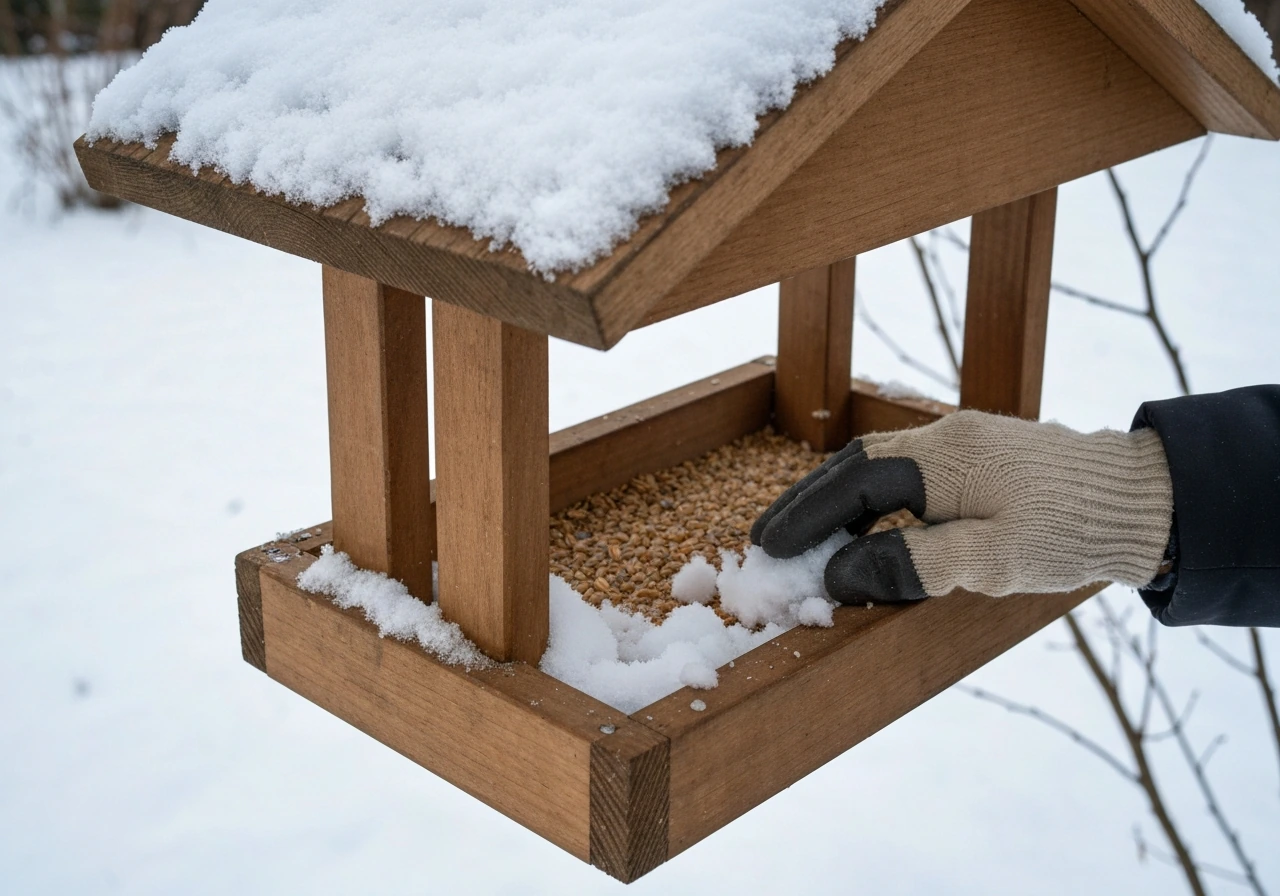
Winter is where covered platform feeders really earn their keep. Snow piling on an open tray buries seed completely and can warp a wood frame through repeated freeze-thaw cycles. A roof keeps the deck functional even during active snowfall. Penn State Extension specifically notes that winter feeders need drainage holes and should be cleaned regularly to remove bird droppings that accumulate faster when birds are visiting frequently in cold weather. For winter seed, switch to high-fat options like black-oil sunflower, peanuts, and safflower. These stay fresh longer in cold temperatures and provide the caloric density birds need.
Check your feeder after every significant snowstorm. Clear any snow that drifts under the roof onto the tray, and check that drainage holes haven't iced over. A feeder with a metal mesh floor is less likely to have drainage clogged by ice than one with small drilled holes in wood or plastic.
Cleaning schedule
The consensus from Cornell Lab's All About Birds, Project FeederWatch, and Audubon lines up around cleaning seed feeders every two weeks under normal conditions. blank" rel="noopener noreferrer">Project FeederWatch recommends cleaning seed feeders about once every two weeks, and more often during heavy use or warm and damp conditions. In wet weather, heavy use periods, or if you hear about disease outbreaks (like salmonella cases) in your area, clean more often. Virginia DWR advises cleaning bird feeders about every two weeks, and more often during heavy use and damp or wet weather blank" rel="noopener noreferrer">clean more often. The Iowa DNR recommends a monthly deep clean using a 10% bleach solution (1 part bleach to 9 parts water), and the same ratio is cited by Wild Birds Unlimited and BirdNet's fact sheet. Always rinse thoroughly and wait until the feeder is fully dry before refilling. Putting wet seed into a damp feeder is how mold problems start in less than 24 hours.
Spring and summer adjustments
Warm, humid weather speeds up mold growth significantly. Audubon recommends cleaning more frequently in hot and humid conditions and notes that uneaten seed should be disposed of rather than left to go rancid. Reduce the amount you put out so seed is consumed within a day or two. In peak summer heat, you might switch to offering only seeds that attract your target species and cut the variety to reduce waste. A mesh-bottom open tray actually performs well in summer because air circulates under the seed layer and helps it dry faster between feedings.
One last thing worth saying: a platform feeder with a roof is a genuinely good long-term investment if you're serious about feeding birds year-round. A roofed platform feeder is a top option when you want drier seed, fewer mold issues, and consistent access for birds. It handles the weather problems that frustrate most beginners, it works for the widest range of bird species, and the ones built with removable trays and mesh floors are easy enough to maintain that you'll actually keep up with cleaning. Start there, get the placement right, and the birds will follow.
FAQ
What’s the best seed to start with if I’m unsure which birds will come to my platform feeder?
Start with seed that tells you what birds are in your yard, usually black-oil sunflower. Offer only a small amount (roughly what they can finish in 1 to 2 days), then adjust based on the species you see. If you see mostly doves or ground feeders, platform feeding may still work, but you may need a no-waste approach (raised-edge tray and better drainage) to limit spilled seed.
Can I keep using the same platform feeder if there’s been a bird illness concern nearby?
Yes, but switch quickly to avoid waste. In wet, keep the feeder stocked lightly so seed does not sit under the roof for long periods, and dispose of any damp or clumped seed. For major illness concerns in your area, clean on a shorter cycle than every two weeks, rinse thoroughly, and let everything fully dry before refilling.
What should I look for in “removable tray” design so cleaning is actually easy?
Prefer a removable tray that comes out without moving the roof. If the tray only partially lifts or is hard to detach, cleaning becomes inconsistent, and wet residue can remain in corners even after hosing. The easiest setups are those where the roof and frame stay in place while the mesh tray is taken inside.
How do I confirm my platform feeder won’t tip or dump seed in wind?
If you are mounting to a pole, put the feeder where wind can’t push it and where you can reach it safely. After installation, test stability by gently pushing the roof or deck, if the feeder can rock or twist, upgrade the shepherd’s hook gauge or add a ground anchor. Also confirm the tray sits level, sloped decks can accelerate spills and uneven drainage.
How can I reduce seed mess and waste under a platform feeder?
Raised edges are helpful when you’re using a platform because birds scratch and kick hulls and fragments. Aim for at least about a 1-inch raised lip when possible, and consider a seed-catcher tray if you’re mounting on a pole. Sweeping or raking the area under the feeder weekly also prevents hull buildup that attracts rodents.
What’s the most effective way to stop squirrels without giving up bird access?
For prevention, choose a covered platform with a mesh floor and keep it away from jump access points, fences, trees, and ledges. If squirrels persist, add a pole baffle that starts below the feeder height, and consider a design with physical restriction like a weight-activated cover or a grid barrier that limits direct reach to the deck.
How often should I clean my platform bird feeder, and how do I tell when it’s too infrequent?
Under most conditions, clean every two weeks as a baseline, then increase frequency in heat, rain, or heavy use. A practical trigger is visible wetness or a noticeable odor, if the tray is damp more often than not, you need either better drainage or less seed put out at a time.
What’s the safest way to disinfect a mesh-bottom tray, and how long should it dry before refilling?
Use food-safe bleach ratios for disinfecting, then rinse until there is no bleach smell and dry completely. The key caveat is timing, do not refill while the tray or mesh is still damp. Even small leftover moisture can accelerate mold growth within a day in warm conditions.
How high should I mount a platform feeder for birds but also reduce raccoons and squirrels?
Choose the feeder height based on both bird access and predator risk. A common guideline for pole-mounted feeders is keeping them at least about 4.5 feet off the ground, but adjust if you have local predators or nearby jumping points. For deck-rail mounting, ensure there is no nearby ledge or branch that creates a short squirrel or raccoon jump route.
What should I do differently for platform feeding during winter snowstorms?
Metal mesh bottoms generally handle snow and freeze-thaw better because drainage is less likely to fully block. If your feeder has small drilled holes in wood or plastic, check after storms for ice buildup. Also clear drifting snow that pushes seed deeper under the roof, because that can bury tray drainage.
Is an open platform feeder ever better than a covered one in my yard?
Yes, and it’s usually a better long-term move. If you often deal with rain, heavy dew, or snow, a covered platform with a roof and removable mesh tray reduces soaked seed and mold risk. Open trays can work in drier climates, but you should expect more frequent draining and cleanup.
How do I choose the right tray size if I want multiple bird species without one dominating?
Use a feeder that fits your deck or mounting constraints and supports the birds you want. For common backyard mixes, a deck-sized tray big enough for multiple birds helps reduce bullying, but if you only want a narrow set of birds, you can size down. The main edge case is if larger birds monopolize the tray, a physical barrier or reduced deck size can balance access.
Next Article
License Plate Bird Feeder Guide: Buy or DIY Plans
License plate bird feeder guide with buy or DIY plans, setup tips, humane build steps, placement, and pest-proof trouble