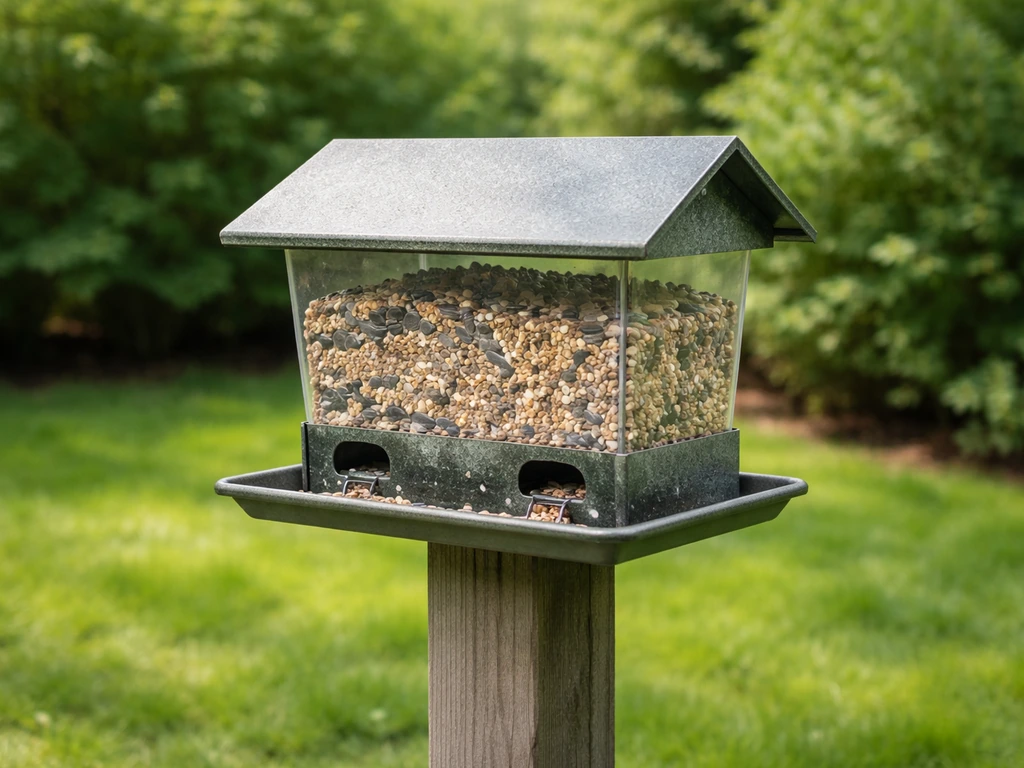
A hopper bird feeder is a seed feeder with a central enclosed reservoir, usually shaped like a small house or barn, that holds several pounds of seed and dispenses it through openings at the bottom onto a tray where birds eat. The "hopper" part refers to that gravity-fed reservoir: seed tumbles forward and down on demand as birds clear it from the tray below. It's one of the most practical all-around feeder types you can buy, and once you know what to look for, it's hard to confuse with anything else.
What Is a Hopper Bird Feeder? How to Identify and Buy One
Marcus Hendricks
19 Apr 2026
What a hopper feeder actually is (and what it's for)
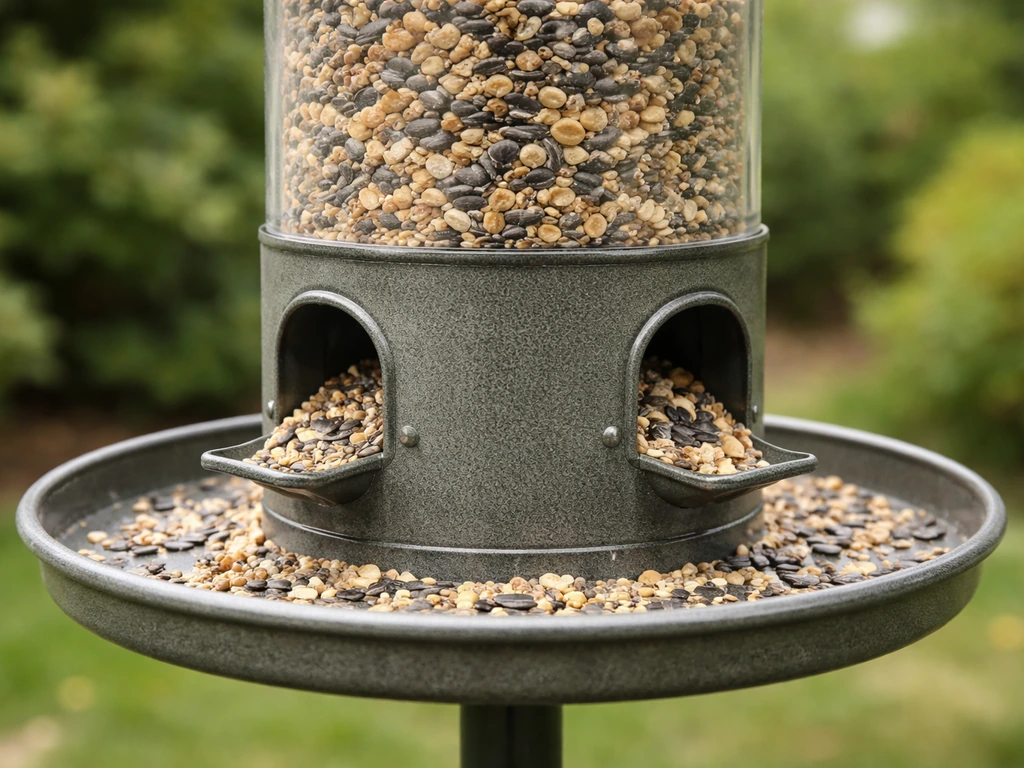
The defining characteristic of a hopper feeder is that one central seed chamber with open slots or ports at the bottom on either side that let seed flow down onto a base seed tray. Birds land on the tray or perches, eat from the exposed seed, and the reservoir automatically replenishes what they've taken. Think of it like a grain hopper on a farm: seed sits in reserve above the feeding area and falls into place as needed. This is fundamentally different from a tube feeder, where birds feed directly from individual ports drilled into a narrow cylinder, or a platform feeder, which is just an open flat tray with no reservoir at all.
The Texas Parks and Wildlife Department describes a hopper feeder as resembling a flip-top mailbox: there's a protected roof above, the food slants inward at the bottom, and an opening dispenses seed to the feeding area. That protected, contained design is the big practical advantage. Compared to a platform feeder, a hopper keeps seed cleaner, drier, and away from bird droppings, which means less waste and better seed health between refills. If you're just getting started and want one feeder that works for a wide variety of common backyard birds without a lot of fuss, a hopper is usually the right starting point.
How to recognize a hopper feeder on sight
Hopper feeders are pretty distinctive once you've seen one. Most look like a miniature house or cabin: a peaked or gabled roof on top, transparent or slatted sides that let you see the seed level, and a wider base tray at the bottom where birds actually perch and eat. The roof is functional, not just decorative. It shields the seed reservoir from direct rain and sun, which is one reason these feeders hold up better in variable weather than open tray designs.
The sides of the seed chamber are often clear acrylic or plexiglass, which is genuinely useful because you can see when you're running low without opening anything up. Below the chamber, you'll see the tray or platform that extends out on both sides, sometimes with low rails or lips to keep seed from spilling off in the wind. Many models also have visible perch dowels or rods along the tray edges. Some hopper feeders are cylindrical rather than house-shaped (the Brome Squirrel Buster Plus is a good example), but they still follow the same functional logic: enclosed seed reservoir above, dispensing ports around the middle or bottom, and a tray or catch area below.
If you're looking at a feeder and trying to figure out whether it's a hopper style, ask yourself these two questions: Does it have an enclosed seed chamber with a roof or housing above the feeding area? And does seed gravity-feed downward into a tray or through ports rather than being fully exposed to the open air? If yes to both, it's a hopper. If the whole feeding surface is open and flat with no reservoir, that's a platform feeder. If seed is dispensed through small holes drilled into a narrow tube with perch pegs, that's a tube feeder.
Features that actually matter when buying a hopper feeder
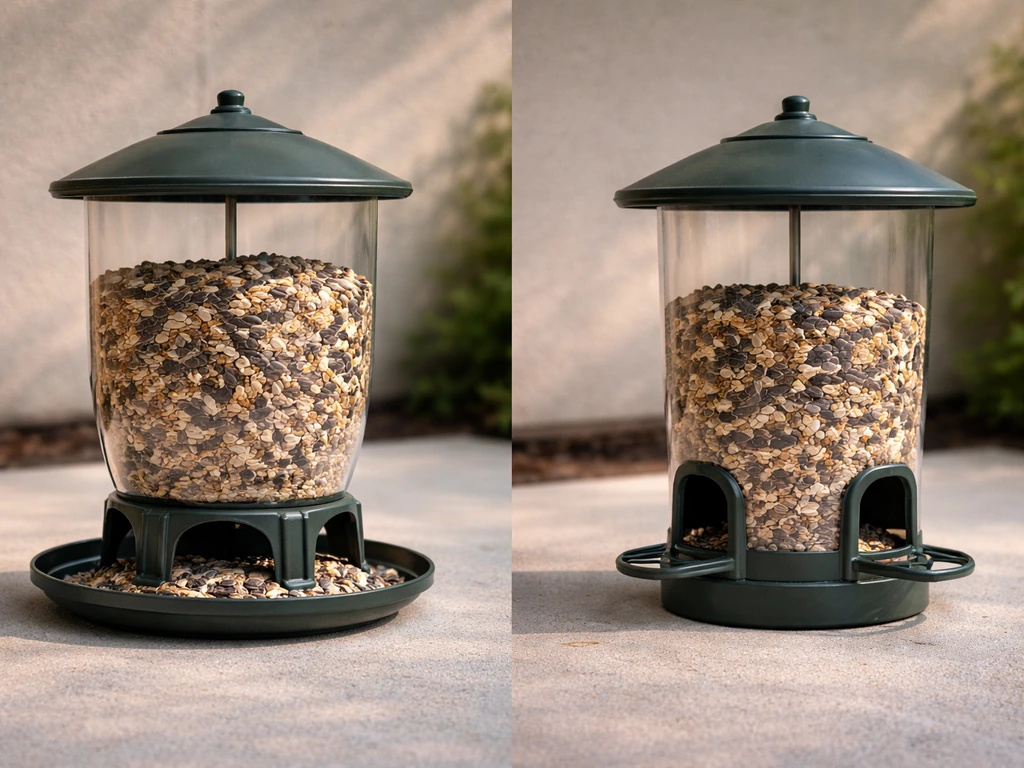
Capacity
Hopper feeders are specifically valued for their large seed capacity. Audubon notes that a good hopper feeder provides dry storage for several pounds of mixed seed. In practice, that ranges from about 3 pounds on the smaller end to 7 or more pounds on larger models. The Audubon Cafe Hopper holds 7 lbs and has four ports; the Brome Squirrel Buster Plus holds 5.1 lbs. If you're feeding a busy yard in winter, a higher capacity means fewer refills in cold weather, which matters more than you'd think when it's 20 degrees outside. For a smaller yard or if you're just starting out, a 3-to-5 lb capacity is plenty.
Ports and dispensing design
The number and design of feeding ports directly affects how many birds can eat at once and how well the feeder resists pests. More ports mean more simultaneous feeding, which reduces competition and keeps timid birds like chickadees from getting crowded out by jays. More importantly, the material around those ports matters a lot. Audubon specifically recommends metal ports around the seed dispensers to protect against squirrels chewing through and house sparrows monopolizing access. Plastic ports get nibbled through surprisingly fast; if you're in a heavy squirrel zone, metal-reinforced ports aren't optional, they're necessary.
Perches and tray design
Most hopper feeders have perch rods or dowels along the tray edges where birds land to feed. Some have angled perches designed to let wind blow empty seed hulls away rather than letting them pile up and get wet. Wild Birds Unlimited notes that perch drains can also let seed drop out of the feeder for ground-feeding birds, which is a nice bonus if you have mourning doves or juncos working the ground below. A deeper tray keeps more seed accessible and gives larger birds like cardinals and jays room to land comfortably.
Weather resistance and drainage
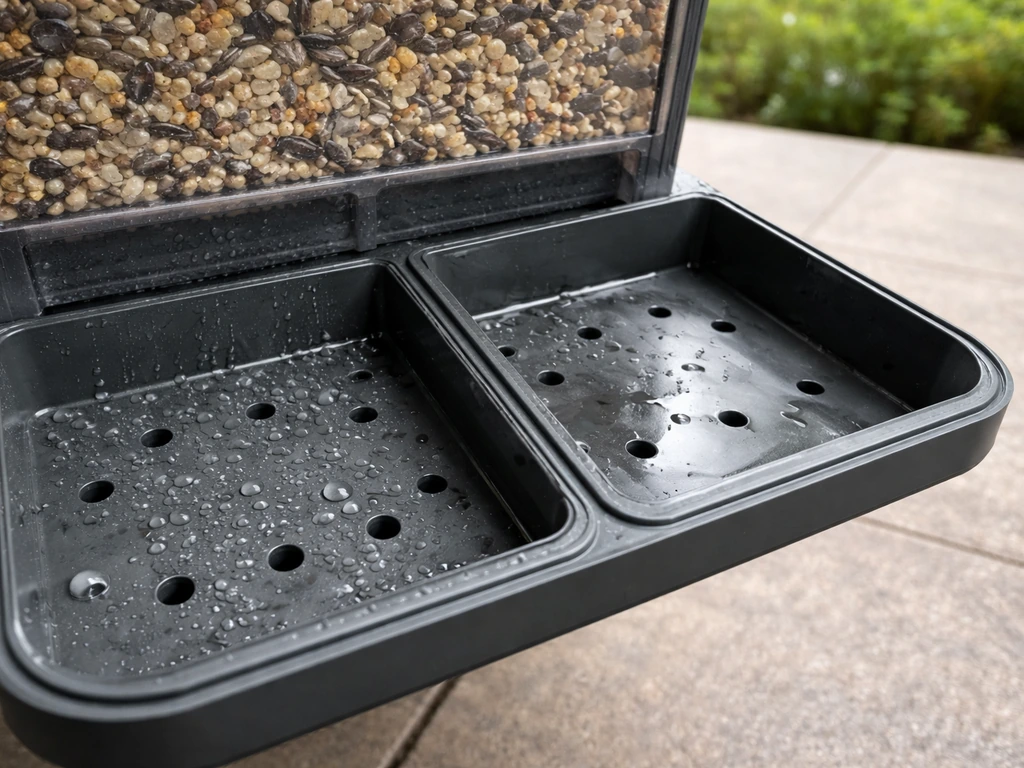
A hopper feeder's roof protects the reservoir, but the tray is still exposed to rain. Without proper drainage holes in the tray, water pools, seed gets wet, and mold follows within a day or two. Pennsylvania Audubon specifically flags drainage holes as essential for winter and wet-weather performance. Look for a tray with drainage slots or holes, not a solid flat bottom. Some higher-end models also use ventilation systems inside the seed chamber itself (Brome's Seed Tube Ventilation, for example) to prevent humidity from building up inside the hopper and spoiling seed before it even reaches the tray.
Ease of cleaning and refilling
This one gets overlooked until you've had a feeder for a season and realize cleaning it is a nightmare. A removable base tray makes a huge difference. Nature's Way positions their lift-out rust-free tray as a direct mold/bacteria prevention feature, and that's accurate. Perky-Pet's hopper design includes a removable base specifically for convenient cleaning. What you want is a feeder you can fully disassemble, scrub with a stiff brush, rinse completely, and dry before refilling. If the seed chamber is sealed or has tiny interior crevices you can't reach, skip it.
Construction materials and durability
Cedar or rot-resistant wood hopper feeders look great and hold up for years if maintained, but they're heavier and need occasional sealing. Metal (powder-coated steel or aluminum) feeders are more pest-resistant, easier to clean, and survive winters better. Clear acrylic panels for the seed chamber are standard and fine for most climates, but cheap acrylic yellows and cracks over time in UV exposure. If you're in a sun-heavy region, look for UV-stabilized acrylic or polycarbonate. The Wild Bird Feeding Institute publishes hard good product standards for feeders that give you an objective baseline for build quality when you're comparing models.
Picking the right hopper feeder for your backyard
The right hopper feeder depends on three things: the birds you want to attract, the seed you plan to use, and the specific pest and weather challenges in your yard. Getting these matched up before you buy saves a lot of frustration.
Match the feeder to your target birds
Hopper feeders attract a broad range of species. Audubon says hopper feeders bring in all the species tube feeders attract (finches, nuthatches, chickadees, woodpeckers) plus larger birds tube feeders can't accommodate well: jays, cardinals, grackles, and red-winged blackbirds. That wide species appeal is one of the main arguments for a hopper over a tube feeder if you want variety. Cardinals especially appreciate the wider tray and perch space that a hopper provides, since they don't cling well to narrow tube ports. If your primary goal is goldfinches and pine siskins on Nyjer seed, a tube feeder with tiny ports is more appropriate. But for a general-purpose backyard setup, the hopper is hard to beat.
Choose the right seed
Black oil sunflower seed is the best all-around choice for hopper feeders. It flows well through the hopper mechanism, doesn't clump easily, and is accepted by the widest range of bird species. Brome specifically recommends black oil sunflower for its hopper-style SquirrelBuster Plus. Mixed seed works too, but UF/IFAS Extension cautions that many commercial mixes include fillers like milo or wheat that most backyard birds ignore, which means wasted seed piling up in the tray and rotting faster.
If you use a mix, go for one with sunflower, safflower, and maybe some peanut pieces rather than a budget bag padded with milo. Avoid Nyjer in a standard hopper: the tiny seeds fall through most tray designs and require specialized tube feeders with pinhole ports.
Think about size and placement
Pennington notes that hopper feeders are a practical choice when backyard space is limited because one feeder handles multiple species rather than needing separate specialized feeders. For placement, hang or pole-mount the feeder at 5 to 6 feet off the ground for most species, higher (7 to 8 feet) if you're specifically targeting woodpeckers, jays, and nuthatches that prefer elevated feeding heights. Keep it at least 10 feet from shrubs or fences where squirrels can launch from, and within 10 feet of tree cover so birds feel safe approaching. In winter, move it slightly closer to the house or a wind-blocking structure to keep seed drier and make it easier for you to refill without bundling up for a long trek.
Comparing hopper feeders: what separates the good ones from the frustrating ones
When you're shopping, most hopper feeders look similar in photos. The differences that matter show up in real use. Here's how the key factors stack up across the main feeder categories you'll encounter:
| Feature | Budget plastic hopper | Wood/cedar hopper | Metal/squirrel-resistant hopper |
|---|---|---|---|
| Typical capacity | 2–4 lbs | 4–7 lbs | 4–7 lbs |
| Port material | Plastic (chewable) | Wood or plastic | Metal-reinforced (best) |
| Weather durability | Fair (UV degrades) | Good (if maintained) | Excellent |
| Squirrel resistance | Low | Low to moderate | High (weight-activated or cage-enclosed) |
| Ease of cleaning | Variable | Moderate (wood absorbs moisture) | High (removable parts) |
| Drainage design | Often poor | Moderate | Usually excellent |
| Best for | Beginners, low-pest yards | Aesthetic-focused setups | High-traffic, squirrel-heavy yards |
For most backyards with active squirrels, a metal or squirrel-resistant hopper feeder is the right call even if it costs more upfront. Models like the Brome Squirrel Buster Plus use a weight-activated mechanism: the feeder's seed ports close when something heavier than a bird (like a squirrel) lands on it. This is more reliable than cage-style baffles alone, especially for determined squirrels.
The metal port reinforcement Audubon recommends is a separate but complementary feature: it stops chewing damage even when the weight mechanism isn't triggered. If pests aren't a serious problem in your yard, a cedar hopper feeder is a genuinely attractive and durable option, just factor in that wood needs seasonal cleaning and occasional re-sealing to stay in good shape.
If you're comparing hopper feeders to platform feeders, the key trade-off is exposure versus accessibility. A good way to think about it is to compare this with the best platform bird feeder options, which focus on easy access and simultaneous feeding on an open tray platform feeders.
A good way to think about it is to compare this with the best platform bird feeder options, which focus on easy access and simultaneous feeding on an open tray platform feeders. A common comparison is the best platform bird feeder with roof, since the roof helps protect seed while still keeping an open feeding surface easy access and simultaneous feeding on an open tray.
A platform feeder lets more species feed simultaneously and is easier for large birds to use, but seed is fully exposed to weather and droppings. A hopper is more protected and holds seed better in wet or windy conditions. For a roofed hybrid option that sits between the two styles, platform feeders with roofs are worth exploring as a comparison point when deciding which design fits your setup.
Troubleshooting the most common hopper feeder problems
Squirrels and other pests
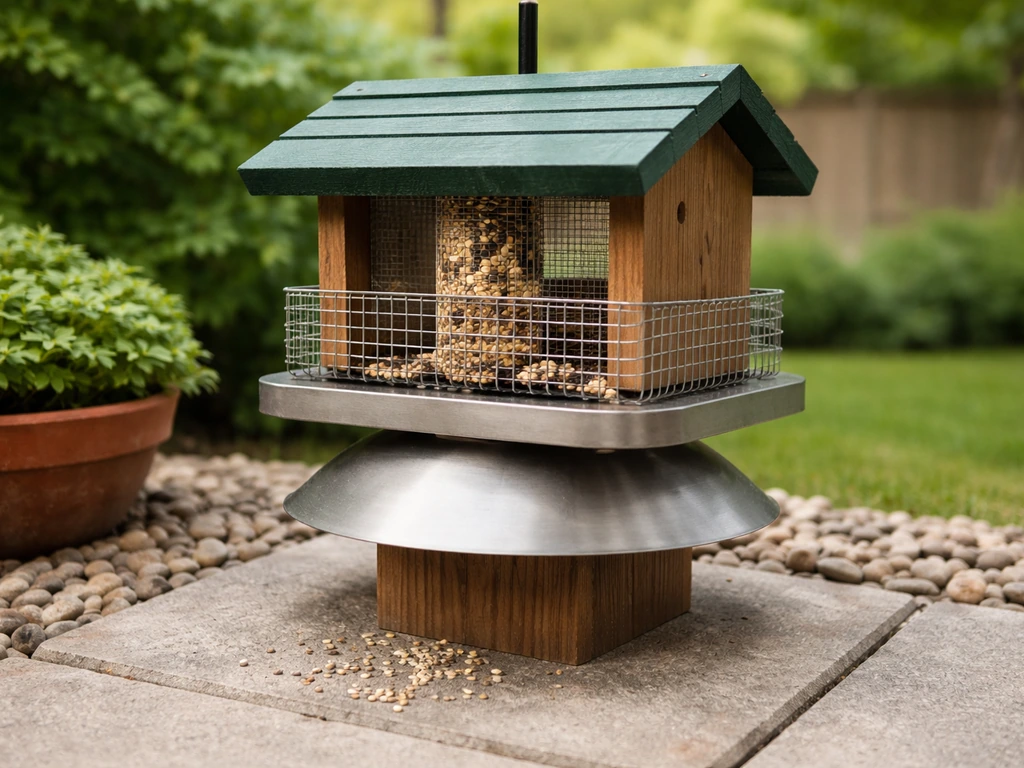
Squirrels are the number one complaint with hopper feeders, and for good reason: the wide tray and accessible seed are basically an invitation. Your best defenses in order of effectiveness are: a weight-activated squirrel-proof design (closes ports when a squirrel's weight hits the tray), a pole-mounted setup with a baffle on the pole (a dome or cylinder baffle at least 4 feet high), and metal port reinforcement to stop chewing.
Adding pest-resistant features, like proper license plate bird feeder hardware and secure mounting, can help keep squirrels and other animals from interfering with access metal port reinforcement. Using just one of these usually isn't enough. Rats are a separate but related problem: they typically work at ground level, eating spilled seed under the feeder.
Keeping the area under the feeder clean, switching to no-mess hulled seed that reduces waste, and using a seed-catching tray below can significantly reduce rat activity without removing the feeder entirely.
Seed clogging and clumping
Clogging happens when seed gets wet inside the hopper and clumps together, blocking the dispensing slots. The fix starts with the feeder design: ventilation holes inside the seed chamber (like Brome's system) help keep humidity from building up. Beyond that, regular cleaning keeps ventilation holes clear, which Brome specifically notes helps keep seed dry. In practice, check the seed level every few days in wet weather. If you push your finger against the seed and it doesn't flow freely, it's clumping. Empty the feeder, let it dry, and refill with fresh seed. Don't just top off a clumped feeder, you'll trap old moldy seed at the bottom.
Rain, wind, and seed spoilage
Even with a roof, driving rain can soak the tray seed in a hopper feeder. Minnesota DNR recommends scraping out old wet seed in wet weather rather than leaving it to mold. Project FeederWatch warns that black mold is a clear signal to clean immediately and discard any contaminated seed. In practice: after heavy rain, pull out the tray, dump any wet seed, let the tray dry before refilling. In winter, snow can pack into the tray and freeze around the seed ports. Check the ports after snowfall and clear them with a dry brush or your finger. A feeder with wider port openings handles snow and ice better than one with narrow slots.
Cleaning routine that actually works
The South Carolina DNR recommends cleaning all feeder parts: feeding ports, perches, lids, platforms, reservoirs, and hooks, using stiff brushes and fully rinsing after disinfection. A practical routine for a hopper feeder looks like this: Wild Birds Unlimited’s “Feeder Care” document also provides feeder-care guidance for cleaning and disinfecting hopper feeders.
- Empty the seed reservoir completely every 2 to 4 weeks (more often in humid or rainy weather).
- Disassemble the feeder: remove the tray, any removable panels, and perch rods if possible.
- Scrub all surfaces with a stiff brush and a dilute bleach solution (1 part bleach to 9 parts water) or a white vinegar solution.
- Rinse thoroughly with clean water until no cleaning solution smell remains.
- Allow all parts to air dry completely before reassembling and refilling.
- While parts are drying, inspect for cracked acrylic, chewed ports, or loose hardware and address before the next refill.
The Washington Post notes that moldy seed and contamination can spread disease among bird populations, so this isn't just about feeder aesthetics. A clean feeder is a health issue for the birds you're trying to attract. In winter, plan your cleaning for a mild day when parts can dry without freezing. If a full clean isn't possible mid-winter, at minimum scrape out the tray, shake out wet seed, and clear the dispensing ports so birds can keep accessing fresh seed from the reservoir above.
When birds stop visiting
If your hopper feeder goes quiet, run through this checklist before assuming the feeder is the problem: Is the seed fresh (not clumped, musty-smelling, or over 4 weeks old)? Are the dispensing ports clear and actually releasing seed onto the tray? Is there a new predator in the area (neighborhood cat, hawk) making birds nervous? Has the feeder position changed relative to cover? In most cases, stale seed or a clogged port is the culprit. Replace the seed, clear the ports, and give it 3 to 5 days. Bird traffic almost always returns once the feeder is working cleanly and offering fresh seed.
FAQ
How often should I replace the seed in a hopper bird feeder?
In most climates, you should not run a hopper feeder continuously on old seed. If the seed smells musty, looks clumped, or has visible mold in the tray, empty it and clean the tray and ports before refilling. As a practical rule, if your seed has been sitting more than about 4 weeks (especially after wet weather), replace it.
Why is my hopper feeder collecting wet, moldy seed in the tray even though it has a roof?
A hopper feeder can still be too messy if the tray design traps waste. Choose a model with drainage holes or slots and low, wind-resistant rails, and use seed that produces less husk waste (for example black oil sunflower). Also scrape the tray under the feeder regularly so spoiled hulls do not build up and block port flow.
Can I use Nyjer seed in a hopper bird feeder?
Nyjer can work for birds, but it is a poor match for standard hopper trays because the tiny seeds fall through most bottoms and ports. If you want finches and siskins on Nyjer, use a tube feeder designed for pinhole ports instead of relying on a hopper.
What should I do if my hopper feeder starts clogging but the tray still looks normal?
To prevent clogs, avoid topping off when you see clumping. Empty the hopper, let the parts dry, scrub any residue from the port area, and then refill. If you frequently get damp conditions, also check whether the hopper has internal ventilation or a design that limits humidity buildup.
Where should I place a hopper feeder to reduce wet seed and speed up bird traffic?
Placement affects both bird comfort and how quickly seed gets wet. Keep it near cover (tree line or shrubs) so birds feel safe, but not so close that squirrels can launch. After heavy rain, consider moving the feeder slightly toward a wind-blocking structure to reduce direct soaking and keep seed drier at the tray.
What features matter most for squirrel-proofing a hopper feeder?
Many hoppers share similar shapes, the differentiator is how the seed ports behave under load. If you have persistent squirrels, prioritize (1) metal or metal-reinforced port areas and (2) a weight-activated mechanism that closes ports when something heavier than a bird lands on the tray. Baffles alone often fail when squirrels learn the access pattern.
How do I stop rats from eating the spilled seed under my hopper feeder?
Rats usually feed at ground level from spilled seed. To reduce attraction, keep the area under the feeder clean, remove fallen husks, and consider hulled or no-mess seed that reduces waste. A seed-catching tray can help, but you still need to empty and clean under it regularly to stop rat foraging.
My hopper feeder is clean, but birds stopped coming. What should I check first?
If birds ignore the feeder, first rule out access and food issues. Clear any buildup or hulls that may be blocking the ports, confirm seed is fresh, and verify that the ports are actively dispensing onto the tray. Then observe for a few days, because birds often take time to resume routine once the feeder is delivering clean, dry seed again.
Can I use a hopper feeder to target different bird species by changing height or perch setup?
Yes, you can target different birds by adjusting both seed type and height, but you still need the hopper to function. Cardinals and jays typically do better at slightly higher perches with a deeper tray, while small birds respond well to frequent availability and unobstructed port flow. Try adjusting the height (within the recommended range) only after confirming ports and tray are dispensing properly.
How do I decide between a full disassembly cleaning versus quick spot cleaning for a hopper feeder?
Not always, because a feeder can look clean while parts inside are dirty or wet. A full-disassembly cleaning is most important when you see moldy seed, notice clogs, or if you live in a region with long damp seasons. Otherwise, do a lighter clean more often, scraping the tray and clearing ports mid-season.
Next Article
Best Bird Feeder for Baltimore Orioles: Buyer Guide
Choose the best bird feeder for Baltimore orioles: styles, features, placement tips, and fixes for heat, pests, and acce