The best digital bird feeder right now is one that combines a reliable 1080p camera, 2.4GHz Wi-Fi connectivity, IP65 or better weatherproofing, and some form of local storage so you're not entirely dependent on a cloud subscription. Top picks in 2026 include the Birdfy Feeder with Pro Perch (IP65, 1080p night vision, AI bird ID, solar option), the BirdReel BF11 Gen 2 (IP65, dual solar plus 5200mAh battery, 64GB MicroSD included), and the Birdbuddy smart feeder (IP67 camera module, polished app). Which one is right for you depends on your target birds, your backyard layout, and how much the cold, squirrels, or subscription costs matter to your situation.
Best Digital Bird Feeder: Smart Buying Guide and Setup Tips
Marcus Hendricks
7 May 2026
What 'digital' actually means in a bird feeder
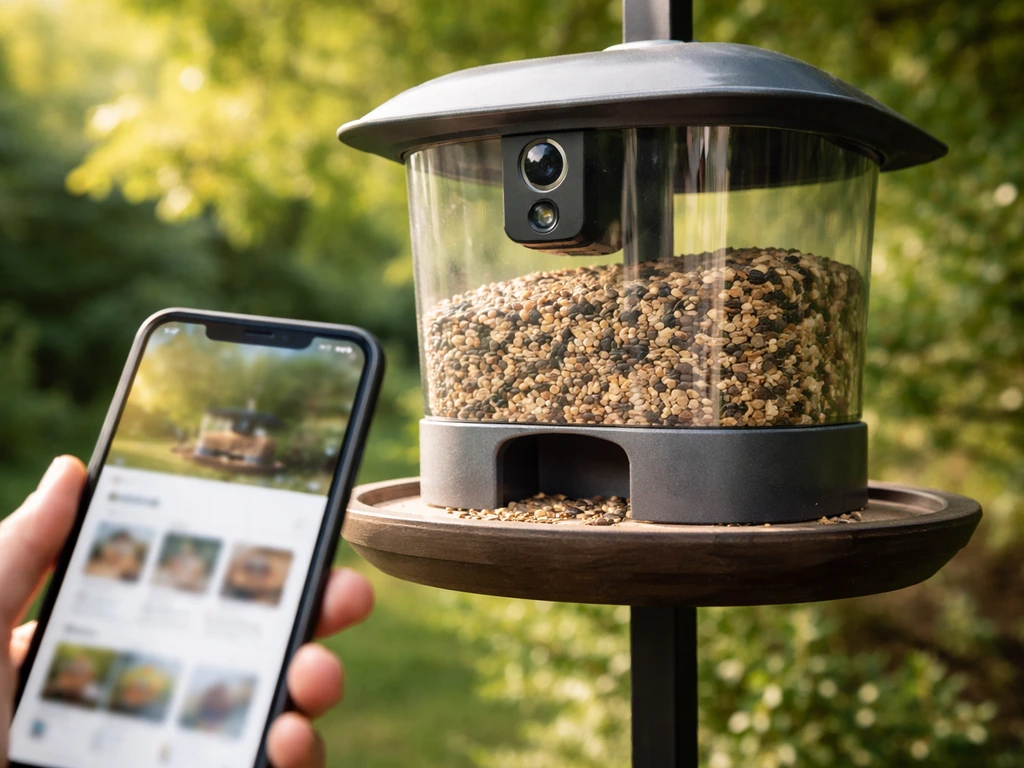
When people search for a digital bird feeder, they usually mean a smart feeder with some combination of these: a built-in camera, motion or bird-arrival detection, app-based alerts, Wi-Fi or Bluetooth connectivity, AI bird identification, and sometimes solar charging or automated dispensing. If you specifically want a wireless link you can use alongside Wi-Fi, a Bluetooth-enabled smart feeder is a close related option in many of the same best digital feeder categories best bluetooth bird feeder. It's a broad term that overlaps with what the industry calls smart, electronic, Wi-Fi, AI, or automatic feeders. If you've looked at related categories like the best Wi-Fi bird feeder or the best AI bird feeder, you've likely been circling the same group of products from different angles. If you're specifically shopping for the best wifi bird feeder, focus on stable 2.4GHz connectivity and a reliable app experience best Wi-Fi bird feeder. For most backyard birders, the camera plus app alert combo is the core draw. Everything else (solar, local storage, squirrel deterrence) is layered on top.
Features that actually matter (and a few that don't)
Not every spec on the box translates into a better experience at the window. Here's what I'd actually prioritize when comparing digital feeders.
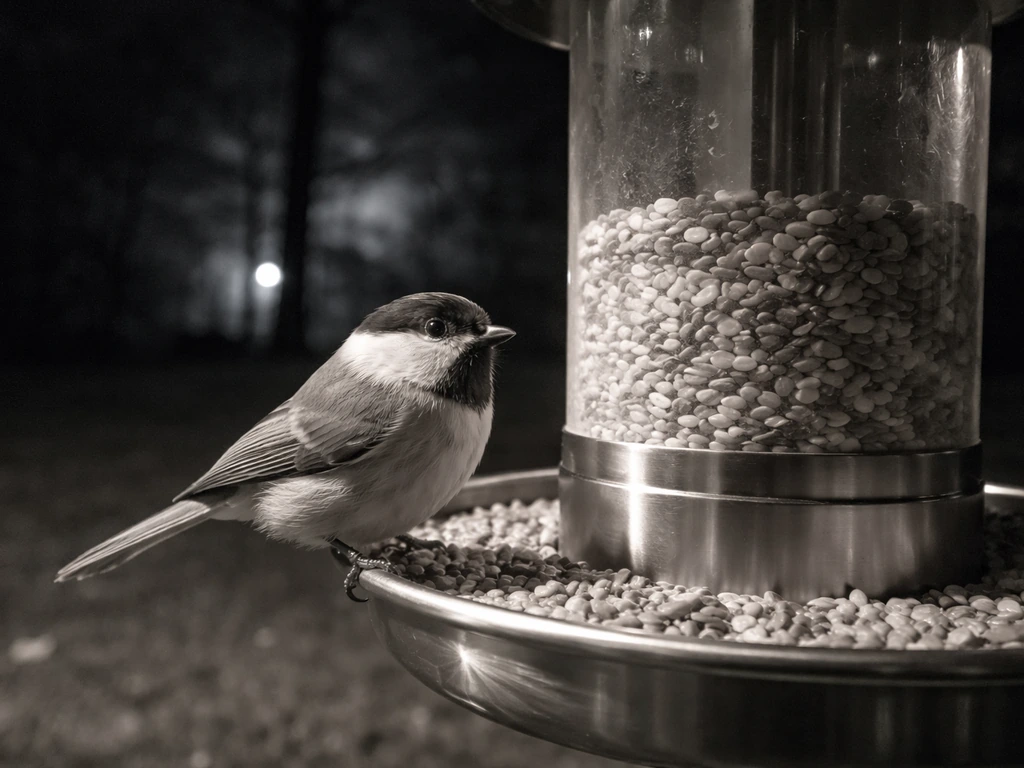
- Camera resolution and night vision: 1080p Full HD is the current standard worth paying for. Night vision matters more than most people expect because a lot of feeder activity happens at dawn and dusk, and cameras without it produce muddy, useless footage.
- IP waterproof rating: IP65 keeps out rain and dust reliably. IP67 (like Birdbuddy's camera module) means it can survive brief submersion, which is useful in heavy rain or snow melt. Anything below IP54 is a gamble in real outdoor conditions.
- Wi-Fi band: Every smart feeder currently on the market requires 2.4GHz Wi-Fi. Your router's 5GHz band will not work. If you have a dual-band router, you need to connect the feeder specifically to the 2.4GHz network. This trips up more people than any other setup issue.
- Local storage vs. cloud: If a feeder only saves video to the cloud, you're at the mercy of a subscription and a 30-day deletion window (Birdfy's free tier clears cloud video after 30 days). The BirdReel BF11 Gen 2 ships with a 64GB MicroSD card, which is a significant practical advantage.
- Battery vs. solar: Battery-only feeders need regular charging, which is annoying in winter. Solar helps but isn't always enough in short or overcast days. Dual solar plus a large battery pack (like the BF11 Gen 2's 5200mAh) is the most reliable setup for year-round use.
- AI bird identification: A genuinely useful feature, but understand the business model. Birdfy's AI bird recognition runs on a cloud service and is available free during a trial, then moves to a monthly, annual, or one-time subscription for unlimited use. The app itself is free.
- Squirrel/pest control: Weight-sensitive mechanisms that close seed ports when something heavy lands work reasonably well, but they require tuning. Large birds like blue jays and flickers can also trigger squirrel-deterrent systems, so expect some calibration time.
Features I'd be less impressed by: 4K resolution (the viewing distance and feeder camera angles don't justify it), audio two-way talk (gimmicky at a feeder), and any feeder claiming fully automatic seed dispensing without a clear mechanical explanation of how it handles clumping seed.
Smart feeder types and when to choose each
Digital feeders come in several physical formats, and the form factor matters as much as the tech inside. Choosing the wrong feeder style for your backyard or target birds will undermine everything else.
Hopper feeders
Hopper feeders have walls and a roof that protect seed from rain and wind, making them the most practical all-season option. They hold a large seed volume, which means less frequent refilling, and their enclosed design keeps seed drier in wet weather. Most smart camera feeders are built into a hopper-style body for exactly this reason. This is the format I'd recommend for most backyards as the primary feeder.
Tube feeders
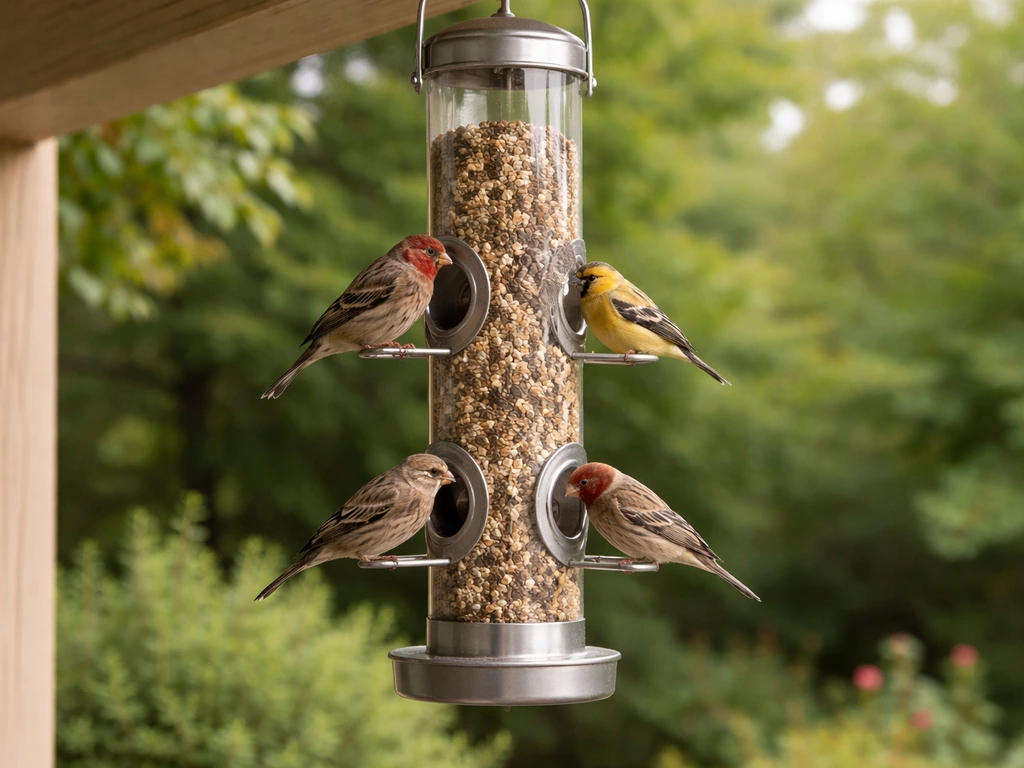
Tube feeders with multiple ports and perches are ideal for small birds like finches, chickadees, and nuthatches. Smart versions of tube feeders are less common but exist. The narrow ports help exclude larger pest birds and squirrels to some degree. If finches are your main target, a smart tube feeder or a standard tube feeder placed near a camera feeder is the more practical combo.
Platform feeders
Platform feeders are flat, open surfaces that attract the widest variety of species, including ground-feeding birds like doves and juncos. They're great for visibility and camera framing but expose seed to weather quickly. A smart camera mounted on or above a platform feeder can capture a lot of activity, but you'll need to clean and refill more often, especially after rain.
Suet feeders
Suet feeders hold rendered fat cakes and are specifically designed to attract woodpeckers, nuthatches, and starlings. Smart suet feeders are rare, but pairing a suet cage with a nearby camera feeder is a very effective setup for woodpecker watching. Suet is especially useful in winter when high-fat food sources are critical for resident birds.
Window feeders
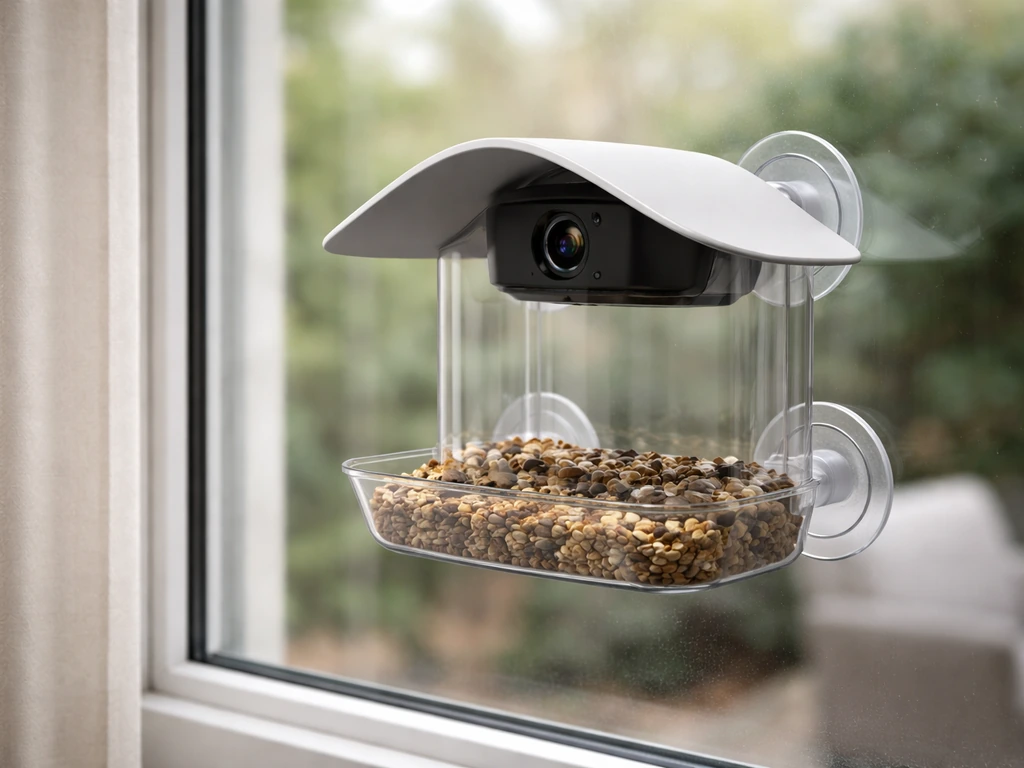
Window-mounted feeders attach via suction cups and offer close-up views without any yard space. Smart window feeders with cameras are the most intimate setup you can build, with the bird potentially just inches from the lens. The tradeoff is capacity (very small) and suction cup reliability in cold or direct sun. These are great as a secondary feeder for close-up photography, less good as your main feeding station.
Pole-mounted feeders
Mounting any smart feeder on a dedicated pole gives you the most control: you choose the height, the baffle placement for squirrel deterrence, and the sight line for the camera. Most smart feeders like the Birdfy and BirdReel can be pole-mounted or hung. Pole mounting with a squirrel baffle below the feeder is still the single most effective squirrel deterrent available, smart features or not.
Best digital feeder setup by target bird
Different birds need different seed, feeder height, and feeder style. Here's how to match your digital feeder to the birds you actually want to attract.
| Target Bird | Best Feeder Style | Feed Type | Key Settings/Placement |
|---|---|---|---|
| Hummingbirds | Smart nectar/hummingbird cam feeder (e.g., Perky-Pet smart hummingbird feeder) | Nectar (4:1 water to sugar) | AI arrival detection; place in shade to slow fermentation; hang at eye level |
| Cardinals | Hopper or platform camera feeder | Sunflower seeds, safflower | Low or mid-height placement; wide perch; avoid tube feeders with tiny ports |
| Finches | Tube feeder with small ports (near a camera feeder) | Nyjer (thistle) or fine sunflower chips | High placement; small perches to exclude larger birds |
| Woodpeckers | Suet cage paired with nearby camera feeder | Suet cakes, peanuts | Mount on tree or post; vertical clinging surface required |
| Orioles | Oriole-specific feeder or platform (near camera) | Nectar, orange halves, grape jelly | Bright orange feeder color helps; place in open area with good visibility |
| Bluebirds | Platform or tray feeder with camera | Mealworms (live or dried) | Low placement near open lawn; avoid dense shrubs nearby |
| Blue Jays | Hopper camera feeder with large platform | Whole peanuts, sunflower seeds | Note: jays may trigger squirrel-deterrent weight sensors; adjust sensitivity |
| Doves | Platform or ground-level camera feeder | Millet, cracked corn, sunflower hearts | Low or ground-level placement; open sight lines for camera coverage |
A note on hummingbird smart feeders: Perky-Pet's smart hummingbird feeder uses AI to detect bird arrivals and push app notifications. This is genuinely useful because hummingbirds can show up and leave quickly, and the alert means you can actually watch the visit in real time rather than reviewing hours of footage. The nectar needs changing every 2 to 3 days in warm weather regardless of how smart the feeder is, so don't let the tech distract you from that basic maintenance.
Weatherproofing, durability, and winter feeding
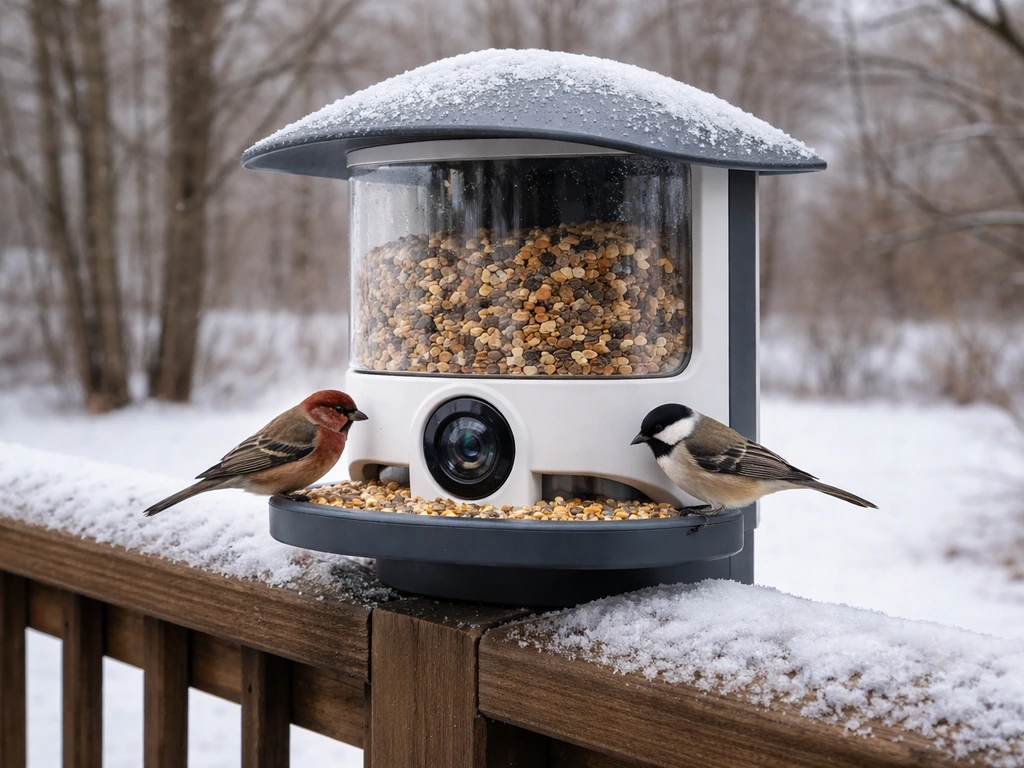
Cold weather is where cheap smart feeders fail fast. Camera lenses fog, batteries drain in hours instead of days, and plastic housings crack when temperatures drop below freezing. Before buying, check the operating temperature range on the spec sheet. The Birdfy solar smart feeder is rated for 14°F to 113°F (-10°C to 45°C), which covers most of North America through a normal winter but will struggle in deep-freeze conditions in northern states or Canada. The Camouflage EZ BirdFeed, by comparison, is rated for -5°F to 120°F (-20.5°C to 48.5°C), giving it a meaningful edge in colder climates.
IP65 waterproofing (found on both Birdfy and BirdReel BF11 Gen 2) means the housing is protected against low-pressure water jets from any direction. This handles rain, snow, and sprinklers without issue. Birdbuddy's camera module goes further at IP67, meaning it can handle brief submersion. In practice, the difference between IP65 and IP67 matters most in climates with ice melt and pooling water near the feeder. For most people, IP65 is enough.
For winter specifically: solar charging becomes less reliable in short daylight and heavy cloud cover. A feeder that relies on solar alone may run low during a week of overcast winter days. The BirdReel BF11 Gen 2's combination of dual solar panels and a 5200mAh backup battery handles this better than solar-only designs. If you're in a genuinely cold region, budget for a feeder with a large onboard battery and plan to bring it inside for charging every week or two during the coldest months.
Cameras, apps, solar, and getting set up without frustration
Setup is where a lot of people hit a wall, and almost every problem traces back to one of three things: Wi-Fi band, router distance, or app permissions on the phone.
- Confirm your router broadcasts a 2.4GHz network separately from 5GHz. If your router only shows one combined network name, log into your router settings and split them. Every smart feeder on the market requires 2.4GHz only.
- Use Bluetooth only for the initial pairing handshake. Both Birdbuddy and Birdfy use Bluetooth to establish the first connection, then hand off to Wi-Fi. Once Wi-Fi is confirmed, Bluetooth can be disabled on the feeder if the app allows it.
- Place the feeder within a strong Wi-Fi signal range before mounting permanently. The BirdReel BF11 Gen 2 is reported to work reliably dozens of feet beyond the house on a 2.4GHz guest network, but signal quality still affects video stream stability. Use a Wi-Fi analyzer app to check signal strength at your intended placement spot.
- Grant the app full permissions: camera, notifications, and local network access. Blocked notifications are the most common reason users think their feeder's alert system isn't working.
- If AI bird ID is important to you, decide upfront whether you want a cloud subscription. Birdfy's AI recognition is subscription-based beyond the trial, and one subscription covers multiple devices. Birdbuddy offers its own AI identification within the app ecosystem. The BirdReel uses the Bird Lover app for AI ID.
On camera quality: 1080p Full HD with night vision is the current baseline worth buying. The Birdfy feeder with Pro Perch and the BirdReel BF11 Gen 2 both hit this. Night vision matters especially for pre-dawn and post-dusk activity. Wide-angle lenses capture more birds at once but can distort close-up identification, so consider whether you want identification shots or broad activity monitoring and check whether the field of view matches that goal.
On storage: cloud video on Birdfy's free tier is deleted after 30 days. If you want to keep footage longer, either download it manually or upgrade to a membership. Birdbuddy’s membership documentation describes features like Photo & Sound ID that use the phone’s camera or microphone upgrade to a membership. The BirdReel's included 64GB MicroSD card is a significant advantage here because your recordings are local, permanent until you delete them, and don't require a subscription to access. This is the approach I'd personally prefer for a set-it-and-forget-it backyard setup.
Squirrels, rats, and keeping pests out
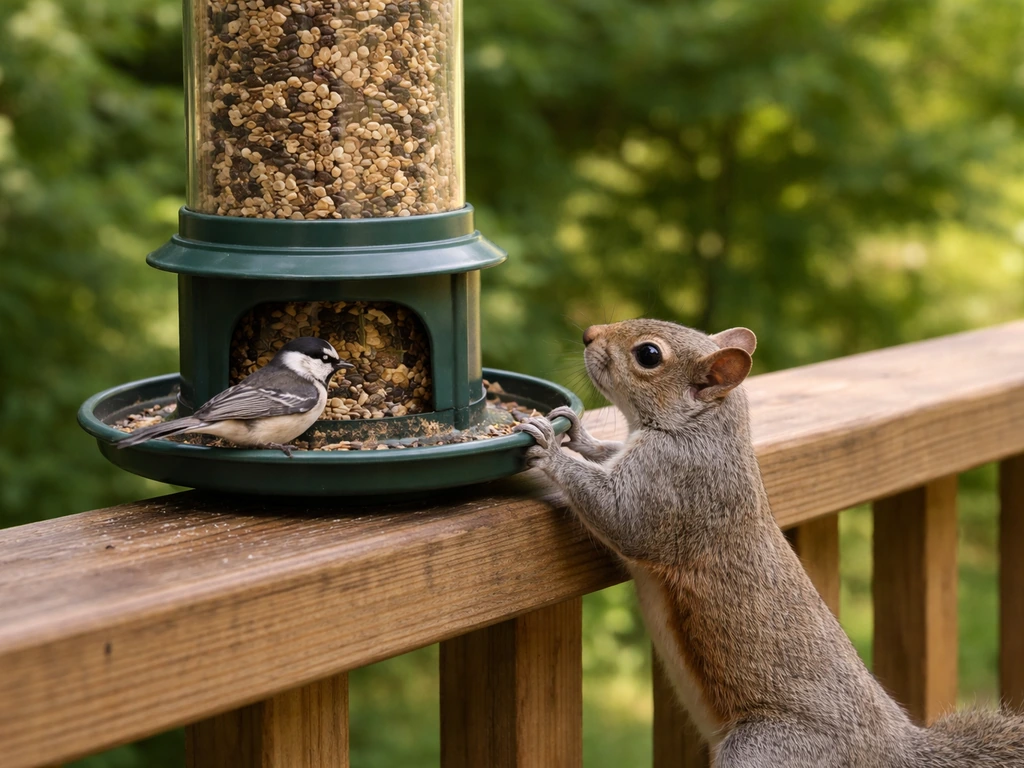
Smart feeders add deterrence options that traditional feeders don't have, but they're not magic. Here's an honest breakdown of what works and what doesn't.
Weight-sensitive seed port closures are the most common smart deterrent. Perky-Pet's smart camera squirrel-resistant feeder uses this approach: when something above a set weight lands on the perch, the ports close. It works, but the sensitivity requires tuning. Squirrels vary in size, and larger birds like blue jays and flickers can also trigger the closure. Perky-Pet explicitly recommends experimenting with the weight and sensitivity settings to find the right threshold for your local squirrel population. Plan on spending 15 to 30 minutes on this when you first set up the feeder.
For rats specifically, the most effective strategies are non-electronic: pole mounting with a smooth metal baffle at least 18 inches below the feeder, keeping seed off the ground by using a seed catcher tray, and never leaving uneaten seed in the feeder overnight. Smart cameras are useful for confirming whether rats are actually visiting (a lot of people assume without evidence), but the camera itself doesn't deter them.
A few practical tips that work regardless of feeder type:
- Mount on a smooth metal pole with a squirrel baffle. This is still more reliable than any electronic deterrent.
- Keep the feeder at least 10 feet from trees, fences, or rooftops that squirrels can leap from.
- Use safflower seed or nyjer instead of sunflower where possible. Squirrels dislike safflower, and nyjer is rarely targeted.
- Use the camera footage to identify when and how pests are accessing the feeder, then adjust placement or settings accordingly.
- If the smart feeder has a motion alert system with a siren (like the BirdReel BF11 Gen 2), try enabling it for nighttime hours when rats are most active.
DIY vs buying a ready-made digital feeder: what's worth upgrading
You can absolutely build a DIY version of a smart bird feeder setup. The most common approach is a standard wooden hopper feeder combined with an outdoor security camera or a repurposed indoor cam mounted under a weatherproof housing. This can cost less than $60 and gives you real-time video. But there are genuine gaps compared to purpose-built smart feeders.
| Feature | DIY Setup | Ready-Made Smart Feeder |
|---|---|---|
| AI bird identification | None (unless you add a third-party app manually) | Built-in via app (Birdfy, BirdReel, Birdbuddy) |
| Weatherproofing | Variable; depends on camera housing quality | Rated IP65 or IP67 from the factory |
| Camera-feeder integration | Separate devices; alignment takes work | Camera built into or mounted directly on feeder |
| Solar/battery system | Requires separate power solution | Integrated (dual solar + battery on BF11 Gen 2) |
| Squirrel deterrence | Manual only (baffles, placement) | Weight-sensitive closures plus manual options |
| Setup complexity | Higher; requires mounting, wiring, app pairing of separate devices | Moderate; single app, guided pairing process |
| Cost | $40 to $80 for a reasonable DIY setup | $80 to $200 for a quality smart feeder |
| Repairability | High; each component replaced independently | Lower; proprietary hardware often means full replacement |
My honest take: the DIY route is worth it if you already have a compatible outdoor camera and mainly want video monitoring. But if AI bird identification, integrated alerts, weatherproofed single-unit design, or solar charging are important to you, buying a purpose-built digital feeder is worth the price. The integration between camera, feeder, and app in products like the Birdfy and BirdReel is genuinely better than what most people can cobble together for the same price. Where DIY wins is repairability and long-term cost: if a $15 camera dies in year three of a DIY setup, you replace just the camera. With a proprietary smart feeder, a hardware failure often means a full replacement.
If you're on the fence, start with a ready-made digital feeder for the first season. You'll quickly learn what you actually use (camera alerts, probably yes; two-way audio, probably no), and that experience makes the second purchase much smarter. The best digital bird feeder is the one you'll actually maintain and use year-round, not the one with the most features on the box. If you want the best electronic bird feeder, focus on reliable video, app alerts, and weatherproofing that matches your climate The best digital bird feeder. If you’re comparing options, look for the best ai bird feeder models that combine reliable camera performance with accurate AI bird identification.
FAQ
Do I need 2.4GHz Wi-Fi, or will 5GHz work for the best digital bird feeder?
Most smart feeders expect 2.4GHz because they use lower power connections and a simpler networking stack. If your router uses a single SSID for both bands, try temporarily splitting them (or selecting the 2.4GHz network in the app) to avoid “connected but no video” problems.
How far can a digital bird feeder be from my router before it starts dropping footage?
Range varies by house materials, but if you get intermittent live view, the fix is usually closer placement or a mesh node positioned between the feeder and router. A practical check is to confirm your phone can stay connected to the 2.4GHz Wi-Fi in the feeder’s exact mounting spot (not just in the yard).
What’s the difference between local storage (microSD) and cloud storage in everyday use?
Local microSD usually means you can access recordings without paying a subscription, and you reduce the risk of losing footage if service changes. If you rely on local storage, note that cards still need occasional checks, since full cards can overwrite or stop recording depending on the device settings.
Why does my feeder detect birds but the app notifications are unreliable?
Most notification issues come from app permissions, motion sensitivity, or AI false positives from shadows and moving branches. Start by lowering sensitivity, setting “active hours,” and confirming the app has background permission so alerts still arrive when the phone screen is off.
Can I use the best digital bird feeder without any subscription at all?
Many setups can work fully without a paid plan if they include onboard recording and you rely on local playback. However, some models still offer enhanced AI or longer cloud retention behind memberships, so check whether AI identification and alert history require a subscription in your region.
Will 1080p camera quality be enough if birds are small and my feeder is farther from the lens?
1080p is typically plenty for identifying “what’s visiting,” but distant feeders reduce detail for species-level accuracy, especially with wide-angle distortion. If you want more identification confidence, mount the camera closer to the activity area and avoid aiming too high over the feeder.
What should I do in freezing weather to prevent camera fogging and battery drain?
Even with a cold-rated feeder, condensation is common when warm indoor air meets cold outdoor surfaces or during rapid temperature swings. Use the operating temperature range as a baseline, keep the feeder out of direct sprinkler spray when possible, and plan a weekly check of lens clarity and battery behavior during cold snaps.
How do I stop squirrels from triggering the smart feeder deterrent, or interfering with recordings?
If the deterrence uses weight-triggered closures, you’ll usually need to tune the sensitivity to your local squirrels while minimizing triggers from larger birds. Also add a properly sized baffle on a pole (below the feeder) and use a seed catcher tray to reduce “extra” food that encourages persistent visits.
Do smart feeders deter rats, or do I still need traditional pest control?
Smart cameras are mainly for confirmation, not deterrence. For rats, physical barriers are the priority: mount on a pole with a smooth baffle, prevent seed from accumulating on the ground using a catcher tray, and remove any leftover seed overnight.
Is solar really reliable for a best digital bird feeder in winter?
Solar-only designs often struggle with week-long overcast periods and short daylight, leading to low battery and fewer recordings. Dual-solar plus a substantial battery is the safer approach, and in very cold regions you may need to bring the unit inside periodically for charging.
Will a window-mounted smart feeder work in direct sun or cold snaps?
Window suction mounts can fail with heat cycling (direct sun) or when the glass and air are very cold. If you choose a window feeder, test suction in the coldest week and the sunniest part of the day, and consider an alternate mounting location if you see peeling or micro-movement.
Can I combine a smart camera feeder with a separate feeder for finches or other small birds?
Yes, and it’s often the best approach. A tube feeder near a camera-based hopper lets small birds access appropriate ports while the camera captures the broader activity at the main station, giving you better species coverage than relying on one feeder format.
How do I decide between AI bird identification and “activity monitoring” mode?
If you mainly want to know who’s visiting, AI identification accuracy matters, and you’ll benefit from tuning sensitivity and keeping birds well-framed. If you’re more interested in documenting frequency and timing, activity monitoring can reduce false species labels and make notifications less noisy.
Is DIY with an outdoor camera a good substitute for the best digital bird feeder?
DIY can be cost-effective if you already own a reliable outdoor camera and mainly want video. The main tradeoffs are reduced weatherproof integration, usually more manual setup, and fewer features like integrated detection, alerts, and feeder-specific mechanical deterrence that purpose-built units include.