The best AI bird feeder right now depends on what you actually want from it. If you want reliable species identification, a clear camera, and a decent app experience, the Birdfy Feeder AI Version and BirdBuddy 2 are the two strongest all-around choices for most backyard setups. If solar power and low-maintenance charging matter most, PerchMe and PeckCam's solar-first models deserve a close look. But before you spend $100 to $250-plus on any of these, it's worth knowing exactly what 'AI' means on a bird feeder, what the tradeoffs are, and what setup choices will make or break your experience.
Best AI Bird Feeder Camera: How to Choose and Set Up
Marcus Hendricks
22 Apr 2026
What 'AI bird feeder with camera' should actually mean (and what it doesn't)
Let's be direct: almost every 'AI bird feeder' on the market is really a camera-equipped feeder that sends footage to a cloud server for species identification. The camera detects motion, captures a clip or a burst of photos, and ships that data off to a classification model that returns a species name. Birdfy, for example, runs what it calls 'Netvue Cloud' inference: when the camera detects a bird, it captures video and photos and sends them to Netvue's classification module. BirdBuddy works the same way. PerchMe does too. None of these are doing real-time, on-device AI in the way a smartphone chip does face recognition. That matters because it means you need a reliable Wi-Fi connection, the cloud service has to be up and running, and your subscription status affects whether identification even works at all.
Birdfy actually documents this clearly in its help center: if you purchased the Birdfy Lite version, you need to subscribe to the Bird Detection service on Birdfy Cloud before you get species recognition at all. The base hardware can record video, but the AI label that tells you 'that's a Black-capped Chickadee' sits behind a paywall tier. BirdBuddy's privacy documentation similarly confirms that footage is stored in its cloud service once captured. This isn't necessarily a dealbreaker, but you should go in with eyes open. You're not buying a standalone device with a self-contained brain. You're buying into a hardware-plus-cloud subscription ecosystem.
What AI on a bird feeder genuinely does well is remove the need for you to identify every bird yourself. Over time, a well-trained model keeps a life list for you, sends push notifications when an unusual species visits, and builds a record of what birds showed up when and how often. That's real value for a backyard birder. Just don't expect it to work perfectly offline, and don't assume your subscription is set-and-forget. Check the plan details before you buy.
Key buying criteria: camera quality, AI detection, and usability
Not all cameras on smart feeders are created equal, and resolution alone doesn't tell the whole story. Here's what to actually compare:
Camera resolution and low-light performance
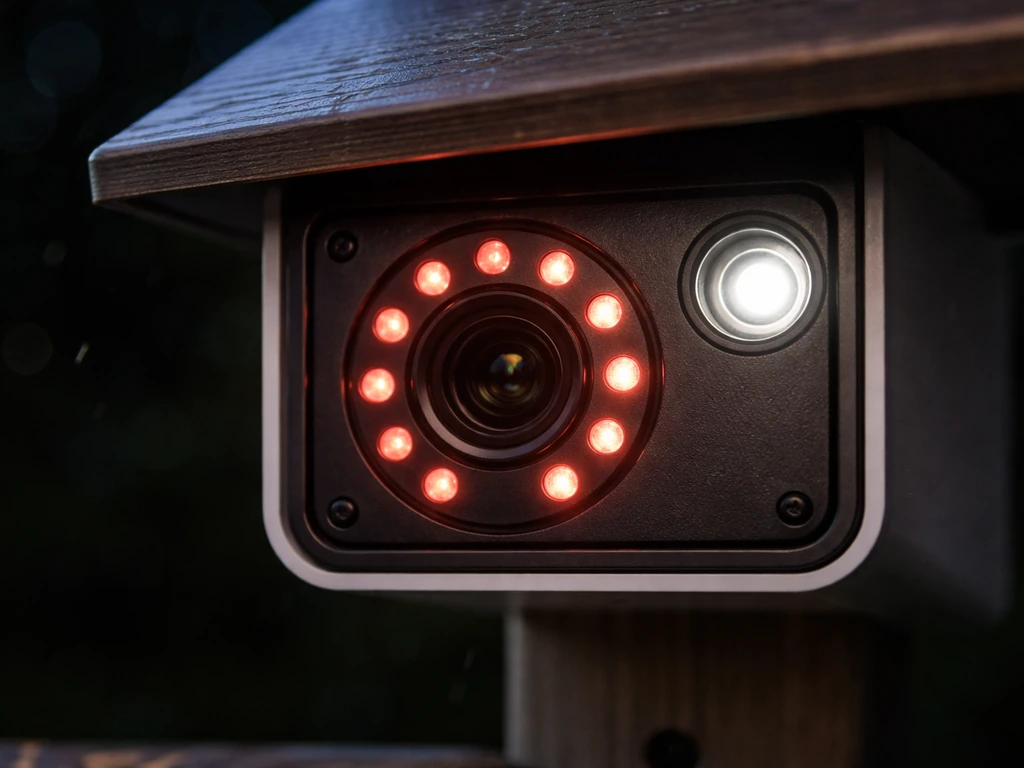
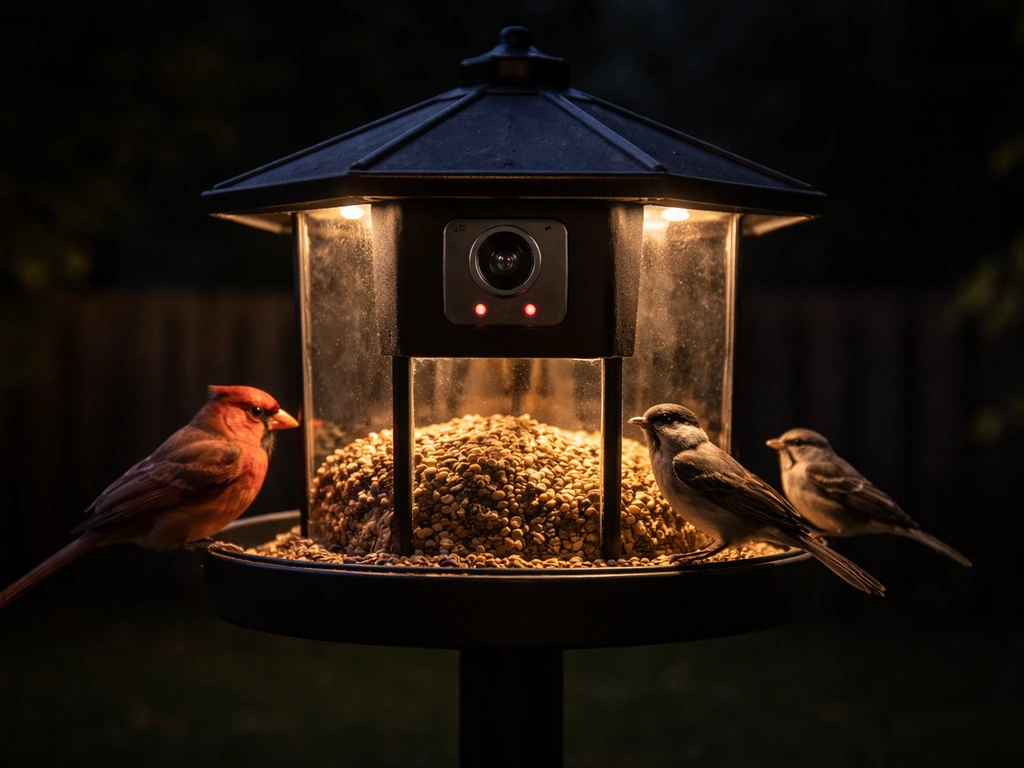
Birdfy's standard camera runs at 1080p with both infrared and white-light night illumination. BirdBuddy 2 steps up to Full HD with HDR, which helps significantly in the mixed lighting conditions you get at a backyard feeder (bright sky behind a shadowed perch, for example). PerchMe goes to 2K and specifically markets 'true color night vision,' meaning color imagery in low light rather than the black-and-white you get from IR-only systems. BeakView uses 8 infrared lights at 850nm with a stated night vision distance of 7 meters, which is solid for a budget option but gives you monochrome footage after dark. For species ID accuracy, color detail matters: many species differ by subtle plumage color, so a camera that washes everything to grayscale at dusk will produce more misidentifications.
AI species database size and accuracy
Birdfy claims over 6,000 bird species in its recognition database. PerchMe claims over 11,000. Bigger databases sound better, but the number that actually matters is how well the model performs on the 30 to 50 species you're likely to see in your yard. Real-world community reports on Birdfy note that the same clip can come back labeled as multiple different species across repeated identifications, which points to low model confidence on partial views or occluded birds. That's a known limitation of cloud-inference systems: if the bird is partially blocked by a perch or feeder housing, the model is essentially guessing from a sliver of plumage. BirdBuddy has a similar edge case where its AI decides whether a visit is worth sending as a postcard at all, and some users report missed recordings when the AI doesn't score the visit as interesting enough.
App experience and notification quality
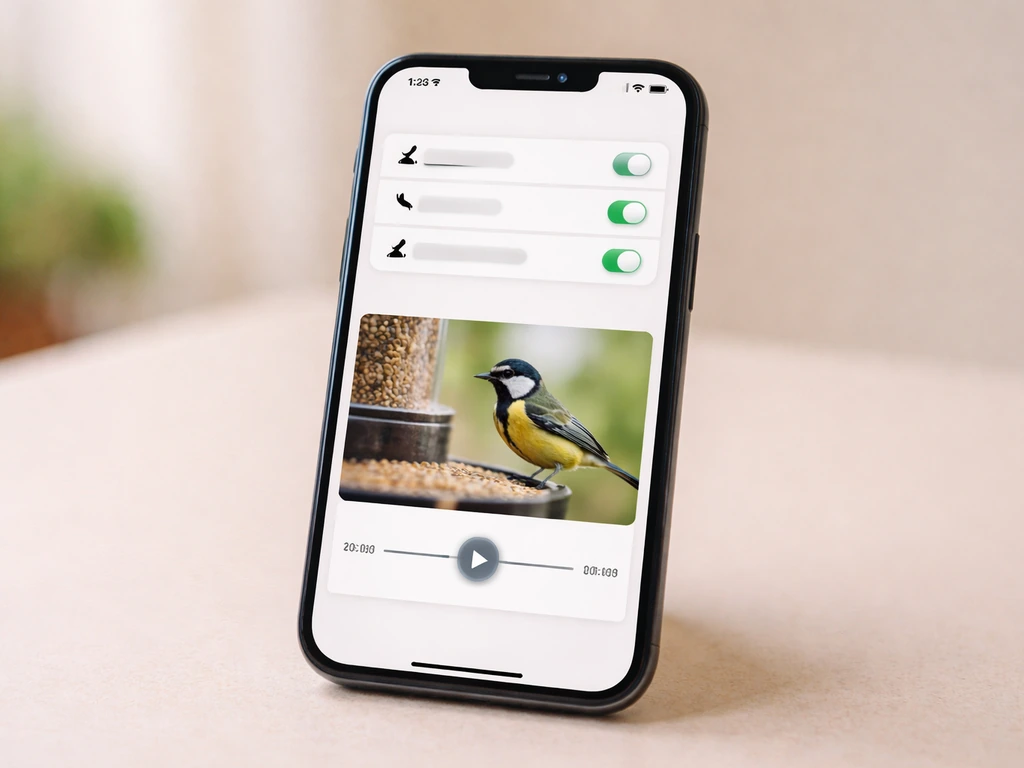
The app is where you'll spend most of your time with these devices, so it matters as much as the hardware. Birdfy's app stores recorded content in the cloud for 30 days by default, and extending clip length requires a separate Moment Video Recording subscription. BirdBuddy's app is widely praised for its 'postcard' design, which makes each bird visit feel like a collectible moment rather than raw security-camera footage. PerchMe ties its AI recognition directly to the notification and capture experience, so you get species-labeled alerts rather than generic motion alerts. Look for apps with a clean species log, easy sharing, and customizable notification sensitivity before committing.
Choosing the right feeder type and placement for your yard and birds
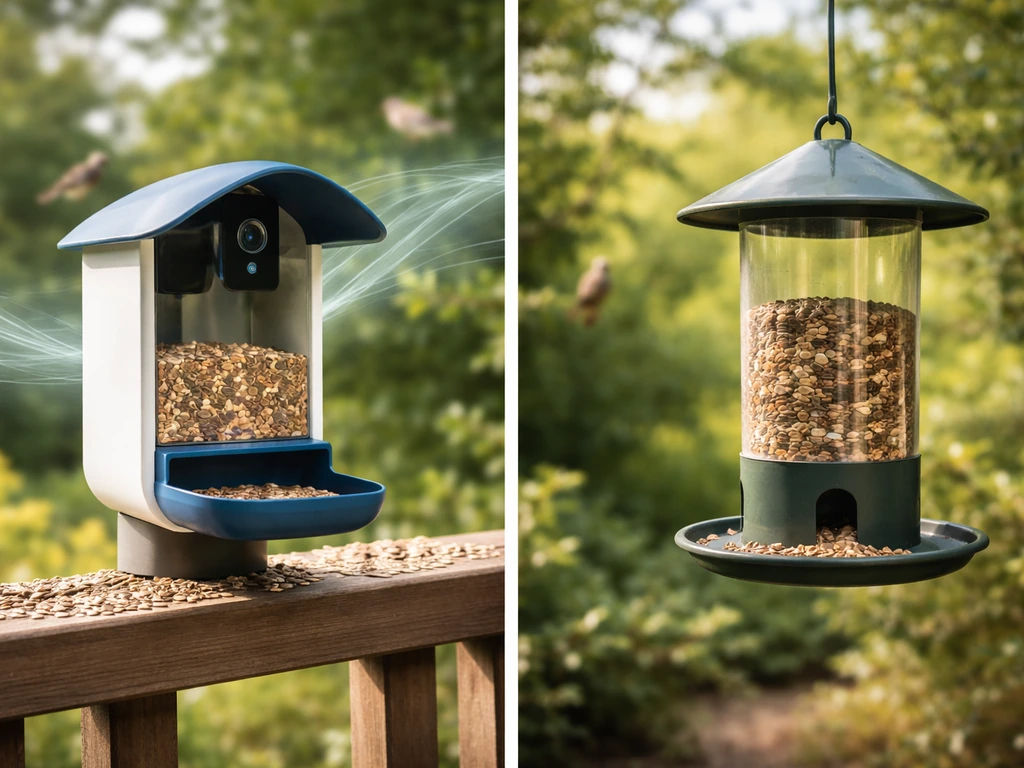
AI cameras don't change the fundamental rules of feeder selection. The camera is an add-on to a feeder that still needs to attract birds in the first place. Most AI feeders are hopper-style or platform-adjacent, meaning they work well for a broad range of perching birds like cardinals, chickadees, nuthatches, titmice, and house finches. If your target birds are woodpeckers, orioles, or bluebirds, you'll likely need a separate suet cage, oriole feeder, or mealworm dish alongside your AI camera feeder, since most smart feeders aren't designed for those species' preferred food types.
Pole-mounted placement at roughly 5 to 6 feet off the ground, positioned 10 to 12 feet from a shrub or tree (close enough that birds feel safe approaching, far enough that squirrels can't leap directly to it), is the sweet spot for most backyards. Window-mounted AI feeders work well for apartment balconies or tight spaces, and they put the camera remarkably close to birds for portrait-quality shots, but they limit the species range since only bolder, smaller birds will approach a window. If you're birding in winter, consider that most AI feeders' batteries drain faster in the cold and that suet and high-fat seed mixes will outperform standard mixed seed for attracting winter species like juncos, goldfinches, and downy woodpeckers.
For people targeting specific species, placement and food choice will do more for your species list than any AI algorithm. Put out nyjer seed in a tube feeder nearby to pull in goldfinches and pine siskins, then let your AI camera feeder handle the identification and logging at the main station. The two work better together than either does alone.
Power, connectivity, privacy, and app tradeoffs
Battery vs. solar
Birdfy's camera module runs on a built-in 9,000 mAh rechargeable lithium-ion battery, and Birdfy's own documentation says that adding their solar panel means the feeder 'will hardly need to be charged.' BeakView rates its battery life at 45 to 75 days depending on bird activity (more detections drain it faster). PeckCam's flagship Triple Solar models take this furthest, with multiple panels and a company claim that most users go entire spring-through-fall seasons without needing to bring the unit inside to charge. PerchMe is also solar-powered. If your feeder is going somewhere inconvenient to reach, like a back-garden pole or a high window ledge, solar is genuinely worth the premium over a battery-only model you'll need to pull down every 4 to 8 weeks.
Wi-Fi dependency and offline limitations
Every major AI feeder currently requires Wi-Fi to run cloud-based species identification. If your feeder is going beyond your router's range, you'll need a mesh node or Wi-Fi extender nearby, or you'll get video recording without AI labeling. Some models support local SD card storage as a fallback (Birdfy documents both cloud and SD card storage options), so at least you won't lose footage entirely during connectivity drops. But real-time species identification requires the cloud pipeline to be working. There is no true offline AI identification in any consumer bird feeder I'm aware of as of spring 2026.
Privacy and cloud data
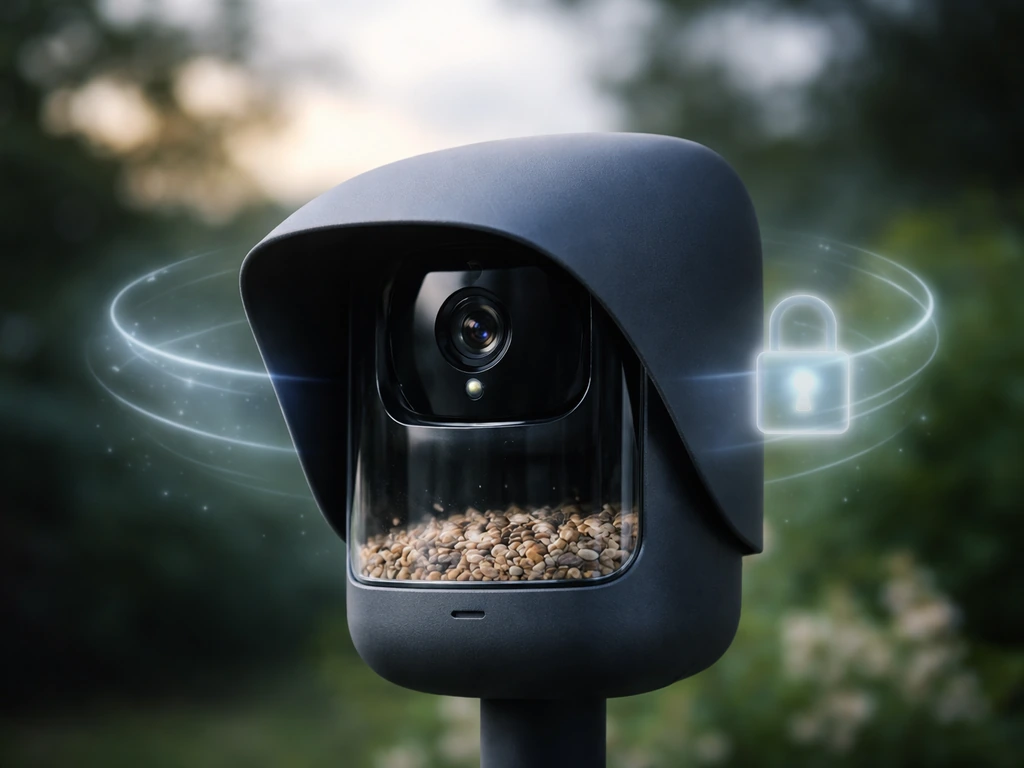
Every AI feeder sends footage to a third-party cloud server. BirdBuddy uses AWS CloudHSM and AWS Key Management Service for encryption and secure key management, per its privacy policy. PerchMe's parent company also uses AWS as its cloud provider. Birdfy defaults to 30-day cloud retention with no indefinite storage. If you're privacy-conscious, look for brands that clearly state their data retention period, offer local SD card storage as an alternative, and let you delete your account and data on request. None of these feeders can be operated fully offline with AI features intact, so if cloud data is a hard no for you, a non-smart feeder is the honest answer.
Weatherproofing and pest-proofing: what the ratings actually mean
IP ratings are the most useful weatherproofing spec to compare. BirdBuddy 2's camera module carries an IP67 rating, which means it's dust-tight and can survive submersion in up to 1 meter of water for 30 minutes. BirdBuddy also uses ASA plastic for the housing, which holds up better to UV exposure than standard ABS. Birdfy and PerchMe both cite IP65, which means dust-tight and protected against low-pressure water jets (heavy rain and garden hoses) but not submersion. The EZ BirdFeed feeder reviewed by TechRadar also carries IP65. For backyard use in normal weather, IP65 is perfectly adequate. If you're in a region that gets heavy, sustained rainfall or you're mounting in a truly exposed location, BirdBuddy's IP67 gives you more margin.
Pest-proofing is a separate issue from weatherproofing, and most AI camera feeders are designed with aesthetics first. That means squirrels are a genuine problem. A baffle on your pole is the single most effective solution and it costs about $20. Some feeders have a weight-sensitive perch that closes the seed port when something heavier than a songbird lands, but camera feeders that integrate this feature are rare and pricey. If squirrels or raccoons are a serious problem in your yard, add a pole-mounted baffle as a non-negotiable part of your setup rather than relying on the feeder itself to solve it. Rats are a ground-feeding issue: clean up spilled seed regularly and consider a seed tray with a catch basin to minimize scatter.
Setup tips that actually improve AI identification accuracy
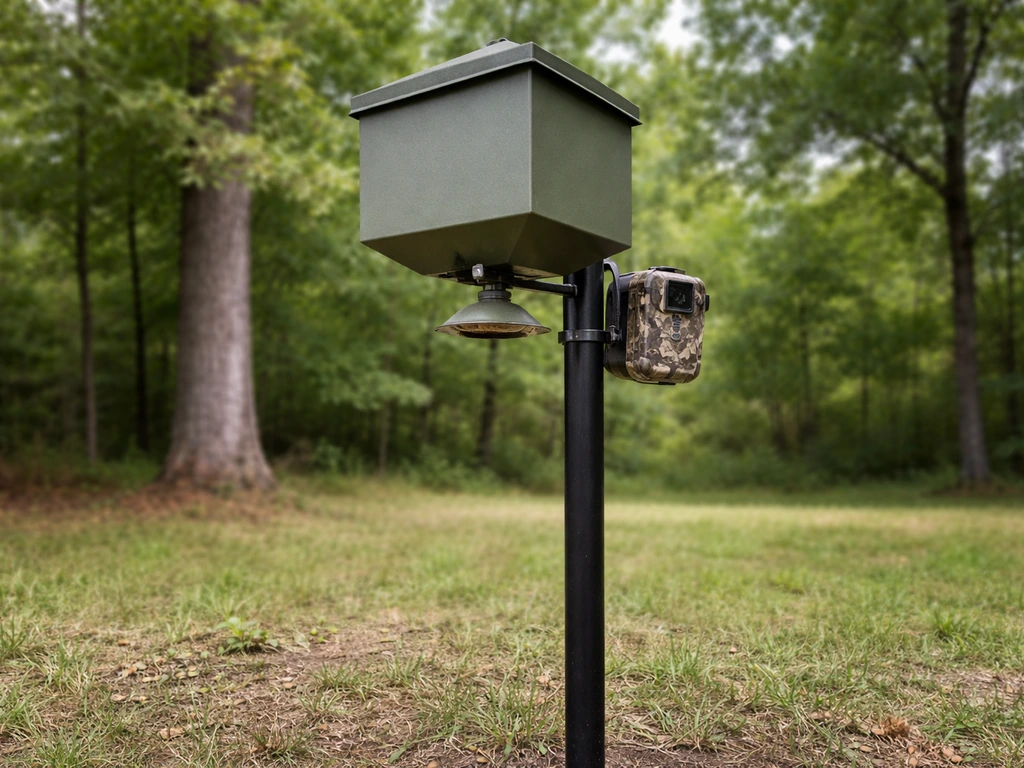
Where and how you mount the feeder matters more than most people expect for identification quality. Here are the adjustments that make a real difference:
- Mount the camera so it faces slightly downward at the perch, not straight on. A slight downward angle gives the AI a clearer dorsal view of the bird's plumage, which is how most species are actually identified in field guides.
- Keep the camera lens at roughly 4 to 5 feet off the ground for small songbirds. Too high and you get a poor angle; too low and approaching cats or squirrels trigger constant false detections.
- Position the feeder so it has a neutral, non-reflective background behind it (a fence, a shed wall, or dense foliage). A busy, bright background like an open sky or bright windows causes the camera to overexpose the bird itself.
- Maximize ambient light from the front. Face the camera north or east so morning sun illuminates the perch without backlighting the bird. Afternoon west-facing setups almost always produce blown-out footage.
- Clean the lens weekly. Seed dust, spider webs, and water spotting reduce image clarity enough to trip up the AI on subtle plumage details.
- Adjust detection sensitivity in the app if you're getting a lot of leaf and branch false triggers. Most apps let you tune this, and reducing false triggers also means the cloud AI processes fewer junk clips, leaving more bandwidth for real visits.
- Let the AI run for 2 to 4 weeks before judging accuracy. Most models improve as they build a local visit history and your app accumulates a profile of your yard's regular species.
When the AI mislabels a species, most apps let you correct the identification manually. Always do this. Birdfy, BirdBuddy, and PerchMe all use user feedback signals to improve classification over time. If you skip corrections, the same bird keeps getting logged wrong. Partial views (a bird half-hidden behind a perch rod) are the most common cause of misidentification, and there's no software fix for that: the solution is physical, meaning repositioning the feeder so the perch is more open and the bird's body isn't cut off by structural elements.
How to choose between the top options
Here's a direct comparison of the main AI camera feeder options worth considering today, organized around the specs that actually matter for buying decisions:
| Feeder | Camera | Night Vision | IP Rating | Power | Species Database | Cloud Storage Default |
|---|---|---|---|---|---|---|
| Birdfy AI Version | 1080p | IR + white-light | IP65 | 9,000 mAh battery + optional solar | 6,000+ species | 30 days, SD card optional |
| BirdBuddy 2 | Full HD + HDR | Not specified as color night vision | IP67 | Battery (rechargeable) | Not publicly specified | Cloud, deletion on request |
| PerchMe | 2K | True color night vision | IP65 | Solar-powered | 11,000+ species | Cloud (AWS-based) |
| PeckCam Triple Solar | 2K | IR night vision | Not publicly confirmed | Triple solar panels | AI ID included | Cloud + app |
| BeakView | HD | 8x 850nm IR, 7M range | Not specified | Battery 45-75 days + optional solar | AI ID included | Cloud + SD card |
Best for most backyard birders: Birdfy AI Version
If you want the most documented, most community-tested AI feeder available, Birdfy is the answer. If you want the best Bluetooth bird feeder, look for models that let you connect and manage feeder features without relying on a constant cloud link. If you want a quick shortcut, look at the best electronic bird feeder options that balance camera quality, reliable Wi-Fi, and an easy app experience. If you want the best digital bird feeder overall, focus on reliable species identification, a strong camera in your lighting, and an app that makes corrections easy. The app is mature, the help documentation is thorough, there's an SD card fallback for local storage, and the solar panel add-on solves the charging hassle. The main caveat is the subscription model: make sure you understand which plan unlocks full AI species recognition before you buy, especially if you're considering the Lite version. For most people, the best automatic bird feeder is the one that delivers accurate species ID with reliable connectivity and an app experience you will actually use.
Best camera and app experience: BirdBuddy 2
BirdBuddy 2's HDR camera, IP67 rating, ASA plastic construction, and postcard-style app make it the best choice if camera quality and the joy of the interface matter most to you. It's the feeder I'd recommend to someone who wants to share bird photos with family or use it as an engaging hobby rather than just a data-logging exercise. The tradeoff is that BirdBuddy's AI can sometimes decide a visit isn't worth recording, which means you may miss occasional clips.
Best for low-maintenance charging: PerchMe or PeckCam
If your feeder location is hard to reach, or you just don't want to think about charging, go solar from the start. PerchMe's 2K color night vision is an added bonus. PeckCam's Triple Solar is the most aggressive solar implementation on the market right now, and the brand's claim of season-long independence from manual charging is credible given the panel configuration. For winter use in northern climates, note that solar output drops significantly in December and January, so either supplement with a battery backup or plan for occasional manual charging during the darkest months.
Best budget starting point: BeakView
BeakView won't match BirdBuddy or Birdfy on app polish or AI accuracy, but it delivers 45 to 75 days of battery life, a reasonable IR night vision range, and optional solar expansion at a lower entry price. If you're testing whether an AI bird feeder fits your lifestyle before committing to a premium model, it's a fair starting point.
When a non-smart feeder is the better call
AI camera feeders are genuinely useful, but they're not the right choice for everyone. If your primary goal is attracting the maximum number of species (woodpeckers, bluebirds, orioles, hummingbirds), you'll get more value from investing in species-specific feeders, the right food, and optimal placement than from a camera-equipped hopper feeder. A quality non-smart hopper or platform feeder paired with a separate wildlife camera is also a legitimate DIY alternative that keeps hardware and software separate and avoids subscription costs entirely. Related to this, if connectivity at your feeder location is poor, the AI features simply won't work reliably, and you'd be better served by the best Wi-Fi bird feeder option you can get solid signal to, or by a Bluetooth-based or automatic feeder that operates more independently.
The AI bird feeder category is still maturing quickly, and the gap between marketing claims and real-world performance narrows every season. The practical advice: pick the model whose power system matches your maintenance tolerance, whose camera specs match your lighting conditions, and whose subscription terms you can live with long-term. If you want the simplest path to the best virtual bird feeder experience, focus on reliable Wi-Fi, strong camera detail, and a subscription plan you can actually keep using. Set it up with the placement and angle tips above, give it a month to calibrate, and you'll have a genuinely rewarding tool for learning your yard's birds by name.
FAQ
Will the best AI bird feeder still identify species if my Wi-Fi drops or is slow?
Most models can keep recording video when Wi-Fi is weak, but species labels require the cloud workflow. To minimize confusion, place the feeder where you still get a stable signal (ideally on the same floor as your router), and rely on any SD fallback only for later review, not for instant “bird by bird” identification.
Is there a way to use an AI bird feeder with local storage only, without any cloud requirement?
No AI bird feeder does full offline species identification in the consumer category, because classification depends on the cloud inference step. If you want an “always works” setup, the practical approach is either choose a model with SD card recording for footage during outages, or use separate local solutions like a wildlife camera plus manual identification later.
How should I correct misidentifications on the app so the model actually improves?
Manual corrections help most when you correct the label using a clear view of the whole bird, not a partial occlusion. If you repeatedly correct the same mislabel for half-hidden positions, the underlying issue is usually the physical sightline, so adjust mounting angle or move the feeder so the perch does not block the bird.
What’s the most common reason an AI bird feeder keeps mislabeling birds even when the camera is “good”?
If your feeder camera is too far away or the bird is silhouetted against a bright background, accuracy drops even with higher resolutions. Try reducing backlight issues by positioning the feeder so birds face the camera more naturally, and avoid mounting so the sky is directly behind the perch during peak visit times.
Which species might the best AI bird feeder struggle to log accurately because of food or design limitations?
If your yard attracts mostly perching songbirds, the feeder will usually capture useful data, but the feeder’s food style still determines who comes. For hummingbirds, woodpeckers, orioles, or bluebirds, plan to use their preferred dedicated feeders nearby and let the AI camera feeder cover the general “main station” species.
How do I choose between IR-only night vision and true-color night vision for bird identification?
Start by checking night performance in the exact conditions you have (clear sky vs heavy dusk shadows). If you see lots of grayscale footage at dusk, you will get more “low confidence” guesses, so prioritize models that use true-color low-light capture when your yard has frequent dusk visits.
Why does my AI bird feeder sometimes miss visits, even though the camera is turned on?
AI feeders can treat visits as “not interesting” depending on motion score thresholds, which means fewer postcards or missed clips. In the app, raise sensitivity cautiously, then test for a day, because higher sensitivity can also increase notifications and storage usage.
What subscription or plan mistakes should I avoid when buying the best AI bird feeder?
Subscribe if you want the species identification features, but double-check the plan tier match for your exact hardware version (for example, starter or “Lite” variants often require an additional detection service). The buying mistake is assuming all bundled models include full detection out of the box.
Will solar-powered AI bird feeders work reliably in winter where it’s cloudy and dark for weeks?
Yes, and it is often worth doing for winter. Solar output drops in December and January in northern climates, so plan for battery fallback, an external battery plan, or occasional manual charging during the darkest months to prevent a “dead camera” gap.
What’s the most reliable way to stop squirrels from ruining footage and emptying the feeder?
For squirrels, the most effective fix is a pole-mounted baffle that blocks access to the seed port. Weight-sensitive perches exist, but they are less common and can be expensive, so treat the baffle as the baseline rather than the optional upgrade.
How can I manage privacy settings and data retention on the best AI bird feeder cameras?
Many apps will let you delete your data, but make sure you understand both video retention and account deletion behavior. If you’re privacy-conscious, look for a clear retention window and a straightforward deletion workflow, then verify it after setting it up once.