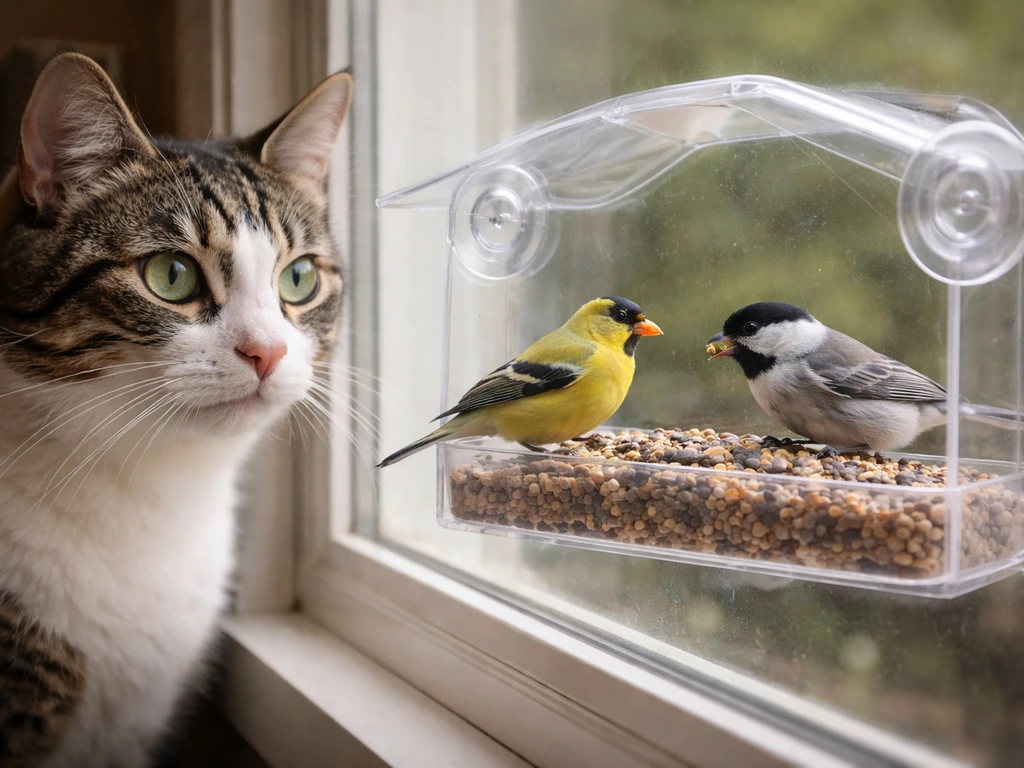
The window feeders Reddit recommends most consistently are clear acrylic suction-cup trays in the $15–$30 range, with at least two large suction cups, a drainage hole or two in the seed tray, and enough platform space for small-to-medium birds to land comfortably. If you're shopping, the best bird feeder window options are the ones that mount securely and keep seed from getting soggy window feeders. Clean the glass thoroughly before mounting, warm the cups with hot water in cold weather, and fill the tray completely so birds notice it from a distance. Do those three things and most of the common Reddit horror stories (feeder shattering on the ground, birds ignoring it for weeks) don't happen to you.
Best Window Bird Feeder Reddit Guide: Pick, Mount, Fix

Marcus Hendricks
26 Jun 2026
What Reddit actually agrees on for window feeders
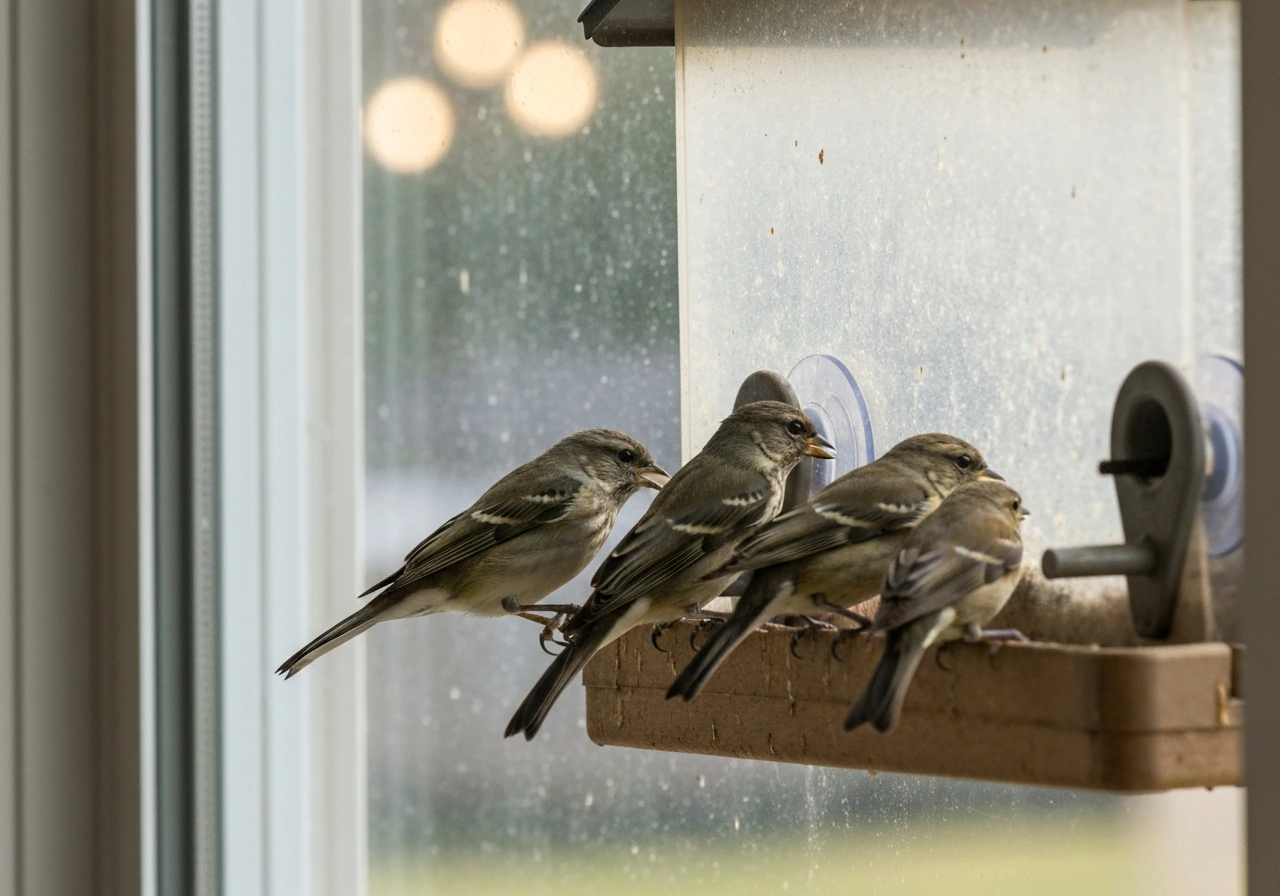
Scroll through enough Reddit threads on r/birding and r/backyardbirds and a few clear patterns emerge. People love window feeders for the close-up view, but they also complain about them more than any other feeder type. The complaints are almost always the same: the thing fell off, birds ignored it for two weeks, or seed turned into a soggy mash. The good news is that nearly every complaint has a known fix, and the community has basically crowdsourced a reliable setup checklist at this point. On Reddit, the discussion centers on choosing and setting up window feeders to address common problems like them falling off, birds ignoring them, or the feed getting ruined.
The most upvoted advice across multiple threads boils down to this: suction cups fail because of dirty glass or cold glass, not because suction cups are fundamentally broken. A $17 feeder that immediately falls off and shatters (a real story from Reddit) almost always traced back to skipping the cleaning step or mounting on a textured or coated window surface where suction cups don't grip. The fix costs nothing.
The other big Reddit consensus is that birds need time and visual cues to discover the feeder. Scattering a little seed on the ground directly below the window, filling the tray all the way to the rim, and removing clutter from inside the window (reflections confuse birds) all speed up that discovery process dramatically.
There's also a useful debate on Reddit about whether clear/transparent window feeders are more 'ethical' than opaque ones. The practical answer: a feeder mounted directly on the glass actually reduces window-strike risk because it breaks up the mirror reflection birds would otherwise fly into. blank" rel="noopener noreferrer">The closer to the glass, the safer, because a bird that does bump the glass at 2 inches of clearance can't build up enough speed to be seriously hurt. That's the science-backed safety rule that keeps popping up in Reddit threads, and it's worth internalizing before you even pick a feeder style.
Pick the right window feeder type for your birds
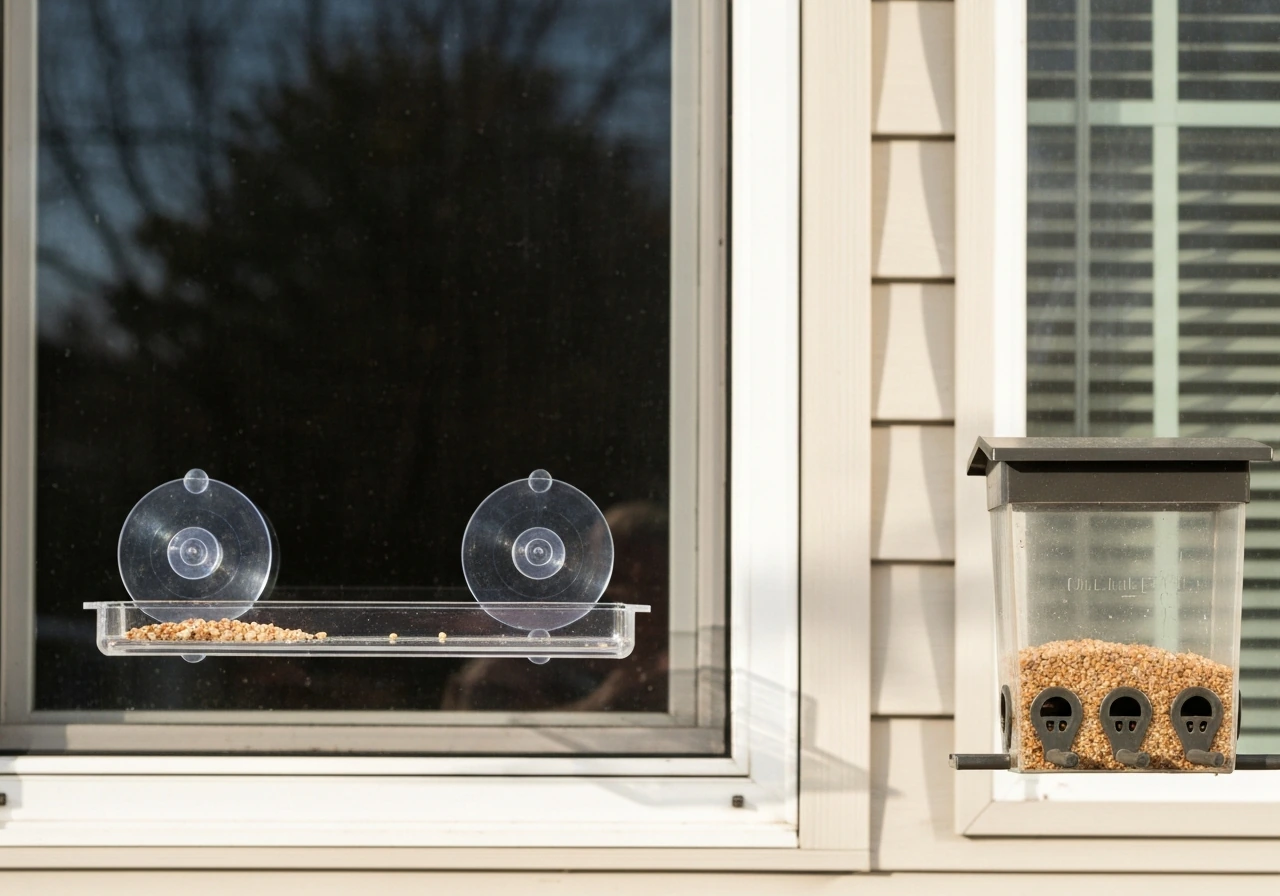
Not all window feeders work equally well for all birds, and matching the style to your target species is one of the most practical things you can do upfront. A better crafter window bird feeder can be a great next upgrade once you have the right mounting and food choices dialed in for your birds. Here's how the main types stack up:
| Feeder Type | Best For | Weak Points | Typical Price |
|---|---|---|---|
| Clear acrylic tray (suction cup) | Chickadees, finches, sparrows, nuthatches | Can feel small for cardinals or jays | $15–$25 |
| Hopper-style window feeder (suction cup) | Finches, titmice, small mixed-seed birds | Harder to clean; seed can clump inside hopper | $20–$35 |
| Wide-platform window feeder | Cardinals, mourning doves, blue jays | Larger footprint; needs stronger attachment | $25–$45 |
| Window suet cage (suction or adhesive) | Woodpeckers, nuthatches, creepers | Limited to suet only; birds must cling vertically | $10–$20 |
| One-way mirror / privacy-film feeder | All small-to-medium birds; great for indoor viewing | Pricier; film application adds a step | $30–$60 |
Cardinals deserve a specific mention because they come up constantly in Reddit discussions. They're bigger, shyer, and more hesitant at window feeders than smaller birds. A tray-style feeder with a wide, flat platform gives them enough room to land without feeling cramped, but even then, some cardinals need a gradual acclimation period before they'll use it reliably. A nearby ground-level platform feeder running at the same time can help bridge the gap while they build confidence. Blue jays and mourning doves have similar hesitation and similar solutions: more platform space, and patience.
Woodpeckers and brown creepers need a vertical feeding surface, so a standard tray feeder doesn't work for them. A suction-mounted suet cage mounted on the same window pane is the cleanest solution. You can run both a tray feeder and a suet cage side by side on the same large window to cover both groups simultaneously.
Attachment and placement: how to mount so it actually stays on
This is the section that prevents the most Reddit disaster stories. Follow these steps in order and you'll have a feeder that stays put through rain, summer heat, and most winter cold.
- Clean the glass with isopropyl alcohol and a lint-free cloth. Dish soap leaves a residue that kills suction. Alcohol evaporates clean.
- Let the glass dry completely before mounting. Even a few seconds of residual moisture weakens the seal.
- In cold weather (below 40°F / 4°C), run hot tap water over the suction cups for 30 seconds to make them pliable before pressing them to the glass. Cold cups are stiff and don't conform to the surface.
- Press firmly in the center of each cup, then twist slightly to expel air. Don't just push from the edge.
- Avoid windows with textured glass, window film coatings, or frosted glass. Suction cups need a smooth, flat surface to hold.
- Check the cups daily for the first week, especially after temperature swings. Re-press any that feel loose before they fail completely.
- If you're in an apartment above ground level, buy a feeder with a backup retention feature: either a ledge hook, a window rail system, or adhesive pads in addition to suction cups. A shattered feeder falling from a second story is a Reddit story you don't want to repeat.
Placement height matters more than most people think. Eye level from your main viewing spot inside is ideal for your enjoyment, but the bird's comfort matters too. A feeder placed directly on a window at mid-height (around 4–5 feet from the ground) gives birds a clear approach path from nearby trees or shrubs.
If you have a bush or small tree within 10 feet of the window, birds will use it as a staging perch before coming to the feeder, which greatly speeds up adoption. The worst placement is a feeder on a bare window with no nearby cover: small birds feel exposed and take much longer to commit.
If you are also trying to keep cats from reaching the feeder, choose a mount that stays secure and position it so the animals cannot knock it down or reach the seed best window bird feeder for cats.
On the window-strike safety point: if your feeder sits right on the glass, birds approaching it can't get a running start, so a strike at close range is rarely fatal. Problems arise when feeders are positioned 3–10 feet from the glass, because birds can reach dangerous speeds in that gap. Either mount directly on the window (within 2 inches of glass) or place feeders more than 30 feet away. That two-zone rule is the one Reddit and ornithologists both agree on.
Best seed and food choices and what birds they attract
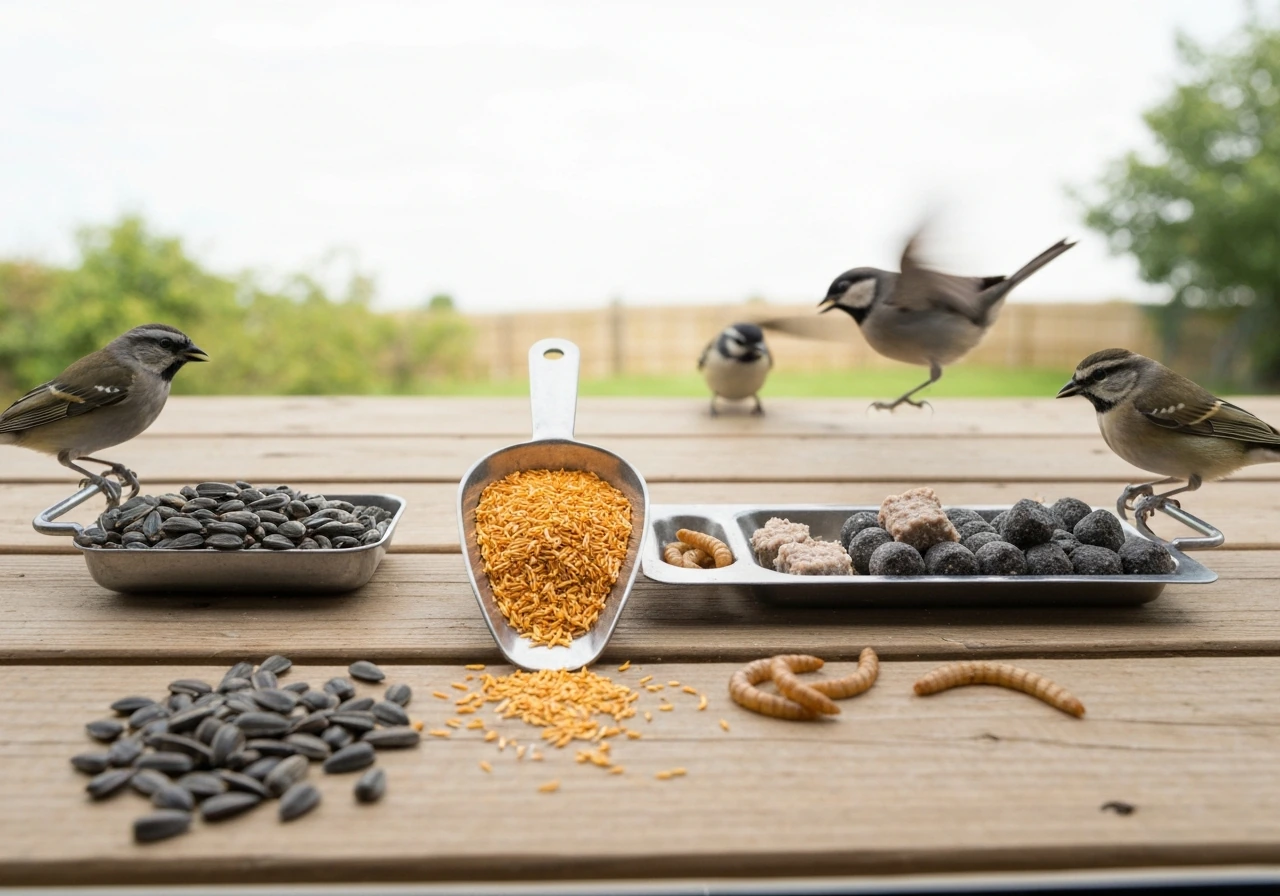
What you put in the feeder determines which birds show up, full stop. If you want the best results, look for a window feeder that fits your target birds and your window setup, since there is no single best option for everyone best window feeder. A lot of beginners fill window feeders with cheap mixed seed and then wonder why they're only getting house sparrows and starlings. The seed choices below will get you more interesting visitors.
| Food Type | Top Birds Attracted | Window Feeder Notes |
|---|---|---|
| Black-oil sunflower seeds | Cardinals, chickadees, nuthatches, finches, titmice | Best all-around choice; works in tray or hopper feeders |
| Safflower seeds | Cardinals, chickadees, mourning doves | Squirrels and starlings typically avoid it—a Reddit favorite for pest reduction |
| Nyjer (thistle) seed | Goldfinches, house finches, pine siskins | Needs a mesh or fine-port feeder; spills quickly in open tray |
| Peanut pieces (no shell) | Blue jays, nuthatches, woodpeckers, titmice | High fat; birds go through it fast; keep tray dry to prevent mold |
| Suet cake | Woodpeckers, brown creepers, nuthatches | Needs a cage-style feeder; not suitable for open seed tray |
| Mealworms (dried or live) | Bluebirds, robins, wrens | Use a deep-sided tray so they don't blow away; high appeal in spring |
| Fruit (orange halves, grape jelly) | Orioles, catbirds, mockingbirds | Specialized dish or cup attachment needed; seasonal (spring-summer) |
For a window tray feeder that you want to attract the widest variety of birds, black-oil sunflower seeds alone will outperform any budget mixed seed blend. If you specifically want cardinals, adding safflower or keeping a separate ground-level platform with mixed seed (sunflower, corn, peanut pieces, millet) alongside the window feeder works well. Reddit users running tube feeders report that cardinals often prefer to drop down to a tray or ground surface, so a two-feeder setup covers that behavior naturally.
Weather, cleaning, and maintenance that prevent messy failures
Window feeders are small, which means seed gets consumed fast but also goes bad fast. A tray sitting in rain or direct sun can turn soggy in 24 hours, and wet seed grows mold that's genuinely dangerous to birds. A few drainage holes in the tray floor help a lot, but they don't eliminate the problem on their own. Here's what actually works:
- Refill in small amounts: only put in 1–2 days worth of seed at a time. It's slightly more work but eliminates mold almost entirely.
- Clean the tray every 1–2 weeks with a 9: 1 water-to-bleach solution or a bird-safe feeder cleaner. Rinse thoroughly and dry before refilling.
- In winter, check the feeder after freezing rain or snow. Ice can lock seed in place and prevent birds from feeding. A quick wipe clears it.
- Suction cup performance degrades in direct summer sun over time. UV exposure makes cups brittle. Rotate them to the shaded side of the window if possible, or replace cups each season (most feeders sell replacement cups cheaply).
- Condensation on the inside of cold-weather windows can cause water to run down the glass onto the feeder. A small drip edge or wiping the window weekly reduces this.
- Don't use petroleum-based lubricants on suction cups—it degrades the rubber. A tiny drop of food-grade vegetable oil or plain water works fine to re-energize a slightly stiff cup.
In winter specifically, consider moving to a suet-only feeder on the window. Suet doesn't freeze into an unusable block as quickly as seed, it's higher in calories so birds prioritize it in cold weather, and the cage-style holder is much easier to remove, swap, and rehang than a full seed tray. Some birders run both: a suet cage through January-February and switch back to a seed tray when temps reliably stay above freezing.
Common issues and how to fix them
Birds won't use the feeder
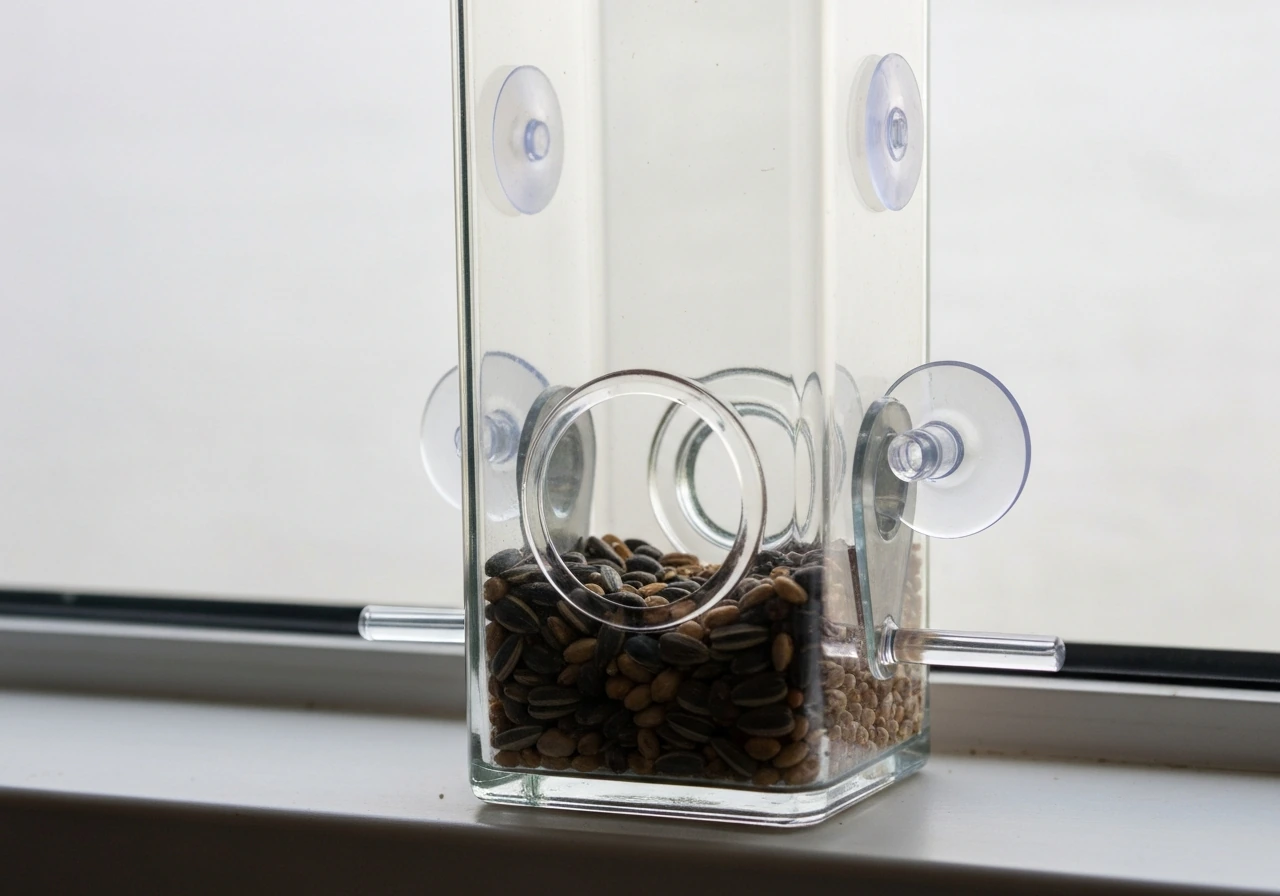
This is the most common complaint, and it's almost always a discovery problem, not a rejection. Birds don't know the feeder exists yet. Fill it to the brim so it's visually prominent, scatter a small handful of seed on the ground directly below the window, and remove any objects from inside the window that create reflections or movement (computer screens, fans, bright lamps). Give it 1–2 weeks. If nothing has visited after two weeks, try moving the feeder to a different window that has nearby tree or shrub cover within 10–15 feet.
Suction cups keep failing
Nine times out of ten this is a glass-prep issue. Alcohol-clean the glass, warm the cups, and press firmly. If it still fails, check whether your window has a low-E coating, privacy film, or a textured surface. Suction cups struggle on all three. The fix is to either switch to an adhesive-pad mounting system (some feeders use both), use a window-ledge rail that hooks over the top of the frame rather than relying on suction alone, or find a different smooth-glass window. Undersized suction cups are also a real problem: a feeder heavier than about 1 lb when full needs cups at least 3 inches in diameter. Cheap feeders often include 2-inch cups that are simply inadequate for any weight.
Feeder falls off in cold weather
Cold makes suction cups stiff and reduces their ability to conform to the glass surface. The hot-water pre-treatment helps at mounting time, but temperature swings overnight can still break the seal. If you're in a climate with hard winters, look for feeders that include a secondary attachment method (a hook over the window frame, a window track mount, or adhesive foam pads). Running a pure suction-cup feeder through a Minnesota or New England winter is fighting an uphill battle. Budget for a sturdier mount or bring the feeder inside on the coldest nights.
Squirrels or pests getting into the feeder
Squirrels can absolutely reach a window feeder if there's a nearby branch, roof overhang, or ledge within jumping distance (roughly 8–10 feet). The cleanest solution is safflower seed, which squirrels strongly dislike but most songbirds eat readily. You can also add a squirrel baffle to a pole feeder nearby to redirect squirrels away from the window.
Raccoons and larger pests are less common on window feeders but will show up if the feeder is near a deck railing or roof edge they can climb to. Bringing the feeder in at night solves that immediately. For smaller pests like wasps attracted to fruit or jelly feeders, a simple mesh cover or switching to a feeder with a built-in ant moat works well.
Cardinals or larger birds won't approach
Cardinals are naturally cautious around new feeders near windows, partly because they can see their own reflection, which feels threatening, and partly because window feeders offer less escape room than a pole feeder in open space. A clear or partially transparent feeder helps by reducing the mirror effect. Placing a branch or a small perch stick near the feeder gives them a landing zone that feels less exposed. Patience matters here: once one cardinal adopts the feeder, others follow quickly, and Reddit users consistently report that the first visit can take 2–4 weeks even under good conditions.
Top picks by use case and a quick buying checklist
Best for each situation
- Apartment or rental window (no drilling): Go with a suction-cup acrylic tray feeder, 2–3 large cups (3-inch minimum diameter), smooth glass only. Budget pick around $18–$22 works fine if you prep the glass properly.
- Attracting cardinals and larger birds: Choose a wide-platform window feeder with at least 8 inches of tray width, or pair a standard tray feeder with a nearby ground-level platform. Fill both with safflower or black-oil sunflower seeds.
- Winter-only feeding in cold climates: A suet cage window feeder with a secondary hook mount is far more reliable than suction-only in freezing temps. Switch to a seed tray in spring.
- Best close-up viewing (cats and humans both love this): A one-way mirror or privacy-film window feeder keeps birds calm and gives you an unobstructed view from inches away. Great for households with cats who watch birds through the glass.
- Woodpeckers and nuthatches: A suction-mount vertical suet cage on the same window as your tray feeder covers both. Pair with a peanut feeder for nuthatches.
- Budget setup that actually works: A $20 clear acrylic tray feeder plus black-oil sunflower seeds plus alcohol glass prep. That's the Reddit-tested baseline that works for most people before they ever need to upgrade.
- Durable long-term setup: Look for UV-stable polycarbonate (not standard acrylic), stainless or rust-resistant hardware, drainage holes, and a tray that detaches for cleaning without removing the whole unit from the window.
Quick buying checklist
- Suction cups are at least 3 inches in diameter, with 2 or more per feeder
- Tray or hopper has at least one drainage hole
- Tray is wide enough for your target birds (8+ inches for cardinals or doves)
- Material is UV-stable polycarbonate or thick acrylic, not thin plastic
- Tray detaches from the mounting bracket for cleaning
- Feeder includes or is compatible with a secondary mount option if you're in a cold climate or above ground level
- You have a smooth, untreated glass window surface to mount on
- You've identified nearby cover (shrubs, trees) within 10–15 feet of the target window
One last thing worth noting: if you find that your birds consistently prefer a ground or platform setup over the window feeder, that's completely normal and not a failure. Some species, especially cardinals, are just more comfortable at ground level. A window feeder paired with a nearby platform feeder is often the setup that satisfies both your close-up viewing goal and the birds' comfort preferences. You don't have to choose one or the other.
FAQ
How do I keep a suction-cup window bird feeder from failing on low-E glass or privacy film?
Suction often struggles on coated, textured, or reflective films. The fastest fix is to add a second mount method (adhesive pad plus suction, or a rail that hooks over the frame). If you cannot add a secondary attachment, test on a small patch of the exact glass area first, and be ready to switch to a hook/ledge or adhesive-pad-only mount.
What’s the maximum feeder weight that the suction cups can realistically handle?
Do not rely only on the listed cup count. When full, treat the feeder plus seed as the real load, and use larger-than-minimum cups (aim for at least 3 inches diameter cups for heavier trays). If you are unsure, lightly fill to half for the first 24 hours to confirm the seal under your window conditions.
My tray looks dry, but birds still avoid it. How can seed quality be the problem?
Even if the surface looks fine, seed can go stale or pick up moisture pockets under the tray. Replace seed on a schedule, and remove any clumps or damp areas immediately. If you live where afternoons are sunny and mornings are cool, consider shorter refill cycles, because wet-dry cycling can still promote mold.
Is it okay to use mixed seed in a window feeder if I want variety?
Mixed seed often draws the same aggressive generalists, and can also leave waste that attracts pests. If you want broader, more reliable results, start with black-oil sunflower in the tray, then add a separate ground or platform mix only where you can manage waste. This also prevents the window feeder from becoming a seed pile that stays partially wet.
How long should I wait before assuming birds rejected the feeder?
Plan for a discovery period. If the feeder is filled to the rim, glass is cleaned, and reflections are minimized, give it 1 to 2 weeks. If there is zero activity by then, move to a different window with nearby cover (trees or shrubs within about 10 to 15 feet) rather than changing food every day.
What should I do if I see birds strike the window after mounting the feeder close to the glass?
Close-to-glass placement reduces speed buildup, but it does not eliminate all risk. If strikes continue, add visual breaks on the outside of the window (for example, patterned decals placed so birds can see the glass) and ensure the feeder is directly on the glass or within about 2 inches rather than several feet off it.
Can I run a suet window cage and a seed tray on the same window without conflicts?
Yes, and it can actually help. Place them so the vertical-surface birds (like woodpeckers and creepers) have the suet cage where they can grip, while the tray has enough open platform space for landings. Keep seed trays tidy and remove stale seed more often, since having multiple feeds can increase overall bird traffic and mess.
How do I reduce squirrels visiting the window feeder?
Switch the tray to safflower, squirrels tend to dislike it while many songbirds still eat it. Also remove easy launch points, trim branches that are within jumping distance, and if needed use a nearby pole baffle or bring the feeder in during the highest squirrel activity times.
What’s the best way to stop cats from reaching the feeder without redesigning my whole setup?
Choose a mounting method that cannot be knocked down, then adjust placement so cats cannot access the seed area from common approach points. If your window area allows it, position the feeder where it is difficult to paw at from inside or from a nearby ledge, and consider taking the feeder down at night if you have frequent cat access.
How often should I clean a window feeder and what’s the minimum routine?
Do a quick clean during refills (scrape clumps, wipe the tray, check the drainage holes), and do a deeper clean monthly or sooner if you see damp seed. Mold risk increases quickly with tray feeders, so if any seed smells off or looks slimy, remove it completely and restart with dry seed.
If birds keep landing on the window but not using the feeder, what change usually works first?
First, confirm the feeder is visually obvious (filled to the rim) and that the inside of the window does not have moving bright reflections. Second, add a small handful of seed directly below the feeder for a short period, and ensure there is nearby cover so birds feel safe landing before approaching the tray.
Next Article
Best Window Bird Feeder for Cats: Buying Guide & Tips
Compare top window bird feeders for cats: sturdy mounts, easy cleaning, cat-safe setup, installation tips, troubleshooti