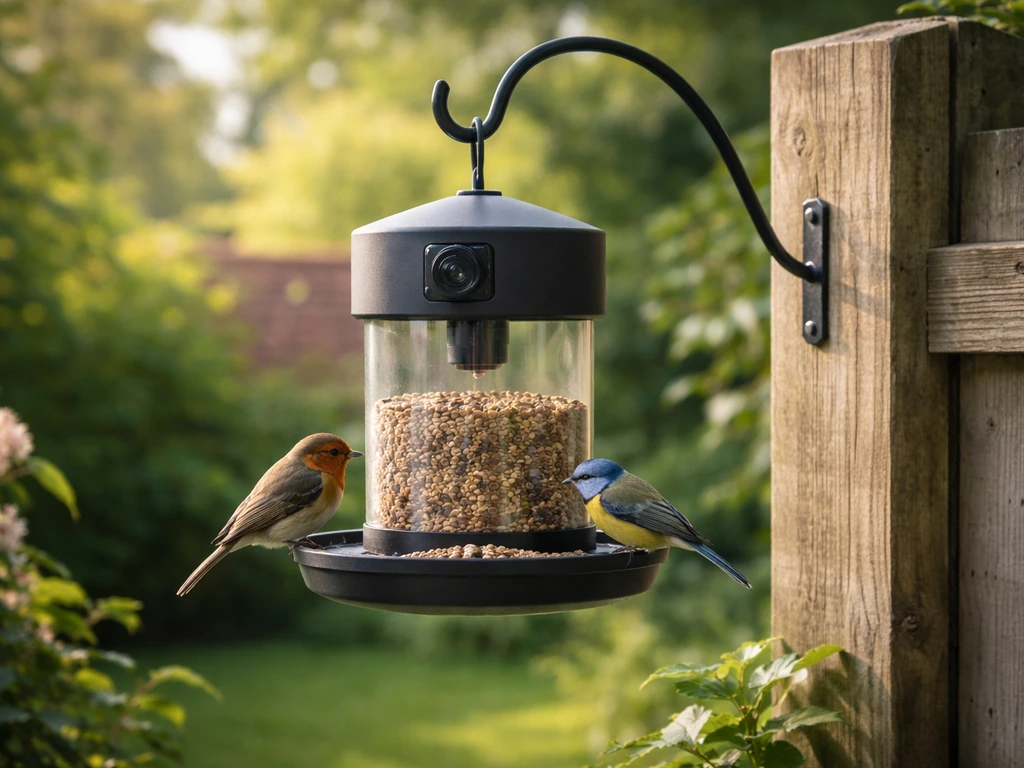
Reddit bird feeder threads are genuinely useful, but they can also send you down a rabbit hole of conflicting opinions. The short answer: for most backyards, a hopper or tube feeder from a brand like Perky-Pet, Droll Yankees, or Stokes Select is the Reddit consensus starting point, and a camera feeder from Birdfy or Kiwibit Beako rounds out the setup if you want to see what's visiting. Everything beyond that depends on which birds you want, what pests you're dealing with, and whether you're in a cold climate. This guide translates the Reddit noise into a clear decision.
Best Bird Feeder Reddit Guide Plus Bird Camera Feeders
Marcus Hendricks
21 Apr 2026
How to read Reddit bird feeder recommendations without getting misled
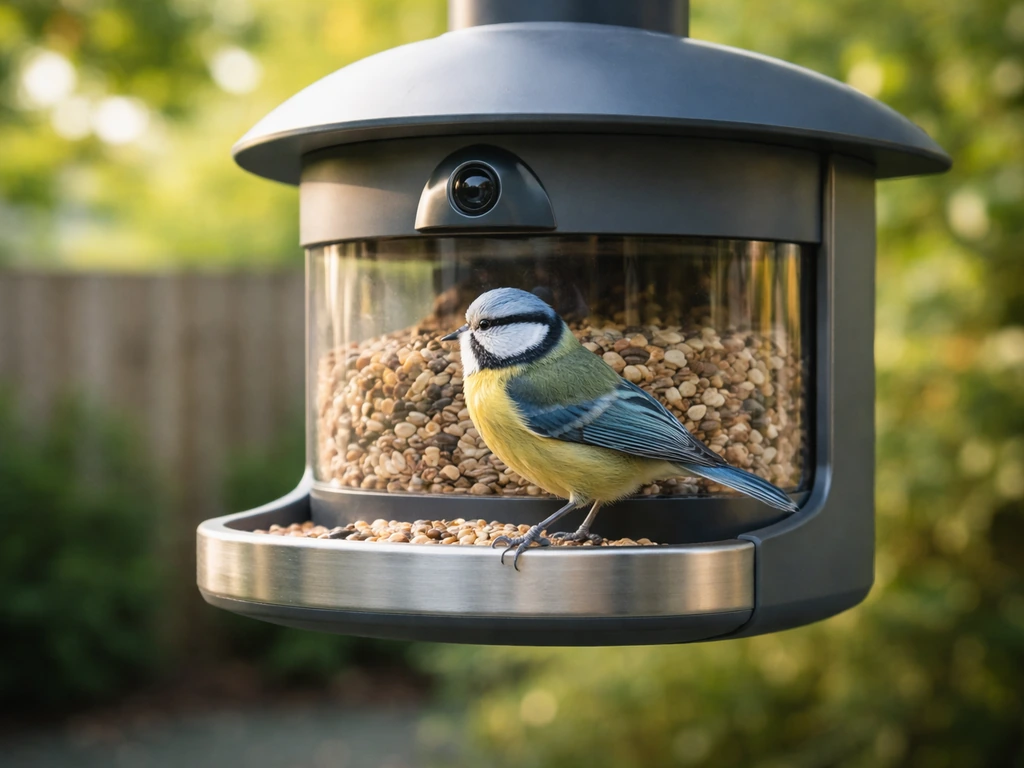
The biggest trap on Reddit is treating upvotes as universal truth. A feeder that works brilliantly for a user in the Pacific Northwest with a mix of chickadees and nuthatches may be a disaster in Florida where squirrels are aggressive and humidity destroys wood in one season. Always filter Reddit advice by three things: the poster's climate, their target birds, and whether they've owned the feeder for more than a few months. A brand-new feeder almost always looks great in early reviews.
Reddit communities like r/birding and r/whatsthisbird skew toward enthusiasts who already know what they want. Their recommendations tend to favor durability and bird variety over price. That's actually a reasonable bias. Cheap feeders with thin plastic ports crack in cold weather, warp in summer heat, and let seed clump and mold in rain. Paying $30 to $60 upfront for a well-built feeder beats replacing a $12 one twice a year. That said, Reddit users also sometimes over-recommend products they've only had for a season, so cross-check any specific model against long-term owner reviews before buying.
One thing Reddit gets consistently right: seed quality matters more than feeder quality. No feeder attracts birds if you're filling it with filler-heavy mixes full of milo and wheat. blank" rel="noopener noreferrer">Black oil sunflower seed is the single most broadly attractive seed you can buy. Nyjer (thistle) is the go-to for finches. Wikipedia also discusses niger seed (Guizotia abyssinica) used in “finch feeders,” aligning with the idea that finches are drawn to nyjer Nyjer (thistle) is the go-to for finches.. If you're not getting visits in the first few weeks, the seed is usually the first thing to check, not the feeder.
Feeder types and which birds actually show up
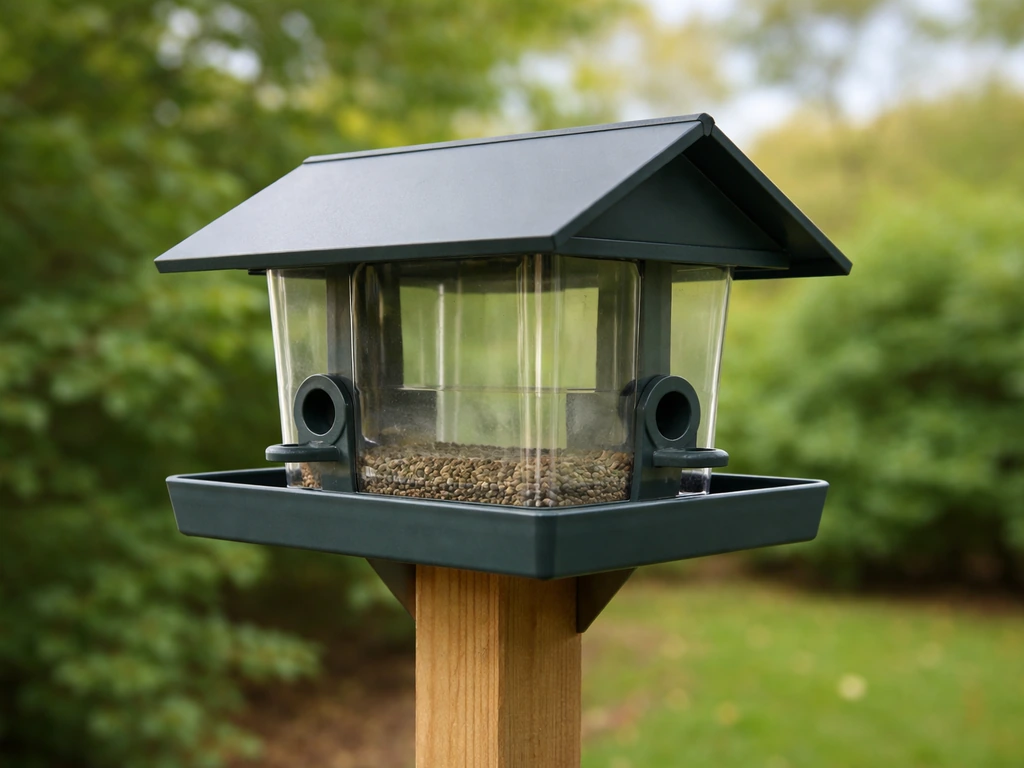
Different feeder styles attract genuinely different bird communities. Buying the wrong type for your target birds is one of the most common beginner mistakes, and it doesn't get flagged often enough in Reddit threads because experienced users forget what it felt like to start from scratch.
| Feeder Type | Best For | Common Birds Attracted | Seed/Food |
|---|---|---|---|
| Hopper (House-style) | All-around backyard feeding | Cardinals, jays, chickadees, sparrows, doves | Black oil sunflower, mixed seed |
| Tube feeder | Clinging small birds | Finches, chickadees, nuthatches, titmice | Sunflower chips, nyjer, safflower |
| Platform/tray feeder | Ground-feeding species | Doves, juncos, sparrows, blue jays | Mixed seed, sunflower, peanuts |
| Suet cage | Insect-eating species | Woodpeckers, nuthatches, starlings, wrens | Suet cakes |
| Nyjer/thistle sock or tube | Finch-specific setup | American goldfinch, house finch, pine siskin | Nyjer seed |
| Nectar/hummingbird feeder | Hummingbirds and orioles | Ruby-throated hummingbird, Baltimore oriole | Sugar water (4:1 ratio) |
| Window feeder (suction cup) | Close-up viewing | Chickadees, house finches, sparrows | Sunflower chips, mixed seed |
| Pole-mounted (baffle system) | Squirrel resistance | Most species depending on attached feeder type | Varies by feeder attached |
Woodpeckers are a special case worth calling out. They'll use suet cages, but they also visit hopper feeders with peanuts or larger sunflower seeds. If downy or hairy woodpeckers are on your wish list, add a suet cage to whatever else you're running. Bluebirds are another exception: they don't eat seeds and largely ignore standard feeders. To attract them, you need mealworms in a platform or specialty feeder, often with a partially covered tray to keep the mealworms contained.
For cardinals specifically, feeder port size and perch length matter. Cardinals are large birds and need a long perch (at least 7 to 8 inches) or a wide tray. Many slim tube feeders simply don't accommodate them well. Hopper feeders and platform feeders are far more cardinal-friendly than most tube designs.
Choosing a bird feeder with a camera: what to actually look for
Camera feeders have gotten genuinely good over the past couple of years. The best ones use AI-powered bird recognition to log species visits automatically, which is something that appeals to serious bird watchers and casual observers alike. But the specs that matter aren't always the ones that get highlighted in marketing.
Video resolution and image quality
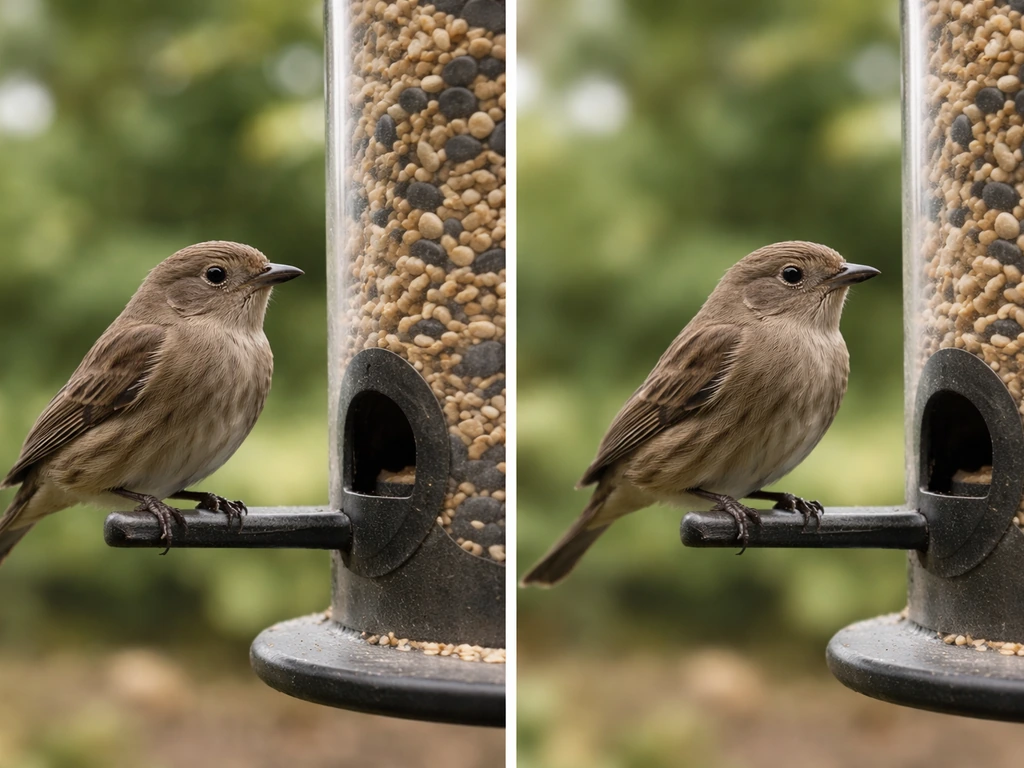
For close-up bird identification, 2K resolution is the practical minimum worth considering right now. 1080p footage can work fine in bright daylight, but detail suffers in shade or on overcast days, which is often when birds are most active. The Kiwibit Beako 4K AI camera is one of the few feeders pushing true 4K capture, which makes a real difference when you're trying to identify a bird by its facial markings or wing pattern. Don't buy a camera feeder that only advertises HD without specifying the actual resolution.
Motion detection and AI recognition
Motion detection sensitivity is a double-edged feature. Too sensitive and you get hundreds of alerts for wind-blown branches. Too low and you miss short visits. Look for feeders that combine motion detection with AI species recognition so the camera logs actual bird events rather than every leaf flutter. The Birdfy Feeder line handles this reasonably well and saves motion-detection events to the cloud even on the free tier.
Storage, subscriptions, and offline access
This is where camera feeders vary the most and where you can easily get burned by hidden costs. The Birdfy system uses two storage paths: cloud storage (with some free access for motion-detection events, or expanded access via subscription) and local microSD card storage, which varies by specific model. The Kiwibit Beako is marketed explicitly as a no-subscription option with local microSD storage as the primary method and basic activity history available without paying a monthly fee. If you're opposed to ongoing subscription costs, that's a meaningful difference between these two ecosystems. If you specifically want the best smart bird feeder without subscription, look for local storage options and AI species logging that don’t require monthly payments. The broader topic of subscription-free camera feeders is worth researching carefully before you commit to a platform.
Power source: battery vs solar
Battery-powered camera feeders are simpler to install (no wires, no solar panel to position) but require regular recharging, usually every 2 to 6 weeks depending on traffic and temperature. Cold weather drains batteries faster, which matters if you're winter feeding. Solar-powered feeders can theoretically run indefinitely, but they need consistent direct sunlight to keep up, which is not guaranteed in northern climates in winter or in shaded yards. A hybrid option (solar panel with battery backup) is the most practical for year-round use.
Weatherproofing and Wi-Fi reliability
Any outdoor camera feeder should carry an IP65 rating or better. Lower-rated units can handle light rain but will start to fail after prolonged exposure or in areas with frequent heavy rain. Wi-Fi reliability is the other common pain point: most camera feeders only support 2.4 GHz networks, not 5 GHz. If your router is more than 50 feet from the feeder location, or separated by walls and floors, you may need a Wi-Fi extender. Test your signal strength at the feeder location before you mount anything permanently.
Best picks by use case
Best all-around backyard feeder
For a straightforward backyard setup that attracts the widest variety of birds, a hopper feeder is the most versatile choice. Look for one with a metal roof, removable tray for cleaning, and drainage holes in the base. Brands like Droll Yankees and Stokes Select consistently hold up well over multiple seasons. Fill it with black oil sunflower seed and you'll attract cardinals, chickadees, titmice, nuthatches, house finches, and jays without much effort. Add a suet cage nearby and you'll pull in woodpeckers too.
Best setup for winter feeding
Winter feeding is where feeder quality really separates itself. Avoid any feeder with significant wood or thin plastic construction in cold climates. Metal-reinforced hoppers or powder-coated steel tube feeders hold up far better through freeze-thaw cycles. In very cold weather, suet is especially valuable because it's a high-fat energy source that birds need more of in winter. Nyjer feeders also continue producing traffic through winter because goldfinches and siskins remain active year-round in most of the US. Keep seeds dry: a feeder with a wide roof overhang reduces moisture infiltration and prevents seed from clumping and molding, which birds will abandon quickly.
Best for pest resistance (squirrels and rats)
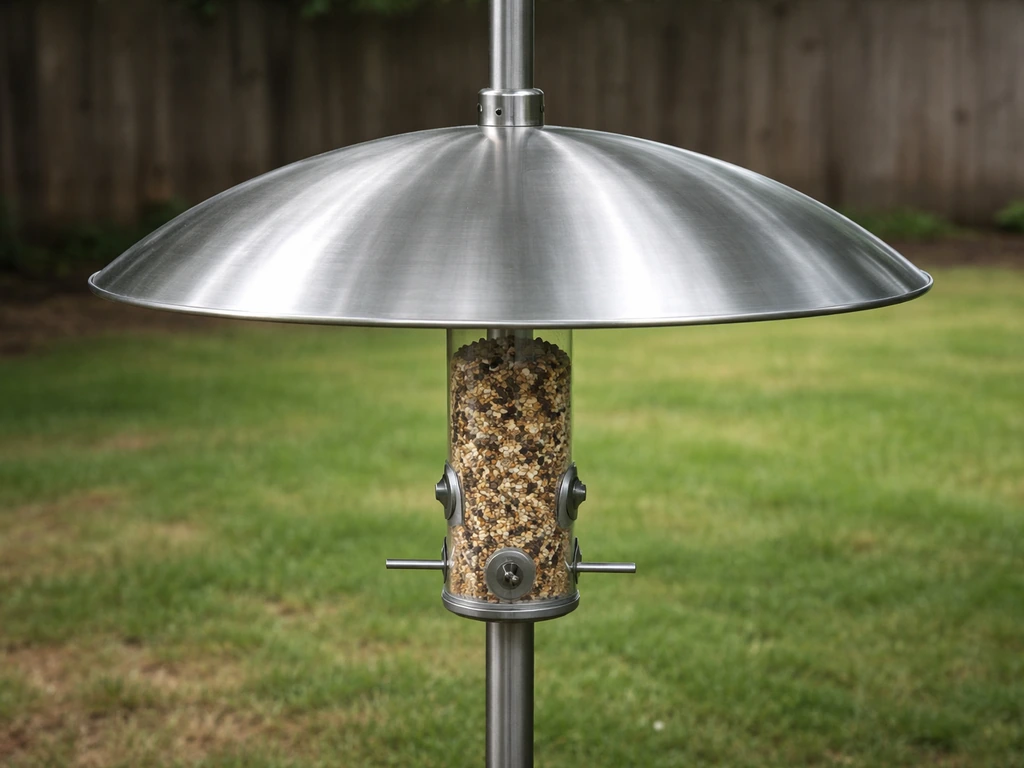
The most effective squirrel-resistant setup isn't a single feeder, it's a system. A smooth metal pole with a baffle (a dome or torpedo-shaped shield at least 17 inches in diameter, mounted about 5 feet off the ground) blocks squirrels from climbing. The feeder should be at least 10 feet horizontally from any fence, tree, or structure squirrels can jump from. Weight-sensitive feeders like the Squirrel Buster series close ports under a squirrel's weight, which works reasonably well as a standalone option when pole mounting isn't practical. For rats, elevated placement matters: rats are ground scavengers first, so minimizing seed spill under the feeder is more effective than any feeder design. Use a seed catcher tray and do a regular ground cleanup.
Best for minimizing mess and seed waste
Tube feeders with short perches naturally limit access by larger birds that knock seed out. Shelled sunflower chips or nyjer seed also generate far less shell debris than whole sunflower seeds, which is worth considering if you're feeding on a deck or patio where cleanup is tedious. Some hoppers come with built-in catch trays that reduce ground scatter. Avoid no-mess blends with milo, red millet, or wheat: birds selectively toss those fillers out to get to what they actually want, which creates more mess, not less.
Placement and setup tips that actually make a difference
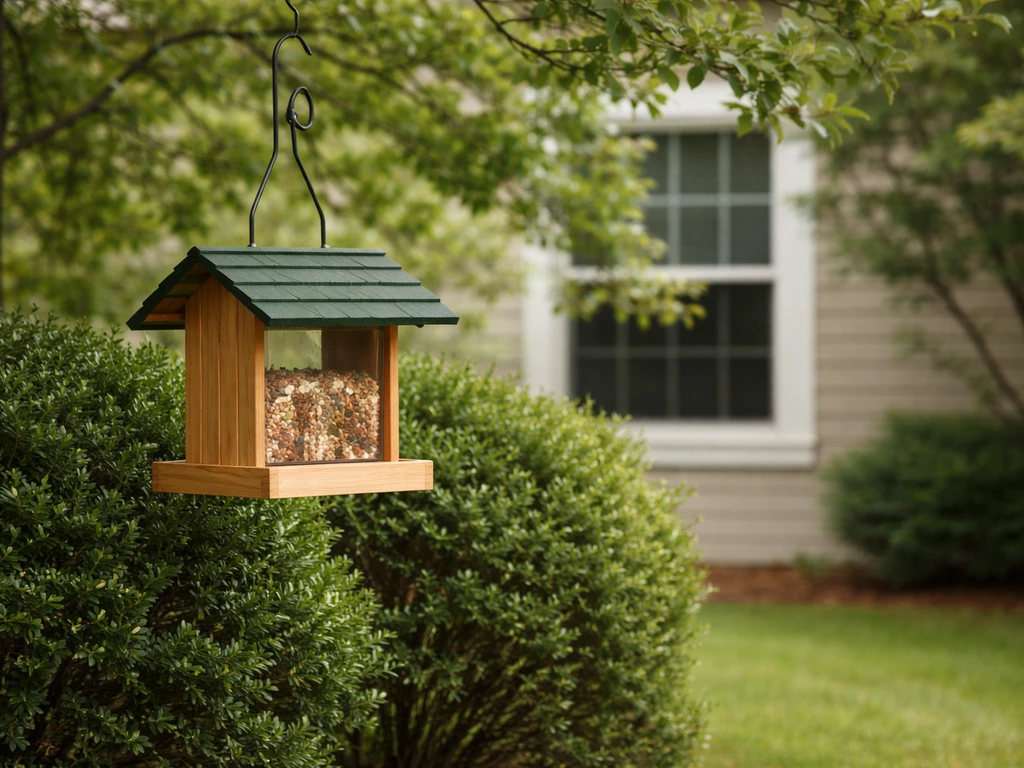
Feeder placement is underrated. You can have the best feeder on the market and still get minimal traffic if you put it in the wrong spot. Birds want cover nearby, specifically shrubs, trees, or hedges within 10 to 15 feet, so they have somewhere to retreat if they feel threatened. But they also need a clear line of sight to spot predators. A feeder in the middle of an open lawn with no cover nearby may get ignored entirely for weeks because birds perceive it as a risk.
Window collisions are a real problem. Feeders placed within 3 feet of a window (so birds don't build up speed) or more than 30 feet away (far enough that birds don't aim at the window when startled) are safer than the middle range. A feeder at 5 to 15 feet from a window is statistically in the highest-risk zone for bird strikes. If you're using a window feeder or camera feeder mounted to glass, the proximity itself limits the speed issue.
Height matters for different species. Ground-feeding birds like doves and juncos will use a platform feeder at about 2 feet off the ground. Hopper feeders work best at 5 to 6 feet. Hummingbird feeders should be at eye level for you, so you can easily clean and refill them, and in partial shade to slow nectar fermentation. Nectar in full sun can ferment and grow harmful bacteria in as little as 2 days in summer heat; partial shade extends that to 3 to 5 days.
- Place feeders 10 to 15 feet from shrubs or trees for bird cover without giving squirrels a jumping platform
- Keep feeders within 3 feet or beyond 30 feet of windows to reduce collision risk
- Mount hopper and tube feeders at 5 to 6 feet off the ground
- Set hummingbird feeders in partial shade and refill every 2 to 3 days in summer
- Start with black oil sunflower seed before experimenting with specialty mixes
- If traffic is slow in the first two weeks, check seed freshness before blaming the feeder
- Use a pole-mounted setup with a squirrel baffle for any feeder where ground squirrels are a serious problem
What to do when things go wrong after you buy
Squirrels and rats keep raiding the feeder
If squirrels are bypassing a weight-sensitive feeder, check whether they're hanging from the roof instead of perching on the ports, which is a common workaround that avoids the weight mechanism. Adding a dome baffle over the top of the feeder (separate from the pole baffle) can close that gap. For rats, the core intervention is eliminating ground seed accumulation. Install a catch tray, switch to shelled seed to reduce shell drop, and do a ground sweep every day or two. If rats are persistent, take the feeder in at night for a few weeks to break their routine.
Seed is clumping, molding, or being ignored
Moldy seed is a genuine health risk to birds and a common cause of sudden feeder abandonment. If seed is clumping inside the feeder, the feeder isn't draining or drying properly. Check that drainage holes aren't clogged. In consistently wet climates, it's worth cleaning the feeder every 1 to 2 weeks with a 10% bleach solution (rinse thoroughly and let it dry completely before refilling). Old or poorly stored seed can also go rancid: if you squeeze a seed and it smells oily or sour, replace the whole batch.
Inconsistent bird visits after a good start
A sudden drop in feeder traffic is almost always explained by one of a few things: a local predator (hawk, outdoor cat) has been spotted near the feeder, the seed has gone bad, there's a natural food abundance in the area (berry season, insect hatches), or it's a migration period when your local population is in flux. Give it 5 to 10 days before assuming there's a problem with the feeder itself. If a sharp-shinned or Cooper's hawk has been hunting near the feeder, birds will stay away for days to weeks. Removing the feeder for a week and rehoming it slightly can sometimes reset the local bird perception of the area.
Weatherproofing and durability problems
Plastic feeders that crack in winter: this is almost always a material quality issue. Polycarbonate holds up far better than standard styrene plastic in freezing temperatures. If you're replacing a cracked feeder, look specifically for UV-stabilized polycarbonate or metal construction. Wooden feeders that rot: cedar is far more rot-resistant than pine, but even cedar needs a roof overhang to survive multiple seasons in rainy climates. Apply a wood sealant on exterior surfaces (not the inside where birds contact food) every year or two. Camera feeders with fogged lenses: this is usually condensation getting inside a poorly sealed unit. It's worth checking whether the manufacturer covers this under warranty before attempting a DIY fix.
DIY vs store-bought: which actually makes sense for you
A DIY feeder can absolutely work, and for certain setups it's the most practical choice. A simple wooden platform feeder is easy to build from scrap cedar, and it's genuinely just as effective as most store-bought platforms for attracting ground-feeding species. The trade-off is time versus money: a quality store-bought hopper feeder with drainage, proper construction, and a warranty costs $35 to $60 and will outlast most DIY builds unless you're comfortable working with durable materials and hardware.
Where DIY tends to win is in customization. If you want a platform feeder a specific size, or a suet cage configured for a particular mounting spot, building it yourself is often faster than finding a commercial equivalent. DIY also makes sense for replacing or expanding a setup you already have working.
DIY and workaround camera setups
If you want bird camera footage without buying a dedicated camera feeder, a trail camera mounted at feeder height is a legitimate alternative. Many hunters' trail cameras have motion-trigger video, are fully weatherproofed, and run on AA batteries for months. The downside is no live viewing, no app integration, and no AI species ID. You pull an SD card to review footage, which is less convenient but totally functional for casual observation.
A Ring or Wyze security camera mounted on a nearby fence post pointed at a regular feeder is another workaround that some Reddit users swear by. It gives you live viewing and motion alerts, though without species recognition. The image quality at feeder distance depends heavily on how close you can mount the camera, and you're relying on a security camera ecosystem rather than one built for bird observation.
For most people who want a camera feeder experience, a purpose-built unit like the Birdfy Feeder or the Kiwibit Beako is worth the premium because the camera is correctly aimed at the perch by design, the AI recognition actually works well enough to be useful, and the whole thing is weatherproofed as a single unit. The subscription question is the main decision point: if recurring costs are a concern, a no-subscription option with local microSD storage is now a real, well-developed alternative rather than a compromise. The smart bird feeder category more broadly has matured quickly, and the gap between subscription and subscription-free options has narrowed considerably in the last year. If you want a smart bird feeder, prioritize good AI species recognition and weatherproof design so you get reliable logs without constant tinkering. If you're trying to compare the best smart bird feeder options, searching Reddit threads for real owner experiences can help you narrow choices faster.
The bottom line is this: start with the right feeder type for your target birds, use quality seed, place it with cover nearby, and add a squirrel baffle if your yard needs it. A camera feeder is a genuinely fun addition once the basics are sorted, but it's not a substitute for getting the fundamentals right first. Most Reddit debates about specific feeder brands become irrelevant once you've got seed, placement, and pest management dialed in.
FAQ
If a squirrel-resistant feeder still gets bypassed, what should I check first?
It depends on whether you have squirrels, but a good rule is to match the feeder to the problem. If squirrels are reaching the ports, use a full pole baffle plus a “no foothold” feeder design, not just a weight-sensitive mechanism. If squirrels are hanging from the roof over the feeder, add a second dome baffle above the ports (separate from the pole baffle) so they cannot access from above. Then control seed spill with a catch tray so you are not feeding squirrels at ground level.
Can I use the same feeder setup during rainy weather, or do I need to change anything?
Yes, but only if the seed is kept dry and you are using a formulation birds can actually process. In practice, you want a feeder with strong drainage and a roof overhang, and you should switch to black oil sunflower or shelled chips for less shell mess and less moisture pickup. Also, clean more often, because clumping seed is usually a feeder drainage issue, not a “birds problem,” and mold can cause sudden feeder abandonment.
What’s the fastest troubleshooting path when feeder traffic drops suddenly?
Start by confirming that your feeder is actually “working” as a food source, then look for the timing pattern. If you see no birds for more than about two weeks despite fresh seed, check seed quality first and then the location (cover within 10 to 15 feet, but not in the open). If birds suddenly stop after previously visiting, consider predators or local seasonal abundance before replacing equipment, and give it 5 to 10 days if the change happened alongside migration or berry season.
Will adding a camera feeder spook birds or reduce visits?
No, because birds adapt to where they feel safe, and camera feeders can unintentionally change that perception. If you are adding a camera to an existing setup, aim it so the perch is not brightly backlit, keep glare off the lens, and place it within your usual “safe” zone near cover. If birds are spooked by the device at first, avoid relocating the feeder daily, give them a few days to re-check the area, and resist switching seed types at the same time.
How do I reduce misidentifications on camera feeders?
If you’re using a camera feeder to identify species, assume wrong IDs will happen when the view is blocked or lighting is poor. The practical fix is to ensure the bird can be seen at the perch without the lens being obstructed by the feeder housing, then confirm resolution and recording settings. Use 2K or true 4K when available, and prioritize local conditions like overcast light and shaded perches where 1080p often loses key facial or wing details.
What should I verify if I want a no-subscription camera feeder?
If you want no subscription, focus on two things before you buy: whether species events or playback history are stored locally, and how much “activity history” you get without paying. Some units provide local microSD recording but limit stored events or AI logs on the free tier, so read the storage behavior carefully. A no-subscription setup should clearly state local storage as the primary method and should not require a monthly plan for basic bird logs you care about.
Is mounting a trail camera to a feeder a good alternative to a bird camera feeder?
A DIY trail-camera approach can be good for casual observation, but it has two limitations you should plan around: you cannot watch live and you cannot rely on app-based species recognition. It also requires you to pull the SD card and review footage manually, so it is less ideal if your goal is easy ID. If you mainly want “what visited when,” it can work, but if you want automated logs and easier identification, a purpose-built feeder camera is usually worth the cost.
What can cause a camera feeder to fail to connect, and how do I prevent it?
Yes, and it usually comes from the mismatch between where the camera needs to be mounted and how Wi-Fi is actually behaving at that spot. Most feeder cameras only use 2.4 GHz, so confirm your network has 2.4 enabled, then test signal strength at the exact mounting location. If the router is far or separated by walls and floors, a Wi-Fi extender is often necessary, and you should do a connectivity test before permanent installation.
Can I combine hummingbird and seed feeders near windows without increasing bird strikes?
You can, but do it selectively and safely. For nectar, partial shade is important because full sun speeds fermentation, and you should clean on schedule so the solution does not become harmful. For seed feeders, placing them too close to windows can raise risk, but the safe strategy is either very close (under 3 feet) or safely farther (over 30 feet) when birds would otherwise build up speed. The camera itself does not replace window-collision prevention.
If my feeder keeps cracking or rotting, what maintenance or material upgrades help most in winter and rain?
Consider switching materials or adding protection only after you diagnose the failure mode. For winter cracking, polycarbonate and UV-stabilized plastic usually last longer than common styrene, and metal-reinforced designs resist freeze-thaw damage better. For wood rot, cedar is more rot-resistant than pine, but it still needs a roof overhang, and a proper exterior sealant should be applied on exterior surfaces on a yearly or every-two-years cadence.
Next Article
Best Smart Bird Feeder UK Guide: Choose and Set Up Today
UK guide to the best smart bird feeder: features, setup tips, bird types, and pest proofing for today’s purchase