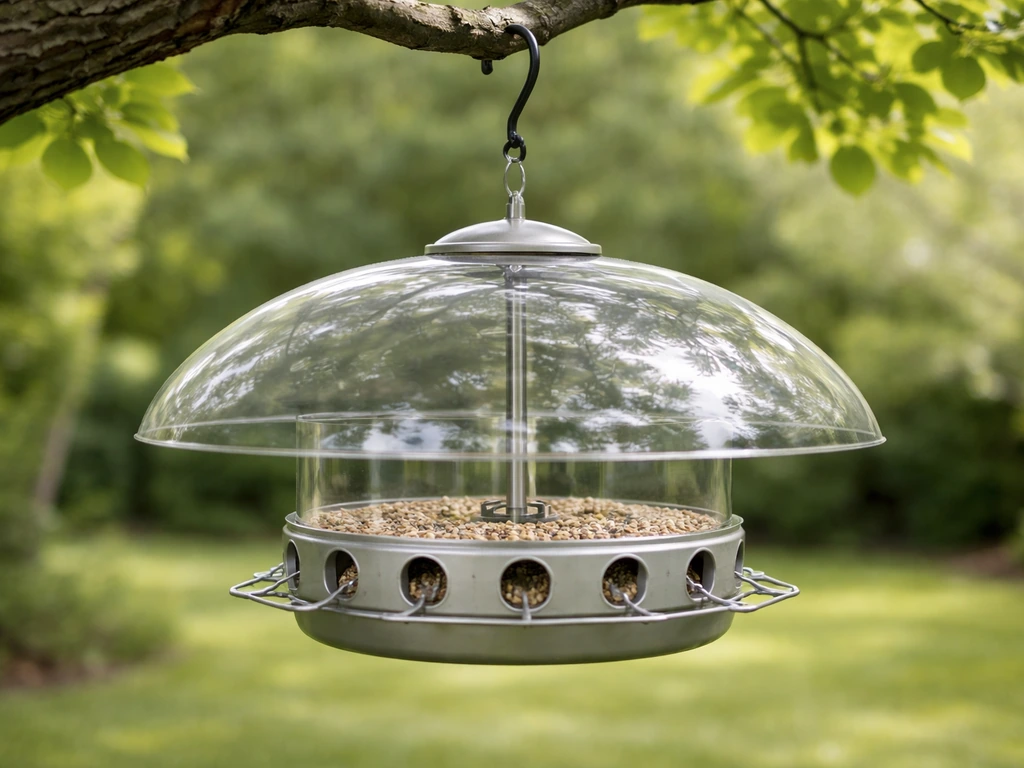
The Droll Yankees Big Top Bird Feeder (model BTG) is a 3-pound capacity, dome-protected hanging feeder with 8 adjustable feeding ports designed primarily for clinging birds like chickadees, nuthatches, and finches. The 15-inch polycarbonate dome sits above the seed bowl to block rain, block squirrels, and let you tune out larger pushy birds by lowering the dome closer to the tray. It hangs from a brass rod, requires no pole, and comes backed by a lifetime warranty that covers squirrel damage. If you set it up correctly, it genuinely works. If you don't, squirrels will figure it out fast.
Droll Yankees Big Top Bird Feeder Guide: Setup, Birds, Pests
Marcus Hendricks
15 Jun 2026
What the Big Top actually is and what it's built to do
The Big Top sits in Droll Yankees' lineup as a dome-style hanging feeder, which puts it in a different category from their tube feeders or hopper feeders. The defining feature is that 15-inch UV-stabilized polycarbonate dome overhead, which does two jobs: it sheds rain and snow to keep your seed dry, and its curved, slick surface sends squirrels sliding off before they can reach the ports. Underneath the dome, there's an open seed bowl with 8 feeding ports arranged around the perimeter. Those ports are adjustable, meaning you can control how much seed flows and, more importantly, how much clearance there is between the dome edge and the bowl rim. Tighten that gap down and you effectively exclude larger birds. Open it up and you get a more generous feeding platform.
The overall dimensions run roughly 15 x 15 x 18 inches, the feeder hangs via a brass rod assembly, and the recommended hanging distance is 16 inches. That 16-inch spec matters more than it sounds, so keep it in mind when you hang it. Compared to a flat top bird feeder or a basic post-mounted platform, the Big Top offers meaningfully better weather and pest protection thanks to the dome. If you are comparing feeder styles, a flat top bird feeder is typically simpler, but it does not have the same dome-based weather and squirrel blocking as a hanging clinging feeder. It's not a suet feeder, not a nyjer tube feeder, and not a window feeder. It's a dedicated clinging-bird hanging feeder with built-in weather and squirrel management, and that specificity is exactly what makes it work well when matched to the right setup.
Which birds will actually show up (and what seed to use)
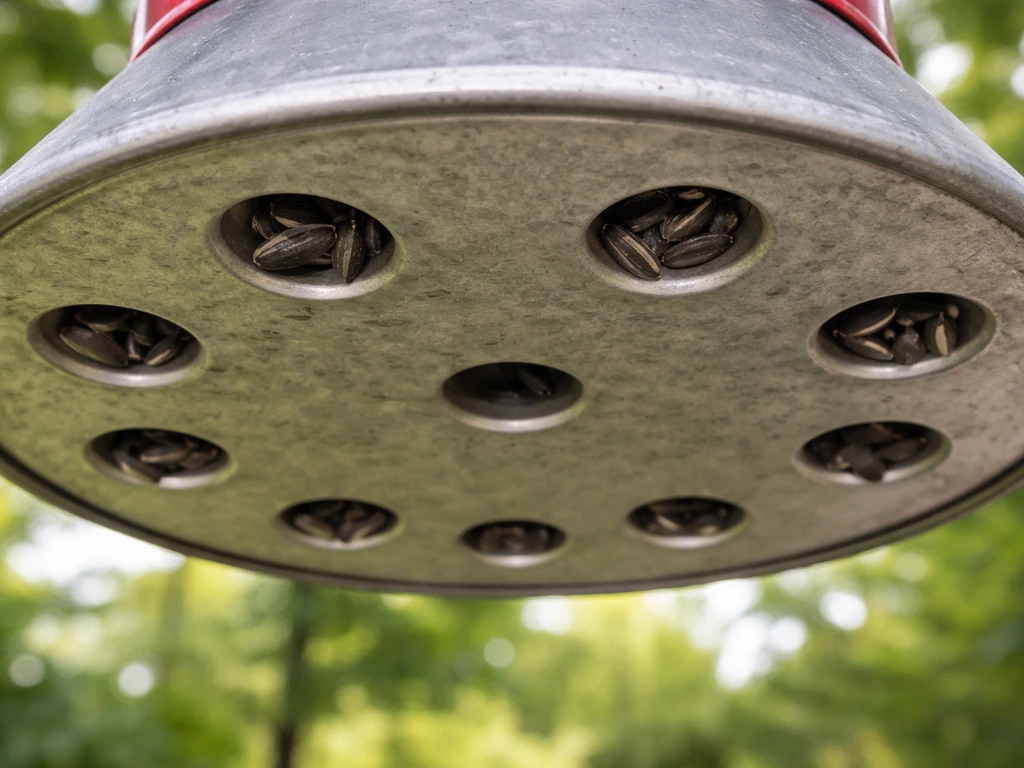
The 8-port clinging design is optimized for smaller birds that grip and perch at a feeding hole rather than stand on a flat surface and peck. In practice, that means you'll reliably see black-capped chickadees, Carolina chickadees, white-breasted nuthatches, red-breasted nuthatches, tufted titmice, house finches, purple finches, and downy woodpeckers. These birds are comfortable at hanging feeders and will find the ports quickly. Cardinals, blue jays, mourning doves, and grackles are much less likely to feed comfortably here, especially if you've closed the dome down to restrict access. That's by design, not a flaw.
For seed, the manufacturer guidance is essentially: anything except nyjer. Black-oil sunflower seed is the go-to for getting the widest variety of the target species to visit. It has a thin shell that small-billed birds handle easily, it's high in fat and protein, and it doesn't gum up ports the way millet mixes can. Safflower seed is another solid option, and it has the bonus of being naturally unappealing to squirrels and European starlings. Avoid straight millet blends or cheap mixed seed with lots of milo and filler, which tend to attract sparrows and ground feeders you probably didn't intend to invite. Nyjer (thistle) is specifically excluded from this feeder's design, so don't try to force it into the ports. If goldfinches are your primary goal, a dedicated nyjer tube feeder is a better match.
Setup for real results: placement, height, and seasonal adjustments
Placement is where most people undercut a feeder that would otherwise work. The Big Top must hang at least 5 feet off the ground to put the dome baffle high enough to block squirrel jumps from below. More importantly, it needs to be at least 10 feet away from any surface a squirrel can launch from: fences, tree branches, roof overhangs, deck railings. Squirrels can clear 10 feet horizontally from a standing jump, so don't give them the angle. A shepherd's hook or a dedicated hanging post in an open area of the yard is typically the best setup. If you do not have room for the hang-only setup, consider a post top bird feeder instead for a more stable, pole-style option. The feeder is hang-only by design, so a post-top mounting scenario doesn't apply here the way it might with a big top bird feeder style on a pole.
The 16-inch recommended hanging distance refers to the gap between the hanging point and the feeder itself. Stick to it when you first install the brass rod assembly so the dome sits at the correct height above the bowl. Once it's up, adjust the dome height relative to the bowl to suit your birds. For most backyards, leaving about 1.5 to 2 inches of clearance under the dome edge works well for small clinging birds while keeping larger ones out. In winter, you may want to open it slightly more to make it easier for birds wearing fluffed-up cold-weather plumage to access the ports comfortably. In late spring and summer when grackles and starlings are at peak aggression, tighten the dome down more.
Position the feeder where you can actually see it from a window. If you want the best bird feeder post setup, prioritize placement like this so you can monitor seed and activity quickly see it from a window. That sounds obvious but it matters: you want to catch early signs of low seed, mold, or pest activity before they become problems. Near a shrub or tree gives birds a staging area to perch and wait their turn, but keep that tree far enough back that it doesn't give squirrels a launch point. A distance of 6 to 10 feet from cover strikes a good balance.
Weatherproofing: what to expect in rain, wind, and snow
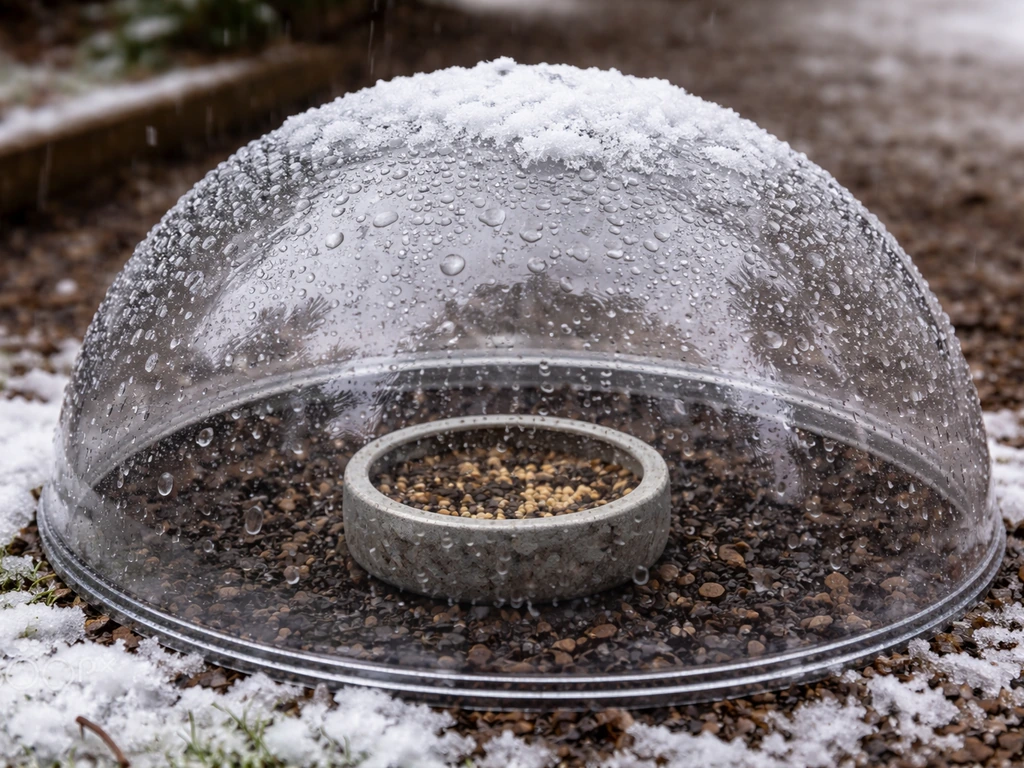
The UV-stabilized polycarbonate dome is genuinely effective at keeping seed dry in rain and light snow. Because the dome diameter is 15 inches and the seed bowl sits beneath it, direct precipitation almost never reaches the seed. In heavy sideways rain or strong wind-driven storms, some moisture can blow in at the edges if the dome is set high, so in stormy weather it helps to lower the dome a bit as a temporary measure. Wind is generally a non-issue structurally. The feeder hangs and swings freely, which actually helps deter squirrels, but it won't spin off its hook in normal conditions.
Snow is the bigger concern. A heavy wet snowfall can accumulate on top of the dome and weigh the feeder down, and if wet seed freezes in the ports overnight, birds will find them blocked the next morning. After a snowstorm, check the ports and clear any ice with warm water. Polycarbonate holds up well in cold, and the dome won't crack from freezing the way cheaper plastic can. Over multiple seasons, the dome may yellow slightly from UV exposure, but structural integrity should hold. The lifetime warranty covers squirrel damage specifically, so if a squirrel somehow manages to crack or deform the dome trying to get at the seed, contact Droll Yankees directly.
Squirrels, rodents, and what to do when they still get in
The dome is the squirrel deterrent, but it's not magic. It works by being slick, curved, and wide enough that a squirrel can't get a grip or reach the ports from the top. In most setups with correct hanging distance and proper placement away from launch surfaces, squirrels slide off and give up. For extra mounting security to help prevent animals from spinning or removing the tray, CountryMax recommends closing the loop at the top and using a carabiner or secure link plus a jam nut to prevent loosening squirrels slide off and give up. Where it tends to fail is when the feeder is too close to a branch or structure that lets a squirrel approach from the side, bypassing the dome entirely and reaching the ports directly. If squirrels are still winning, the fix is almost always a placement adjustment, not a feeder defect.
For rats and mice, the situation is different. The Big Top doesn't have a ground-level tray, which is good, but spilled seed from the bowl will fall and accumulate below the feeder. Rodents don't typically climb a swinging hanging feeder, but they absolutely will forage beneath it. If you're seeing rats or mice under the feeder, the best immediate steps are: switch to no-waste seed like hulled sunflower hearts (less shell debris falls), use a seed catcher tray on the pole or hook if available, and clean up ground debris regularly. Avoid switching to an open platform feeder if rodents are already active, since that makes things considerably worse.
- Check that the feeder hangs at least 10 feet from any horizontal launch surface (branches, fences, rooflines).
- Verify the feeder is at least 5 feet off the ground so the dome sits high enough to block climbing approaches.
- If squirrels are getting in from the side, move the feeder further from nearby structures or add a pole-mounted baffle below the hook point.
- Switch to safflower seed as a secondary deterrent since squirrels generally dislike the taste.
- For persistent rodent activity below the feeder, switch to hulled (shell-free) seed and clean up ground spill daily.
- If squirrel damage to the feeder itself occurs despite correct placement, file a warranty claim with Droll Yankees.
Cleaning and maintenance: the routine that keeps it reliable
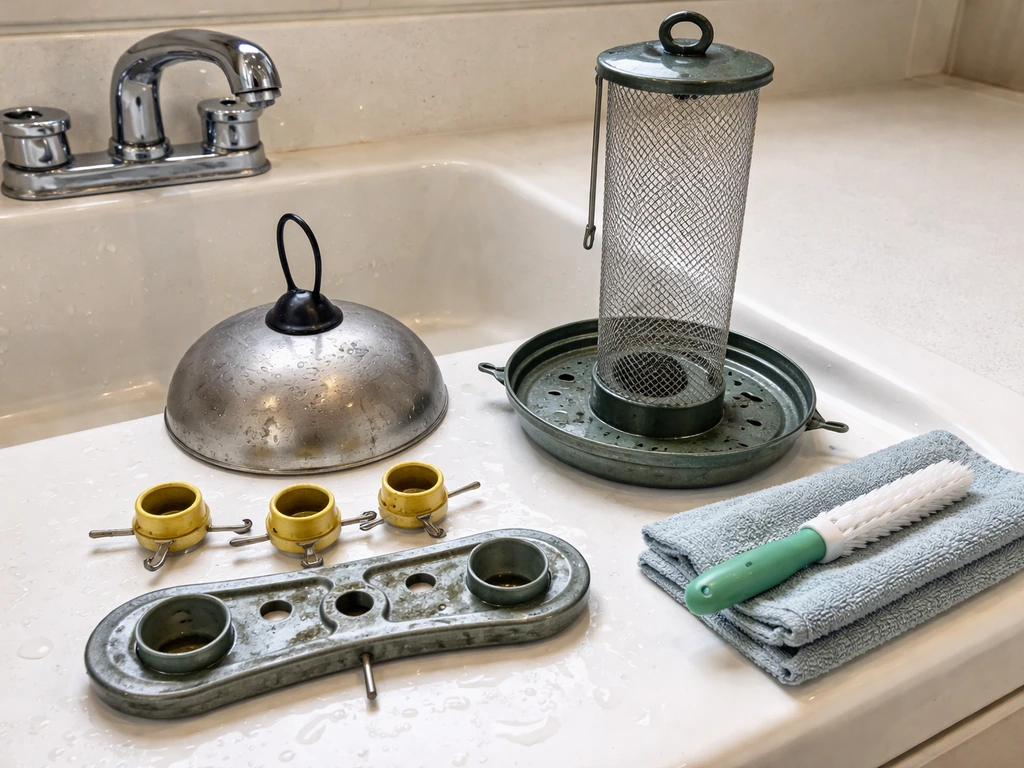
A dirty feeder is a health risk to the birds you're trying to help, and the Big Top needs regular cleaning just like any other feeder. The target cadence is a full disassembly and wash every 2 to 3 weeks during active feeding season. More frequently during hot, humid summer months when wet seed can mold in 3 to 4 days, and after any extended rainy spell. The polycarbonate parts disassemble by reversing the rod assembly steps described in the BTG instruction manual, so it's designed to come apart for cleaning, not to be hosed down as a unit.
- Remove the feeder from the hook and take it to a utility sink or outdoor table.
- Disassemble by sliding the rod assembly apart and separating the dome from the bowl.
- Discard any old, wet, or clumped seed. Don't mix old seed into fresh.
- Wash all parts with warm soapy water, scrubbing the ports and bowl with a bottle brush to remove seed residue and mold.
- Rinse thoroughly. Soap residue can deter birds or cause illness.
- Let all parts air dry completely before reassembling and refilling. Wet seed molds fast.
- Reassemble, check that ports move freely, and refill with fresh seed.
For refilling between cleanings, the 3-pound capacity means you're not topping off daily for a small to medium yard bird population. With a steady group of chickadees and nuthatches, expect to refill roughly every 5 to 10 days depending on traffic. Watch the seed level through the dome and refill before it runs completely empty. Empty feeders train birds to stop visiting, and it can take a week or two to rebuild traffic once you've let it go dry.
When it's not working: fast troubleshooting
If birds aren't coming to the feeder within the first week or two, work through the most common issues before assuming the feeder itself is the problem. New feeders in new locations can take birds 1 to 3 weeks to find, especially in lower-traffic yards. Make sure the feeder is visible from above (not hidden under heavy tree canopy) and that there's nearby perching habitat. If birds were visiting and then stopped, check seed freshness first. Old or contaminated seed is the most common reason bird traffic drops off suddenly.
| Problem | Most likely cause | Fix |
|---|---|---|
| No birds after 2+ weeks | Poor placement or no local population of clinging birds | Move to a more open spot; add black-oil sunflower seed; check nearby cover |
| Squirrels consistently getting in | Feeder too close to launch surface | Move feeder at least 10 ft from branches/fences; verify 5 ft ground height |
| Seed getting wet or moldy fast | Dome set too high or feeder in direct storm path | Lower dome; clean and replace seed; move to slightly more sheltered spot |
| Ports clogged or blocked | Ice, wet seed clump, or improper assembly | Clear with warm water; disassemble and wash; re-check port adjustment |
| Only large/dominant birds feeding | Dome gap too wide | Lower dome to reduce clearance and exclude larger species |
| Feeder swinging excessively in wind | Hook or hanging point not stable | Use a locking carabiner or jam nut at the hook; add a second anchor point |
| Rodents active below feeder | Shell debris accumulating on ground | Switch to hulled sunflower hearts; clean ground spill daily |
When to switch to a different feeder type
The Big Top is a strong choice for clinging birds in a medium-to-large yard where you can get sufficient distance from squirrel launch points. But it's not the right tool for every situation. If your primary goal is attracting cardinals, you'll get better results from a hopper or tube feeder with wide perches. If goldfinches are the target, a dedicated nyjer tube feeder is what you need since the Big Top explicitly excludes nyjer. If you have a severe rat problem in the yard, any feeder that spills seed on the ground is going to make it worse. In that case, a sealed tube feeder with a no-mess seed blend and a ground-level debris tray is a smarter starting point.
If you're drawn to the dome concept but want something pole-mounted rather than hanging, a big top bird feeder on a post setup or a post top bird feeder with a dome accessory might be worth exploring. If you’re comparing options, a big top bird feeder on a post can be a useful alternative when you want more of a platform-style setup. And if you're dealing with limited space or a fence-line setup, a top of fence bird feeder or a flat top bird feeder gives you a stable platform-style option without the hanging requirements. The Big Top earns its keep specifically as a hanging, clinging-bird feeder with integrated squirrel and weather management. Stay in that lane and it performs well. Push it outside that use case and you'll want to look at other styles.
FAQ
Will the Droll Yankees Big Top attract cardinals and blue jays?
Yes, but it will likely underperform. The feeder is designed around 8 adjustable clinging ports with a dome clearance setting that favors small grip-and-perch birds. Large, heavier perchers usually struggle to feed comfortably at the port openings, especially if you tighten the dome gap to restrict access.
Can I hang the Big Top using twine, chain, or another hook instead of the brass rod?
Nylon or coated wire string is more likely to twist and change height than the included brass rod assembly. If you hang it, use a hardware setup that keeps the hanging point height consistent so the dome-to-bowl clearance stays where you tuned it.
What happens if I put nyjer (thistle) seed in the Big Top?
Don’t. Because nyjer is specifically excluded from this feeder’s design, forcing thistle into the ports can clog or jam the feeding holes and reduce access for the target clinging birds. If you want goldfinches reliably, start with a dedicated nyjer tube feeder and keep the Big Top for sunflower or safflower.
How do I fine-tune the dome clearance if I’m getting the wrong birds or too little traffic?
Adjust in small steps. If birds are arriving but not using all ports, open the dome slightly for easier port access. If you start seeing larger, more aggressive visitors, tighten the dome gap gradually rather than moving it dramatically, since the “right” clearance depends on seasonal behavior and bird size.
What should I change first if squirrels are still beating the dome?
If you see squirrels getting in, placement is usually the fix. Lowering the feeder or moving it closer to branches, fences, or overhangs often gives squirrels a side approach route that bypasses the top deterrent. Recheck the launch distances and aim for open air with no nearby “staging” surfaces within range.
Can I lower the dome during rain or snow to keep seed drier?
Yes, but treat it as a storm tool, not a permanent setting. In heavy, wind-driven rain or sideways snow, temporarily lower the dome to reduce edge blow-in. Then return to your normal clearance once conditions improve so you keep the deterrent effect tuned for your birds.
How should I deal with ice or frozen seed in the ports after a winter storm?
Warm water is best for clearing frozen ports, because cold scraping can leave residue or damage the port edges. After melting ice, let everything dry before refilling so you don’t trap moisture that can spoil seed quickly.
How do I reduce mice and rat activity under a dome hanging feeder?
Clean out spilled seed more aggressively than you think. Because the bowl is above a gap with no built-in catch tray, shell debris and dropped seed can accumulate beneath and attract rodents. Regularly remove debris within the “under-feeder” area, not just the immediate bowl area.
Can I skip full disassembly and just rinse the feeder more often?
The dome itself should not be disassembled repeatedly for “spot cleaning.” The recommended approach is full disassembly and washing at the interval that matches conditions, and between cleanings you can do a quick empty-and-wipe only if you’re sure mold or wet clumps are not present. Frequent partial handling can leave hidden seed residue that later molds.
What’s the best way to troubleshoot sudden bird drop-off?
Yes. If birds stop visiting after a period of activity, first remove old seed and check for wet clumps, moldy odor, or insect contamination. Then restart with a fresh seed batch, since emptying the feeder completely can take 1 to 2 weeks for traffic to rebuild.
If no birds use the Big Top, what should I check before assuming the feeder is defective?
Expect feeding to be slower in low-visibility spots. If the feeder is hidden by heavy canopy, birds may not discover it quickly, even if it’s properly set. Aim for a location where you can see it from a window and where nearby perching habitat is close enough for scouting.
Why do sparrows or ground-feeders show up even though this is a clinging-bird feeder?
If you’re trying to feed smaller clinging birds and you still see ground-feeders, switch seed and manage the spill. Use no-waste sunflower hearts or similarly lower-debris options and keep the area under the feeder tidier, because extra shell and fallen seed can draw sparrows and other ground visitors.