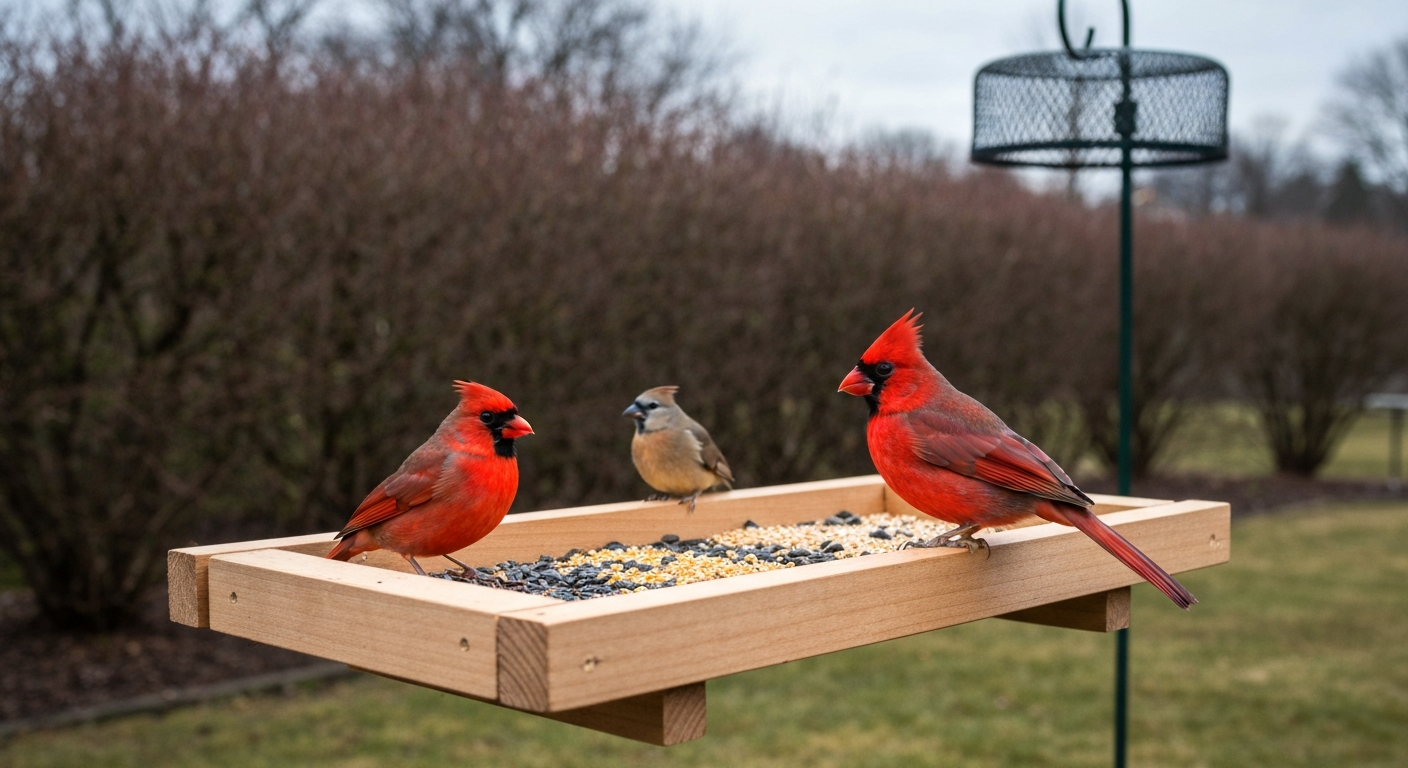
A post top bird feeder is exactly what it sounds like: a feeder designed to sit or mount directly on top of a post, whether that's a dedicated metal pole you've driven into the ground, a fence post, or a wooden 4x4 in your yard. The best setup puts the feeder about 5 feet off the ground, uses a hopper or platform style feeder for the widest bird appeal, and pairs it with a cone-shaped baffle at least 17 inches in diameter mounted at the 4.5-to-5-foot mark to stop squirrels and raccoons cold. Get those three things right and you'll have birds visiting within a few days.
Post Top Bird Feeder Guide: Choose, Mount, and Maintain
Marcus Hendricks
14 Jun 2026
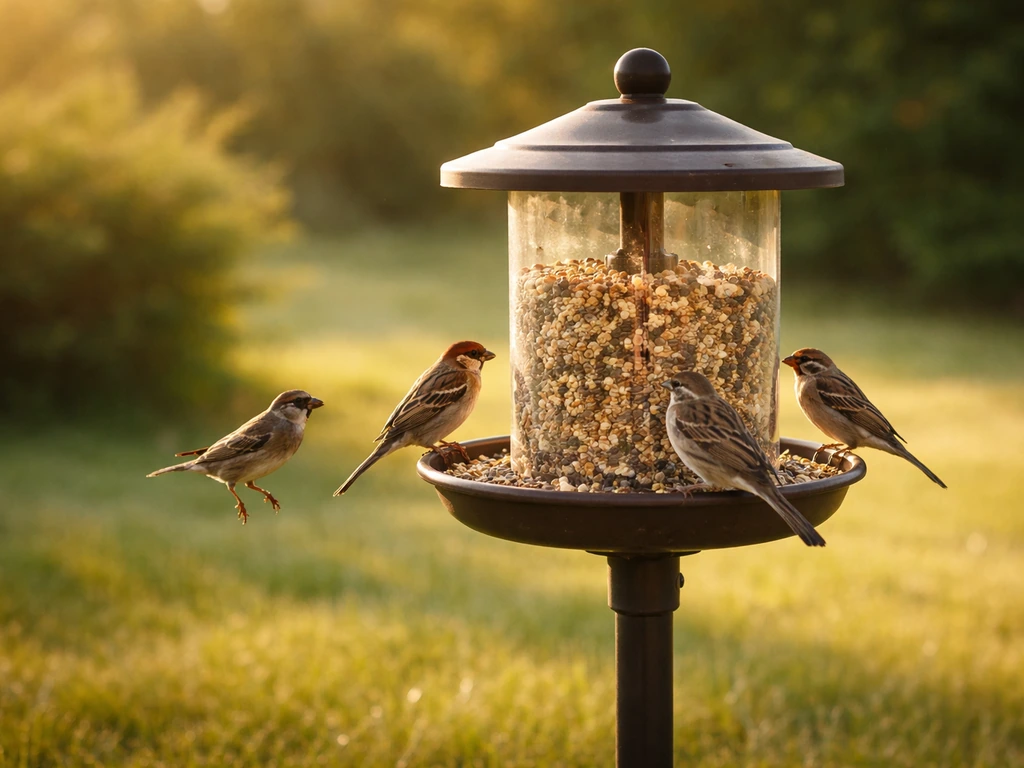
What a post top bird feeder actually is (and where it fits in your yard)
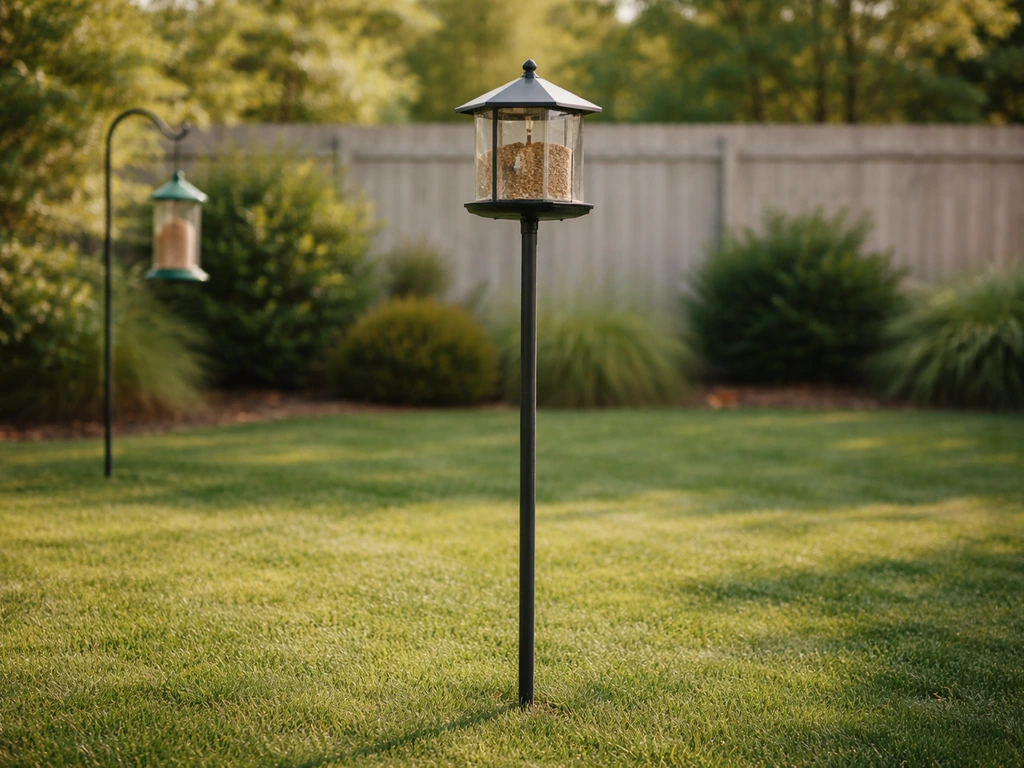
Post top feeders sit at the top of a freestanding pole or existing post rather than hanging from a hook or tree branch. That distinction matters more than it sounds. When a feeder is pole-mounted, you control everything: the height, the angle, the distance from shrubs or your house, and what pest deterrents go on the pole below it. You don't get that control with a hanging feeder swinging from a branch. Most post top feeders are hoopers, platforms, or tube feeders with a base plate or mounting bracket that locks onto a standard 1-inch or 4x4 post top. A few are purpose-built with integrated poles, but plenty of popular feeder models are designed to accept a separate post system.
In a typical yard, a post top feeder works best positioned in an open area away from dense shrubs but with some visual shelter nearby so birds feel safe flying in. Think of it as the centerpiece of your feeding station. If you're already thinking about fence-mounted feeders, the top-of-fence setup is a close cousin, but an open post in the yard usually gives you more flexibility on placement and pest control.
To get similar benefits while keeping the area tidy, consider a top-of-fence bird feeder setup paired with proper baffles. The goal with any post top setup is visibility for birds, accessibility for you to refill and clean, and enough clearance from jump points that squirrels can't easily reach it.
Choosing the right post-top feeder style for your target birds
Not every feeder style mounts cleanly on a post, and not every style attracts the birds you're after. Here's how the most common types map to bird species and post-top suitability.
| Feeder Style | Best For | Post-Top Fit | Seed Type |
|---|---|---|---|
| Hopper | Cardinals, jays, chickadees, nuthatches, titmice | Excellent — most hopper feeders are designed for pole mounting | Black oil sunflower, safflower, cracked corn, mixed |
| Platform/Tray | Doves, juncos, sparrows, larger ground feeders | Good — needs drainage holes; open to weather | Mixed seed, millet, peanuts, safflower |
| Tube | Finches, chickadees, nuthatches, siskins | Good — use a base adapter or hanging arm off the post | Black oil sunflower, nyjer/thistle, mixed |
| Suet Cage | Woodpeckers, nuthatches, chickadees | Fair — better hung from a side arm off the post | Suet cakes |
| Nyjer/Thistle Tube | Goldfinches, house finches, pine siskins | Good with adapter — tiny ports keep seed from spilling | Nyjer (thistle) only |
If you want to attract the widest range of backyard birds, a hopper feeder on a post is the most reliable starting point. Hopper feeders have walls and a roof that protect seed from rain and wind, and they hold enough seed that you don't need to refill daily. A flat top bird feeder is another good option when you want a platform-style feeding surface that stays usable even during busy feeding days. Cardinals and blue jays love them.
If finches are your priority, a tube feeder with nyjer seed in a feeder designed for small ports is the way to go. Woodpeckers and nuthatches respond best to suet, ideally hung from a side arm off the post rather than sitting on top, since they like to cling to a vertical surface while feeding. You can build a versatile post top station by combining a hopper on top with a suet arm hanging off the side.
Platform feeders work on posts but come with a real tradeoff: because they're open, seed gets wet fast and molds quickly. If you go with a platform, make sure it has at least a dozen drainage holes in the tray floor. Some products market themselves specifically on this, and for good reason. A clogged tray in a summer rainstorm or after a winter snow is one of the fastest ways to lose birds and grow mold.
Mounting and setup: height, clearance, and positioning
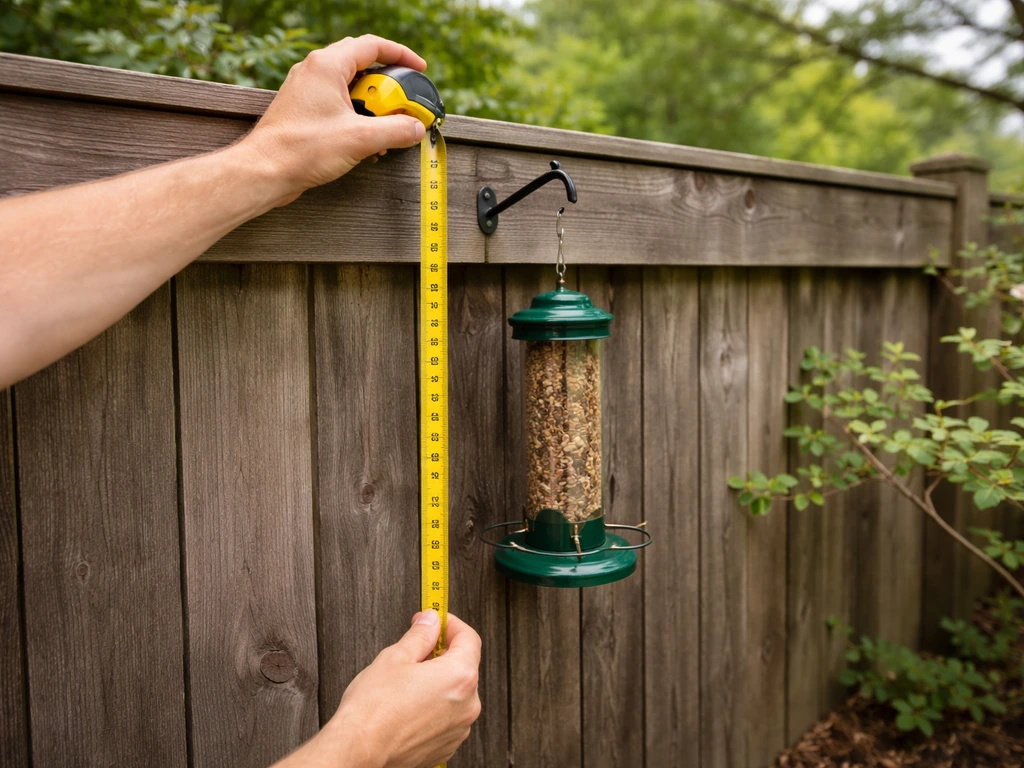
The standard recommendation from ornithology sources is to mount the base of the feeder about 5 feet off the ground. That's not arbitrary. It's high enough that ground-based predators can't simply reach up, but low enough that you can refill and clean it without a ladder. If you're driving a new post into the ground, sink it about 12 inches deep for stability, which means you need a post that's roughly 6.5 to 7 feet total before the feeder adds another foot or so on top.
Clearance from jump points is just as important as height. Squirrels can leap horizontally about 8 to 10 feet from a branch, fence, or rooftop. Place your post at least 10 feet from any tree limb, fence line, or structure that a squirrel could use as a launchpad. If your yard is tight, 10 feet isn't always possible, which is where a good baffle becomes non-negotiable (more on that below).
Window collision risk is something most people overlook when choosing a post location. Birds that flush suddenly from a post feeder sometimes fly straight toward a window. The safest zones are either very close (within 3 feet of the glass, so a bird doesn't have room to reach full speed) or 30 feet or more away. The mid-range of 3 to 30 feet from a large picture window is the danger zone. If your only viable post location falls in that range, add window collision deterrents on the glass.
Fence post vs. dedicated pole: which to use
Existing fence posts are tempting because the work is already done, but they come with complications. A fence is a highway for squirrels. The moment you put a feeder on a fence post, every squirrel in the neighborhood can walk the fence line right to it. Baffle placement also gets complicated when the post is attached to a continuous fence structure. A freestanding dedicated pole in the open yard gives you far better pest control options and more flexibility on placement. That said, if a fence post is your only option, position the feeder on the corner or end post farthest from trees and shrubs, and use a wrap-around baffle designed for 4x4 posts.
Weather durability and keeping seed dry
A post top feeder is more exposed than a hanging feeder sheltered under a tree canopy, so weather protection matters a lot. Hopper feeders are the best at this: the roof and walls form a protected chamber that keeps seed dry through most rain. Tube feeders are also reasonably rain-resistant because the seed column inside the tube stays dry. Platform feeders are the worst performers in rain and need regular emptying in wet seasons.
Look for feeders with these specific features when evaluating weather durability:
- A roof with an overhang that extends at least 2 to 3 inches beyond the seed ports or tray edge
- Drainage holes in any tray or base (at least a dozen for a full platform tray)
- UV-stabilized or powder-coated finish that won't crack or peel in freeze-thaw cycles
- Metal or high-density poly construction rather than thin painted wood (untreated wood warps and grows mold)
- Seed ports that close or seal when not actively being accessed, which reduces moisture entry
In winter, snow loading becomes an issue on hopper roofs and platform trays. A steeply pitched roof sheds snow better than a flat one. After heavy snow, a quick brush-off with a gloved hand keeps the seed accessible and prevents ice damming on the roof seams. Some all-weather feeder designs specifically advertise ice and snow resistance, and when you test them through a real winter (especially if you're in the Midwest or Northeast), the ones with steeper roof angles and stainless or powder-coated metal hardware genuinely do hold up better than the budget wood models.
Pest-proofing the post: squirrels, raccoons, and ants
Squirrels and raccoons
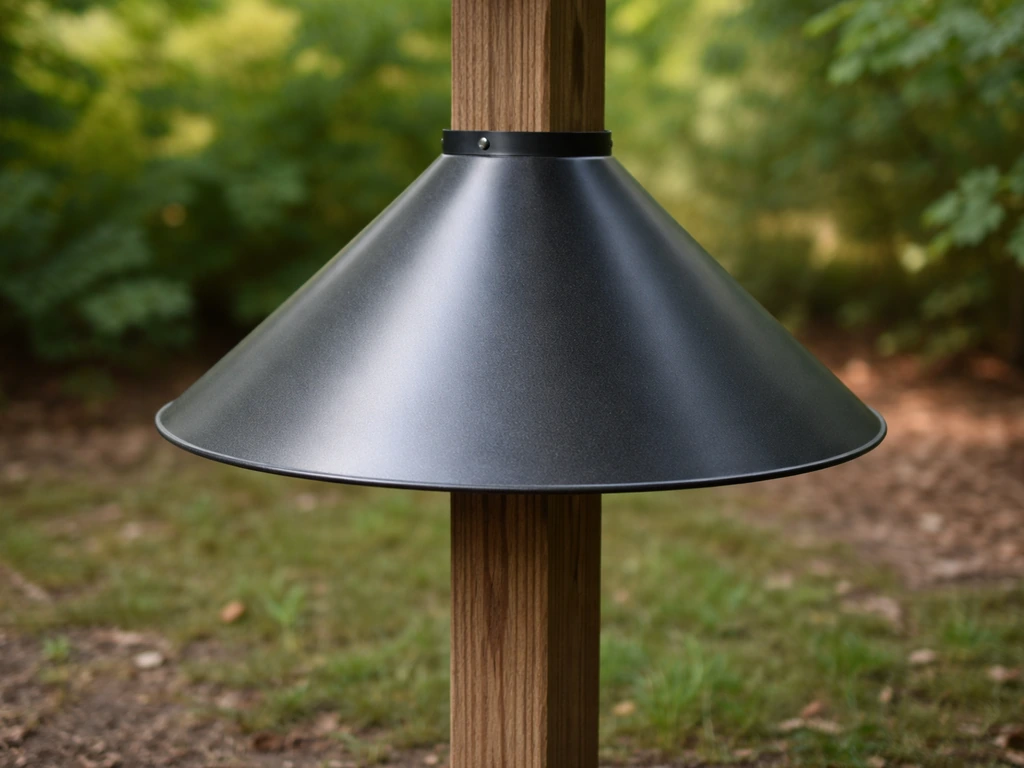
The single most effective thing you can do is install a cone-shaped baffle on the post below the feeder. Audubon specifically recommends a cone of at least 17 inches in diameter. Mount it so the top of the cone sits at the 4. 5-to-5-foot mark on the post.
Below that height, squirrels can jump straight up to the feeder from the ground. At the right height with the right size cone, a squirrel that climbs the post hits the underside of the cone and has nothing to grip. Raccoons are heavier and more persistent, and for them a 22-inch diameter baffle (sometimes called a raccoon baffle) provides extra margin.
The Birdhouse Chick sells a “Tall raccoon baffle” product intended to guard feeders against climbing raccoons and squirrels a 22-inch diameter baffle (sometimes called a raccoon baffle). There are 4x4 post-specific wrap-around baffles designed to clamp directly onto standard lumber posts if you're working with an existing wooden post rather than a round metal pole.
Beyond the baffle, position matters enormously. If squirrels can jump from a nearby fence, tree, or rooftop, no baffle will stop them because they'll bypass the pole entirely. The 10-foot clearance rule from any jump point is your first line of defense; the baffle is the backup. Don't rely on the baffle alone if the post is surrounded by potential launch points.
One thing that genuinely doesn't work as well as marketed: hot pepper additives in seed. Birds don't register capsaicin, but squirrels supposedly do. In real-world use, plenty of squirrels push through it anyway, especially in winter when food is scarce. A physical baffle is more reliable every time.
Ants
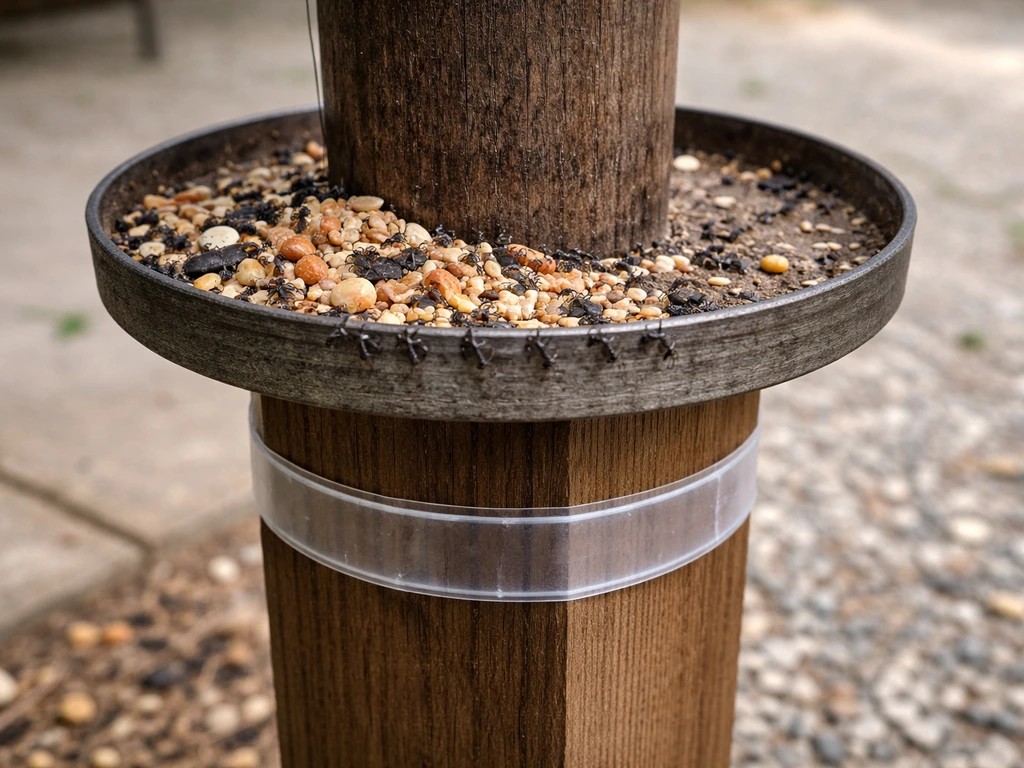
Ants are more of a warm-season problem. They can swarm a post top feeder from below, especially if there's any spilled seed or sugary residue on the post. The standard fix is an ant moat: a small cup-shaped water reservoir that sits between the hanging hook or feeder base and the seed supply. Ants can't cross the water barrier. You can buy commercial ant moats or DIY one from a bottle cap and some wire. Just remember to refill it in dry spells, and don't let it become a mosquito breeding tray. Keep it topped with fresh water and dump it every few days.
Troubleshooting: no birds, messy seed, and birds avoiding the feeder
Birds aren't coming
Give it at least two weeks. Birds discover new feeders by sight and by watching other birds, and it takes time to establish a feeding spot as part of their daily route. If two weeks pass without a visitor, check these things in order: First, are the birds actually in your area right now? Migration and seasonal patterns mean some species simply aren't present certain times of year.
Second, is the seed fresh? Stale or moldy seed has no smell appeal to birds. Dump the old seed, clean the feeder, and refill with fresh black oil sunflower. It attracts more species than any other single seed type.
Third, is the feeder visible? Birds feeding from cover scan open areas for feeding stations. A feeder hidden behind dense foliage won't get discovered. Fourth, is the feeder shaking or moving excessively in wind?
A wildly unstable feeder makes birds nervous. A post top setup should be more stable than a hanging feeder, but make sure the feeder is locked firmly to the post.
Too much mess under the feeder
Seed mess under a post top feeder is almost always caused by one of three things: birds tossing seed they don't want, spillage from overfilling, or squirrels digging through the seed looking for their favorites. For the bird-tossing problem, switch to a no-mess blend or shelled seeds (hulled sunflower or shelled peanuts) that birds eat entirely without dropping husks. For spillage, don't fill the feeder to the absolute brim, especially with mixed seed. For squirrel digging, fix your pest-proofing setup. Ground mess also attracts rodents at night, so staying on top of it isn't just aesthetic.
Birds are visiting but not landing or staying
If birds are flying to the feeder and leaving quickly without feeding, the most common culprits are a feeder that's wobbling or feels unstable underfoot, perches that are too short or slick for comfortable gripping, or a dominant bird species chasing others away. Check that the feeder base is secure on the post. For perch issues, some birds (especially larger ones like cardinals and jays) prefer a wider ledge or tray rather than a thin tube port. A hopper feeder with a wide tray base solves this. For bird aggression, a second feeder positioned 10 to 15 feet away gives subordinate birds an alternative and reduces competition.
Seed is clumping or getting wet inside the feeder
Wet seed is a serious problem because it grows mold fast, and moldy seed can make birds sick. If seed is clumping inside the hopper, it means moisture is getting in. Check the roof seams, the seed port openings, and the base gasket (if there is one). Hopper feeders can develop hairline cracks in acrylic panels that let moisture wick in. If the feeder is older and the panels are cloudy or cracked, it's time to replace them or the whole feeder. As a stopgap, dump and dry the feeder completely after any wet weather spell and refill with fresh seed.
Maintenance and seasonal feeding tips
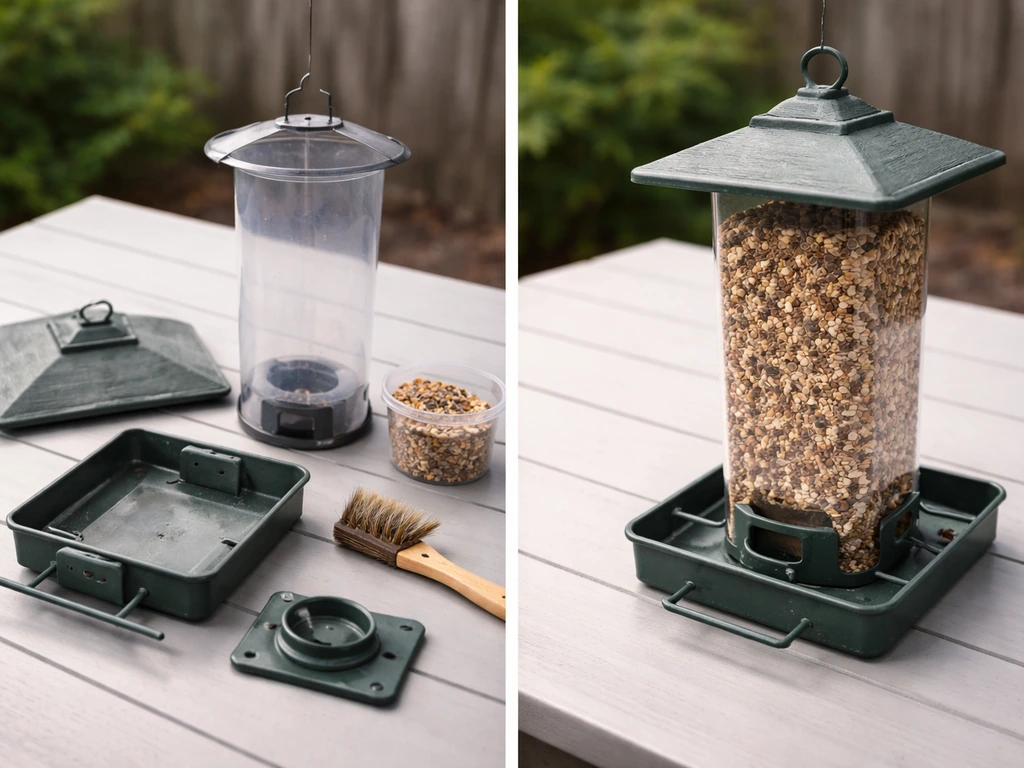
Cleaning schedule
Clean seed feeders every two weeks as a baseline. In hot, humid weather or if you see sick-looking birds, bump that up to once a week. The cleaning method is straightforward: disassemble the feeder, scrub all surfaces with hot soapy water, then soak for a few minutes in a solution of 1 part bleach to 9 parts water, rinse thoroughly, and let the feeder air dry completely before refilling. This is important: putting seed into a damp feeder defeats the whole cleaning exercise because moisture plus seed equals mold within days. Most quality hopper and tube feeders are designed to come apart easily for exactly this reason, so prioritize ease of disassembly when you're buying.
Winter feeding
Winter is when post top feeders earn their keep. If you want a fun, quirky approach to feeding, a droll yankees big top bird feeder can be a conversation-starting option for your setup. Birds are burning more calories in cold weather and are actively seeking reliable food sources. Black oil sunflower seed is the single best all-around winter seed: it attracts chickadees, nuthatches, titmice, finches, cardinals, and more.
In a hopper feeder, add safflower to bring in cardinals and deter house sparrows and starlings (those species don't prefer safflower). For a tube feeder, nyjer seed draws goldfinches even in winter when they're in their drab plumage. Peanuts (shelled or in the shell) attract blue jays and woodpeckers and provide high-fat calories that birds need in cold snaps.
In winter, refill more frequently than you think you need to. Birds will empty a feeder surprisingly fast during a cold week, and an empty feeder in January trains birds to stop checking it. Check the seed every two to three days and top off. Also clear snow from the roof and tray after storms so the seed stays accessible and the drainage holes in the tray don't get blocked by packed snow.
Summer and warm-season adjustments
Summer brings more moisture, more heat, and more insects, which means faster seed spoilage and more ant activity. Fill the feeder in smaller amounts so seed turns over every few days rather than sitting for a week in the heat. Clean every two weeks at minimum, and do a quick visual check of the seed surface every time you refill: if you see any caking, discoloration, or a sour smell, dump it immediately. This is also when the ant moat becomes essential if ants are a problem in your area. Summer is also when some bird species shift to eating more insects and may visit feeders less reliably, so don't panic if traffic drops in July and August. It's normal.
Quick-start checklist for today
If you're setting up a post top feeder right now, here's what to do in order:
- Choose a feeder style matched to your target birds: hopper for general use, tube for finches and small birds, platform only if you're committed to frequent cleaning
- Pick a post location at least 10 feet from any tree, fence, or structure a squirrel can jump from, and either within 3 feet or more than 30 feet from large windows
- Set the feeder base at 5 feet off the ground, with the post sunk about 12 inches into the ground for stability
- Install a cone-shaped baffle at least 17 inches in diameter (22 inches if raccoons are present in your area) at the 4.5-to-5-foot mark on the post
- Fill with fresh black oil sunflower seed as your starting point, then add seed variety once you know what species are visiting
- Set a cleaning reminder for every two weeks: disassemble, scrub, bleach-solution soak, rinse, dry, refill
- Wait at least two weeks before deciding the feeder isn't working, and check for fresh seed, good visibility, and stable post mounting if birds are slow to arrive
Once your post top setup is running smoothly, it's worth thinking about the broader pole and mounting system. The best bird feeder post setup can hold multiple feeder styles on arms below the main post top feeder, which turns a single post into a full feeding station. If you want a starting point, check our guide to the best bird feeder post setup.
If you're drawn to a specific style like a big top or flat top feeder design, those principles of height, baffle placement, and seed selection apply equally. If you want a more whimsical look, a droll yankees big top bird feeder is a fun post-top option that still follows the same height and pest-proofing basics. The post is the foundation; get it right and the rest is just fine-tuning.
FAQ
What if my post top feeder ends up higher or lower than 5 feet, how do I still set the baffle correctly?
If your post is taller than usual, don’t rely on a fixed overall height. Use the measured baffle mark, keep the feeder base around 5 feet, and make sure the top edge of the cone sits at the 4.5-to-5-foot range even if the feeder itself ends up above that due to the mount hardware thickness.
Do I really need a bigger baffle for raccoons, or will the 17-inch cone be enough?
Choose the baffle based on the jump threats you have, not just the animal you most fear. A smaller 17-inch cone can be enough for many yards, but if you frequently see raccoons reach fences or rooftops, upgrade to a larger (often 22-inch) raccoon baffle and double-check there are no nearby launch points within the 10-foot clearance window.
Can I use a wrap-around baffle on a wooden 4x4, and what can go wrong?
Yes, but only if the wrap-around baffle matches your post size and clamps securely without leaving gaps. If you use a 4x4 wrap-around baffle on a non-matching post, squirrels can find a grip point at the seams, and the baffle height must still place the cone underside where squirrels hit when climbing.
If my only usable post location is 3 to 30 feet from a window, what’s the best way to reduce window collisions?
Start with a “close and slow” window strategy. If you must place the feeder in the 3-to-30-foot danger zone, apply window collision deterrents like visible patterns on the glass and avoid leaving large transparent areas unmarked, since birds often aim for the most visually open path.
How do I maintain an ant moat so it actually keeps ants out?
Don’t treat ant moats as a one-time install. If the moat dries out, ants can cross, and if you leave old water sitting, it can become a mosquito source. Refill with fresh water during dry spells, and dump and clean on a regular schedule (for most yards, every few days) even if you do not see ants.
Birds are coming to the feeder but leaving quickly, what should I check first?
If the feeder is too stable or placed incorrectly, you can still get “no feeding” behavior. Confirm birds can land comfortably (perch width matters), ensure the feed port is not blocked by the mount bracket, and consider adding a second feeder 10 to 15 feet away to reduce chasing and give subordinate birds a safe option.
What causes lots of spilled seed under a post top feeder, and how can I fix it?
Switching seeds is useful, but do it in a controlled way. For example, if you suspect waste, move from mixed seed to a no-mess blend or shelled sunflower and peanuts, and reduce overfilling. The goal is to stop husk buildup and reduce the amount of food available for squirrel digging.
My hopper seed clumps even after I dried it, does that mean I should replace the feeder?
Not always. If the feeder uses a base gasket or sealed seams, you may need to remove and inspect for cracks and moisture paths after wet weather. In particular, hairline cracks in clear acrylic panels and compromised gaskets can wick moisture, and once you see persistent clumping after drying, replacement is often more reliable than repeated “drying out.”
How should refill frequency change between winter and summer for a post top feeder?
Seasonal refill timing matters. In winter, check seed every 2 to 3 days and clear snow so drainage holes and access ports remain open. In summer, use smaller fills so seed turns over every few days, because sitting heat increases spoilage even if the feeder looks clean.
I’m not getting the bird species I want, can feeder design and perching surfaces make the difference?
Yes, especially with birds that prefer perching surfaces. If your setup is a narrow tube-style port and you want cardinals or jays, a wider platform base or a hopper with a tray-style landing area can noticeably improve long-term visitation, since grip comfort affects feeding time more than people expect.
Next Article
What Does a Cardinal Bird Feeder Look Like: Design & Tips
Identify and choose the best cardinal bird feeder: shapes, colors, perches, seeds, placement, and winter tips.