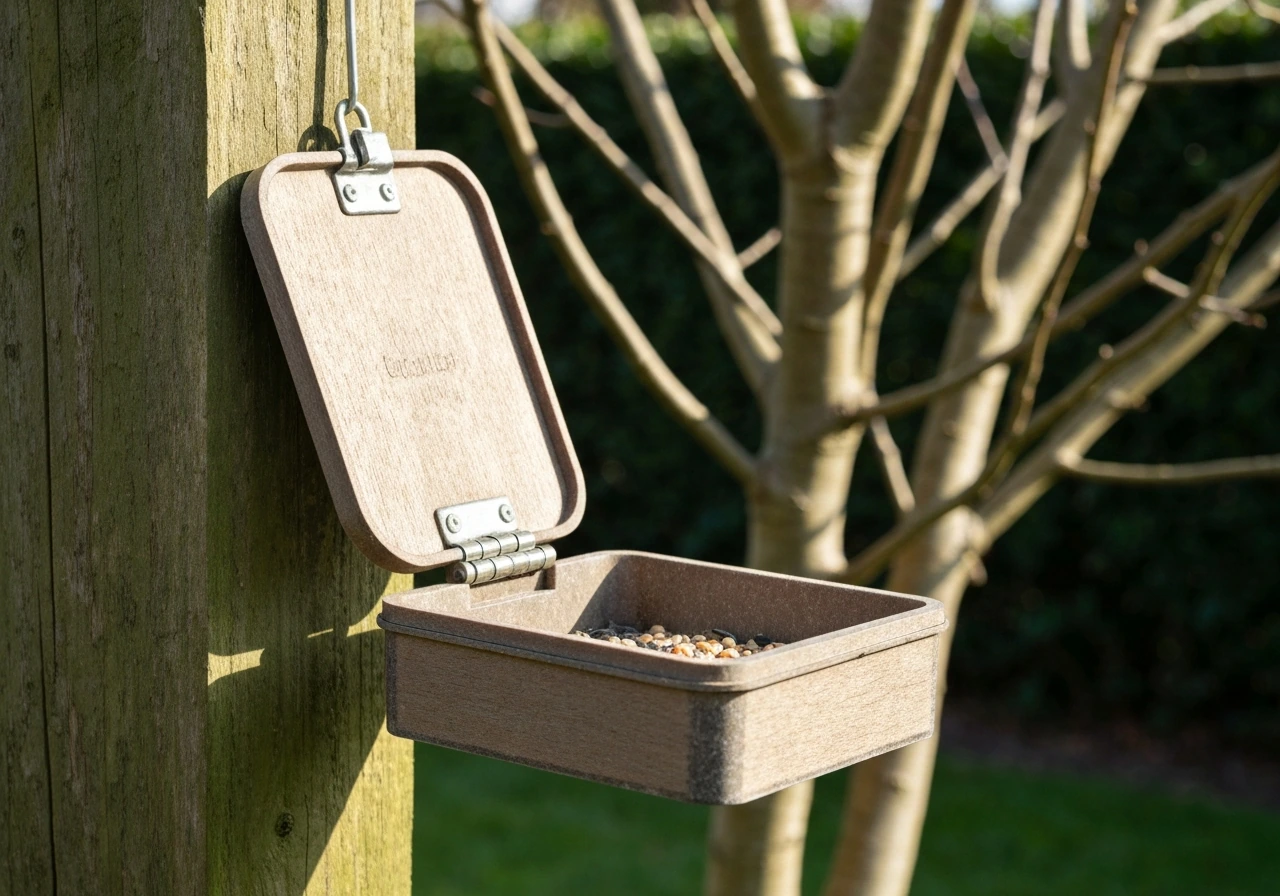
The Gardman flip-top bird feeder is a compact hanging feeder with a hinged lid you pull up and flip back to fill one-handed, then close again to keep seed, peanuts, suet pellets, or mealworms dry between visits. Gardman makes several versions of this feeder, each tuned to a specific food type, and getting the right one for your yard birds is the first decision worth making.
Gardman Flip Top Bird Feeder Setup, Use, and Fix Guide
Marcus Hendricks
3 Jul 2026
What the Gardman flip-top feeder actually is and how it works
Gardman produces the flip-top as a feeder family, not a single product. The core design is plastic and steel construction with a hinged top that you pull upward and flip backward to open. There is no unscrewing, no removing a separate cap, and no fumbling with multiple parts while seed pours everywhere. One hand opens it, you fill it, and the lid snaps back into place. It is a small but genuinely useful design detail. If you want a very different style, a table top bird feeder is a useful related option, though it tends to be less weather-protected than the flip-top design.
The three variants you will most commonly find are the seed feeder (holding roughly 280g of seed mix or around 190g of sunflower seeds), the peanut feeder (holding approximately 340g of whole peanuts), and the suet treat and mealworm feeder (also around 20cm tall, built for suet pellets or dried mealworms). All three share the same flip-top mechanism but have different ports and mesh sizes to suit the food type. The official filling instruction from Gardman is simple: pull up the lid, flip it over, and fill. That is genuinely all there is to it.
The build is plastic body with steel mesh or wire elements. Plastic keeps it light for hanging and makes it easy to wipe down, but you do want to check metal parts after a winter season since cheaper wire can rust if the coating chips. The compact dimensions (roughly 5 x 13 x 14 cm for the seed version) mean this is not a high-capacity feeder. It will not keep a busy garden flock fed for a whole week, but for a quieter garden or a secondary feeder it is well sized.
Choosing where to hang it in your yard
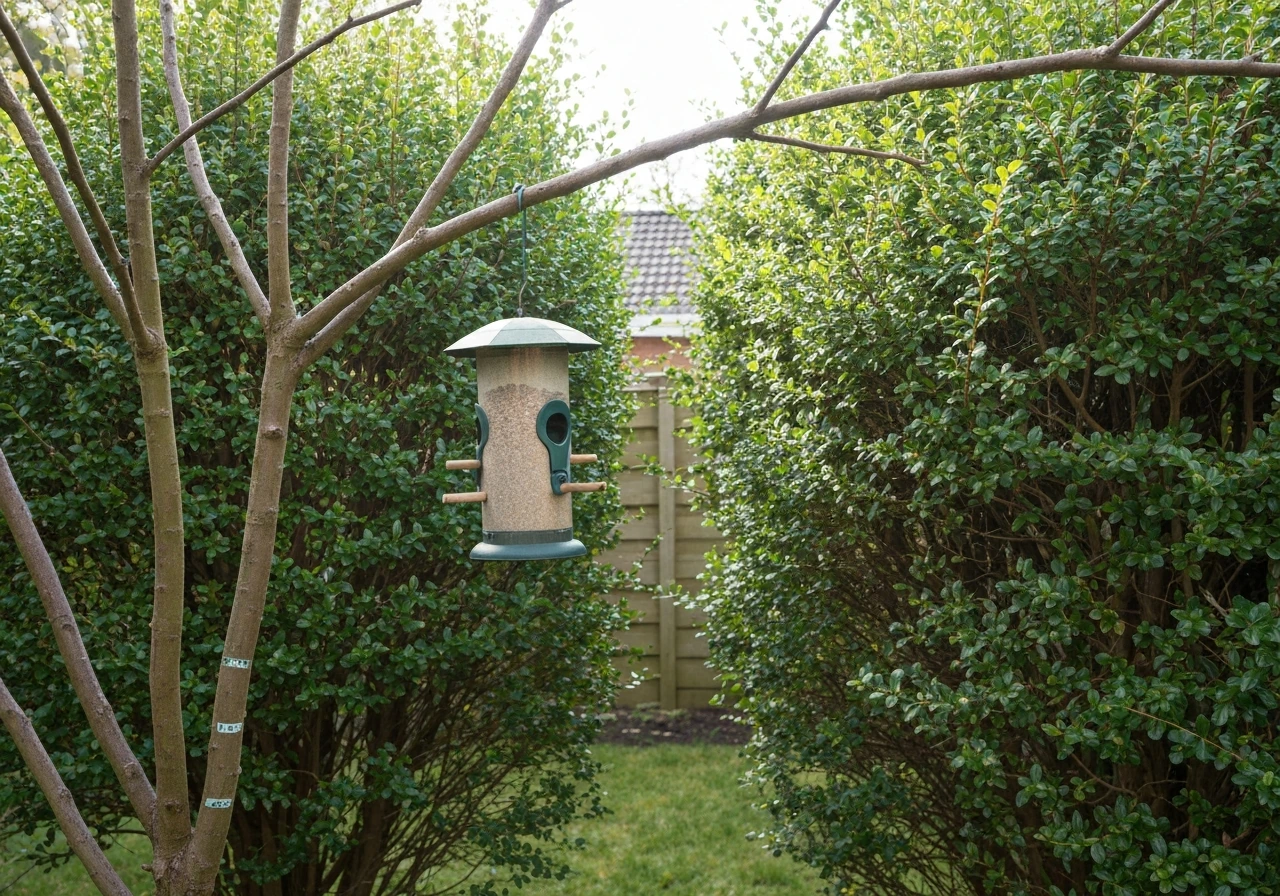
Gardman's own guidance for the suet and mealworm version calls for siting the feeder about 2 metres from cover so that it stays visible to birds while giving them a safe retreat nearby. That is a solid general rule for any garden bird feeder. A shrub, hedge, or low tree within that distance lets nervous birds scope the feeder from cover before committing, which noticeably increases how quickly new birds take to a feeder.
If you want a slightly broader rule of thumb, placing the feeder somewhere between 3 and 5 metres from a window is comfortable for birds and still gives you a clear view. Avoid positioning it directly against a fence or wall with no open approach angle, as birds prefer to fly in from multiple directions rather than feeling cornered. Height matters less than people think, but hanging it at roughly 1.5 to 2 metres off the ground keeps it accessible for cleaning while staying out of easy reach for ground-level pests.
Weather exposure is worth thinking about. The flip-top lid does help keep rain out compared with open-top tray feeders, but direct driving rain will still get into port holes. If you are comparing options, a best tray bird feeder will usually be simpler, but it often offers less protection in rain open-top tray feeders. If your garden is exposed, try to hang it under a tree canopy or from an eave where it gets some natural overhead protection. A dome-top feeder or a squirrel baffle positioned above it can double as a rain shield, which is a neat solution for exposed spots.
Setting it up for the first time
Mounting
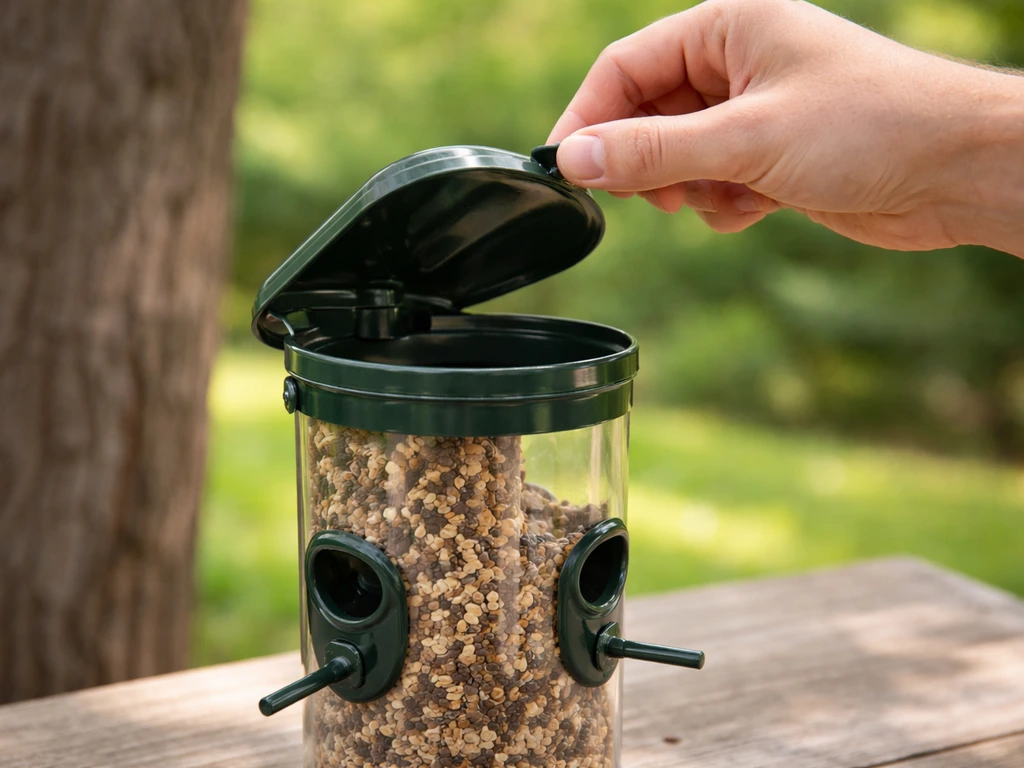
The Gardman flip-top feeder comes with a hanging loop or chain at the top. You can use it on a standard bird feeding station pole, hang it from a tree branch, or attach it to a bracket fixed to a fence or wall. If you are hanging it from a branch, make sure there is enough clearance for the feeder to swing without hitting anything, since wind-spinning feeders can spook birds initially. A feeding station with multiple arms is an efficient way to run the seed, peanut, and suet versions together as a small feeding station, which is how Gardman markets the flip-top range as complementary products.
Cleaning before first use
Before you add any food, rinse the feeder thoroughly with warm water and let it air-dry completely. Audubon also emphasizes it is key to completely dry a feeder before refilling to support winter cleanliness and reduce microbial growth. New feeders can carry manufacturing residue and warehouse dust, and introducing wet seed into a damp feeder is the fastest way to get mold growing inside within a day or two. Complete drying before the first fill is not optional, even if the feeder looks clean.
Filling
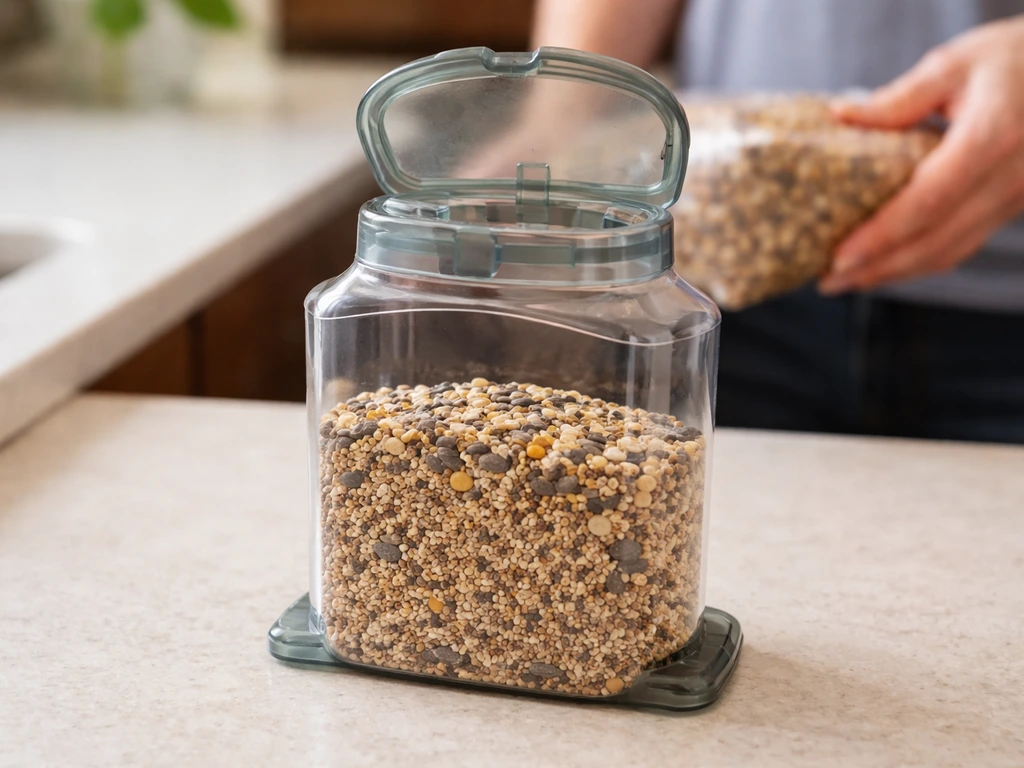
Pull the lid up, flip it backward, and fill to no more than about two-thirds of the capacity. If you are also shopping for a bottle top bird feeder kit, the same fill-and-seal idea helps keep the feeding area tidy and less prone to spills Pull the lid up, flip it backward, and fill. This is a small feeder and overfilling it increases the chance of seed pressing against the lid seal and jamming the closure.
For the seed version, that means roughly 180 to 200g of mix. For the peanut version, pack the mesh section loosely with whole peanuts, stopping before the feed is above the port level. For the suet and mealworm version, suet pellets or dried mealworms both pour in easily. Flip the lid back closed until it clicks or sits flush.
Best feed types and seasonal strategy
Matching feed to feeder matters more than most people realise. Using the wrong seed in a peanut mesh, for example, results in blocked ports and wasted food. Here is a quick breakdown of the three versions and what works best in each.
| Feeder version | Best feed | Birds it attracts | Notes |
|---|---|---|---|
| Flip-top seed feeder | Sunflower hearts, mixed seed | Blue tits, great tits, house sparrows, finches | Sunflower hearts reduce husk mess; avoid cheap fillers like milo or wheat |
| Flip-top peanut feeder | Whole peanuts (aflatoxin-tested) | Great spotted woodpeckers, nuthatches, blue tits, great tits | Use only during breeding season with caution (chick choking risk); wire mesh controls feed rate |
| Flip-top suet and mealworm feeder | Suet pellets, dried mealworms | Robins, starlings, blackbirds, thrushes, tits | High-energy; especially useful October through March |
For seasonal feeding, the RSPB's guidance is to put out food regularly through autumn and winter. Mornings are particularly important: birds lose significant body heat overnight and need to replace that energy early. Getting food out at the start of the day in winter genuinely helps birds survive cold snaps. The suet and mealworm feeder is especially worth keeping stocked from October through to late March, when natural insect food is scarce and birds need dense calorie sources.
Spring and summer feeding with the seed and peanut versions is fine, but be more cautious about quantities during breeding season. Food left uneaten for more than a day or two in warm weather can go stale or moldy fast. The RSPB's rule of thumb is that seed and peanuts should ideally be eaten within one to two days in wet or warm conditions. In summer, fill to a smaller amount more frequently rather than topping up a full feeder.
Keeping pests out and food dry
Squirrels and rats
The Gardman flip-top is not a squirrel-proof feeder. It is a compact hanging feeder, and a determined squirrel will empty it quickly. The most practical fix is the Gardman Universal Squirrel Baffle, a clear domed unit that mounts above the feeder on the hanging chain or pole and physically blocks squirrels from reaching down to the feeder. It works reliably for hanging feeders positioned away from jump-off points like fences, branches, or garden furniture.
For rats, the issue is usually fallen seed on the ground rather than rats accessing the feeder directly. Keep the area under your feeder raked and cleared regularly. Ground-level spillage is the main attractant. Using sunflower hearts instead of whole seed mixes also reduces husk waste on the ground significantly, since birds eat the whole thing rather than dropping husks.
Keeping food dry
The flip-top lid provides more weather protection than an open platform or tray feeder, but it is not waterproof in sustained rain. Wet seed is a serious problem: it clumps, blocks ports, and provides an ideal environment for mold and bacteria to grow rapidly. If you open the feeder and the seed is damp or clumping, discard it, clean the feeder, dry it completely, and refill. Do not push wet seed through the ports or mix fresh seed on top of damp seed.
Positioning the feeder with some overhead cover is the best passive defense. If you cannot provide natural cover, a domed baffle above the feeder, similar to a bird feeder dome top design, serves double duty as both a squirrel deterrent and a rain shield. In very wet winters, consider temporarily reducing fill levels so any seed that does get wet is a smaller loss to discard and replace.
Insects and mold
Insects, particularly wasps in late summer, can be attracted to sugar-rich suet products and stale seed. Keeping quantities small and cycling food through quickly is the most effective control. Ants can also be an issue on pole-mounted setups: a water moat on the pole can help, though this is less of a concern for hanging feeders.
Troubleshooting common problems
Birds are not using the feeder
This is the most common complaint and it almost always comes down to one of three things: the feeder is too close to human activity, it is positioned without nearby cover, or the food is stale. Check the 2-metre-to-cover rule first. If the feeder has been sitting out for more than a week with no takers, empty it, clean it, and refill with fresh food. Birds are sensitive to food that has gone stale or smells off. Patience is also real: a newly placed feeder in a garden without established feeding can take two to four weeks for birds to discover.
The flip-top lid is not closing properly
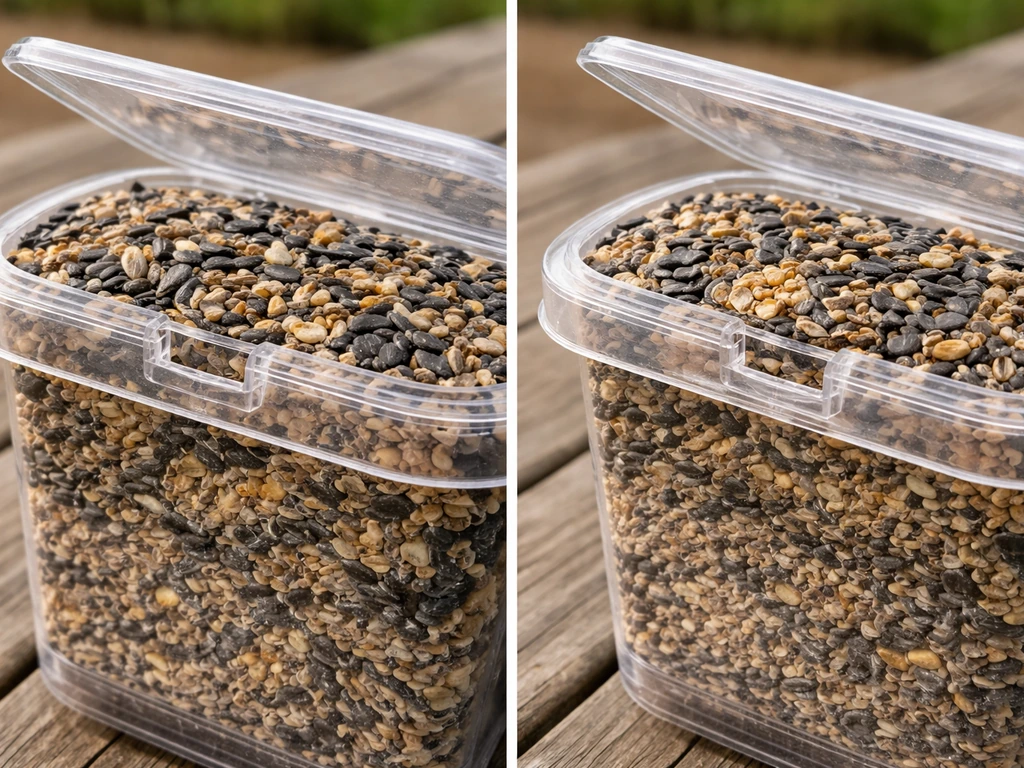
If the lid will not close flush, the most likely cause is overfilling. Food packed too close to the lid opening will prevent the hinge from closing completely. Empty some feed out, then try again. If the lid still does not sit flush, check whether the hinge pin has bent slightly or the plastic has warped from prolonged sun exposure. Gardman replacement parts can sometimes be ordered directly, but for a warped lid on an older feeder, replacing the whole unit is usually the more practical choice given the low cost of the feeder.
Seed is getting wet inside the feeder
If seed is consistently damp inside, first check whether the lid is actually closing fully. Then look at your hanging position: is it exposed to prevailing wind and rain? Move it to a more sheltered spot or add overhead cover. In persistent cases, the mesh or port holes at the bottom of the feeder may not be draining properly. Check for seed husks or compacted debris blocking any drainage holes and clear them with a thin brush or toothpick.
Feed is clumping or blocked in ports
Clumping is almost always a moisture problem. Discard the old food, clean the feeder, dry it thoroughly, and switch to a drier food type if possible (sunflower hearts clump less than cheap seed mixes with dusty filler). Peanut feeders can get blocked if peanut fragments jam the mesh: tap the feeder gently to dislodge and clear with a narrow brush.
Sick birds are visiting the feeder
If you see a bird that looks ill at or near your feeder, stop feeding immediately, remove and thoroughly clean all feeders, and store them away (in a shed or garage) for at least a week. This is the RSPB's direct advice, and it is the right call. Disease can spread fast at feeders when multiple birds are eating from the same surface.
Maintenance routine and when to replace parts
The Gardman flip-top is a low-maintenance feeder, but it still needs regular attention to stay safe for birds. Here is a practical schedule:
- Every 1 to 2 days in warm or wet weather: check food quality, discard anything damp or clumped, and top up with fresh food only if the feeder is dry inside.
- Weekly: empty remaining food, rinse the feeder with warm water, scrub any residue with a stiff brush, rinse again, and air-dry completely before refilling. The Wildlife Trusts recommend always allowing feeders to air-dry fully before adding food.
- Monthly in winter, fortnightly in summer: do a more thorough clean with a diluted wildlife-safe disinfectant, rinse well, and inspect all components.
- Each season: inspect the hinge mechanism and any steel wire or mesh parts for rust or corrosion. Check that the hanging loop or chain is secure and has not weakened.
- Annually: assess the plastic body for UV cracking or warping, especially after a hot summer. If the lid no longer closes cleanly, or any wire mesh is separating from the plastic body, replace the feeder.
The Gardman flip-top range is modestly priced, which makes the replacement decision easier than with premium feeders. When the lid hinge starts to fail or the mesh corrodes, buying a new unit is usually a better use of time than attempting repairs. Keep a spare of whichever version your birds use most, especially before winter when you do not want a gap in feeding during cold spells.
If you find yourself wanting more capacity, better weather resistance, or built-in squirrel protection as your garden feeding setup grows, it is worth looking at other feeder types alongside the Gardman flip-top. Screw-top feeders offer a tighter seal for seed in wet climates, and dome-top designs give more integrated rain and pest protection. Screw top bird feeders can provide a tighter seal to help keep seed drier in wet climates Screw-top feeders. The flip-top earns its place as an easy-access, easy-clean everyday feeder, but a well-rounded garden setup usually combines two or three complementary feeder styles to serve different birds and conditions across the seasons.
FAQ
Can I use the gardman flip top bird feeder for any type of seed, or do I need the exact variant?
You should match the food to the specific variant. Seed, peanut, and suet or mealworm versions have different port shapes and mesh sizes, using the wrong food can cause port blockages and wasted feed, even if it seems to fit at first.
How often should I clean the gardman flip top bird feeder if birds are using it daily?
Clean it at least every 1 to 2 weeks in winter, and sooner if you see dampness, clumping, or stale odors. In hot weather, shorten the cycle because wet or warm conditions accelerate mold inside the lid area and ports.
What is the safest way to refill without spilling or overfilling the gardman flip top bird feeder?
Open the lid and fill to no more than about two thirds of capacity, pour slowly so the feed sits below the port line, then close until it clicks or sits flush. Overfilling is a common cause of a hinge that cannot fully seat.
My gardman flip top bird feeder looks dry outside, but the inside seed is still damp. What should I check first?
Start by confirming the lid seals fully when closed. Next, reassess your siting for prevailing wind-driven rain, then check for blocked drainage holes or clogged port openings caused by husks or compacted debris.
Is the gardman flip top bird feeder waterproof in heavy rain?
No, it is more rain resistant than open tray feeders but not waterproof in sustained downpours. In very wet weather, reduce fill levels and be ready to discard any clumped or damp feed rather than topping it up.
Do I need to rinse the gardman flip top bird feeder before first use?
Yes, rinse with warm water and air-dry completely before the first fill. Manufacturing residue and dust can promote mold quickly once wet seed is added, even if the feeder appears clean.
How can I prevent ants when the gardman flip top bird feeder is mounted on a pole or bracket?
If ants become a problem, consider a water moat on the pole where possible, keep the area around mounting points clean of spilled seed, and avoid leaving mixed seed below the feeder to reduce attractants.
Is the gardman flip top bird feeder squirrel-proof?
It is not squirrel-proof by itself. Use a dedicated squirrel baffle mounted above the hanging chain or pole, and place the feeder away from easy jump-off routes like fences, branches, or furniture.
What should I do if I see sick-looking birds at the feeder?
Stop feeding immediately, remove and thoroughly clean all feeders, and store them away for at least a week. Do not try to keep refilling with the assumption it is harmless, disease can spread rapidly at feeders.
What should I do if the lid hinge seems loose or won’t close flush over time?
First, confirm you are not overfilling. If it still won’t seat, inspect for hinge pin bending or plastic warping from long sun exposure. For worn hinges or corrosion, replacing the whole unit is often more practical than repairing.
How long should it take before birds find the gardman flip top bird feeder?
In a garden without established feeder activity, expect a delay of about two to four weeks. Keeping quantities appropriately small and maintaining consistent placement helps, birds return when food is fresh and predictable.
Can I run multiple gardman flip top versions together on one feeding station?
Yes, using a multi-arm feeding station is a practical way to offer seed, peanuts, and suet or mealworms in one spot. Just ensure each port is fed the correct food type, and keep fill quantities small to reduce waste if conditions are wet.
Next Articles
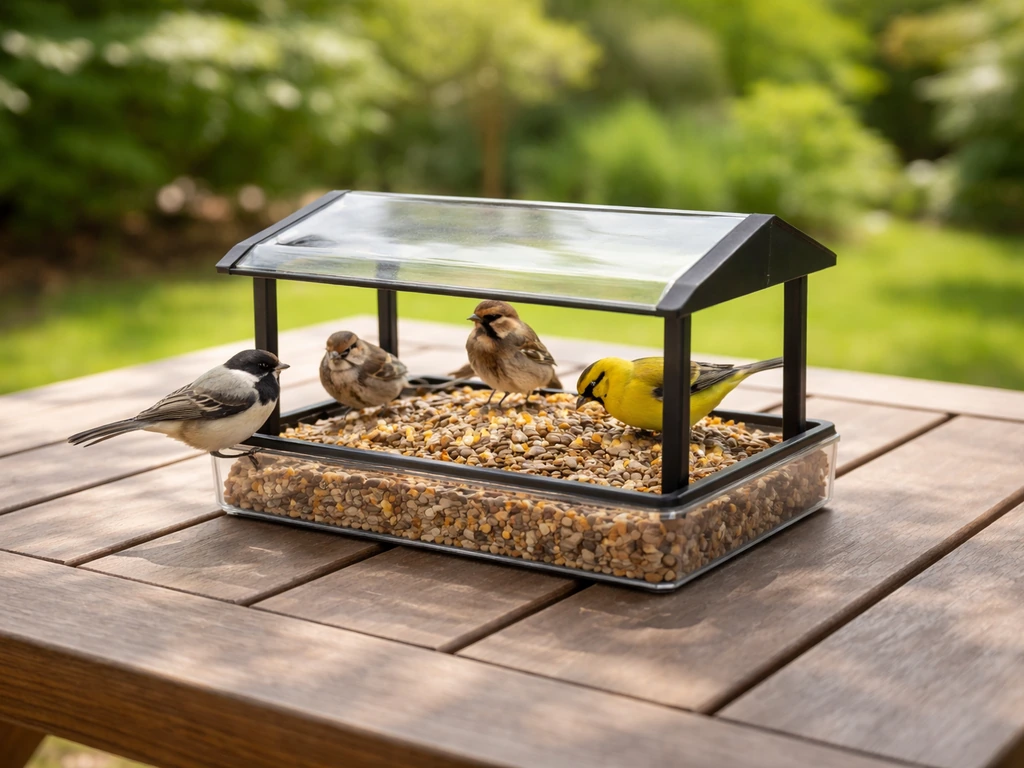
Table Top Bird Feeder Guide: Choose, Place, and Fix Problems
Choose a table top bird feeder, place it safely, solve mess and pests, and match feeders to backyard birds.
What Does a Bird Feeder Look Like? Types and Visual Cues
See common bird feeder silhouettes and visual cues, plus features for choosing and troubleshooting fast.
Best Oriole Bird Feeders: Buying, Setup, and Tips
Choose the best orioles feeders and set up jelly or nectar for backyard success, with pest-proofing and troubleshooting.