The best suet bird feeder is the one that physically matches the suet form you're using, holds up through your local weather, and keeps squirrels and raccoons from cleaning you out every night. That sounds simple, but there's a lot of variation between feeder styles, and picking the wrong one means wasted suet, a mess under the feeder, and birds that don't stick around. Whether you're running suet pellets, cakes, or loose chunks, this guide will walk you through exactly what to look for, which feeder style fits your situation, and what to skip.
Best Suet Bird Feeders: Buying Guide for Pellets and Chunks

Marcus Hendricks
23 Mar 2026
What actually makes a suet feeder good
"Best" in suet feeders comes down to a handful of specific design choices, not brand names or price points. A feeder that scores well on all of these is genuinely hard to beat:
- Suet-form fit: The feeder opening and interior cavity need to match your suet format. Pellet feeders use tighter mesh or controlled openings to keep small pellets from falling through, while cake/chunk feeders have larger cavities sized for standard 11-ounce suet cakes.
- Mess and waste control: Good feeders catch crumbs and drips instead of letting them fall to the ground. The Brome Squirrel Buster, for example, uses dedicated Crumb Ports that funnel falling suet back into a recovery zone so birds can still access it.
- Drainage and drip management: Suet softens and drips, especially in warmer weather. A feeder with drainage holes in any tray or base and no pooling zones keeps suet fresher and reduces ground contamination.
- Cage or mesh strength: Cheap wire rusts fast and deforms under pressure from larger birds and pests. Look for powder-coated or stainless steel wire, not painted bare metal.
- Capacity and access: How many suet cakes or how much pellet volume does it hold? More capacity means fewer refills, but larger feeders also attract more starlings if that's a concern in your yard.
- Mounting versatility: Can it hang, pole-mount, or attach to a window? Flexibility here matters a lot for pest management and bird visibility.
One thing I'd add from personal experience: feeder weight when full matters more than people expect. A heavy, full suet feeder on a flimsy hanger will swing violently in wind, scattering suet and discouraging birds. A stable mount is part of the design, not an afterthought.
Matching the feeder to your yard and your suet type
Before you buy anything, figure out two things: what suet form you plan to use, and what your yard environment looks like. These two factors narrow the field faster than any other consideration.
Suet pellets vs. suet cakes: feeder design matters
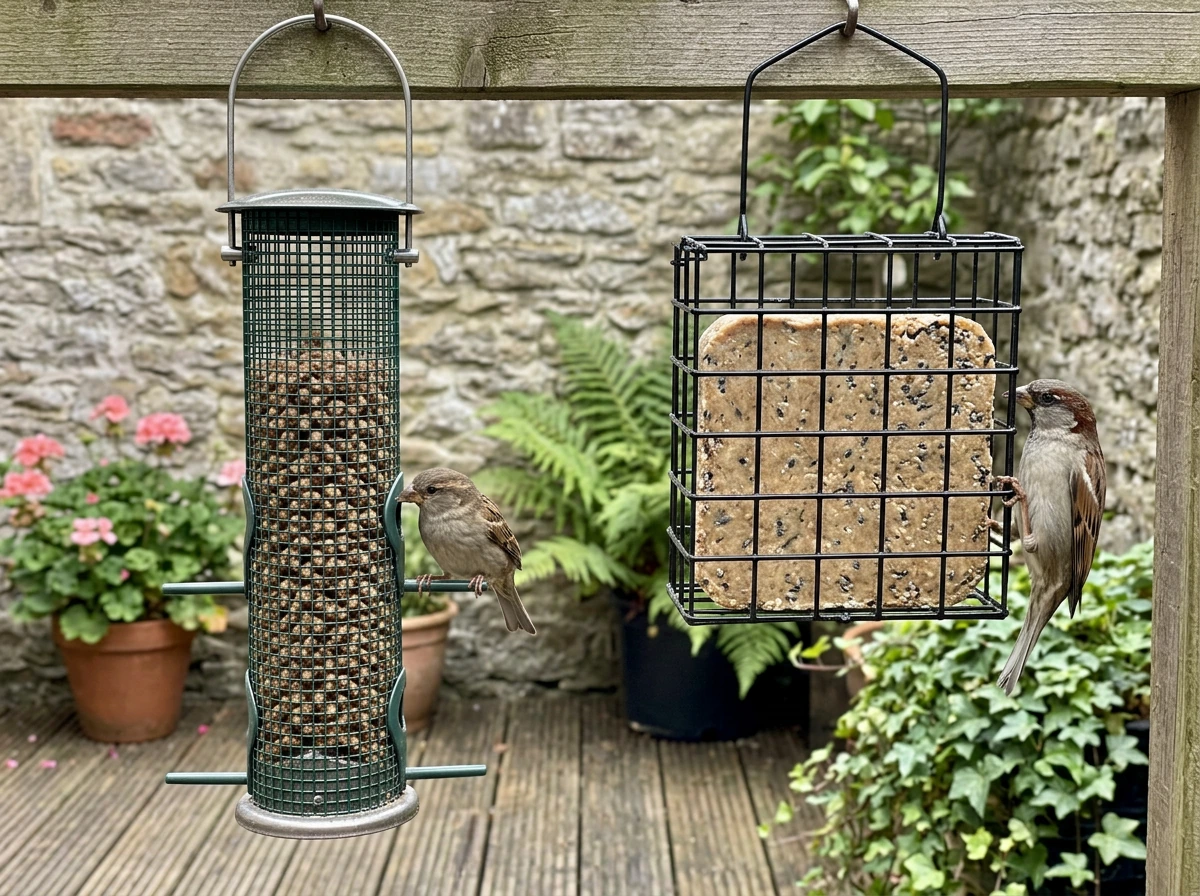
Suet pellets are small, round, and will fall straight through a standard cage feeder. Pellet-specific feeders solve this with a lower mesh area that holds pellets securely and often include an integrated tray to catch any that do escape, which also reduces ground mess. If you switch to pellets and try to use a cake-style cage feeder, you'll lose most of your suet to the ground within a day or two. If you want flexibility, look for feeders with a pellet tray add-on or a dual-format design.
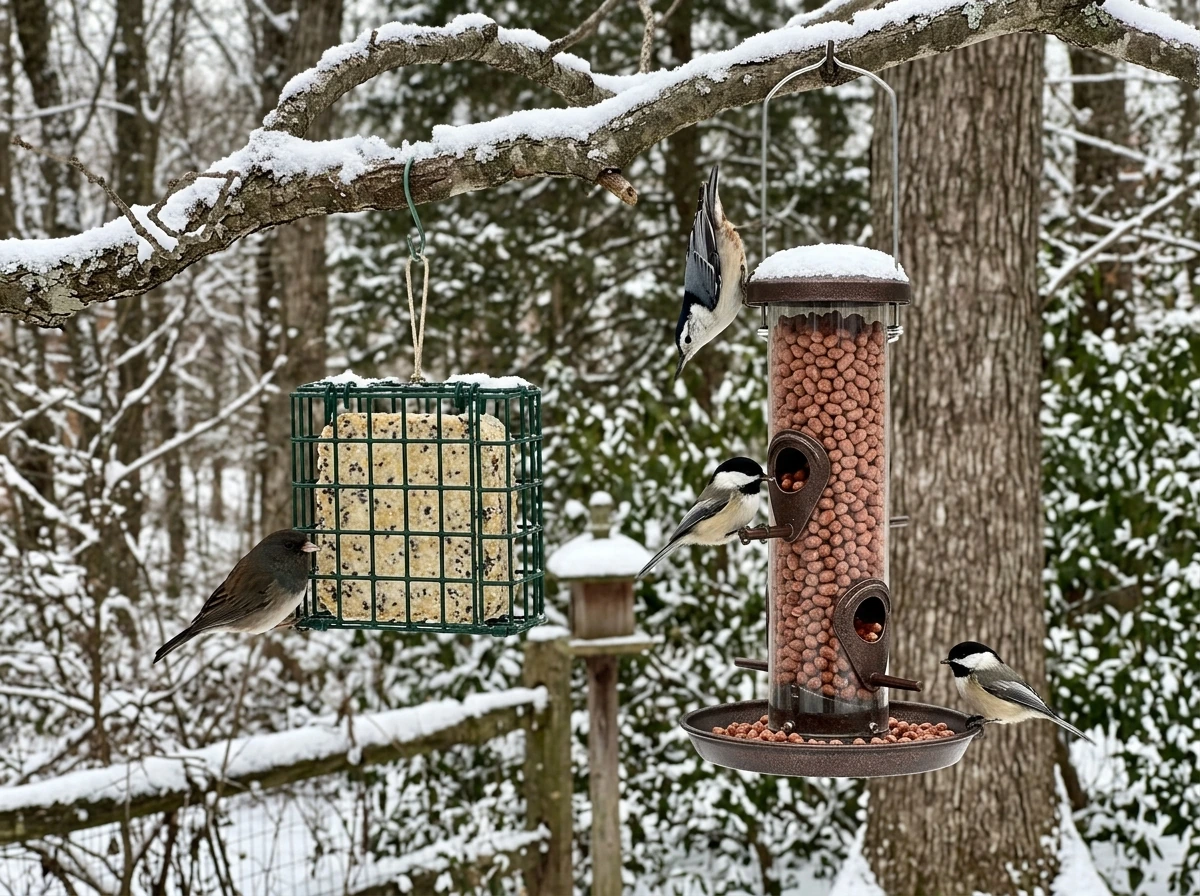
Suet cakes are the easier case. Most standard cage-style feeders accommodate the common 11-ounce square cake. Some feeders hold two cakes, which is great for winter when demand is high. Loose chunks and no-melt suet logs use similar containment logic: you need a cage or mesh enclosure that keeps the suet accessible but contained, which Audubon recommends when it says to use suet in cage feeders or mesh onion bags.
Yard placement and feeder style
Where you hang or mount the feeder shapes everything from which birds show up to how badly squirrels raid it. Audubon's winter feeding guidance recommends having ample native plant cover nearby, since birds need somewhere to retreat between visits. At the same time, pole-mounted feeders should sit at least 10 feet from trees, fences, or other structures that give squirrels a launching point. A hanging feeder under a good baffle can work closer to cover, but the baffle placement is critical: the top of the baffle should sit at least 4 feet off the ground, and the whole setup should be 7 to 8 feet away from any surface a squirrel can jump from.
If you're in a yard with heavy tree cover and lots of squirrel pressure, a weight-sensitive or baffled suet feeder mounted on a pole is your best setup. If you have a more open yard with fewer squirrel problems, a simple hanging cage feeder close to a window is both practical and great for bird watching.
Suet feeder styles and which birds they suit
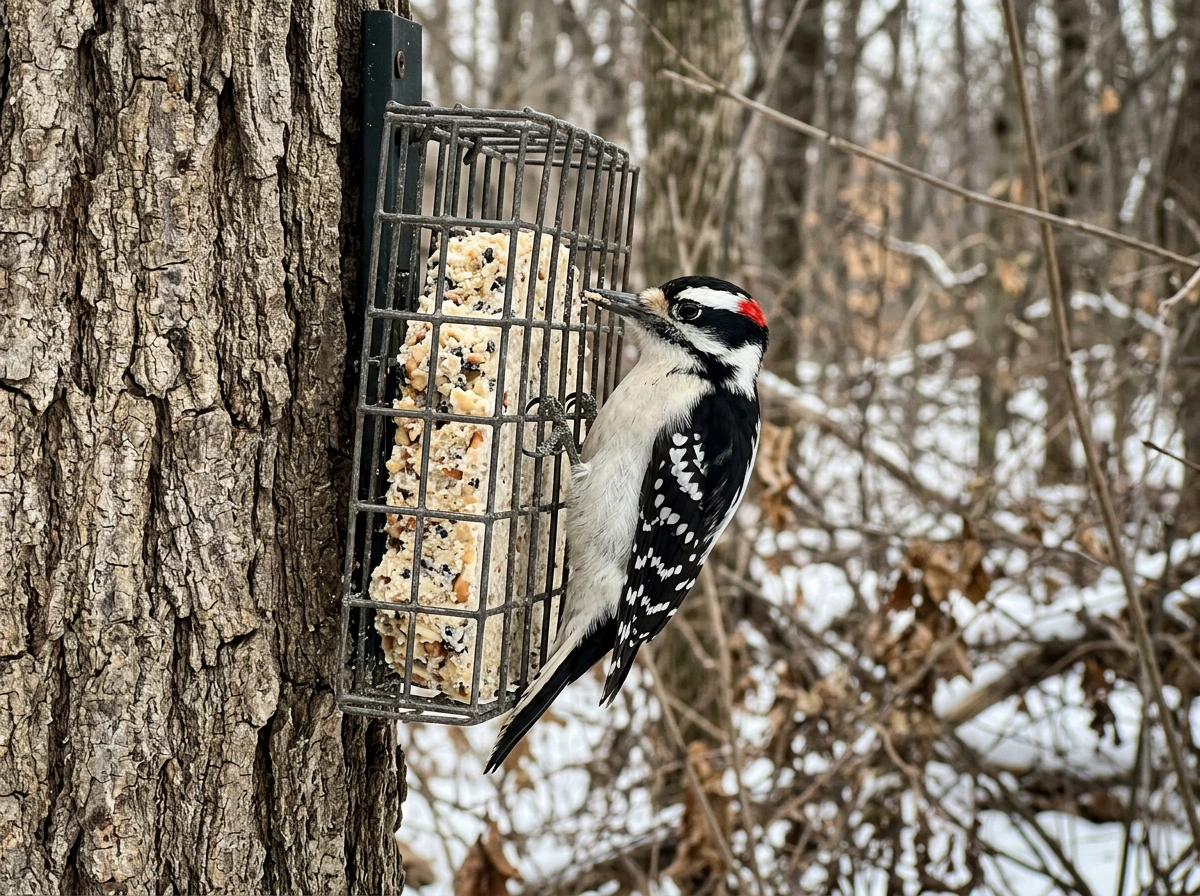
Different feeder styles attract slightly different bird mixes and handle different situations. Here's how each type actually performs in real-world use:
Cage or sleeve feeders
This is the most common style and the one most people start with. A wire cage holds one or two suet cakes and hangs or mounts on a pole. The openings on standard cage feeders run roughly 1.5 inches square, which lets in chickadees, nuthatches, woodpeckers, and northern flickers while making it harder for larger birds like starlings or grackles to dominate. Cage feeders with a tail prop area below the cage specifically attract woodpeckers, who prefer to brace their tail while clinging. If woodpeckers are your target, look for that extended bottom tail prop.
Pellet-specific feeders
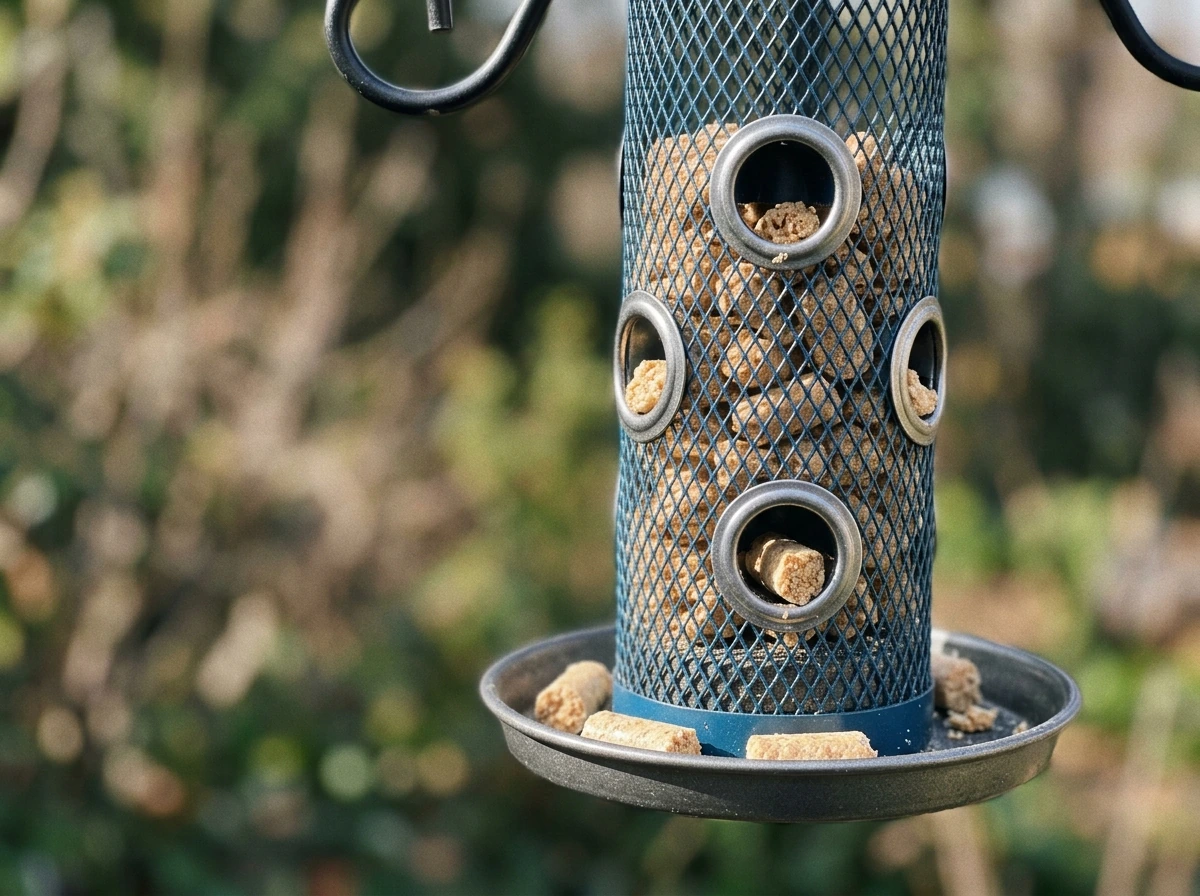
These use finer mesh or a tube-style design with small ports to hold suet pellets. They typically include a tray underneath to catch loose pellets and reduce ground mess. If you're specifically targeting smaller birds like chickadees and nuthatches with high-quality suet pellets, this style reduces waste significantly compared to improvising with a cake-style feeder.
Tray and platform feeders
Open tray feeders can hold suet chunks or crumbled suet, and they tend to attract a wider variety of birds since there's no cage barrier. The downside is that they offer zero pest protection and suet exposed on an open tray drips faster in warm weather. I'd only recommend this style in winter, in a yard with low squirrel pressure, and when you want to attract ground-feeding birds that won't cling to a cage.
Upside-down or inverted cage feeders
These are cage feeders where birds access suet from the bottom rather than the sides. This design favors birds that cling upside-down, like chickadees, nuthatches, and woodpeckers, while naturally discouraging European starlings, which are less comfortable feeding in that position. If starlings are raiding your suet, switching to an inverted feeder is one of the most effective deterrents that doesn't involve any additional hardware.
Which birds show up, and how feeder design affects that
Suet is high-fat, high-energy food, which makes it especially popular in winter when insects are scarce. The birds most reliably drawn to suet feeders include <span>woodpeckers (downy, hairy, red-bellied, and northern flickers)</span>, chickadees, white-breasted and red-breasted nuthatches, and Carolina wrens. Starlings are also enthusiastic suet visitors, which is why feeder design and placement both matter for managing who shows up.
Suet pellets vs. suet cakes for bird attraction
The suet format affects both who visits and how they visit. Suet cakes in a cage feeder are ideal for woodpeckers and nuthatches, who cling and peck directly at the block. Suet pellets are more approachable for smaller, perch-feeding birds like chickadees and wrens, especially when a tray is involved. If attracting woodpeckers is your main goal, a standard or inverted cage feeder with a suet cake is the right call. If you want a mixed crowd of smaller backyard birds, a pellet feeder with a tray tends to draw a broader mix.
Placement tips for the birds you want
Woodpeckers prefer feeders mounted on or near tree trunks, or at least within sight of mature trees they can retreat to. Chickadees and nuthatches are adaptable and will use hanging feeders almost anywhere, but they appreciate nearby shrubs for quick cover. In general, placing your suet feeder within 10 to 15 feet of a native shrub or tree gives birds a safe retreat and increases how long they stay at the feeder.
Keeping pests out and suet usable in bad weather
Pest pressure and weather are where most suet feeders fail in practice. Let's break both down.
Squirrels and raccoons
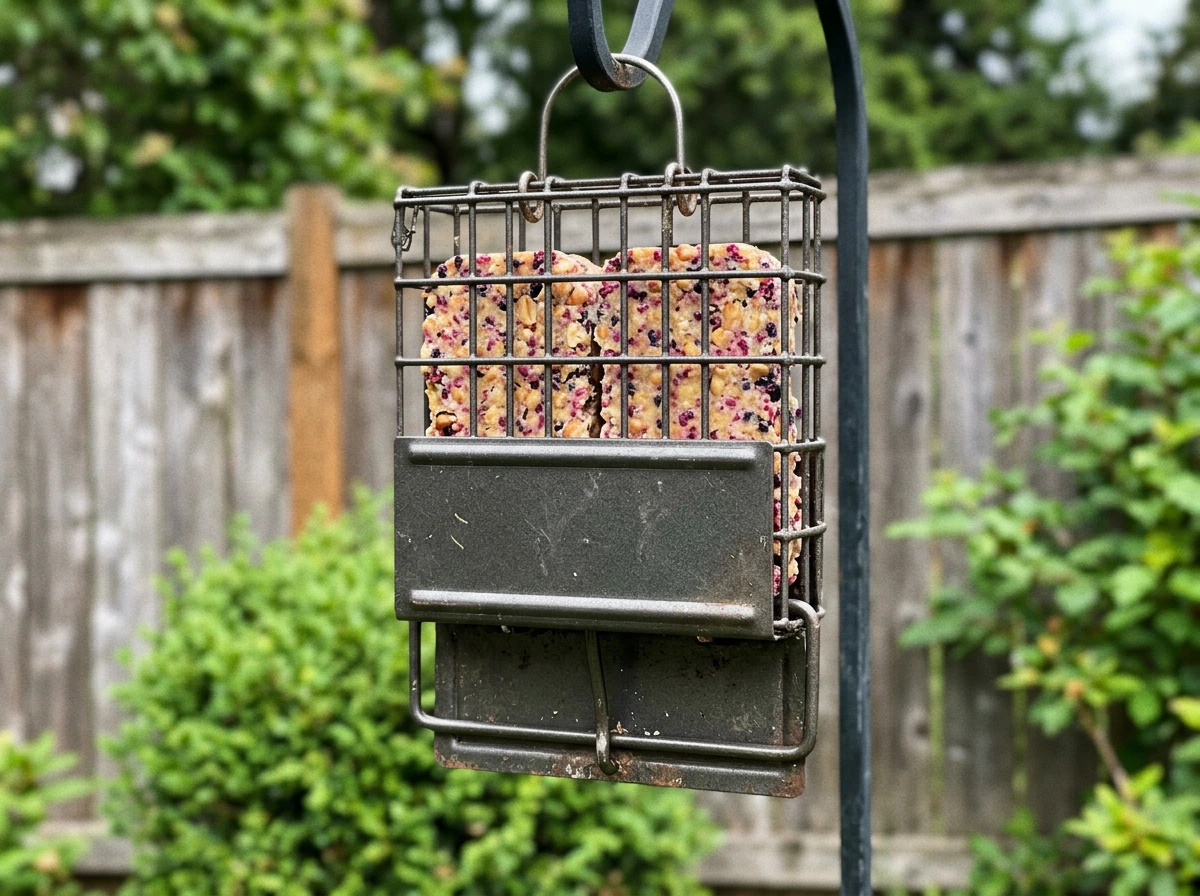
Squirrels are the main challenge with suet feeders, and the good news is there are genuinely effective design solutions. The two most reliable approaches are weight-sensitive feeders and physical baffles.
Weight-sensitive feeders like the Brome Squirrel Buster use a metal sleeve that drops down and blocks suet access when a squirrel's weight triggers it. Birds are light enough to feed without triggering the mechanism. This works well on a hanging setup. For pole-mounted feeders, a smooth metal baffle mounted below the feeder is the standard solution. The baffle top should be at least 4 feet off the ground, and the whole setup should be positioned at least 7 to 8 feet from any fence, tree, or structure a squirrel can jump from.
Raccoons are trickier because they're heavier and more dexterous. A weight-sensitive feeder that works for squirrels will usually stop raccoons too, since the mechanism responds to heavier animals. Bringing feeders in at night is also a practical step if raccoon pressure is severe, since they're primarily nocturnal. Cage feeders with small 1.5-inch openings do a reasonable job of preventing raccoons from reaching inside to pull out suet, though a determined raccoon can still knock a feeder around and dislodge suet.
Rain, freezing temperatures, and suet drip
In warm or wet weather, suet melts and drips, which makes a mess, attracts pests, and can actually harm birds if smeared suet gets on feathers. For this reason, Audubon recommends using contained formats, either cage feeders or mesh bags, specifically to reduce dripping. No-melt suet formulations help, but containment is still your best control measure.
In freezing weather, suet itself is fine since it's basically solid fat, but feeder hardware can seize up. Metal latches and hinges freeze shut, and some plastic components crack in hard freezes. Look for feeders with metal hardware and no small plastic latches if you're in a northern climate. Also check that drainage holes in any tray won't ice over and trap water, which can crack the tray.
If you're dealing with heavy rain, a feeder with a roof or top baffle keeps the suet drier and slows spoilage. Suet that's been repeatedly soaked and partially dried will go rancid faster and can carry mold, which is a real health risk for birds.
Refilling, cleaning, and making your feeder last
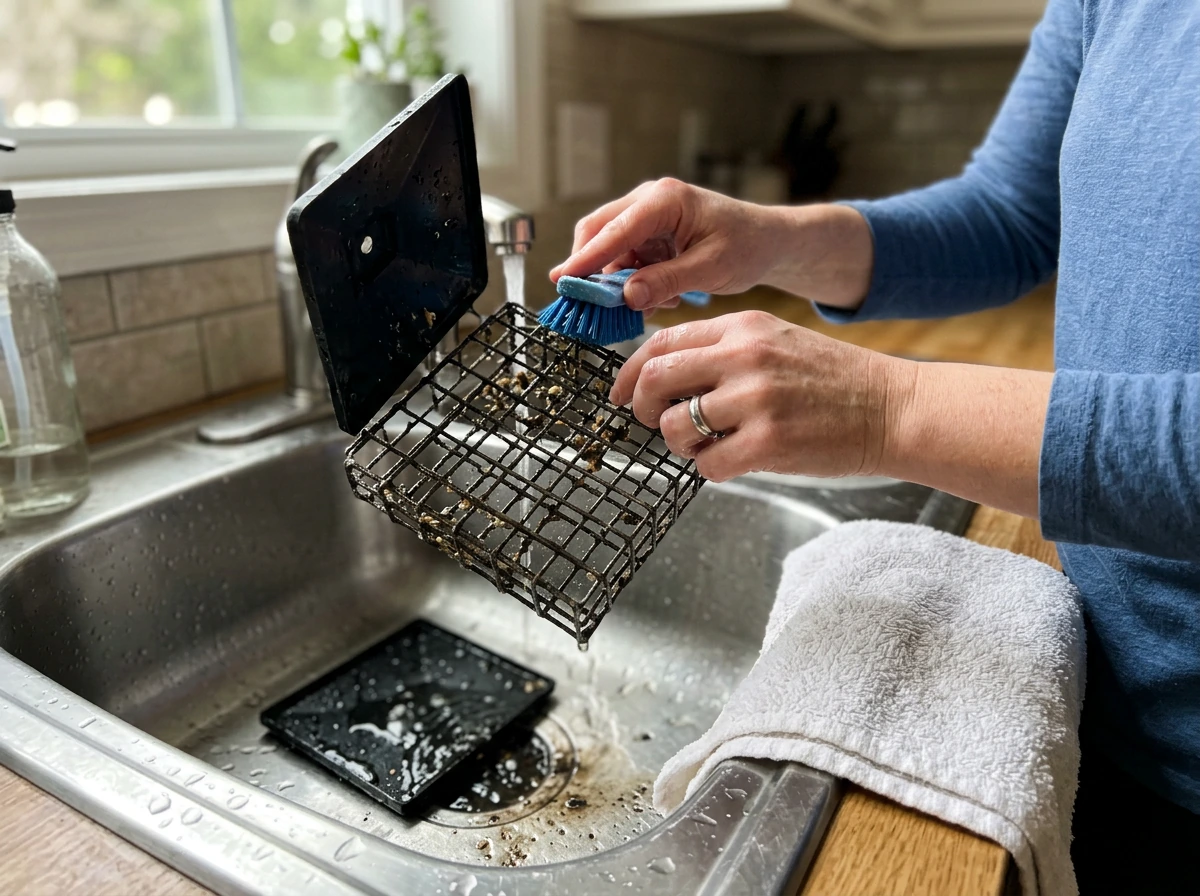
Suet feeders are simpler to maintain than seed feeders, but they're not maintenance-free. A dirty suet feeder can spread disease among your bird visitors just as a dirty seed feeder can.
Audubon recommends cleaning suet feeders at least every other week as a baseline, and more often in humid or warmer conditions. Wild Birds Unlimited's cleaning protocol is a reliable standard: scrub the feeder with a 10% diluted bleach solution, rinse it thoroughly, and let it dry completely before refilling. That last step, complete drying, is critical. A wet feeder with fresh suet loaded in traps moisture and accelerates mold growth.
For refilling, choose feeders with latches or doors you can operate with one hand while cold or wearing gloves. Some cage feeders require two hands and a tool to open, which becomes annoying fast in January. Also consider what to do with leftover suet when cleaning: Audubon is clear that old suet should be disposed of, not dumped on the ground where it attracts pests and creates a contamination point.
Durability is mostly about wire quality and coating. Powder-coated steel wire outlasts painted or bare wire by years. Cheap feeders with thin gauge wire deform after a season of woodpecker pressure and squirrel abuse. If you're buying once and want it to last, spend a bit more on heavier gauge, powder-coated construction.
Feeder style comparison at a glance
| Feeder Style | Best Suet Form | Top Birds Attracted | Pest Resistance | Weather Performance | Ease of Cleaning |
|---|---|---|---|---|---|
| Standard cage | Suet cakes/chunks | Woodpeckers, nuthatches, chickadees | Low without extras | Good with roof | Easy |
| Inverted/upside-down cage | Suet cakes | Woodpeckers, chickadees, nuthatches | Low without extras, deters starlings | Good | Easy |
| Pellet-specific feeder | Suet pellets | Chickadees, wrens, small songbirds | Moderate (smaller openings) | Moderate | Moderate |
| Weight-sensitive (e.g., Squirrel Buster) | Suet cakes | All clinging birds | High | Good | Moderate |
| Baffled cage feeder | Suet cakes/chunks | Woodpeckers, nuthatches, chickadees | High | Very good | Moderate |
| Open tray/platform | Chunks, crumbled suet | Ground feeders, jays, mixed | None | Poor (drips fast) | Easy but frequent |
Buying checklist and which feeder to get for your situation
Run through this checklist before buying. It'll steer you to the right feeder faster than any top-10 list:
- What suet form are you using? Pellets need a pellet-specific feeder with fine mesh or small ports. Cakes and chunks work in standard cage feeders.
- How bad is your squirrel pressure? Mild: a baffle on the pole is enough. Heavy: go with a weight-sensitive feeder like the Brome Squirrel Buster, plus a baffle.
- Do starlings dominate your yard? If yes, choose an inverted cage feeder where birds feed from the bottom.
- What's your climate? Cold northern winters need metal hardware and no plastic latches. Wet or warm climates need good drainage and a feeder roof.
- How often can you realistically clean it? If the answer is every couple of weeks, pick a feeder with a simple latch and smooth interior surfaces.
- Do you want to watch birds up close? A hanging feeder near a window is ideal. A pole-mounted feeder at 10+ feet from cover is better for managing pest access.
Recommended pick by scenario
If your main goal is suet pellets and minimizing waste: go with a dedicated pellet feeder that has an integrated lower tray. The tray catches escaped pellets and keeps your ground clean, which also reduces ground-feeding pests.
If you have heavy squirrel and raccoon pressure: the Brome Squirrel Buster Suet is the most practical pick. The weight-sensitive mechanism works, the Crumb Ports recover fallen suet, and the overall design is solid enough for regular abuse. Pair it with a pole baffle positioned at least 4 feet off the ground and 7 to 8 feet from jumping surfaces.
If you're dealing with extreme cold or lots of rain: choose a baffled cage feeder with a built-in top shield and all-metal hardware. Models like Duncraft's baffled suet feeder combine the top weather baffle with 1.5-inch grid openings, giving you pest resistance and weather protection in one.
If you want low maintenance and a broad mix of birds: a standard two-cake cage feeder with powder-coated steel wire, a simple hinged door, and a drainage tray is your best bet. It's easy to clean, holds enough suet to get through a few days between refills, and attracts woodpeckers, nuthatches, and chickadees reliably. Add a pole baffle if squirrels are even a moderate concern.
If starlings are your biggest problem: an inverted cage feeder is the single most effective fix that doesn't require any additional accessories. Most starlings won't bother trying to feed upside-down, while your target birds (woodpeckers, chickadees, nuthatches) handle it without any trouble at all.
FAQ
Can I mix suet forms in the same suet feeder (pellets and cakes)?
Yes, but only if the feeder’s openings and access style match. Pellet-specific feeders use a lower mesh area to prevent pellets from dropping through, and they usually include a tray. If you load pellets into a cake-style cage, you will get rapid ground loss, and in wetter weather the drips can also make the area under the feeder slick and messy.
In warm climates or during a late fall thaw, what changes should I make to choose the best suet bird feeders?
Start by checking whether your climate makes suet melt frequently (warm spells, rain, or south-facing sun). If melting is common, prioritize contained formats that include a tray or top shelter, since exposed suet can foul feathers and draw more pests. In consistently freezing conditions, you can lean more on cage or inverted designs for pest control without as much concern about dripping.
Do I need a roof or top shield, and how do I know it will actually protect the suet?
A roof is most helpful when it covers both the feeder body and the immediate area where suet sits, or when paired with a top baffle. If you only add a small cover that doesn’t shield the suet itself, rain can still soak the suet and accelerate spoilage. Also make sure any tray or drainage area can still be accessed for cleaning, so you do not trap moisture.
What height should I hang or mount a suet feeder to reduce squirrel raids?
Yes, the “right” height depends on how squirrels are getting access. The safe approach is to follow the baffle placement concept, keeping the baffle top well above the ground clearance squirrels need. If you have poles or nearby jump points like fences, shrubs, or low branches, prioritize distance from those launch surfaces rather than just choosing an average height.
My suet feeder gets destroyed overnight by raccoons. What’s the next step beyond weight-sensitive squirrel protection?
If raccoons are knocking feeders around, weight sensitivity alone may not be enough. Use a design that resists tipping or uses a stable pole mount, and consider removing the feeder overnight as a practical control during peaks. Also inspect the cage openings, since larger access points can let a determined raccoon pull suet out even if the feeder is otherwise well designed.
Which feeder style is best if I want specific birds like woodpeckers vs chickadees?
Choose based on how you want birds to feed. Woodpeckers and many nuthatches are more direct with cakes in a standard or inverted cage because the suet block is firm and easy to grip. For chickadees and wrens, pellets with a tray tend to reduce waste and keep feeding ports available, especially when you want smaller birds to take frequent visits.
What should I do if I’m losing lots of pellets on the ground under the feeder?
Even with an excellent feeder, pellet waste increases if the feeder is in a spot with frequent perching debris, strong wind, or rain splash. Look for a feeder that holds pellets securely and captures escape with a lower tray, then place it where birds can retreat quickly. A clean, sheltered setup usually outperforms a larger feeder placed in an exposed, windy location.
How can I tell if a suet feeder will survive winter freezing and bird pressure?
Not necessarily. A powder-coated, heavier-gauge wire design lasts longer under woodpecker pecking and repeated squirrel stress. Also check for non-freezing points, like metal latches and hinges, and verify trays do not ice over. Hardware that fails is often more important than the feeder’s wire thickness alone in northern climates.
Is it okay to “top off” a suet feeder when refilling instead of cleaning every time?
Yes, but do it in a way that avoids contamination. After cleaning, let the feeder dry completely before refilling, then remove any leftover old suet instead of topping it off. This prevents trapping moisture and reduces the chance of spreading disease between batches.
What’s the most effective way to stop starlings without giving up access for woodpeckers and nuthatches?
If starlings keep showing up, switch from a standard side-access cage to an inverted cage design. Most starlings are less willing to feed upside-down, while the birds you want can still cling and feed. If you still see activity, recheck placement and pest pressure, since starlings can adapt to convenient locations when multiple feeders are nearby.