If someone handed you a crossword clue reading 'bird feeder pine cone alternative,' the answer they're looking for is almost certainly SUET (four letters) or possibly HOPPER or TUBE. But if you're here because you actually want to replace a pine-cone feeder in your backyard, the best ready-made alternatives are tube feeders, suet cages, shelled-peanut feeders, and hopper feeders, each one handles more seed types, holds more food, attracts more species, and is far easier to clean than a wax-and-pine-cone setup.
Bird Feeder Pine Cone Alternative Guide: Best Ready-Made & DIY
Marcus Hendricks
27 Jul 2026
Quick answer for crossword clue seekers
The classic crossword answer for a pine cone bird feeder alternative is SUET. Suet cakes, like pine-cone feeders, present high-fat food in a compact, hangable form that woodpeckers, nuthatches, and chickadees go after immediately. If the clue is longer or the grid requires a different letter count, TUBE or HOPPER also fit the 'alternative to pine cone feeder' framing. If you landed here for the crossword, that's your answer. If you want the full practical breakdown, keep reading. For crosswords, the clue 'bird-feeder alternative to seed' commonly points to SUET bird-feeder alternative to seed crossword clue.
Why replace a pine-cone feeder at all?
Pine-cone feeders, typically a large cone rolled in peanut butter and birdseed, are a great craft project and they do attract birds, but they fall short in a few practical ways. First, peanut butter can go rancid quickly in warm weather, turning the whole thing into a spoiled mess that may harm birds rather than help them. Second, the exposed seed surface has no weather protection, so rain and humidity soak the seed, encouraging mold and bacterial growth almost immediately. Third, capacity is tiny: a single pine cone holds maybe a handful of seed, meaning you're back outside in a day or two. Fourth, the open design gives squirrels, rats, and raccoons easy access with nothing to discourage them. Fifth, cleaning is basically impossible, you use it once and discard it, which means you have no way to break the disease transmission cycle that feeders can perpetuate. Cornell Lab and Project FeederWatch both recommend cleaning feeders every one to two weeks (sooner in warm or humid conditions), which simply isn't practical with a disposable pine-cone setup.
Ready-made alternatives, ranked by overall performance
Not every feeder type excels at everything, so I've ranked these by how well they handle the three factors that matter most when you're replacing a pine-cone feeder: seed retention (less scatter and waste), pest resistance, and versatility (species and food types supported).
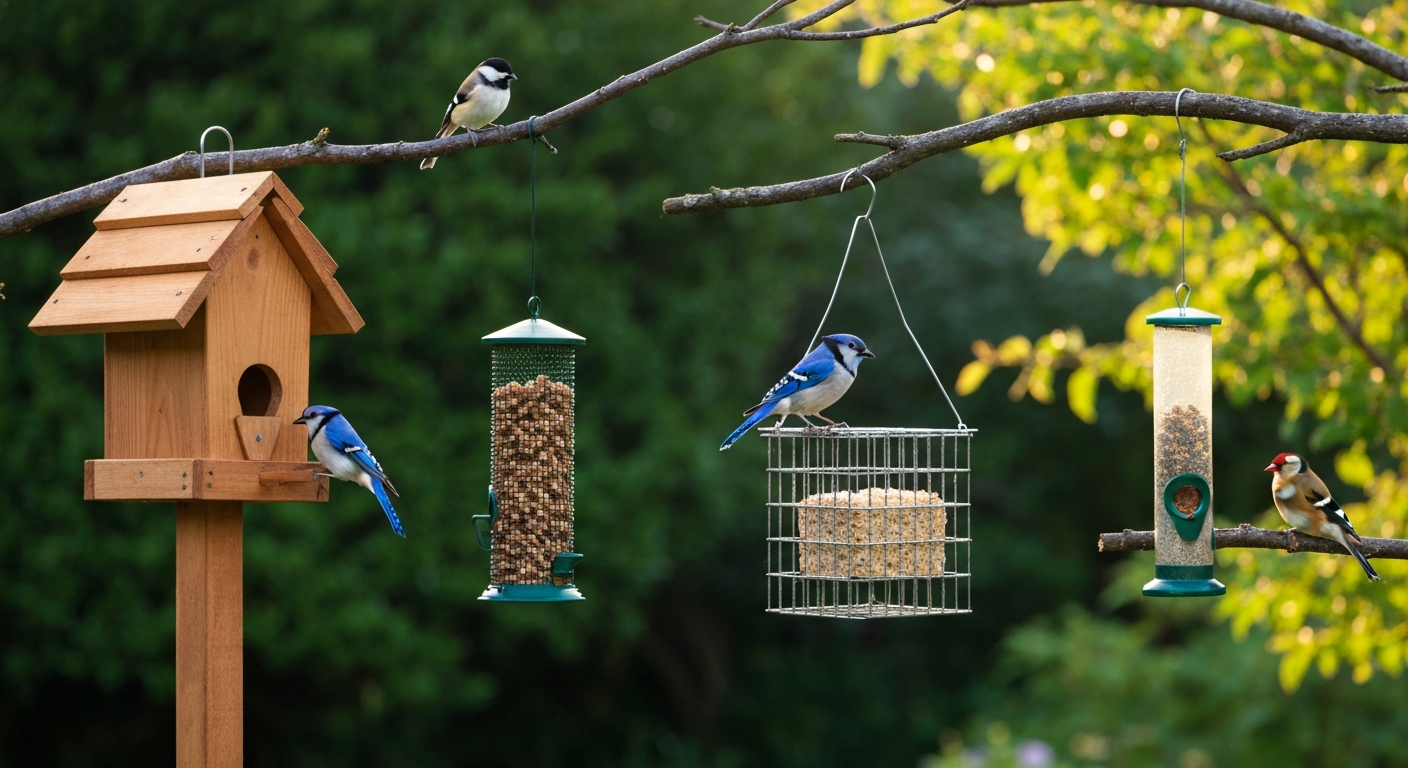
- Shelled-peanut tube or mesh feeder: best overall seed retention, excellent for jays, woodpeckers, chickadees, and nuthatches; no shells mean almost zero ground mess
- Weight-activated or cage-style hopper feeder: highest capacity, good weather protection, strong pest resistance — the best all-around replacement for a low-capacity DIY feeder
- Suet cage: closest functional equivalent to a pine-cone feeder, simple, inexpensive, easy to clean, great for woodpeckers and clinging birds
- Mesh or sock finch feeder (nyjer/thistle): outstanding seed retention for small seeds, minimal scatter, purpose-built for goldfinches and siskins
- Fruit-and-nut tray or oriole feeder: best for mixed species and orioles, moderate scatter, requires more frequent cleaning
- Platform feeder: maximum species diversity but lowest seed retention — best used with a tray lip and drainage holes
- Window feeder: great for close observation, moderate capacity, easy cleaning, but limited pest resistance without a pole-mounted setup
Shelled-peanut and peanut feeders
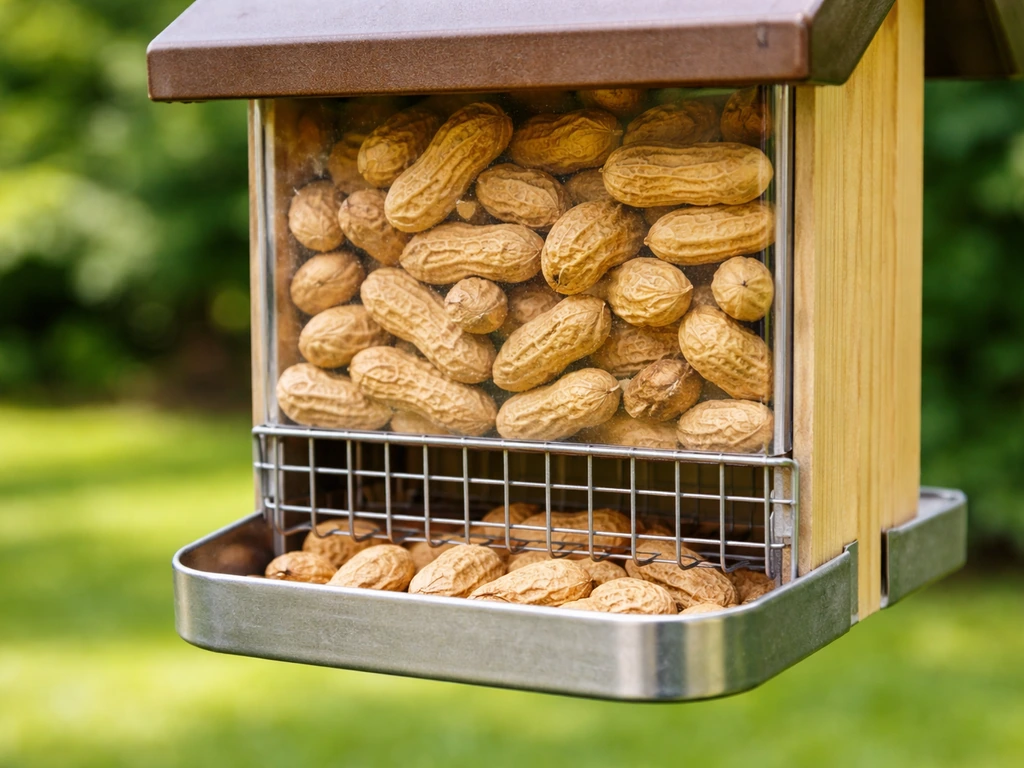
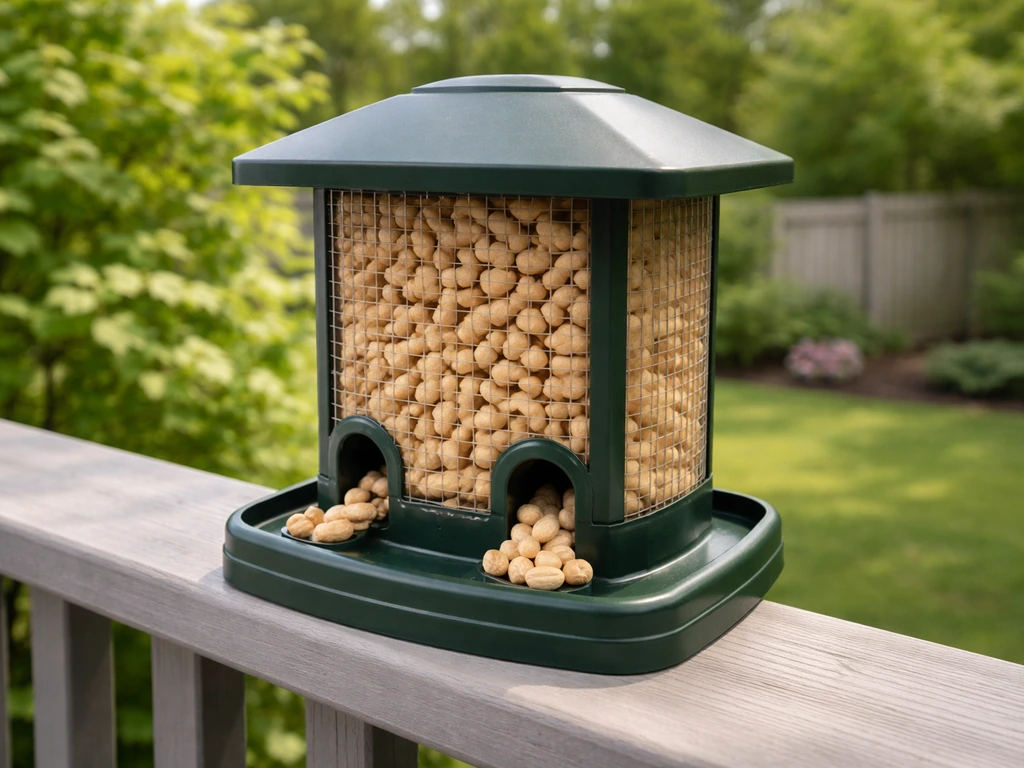
Shelled peanuts (peanut pieces with the hull already removed) are one of the most efficient foods you can offer. Birds don't have to crack anything, so they eat faster and waste less. In my experience, a dedicated shelled-peanut feeder creates noticeably less ground mess than almost any seed feeder, which is a direct answer to the scatter problem pine-cone feeders create. For model recommendations and buying tips, see our guide to the best shelled peanut bird feeder.
What to look for in a shelled-peanut feeder
- Mesh or grid openings sized for peanut pieces (roughly 1/2 to 3/4 inch) — too large and pieces fall through, too small and birds can't grip them
- Metal construction (powder-coated steel or heavy gauge wire) to resist squirrel chewing — peanuts are high-value food and squirrels will chew through plastic for them
- Capacity of at least 1 lb of shelled peanuts so you're not refilling daily
- Removable base or top for easy cleaning — shelled peanuts carry oils that leave residue and can go rancid, so washability matters more than with dry seed
- Drainage holes or open mesh design so moisture doesn't pool and cause spoilage
Blue jays, woodpeckers (downy, hairy, red-bellied), chickadees, nuthatches, and tufted titmice all visit shelled-peanut feeders regularly, according to Cornell Lab species accounts. The trade-off is cost: shelled peanuts are more expensive per pound than black-oil sunflower, and higher food value means faster depletion. Weight-activated feeders like the Brome Squirrel Solution200 (which holds about 3.4 lb of seed and uses a metal shroud that drops over ports when larger animals load it) work well with peanut pieces, though it's worth noting that some weight-activated designs can occasionally close on heavier desirable birds like blue jays, something worth checking in the field before you commit to a model.
Whole peanut-in-shell feeders
If you enjoy watching blue jays cache whole peanuts, an in-shell peanut feeder is worth considering alongside the shelled version. These are typically wide-mesh tubes or ring-style feeders. The trade-off versus shelled is more ground scatter as birds drop shells, and more squirrel interest. A cage-within-cage design (small-mesh outer cage around the feeder) limits squirrel access without excluding most target birds.
Whole and split nut feeders
Nut feeders designed for hazelnuts, walnuts, or mixed nut pieces serve a slightly different niche than peanut-specific feeders. They're excellent for attracting woodpeckers, nuthatches, and corvids in woodland-edge yards, and they work particularly well in winter when birds need high-fat, high-calorie food to maintain body temperature. The best-use situation for a dedicated nut feeder is a yard with tree cover where woodpeckers and nuthatches are already regular visitors, these birds will find a well-placed nut feeder within days. For model recommendations and comparisons, see the best bird nut feeder guide (c0eb8c40-62b5-4668-a476-422bc6b83f43).
The main downside is selectivity: a nut feeder won't draw finches, sparrows, or doves, so if you want broad species diversity, it should be a secondary feeder rather than your only one. Nut feeders with a small-mesh cage around the outside are the most effective at limiting squirrel access without blocking woodpeckers and larger birds. Avoid open platform or tray designs for whole nuts in squirrel-heavy yards, it's essentially an open buffet for them.
Fruit-and-nut feeders for orioles and mixed flocks
Fruit-and-nut feeders sit at the crossroads of attracting multiple species that rarely appear at a standard seed feeder. Baltimore and Bullock's orioles arrive in many backyards from late April through summer and are strongly drawn to orange halves and grape jelly. A dedicated oriole feeder with orange-half spikes, a jelly cup, and optionally a nectar reservoir covers all three food preferences in one unit. Mixing dried fruit, nut pieces, and occasionally fresh apple or grape chunks on a tray extension broadens the appeal to catbirds, mockingbirds, and thrushes.
Design-wise, look for a feeder with removable, dishwasher-safe jelly cups, grape jelly ferments quickly in warm weather and needs to be changed every two to three days in summer. The RSPB's 2026 seasonal feeding guidance makes a point I've found accurate in my own yard: in warm months, only offer amounts that will be consumed quickly, because fruit and soft foods spoil far faster than dry seed. Bright orange color on the feeder housing is a genuine design feature for orioles, not just aesthetics, these birds use color cues strongly when locating food sources.
Suet cages and mesh feeders
Suet is the single closest functional replacement for a pine-cone feeder. Both present high-fat food in a hangable, compact form, but a suet cage costs a few dollars, holds a standard 11 oz suet cake, is made of metal wire that won't degrade, and takes about 90 seconds to clean and refill. That's a significant upgrade over discarding and re-making a pine-cone feeder every few days.
Suet in warm weather
Standard beef suet melts above roughly 70°F (21°C), which makes warm-season feeding messy and potentially harmful, melted suet can mat feathers. In summer, use 'no-melt' or 'summer weight' suet cakes, which are formulated with a higher melting point. RSPB guidance from 2026 recommends heat-resistant suet products for warm months and removing melt-prone offerings in very warm weather. See RSPB: Our latest guidance on what and when to feed garden birds (Feed Safely, Feed Seasonally) for details on heat-resistant suet recommendations and removing melt-prone offerings in very warm weather. I've found this applies anywhere that sees temperatures above 75°F for extended periods.
Mesh bags and tail-prop suet feeders
A simple mesh onion bag works as a low-cost suet or nut feeder and is easy to replace, though metal mesh cages last far longer and are worth the small extra cost. If you want woodpeckers specifically, look for a suet cage with a tail-prop extension below the cake opening, downies, hairies, and pileated woodpeckers naturally brace their tail against a surface while feeding, and the extension significantly increases visit time and frequency. Starlings are a real problem at suet feeders; an upside-down suet feeder (where birds have to cling from below) discourages starlings, which prefer feeding upright, without deterring woodpeckers.
Pest considerations at suet feeders
Suet cages present less of a squirrel challenge than seed feeders because squirrels tend to prefer carbohydrate-heavy seeds, but raccoons and bears (in relevant regions) will absolutely take entire suet cakes overnight. Bring suet feeders in at night if large mammal visits are a problem, or mount them on a pole with a dome baffle placed at least 4.5 feet above ground and at least 8 to 10 feet away from any surface a squirrel could jump from.
Platform feeders and hopper feeders: when each one makes sense
Platform feeders
Platform feeders are the most species-inclusive option you can buy. Doves, cardinals, towhees, sparrows, and jays all prefer flat, open feeding surfaces, and many of these birds won't reliably use tube or hopper feeders. Cornell Lab notes that mourning doves strongly prefer platform or ground feeding, and cardinals do best on hopper or platform designs. If species diversity is your goal, a platform feeder is a high-value addition.
The significant downside of platform feeders is seed scatter and weather exposure. Without a roof, seed gets wet, and wet seed molds within 24 to 48 hours in humid conditions. The practical fixes are: choose a platform with a screened mesh bottom so water drains through rather than pooling; clean the tray every one to two weeks (or more often in warm weather, per Cornell Lab's guidance); and only fill with as much seed as birds will consume in one to two days. Some platform feeders include a roof cover, which dramatically improves seed life and reduces cleaning frequency. For squirrel resistance, a platform feeder on a pole with an umbrella baffle is far more effective than a hanging platform, gravity baits squirrels downward onto hanging feeders.
Weatherproofing a platform feeder
- Use a mesh or slatted tray bottom so rain drains through rather than pooling under seed
- Add a roof or purchase a covered platform model — this alone can double the usable seed life in rainy weather
- Fill lightly in wet weather: 1 to 2 cups of seed at a time rather than loading the tray full
- In winter, clear snow and ice from the tray daily and consider moving the feeder to a more sheltered spot near a wall or overhang
Hopper feeders
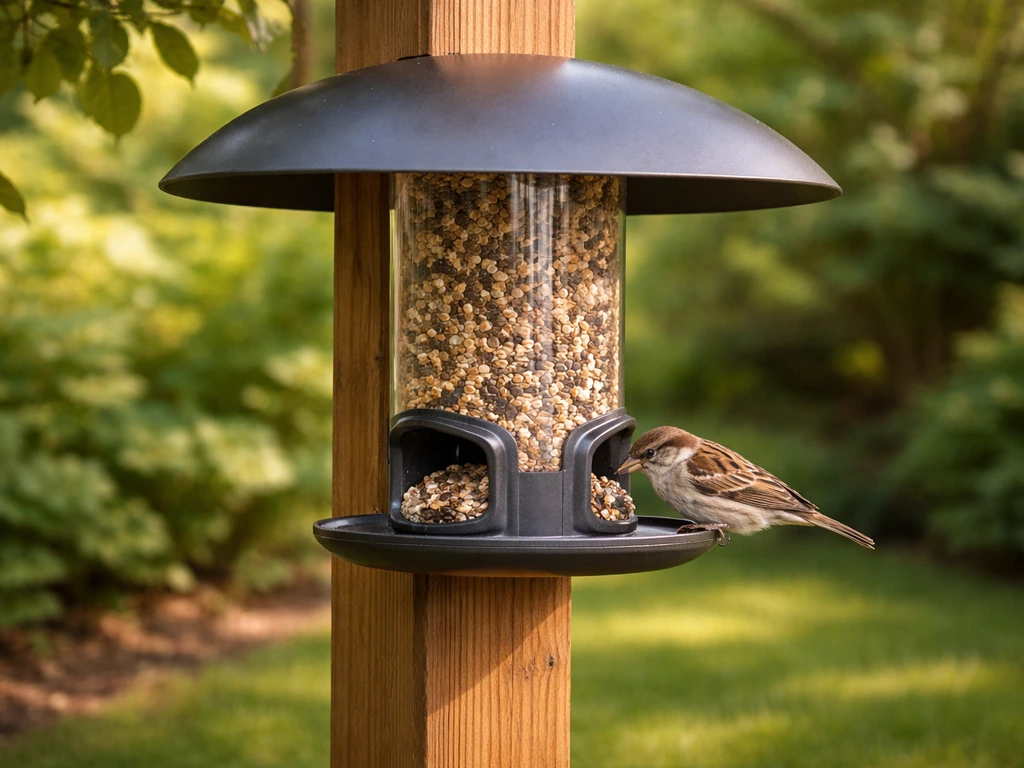
Hopper feeders are the practical workhorse alternative when you want higher capacity, better weather protection, and broader seed compatibility than a tube feeder. A typical hopper holds 3 to 8 lb of seed, dispenses from a trough at the bottom as birds eat, and a roof protects the seed reservoir from direct rain. For pine-cone-feeder users upgrading to something more permanent, a hopper is often the natural first step.
The maintenance trade-off is real though: hopper feeders have more surfaces and corners where wet seed accumulates, and the enclosed reservoir can hide mold problems until you open it. I open and inspect my hopper feeder every time I refill it. Metal-roofed, cedar-bodied hoppers weather better than plastic, but require periodic sealing to prevent cracking. Capacity is the hopper's genuine advantage, on a busy winter day with cardinals, jays, and woodpeckers cycling through, a large hopper feeder can last a week without a refill, compared to two to three days for most tube feeders.
Weight-activated hopper designs add squirrel resistance but bring a noted trade-off: some models close on blue jays and large woodpeckers, which are exactly the birds you want at a hopper. If large desirable birds are a priority, look for models with an adjustable weight threshold or a cage-style squirrel baffle that doesn't interfere with ports. Penn State Extension notes that no commercial squirrel-proof feeder is guaranteed against all individuals, and testing against manufacturer claims in your own yard is the only reliable method.
How each feeder type stacks up at a glance
| Feeder Type | Seed Retention | Pest Resistance | Weather Protection | Ease of Cleaning | Best For |
|---|---|---|---|---|---|
| Shelled-peanut mesh/tube | Excellent | Good (metal cage) | Moderate | Good | Woodpeckers, jays, chickadees |
| Hopper (weight-activated) | Very Good | Very Good | Very Good | Moderate | Cardinals, jays, mixed seed birds |
| Suet cage | Excellent (no scatter) | Moderate | Moderate | Excellent | Woodpeckers, nuthatches, chickadees |
| Nyjer/mesh sock or tube | Very Good | Low (squirrels ignore nyjer) | Moderate | Good | Goldfinches, siskins, redpolls |
| Fruit-and-nut tray/oriole | Moderate | Low | Low | Requires frequent cleaning | Orioles, catbirds, thrushes |
| Platform (roofed) | Moderate | Low–Moderate (pole + baffle) | Good (with roof) | Fair | Doves, sparrows, cardinals, towhees |
| Platform (open) | Poor | Low | Poor | Fair | Maximum species diversity |
| Window feeder | Good | Low | Moderate | Excellent | Close observation, small birds |
DIY alternatives that actually work (including peanut-butter-free options)
If you enjoy the DIY aspect of pine-cone feeders but want to move away from peanut butter (because of spoilage, allergen concerns, or just wanting something more durable), there are several solid options. A suet block made from rendered beef fat mixed with cornmeal, rolled oats, and black-oil sunflower seed can be pressed into a small mesh bag or a muffin tin lined with mesh, cooled solid, and hung directly. This is a genuine peanut-butter-free alternative that holds together better in warm weather than a peanut-butter coating.
For fruit presentation, halved oranges skewered on a nail driven through a board or hung from a wire spike are the oriole equivalent of the pine-cone feeder: simple, disposable, and effective. Grape halves on the same board extend the appeal. These should be replaced every two to three days in warm weather to prevent fermentation. A shallow ceramic dish or jar lid filled with grape jelly and placed on a platform or hung from a hook is another low-cost, effective approach for orioles and catbirds.
Log feeders, a short length of untreated wood with 1-inch holes drilled through it and packed with suet or nut butter, are a more durable DIY alternative to pine cones. The log can be cleaned by soaking in a 10% bleach solution (a dilution Cornell Lab recommends for standard feeder cleaning), rinsed thoroughly, dried, and refilled. This makes it a reusable, cleanable substitute, unlike a single-use pine cone.
Species-specific recommendations at a glance
| Bird | Preferred Feeder Type | Preferred Food | Notes |
|---|---|---|---|
| Goldfinch / American Goldfinch | Nyjer tube or mesh sock | Nyjer (thistle) seed | Dedicated finch feeders minimize waste from larger birds |
| Downy / Hairy Woodpecker | Suet cage with tail prop, shelled peanut feeder | Suet, shelled peanuts | Tail-prop extension increases visit time significantly |
| Blue Jay | Hopper, shelled or in-shell peanut feeder | Peanuts, sunflower seed | Check weight-activated feeders don't close on jays |
| Northern Cardinal | Hopper or roofed platform | Black-oil sunflower seed | Prefer feeding from a wide, stable surface |
| Mourning Dove | Platform or ground tray | Mixed seed, safflower, millet | Strongly prefer flat, open surfaces; avoid tube feeders |
| Baltimore Oriole | Oriole feeder (jelly cup + orange spike) | Grape jelly, orange halves, nectar | Replace jelly every 2–3 days in warm weather |
| White-breasted Nuthatch | Suet cage, shelled peanut feeder | Suet, peanuts, sunflower | Often feed upside-down; upside-down suet feeders work well |
Seasonal notes: winter feeding and warm-season adjustments
Winter is when feeders earn their keep most clearly. Birds in cold climates need high-calorie, high-fat food to maintain body temperature overnight, which is exactly what suet, peanuts, and black-oil sunflower seed provide. In winter I prioritize suet cages, shelled-peanut feeders, and a roofed hopper over any open platform or fruit feeder. Capacity matters more in winter too, you don't want to be refilling a feeder in sub-zero temperatures every other day.
In warm months, the calculus shifts. Seed and suet spoil faster, and feeder density can increase disease transmission risk, Audubon and Cornell both recommend feeding based on actual bird demand rather than keeping feeders constantly overfilled. RSPB guidance from 2026 explicitly recommends removing melt-prone suet in very warm weather and switching to heat-resistant formulations. I scale back to two or three feeders in summer (a nyjer tube, a shelled-peanut feeder, and an oriole station) rather than running everything at once.
Cleaning, disease prevention, and pest control
Cleaning is the most important and most overlooked part of running any feeder, and it's one area where pine-cone feeders fail completely. Cornell Lab recommends cleaning feeders every one to two weeks with soap and water, optionally followed by a 10% bleach soak, and fully drying before refilling. In my experience, this schedule works well in cool months; in summer humidity, I clean every week and sometimes sooner if I see sick-looking birds.
The science on feeder-transmitted disease is worth understanding briefly. Research published in 2015 by Adelman and colleagues showed that time spent on feeders directly predicts both acquisition and transmission of Mycoplasma gallisepticum (a respiratory pathogen) in house finches. A 2026 study by Meyers and colleagues found that frequent surface cleaning of tube feeders (bleach wipes every other day) prevented transmission from contaminated surfaces, but cleaning alone couldn't fully stop spread when infected birds were continuously re-contaminating feeders. The practical takeaway: clean regularly, but if you see multiple visibly sick birds, consider taking feeders down for two weeks to allow birds to disperse, then clean thoroughly before bringing them back.
For squirrel and pest control, the most reliable approach combines placement with hardware. Mount feeders on a smooth metal pole at least 4.5 to 5 feet high, install a dome or umbrella baffle below the feeder, and keep the feeder at least 8 to 10 feet from any surface a squirrel can jump from (branches, fences, eaves). Penn State Extension documents this approach as consistently the most effective, noting that no single commercial feeder design is guaranteed against all squirrel individuals or species. Penn State Extension, Squirrels and Bird Feeders recommends pole-mounted feeders with dome/umbrella baffles placed about 4.5–5 ft high and 8–10 ft from jump-off points, and notes many commercial 'squirrel-proof' feeders use weight-activated covers or cages but none are guaranteed against all species or individuals Penn State Extension — Squirrels and Bird Feeders. Weight-activated feeders like the Squirrel Buster series add a second layer of protection but work best as a supplement to good placement rather than a replacement for it.
If avian influenza or other zoonotic concerns are present in your area, CDC guidance recommends wearing disposable gloves when cleaning feeders, avoiding touching your face, and disinfecting any surfaces (tables, tools) used during feeder maintenance. This is a reasonable precaution year-round, not just during active outbreaks.
Feeder buying checklist before you purchase
- Material: metal or powder-coated steel construction for pest resistance and longevity; avoid feeders with thin plastic ports that squirrels can enlarge
- Capacity: match to your bird traffic — underfilling a large feeder means seed sits too long; overfilling a small one means constant refills
- Cleaning access: the feeder must fully come apart for washing; narrow tubes that you can't reach inside are a hygiene problem
- Drainage: look for mesh bottoms, weep holes, or ventilated seed chambers to prevent wet-seed mold
- Weather protection: a roof overhang of at least 2 to 3 inches keeps direct rain off seed in a hopper or platform
- Pest resistance: identify your pest pressure first (squirrels, rats, starlings, bears) — the right deterrent depends on the pest
- Seed compatibility: confirm the feeder physically works with the food you plan to use (port size, tray width, mesh gauge)
- Species target: match feeder design to the birds you actually have or want — a nyjer tube won't help you attract woodpeckers
- Mounting: decide pole-mounted vs. hanging before buying — many feeders come with one option but not both
Next steps for building out your feeder setup
If you're starting from a pine-cone feeder and want to build something more permanent, a good entry sequence is: start with a suet cage (immediate woodpecker and nuthatch results, cheap, easy), add a shelled-peanut feeder or a peanut feeder for blue jays and larger birds, then layer in a hopper or tube feeder for seed-eating species like cardinals, sparrows, and finches. For a buyer's guide to the best peanut bird feeder, see our dedicated review covering mesh gauges, capacity, and squirrel-resistance. A fruit station or oriole feeder is a worthwhile spring addition if you're in oriole range. Platform feeders round out a setup for dove and ground-feeding species.
Throughout this site you'll find detailed comparisons of hopper, tube, platform, suet, window, and pole-mounted feeders by specific features, including pest-proofing performance, smart-camera integration, weatherproofing ratings, and species results from real backyard testing. If you're weighing peanut-specific options in particular, the guides covering shelled peanut feeders, whole peanut feeders, and the broader nut feeder category go deeper on mesh gauge, port size, and capacity trade-offs than I can cover in one article. And if seed scatter is your primary complaint, the coverage on feeders that don't drop seeds is worth a read before you buy.
FAQ
What is the single, brief answer for someone searching a crossword-style clue for a 'bird feeder pine cone alternative'?
Use a small mesh/nyjer sock or a suet cage — both are compact, commonly used pine-cone substitutes that hold seed/fat without large seed loss.
What kinds of evidence and expert sources are essential to write an accurate, practical article offering tested alternatives to pine-cone feeders?
A mix of primary and applied sources: peer-reviewed field studies on feeder disease transmission and seed removal; guidance from authoritative bird organizations (Cornell Lab/Project FeederWatch, Audubon, RSPB); extension materials on pest control (university extensions); independent product test reviews (BobVila, TechGearLab, BestReviews) and manufacturer specifications; and observational/citizen‑science protocols (FeederWatch handbook) for replicable field tests.
Which field-test data and metrics are needed to compare feeder alternatives (seed retention and pest-proofing performance)?
Quantitative, repeatable metrics: percent seed mass lost per 24 hours (pre/post mass), seed‑scatter radius (area with >95% of spilled seed), species visitation rates (visits/hour), pest‑visitation events (nocturnal camera hours), time-to-clean and time-to-fill (minutes), feeder uptime (days between maintenance), and photographic/video logs tying removal events to taxa. Use seed‑tray + remote camera methods and replicate across multiple sites/days.
What experimental protocols or observation methods should be used for reliable, reproducible feeder tests?
Adapt Project FeederWatch/FeederWatch handbook protocols and peer‑reviewed seed‑tray + camera methods: standardize observation windows, use timed counts, measure seed mass before/after fixed intervals, deploy motion/IR cameras for diurnal/nocturnal visitors, randomize feeder placement across sites, run multi-day trials, and record environmental variables (temperature, precipitation). Include control feeders and run tests across seasons.
Which ready-made feeder types should be prioritized in the article and what pros/cons should be tied to key features?
Prioritized list with feature-linked pros/cons: - Shelled-peanut/peanut feeders (high attraction for jays, woodpeckers; high seed retention; moderate squirrel risk unless weight-activated; moderate cleaning). - Nut/fruit-and-nut feeders (great for blue jays, grosbeaks; weather-dependent; attracts larger birds; higher capacity but may spoil). - Suet/mesh cages (excellent for woodpeckers and insectivores; high retention; can melt in heat; easy to clean). - Platform feeders (versatile for doves, cardinals; poor seed retention; high spill/loss/pest access). - Hopper feeders (good seed protection, medium capacity; moderate pest resistance). - Tube feeders (good for small seeds, finches; lower spill; moderate cleaning difficulty). - Window/pole-mounted feeders (close viewing; variable capacity; easier pest control on poles with baffles). For each, evaluate seed retention, weatherproofing, rat/squirrel resistance, ease of cleaning, and capacity in field tests.
How should product reviews and manufacturer claims be treated and validated in the article?
Use independent test reviews (e.g., BobVila, TechGearLab) to evaluate real-world performance and tradeoffs; verify capacity/mechanism claims with manufacturer specs; validate key claims via short field trials (seed loss, pest visits) or cite published reviewer field reports. Note failure modes reviewers document (e.g., weight-activated feeders excluding desirable larger species or increased cleaning difficulty).