The feeder type that drops the least seed is a tube feeder with small, sealed ports sized to your seed, or a no-mess hopper feeder with a tight lid and a seed-catcher tray mounted underneath. Neither design is perfect out of the box, but pairing the right feeder style with a few specific containment features, good placement, and the right seed cuts ground scatter to almost nothing.
Bird Feeder That Does Not Drop Seeds: Fix Spill Today
Marcus Hendricks
16 Jun 2026
Why seeds keep dropping in the first place
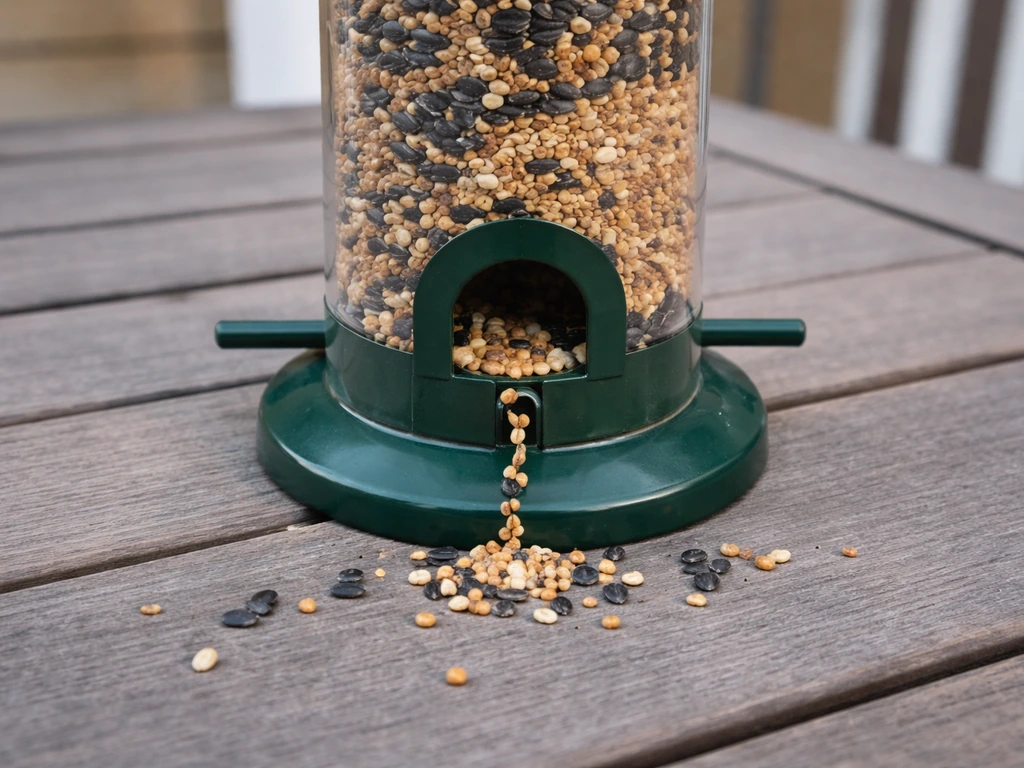
Before you can fix the problem, it helps to know exactly why seed is ending up on the ground. Most people assume their feeder is broken or cheap. Usually it's one of a handful of predictable causes.
- Gravity and over-fill: Hoppers and tube feeders rely on seed flowing down to the ports. If you pack them too full, seed spills straight out the moment a bird lands or a breeze hits.
- Slanted or oversized ports: A port that's too wide for the seed you're using lets seeds trickle out constantly. A slanted port that angles downward pours seed every time the feeder swings.
- Loose or warped lids: On hopper-style feeders, a lid that doesn't seat flush creates a gap. Rain swells wooden lids over time, and the fit gets worse with every season. Seed dust and debris also build up in the lid groove and prevent a proper seal.
- Wind and drafts: A feeder that swings freely in a gusty yard loses seed on every swing. This is especially bad with lightweight plastic tube feeders hung from a single hook.
- Seed hull waste: If you use mixed seed with millet, milo, or sunflower seeds in the shell, birds toss aside hulls and rejected seeds constantly. That's not really spilling, but it looks identical from a distance and makes as much mess.
- Pest activity: Squirrels shaking a feeder, large birds like starlings or grackles hogging ports and scattering seed, or raccoons prying lids open at night account for a huge chunk of what people call 'seed dropping.' More on this below.
Damage and warping matter too. A feeder that's cracked, has a bent port cover, or has a perch rod that's worked loose gives seed an easy path out. Walk up to your feeder right now and give it a gentle shake. If you hear more than a soft shift of seed, you probably have a fit or seal issue worth fixing before buying anything new.
Choosing the right feeder style to stop seed loss
Each feeder style has a different relationship with seed loss. Here's how they compare honestly, not just by what the marketing says.
| Feeder Style | Seed Containment | Best For | Main Spill Risk |
|---|---|---|---|
| Tube feeder | High (if ports are sized correctly) | Finches, chickadees, nuthatches | Oversized ports, birds excavating seed |
| Hopper feeder | Medium (depends on lid and tray) | Cardinals, jays, mixed species | Loose lid, no catch tray, wind swing |
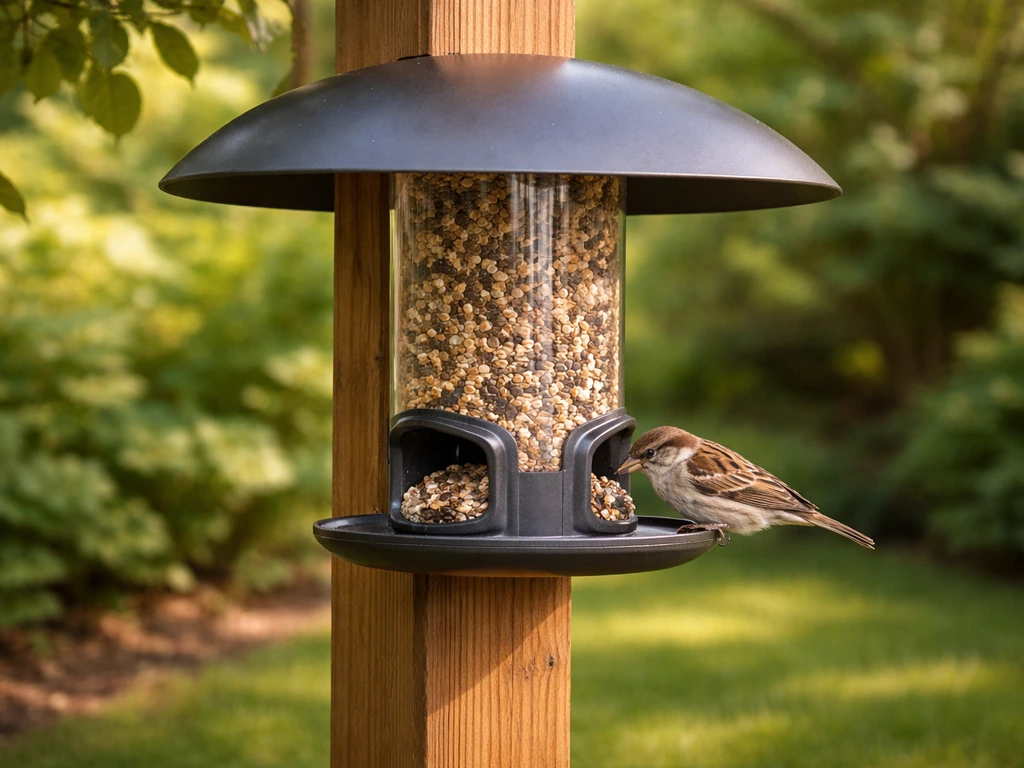
| Platform/tray feeder | Low on its own | Ground feeders, doves, sparrows | Open design, rain soaks seed, wind blows it off |
| Window feeder | Medium-high | Close-up viewing, small birds | Shallow tray, frequent refills needed |
| Suet cage | Very high (seed-free) | Woodpeckers, nuthatches | N/A for seed; suet crumbles but doesn't scatter |
| Weight-sensitive 'squirrel-proof' tube | High (ports close under excess weight) | Mixed species in squirrel-prone yards | Improper hanging can prevent port closure from activating |
My recommendation for most backyards: start with a quality tube feeder for small birds and add a seed-catcher tray underneath. For many backyards, the best bird nut feeder is one with tight containment features and the right seed ports to prevent scatter. If you're feeding cardinals or blue jays, go with a hopper that has a twist-lock lid and a deep seed tray. Platform feeders are great for birds but terrible for low-spill goals unless you're placing them intentionally close to the ground and don't mind some scatter.
Tube feeders: the low-spill workhorse
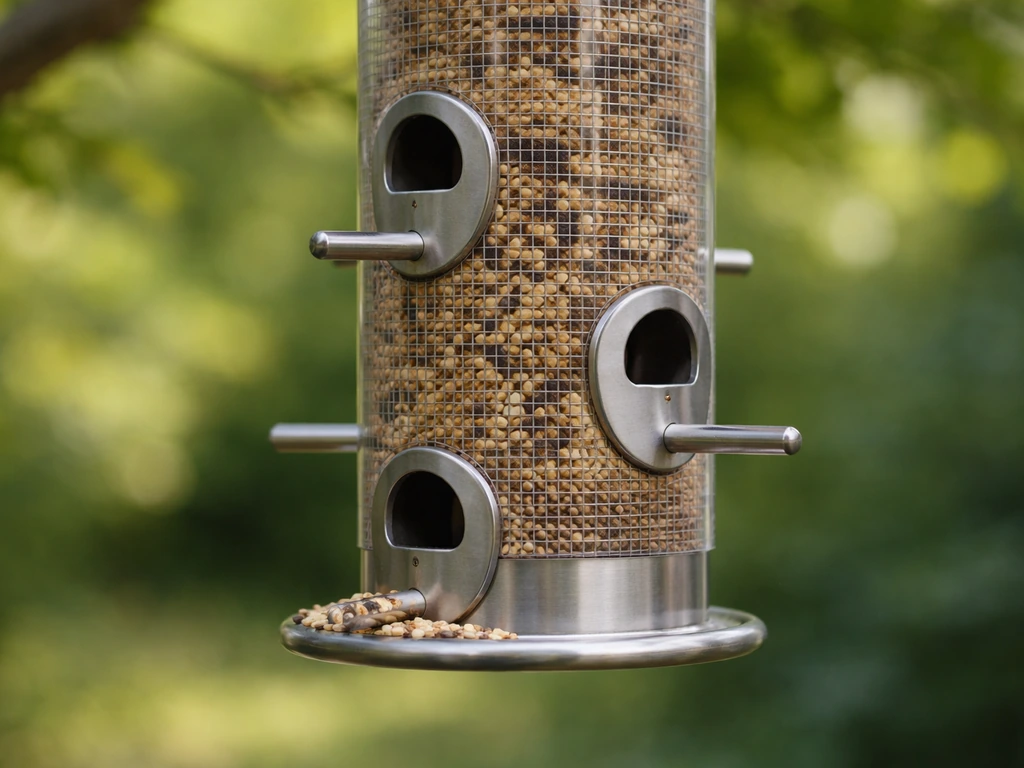
A well-made tube feeder with ports sized to your seed is genuinely the easiest way to cut down on scatter. The key word is 'sized.' A finch feeder with small thistle ports won't work if you're filling it with black oil sunflower. The port diameter has to match the seed, or birds end up digging and flinging. Weight-sensitive tube feeders add another layer of protection: the ports snap closed under a squirrel's weight, which stops not just theft but also the vigorous shaking that sends seed flying. Perky-Pet's Squirrel-Be-Gone design, for example, uses weight-activated port closures, and the Flexports version is marketed as being four times more shake-resistant than standard ports to reduce seed waste.
Hopper feeders: great capacity, needs a good lid
Hopper feeders hold a lot of seed and work well for larger birds like cardinals and jays, but a poorly fitting lid is their Achilles heel. Look specifically for a hopper with a twist-lock or latch-close lid rather than one that just rests in place. A feeder like the Perky-Pet Squirrel Stumper uses a twist-lock lid that keeps squirrels from prying it open, which also means seed stays inside instead of ending up scattered across your deck. Pair any hopper with a seed-catcher tray and you've covered both the direct spill and the secondary scatter.
The specific features that actually keep seed contained
When you're shopping for a feeder or evaluating what you already have, focus on these specific design elements. They make the real difference between a feeder that wastes half its fill and one that doesn't.
- Port size matched to seed: Small nyjer/thistle ports for finch feeders, medium ports for sunflower, larger for safflower or mixed seed. Mismatched ports are the single biggest design cause of scatter.
- Port covers or chutes: A short chute below the port slows the rate seed flows out and reduces the 'waterfall' effect when birds excavate. Some tube feeders have covered ports with a small overhang that blocks rain and limits spill angle.
- Tight-fitting lid with a lock: A lid that twists or latches into place does two jobs: it keeps pests from opening the feeder and it seals seed in during windy conditions or handling.
- Seed-catcher tray or hoop: This is the single most effective retrofit for an existing feeder. A 10.5 to 18-inch tray mounted below the feeder catches whatever falls, lets birds feed from it secondarily, and keeps your lawn clean. Products like the Myard 18-inch Universal Seed Catcher Hoop include drain holes so rain doesn't turn the tray into a soup bowl. Droll Yankees also makes a Clever Clean Seed Tray (10.5 inches) designed to clip directly to their feeders.
- Internal baffles or seed channels: Some hoppers route seed through an internal channel that controls flow rate. This slows gravity feed and reduces over-pour at the ports.
- Weight-sensitive port closures: As described above, these close the feeding port automatically when something heavier than a bird lands. This prevents both pest theft and the shaking-induced scatter that comes with squirrel visits.
How to set it up for zero spill
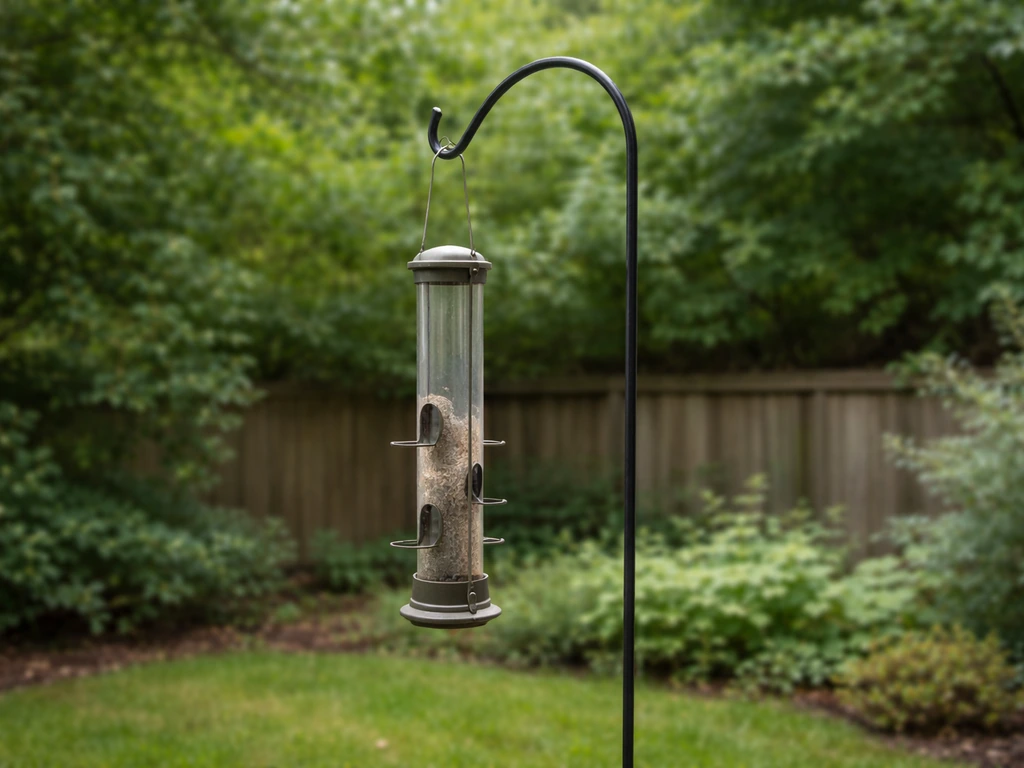
Even the best feeder design will waste seed if it's badly positioned, overfilled, or neglected. Here's what actually works in practice.
Placement and hanging
Hang tube and hopper feeders from a sturdy arm or shepherd's hook that limits swing. A feeder that rocks in every gust loses seed on every cycle. If you're using a pole, choose one with a wide base or anchor it into the ground rather than balancing it on a single stake. For weight-sensitive feeders, make sure the feeder hangs freely so the weight-activated ports can actually engage. If the feeder is resting against a pole or wall, the mechanism doesn't work correctly.
Fill level matters more than you think
Don't fill any feeder to the very top unless you have a sealed lid that sits flush with the seed level. For tube feeders, leave about an inch of space at the top port to prevent seed from sitting right at the opening. For hoppers, fill to about 80% capacity. A feeder that's stuffed to maximum is one breeze away from scattering a significant amount of seed.
Weatherproofing and maintenance
Rain is a major but underrated cause of seed waste. When mixed seed gets wet, it swells, clumps, and then drops out of ports in chunks. It also goes rancid quickly and birds stop eating it, so you're left with a mass of wet seed that ends up on the ground or in the tray. If your feeder doesn't have a weather baffle (a dome or roof that diverts rain), add one or move the feeder under a roof overhang.
Check the lid seal after any heavy rain: warped wooden lids should be sanded and re-sealed or replaced. Clean seed dust and debris from port grooves and lid seating surfaces every time you refill, because that residue is what prevents closures from seating properly.
Seed type and tray design: what you fill it with changes everything
Cheap mixed seed is the number one cause of hull waste and selective feeding scatter. When birds pick through a mix to get to the seeds they actually want, everything else goes on the ground. There are two ways to fix this without changing the feeder.
- Switch to no-mess or shelled seed: Hulled sunflower hearts, shelled peanuts, or nyjer (thistle) leave no hull waste at all. Birds eat the whole seed, nothing falls. This is genuinely the fastest single change you can make today. If you're comparing this approach to peanut-based feeding, shelled peanuts in a quality peanut feeder work on the same principle.
- Use a baffled seed tray: A tray with interior dividers or raised edges slows the rate that dropped seeds roll off the edge. It also gives smaller birds a secondary feeding surface, which reduces competition at the main ports and the associated jostling that causes spill.
- Match seed to feeder port: Nyjer for finch tube feeders, black oil sunflower for standard tube and hopper ports, safflower for cardinal-focused hoppers. Each combination minimizes excavation behavior.
For finch feeding specifically, a dedicated nyjer feeder with mesh or tiny slotted ports is dramatically lower-mess than a standard tube feeder filled with mixed seed. Cardinals at a hopper prefer safflower seed, which they crack cleanly without a lot of tossing. If you're feeding a fruit and nut mix for a more diverse group, a covered platform with raised edges works better than an open hopper because the edges contain the scatter from larger birds rummaging through the mix.
When pests are the real reason seed is hitting the ground
This is worth saying plainly: if you're losing a large amount of seed quickly, the feeder design is probably not the main culprit. Squirrels shaking or prying open a feeder, raccoons knocking it over at night, or large invasive birds like starlings and European house sparrows excavating seed looking for specific pieces will create ground scatter that no feeder lid can fully prevent.
Audubon’s Bird Feeding Basics guide notes that squirrels and large birds can affect feeder access, which can matter for low-spill strategies that use controlled entry points Audubon Guide to Bird Feeders.
Spilled birdseed can attract far more wildlife than just birds, including rats, so addressing pest access isn't just about saving seed. It's a genuine yard management issue.
Squirrels
Squirrel deterrence requires both a squirrel-resistant feeder and correct placement. The feeder itself should have weight-activated port closures or a cage barrier. The placement needs to follow clearance rules: [the feeder should be at least 8 feet horizontally from any branch, deck railing, roof edge, or structure from which a squirrel can launch. ](https://valleyforgeaudubon.
org/2020/04/27/bird-feeding-beyond-the-basics/) A pole-mounted baffle should be an inverted cone at least 13 inches in diameter, or a dish-style baffle at least 15 inches in diameter, or a stovepipe baffle roughly 6 inches in diameter and 18 inches long. Reddit users who've actually solved this problem consistently report that it took both the baffle and a seed-catcher tray to eliminate ground waste entirely. The baffle stops squirrels climbing up; the tray catches what birds legitimately drop.
One important caveat: even well-designed plastic squirrel-proof feeders can be overcome by persistent squirrels, especially if the placement gives them a running start. The baffle and the clearance rules are not optional. If squirrels can jump to the feeder from a nearby structure, no feeder design will compensate for that.
Large birds and scatter feeders
Grackles, starlings, and house sparrows are aggressive feeders that dig through seed looking for what they want. If these species are dominant at your feeder, switching to a tube feeder with small ports (too small for larger birds to access) or a weight-sensitive feeder that closes under heavier birds is more effective than any lid or tray. Safflower seed also deters many of these species while still attracting cardinals and chickadees.
Troubleshooting checklist and feeder picks by bird type
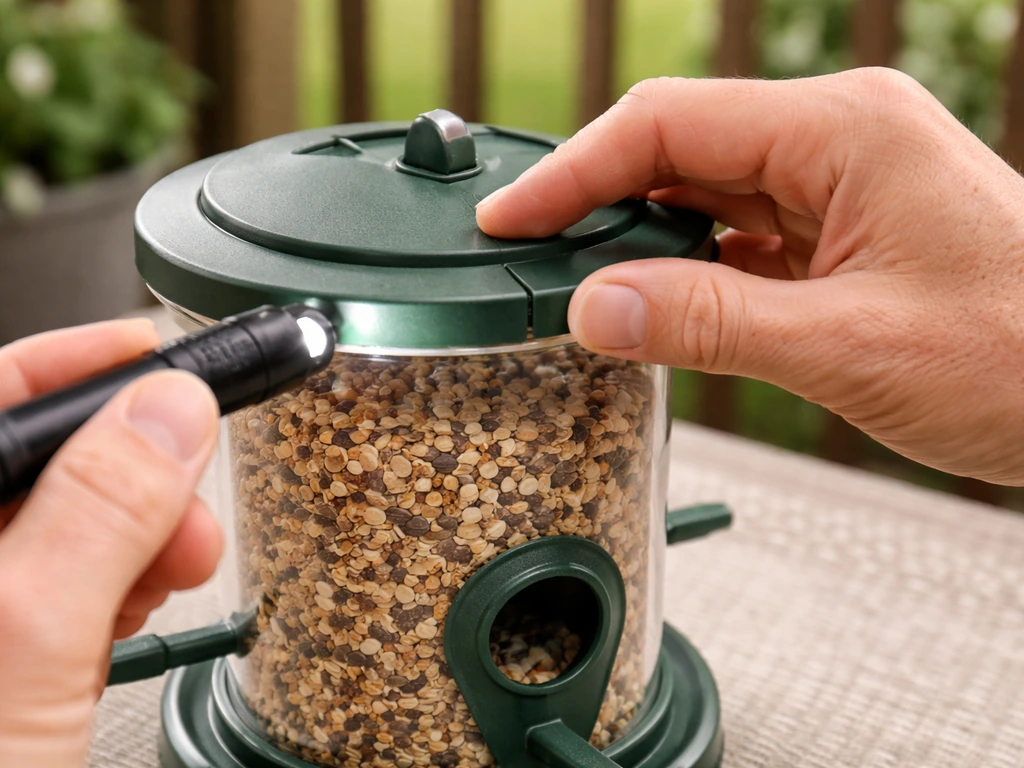
Work through this list before buying anything new. Most seed-spill problems are fixable with what you already have.
- Check the lid seal: Does it sit flush? Any gap or wobble means seed (and rain) gets in and out. Tighten, replace, or add weather stripping.
- Check the port size vs. your seed: Are seeds sitting right at the opening or dribbling out when nothing is feeding? If yes, switch to a matched seed size or replace the tube insert.
- Look at the fill level: Is seed at or above the top port? Drop the fill level 10 to 15% and see if scatter reduces.
- Observe at dawn and dusk: Is seed disappearing rapidly overnight or in short bursts? That's a pest, not a design flaw. Address placement and add a baffle.
- Check for damage: Any cracked ports, bent perch rods, or warped lids? Seed will find every gap. Replace damaged components or the whole feeder.
- Look under the feeder: Is there a neat pile of hulls (normal), a wide scatter of whole seeds (wind or pest), or a soaked clump (rain infiltration and poor lid seal)? Each pattern points to a specific fix.
- Add a seed-catcher tray if you haven't already: Even a basic 10.5-inch tray under the feeder eliminates most ground-level mess immediately.
Recommended feeder approach by target bird
| Target Bird | Best Low-Spill Feeder Style | Seed to Use | Key Feature to Look For |
|---|---|---|---|
| Finches (goldfinch, house finch) | Mesh or slotted nyjer tube feeder | Nyjer/thistle or hulled sunflower hearts | Small ports, no perches required for clinging species |
| Cardinals | Hopper or wide-port tube with tray | Safflower or hulled sunflower hearts | Twist-lock lid, deep seed tray, covered ports |
| Chickadees and nuthatches | Standard tube feeder with seed catcher | Black oil sunflower or sunflower hearts | Port-sized for sunflower, tray or hoop underneath |
| Blue jays | Large hopper with lock lid | Whole peanuts or sunflower | Sturdy construction, latch lid, wide tray |
| Woodpeckers | Suet cage (no seed spill) or peanut feeder | Suet or shelled peanuts | Cage design eliminates scatter entirely |
| Doves and ground feeders | Low covered platform with drainage | Mixed seed or millet | Raised edges, drain holes, ground-level tray placement |
| Mixed flock (squirrel-prone yard) | Weight-sensitive cage or tube feeder | Hulled sunflower or safflower | Weight-activated port closure, pole-mounted baffle |
If you're feeding woodpeckers and want to avoid seed scatter entirely, a suet cage is genuinely the cleanest option since suet doesn't drop the way loose seed does. For anyone interested in peanut-based feeding as a no-hull alternative, a dedicated peanut feeder with a mesh or cage design keeps whole or shelled peanuts contained with almost no waste.
If you want the best peanut bird feeder for no-hull feeding, look for a dedicated design that keeps whole or shelled peanuts contained with minimal waste. A good option is the best shelled peanut bird feeder, because the design helps keep peanuts contained with very little waste. Shelled peanuts in particular leave nothing behind for pests to pick up off the ground.
The bottom line: a tube feeder with correctly sized ports, a twist-lock lid on any hopper you use, a seed-catcher tray underneath, hulled or no-mess seed, and a baffle on the pole will get you to near-zero ground scatter. Fix the placement and the seed type first, since those are free changes. If you want a bird feeder pine cone alternative, look for designs that hold seed securely and include containment features to minimize ground scatter. Then upgrade the feeder hardware if the problem persists. Most people find that switching to hulled sunflower hearts alone cuts their ground mess by more than half before they spend a dollar on new equipment.
FAQ
How can I tell whether my feeder is leaking seeds versus birds dropping them on purpose?
Do a quick 10 to 15 minute observation right after a refill. If seeds are accumulating mostly in the tray directly under the ports or openings, it points to lid seal, port gaps, or warping. If most pieces appear after birds perch and leave, look more at seed choice (mixed seed hull waste) and placement under aggressive diggers. Also check for torn or loose components by pressing gently on port covers and the lid seating surfaces while the feeder is empty.
Will a seed-catcher tray alone stop waste if my feeder still has loose ports or a bad lid?
A tray reduces the mess, but it cannot prevent seeds from escaping through gaps, especially with tube feeders that have mismatched port sizes or hopper lids that do not fully latch. If you notice seeds outside the tray area or see residue around port grooves, fix the containment first by cleaning the groove, reseating the lid, or replacing warped seals. Use the tray as a secondary layer, not a substitute for proper sealing.
What seed types work best when I want near-zero scatter?
Whole or no-mess options tend to be cleaner than mixes. Hulled sunflower hearts usually reduce hulls that birds discard. Safflower is also a strong option for lower scatter because cardinals tend to crack it more cleanly than many other seeds, and it can deter certain nuisance birds. For finches, switch to a dedicated nyjer feeder so the seed is delivered through tiny ports that limit flinging.
My tube feeder has the right ports, but seeds still end up on the ground, why?
Two common causes are shaking from an unstable hanging setup and birds digging at oversized gaps. Confirm the feeder is hanging freely (not pressed against a pole or wall) so any weight-activated closures can engage correctly. If your feeder uses snap-closed ports, clean the port channels so residues do not keep closures from fully seating. Finally, verify the seed matches the port size, for example finch thistle ports should not be used with black oil sunflower.
How do I prevent scatter during storms or heavy wind?
Wind-driven swing can empty ports and increase shake-related loss, even if the feeder is otherwise sealed. Hang tube and hopper feeders from a rigid arm or use a shepherd’s hook, avoid flimsy single-stake balancing, and position so prevailing gusts do not rock the feeder. Add or adjust a weather baffle (roof or dome) and check the lid seal after heavy rain, because warped lids often stop closing tightly once they dry unevenly.
What’s the best fill level to avoid a spill from tube and hopper feeders?
Do not fill to the very top unless the lid is sealed flush to the seed surface. For tube feeders, leave a small gap so seed is not sitting right at the opening of the top port. For hopper feeders, aim for roughly 80% capacity. Overfilling increases the chance that seed slips out of minor gaps or gets pushed out when birds hop and shake the feeder.
If squirrels are not stealing most of the seed, can they still cause ground scatter?
Yes. Squirrels often create scatter by prying, shaking, or testing port closures even when they do not fully empty the feeder. If you see scattered seed but few obvious theft gaps, upgrade to squirrel-resistant features such as weight-activated port closures or a cage barrier, and do not rely on a tray alone. Placement is equally important, because a running start from nearby branches can let squirrels reach the feeder before deterrents engage.
What clearance rules should I follow to keep squirrels from launching at the feeder?
Keep the feeder at least 8 feet horizontally from any structure a squirrel can launch from, such as branches, railings, or roof edges. For the pole, use a baffle appropriate to your setup, commonly an inverted cone (about 13 inches minimum diameter), a dish-style baffle (about 15 inches minimum diameter), or a stovepipe baffle (about 6 inches diameter and 18 inches long). If you have both a baffle and a tray, you can prevent climbing and still capture any legitimate drops.
Do baffles and clearance rules matter if I already bought a squirrel-proof feeder?
They do. Even “squirrel-proof” designs can be overcome if a squirrel can jump from a nearby branch or railing and land directly on the feeder. In that scenario, the mechanism may not have time or leverage to trigger properly. Treat baffle and clearance as mandatory setup steps, not optional upgrades.
How can I reduce scatter caused by grackles, starlings, or house sparrows?
If these species dominate, prioritize limiting access. Switch to a tube feeder with small ports or a weight-sensitive feeder that closes under heavier birds. Seed choice helps too, safflower often discourages several of these aggressive visitors while still drawing desired birds like cardinals and chickadees. This approach often reduces waste more reliably than larger trays or tighter lids alone.
My feeder seems sealed, but seeds still collect inside the grooves and around the lid. Is this normal?
Residue around port grooves and lid seating surfaces can build up and prevent closures from seating fully. Clean the groove channels and where the lid contacts the body every time you refill, especially after birds leave husk dust or wet clumps. A quick wipe with a dry brush or cloth is often enough, but if you see swelling or warped fit after rain, you may need to sand and re-seal wood lids or replace them.
Are platform feeders ever a good choice for a feeder that does not drop seeds?
Generally, platform feeders create more mess because birds step and rummage in the tray, which leads to hulls and dropped pieces. They can work if you intentionally place the feeder close to the ground with containment in mind, but if your goal is near-zero ground scatter, tube or hopper designs with a seed-catcher tray usually perform better.
Is there a practical way to troubleshoot the problem without buying a new feeder?
Yes, use a three-step check: (1) inspect the feeder for cracks, bent port covers, and loose perch rods, then gently shake it empty and listen for excessive seed movement when filled later, (2) clean and verify lid seal and port seating, (3) test placement by temporarily suspending the feeder more rigidly and keeping it away from launch points. If scatter drops after these adjustments, the “fix” is setup and maintenance rather than replacing the feeder.
Next Articles
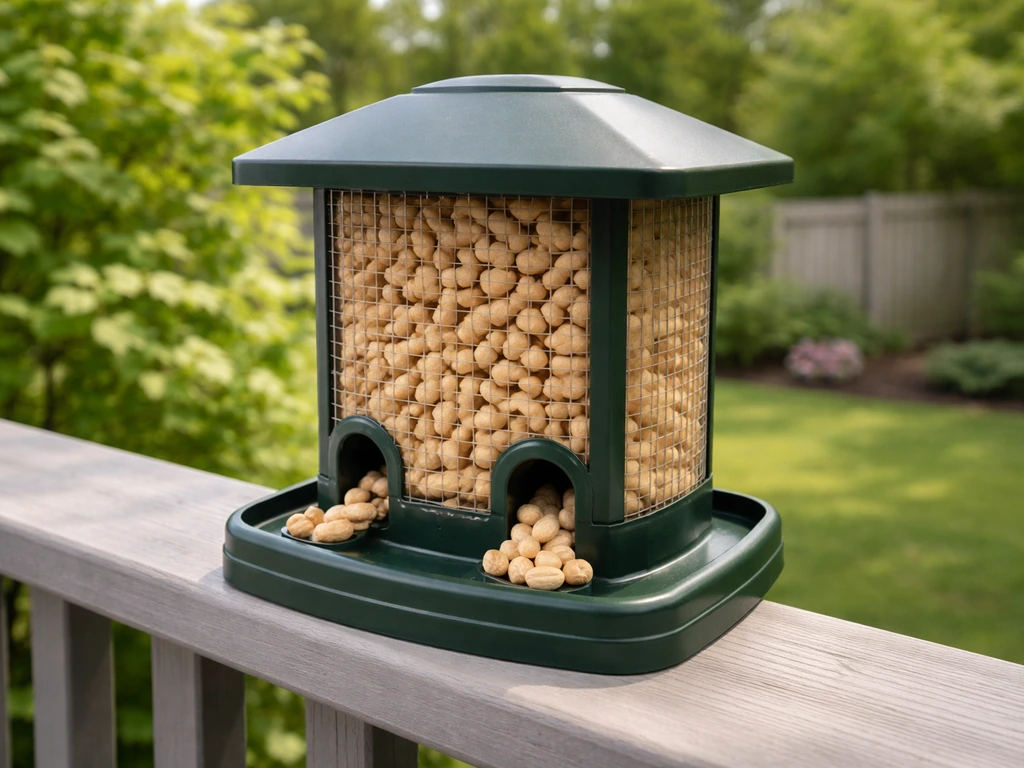
Best Shelled Peanut Bird Feeder: Buyer Guide and Setup
Compare the best shelled peanut bird feeders, features that reduce mess, and pest-proof setup tips for hungry backyard b
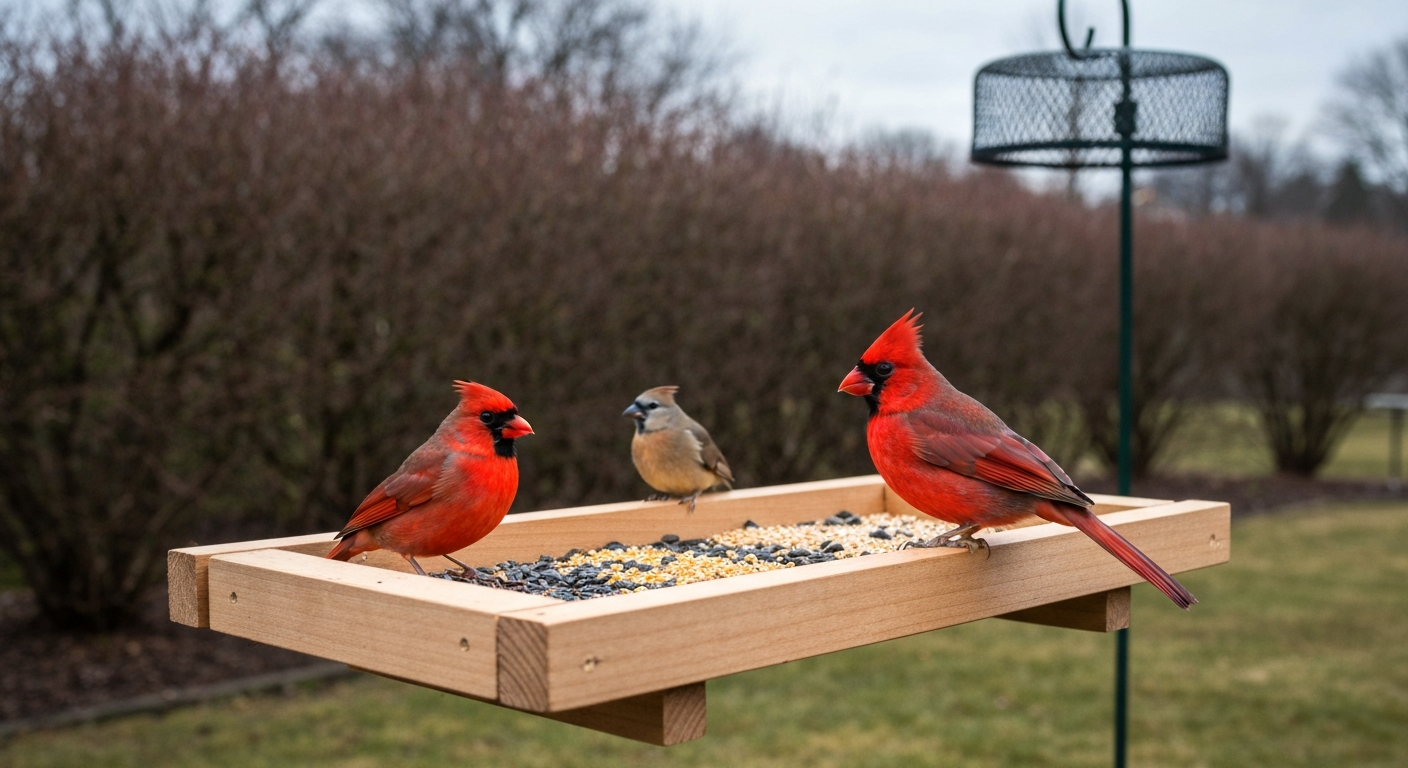
What Does a Cardinal Bird Feeder Look Like: Design & Tips
Identify and choose the best cardinal bird feeder: shapes, colors, perches, seeds, placement, and winter tips.
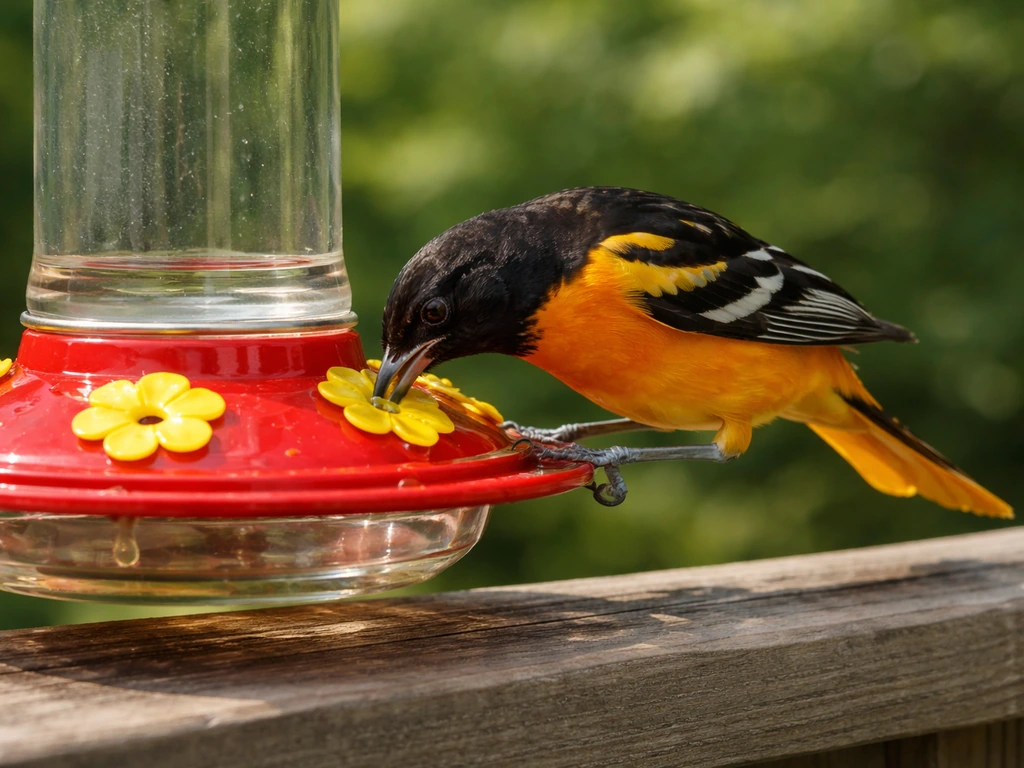
Best Bird Feeder for Baltimore Orioles: Buyer Guide
Choose the best bird feeder for Baltimore orioles: styles, features, placement tips, and fixes for heat, pests, and acce