For shelled peanuts, a wire mesh cylinder feeder or a wide platform tray feeder will do more for you than almost anything else on the market. Wire mesh feeders let birds cling and peck at their own pace, work with smaller shelled pieces as well as whole peanuts, and drain well in rain. Platform feeders attract a wider range of species but need a roof to keep peanuts dry. Specialized tube-style peanut feeders with large ports also work well, but the mesh design is the gold standard most serious backyard birders come back to.
Best Shelled Peanut Bird Feeder: Buyer Guide and Setup
Marcus Hendricks
13 Jun 2026
Why shelled peanuts need a specific feeder design
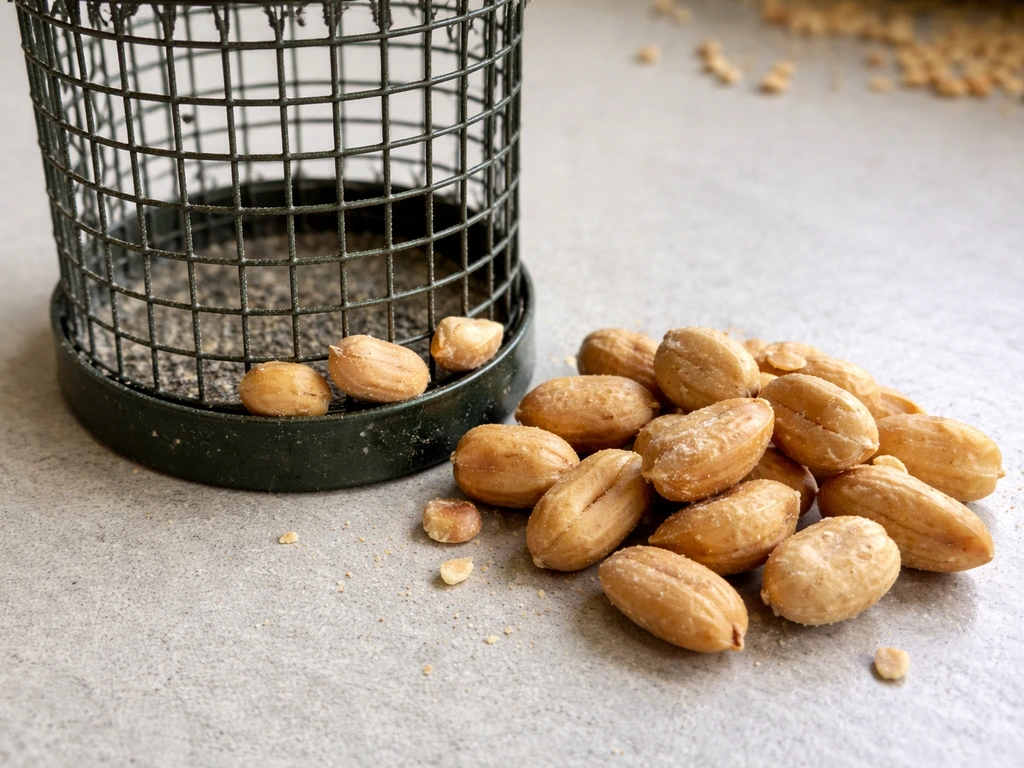
Shelled peanuts are chunky, oily, and dense compared to typical birdseed. They don't flow through a standard tube feeder's narrow ports, they can clump when wet, and they spoil faster than dry seed if moisture gets trapped inside. That means a feeder designed for millet or sunflower seeds will either jam up, hold moisture against the peanuts, or let squirrels reach in and haul out every peanut in one visit. The feeder geometry has to match the food, and with shelled peanuts that means larger openings, good airflow, and materials that don't hold water.
Mesh size is the key variable. A wire mesh feeder with roughly half-inch to three-quarter-inch openings lets birds peck out pieces without the peanuts falling straight through or getting permanently wedged. Feeders designed for nyjer or small seeds have openings that are far too tight. Hopper feeders built for mixed seed often have ports that are too small and a base tray that traps moisture right where peanuts sit. If you try to repurpose a standard seed feeder for shelled peanuts, you'll spend more time unclogging it than watching birds.
Best feeder types for shelled peanuts
Wire mesh cylinder feeders
This is the design most recommended by birding organizations for shelled peanuts, and for good reason. A wire mesh cylinder (sometimes called a peanut feeder or nut feeder) gives birds like chickadees, nuthatches, titmice, woodpeckers, and jays a surface to cling to and peck from. If you are specifically hunting for the best bird nut feeder, look for a wire mesh cylinder style that lets birds cling and peck while draining well in rain. The open mesh allows airflow around the peanuts, reducing moisture buildup. Birds can work at multiple points around the cylinder simultaneously, which cuts down on competition. The Audubon Shop's wire mesh peanut feeder and similar designs from brands like Birds Choice are built specifically for this use. Look for a removable top cap for easy filling and a bottom that opens or unscrews for cleaning.
Platform and tray feeders
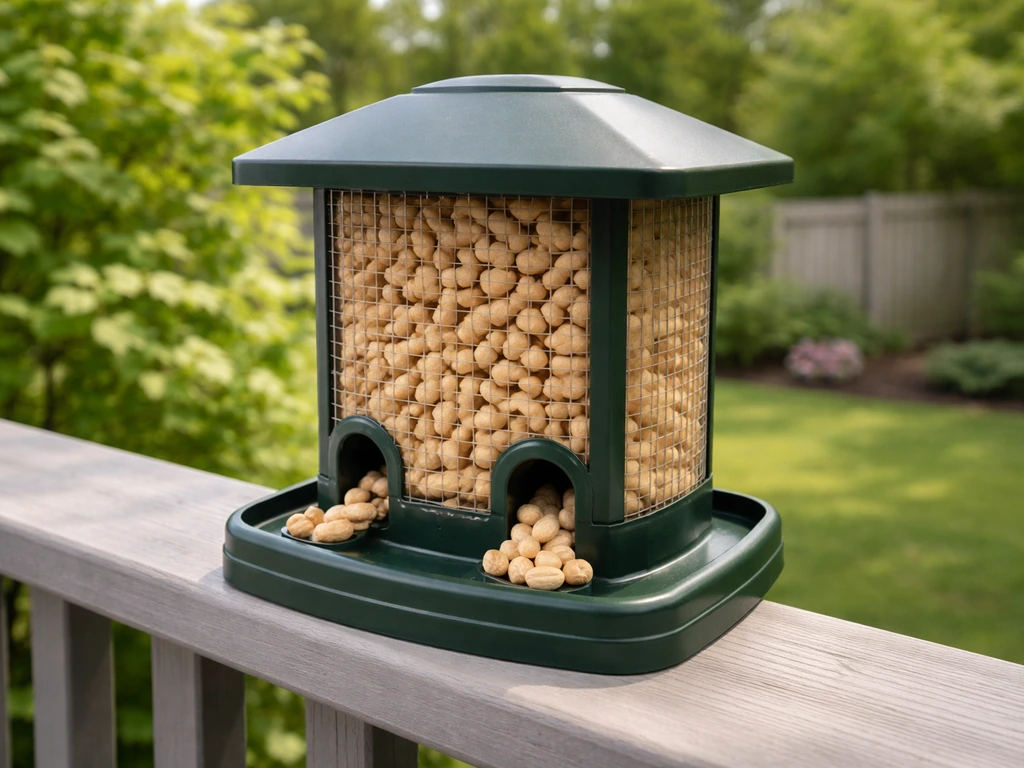
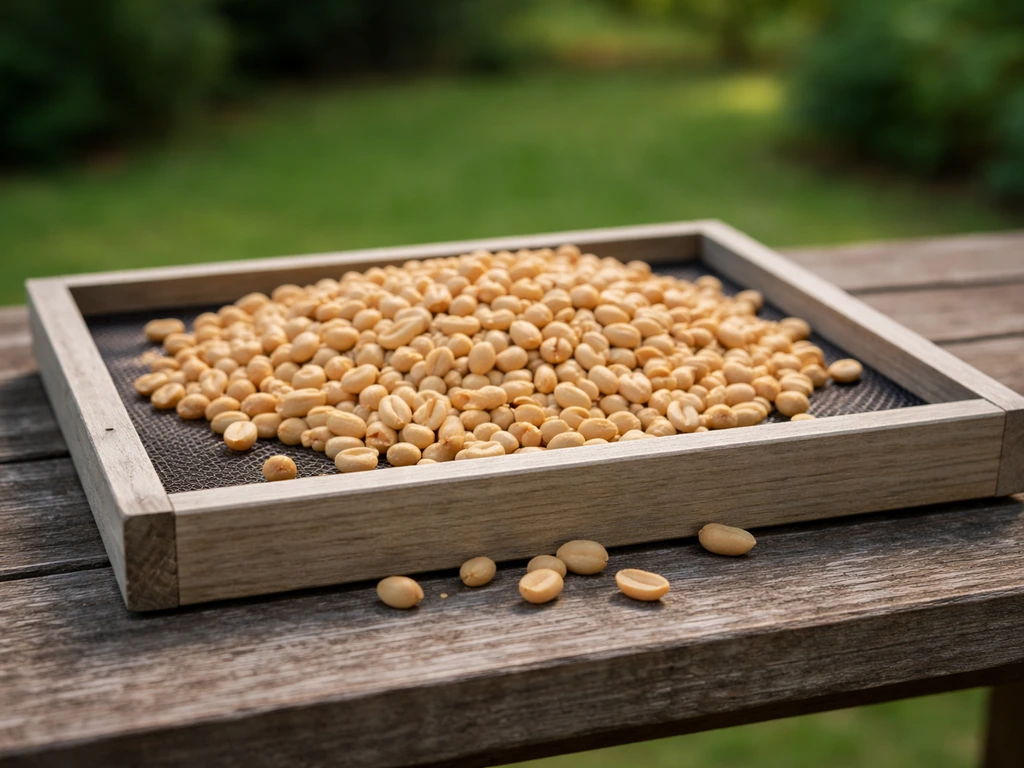
Platform feeders are flat, raised surfaces where you spread food openly. Project FeederWatch notes that some species strongly prefer feeding on large flat surfaces, and shelled peanuts work well here because birds can grab and fly off quickly without having to peck through mesh. The downside is exposure: peanuts on an open tray get wet fast, and wet peanuts go bad quickly. If you go the platform route, choose one with a built-in roof or a mesh-bottom tray that drains. Roofed platform feeders are excellent for rainy climates and keep peanuts usable for longer. Blue jays in particular seem to prefer the open-tray style over mesh cylinders because they can grab a full peanut and cache it.
Hopper feeders
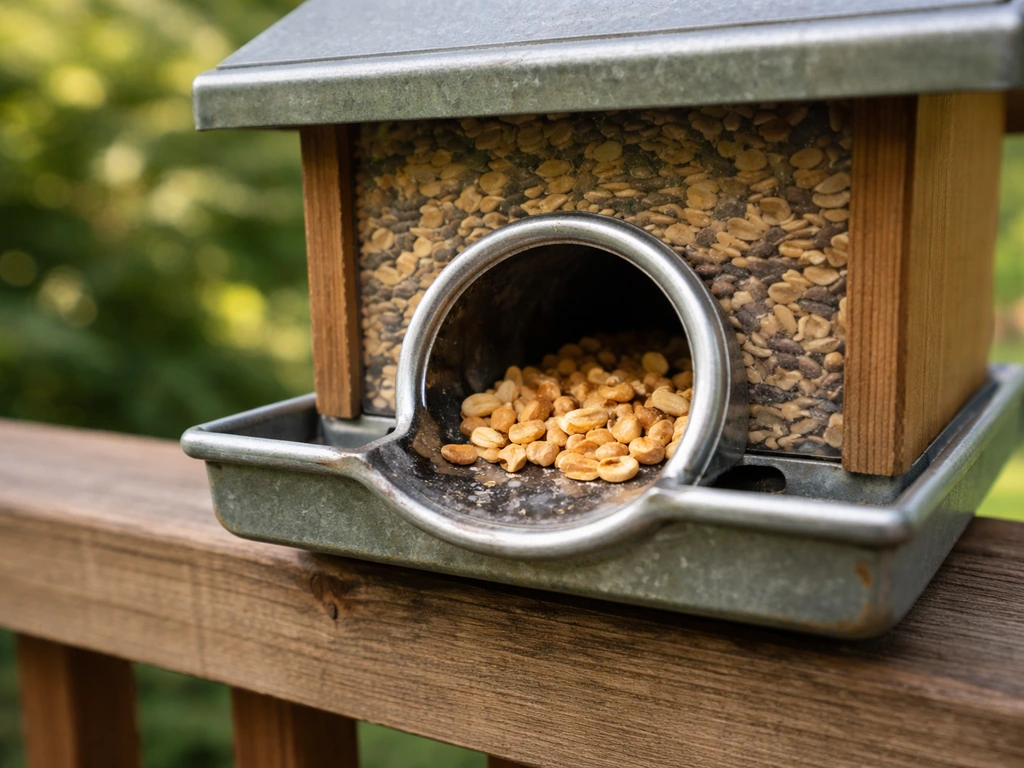
Traditional hopper feeders can work with shelled peanuts if the port openings are large enough, but most are designed for seed and will jam. If you already own a hopper feeder with wide ports and a generous tray, you can use it for peanuts in a pinch, but plan on checking for clogs daily. Hopper feeders with a glass or plastic reservoir also give you no real airflow around the peanuts, which speeds up spoilage. I'd call this a second-choice option rather than a purpose-built peanut solution.
Specialized tube feeders with large ports
Some manufacturers make tube feeders with ports sized specifically for peanuts, sometimes called peanut butter feeders or nut log feeders. The Birds Choice Magnet Mesh feeder and similar products accommodate both whole peanuts and shelled pieces. These work well for smaller yards where you want a compact footprint, and they're easier to hang from a hook than a wide platform. They're not as versatile as a mesh cylinder but are a solid middle ground if you want something tidy-looking.
What to look for when buying
| Feature | Why it matters for shelled peanuts | What to look for |
|---|---|---|
| Mesh or port size | Determines if birds can access peanuts without jamming | Half-inch to three-quarter-inch openings |
| Capacity | Affects how often you refill and how long peanuts sit | 16–32 oz for moderate traffic; smaller in hot/humid weather |
| Weatherproofing | Wet peanuts spoil fast and develop mold | Roofed design, drainage holes, powder-coated or stainless steel wire |
| Cleanability | Peanut oil residue builds up fast and breeds bacteria | Removable cap and base, dishwasher-safe parts or smooth surfaces |
| Mess control | Peanut pieces and skins drop under the feeder | Catch tray or mesh bottom that lets debris fall through |
| Pest resistance | Squirrels will empty a peanut feeder in minutes | Weight-activated closure or narrow cage that excludes large animals |
Capacity is worth thinking about carefully. A large feeder sounds convenient, but shelled peanuts left in a feeder for more than two to three days in warm or humid weather can develop aflatoxin, a mycotoxin produced by mold that is genuinely dangerous to birds. The Environmental Literacy Council specifically flags aflatoxin contamination as the primary risk with peanut feeding and recommends using peanuts that are tested and intended for bird feeding. Buying smaller quantities more frequently, and sizing your feeder to what birds consume in two to three days, is safer than buying in bulk and letting peanuts sit.
Which birds come to peanut feeders and how to target them
Shelled peanuts draw a reliably exciting crowd. Project FeederWatch specifically highlights chickadees, nuthatches, and titmice as enthusiastic shelled-peanut eaters. In practice you'll also see blue jays, woodpeckers (including downy, hairy, and red-bellied), Carolina wrens, and occasionally dark-eyed juncos picking up fallen pieces from below. The Audubon Shop's peanut feeder documentation lists chickadees, titmice, jays, nuthatches, and woodpeckers as regular users of wire mesh peanut feeders.
To match your setup to your target birds: if you want woodpeckers and nuthatches, hang a wire mesh cylinder from a shepherd's hook or tree branch at around five to six feet high and position it near tree cover. If you're targeting blue jays, a roofed platform feeder is usually more effective since jays prefer an open surface where they can grab whole peanuts quickly. Chickadees and titmice will use both styles readily. For Carolina wrens, placing a small platform feeder lower (two to three feet) closer to shrubs works well since wrens don't love exposed heights.
One thing worth noting: Perky-Pet points out that which birds show up depends not just on the feeder but also on what other food sources are nearby. If you're running a busy sunflower seed feeder right next to your peanut feeder, dominant species like house sparrows may block smaller birds from getting to the peanuts. Spacing feeders fifteen to twenty feet apart helps spread traffic and reduces competition.
Stopping squirrels and other pests
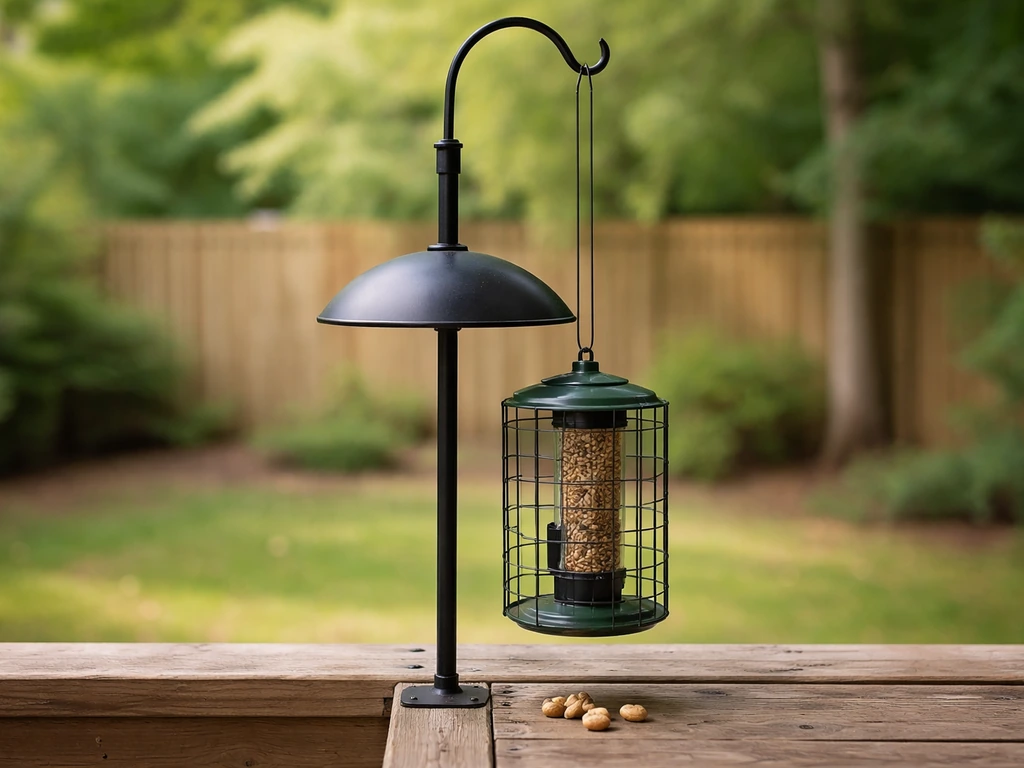
Peanuts are basically squirrel bait, so pest-proofing isn't optional with this type of feeder. The two most reliable physical strategies are a baffle on the pole and hanging placement with adequate clearance. Penn State Extension and Nebraska Extension both emphasize that baffle placement is the foundation of any squirrel-resistance plan: a bowl or torpedo-shaped baffle mounted on the pole below the feeder prevents squirrels from climbing up. The baffle needs to be at least four to five feet above the ground and positioned so squirrels can't simply jump over it from the side.
Audubon specifically notes that weight-activated feeders can be effective, but only if the feeder hangs far enough from the mounting pole or tree that squirrels can't reach it by leaping. Their recommendation is to hang feeders at least ten feet from any structure a squirrel can climb or jump from, and at least five feet above the ground. If you can't achieve that clearance, a weight-activated mechanism that closes ports under the heavier weight of a squirrel is your next best option. Raccoons are heavy enough to trigger most weight-activated closures, but they're also strong enough to physically dismantle lighter feeders, so metal construction is worth the extra cost.
Caged feeders, where a wire cage surrounds the peanut feeder with openings large enough for small birds but too small for squirrels, are another solid option. They do restrict which birds can access the feeder (jays won't fit through a cage), so match the cage design to your target species. UNH Extension also recommends placing feeders near shrub borders rather than directly under large trees, which makes aerial approaches harder for squirrels and provides quick cover for birds after they feed.
Climate, seasons, and peanut storage
Shelled peanuts are a year-round food but behave differently across seasons. In summer and humid climates, peanuts go bad faster than almost any other bird food. Limiting what you put out to a two-day supply and storing the rest in a sealed container in a cool, dry location (not the garage in July) is the practical move. In dry climates like the Southwest, you can leave peanuts out a bit longer, but the oil still goes rancid in direct sun heat.
In winter, peanuts are one of the best high-fat foods you can offer birds that overwinter in cold regions. Chickadees, nuthatches, and woodpeckers need extra calories in cold weather, and shelled peanuts deliver. Audubon recommends completely drying any feeder before refilling in winter conditions because wet residue freezes and creates bacterial problems even in cold temps. If you're in a region with heavy snow or freezing rain, a roofed feeder becomes almost essential: unprotected peanuts can freeze into a solid block that birds can't access.
For storage, keep bulk peanuts in an airtight container away from direct sunlight. A metal trash can with a locking lid works well and doubles as a pest deterrent if squirrels or mice have found your storage area. Do not store peanuts in paper bags or open bins in humid conditions: that's exactly where aflatoxin contamination becomes a real risk, not just a theoretical one.
Troubleshooting: peanuts not getting eaten, mold, and clogs
Birds aren't visiting
If you've put out a peanut feeder and birds aren't coming, give it one to two weeks before worrying. Birds need time to discover a new food source, especially if they weren't already visiting your yard. To speed things up, place a small amount of shelled peanuts on a nearby platform or even a fence rail where they're easily visible. Once birds find the easy open source, they'll investigate the feeder nearby. Also check whether the feeder is in too exposed a location: birds, especially smaller ones, won't feed far from cover. Moving the feeder within ten to fifteen feet of a shrub or tree often makes an immediate difference.
Moldy or clumped peanuts
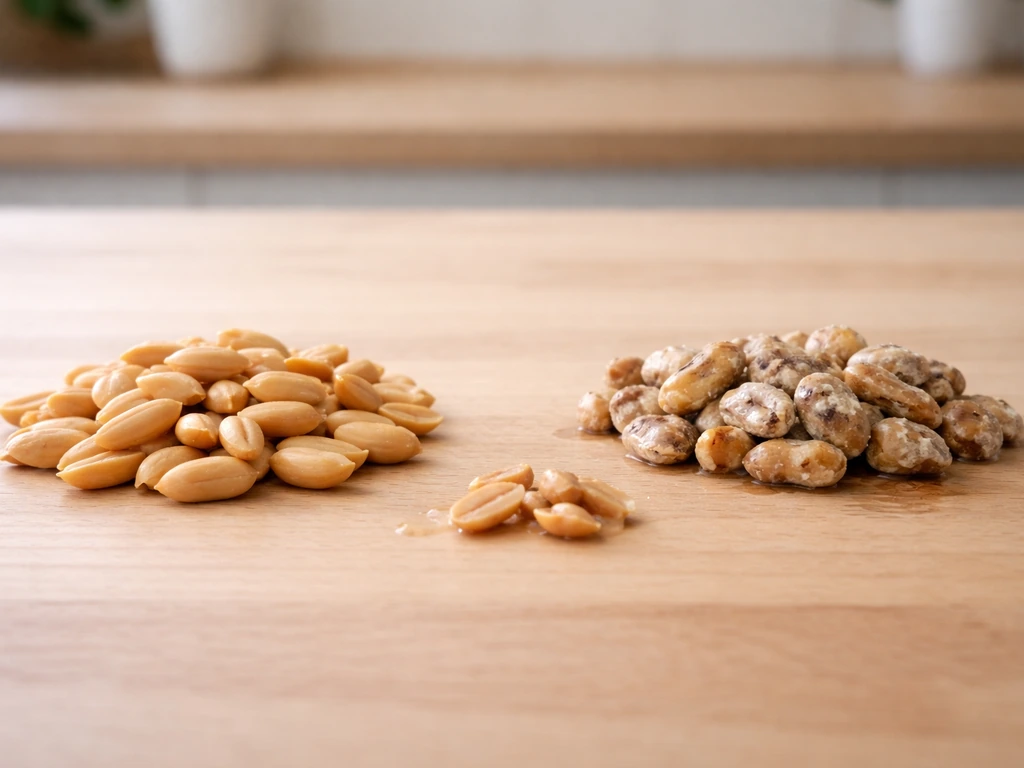
The Minnesota DNR notes that mold on birdseed forms readily in wet weather, and peanuts are especially vulnerable because of their oil content. In wet weather, mold or bacteria can form on wet birdseed in the feeder or on the ground, so it’s important to keep feed dry keep feed dry in wet weather. If you find moldy peanuts in the feeder, remove and discard all of them immediately: do not try to shake out just the bad ones. Clean the feeder with a dilute bleach solution (one part bleach to nine parts water) before refilling. All About Birds recommends cleaning seed feeders about every two weeks under normal conditions, and more often in wet weather or during heavy use. Iowa DNR suggests a 10% bleach solution and stresses that the feeder must be completely dry before you add fresh food. A wet feeder refilled with peanuts will be moldy again within days.
Clogging
Shelled peanuts can jam in mesh or port openings when they swell from moisture or when skins and peanut fragments pack together. If you notice birds pecking at the feeder but not getting much out, it's usually a clog. A quick shake often frees it up. For persistent clogs, use a thin brush or chopstick to clear the mesh from the inside, then check whether your mesh size is appropriate for the peanuts you're buying: larger, chunkier peanuts in a feeder with smaller openings will clog repeatedly. Switching to peanut pieces (already broken into smaller chunks) often solves this entirely.
Peanuts going uneaten and sitting too long
If peanuts consistently sit more than two to three days without being eaten, refill less. Put out only what birds can consume in a day or two. This reduces waste, limits spoilage, and keeps the food fresh and attractive. Stale or rancid peanuts have a noticeably off smell and birds will avoid them: that's often why a feeder that worked initially stops getting traffic. Fresh, high-quality peanuts marketed specifically for bird feeding (tested for aflatoxin) will consistently outperform cheap bulk peanuts from a grocery store or feed store with no quality controls.
DIY and budget alternatives vs. buying a dedicated feeder
If you want to test whether peanuts work in your yard before committing to a dedicated feeder, start with a platform made from an old wooden board or a shallow dish placed on a railing or stump. Try searching with your clue by looking for common phrases like “nut feeder” or “peanut feeder” that describe a bird-feeder alternative to seed bird-feeder alternative to seed crossword clue. Spread a small handful of shelled peanuts and see what visits within a week. This costs nothing and gives you real data about whether peanut-eating birds are in your area. The FeederWatch Handbook notes that feeder design and hole sizing genuinely matter for consistent use, so the DIY approach is a trial, not a permanent solution.
A hardware-store alternative that works reasonably well is a simple wire suet cage: the openings are usually close to the right size for peanuts, and many birds already know how to use them. If you are looking for a bird feeder pine cone alternative, a wire suet cage can be an easy swap you can fill with shelled peanuts simple wire suet cage. If you want an even easier peanut butter bird feeder alternative, repurpose a wire suet cage with a peanut-butter style setup and keep it clean and protected from moisture. Fill it with shelled peanuts instead of suet and hang it the same way. It won't drain as well as a purpose-built feeder and cleaning is harder, but it's a $5 to $8 experiment that tells you a lot about your local bird population before you spend $30 to $60 on a dedicated peanut feeder.
When you're ready to buy, the features worth paying for are metal construction (powder-coated steel or stainless wire holds up and resists squirrel chewing), a removable top and bottom for cleaning, a weather cap or roof, and mesh openings that match shelled peanut size. You don't need a smart feeder or a solar-powered design for peanuts: the mechanical simplicity of a well-made mesh cylinder is its strength. A well-designed bird feeder that does not drop seeds is also easier to keep clean and more effective at delivering the peanuts where birds can reach them well-made mesh cylinder. Budget for around $25 to $45 for a quality wire mesh peanut feeder from brands that specialize in bird feeding equipment. If you're comparing this to a general peanut feeder that handles both shelled and in-shell peanuts, the specialized shelled-peanut mesh design generally wins on cleanability and bird access, especially for the smaller species that are the most consistent visitors.
If you find yourself exploring related options, feeders designed for fruit and nut mixes or general nut feeders can sometimes double as shelled peanut feeders depending on port size, but purpose-built designs almost always perform better over a full season. If you are feeding more than just peanuts, look for a feeder that can also handle fruit and nut mixes without clogging or holding moisture. Whatever feeder you choose, the fundamentals stay the same: fresh peanuts, a clean feeder, good placement near cover, and a baffle or adequate clearance to keep squirrels out will get you results faster than any specific brand or price point.
FAQ
Can I use any wire mesh feeder for shelled peanuts, or do I need a peanut-specific model?
Most mesh cylinders are meant for shelled peanuts only or for shelled plus whole peanuts. Before buying, confirm the maximum opening size and whether the bottom is open enough to avoid a “sitting pool” of oily peanut dust. If the feeder’s mesh is too tight or the tray traps residue, you will still get clogs even if the brand claims it handles peanuts.
What should I do if the feeder gets rained on and the peanuts look damp?
Yes, but change the maintenance plan. After rain or heavy humidity, dump and rinse the feeder sooner than usual, and do not top off with more peanuts onto damp residue. A quick check is whether peanuts look swollen or feel tacky, that usually means the feeder needs cleaning before birds return.
How do I handle moldy or suspicious peanuts in and around the feeder?
Do not rely on “best effort” cleaning for safety. If you see mold, discard all peanuts in that feeder, clean the entire feeder (not just the visible area), then let it dry completely before refilling. Also clean the surrounding area where peanuts have fallen, because mold can persist in leftover hull fragments.
Where exactly should I hang the feeder if I have little shrub or tree cover?
Start by matching feeder height to your targets, but also to bird comfort. If you cannot place the feeder near shrubs or tree cover, smaller birds often stop visiting. Use a sheltered placement, then adjust height within the recommended range rather than moving it far into an open yard.
My mesh feeder clogs, birds are waiting at it, what’s the most likely fix?
If you see birds pecking but nothing is coming out, most clogs are caused by swollen peanuts or peanut skin and fragments packing into the mesh. Try a gentle shake first, then clear from the inside with a thin brush. If clogs repeat, switch to larger-mesh peanuts or to pre-broken peanut pieces sized for the feeder.
How much peanut should I put out at once, especially in hot or humid weather?
Yes, but take the spoilage risk seriously. Keep a two to three day supply in warm weather, and store the rest sealed and cool. Avoid leaving peanuts in direct sun on the porch or windowsill, rancidity and faster spoilage can happen even if the feeder is covered.
Do weight-activated squirrel-resistant peanut feeders actually work?
Weight-activated closures can work, but only when the feeder is positioned so squirrels cannot leap onto it from structures. If squirrels can reach from a fence, roofline, or nearby branch, they may still defeat the mechanism by grabbing and dismantling the feeder. In that case, use a baffle and adequate clearance first, then consider a weight-activated design as a backup.
Should I choose a caged peanut feeder or a baffle system for squirrels?
Generally, baffles reduce squirrel success more reliably than relying on cage gaps alone. Caged feeders can help, but they limit which birds can access, especially larger species. If your priority is small birds like chickadees and nuthatches, a cage can be a good match, but check port size so the birds you want can fit comfortably.
How do I choose between a mesh cylinder and a roofed platform based on the birds in my area?
If you are targeting woodpeckers, hang it near vertical surfaces and tree cover so they can approach confidently. If you are targeting blue jays, an open, roofed platform often works better than a cylinder because jays grab larger pieces quickly. For chickadees and titmice, both styles usually work when placement includes nearby cover.
Birds avoid the peanut feeder, could my other feeder be affecting who shows up?
It can, especially if your mix includes seeds that attract dominant species. Even if peanuts are available, house sparrows can monopolize feeding areas if the peanut feeder is too close to a busy sunflower or suet station. Try spacing feeders 15 to 20 feet apart and observe for a week before changing everything at once.
How long should I wait before concluding the feeder setup is not working?
Feeder timing matters less than freshness and visibility. If birds are not using it after one to two weeks, check the feeder’s location relative to cover, confirm it is draining well, and verify you are not using stale or rancid peanuts. Fresh, bird-tested peanuts and a quick nearby “starter” scatter can speed discovery without leaving food out too long.
Is a wire suet cage a good long-term solution for shelled peanuts, not just an experiment?
A suet cage can be a good trial, but it often drains poorly compared with purpose-built mesh peanut cylinders. If you choose this route, take a smaller portion and check more frequently for damp residue, especially after rain. It is best for short-term testing in dry conditions or with frequent cleaning.
Next Articles
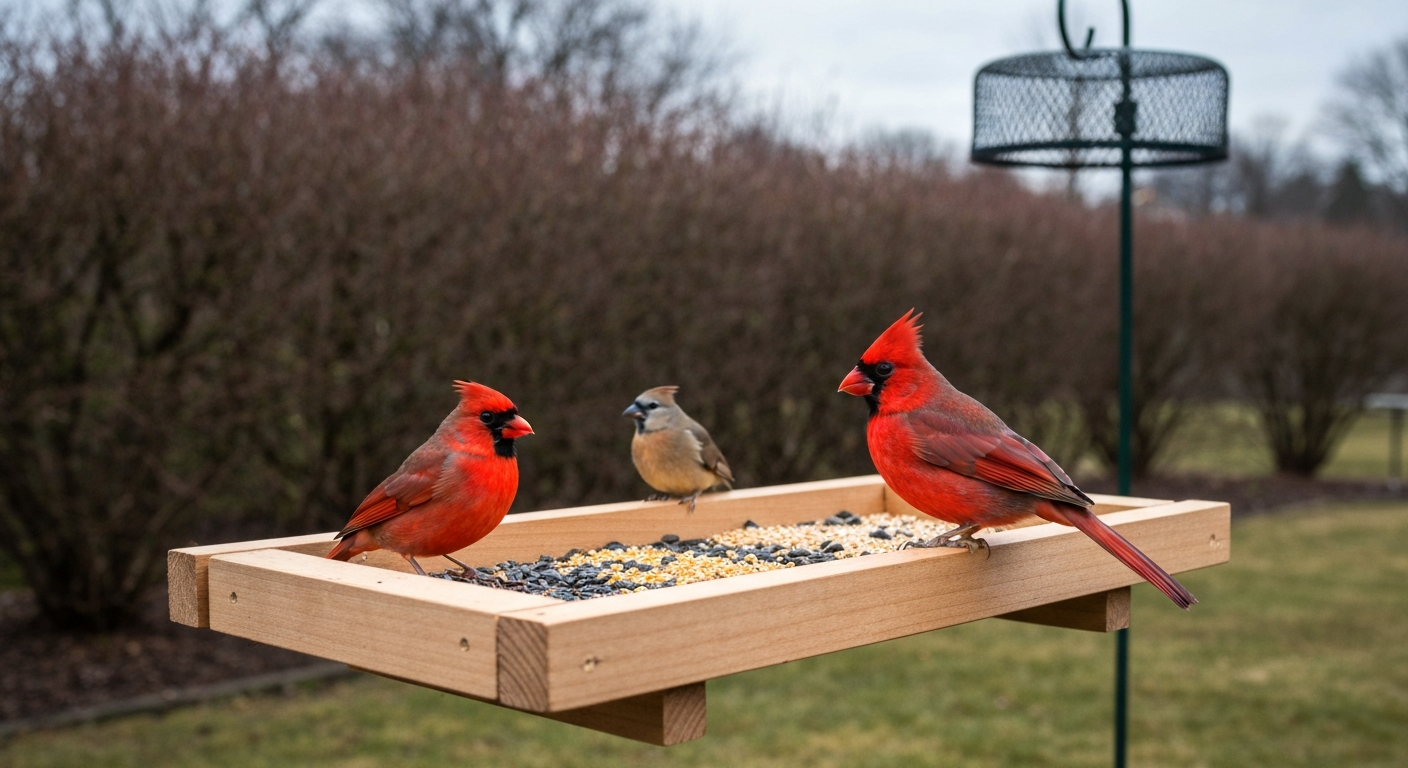
What Does a Cardinal Bird Feeder Look Like: Design & Tips
Identify and choose the best cardinal bird feeder: shapes, colors, perches, seeds, placement, and winter tips.
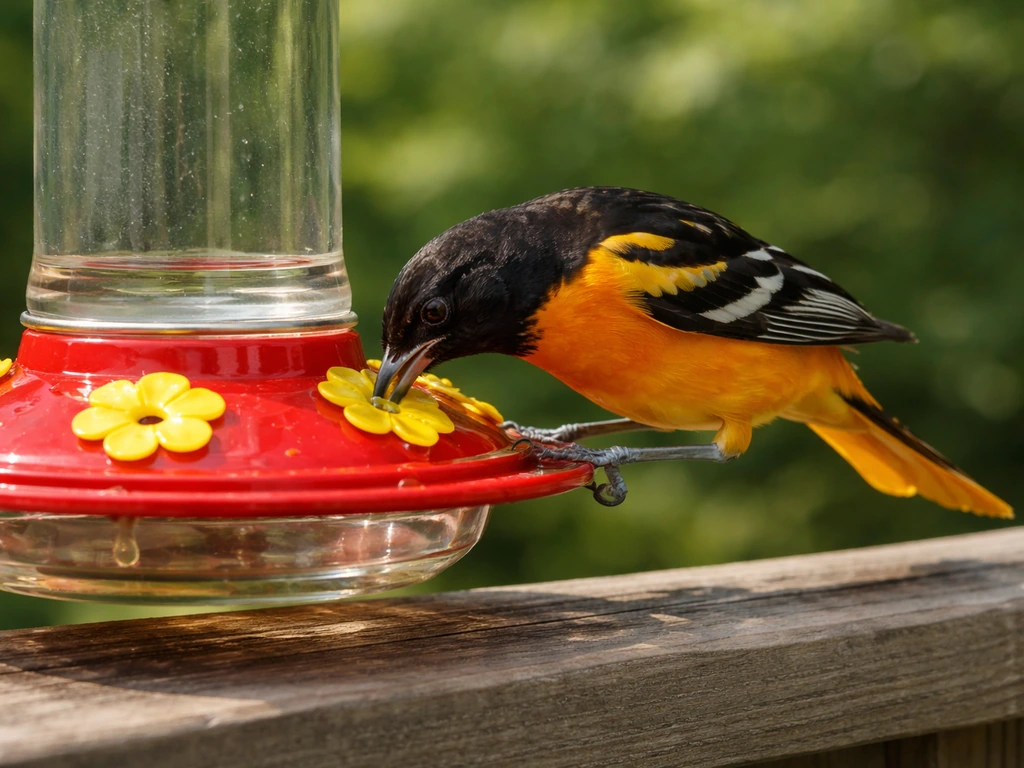
Best Bird Feeder for Baltimore Orioles: Buyer Guide
Choose the best bird feeder for Baltimore orioles: styles, features, placement tips, and fixes for heat, pests, and acce
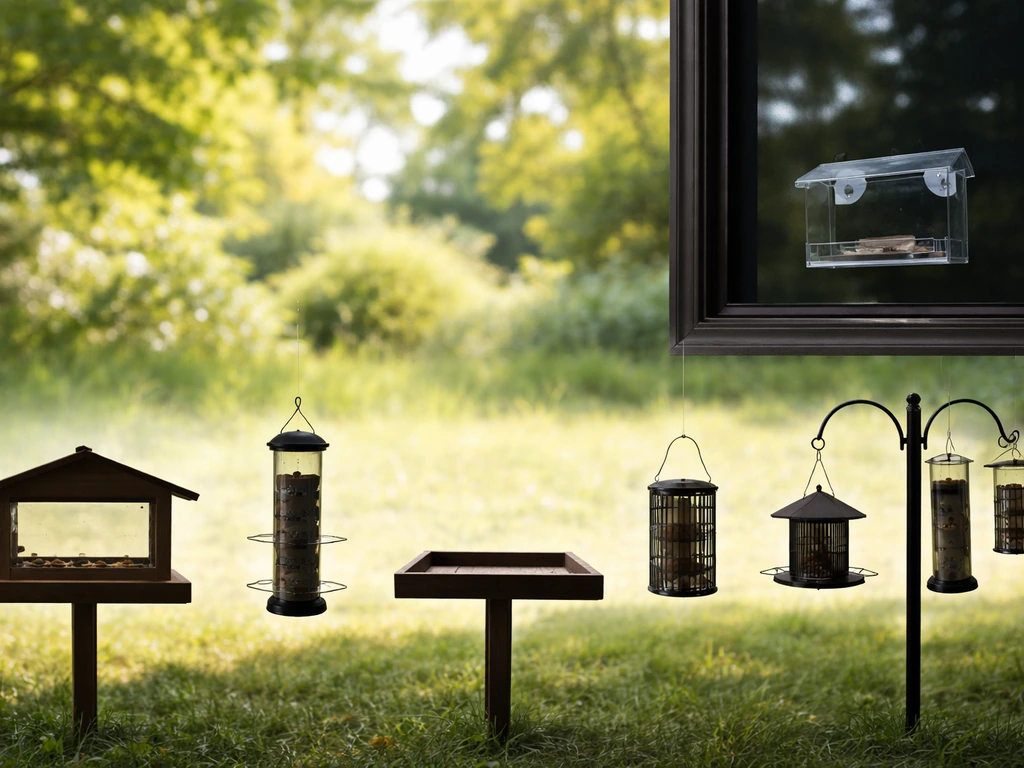
What Does a Bird Feeder Look Like? Types and Visual Cues
See common bird feeder silhouettes and visual cues, plus features for choosing and troubleshooting fast.