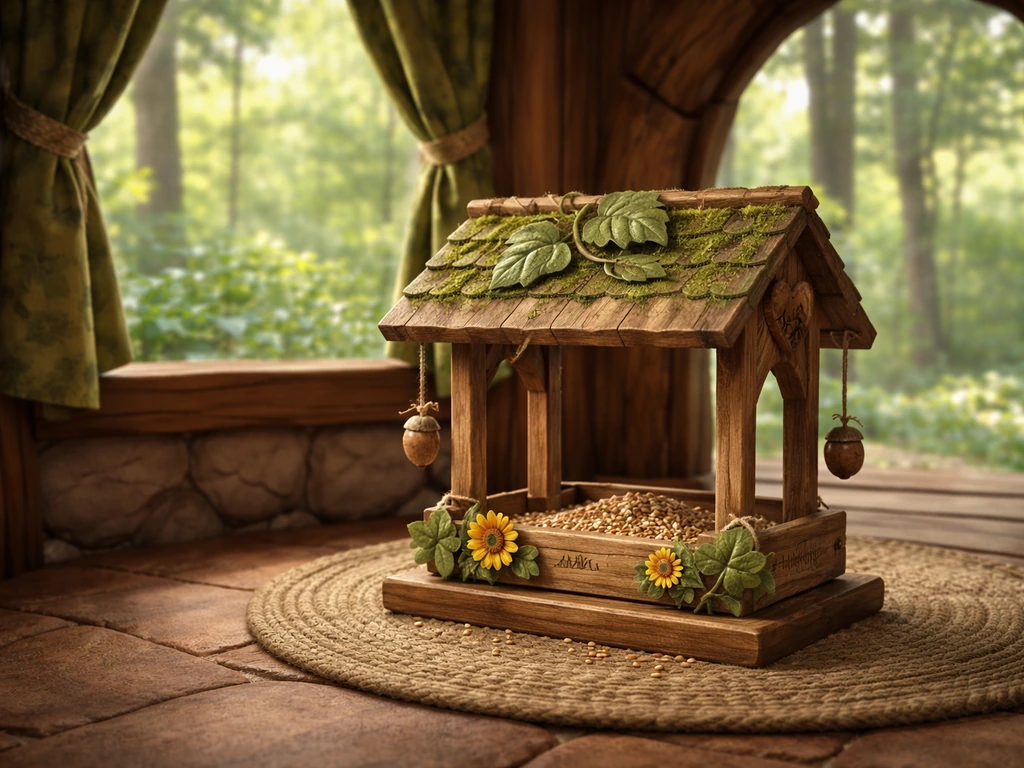
Pick your target birds first, then buy the feeder that matches how those birds actually eat. A tube feeder with small ports pulls in finches and chickadees. A suet cage brings woodpeckers. A platform or hopper handles cardinals, jays, and doves. A nectar feeder with orange accents gets orioles. Start there, and the rest of the decision, size, placement, pest-proofing, materials, falls into place much more easily.
How to Select a Bird Feeder for Your Yard and Birds
Marcus Hendricks
6 Jul 2026
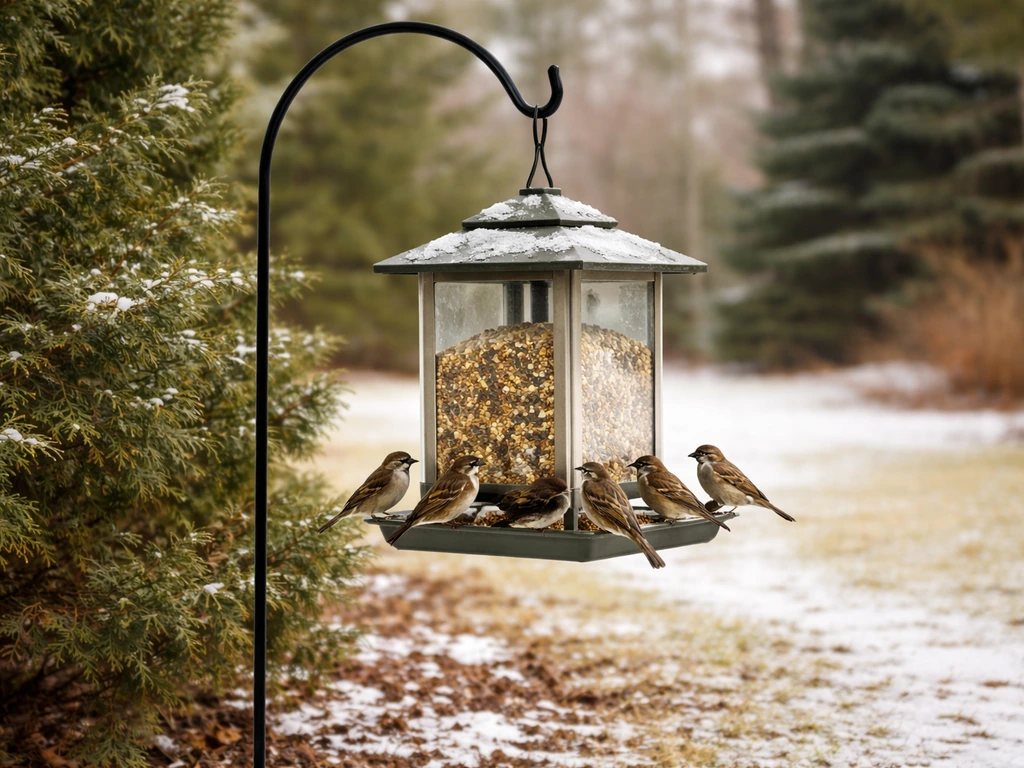
Start with your target birds and feeding goals
Before you look at a single feeder, write down the birds you actually want to attract. This sounds obvious, but most people skip it and end up with a feeder that either draws everything (including pests) or misses the species they care about. Are you chasing goldfinches and siskins? Woodpeckers? Cardinals? Orioles during migration? Or are you just trying to get a general mix through the winter? Your answer changes everything about which feeder you buy.
Your feeding goals matter too. Some people want non-stop activity and a full feeder that lasts a week between refills. Others want up-close viewing from a desk or kitchen window. Some are dealing with a rat problem and need to minimize spilled seed. Others are purely focused on winter feeding when birds need high-fat calories to survive cold nights. Get clear on your goal and you'll save money and frustration.
| Target Bird | Best Feeder Type | Best Seed/Food |
|---|---|---|
| Goldfinches, siskins | Nyjer tube feeder (fine mesh ports) | Nyjer (thistle) seed |
| Cardinals, grosbeaks | Hopper or platform feeder | Sunflower seeds, safflower |
| Woodpeckers | Suet cage feeder | Suet cakes, peanuts |
| Chickadees, nuthatches | Tube feeder or hopper | Black oil sunflower |
| Orioles | Nectar/jelly feeder (orange-accented) | Sugar water, grape jelly, oranges |
| Blue jays, doves | Platform or large hopper feeder | Sunflower, corn, peanuts |
| Bluebirds | Platform or mealworm tray feeder | Live or dried mealworms |
| Hummingbirds | Nectar feeder (red accents) | Sugar water (1:4 ratio) |
Match feeder type to how birds actually eat
This is the section that makes or breaks your setup. Each feeder type rewards a specific feeding behavior, and birds are picky about what works for them.
Hopper feeders
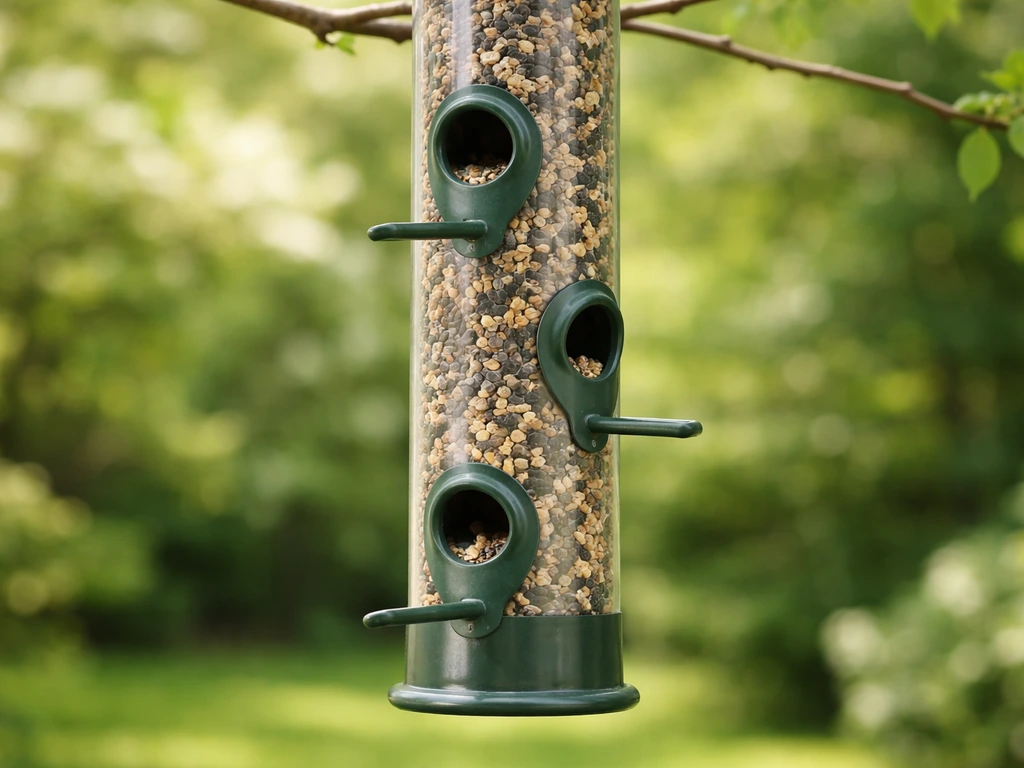
Hopper feeders use a gravity-fed reservoir that dispenses seed as birds eat from perches along the sides. They're versatile, cardinals, jays, chickadees, nuthatches, and sparrows all use them comfortably. The wide perch area is a big deal for cardinals, which struggle on the narrow perches of most tube feeders. Hoppers also hold a good volume of seed, so you're not refilling every day. The tradeoff is that they're harder to clean thoroughly, and any moisture that gets into the seed reservoir can cause mold fast.
Tube feeders
Tube feeders are cylinders with multiple feeding ports spaced along the length, each with a small perch. The port size and perch length are the main controls over which birds can feed. Short perches and small ports favor small songbirds like finches, chickadees, and siskins, while making it awkward for larger birds like grackles or jays.
If you specifically want goldfinches, go with a Nyjer tube feeder, the tiny mesh ports are designed for that small seed, and they actively discourage house sparrows that can't grip a tightly meshed surface well. If you are looking for bird feeder options, an AJ Worth style tube feeder setup is a good fit for finches that prefer tiny ports and a stable perch Nyjer tube feeder.
One real-world note: tube feeders can be a disease transmission risk, particularly for conjunctivitis in house finches, so they need regular cleaning more than any other type.
Platform feeders
Platform feeders are flat trays, open on all sides, that attract the widest variety of birds of any feeder type. Doves, jays, cardinals, and even ground-feeding sparrows will use them. The downside is that seed is fully exposed to rain and bird droppings, which means you need to check them often and keep seed fresh. Good platform feeder designs include a metal mesh floor for drainage, which helps but doesn't fully solve the wet-seed problem in persistent rain. These work best in covered or protected spots.
Suet feeders
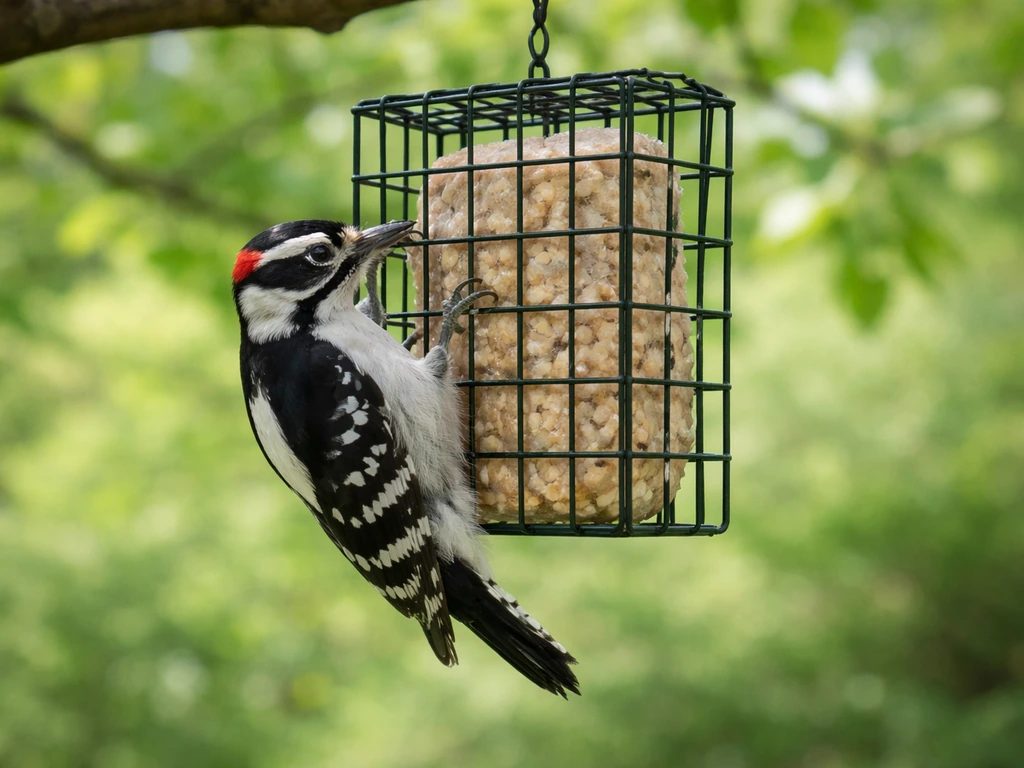
Suet feeders are wire cages designed for woodpeckers, nuthatches, and creepers, birds that cling to vertical surfaces and peck. Woodpeckers have zygodactyl feet (two toes forward, two back) built for clinging, and a suet cage mounted to a tree or pole lets them feed exactly the way they're wired. Standard horizontal perches on tube or hopper feeders are genuinely awkward for them. Tail-prop suet feeders, which extend below the cage so a woodpecker can brace its tail, are worth the small extra cost if downy or hairy woodpeckers are your target.
Window feeders
Window feeders mount directly to the glass with suction cups and are designed for close-up viewing. They work well for seed blends, peanuts, and safflower. Because they attach directly to the window, the collision risk math is different, birds flushed from a feeder right at the glass don't have room to build speed, so impact force is lower than it would be at mid-range distances. That said, keep the feeder clean (mold and bacteria build up fast in confined plastic trays) and check the suction cups regularly, especially in temperature extremes.
Pole-mounted feeders
Pole-mounted setups aren't a feeder type on their own, but they're worth calling out as a system. Mounting any feeder, hopper, tube, or platform, on a dedicated pole with a baffle underneath gives you much better pest control than hanging from a tree branch. More on that in the squirrel section below.
Size, capacity, and where to put it in your yard
Feeder capacity matters more than most beginners expect. A small tube feeder holds maybe half a pound of seed, fine for a quiet yard with a few regulars, but frustrating if you get a flock of 20 finches that empties it in a day. On the other hand, a massive hopper feeder that holds 5+ pounds of seed sounds great until you realize seed goes stale, gets wet, or grows mold before you can empty it. Match your capacity to your bird traffic and how often you're willing to refill. For most suburban yards, a feeder that holds 2 to 4 pounds of seed and gets refilled weekly is a reasonable balance.
Placement is one of the most overlooked decisions. The core rule: place feeders either within 3 feet of a window or 30 feet or more away from one.
The danger zone is the in-between range, birds that flush from a feeder 10 to 20 feet from glass can build enough speed to cause serious window collisions. Within 3 feet, they can't accelerate enough to hit hard. At 30 feet or more, they're far enough away that reflections are less of a navigational hazard.
If you're stuck in the middle zone, use bird-safe window markers, not one or two stickers, but a pattern of small decals spaced no more than 2 inches apart across the glass surface, since isolated stickers leave too much clear area for birds to aim for.
Beyond windows, think about sight lines. Put feeders where you can actually see them from your usual indoor spot. Give yourself clear access for refilling and cleaning, a feeder tucked behind shrubs sounds naturalistic but becomes a chore. And make sure there's some nearby cover (shrubs or small trees within 10 to 15 feet) so birds have somewhere to retreat when a hawk shows up, but not so much overhead cover that squirrels have an easy launch point.
Weatherproofing and durability, especially for winter
Weather is where cheap feeders fall apart fast. The most common failure modes are: seed ports that clog when wet seed swells, plastic that cracks in hard freezes, metal roofs that rust through after one winter, and wooden feeders that rot. If you're in a climate with real winters, these aren't hypothetical, they're what happens to bargain feeders by February.
For cold-weather reliability, look for feeders with UV-resistant polycarbonate or powder-coated metal construction. Avoid thin acrylic, it goes brittle in the cold and cracks under ice load. Seed ports should have drainage cutouts or angled floors so melting snow and rain can run out rather than pooling around seed. Metal mesh floors on platform feeders drain better than solid plastic. For hoppers, a tight-fitting roof overhang that sheds water away from the seed reservoir makes a real difference.
Suet feeders are actually among the best cold-weather performers, simple wire cages have no moving parts to freeze and suet is a high-fat food that's especially valuable to birds in winter. If you only set up one feeder for the cold months, a suet cage plus a quality hopper is a solid combination. If you want the best animal jam bird feeder worth for your setup, prioritize dependable designs like these suet cage plus a quality hopper. Nectar feeders are a special case in cold weather: if you're running hummingbird or oriole feeders into shoulder seasons, use a smaller reservoir so you're replacing the solution frequently before it freezes, and bring feeders in at night when temps drop hard.
Pest control and keeping your setup safe
Squirrels
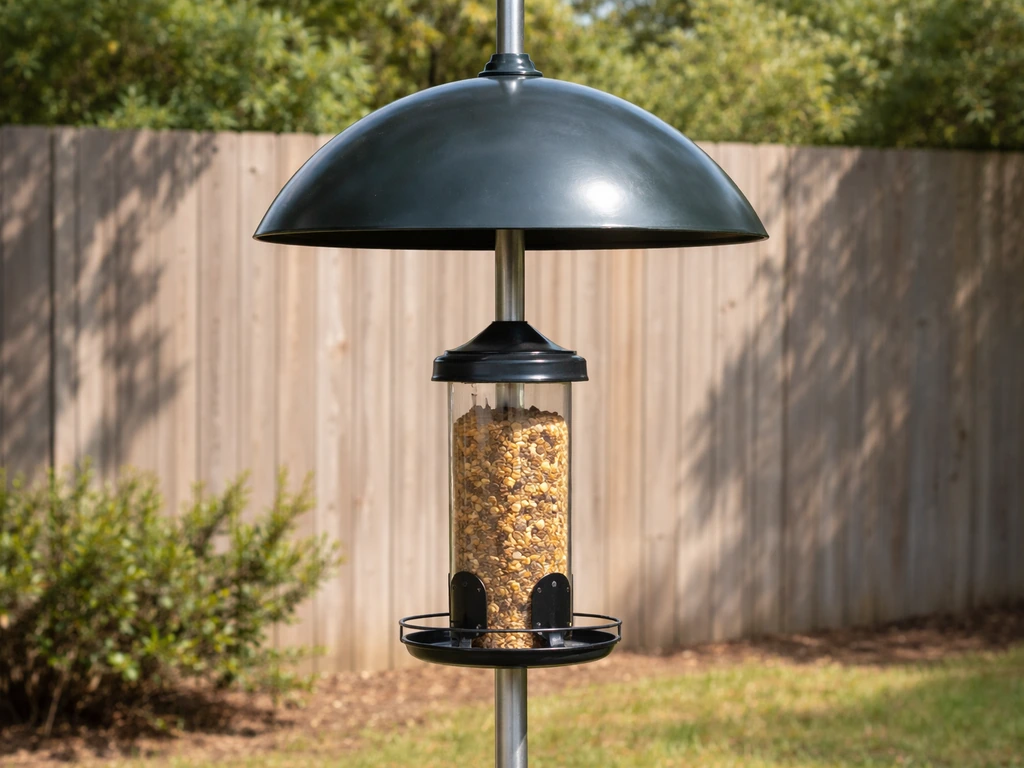
No feeder is completely squirrel-proof, but you can get very close with the right system. The most reliable setup is a smooth metal pole with a dome or torpedo-style baffle mounted below the feeder, positioned so squirrels can't jump from the side or above. For that to work, [the feeder needs to be at least 5 feet off the ground](https://media. tractorsupply.
com/is/content/TractorSupplyCompany/tsc/product/1/25/73/72/1257372_Man1. pdf) and positioned well away from any launch surface: fences, tree branches, roofs, or nearby structures within 10 feet horizontally and 5 feet vertically. If your yard doesn't allow that kind of clearance, a weight-activated feeder, one that closes its ports when anything heavier than a songbird lands on it, is your next best option. These work well but aren't foolproof if squirrels can perch on the feeder body rather than the weight-sensing ring.
DIY baffles can work, but they fail more often than commercial ones due to sizing and geometry issues, if the baffle is too narrow or the feeder can be accessed from above, squirrels just route around it.
Rats
Rats are attracted to bird feeding stations primarily through spilled seed on the ground. A feeder that throws a lot of waste, loose platform designs, overfilled hoppers, messy seed mixes with lots of filler that birds toss aside, creates a ground-level food source that's rat heaven.
The fixes are: use a seed tray or catcher beneath the feeder to collect dropped seed before it hits the ground, switch to no-waste seed mixes (hulled sunflower, for example), and rake or sweep the area under your feeders regularly. Don't leave seed on the ground overnight. If you already have a rat problem, temporarily stopping feeding for a week or two while cleaning up the area thoroughly is often more effective than any feeder modification alone.
Cleaning and sanitation
This is the part most people underdo. Seed and suet feeders should be cleaned every one to two weeks, and more often during wet weather or heavy use. Tube feeders in particular need extra attention because they're an easy transmission route for bacterial conjunctivitis in house finches, the tight seed ports and close bird contact make them higher risk than open platform feeders. For disinfecting, [use a 1 part bleach to 9 parts water solution](https://www.
reddit. com/r/birdwatching/comments/1dkxwzh/arebleachwipesanacceptablealternativetocleaningthefeederwithsoapand_water/), scrub all surfaces, rinse thoroughly, and let the feeder dry completely before refilling. Hummingbird and nectar feeders need cleaning every time you refill, and in hot weather (above 85°F), replace the sugar solution daily, fermented nectar can make birds sick. Ground cleanup below the feeder is part of the routine too, not optional.
Feeder features that are actually worth paying for
Feeder marketing loves to highlight features that sound great in a photo and fail in real life. Here's what actually matters after a year of use. With the right feeder accessories, you can improve comfort for the birds and reduce mess, pests, and weather damage at the same time what actually matters.
- Easy fill and clean: Look for feeders that open fully at the top for filling and come apart without tools for cleaning. If it's a hassle to clean, you won't do it as often, and that's a real sanitation problem.
- Drainage: Mesh or slotted floors on trays and platforms prevent seed from sitting in water. Feeder roofs should overhang the seed area by at least an inch.
- Port and perch design: Match these to your target birds. Short perches limit larger birds. Small nyjer ports pull finches and exclude house sparrows. Wide perch shelves accommodate cardinals and jays.
- Weight-activated mechanisms: Worth it if squirrels are your main problem and you can't do a proper pole-baffle setup. Brome's Squirrel Buster series is one of the better-tested options — the Squirrel Buster Plus holds about 5 pounds of seed and closes ports reliably under squirrel weight.
- Seed guards and trays: Catching seed waste below the feeder reduces ground mess and rat attraction. Some feeders include integrated trays; others accept add-on accessories.
- Smart camera feeders: These have improved noticeably in the past couple of years. If you're serious about bird ID and enjoy the data, a smart feeder with a built-in camera and AI bird recognition can be genuinely useful. The image quality and species-ID accuracy vary by model — test the return policy before committing.
- Solar-powered features: A few feeders use solar to power cameras or heating elements. Heated seed feeders for winter are a niche but real use case in very cold climates. Solar camera feeders reduce battery-swapping hassle. Both are nice-to-haves, not essentials.
Budget, material quality, and when a DIY feeder makes sense
Feeders range from under $10 to over $200 for smart-camera models. The real quality jump happens around $25 to $50 for a standard tube or hopper feeder, you move from thin plastic with flimsy ports to UV-stable polycarbonate or powder-coated metal with better drainage and longevity. Above $80 to $100, you're generally paying for weight-activation mechanisms, smart features, or premium materials like recycled poly lumber that genuinely last years. Buying a $15 plastic feeder and replacing it every season is often more expensive over five years than spending $50 once on something solid.
Brand matters more than most people realize. Wild Birds Unlimited, Brome, Droll Yankees, and Aspects consistently produce feeders that hold up through real winters and are designed with cleaning in mind. Avoid generic feeders with no brand backing, the port alignment, seal quality, and hardware on no-name feeders often disappoint within a season.
DIY feeders genuinely make sense in a few situations: you want a very large platform feeder custom-sized to your railing, you're on a tight budget and willing to build from scrap cedar or pine, or you want a mealworm tray that's just a shallow dish on a pole. Simple designs with no moving parts are the best candidates for DIY. Where DIY almost always disappoints is in squirrel-proofing, homemade baffles fail more often than commercial ones because the geometry has to be precise, and if the feeder body itself is accessible from above, no baffle solves it. If pest control is a priority, spend the money on a proven commercial solution rather than improvising.
Putting it all together: which feeder for your situation
If you want one feeder that does the most: a mid-size hopper feeder on a pole with a squirrel baffle, filled with black oil sunflower seed, placed 30 feet from your nearest window. That setup attracts the widest range of common backyard birds, handles most weather reasonably well, and gives you a real shot at pest control. Add a suet cage to a nearby tree and you've covered woodpeckers too.
If you want finches specifically: a Nyjer tube feeder with mesh ports, hung or pole-mounted near some open space, filled with fresh nyjer seed. Nyjer goes stale faster than sunflower, so buy smaller quantities and check the feeder if birds suddenly lose interest, stale seed is usually the reason. Use this buyer's guide to find the best bird feeders a buyer's guide recommends for your specific birds and conditions.
If you're setting up a winter feeding station: prioritize a quality hopper for sunflower seed and a suet cage for high-fat calories. These two cover the birds most likely to be in your yard through the coldest months. Add a heated water source if you can, open water in winter is often harder for birds to find than food, and a heated birdbath will draw birds as reliably as any feeder.
If you're dealing with squirrels and rats: commit to the pole-baffle system, switch to hulled (no-mess) seed, add a seed catcher tray, and keep the ground clean. There's no shortcut here, the system only works when all the pieces are in place. And if window collisions have been a problem, either move the feeder to within 3 feet of the glass or well beyond 30 feet, and address any remaining reflective glass with a dense pattern of bird-safe markers.
The right feeder isn't the most expensive one or the one with the most features, it's the one that matches your birds, fits your yard, and that you'll actually maintain. Start simple, get that right, and add feeders for specific species as you learn what's coming through your yard. If you're still wondering what type of bird feeder to get, use your target birds and feeding goals to choose the feeder style that matches how they eat specific species.
FAQ
What seed should I start with if I do not know which birds will visit first?
Start with black oil sunflower or hulled sunflower, since they attract many common backyard birds and are easier to manage than fancy mixes (less waste, fewer messy fillers). After 1 to 2 weeks, switch to seed types that match what you actually see using the feeder.
How do I choose the right feeder size if my yard gets occasional flocks?
Pick capacity based on your refill schedule, not just the number of birds you hope for. If a feeder will sit partly full between refills, you risk spoilage and mold, so choose a size that you can empty or refresh regularly during your busiest week.
Is it better to hang feeders from a tree or mount them on a pole?
Poles generally give better pest control and cleaner maintenance because you can add a baffle and position the feeder where it is hard for squirrels to launch. Tree branches are convenient but often lead to squirrels accessing the feeder from above or from the side, even when the feeder is “squirrel-resistant.”
How far should a feeder be from where I park or walk pets?
Place feeders where you can access them safely for cleaning, but consider traffic patterns. Avoid putting feeders right next to busy entrances or pet paths, because constant disturbance reduces visit consistency and increases the time seed sits on the ground when birds scatter.
What is the safest way to reduce bird-window collisions if I cannot move the feeder?
If relocating is not possible, use a bird-safe marker pattern that covers more of the viewing area than a couple of stickers. Also, keep the feeder either very close to the window (within about 3 feet) or far out (30 feet or more), because mid-range distances remain the highest risk even with decals.
Do I need different feeders for summer versus winter?
Often, yes. In warmer months, nectar feeders can spoil faster and may need more frequent cleaning and shorter fill durations. In winter, prioritize feeders that handle moisture well, and consider suet and a quality hopper because birds need high-fat foods and stable access when conditions are harsh.
How often should I refill seed, and what should I watch for when it is time?
Refill before the feeder is empty or half empty for long periods. Watch for clumping, dampness around ports, or a “stale” smell, these are signs moisture or airflow has changed and the seed may become mold-prone.
Can I mix different seed types in the same hopper or tube feeder?
It is usually better to match seed to the feeder design. Tube and port feeders work best with the seed size they were built for, while loose mixes with fillers can increase waste and attract pests. If you do use a blend, choose one formulated for your feeder type and be ready to switch when you notice excess discard.
What is the quickest way to prevent mold in hopper and platform feeders?
Use drainage-friendly construction and keep the roof or overhang above the reservoir area. For platforms, use frequent spot checks and discard wet seed quickly, even when it looks mostly dry, because hidden dampness can start mold in the middle of the pile.
How do I clean tube feeders without harming birds or leaving residues?
Disassemble if the design allows, scrub every contact surface, then rinse thoroughly and fully dry before refilling. Residual soap or cleaner odors can deter birds, and partial drying can leave moisture that accelerates bacteria growth.
What should I do if house finches or other birds seem sick at my feeder?
Increase cleaning frequency immediately and focus on feeders with frequent close contact, especially tube styles. Temporarily stop feeding for a short window while you deep clean and dry equipment, then restart with the same feeder type only after it is fully sanitized and no new cases appear.
Are weight-activated squirrel feeders worth it, or will squirrels defeat them?
They help, especially when squirrels cannot access the feeder body from above or the side. They are not foolproof in yards with nearby launch points, so you still need careful placement away from fences, branches, roofs, and other structures.
How do I reduce spilled seed to control rats without eliminating bird feeding?
Add a seed catcher or tray under the feeder if your setup scatters seed, and switch to lower-waste seed (often hulled sunflower). Then commit to daily or near-daily ground checks, because rats key in on consistent food availability rather than a one-time spill.
Which feeder should I pick if I want maximum bird variety but I can keep up with maintenance?
A platform feeder is typically the widest-access option, but it demands frequent refreshing and good drainage. If your yard is rainy or you cannot clean often, a hopper or tube design may still be better because it shields seed from moisture more effectively.
Next Article
Animal Jam Bird Feeder Worth It? Cost, Benefits, Best Buy Tips
Is an Animal Jam bird feeder worth it? Costs, benefits, best buy tips, and who should buy or skip.