The worst bird feeders are the ones that waste seed, skip cleaning, invite pests, fall apart in one season, or simply don't match the birds you're trying to feed. If birds are ignoring your feeder, seed keeps going moldy, squirrels are cleaning it out nightly, or you dread refilling it because it's a mess to open, your feeder is working against you. This guide walks you through exactly which feeder types and design failures cause those problems, how to diagnose what's going wrong right now, and what to do about it today.
Worst Bird Feeders: How to Spot, Fix, and Replace Bad Ones
Marcus Hendricks
30 Jun 2026
What 'worst' actually means in real bird feeding
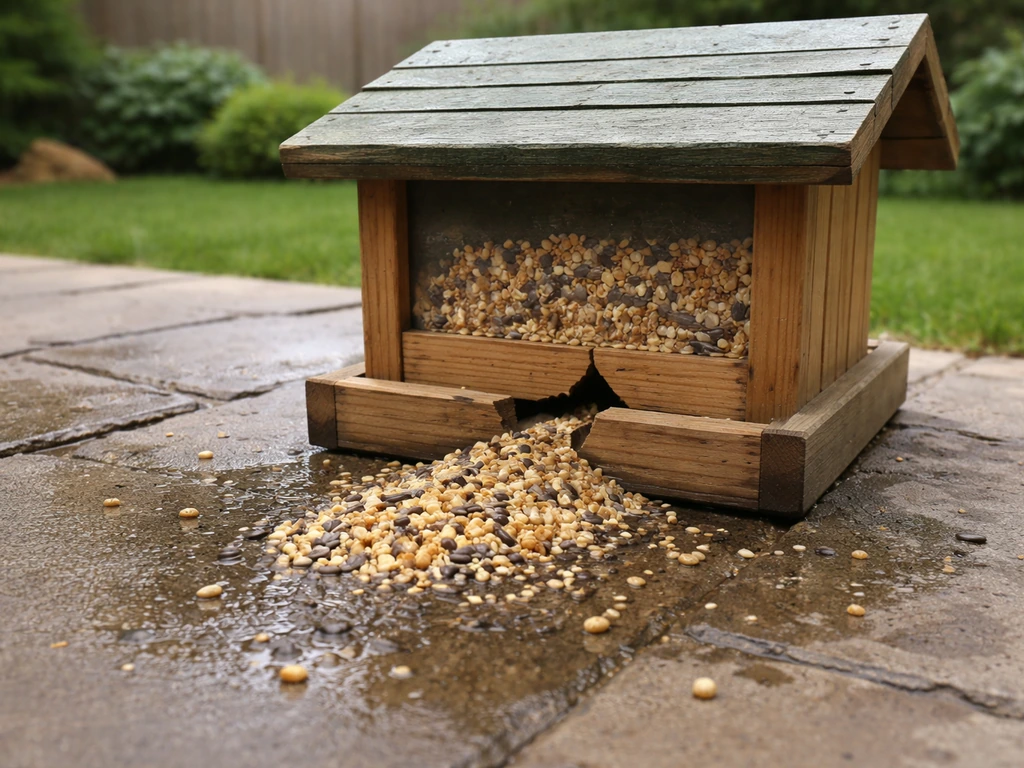
When backyard birders call a feeder 'the worst,' they're usually describing one of five real-world failure modes. The feeder spills seed constantly and turns into an expensive pile on the ground. It traps moisture and grows mold that can sicken or kill birds. It's impossible to clean thoroughly, so bacteria build up between fills. It's so flimsy or poorly sealed that squirrels, rats, starlings, or house sparrows take over. Or it's designed for the wrong species entirely, so the birds you want never land on it. Any one of those problems is frustrating. Several at once, which is common with budget feeders, makes the whole hobby feel like a waste of time and money.
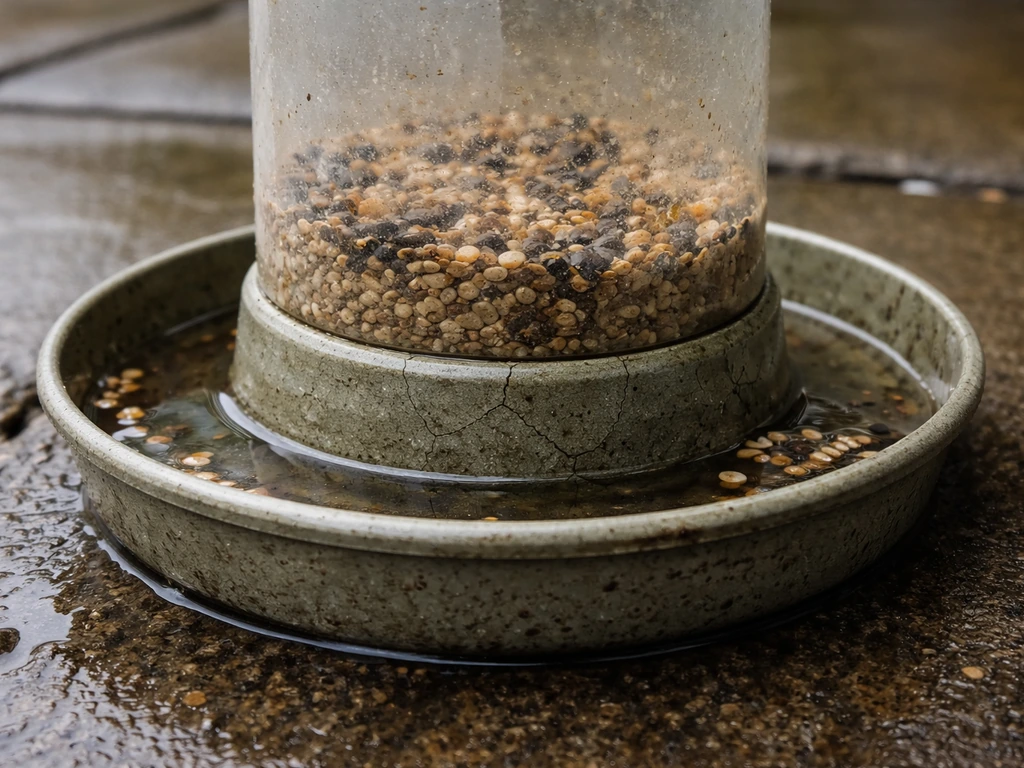
The Minnesota DNR explicitly warns that in wet weather mold and bacteria can form on birdseed both inside the feeder and on the ground below it. That's not a minor cosmetic issue. Wet, moldy seed can cause aspergillosis and other diseases in songbirds. A feeder that can't drain, can't be cleaned easily, or holds more seed than your local bird population can eat in a few days is actively dangerous to the birds you're trying to help.
How to spot a bad feeder fast
You don't need to run a long test. A bad feeder almost always has one or more of these red flags the moment you look closely.
- No drainage holes in the seed reservoir or tray: water pools, seed rots, mold grows within days of rain
- Thin, brittle plastic that cracks after one winter: cracked seams let in moisture and create crevices where bacteria hide
- Ports or perches too small or too large for the target species: birds can't feed comfortably and stop visiting
- Difficult or tool-required disassembly: if cleaning takes more than two minutes to start, it won't get done often enough
- Seed capacity far too large for local bird traffic: seed sits for weeks, especially in humid or rainy climates
- No baffle or pest deterrent built in or available as an add-on: squirrel and rat access is almost guaranteed
- Rusting metal components after the first season: rust contaminates seed and weakens structural integrity
- Tight, narrow tubes with no brush-access ports: mold builds up in the base of the tube where seed clumps form
- Uncovered or fully exposed seed tray on a platform feeder: every rain event soaks the seed directly
- Heavy reliance on marketing photos showing exotic birds that don't live in North America
The most common bad feeder types, by failure mode
Different feeder styles fail in predictable ways. Knowing which failure mode matches your situation saves you from buying the same type twice.
Tube feeders: mold and impossible cleaning
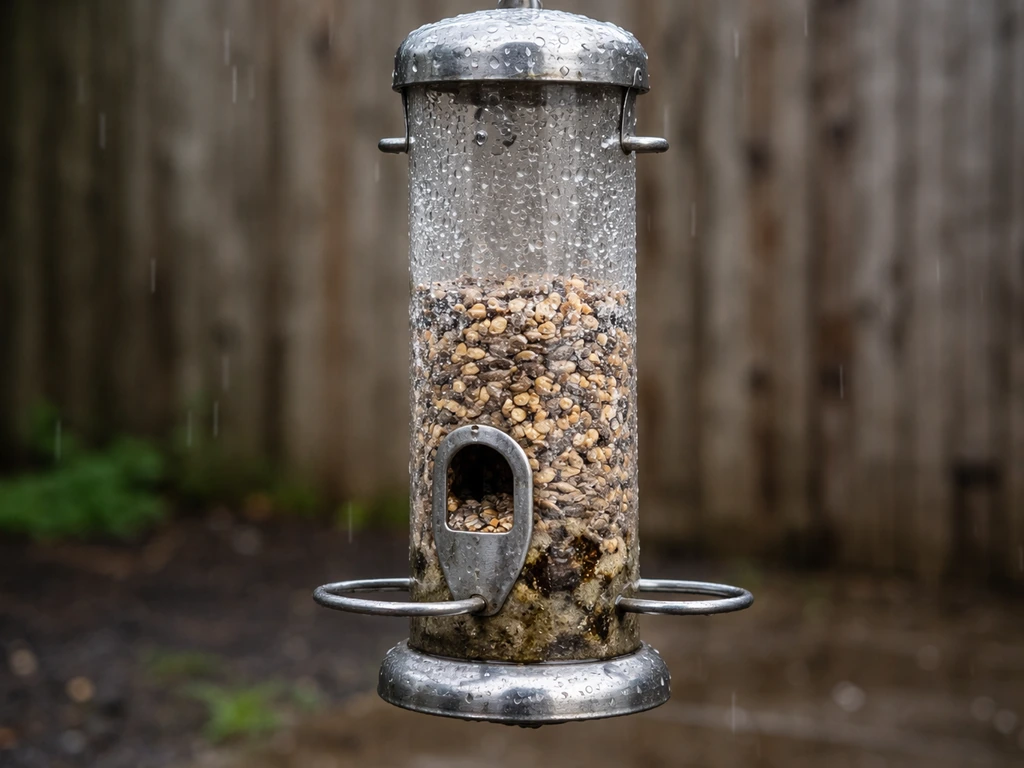
Tube feeders are one of the most popular designs sold, and one of the most problem-prone if built cheaply. The core issue is moisture. Seed packs down into the lower third of the tube, especially after rain or humidity, and that clumped seed is almost impossible to dislodge without a long, narrow bottle brush. BirdForum discussions and Reddit threads from r/birdfeeding document mold growing in large patches inside tubes, with users describing the smell as a giveaway that something has gone very wrong. Some users have switched entirely to platform feeders after dealing with repeated tube mold. The fix, if you want to keep a tube feeder, is to buy one with a removable base, wide disassembly access, and ports large enough for a cleaning brush. Otherwise, tube feeders are among the worst for consistent hygiene maintenance.
Cheap hopper feeders: spillage and weather failure
Hopper feeders with wide, flat seed trays and no lips spill constantly, especially in wind. If your main problem is constant spilling in wind and rain, a best no spill bird feeder is usually the most direct upgrade. The spilled seed on the ground below is a direct invitation for rats, mice, and European starlings. K-State Extension notes that cleaning up spilled seed once or twice a season can reduce mold at ground level, but a feeder that spills daily defeats that strategy entirely. K-State Extension (Chuck Otte) also notes that cleaning up spilled seed once or twice a season can reduce mold at ground level. On the weather side, thin plastic hoppers warp and crack, leaving gaps that funnel rain directly into the seed chamber. Cedar wood hoppers look great but need regular sealing to resist rot. Cheap versions skip that finish entirely.
Open platform feeders: seed spoilage and pest magnets
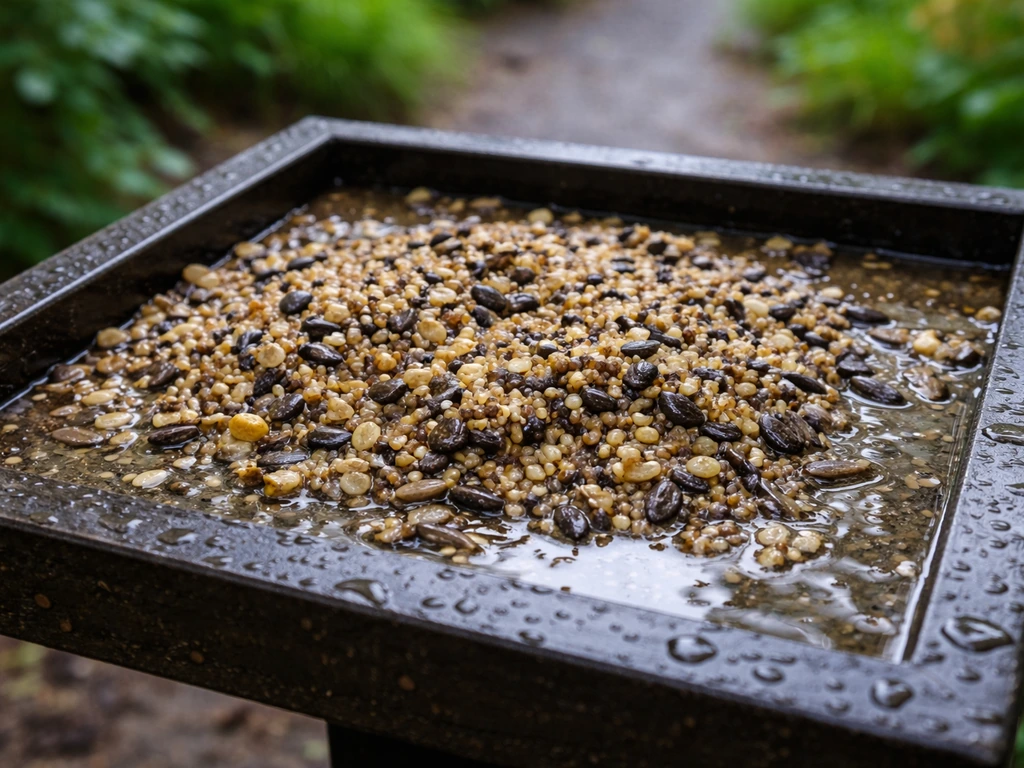
A completely uncovered platform feeder turns every rain shower into a seed-soaking event. The seed volume is high, exposure is total, and anything that walks, flies, or climbs can access it. Squirrels, raccoons, and rats treat open platform feeders as an all-you-can-eat buffet. Project FeederWatch recommends raking and sweeping below feeders regularly to prevent accumulation of droppings and spoiled food at ground level, but if your platform feeder is dumping soaked seed after every rainfall, regular sweeping barely keeps up. A covered platform or tray feeder with mesh flooring that allows drainage is a much better option.
Window feeders: suction cup failure and small capacity
Inexpensive window feeders fail at the suction cups first. A feeder loaded with seed and dropping off a second-story window is a genuine hazard, and this is a common complaint. Beyond that, most cheap window feeders have no drainage, no weather protection, and seed capacity so small it needs refilling every day or two. The idea is excellent for watching birds up close, but the execution at the budget end is almost always disappointing.
Suet cages: not bad themselves, but placement ruins them
Basic wire suet cages are actually one of the simplest, easiest-to-clean feeder formats out there. Where they go wrong is placement and suet quality. In summer, cheap suet blocks melt and go rancid within a few days. Uncaged suet hung too low gets demolished by raccoons overnight. The cage itself is rarely the problem.
Species mismatch: when the feeder design fights the birds
One of the most overlooked reasons a feeder underperforms is that it's simply the wrong design for the birds in your yard. For parakeets, the best choice is typically a feeder that’s easy to clean and designed to prevent seed from getting wet or contaminated wrong design. You can have a clean, well-placed, pest-resistant feeder and still get no visitors if the port size, perch length, feeder orientation, or food type doesn't match your target species.
| Bird | Preferred Feeder Style | Common Mismatch to Avoid |
|---|---|---|
| Cardinals | Hopper or platform with wide perches | Narrow tube ports, short perches they can't stabilize on |
| Finches (goldfinch, house finch) | Nyjer/thistle tube with small ports | Standard seed ports too large, seed spills and finches won't cling |
| Woodpeckers | Suet cage or vertical clinging feeder | Flat platform with no vertical grip surface |
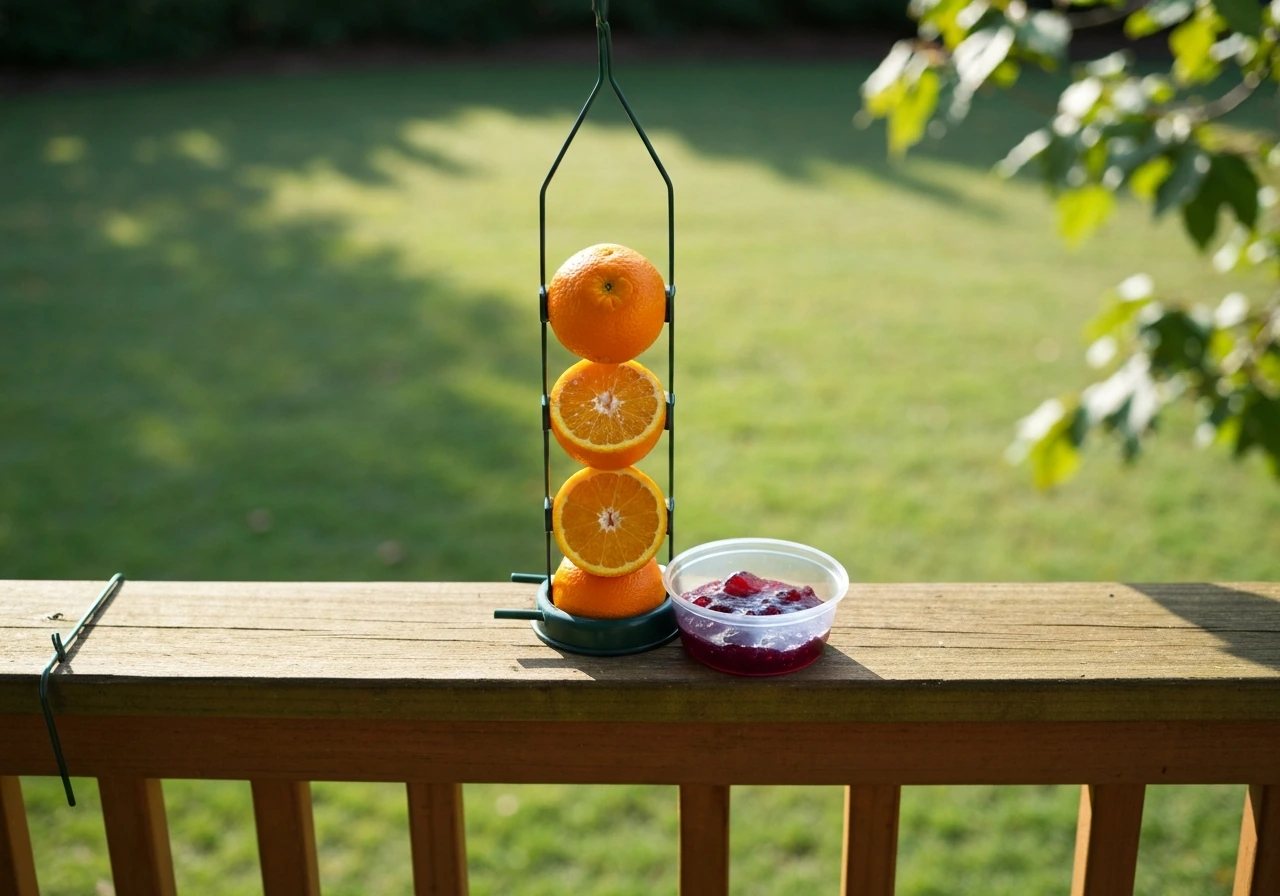
| Orioles | Oriole-specific feeder with orange halves or jelly cups | Standard seed feeders, they won't visit at all |
| Bluebirds | Mealworm tray or covered platform | Seed feeders, bluebirds rarely eat seed |
| Blue jays | Large hopper or open tray with whole peanuts | Nyjer tube, too small and wrong food type |
| Mourning doves | Ground-level or low platform feeder | Tube feeders they can't perch on; they feed on the ground |
| Hummingbirds | Nectar feeder with red ports, no perch required | Any seed feeder; they don't eat seed |
Cardinals in particular frustrate a lot of beginners because they look like they should fit a standard tube feeder. They won't. Cardinals need a wide, stable perch and enough room to sit upright while feeding. A skinny tube feeder with short ports is probably the most common species mismatch in American backyards. Similarly, doves feed on the ground by instinct. Even the best-designed hanging feeder won't pull consistent dove traffic if there's no low platform or ground-level tray nearby.
Why birds aren't using your feeder right now (and how to fix it today)
If birds were using your feeder and then stopped, or if you've had a feeder up for weeks with little action, work through this checklist before replacing anything.
- Check the seed first. Smell it. Moldy, clumped, or stale seed is often the first thing birds detect and reject. Dump everything, scrub the feeder with a bleach solution (2 oz bleach per 1 gallon of water, as recommended by the Minnesota DNR), rinse completely, let it air dry, and refill with fresh seed.
- Check for seed bridging. In tube feeders especially, old seed cakes together inside the tube and blocks fresh seed from reaching the ports. Birds show up, find nothing accessible, and leave. Shake the feeder hard and look down into the ports.
- Assess feeder placement. Is it within 10 feet of dense cover (shrubs, trees) where birds feel safe flying to and from? Is it in a high-traffic area with constant human or pet disturbance? Feeders placed in open, exposed spots with no nearby cover get far fewer visits.
- Look for pest evidence. Scratch marks, missing seed overnight, scattered hulls far from the feeder, or rat droppings nearby all indicate the feeder has become a pest station. Birds often abandon feeders with heavy rodent activity around them.
- Consider seasonal timing. Early spring and late summer are naturally low-traffic periods because wild food sources (insects, berries, seeds) are abundant. If birds are feeding well in your neighbor's yard but ignoring yours, then the feeder itself or its food is the problem.
- Rule out a window reflection problem. Feeders placed directly in front of large reflective windows can deter birds from landing due to perceived threat. Shift the feeder to an angle or add window decals.
- Try a different seed. Mixed seed with a lot of milo, wheat, or red millet is largely rejected by most songbirds in North America. Switching to black oil sunflower seed or a species-specific blend often produces results within 24 to 48 hours.
What to buy instead: feeder types that actually work
Once you've diagnosed the problem, here's what to replace a bad feeder with, matched to what you need most. If you want the fastest path to a low-mess upgrade, focus on the best easy clean bird feeders so you can keep hygiene and refilling simple.
For most songbirds: a quality hopper or tube with drainage
A well-built hopper feeder with a covered roof, a raised seed tray with drainage holes, and a wide enough perch for cardinals and jays is the single most versatile option for North American backyards. Look for UV-stabilized polycarbonate or rot-treated cedar, not thin injection-molded plastic. For finches specifically, a dedicated Nyjer tube feeder with small ports and a removable base for cleaning handles thistle seed cleanly without attracting house sparrows or starlings in large numbers.
For messy or moldy situations: a covered platform with mesh floor
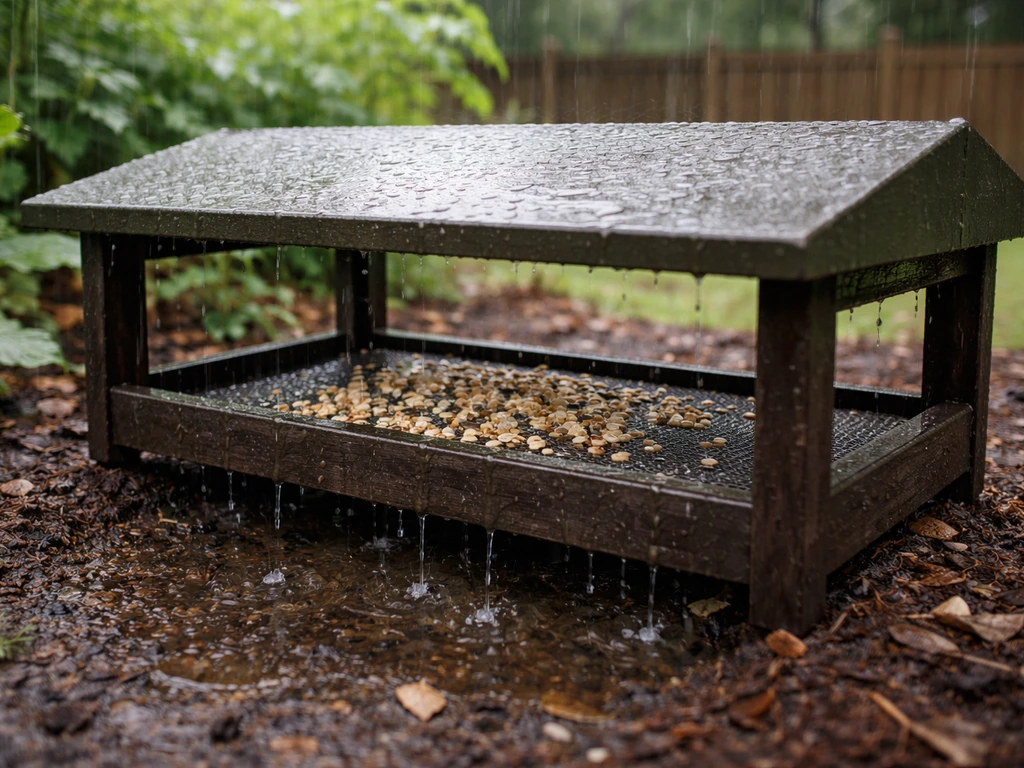
If you've been fighting seed spoilage, swap to a covered platform feeder with a mesh or screen floor. Rain drains through immediately, the roof keeps most direct downpour off the seed, and the open design is easy to scrub in under two minutes. This style works well for cardinals, blue jays, doves, and most ground-feeding species.
For pest problems: weight-sensitive or baffle-equipped feeders
Weight-sensitive feeders close their ports when anything heavier than a songbird lands, which blocks squirrels and large pest birds effectively. If you have a feeder you otherwise like, adding a squirrel baffle to the pole below it (or a dome baffle above a hanging feeder) is cheaper than replacing the feeder entirely and solves most squirrel access problems immediately. If you want the best pest-proof bird feeders, prioritize designs that block access, minimize spill, and keep seed dry so pests have fewer opportunities to feed and breed squirrel access problems. For rat problems, reducing ground spill is the most important step, more so than any feeder upgrade.
For woodpeckers and suet fans: a tail-prop suet feeder
Standard two-cake wire suet cages work fine, but a feeder with a tail-prop extension board below the cage lets larger woodpeckers like pileateds and flickers brace themselves properly while feeding. In summer, switch to no-melt or high-melt suet to prevent the rancid, melting mess that cheap suet causes in heat above 85 degrees Fahrenheit.
For specialty birds: go species-specific
Orioles need an oriole feeder with jelly cups and orange-half holders. Hummingbirds need a red nectar feeder with ports sized for hummingbird bills and no bee guards that block access. Bluebirds need a mealworm tray, ideally with a dome cover. Trying to attract these birds with a generic feeder is one of the most common (and fixable) mistakes beginners make.
Placement, food, and winter feeding done right
Even a great feeder fails if it's in the wrong spot. Place feeders within 10 to 12 feet of shrubs or trees so birds have a safe escape route, but far enough from branches that squirrels can't leap directly onto them. Multiple feeders spread out in different zones of the yard reduce competition and allow timid species like bluebirds to feed without being pushed off by dominant birds like blue jays.
In winter, the stakes get higher. Frozen seed, ice in ports, and seeds buried under snow are real problems. Heated birdbaths near feeders increase traffic significantly in cold months. Black oil sunflower seeds, safflower, and peanuts in the shell are high-fat, cold-weather staples that attract the widest range of winter birds (chickadees, nuthatches, cardinals, woodpeckers, and jays). Avoid mixes with large amounts of milo, wheat, or fillers in winter: birds burn energy they can't afford to waste rejecting seed. Clean feeders even more frequently in wet winter weather, because the Minnesota DNR specifically flags wet conditions as prime time for mold and bacterial growth on seed.
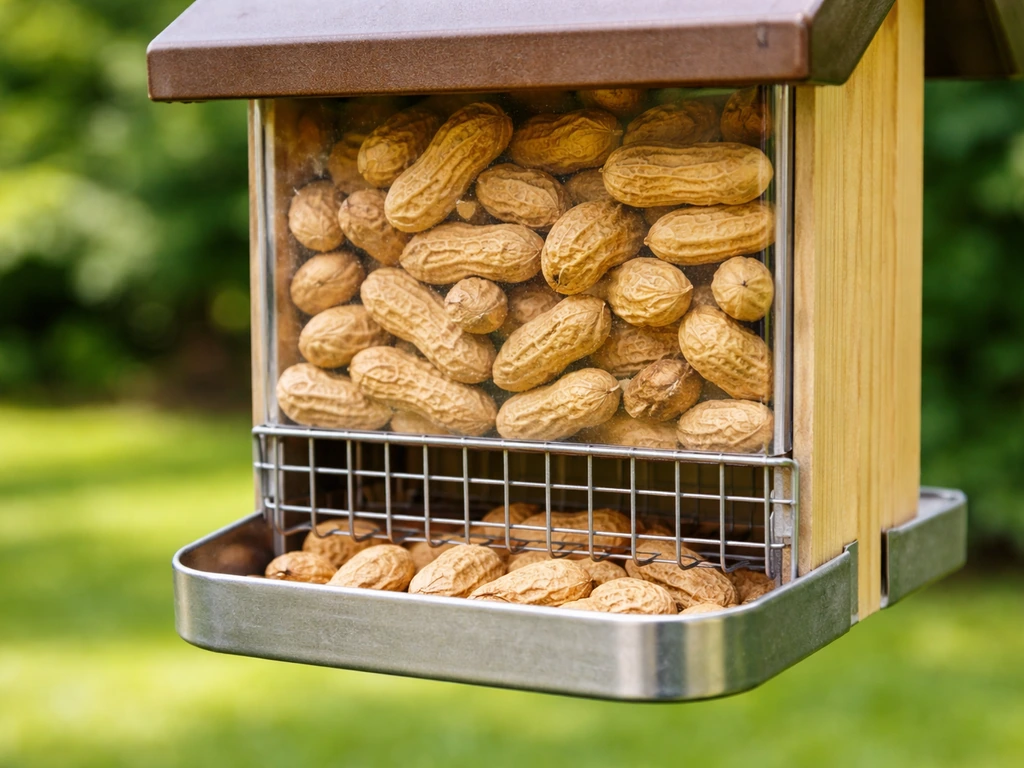
Seed choice often matters more than feeder design. Black oil sunflower seed attracts more North American songbird species than any other single seed type. Nyjer (thistle) is almost exclusively for finches. Safflower is loved by cardinals and largely ignored by squirrels and starlings, making it useful when pests are a problem. Shelled peanuts in a mesh feeder bring in woodpeckers, jays, and nuthatches fast.
DIY and immediate fixes to salvage what you already have
If you're not ready to replace your current feeder today, there are several things you can do right now to reduce the damage.
- Deep-clean immediately with the bleach solution (2 oz per gallon of water), scrub all interior surfaces with a bottle brush, rinse thoroughly, and let it fully air dry before refilling. This one step removes mold and bacteria that may be driving birds away.
- Drill additional drainage holes in a plastic tray or base if none exist. A 1/4-inch drill bit and two minutes of work can prevent standing water from ever building up again.
- Add a pole-mounted baffle below a hanging feeder using a wide-cone style baffle, or tie a dome baffle above the feeder. This works even on feeders with no built-in pest protection.
- Reduce the fill level to only what birds can eat in two to three days. Overfilling is one of the leading causes of seed spoilage and is completely free to fix.
- Sweep or rake the ground below the feeder to clear spilled seed and droppings. Project FeederWatch and K-State Extension both recommend this as an essential step to prevent ground-level mold and pest attraction.
- Move the feeder to a new location closer to natural cover if birds have been ignoring it. Sometimes a 10-foot shift changes everything.
- In summer, switch to a no-waste or hull-free seed blend to reduce the amount of material reaching the ground and stay ahead of ground mold.
If the feeder is genuinely beyond saving, cracked, rusted, or structurally failing, the cost of a quality replacement is almost always lower than the ongoing cost of wasted seed, pest management, and cleaning effort on a bad one. A covered platform feeder or a well-built hopper with drainage costs between $25 and $60 and will outperform a $10 budget feeder for years. The economics of bird feeding shift strongly in favor of buying once and buying right.
For anyone who wants to go deeper after solving the immediate problem, the same issues that make a feeder 'worst' overlap directly with what makes feeders easy to clean, pest-resistant, spill-free, and species-appropriate. Those are all worth exploring as separate topics once you've got your current setup back on track.
FAQ
How can I tell if my feeder is moldy or just dusty before I risk birds getting sick?
Check for any musty smell and for clumps that look damp or discolored, especially near the lowest part of the feeder where seed packs. If you see fuzzy growth, or if seed is leaving wet residue on your hands, treat it as contaminated and discard it rather than trying to “rinse and reuse.”
If I switch seed, will that fix problems caused by a bad feeder design?
Not by itself. Seed choice can reduce mold pressure, but a feeder that traps moisture, has no drainage, or cannot be cleaned thoroughly will keep recontaminating new seed. If you see repeat spoilage in the same spots inside the feeder, replace the feeder or the insert portion you can’t clean.
What’s the safest way to clean a worst bird feeder without spreading contamination to other feeders?
Clean the worst feeder last, keep it separate from other feeders, and dispose of droppings and spent seed away from your garden. After scrubbing, rinse with hot water, let it fully dry before refilling, and don’t “top off” old seed into cleaned-out areas until everything has dried.
How often should I refill to prevent bacteria and mold, especially in humid weather?
In wet or muggy conditions, refill on shorter cycles and only as much as birds will consume quickly. A practical rule is to empty and refresh the feeder more frequently than you would in dry weather, particularly if you notice seed clumping, a damp smell, or visible moisture inside the reservoir.
My hopper spills a little, but not every day. Is it still a problem?
It can be, because even small, regular spill creates a reliable food source for ground pests and increases mold on the ground. If you consistently find seed accumulating below it after wind or rain, the “small spill” is already enough to support rats and starlings, so you’ll want an improved drainage tray, a less leak-prone model, or a no-spill feeder upgrade.
Do I need to stop feeding entirely if I’m getting pest activity like rats or European starlings?
You don’t necessarily have to stop completely, but you should stop using the feeder that’s enabling the problem. Pause refills until you can remove spill, switch to a design that minimizes access and keeps seed dry, and clean up the ground area so the pests don’t keep showing up for spoiled food.
Can squirrels be avoided without buying a new feeder?
Often, yes. A dedicated squirrel baffle on the pole or a dome baffle for hanging setups can block access immediately. Also check whether your feeder is mounted close enough to branches that squirrels can launch from nearby cover, because baffles won’t help if there’s an easy leap-in point.
Why do I get birds at the feeder sometimes, then they disappear for weeks?
Common causes are partial wet spoilage, clogged ports, or a feeder that attracts dominant birds and then “fails the crowd” when food quality changes. Re-check drainage, inspect ports and perches for residue, and verify the food type still matches what your target species prefers seasonally.
Is a tube feeder actually safe for finches if I get mold inside?
Tube feeders can be safe when they’re designed for easy disassembly and thorough brushing, with components that dry quickly. If you have recurring mold patches in the same lower section, your tube likely needs removable access (wide enough for a brush) or a different design like a dedicated finch tube with a removable base.
What feeder mistake causes window feeders to be unsafe or less effective?
Overloading is a big one. If the feeder becomes heavy with seed, the suction cups can fail, especially after heat cycles or after birds repeatedly land and hop near the glass. Use feeders with strong mounting design, keep them lightly loaded, and replace suction pads if they no longer seal tightly.
How do I choose the right feeder for ground feeders like doves without encouraging rats?
Use a low platform or tray feeder that provides drainage and is protected enough that seed doesn’t stay soaked. The key is to prevent ground accumulation by cleaning up what spills and sweeping below regularly, because any design that drops damp seed onto the same spot will eventually attract rats.
Do I have to throw out entire bags of seed if only part of the feeder is contaminated?
If seed has been exposed to moisture for long enough to clump, smell, or show visible contamination, discard that seed and keep the bag separate to avoid cross-contamination. If you only suspect mild dust, you can sift and dry seed, but if the feeder has been mold-prone before, assume the risk is higher and prioritize replacing the seed supply.
What’s the winter-specific reason “mixed seed” can look like a bad feeder problem?
Even with a good feeder, energy-wasting rejection happens when mixes include low-preference filler seeds. In cold weather, birds burn calories they can’t afford, so you may see low feeder traffic even though seed is present. Switching to targeted staples like black oil sunflower or safflower often improves results without changing the feeder at all.
When is it smarter to replace a feeder instead of just fixing one part?
Replace if the body can’t be cleaned fully, if seals or drainage are failing, or if plastic is warped or cracking so water gets into the seed chamber. If the only fix is “more scrubbing” or you keep finding structural failure after a season, the ongoing cleaning and wasted seed costs usually outweigh the cost of buying a better design.
Next Articles
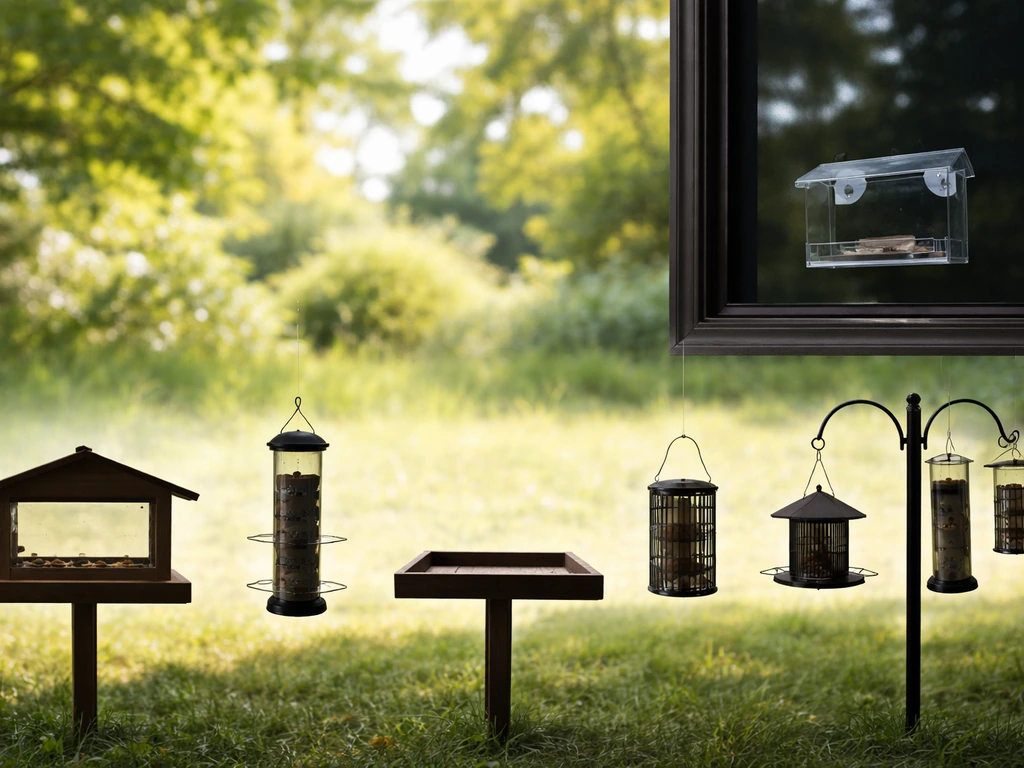
What Does a Bird Feeder Look Like? Types and Visual Cues
See common bird feeder silhouettes and visual cues, plus features for choosing and troubleshooting fast.
Best Oriole Bird Feeders: Buying, Setup, and Tips
Choose the best orioles feeders and set up jelly or nectar for backyard success, with pest-proofing and troubleshooting.
Best Peanut Bird Feeder Guide: Whole Peanut Options
Pick the best peanut bird feeder for whole peanuts: hopper, platform, or caged designs, with pest control and easy clean