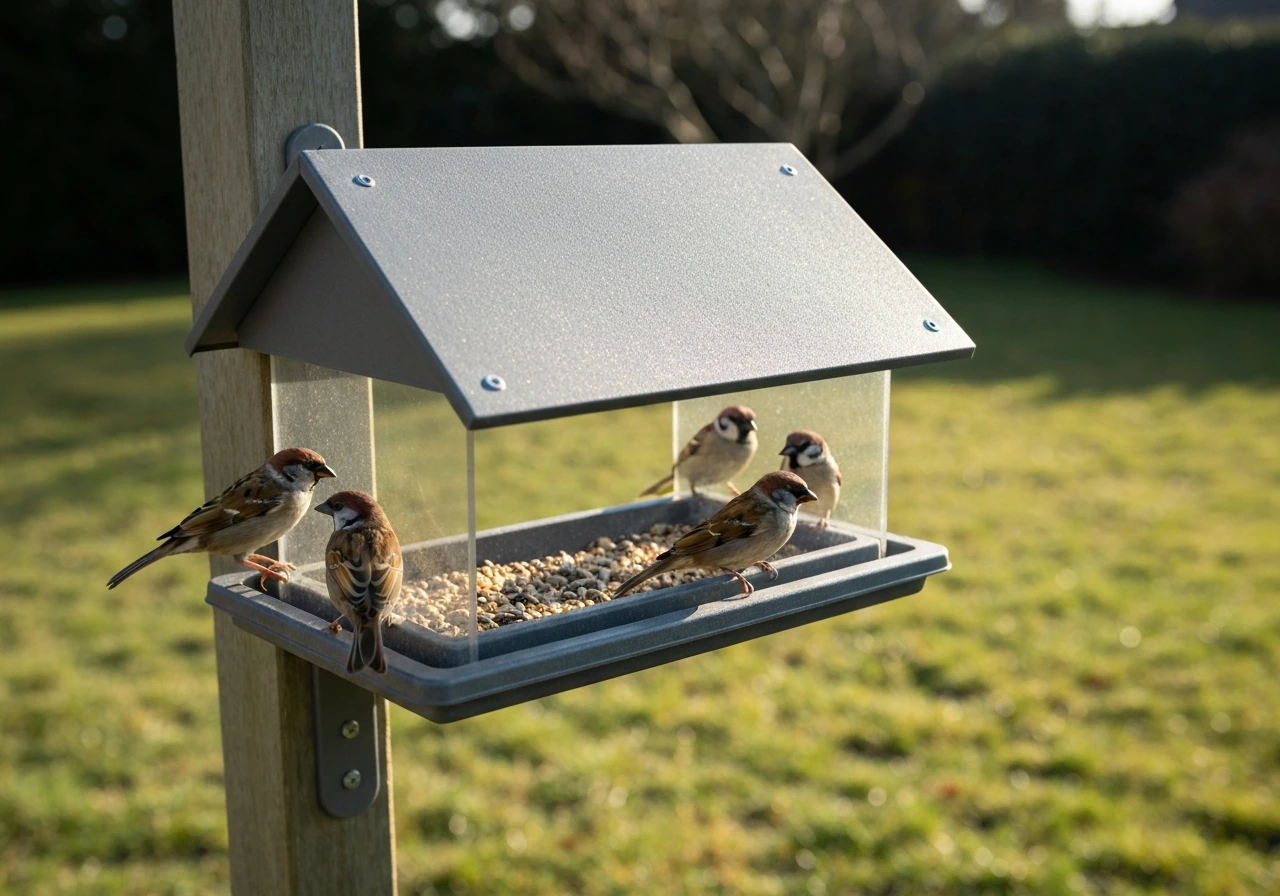
A platform bird feeder is exactly what it sounds like: a flat, open, raised surface where you spread bird food. Project FeederWatch defines it simply as "any flat, raised surface onto which bird food is spread." There are no tubes, no ports, no hopper walls. Birds fly in, land directly on the tray, and eat. That open design is what makes platform feeders so appealing to a wide variety of birds, especially larger ground-feeding species that struggle with tube or hopper feeders, but it also means you need to stay on top of drainage, cleaning, and pest management if you want to run one well.
What Is a Platform Bird Feeder? Setup, Foods, and Tips
Marcus Hendricks
2 Jun 2026
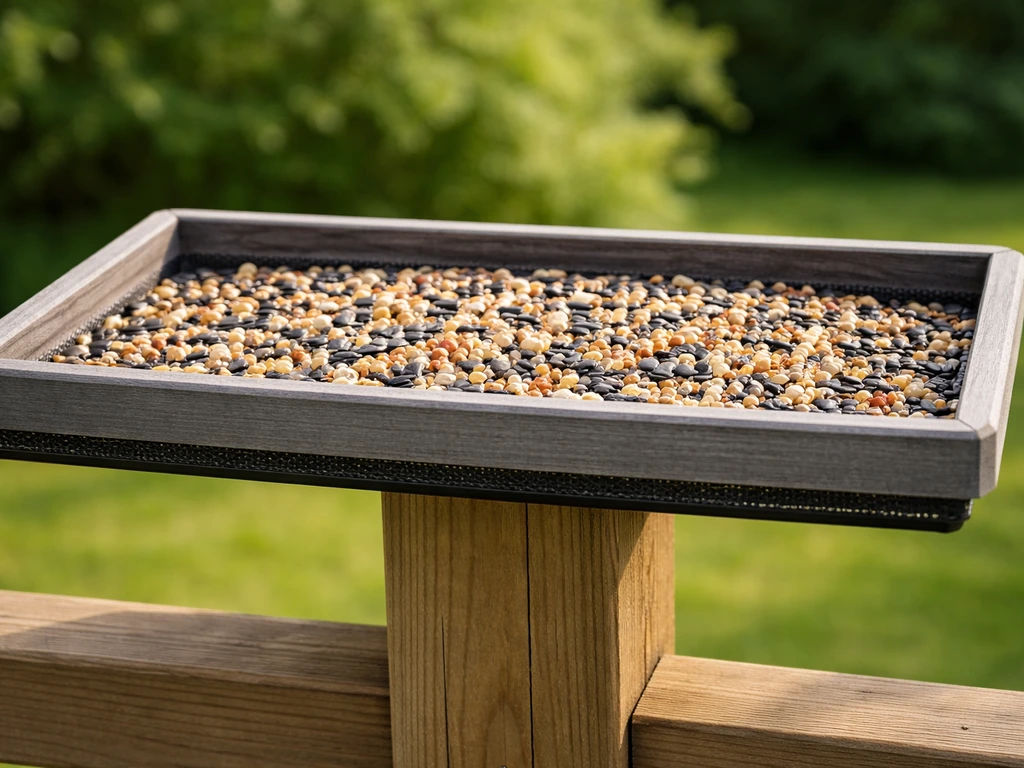
What a platform feeder actually looks like (and how it works)
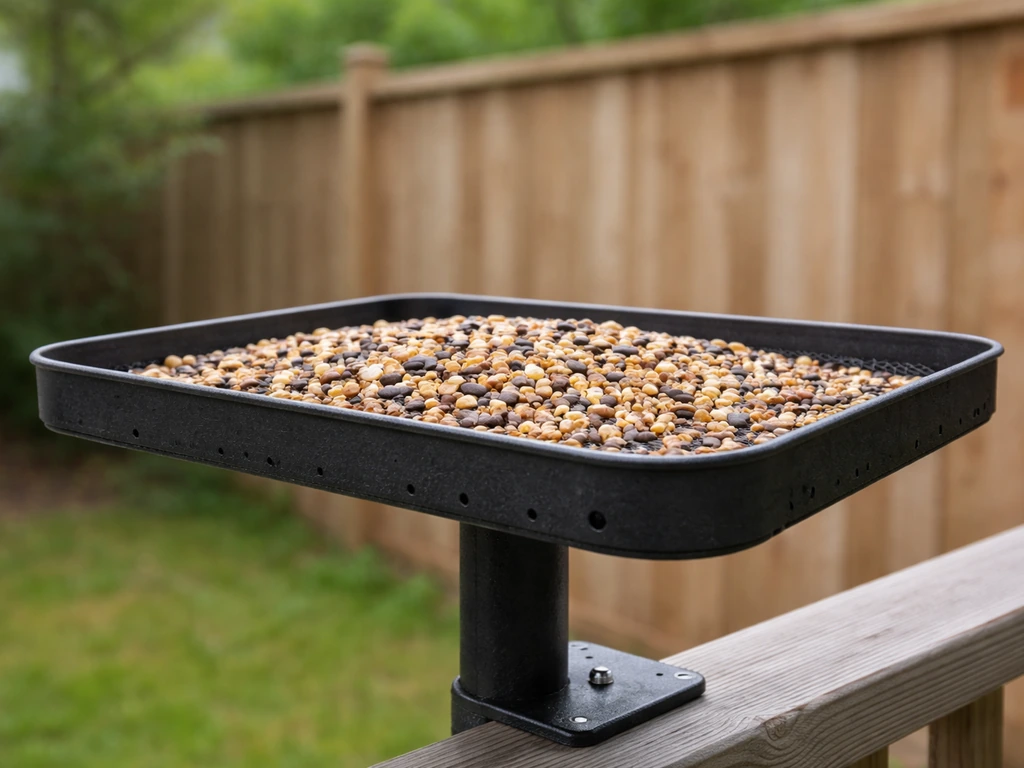
The core structure is simple: a tray or flat surface, usually with a low lip around the edge to keep seed from rolling off, mounted on a post, hung from a hook, or set on a railing. Some models add a roof to keep rain off the seed, which is a smart upgrade worth looking for. If you want to reduce rain soaking while keeping the open-tray design, a bird feeder with license plate roof is a handy way to add sheltered coverage. That roofed version is sometimes called a covered platform or gazebo-style tray feeder. The open-tray version without a roof is cheaper but can be a headache in wet weather because soaked seed goes moldy fast.
Platform feeders are often also called tray feeders, and the two terms are interchangeable. Home Depot's bird-feeding guide describes them as feeders that "invite birds to fly in and fill up," which captures the vibe well. Compare that to a hopper feeder, which has walls and a roof and gravity-feeds seed down to a small ledge, or a tube feeder, which dispenses seed through small ports. Platform feeders offer none of that structural complexity, which is a feature and a limitation at the same time.
Which birds will actually show up at a platform feeder
This is where platform feeders really earn their place in a backyard setup. Because the feeding surface is open and spacious, it attracts birds that prefer to feed on the ground or that are too large to comfortably cling to tube ports. In my experience, once you get a platform feeder dialed in, the variety of visitors is better than almost any other feeder type.
- Northern cardinals: one of the most common and reliable visitors, especially with sunflower seed
- Blue jays: big birds that love peanuts and sunflower seeds and need the open space a platform provides
- Mourning doves: natural ground feeders that feel at home on a flat surface
- Dark-eyed juncos: classic winter ground feeders that readily switch to a low platform tray
- White-throated and white-crowned sparrows: frequent platform visitors, especially during migration
- Song sparrows and fox sparrows: show up regularly, especially in fall and winter
- Bluebirds: attracted to mealworms placed on a platform, especially in spring
- Towhees and grackles: less common depending on region, but platform feeders pull them in
Virginia Tech Extension's ground-feeding bird guidance specifically calls out sparrow species, doves, and juncos as birds that typically feed on or near the ground, and a platform feeder at low height mimics exactly that. If you currently run only tube or hopper feeders and wonder why you never see juncos or doves up close, a platform tray is the answer.
Best foods to put in a platform feeder
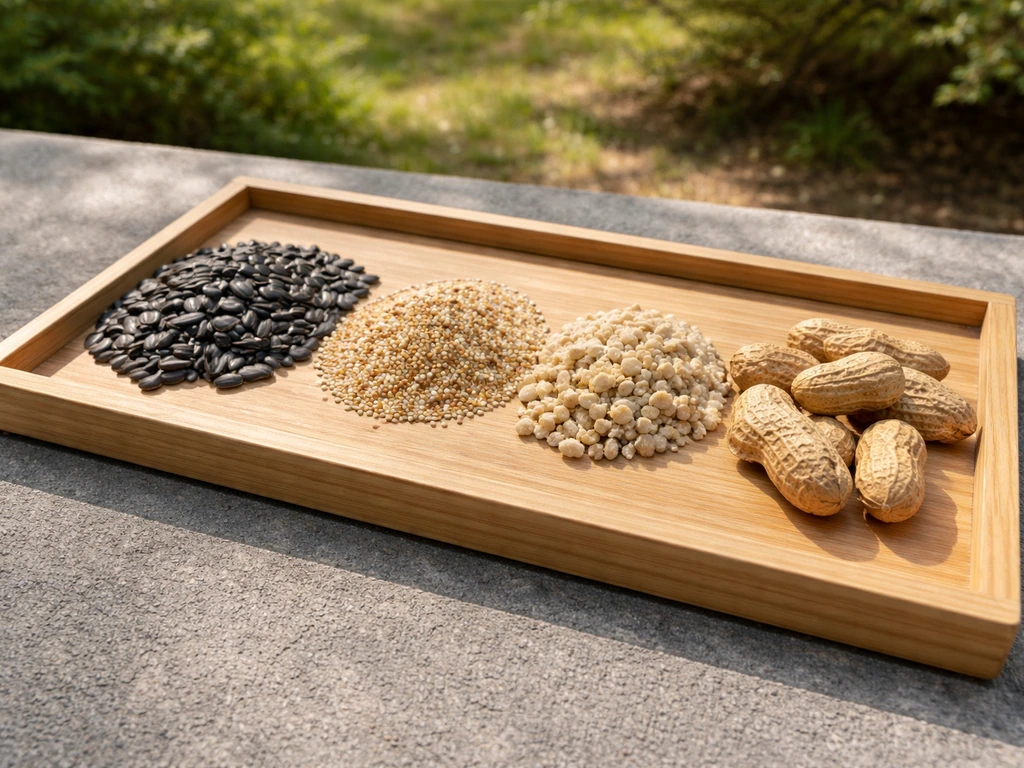
Because the surface is wide open, you have more flexibility with food types than any other feeder style. You're not constrained by port size or hopper dimensions. That said, some foods work much better than others on an open tray.
Black-oil sunflower seed is the single best starting point. Audubon consistently lists it as the seed that appeals to the greatest number of birds, and Project FeederWatch notes it's high in energy and preferred by a wide variety of species. Hulled sunflower (no shells) is even better on a platform because there's no shell waste building up on the tray, which means less mess and easier cleaning.
| Food Type | Best For | Platform Pros | Platform Cons |
|---|---|---|---|
| Black-oil sunflower seed | Cardinals, jays, chickadees, finches, sparrows | Universal appeal, easy to scatter | Shells accumulate on tray |
| Hulled sunflower (chips) | Same species as above | No shell waste, cleaner tray | Spoils faster when wet |
| White millet | Juncos, doves, sparrows, towhees | Ground feeders love it | Can attract house sparrows |
| Cracked corn | Doves, jays, sparrows | Cheap, fills birds quickly | Goes moldy fast in rain |
| Peanuts (in shell or halved) | Blue jays, woodpeckers, nuthatches | High energy, loved by jays | Attracts squirrels strongly |
| Live or dried mealworms | Bluebirds, robins, wrens | Hard to offer any other way | Expensive, needs frequent refresh |
| Safflower seed | Cardinals, chickadees | Squirrels and starlings tend to ignore it | Fewer species accept it |
One thing to avoid: big scoops of mixed seed blends with lots of filler millet and milo. Birds pick out what they like and flick everything else off the tray. That creates a pile of rejected seed on the ground, which is a fast track to attracting rats and squirrels. If you use a mix, look for quality blends that lead with sunflower, millet, and peanuts, and skip anything loaded with red milo.
Where to put a platform feeder for the best results
Placement makes or breaks a platform feeder setup. Get it wrong and you'll get fewer birds, more pests, and frustrated yourself. Here's what actually works.
Distance from windows
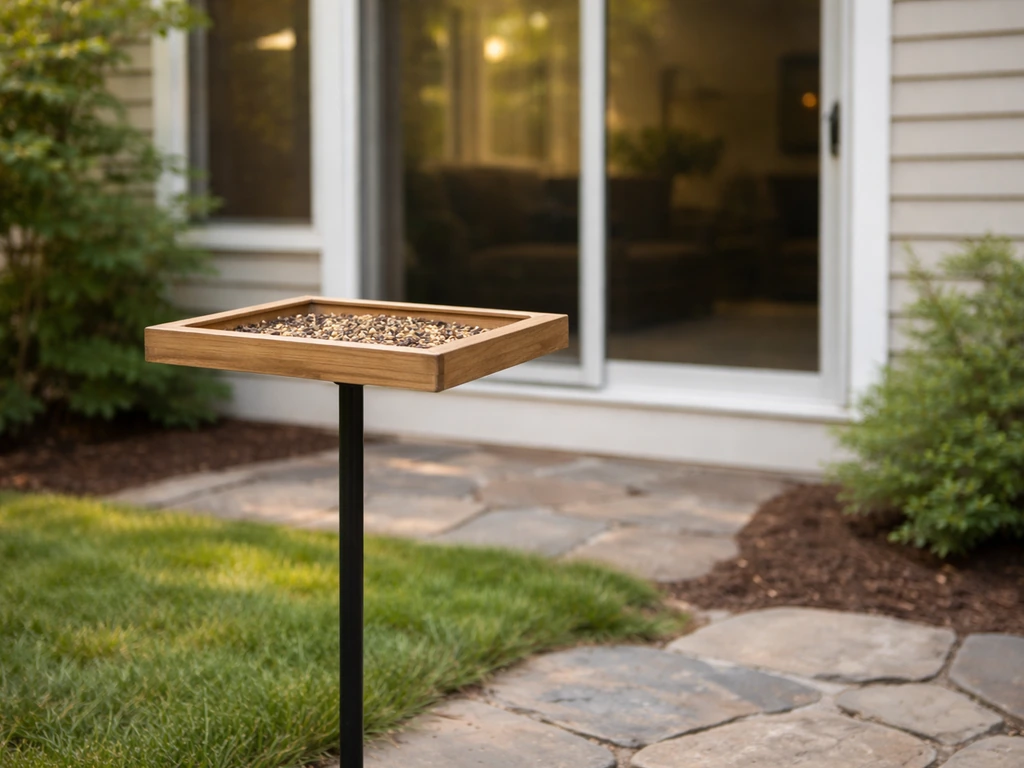
Window strikes are a real risk with any feeder, and platform feeders are no exception. The rule backed by All About Birds, Ornithology Education, and Chewy is the same: place the feeder either closer than 3 feet from a window (so birds can't build up enough speed to hurt themselves if they do hit it) or farther than 10 feet away. The sweet spot for many backyards is a post-mounted platform about 10 to 15 feet from the house, which is close enough to enjoy from inside but far enough to reduce collision risk.
Distance from cover
Birds want to be able to see a predator coming and have somewhere to bolt. Chewy recommends placing feeders within 10 to 15 feet of shrubs or trees, and Birdfact puts the ideal range at 10 to 12 feet from dense cover. That gives birds a clear sightline to the feeder from cover, and a quick escape route if a hawk shows up. Too close to dense brush (under 5 feet) and you're giving cats and other predators a hiding spot. Too far from any cover and nervous birds like sparrows and juncos will avoid it.
Height and mounting
For ground-feeding species like juncos and doves, a low platform, around 2 to 3 feet off the ground on a post, works well. For cardinals and jays, anywhere from 3 to 6 feet is comfortable. Hanging platform trays from a hook or shepherd's crook are also common, and they have the added benefit of being easier to fit a baffle on the pole below. The Michigan DNR's backyard management guide specifically calls out a "small roofed platform on a post" as a well-designed setup, and I'd agree, that combination of post-mounting and a roof is the most practical configuration.
Dealing with the real problems: waste, mess, and pests
Platform feeders have the most open design of any feeder type, which means they can also have the most problems if you're not proactive. These are the issues I see most often and how to actually fix them.
Seed waste and mess
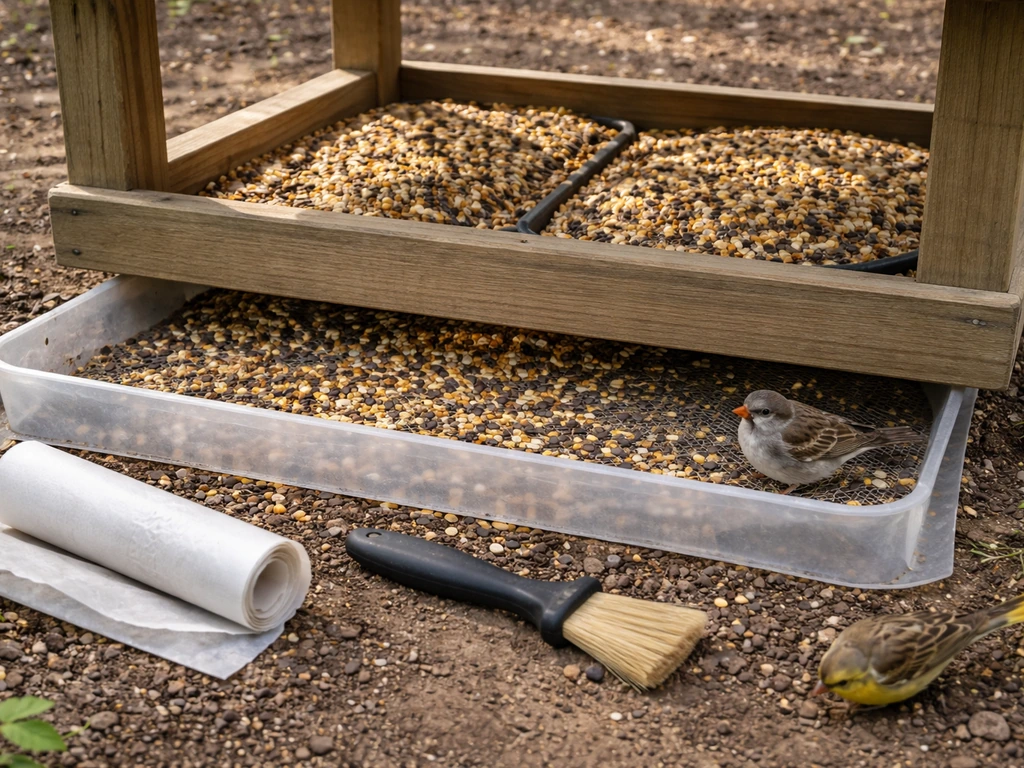
Birds scatter seed off open trays while they forage. This is normal, but you can reduce it significantly by using high-quality seed with minimal filler (birds won't toss out food they want), using hulled seed that leaves no shells, and choosing a platform with a slightly raised lip. A tray with drainage holes in the bottom also lets water out instead of pooling, which slows mold growth. Underneath the feeder, clean up fallen seed and hulls regularly. Minnesota DNR recommends raking up old seed and hulls and, in persistent cases, sprinkling lime about a quarter inch deep to kill bacteria, though they note it can damage grass.
Mold and wet seed
This is the biggest functional weakness of an open platform feeder. In rainy weather, seed gets soaked and can grow mold or bacteria within a day or two. [Minnesota DNR specifically flags wet-weather mold as a common problem for bird feeding stations. ](https://www.
dnr. state. mn. us/birdfeeding/cleaning.
html) The fixes: get a platform with a roof if you live in a rainy climate, only fill the tray with what birds can eat in a day or two, and dump and rinse the tray after rain events.
K-State Research and Extension’s “Problems at the Bird Feeder” similarly emphasizes that proper cleaning and feeder management, including actions to prevent wet, moldy seed, helps reduce recurring feeder problems get a platform with a roof if you live in a rainy climate.
If you also want to minimize wet-seed issues, the best platform bird feeder with roof is an easy adjacent option to compare. All About Birds recommends cleaning seed feeders at least once every two weeks, and more often during wet weather or heavy use. For a platform feeder, I'd push that to weekly in wet seasons.
Disease risk from droppings
Project FeederWatch is direct about this: "Tray feeders collect bird droppings that are then consumed by birds that subsequently feed." That's a genuine disease risk that you don't get the same way with a tube or hopper feeder. The solution is regular cleaning. Flathead Audubon recommends washing seed feeders in hot water or a dilute bleach solution every one to two weeks. For a platform feeder, scrub the tray surface thoroughly because droppings dry and stick. This isn't optional hygiene, it's what keeps your birds healthy.
Squirrels and rats
An open platform tray is basically a squirrel buffet if you don't take precautions. Project FeederWatch links scattered food on the ground directly to rodent attraction, so the first line of defense is keeping the ground under the feeder clean. For squirrels, a pole-mounted baffle (either a cone below the feeder on a pole, or a dome-style above the tray on a hanging setup) is the most effective tool.
A squirrel baffle only works if the pole is placed correctly: at least 10 feet from any tree, fence, or structure squirrels can jump from, and the feeder should be at least 5 feet off the ground. Safflower seed is also worth trying since squirrels tend to leave it alone. For rats, remove spilled seed nightly and avoid cracked corn and milo, which are both rat favorites.
What to look for when picking a platform feeder
Not all platform feeders are built the same, and the differences matter more than the price tag. Here's what I pay attention to when evaluating a model.
- Drainage holes: non-negotiable. The tray bottom needs holes so water doesn't pool and rot the seed. Look for multiple holes, not just one
- Material: cedar and recycled plastic are both solid choices. Cedar weathers well and looks great but needs occasional sealing. Recycled plastic (poly lumber) is virtually maintenance-free and won't rot or splinter
- Roof: a sloped roof over the tray dramatically improves usability in wet climates. Covered platform feeders keep seed dry much longer and reduce how often you need to dump and refill
- Tray size: bigger trays hold more seed and can accommodate several birds at once, which reduces competition. A tray at least 12 by 12 inches is a reasonable minimum
- Ease of cleaning: you should be able to remove the tray or access it fully for scrubbing. Designs with removable mesh bottoms or slide-out trays are much easier to keep clean
- Mounting options: decide whether you want post-mounted, hanging, or railing-mounted before buying. Not all models work all three ways
- Roof access: some covered platform feeders have a roof that swings up or lifts off, which makes filling and cleaning far less annoying
If you want to go deeper on specific models, the best platform bird feeder and best platform bird feeder with roof guides on this site break down top picks by material, size, and intended use. There's also a category of platform feeders styled after license plates that are worth a look if you want something with personality alongside function.
Platform feeder vs. other feeder types: when to choose which
Platform feeders are genuinely versatile, but they're not the right tool for every situation. Here's an honest comparison.
| Feeder Type | Best Birds | Best Foods | Main Advantage | Main Drawback |
|---|---|---|---|---|
| Platform / tray | Cardinals, jays, doves, juncos, sparrows, bluebirds | Sunflower, millet, mealworms, peanuts, safflower | Widest species appeal, versatile food options | Open to weather, droppings, squirrels |
| Hopper | Cardinals, chickadees, nuthatches, finches | Sunflower, safflower, mixed seed | Stores more seed, protected from rain | Harder to clean, seed can still spoil inside |
| Tube | Finches, chickadees, nuthatches, small birds | Sunflower chips, nyjer/thistle, safflower | Squirrel-resistant, works with baffles, less waste | Excludes many larger species |
| Suet cage | Woodpeckers, nuthatches, wrens, creepers | Suet cakes | Attracts species nothing else does | Not for seed, limited food variety |
| Window feeder | Any small birds, close-up viewing | Sunflower chips, mixed seed | Incredible close-up views | Small capacity, frequent refilling needed |
Choose a platform feeder if you want to attract the most diverse group of birds, especially ground-feeding species you're not currently seeing. It's also the right call if you want to offer mealworms for bluebirds or peanuts for jays, since those foods work poorly in tube or hopper designs. A hopper feeder is a better choice if you want to load up a large seed capacity and not refill as often, especially in winter.
If your main headache is squirrels, a tube feeder with a pole-mounted baffle will give you less grief than a platform. And if you have the space, run a combination: a tube for finches and chickadees, and a platform for cardinals, jays, and ground feeders. That combination pulls in more species than any single feeder type can.
For anyone just starting out, a roofed platform feeder on a post with a squirrel baffle, filled with black-oil sunflower seed, is one of the best single setups you can put in a backyard. It's simple, highly effective, and the variety of birds you'll attract in the first few weeks is genuinely satisfying. From there, you can layer in other feeder types as you figure out which birds are visiting and what else they want.
FAQ
Can I put a platform bird feeder directly on the ground?
Yes, but keep it sanitary and strategic. Use a shallow tray, clean on schedule (at least weekly in wet weather), and start with hulled sunflower or another low-mess option so dropped seed does not build up. If you are not able to maintain regular cleanup, a covered platform or a different feeder type is usually a safer choice.
What height should a platform bird feeder be for different birds?
If the platform sits too high, ground-feeding birds such as doves and juncos may pass it up, and if it sits too low, it becomes easy prey for cats and makes cleaning harder. A practical starting point is about 2 to 3 feet for ground-feeders, then adjust based on which species show up after a week.
Does a roofed platform feeder completely solve the mold problem?
Often, but it is not automatic. A roof helps with rain soaking, but you still need drainage and you must dump and rinse after storms. If you live where it rains frequently, use only what birds will eat in a day or two so seed does not sit wet for long periods.
What seed should I use to minimize cleanup on a platform feeder?
Hulled sunflower usually works best because shells create waste that traps moisture and dirt. If you use in-shell seed, plan on more frequent raking and tray scrubbing, especially after rain. For less mess, consider mixing in peanuts or small amounts of other premium foods rather than large portions of filler seed.
Are hanging platform trays as effective as post-mounted ones?
Yes, but be careful with how you suspend it. When platform trays are hung, they can sway and be harder to stabilize with a baffle, so spilled seed may spread farther. For best results, choose a design that limits wobble and make sure you can place a squirrel barrier underneath or around the setup.
Why do I keep finding lots of rejected seed under my platform feeder?
A lip helps, but the biggest spill control comes from reducing filler and preventing waterlogging. If you see a lot of wasted seed, switch to blends that lead with sunflower or add hulled sunflower, then check whether the tray has drainage holes and rinse it after wet days.
My feeder has birds at first, then they stop coming. What should I change?
Yes, especially if there are no shrubs or escape cover nearby. If birds cannot see a safe route from cover, they may avoid the feeder. Try moving the feeder closer to dense cover (around the 10 to 15 foot range mentioned in placement guidance) or add natural perches nearby, then re-evaluate after several days.
How should I clean a platform feeder, and is vinegar or soap enough?
Not necessarily. Antimicrobial cleaning can help, but the key is physical removal of dried droppings and old residue. Use hot water and a diluted bleach solution for periodic deep cleaning, then rinse thoroughly so there is no lingering chemical taste or residue.
Will platform feeders attract rats, even if I clean the tray?
It can happen, and it is usually worse when there is spilled food on the ground. Keep the ground raked or swept under and around the feeder, remove leftovers nightly during peak rat activity, and avoid cracked corn and milo if rats are showing up.
What should I look for when buying a covered platform bird feeder?
Use them, but make sure the product design still matches platform needs. Some covers are better at keeping rain off the seed while letting airflow prevent persistent dampness. When comparing options, prioritize drainage and a roof height that does not block bird access or create large dead-space where seed collects.
Next Article
Best Platform Bird Feeder: Covered Options, Features, Setup
Find the best covered platform bird feeder with features, setup tips, pest control, and winter-proof troubleshooting for