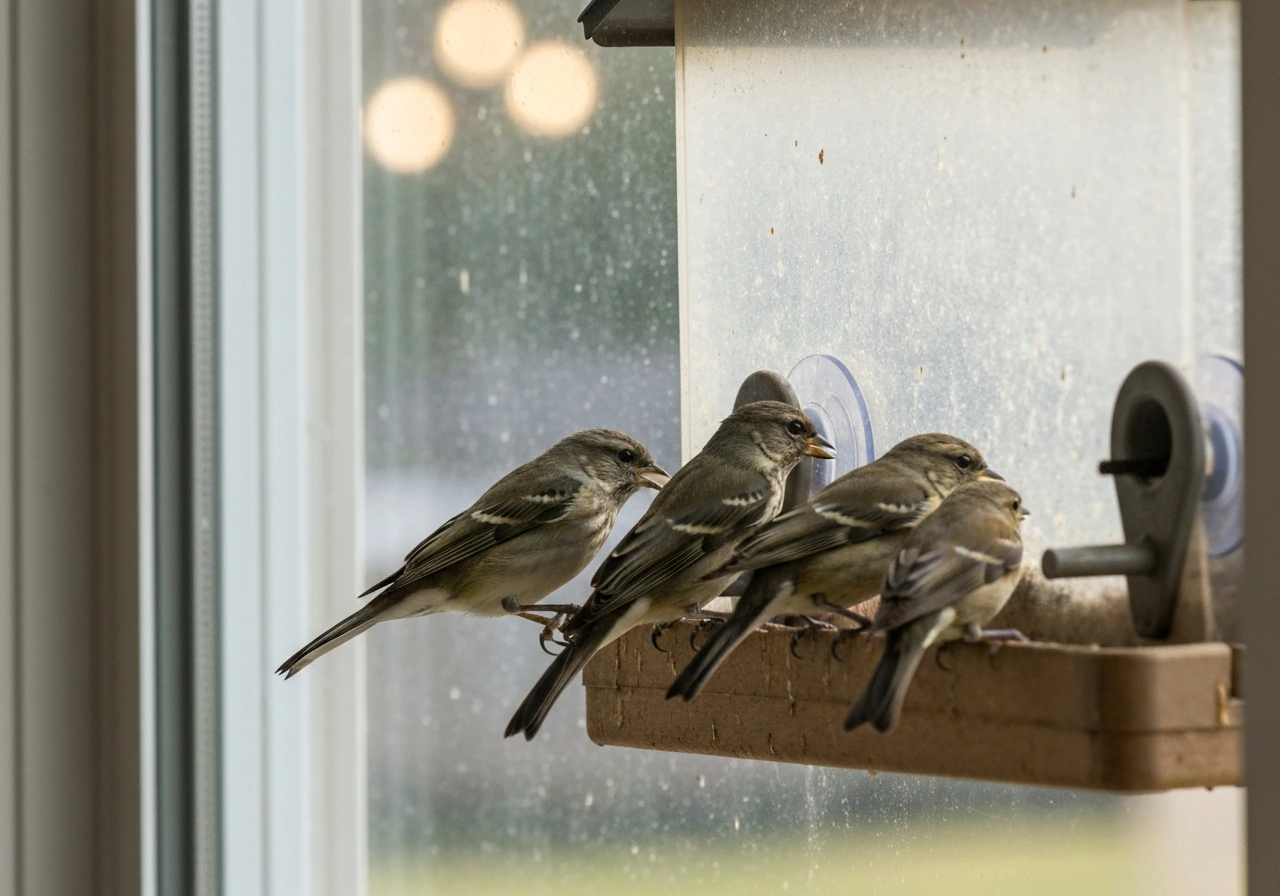
A one-way mirror window bird feeder lets you watch birds from inches away without spooking them. The feeder mounts directly on your glass with suction cups, and a sheet of reflective mirror film on the back panel faces the birds so they see their own reflection instead of you. From inside your room, you see straight through to the feeder tray. It works on the same principle as a two-way mirror in an interrogation room: as long as your room is darker than the outside, the reflection dominates what the birds see. That one detail, the indoor light level, is the single biggest variable that determines whether the effect actually works.
Best Window Bird Feeder One-Way Mirror: Buying Guide
Marcus Hendricks
9 Jul 2026
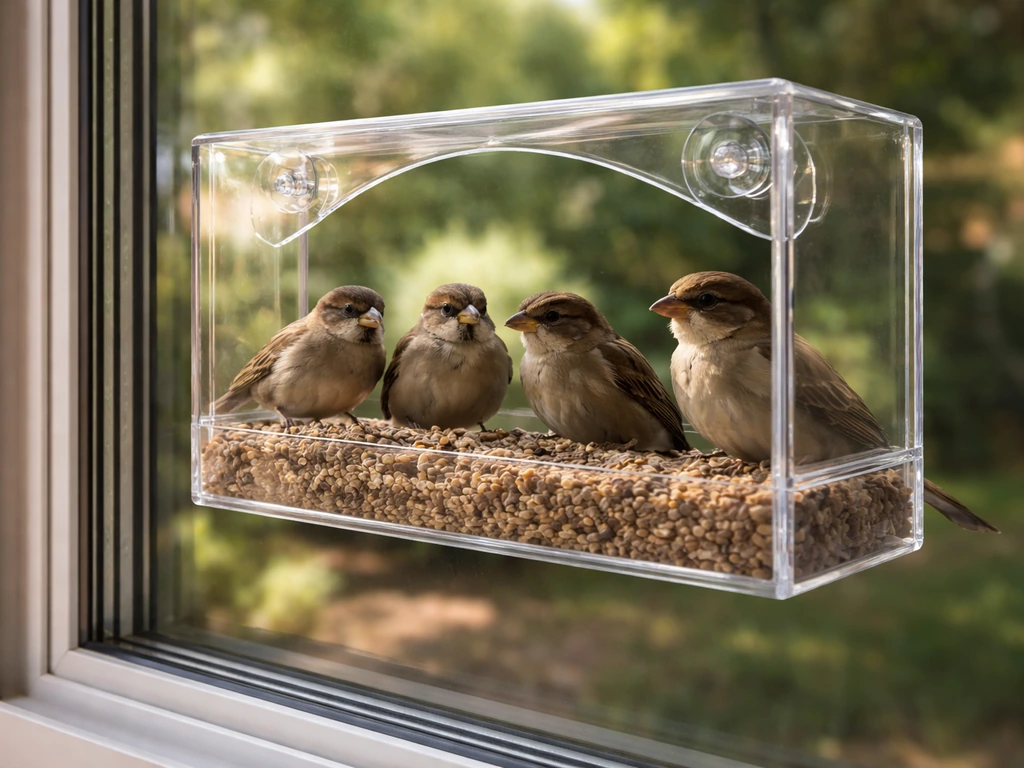
What a one-way mirror window bird feeder actually is (and what to realistically expect)
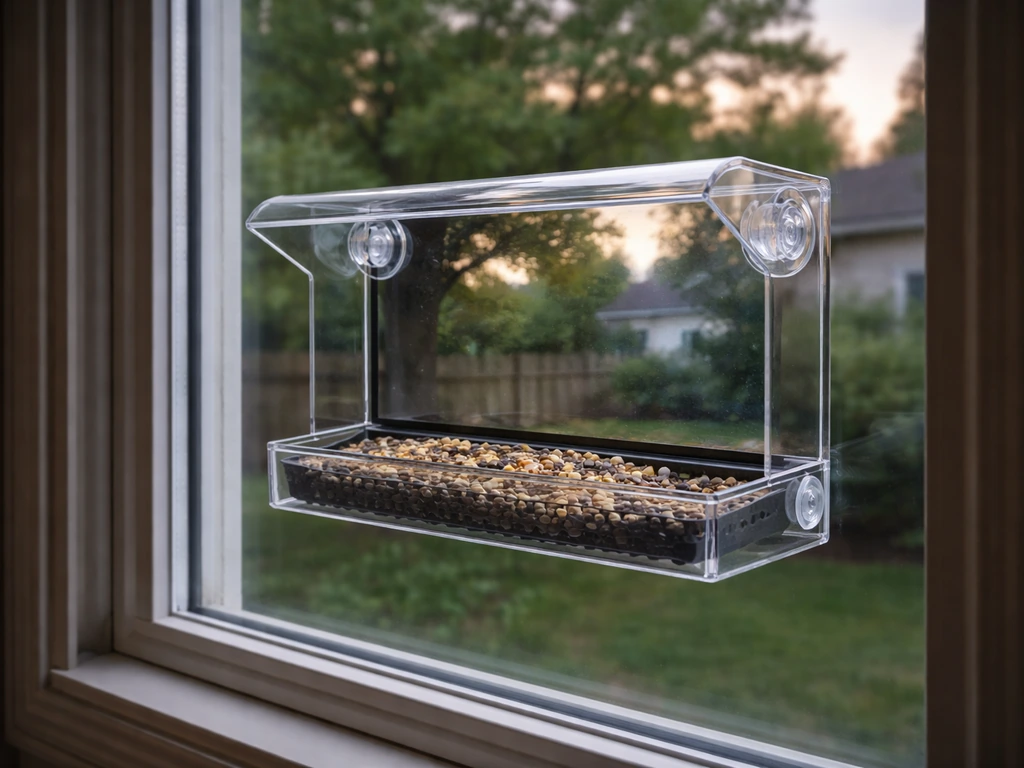
The term "one-way mirror" here almost never means genuine one-way glass. What you're getting in nearly every commercial product is a sheet of reflective mirror film, typically around 8 x 14 inches, applied to the back panel or window-facing side of a clear acrylic or polycarbonate feeder. Products like the Lee Valley window feeder (roughly 8" wide by 12.5" tall, projecting just over 3" from the glass), the Bluebird Landing Clear View Hopper with a 14 x 8" mirrored film, and the Super Songbird One Way Mirror Window Bird Feeder all use exactly this approach. Some sellers, including Duncraft, even sell the film separately so you can retrofit any clear window feeder you already own.
The practical result is genuinely impressive when conditions cooperate. Birds feeding two inches from your nose, completely unbothered, is not hype. But you do need to accept two trade-offs: the view from inside is slightly darker and more mirror-tinted than a plain clear feeder, and on very bright mornings when sunlight floods your room, the one-way effect weakens. To find the best bird feeder window for your home, pay close attention to lighting, location, and safety so the one-way effect works without increasing window strikes. This is a physics problem, not a product defect. Keeping the room behind you relatively dim, especially during the golden hours when birds are most active, makes the biggest difference.
How to choose the best model: viewing clarity, reflection quality, and bird safety
The single most important thing to evaluate is how the mirror film integrates with the feeder body. Loose-insert film that's too small for the back panel, a real complaint in Home Depot reviews of the Evergreen Enterprises HA6312, creates gaps where birds can see movement inside and defeats the purpose entirely. Look for feeders where the mirror film covers the entire back surface with no exposed clear acrylic around the edges, or where the film ships pre-applied rather than as a separate piece you have to install yourself. If you want the best version, look for a better crafter window bird feeder that uses well-fitted reflective film and a sturdier viewing panel best model.
For viewing clarity from inside, the feeder body should be made of heavy clear acrylic, not thin cheap polystyrene. Thin plastic hazes, scratches easily, and turns yellow within a season or two. The Bluebird Landing Clear View Hopper specifically advertises durable heavy clear acrylic and that distinction matters for long-term visibility. The Coveside Panoramic In-House Bird Feeder takes a slightly different approach: it mounts so you can access and view it from inside your home entirely, with a mirrored back facing outward, which is worth considering if you want to avoid going outdoors to refill.
Glare is manageable but real. East-facing windows get direct morning sun, which is the worst scenario for the one-way effect. North or northwest-facing windows are ideal because they get indirect, consistent light without harsh direct sun blowing out the reflection. If you only have south or east-facing windows, close blinds or use a room divider to reduce interior brightness during peak morning feeding hours.
| Model | Mirror Coverage | Material | Size (approx.) | Capacity | Mounting |
|---|---|---|---|---|---|
| Lee Valley Window Feeder | Full back panel (pre-applied film) | Clear acrylic | 8" W x 12.5" H x 3" D | Not specified | Suction cups |
| Bluebird Landing Clear View Hopper | 14" x 8" film (full back) | Heavy clear acrylic | Not specified | Not specified | Suction cups |
| Super Songbird One Way Mirror | 8 x 14" film (inside window) | Clear plastic, removable roof | 11.5" x 3.5" x 8.5" H | Not specified | Suction cups |
| Evergreen Enterprises HA6312 | Partial insert (user reports gaps) | Plastic | 12" nominal | Not specified | Suction cups |
| Coveside Panoramic In-House | Mirrored back panel | Not specified | Not specified | Not specified | Window mount (interior access) |
| Wind & Weather WIWE1009 (Breck's) | One-way mirror film back | Clear acrylic | Not specified | 1 lb seed | Suction cups |
Bird access, seed types, and which birds each design attracts
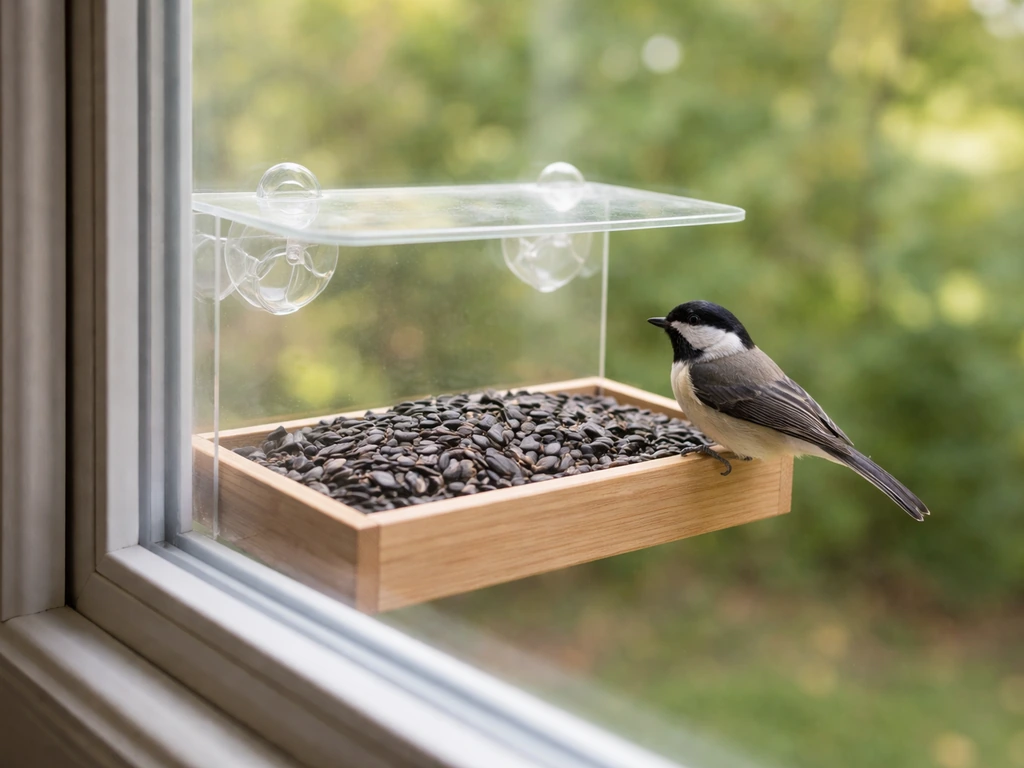
Window feeders with one-way mirror film are almost all open tray or hopper-style designs, which is actually good news because those formats attract the widest range of species. The seed you put in matters more than most people realize.
- Black-oil sunflower seed is the single best all-around choice. It attracts cardinals, chickadees, house finches, goldfinches, nuthatches, sparrows, and woodpeckers. If you fill the tray with nothing else, this is what to use.
- Nyjer (thistle) is a finch specialist seed. American goldfinches and house finches love it, but it requires a tube feeder with small ports to avoid waste. Most open window trays aren't ideal for nyjer unless you mix it with other small seeds.
- Shelled peanuts or peanut hearts draw chickadees, nuthatches, woodpeckers, and blue jays. A wider tray with higher sides helps contain them.
- Suet cakes require a cage-style feeder, not a tray, so they don't fit the standard one-way mirror window feeder format. If you want woodpeckers specifically, you'd need a separate suet cage mounted nearby.
- Mixed seed blends work but often include milo and millet that many birds kick off the tray, which creates a mess on your window and sill.
The hopper-style window feeders like the Bluebird Landing Clear View are best for cardinals because cardinals prefer platforms and trays over tube ports. They're larger birds and need room to land and turn. Smaller open-tray feeders with about 1 lb capacity (the Wind & Weather and Breck's models) work well for chickadees, house finches, and sparrows but may not comfortably accommodate a cardinal or a pair of mourning doves without crowding.
Installing your feeder on the window the right way
Placement distance from your window is one of those things that sounds like a minor detail but is actually critical for bird safety. Research consistently lands on two safe zones: within 3 feet of the glass (so birds can't build up lethal momentum before impact), or more than 30 feet away.
Chicago Bird Collision Monitors also recommends keeping feeders either directly next to windows or over 50 feet away to reduce collision risk, reflecting the same “room to build up speed” vs “not close to glass” reasoning two safe zones, within 3 feet of the glass or more than 30 feet away.
Window feeders that mount directly on the glass sit solidly in that under-3-foot safe zone, which is one of the underappreciated advantages of this feeder type. A bird that startles and flies toward the window simply taps it at low speed rather than hitting it at full flight velocity.
That said, the window itself still needs attention. The one-way mirror film on the feeder only covers the feeder's back panel, not the rest of your window. Birds approaching from the side can still see an unobstructed pane of glass reflecting sky and trees. If you've had window strikes in the past, add a few decals or a strip of tape at roughly 4-inch intervals on the glass outside the feeder footprint. The goal isn't to mark every inch, just to break up the reflection enough that birds recognize it as a solid surface.
For mounting, clean the suction cup contact zone on the glass with rubbing alcohol first. This is the step most people skip, and it's why their feeder falls off after two weeks. Any residue, film, or grease on the glass breaks the seal. Press each cup firmly and twist to seat it, then tug gently before loading seed. In cold weather (below about 20°F), suction cup adhesion weakens significantly. If you live somewhere that gets hard winters, test the mount with a full seed load before leaving it unattended.
One other placement note: if you're near a corner of the house or have a window that faces two directions (like an angled bay window), birds approaching from the off-angle can see straight through the glass. A room-side curtain partially drawn on the off-angle side reduces interior visibility without blocking your forward view to the feeder.
Cleaning, maintenance, and keeping it working through winter
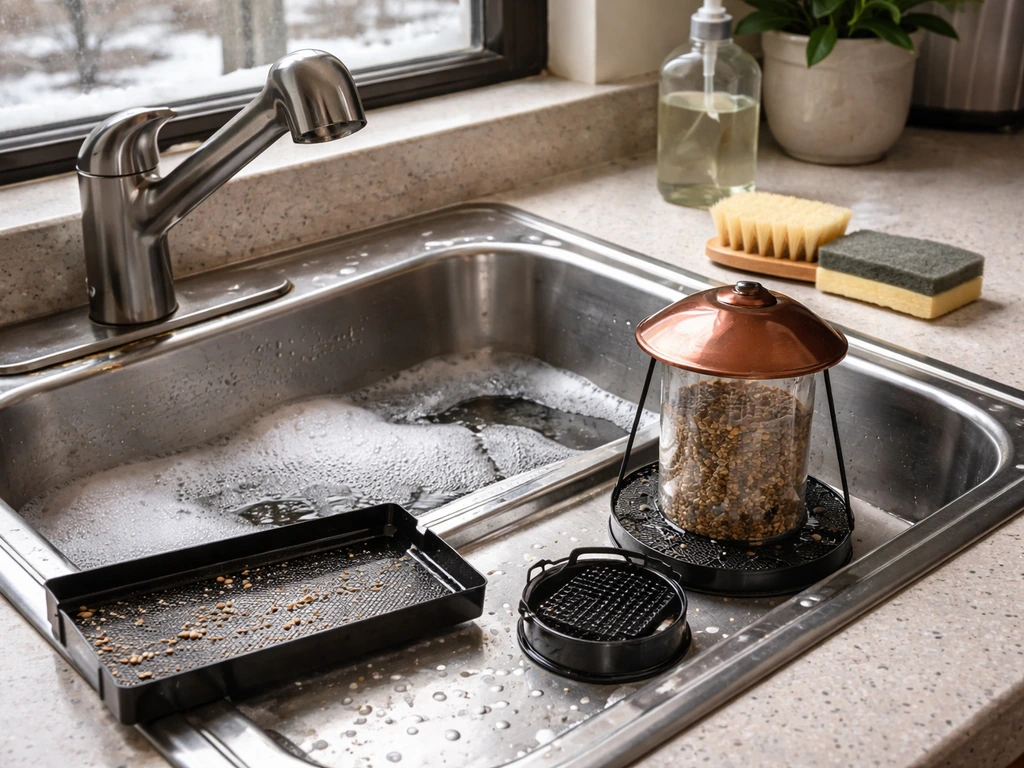
Window feeders need cleaning more often than pole feeders because the small tray size and enclosed position against the glass traps moisture. Wet seed molds fast, and moldy seed can make birds sick. A weekly wipe-down during spring and fall, and a full cleaning every two weeks minimum, is the right cadence. In humid summer weather or rainy periods, check the tray every few days.
The cleaning method is simple: mild dish soap, warm water, and a soft brush. Don't use bleach at full strength because it degrades acrylic over time and will cloud your viewing panel. A diluted bleach rinse (roughly one part bleach to nine parts water) once a month is fine for disinfecting, but always rinse thoroughly and let the feeder dry completely before refilling. Perky-Pet's care instructions for their Observer Window Feeder series make this point explicitly: for the sake of the birds, keep it clean.
In winter, the main threats are soggy seed freezing into a solid block and suction cup failure from cold glass. A few things help: switch to a higher-fat seed mix (black-oil sunflower holds up better than cheaper blends in cold and wet), use only as much seed as birds will clear in a day or two, and check the suction cups after any hard freeze. If the feeder drops, it's almost always a mounting failure, not a product defect. Reattach to a clean, dry, slightly warmer pane (afternoon sun helps) and it'll hold again.
The one-way mirror film itself needs occasional inspection. If you notice birds startling more than usual, check whether the film has peeled at a corner or shifted to reveal a clear gap. A replacement film sheet (the standard 8 x 14" size Duncraft and others sell) is inexpensive and takes about two minutes to re-apply.
Pests and the usual window feeder headaches
Squirrels are less of a problem with window-mounted feeders than with pole feeders, because a squirrel climbing a smooth window pane to reach a suction-cup-mounted feeder is actually a fairly athletic feat. Most squirrels won't bother. The more common issue is house sparrows monopolizing the tray and scaring off shier species. There's no great solution to this beyond putting out a second feeder with a different seed type to draw them off, or using a tube feeder attachment if your window feeder supports one.
Seed moths can infest your bird seed supply if you store it improperly indoors. Keep seed in a sealed metal or hard plastic container, not the paper bag it came in. If you notice tiny moths near your storage area, freeze fresh seed bags for 48 hours before transferring to storage to kill any larvae.
Wet seed clumping is probably the most common complaint with window feeders in general. The tray has no drainage in most designs because it's pressed against glass. If you're in a rainy climate, look for a feeder with a slightly elevated floor or drainage slots, and consider putting a very thin layer of sand or grit at the bottom of the tray to wick moisture away from the seed. The Super Songbird model's removable roof helps reduce direct rain entry, which is worth noting if weather is a primary concern for you.
Birds hitting the window near the feeder even after installation usually means interior lighting is too bright relative to outside, making the one-way film less effective and the window look transparent or reflective-sky-like to approaching birds. Dim the room, close a side curtain, and add a couple of decals to the glass above or beside the feeder footprint.
How to pick the right one for your situation
Here's the honest breakdown by priority. Many people also compare options by reading the best window bird feeder Reddit threads for real-world feedback on clarity, mess, and bird safety. If your main goal is the clearest, most unobstructed close-up view and you're willing to manage lighting conditions carefully, the Bluebird Landing Clear View Hopper with its full-coverage 14 x 8" heavy acrylic and pre-applied film is the strongest option on build quality and optics.
If interior access and easy refilling without going outside matters most to you, the Coveside Panoramic In-House feeder is the one to look at seriously. For a solid budget-friendly entry point with about 1 lb capacity and suction cup mounting, the Wind & Weather / Breck's See-Thru Window Feeder is reliable and widely available. Avoid the Evergreen HA6312 as your primary choice because of the documented film-size issues in user reviews.
It's not a bad feeder structurally, but the one-way mirror effect is its weakest point, which is the whole reason you're buying this type.
| Priority | Best Choice | Why |
|---|---|---|
| Clearest viewing / best optics | Bluebird Landing Clear View Hopper | Heavy clear acrylic, full 14x8" mirror coverage, hopper design for larger birds |
| Easiest access and refill | Coveside Panoramic In-House Feeder | Opens from inside, no outdoor trips, mirrored back faces birds |
| Budget / starter option | Wind & Weather WIWE1009 (Breck's See-Thru) | 1 lb capacity, suction cup mount, widely available, decent reviews |
| DIY upgrade to existing feeder | Duncraft 8x14" One-Way Mirrored Film | Apply to any clear window feeder you already own |
| Best for finches specifically | Any tray feeder + nyjer in a separate tube | Open tray with black-oil sunflower, add a nyjer tube alongside |
| Cardinals and larger birds | Bluebird Landing or Coveside (wider tray) | Cardinals need room to land; wide platform designs work best |
Before you buy, do three quick checks at home. First, stand inside the room where you'll mount the feeder during morning hours and look at the window. Is the glass reflecting sky and trees, or can you see through it clearly? If you can see through it easily from inside with bright outdoor light, birds approaching from outside will see through it too, and the one-way effect will be weak. Second, measure the window pane width to confirm suction cups will have clean flat glass to grip. Third, check whether the window opens inward or outward, because inward-opening windows are incompatible with most window feeder designs while the window is open.
If you're researching window feeders more broadly, there are related questions worth thinking through, including which window feeder designs work best for cats watching from inside, what the birding community recommends on forums like Reddit, and how the Coveside and similar "in-house" designs compare to standard suction-mount styles. If you're specifically shopping for the best window bird feeder for cats, focus on how clear the view is from inside and whether the design is safe for birds to land and feed. All of those angles point back to the same core trade-off: convenience of access versus viewing quality versus bird safety, and no single feeder wins on all three. Knowing which one matters most to you makes the decision straightforward.
FAQ
Will the one-way mirror window bird feeder still work if I mount it in a darker room or I mainly watch birds at night?
Yes, but only if the feeder’s suction cups can stay sealed and you still keep the room behind you dim. In very low light, the one-way effect may be stronger than expected, but if you use bright indoor lighting at night you can flip the behavior and make birds more likely to see through the reflective film.
Can I use a one-way mirror window bird feeder on an inward-opening window?
Most standard window-mounted one-way feeders are not ideal. If the window opens inward, the feeder body can be pressed or shifted by the moving sash, and birds can get a higher line-of-travel into the gap. If you must use an inward-opening window, consider a model designed for off-sash mounting or keep the window closed while feeding.
What’s the most reliable way to confirm the mirrored film is installed correctly so the one-way effect is not weakened?
To reduce gaps, prioritize feeders where the mirrored film is either pre-applied with full-coverage edges or permanently bonded to the back panel, with no exposed clear frame. If you retrofit your own film, trim carefully to the exact back surface size and re-check for lifted corners after the first few days of temperature swings.
My birds keep hitting the window even though I installed the mirror feeder, what should I change first?
It can happen. If birds startle and then repeatedly hit the glass near the feeder, try two adjustments at once: dim the interior near the window and add a few decals or tape strips on the outside at bird eye-height. This forces birds to treat the window as solid even if lighting conditions weaken the reflective effect.
Does the mirrored film orientation matter, and how can I tell it’s facing the birds correctly?
No. If you want the one-way film to work, the feeder’s reflective surface needs to face the birds, and the reflective side needs to be continuous across the back panel. Putting the film upside down, backwards, or on the wrong face can make it look reflective from your side without providing the intended bird-side illusion.
How do I match tray size and seed type to the species I want, especially if cardinals are my priority?
Choose based on the birds you want to attract and whether you see multiple species competing. Open tray and hopper styles are generally best because larger perching birds can land and adjust. For frequent cardinal visits, ensure the tray is large enough for two-step footing so they are not crowded at the edge.
Do placement and window corners change the safety benefits of mounting directly on the glass?
Yes, location can directly affect the “safe zone” benefit. Even though glass-mounted feeders often fall into the under-3-foot safe range, corner placement or an off-angle where birds approach from the side can create unexpected flight paths. If you notice strikes mostly from one direction, reposition or partially block the off-angle view with a curtain.
Will frequent cleaning or using certain brushes ruin the acrylic viewing panel or worsen glare over time?
It depends on how it’s built and how you clean it. Use a soft brush and mild soap, and avoid abrasive pads that can micro-scratch acrylic, which makes the view hazier and can increase glare. If your feeder has a removable roof, keep it dry and inspect the seal points because debris under the roof can trap moisture.
How can I practically control indoor brightness so the one-way effect stays strong during morning hours?
Try to manage the room’s brightness during peak feeding hours by closing a side curtain, turning off nearby bright lamps, or using dimmer lighting when birds are feeding. As a quick test, stand inside and check whether the glass looks transparent or you can see reflections clearly, then adjust until birds seem calmer.
What’s the best way to prevent wet seed clumping without making birds avoid the tray?
A small amount of leftover seed at the bottom can be fine, but clumps are not. If you see wet packed seed, empty and dry the tray more frequently, especially after rain or foggy mornings. Consider a feeder design with drainage or add a thin wicking layer only if it does not prevent birds from accessing seed easily.
Next Article
Best Window Bird Feeder Reddit Guide: Pick, Mount, Fix
Reddit-based guide to choosing the best window bird feeder, with mounting fixes, bird targeting, and troubleshooting tip