If you live where black bears roam, the simplest, most effective thing you can do is take your feeders down from April through November. A standard 7-lb bird feeder holds roughly 18,000 calories, which is a meaningful meal for a bear, and once a bear connects your yard with easy food, that association is very hard to break. That said, many birders successfully feed birds year-round in bear country by choosing the right feeder type, installing it correctly, and using a combination of deterrents. This guide walks through exactly how to do that.
Bear vs Bird Feeder: How to Safely Protect Feeders, Birds & Yard
Marcus Hendricks
20 Jul 2026
Why bear-aware bird feeding matters
Bird feeders are one of the most commonly cited anthropogenic attractants in human-bear conflict research. Peer-reviewed studies consistently show that bears which access human foods, including bird seed and suet, become food-conditioned, meaning they begin to associate human structures with reliable calories. Foraging ecology of black bears in urban environments: guidance for human‐bear conflict mitigation (Ecosphere, Lewis et al. 2015) documents that black bears exploit anthropogenic foods and that food‑conditioning increases human–bear conflict Foraging ecology of black bears in urban environments: guidance for human‐bear conflict mitigation (Ecosphere, Lewis et al. 2015) documents that black bears exploit anthropogenic foods and that food‑conditioning increases human–bear conflict.. Once that conditioning sets in, those bears show up repeatedly, become bolder, and are far more likely to be involved in property damage or safety incidents. Long-term research from Yosemite found that removing artificial feeding sources directly reduced the proportion of human food in bear diets. In practical terms: what you put in your yard shapes which animals visit, and bird feeders absolutely attract bears.
For backyard birders, this creates a real tension. You want finches and cardinals at your tube feeder. You do not want a 300-lb black bear dismantling your pole system at 2 a.m. The good news is that risk is manageable with the right setup. The bad news is that no feeder is truly bear-proof, only bear-resistant, and the distinction matters both for your equipment and for local wildlife welfare.
How and why bears find your feeders
Bears have an extraordinary sense of smell, estimated at roughly seven times more sensitive than a bloodhound's. Sunflower seeds, suet cakes, and hummingbird nectar all produce strong odor signatures that carry hundreds of yards downwind. Black bears in particular are opportunistic foragers, and research on their urban foraging ecology confirms that proximity and accessibility to anthropogenic food sources are the primary drivers of bears appearing near homes. They are not being aggressive or unusual. They are doing exactly what their biology tells them to do.
Seasonality drives a lot of the risk. Spring is the highest-risk window. Bears emerge from winter dens in a state called hyperphagia recovery, needing to quickly rebuild fat reserves. Natural food sources like berries and mast crops are not yet available, so human-provided calories are especially attractive. Late summer and fall bring a second high-risk period as bears enter true hyperphagia, eating up to 20,000 calories per day to prepare for denning. Winter risk drops significantly in areas where bears fully den, but in warmer climates or during warm spells, bears can remain active year-round.
Assessing your local bear risk and understanding the rules
Before you invest in any feeder setup, know what you are dealing with legally and ecologically. Several U.S. states, Canadian provinces, and municipalities have ordinances that either restrict when you can put feeders out or prohibit leaving accessible attractants for bears entirely. Colorado Parks and Wildlife, Montana Fish, Wildlife and Parks, and similar agencies have published explicit guidance that birdseed and suet attract bears, and some jurisdictions treat leaving accessible feeders as a violation. The City of Whitehorse, Yukon even runs a loaner program for bear-resistant containers and has bylaws requiring seasonal feeder restrictions.
Montana FWP guidance commonly cites safe feeder seasons as roughly December 1 through April 1 in many areas, though this varies by elevation and local bear activity. If you are unsure, call your state or provincial wildlife agency before setting anything up. They will tell you the legal window, whether there are active bears in your area, and whether any recent conflicts have been reported nearby. That 10-minute call can save you a ruined feeder, a wildlife fine, and a food-conditioned bear in your neighborhood.
- Contact your state or provincial wildlife agency to confirm active bear seasons and any local restrictions
- Check your municipality for ordinances on bird feeders, bird seed storage, and wildlife attractants
- Ask whether a bear activity map or recent sighting reports are publicly available
- Review HOA rules if applicable, as some communities in bear country prohibit outdoor feeders entirely
- Confirm whether bear-resistant equipment loaner or subsidy programs exist in your area
Which birds you want vs. what that costs you in bear resistance
Not all bird species require the same feeder type, and feeder type is one of the biggest variables in bear resistance. If you are feeding cardinals and blue jays, you probably want a hopper feeder with a broad platform and sunflower seed, which happens to be one of the most calorie-dense and odor-producing options you can put out. If you are targeting finches and siskins, a closed tube feeder with nyjer seed is a significantly less attractive target for bears because the seed volume is lower and the odor profile is subtler. Audubon specifically recommends nyjer/thistle as a lower-bear-interest option when you need to keep feeders out during marginal-risk periods.
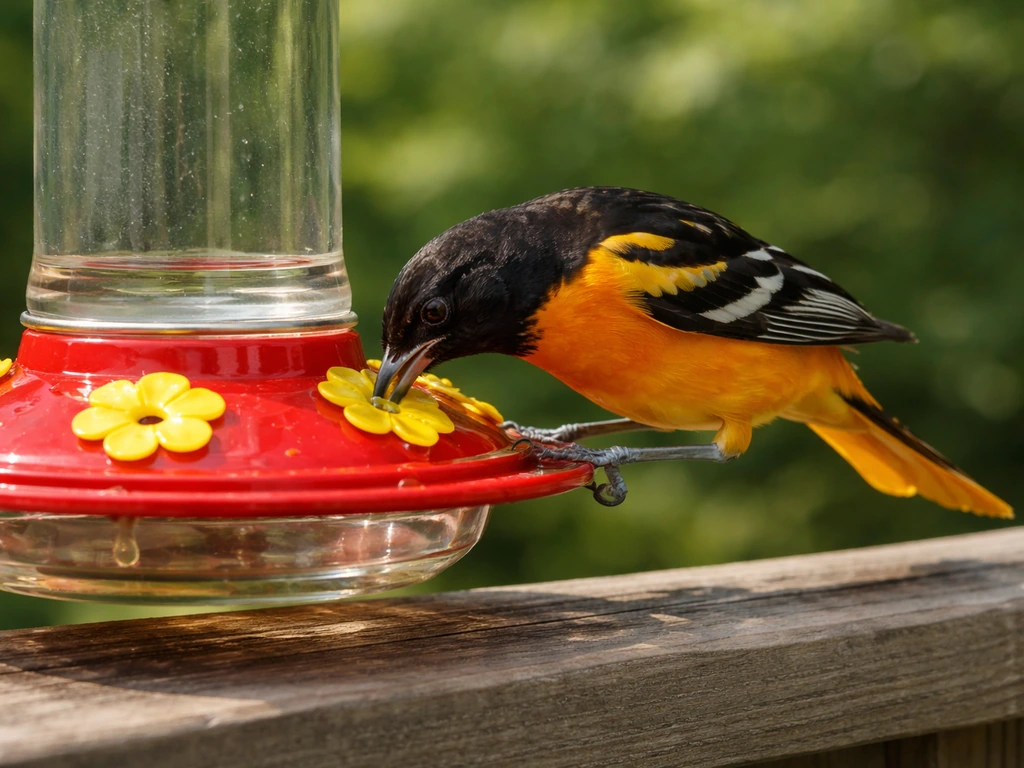
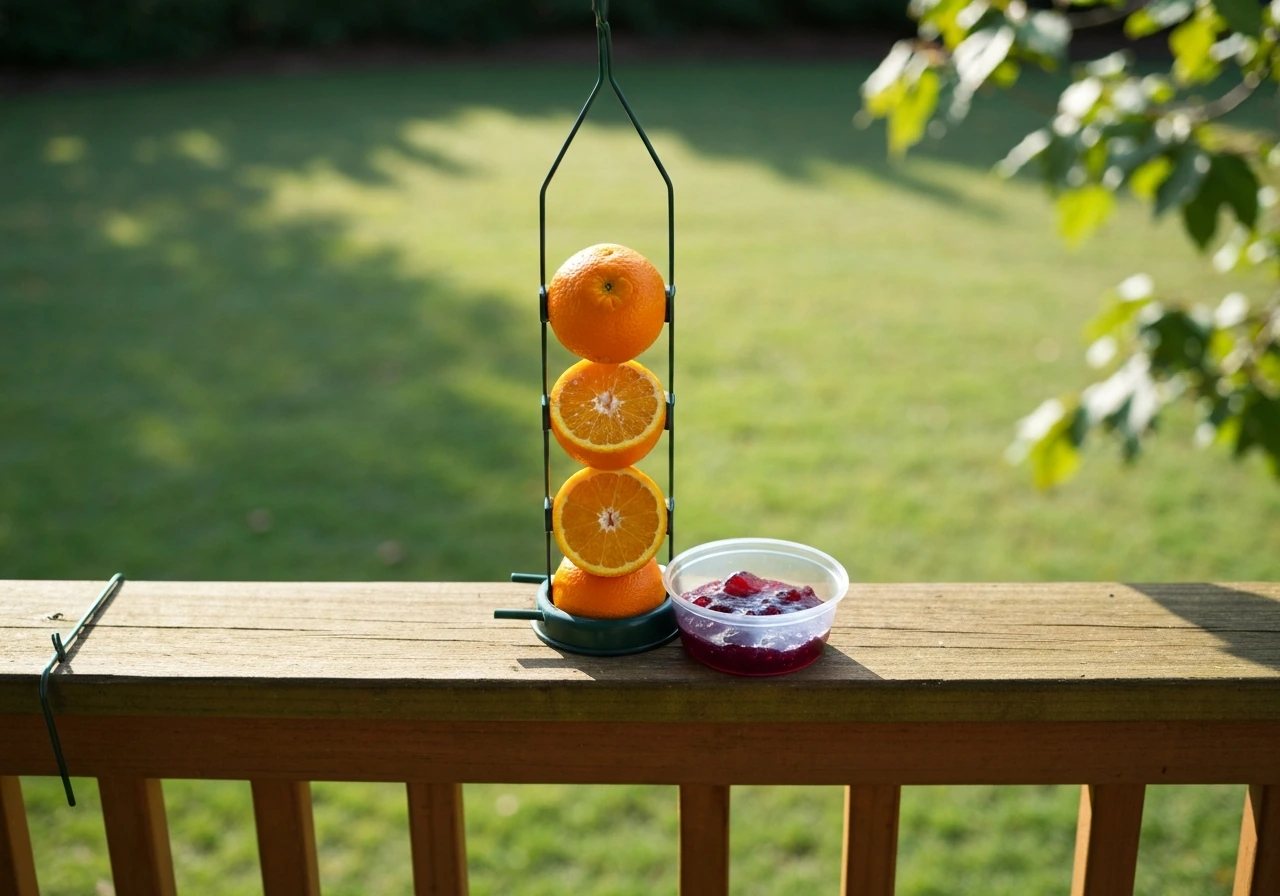
Hummingbird feeders present a special case. Nectar is highly aromatic and sugar-rich, and bears will absolutely take a hummingbird feeder. The feeders themselves are small and fragile, so even a single bear visit typically destroys them. If you are in bear country and feeding hummingbirds, you need to bring the feeder in every night without exception and consider a window-mount model for easier daily management. Woodpecker suet feeders are another high-risk category because suet is essentially compressed fat and protein with a strong smell. Oriole feeders with grape jelly or orange halves are similarly risky.
| Target Bird | Preferred Feeder Type | Seed/Food | Bear Attraction Level | Practical Compromise |
|---|---|---|---|---|
| Finches, siskins | Closed tube | Nyjer/thistle | Low | Easiest feeder to manage in bear country |
| Cardinals, blue jays | Hopper or platform | Sunflower, safflower | High | Use tube variant, reduce fill volume, bring in at night |
| Hummingbirds | Nectar tube/bottle | Sugar water | High | Window mount, bring in nightly |
| Woodpeckers | Suet cage | Suet cake | Very high | Avoid during active bear season or use metal cage with baffle |
| Orioles | Open cup/dish | Jelly, nectar, orange | Very high | Remove during active season; no good bear-resistant option |
| Doves, sparrows | Platform/ground | Millet, mixed seed | High | Ground feeding is highest risk; avoid in bear country |
| Bluebirds | Mealworm dish | Live/dried mealworms | Moderate | Small quantities, bring in nightly |
Feeder types compared for bear-country yards
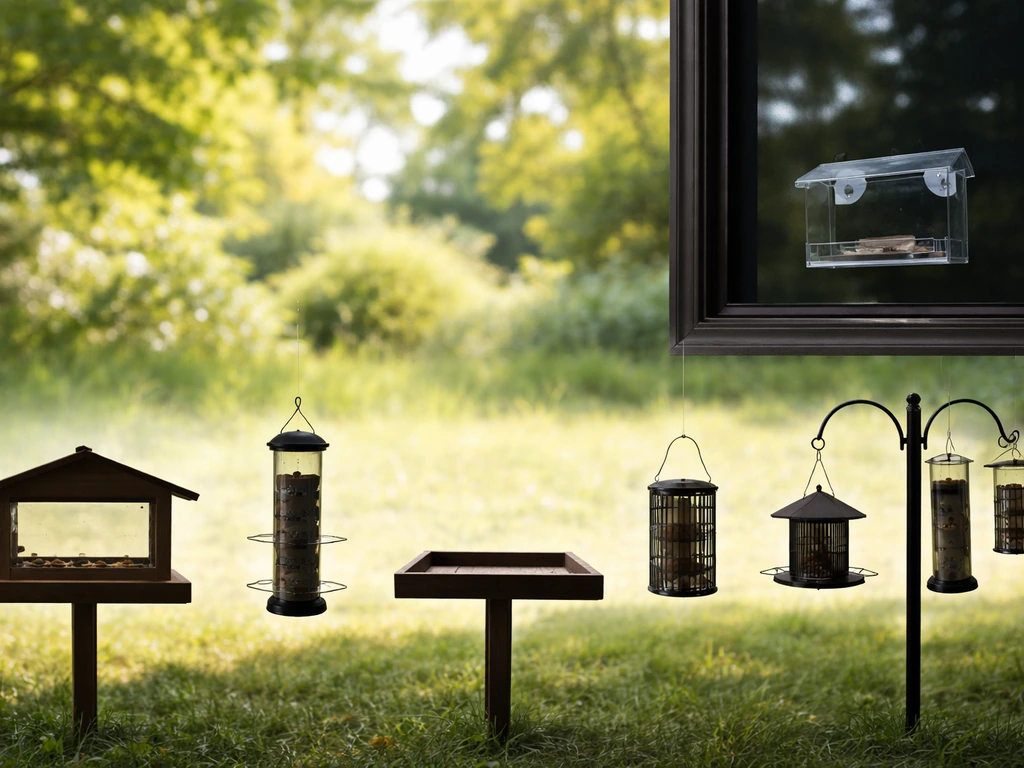
Every feeder type has a different risk profile when bears are in the picture. Here is how they stack up in practice, both for the birds you want and for how defensible they are.
Hopper feeders
Hopper feeders are popular because they hold a lot of seed and attract a wide range of species including cardinals, chickadees, nuthatches, and jays. In bear country, that high seed volume is a liability. A fully loaded hopper can hold 5 or more pounds of sunflower seed, representing thousands of calories and a strong scent plume. If you use a hopper, keep it no more than half full, mount it on a steel pole with a quality bear baffle, and bring it in at night. Metal or powder-coated steel construction is essential because a bear can destroy a plastic or wood hopper in seconds. I have tested wooden hoppers against raccoons, let alone bears, and they do not hold up.
Tube feeders
Tube feeders are the best general-purpose option in bear country. They hold less seed by design, the enclosed tube limits odor dispersion somewhat, and metal-tube models with reinforced ports are genuinely difficult for smaller pests to damage. Against a bear, no tube feeder survives a direct hit, but bears are less likely to be drawn to a small nyjer tube than to a loaded hopper. For finches and chickadees, a 12-inch to 18-inch steel tube feeder with a weight-sensitive perch is a reasonable year-round option with a good pole and baffle setup.
Platform and tray feeders
Platform feeders are the highest-risk option in bear country, full stop. Open trays with visible, accessible seed at low heights are essentially an invitation. If you want to feed ground-foraging birds like doves or juncos, I would skip platform feeders entirely during any period when bears are active in your area and switch to a tube or hopper instead.
Suet feeders
Suet cages attract woodpeckers, nuthatches, and chickadees reliably, but suet is one of the most bear-attractive foods you can put out. If you feed suet in bear country, use a metal cage (not plastic-coated wire that a bear can crush), mount it high on a pole with a baffle, and seriously consider removing it entirely from April through November. Hot-pepper suet is sometimes recommended as a deterrent because birds cannot taste capsaicin but mammals can. Research on this is mixed, but it has anecdotally worked for some of my readers and is worth trying in moderate-risk areas.
Window feeders
Window-mounted feeders are genuinely underrated in bear country. Because they attach directly to a window with suction cups and sit only a few inches from the glass, bears cannot physically get to them without approaching the house itself, which most bears avoid. The seed capacity is small, typically a pound or less, which limits scent dispersal. The trade-off is that you need to clean and refill them frequently, and they work best for smaller species like finches, chickadees, and nuthatches. For hummingbird feeders specifically, a window-mount nectar feeder that you can grab and bring in nightly is probably the most practical solution I have found.
Pole-mounted feeders
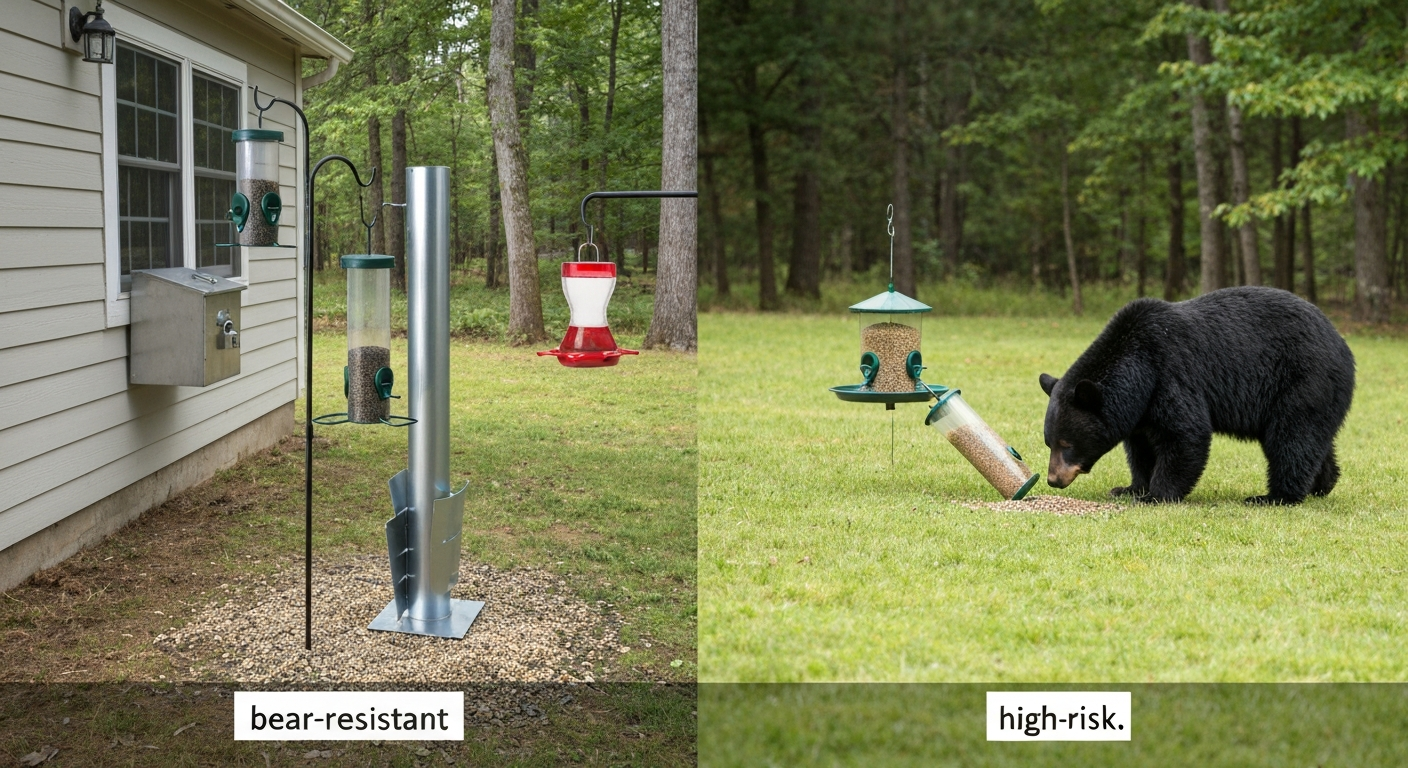
A pole-mounted system with a quality steel pole, a bear-rated baffle, and correct height is the most versatile bear-resistant setup for traditional feeders. The pole itself needs to be steel (not aluminum or hollow tube that bends under bear pressure), at least 1.5 inches in diameter, set into the ground at least 18 inches, and positioned far enough from trees, structures, and fences that a bear cannot reach the feeder by climbing or leaning from an adjacent surface. More on exact dimensions in the installation section below.
| Feeder Type | Best Birds | Bear Attraction | Bear Resistance Potential | Recommendation in Bear Country |
|---|---|---|---|---|
| Hopper | Cardinals, jays, chickadees, nuthatches | High | Moderate with steel + baffle | Use only with full pole/baffle setup; limit fill |
| Tube (closed) | Finches, chickadees, nuthatches | Low–Moderate | Good with steel tube + pole | Best everyday option in bear country |
| Platform/tray | Doves, sparrows, juncos | Very high | Poor | Avoid during active bear season |
| Suet cage | Woodpeckers, nuthatches | Very high | Poor–Moderate | Remove April–November; metal cage essential |
| Window mount | Finches, chickadees, hummingbirds | Low | Excellent (house proximity) | Best option for hummingbirds and daily-use feeding |
| Pole-mounted system | Any, depending on feeder head | Varies by feeder head | Best available if set up correctly | Strongest deterrence with correct hardware |
Feeder features that make a real difference against bears
The feeder you buy matters less than you might think if the installation is wrong. But materials and features do make a measurable difference in whether a bear damages your equipment and, more importantly, whether it gets a reward that reinforces the behavior.
Materials: what actually holds up
Cast iron and heavy-gauge powder-coated steel are the materials that survive bear contact most reliably. Thick-walled stainless steel tube feeders with reinforced seed ports are the next tier. Polycarbonate tubes are durable against squirrels and weather but not against a 200-lb bear applying pressure. Avoid feeders with wooden components, thin plastic bodies, or decorative elements that give a bear grip. Weight-sensitive perches that close ports under heavy load are useful against squirrels and raccoons but provide essentially no protection against bears, which are simply too heavy and too persistent.
Weatherproofing and durability
In bear country, a feeder that rusts or deteriorates quickly will also fail structurally faster under bear pressure. Look for powder-coated or galvanized finishes on metal components, UV-stabilized materials on any plastic elements, and drainage holes in seed trays to prevent moisture buildup and mold. A feeder that stays structurally intact over multiple seasons is also a feeder that keeps seed dry and reduces the mold odors that can attract both bears and rodents.
Rat-proofing features
This is worth flagging because the same features that reduce rodent access also tend to reduce overnight bear temptation. Weight-activated port closures, locking seed reservoirs, and smooth metal poles that prevent climbing all reduce the secondary pest population that can itself attract predators and scavengers, including bears. If rats are raiding your feeders nightly, you have a seed-on-the-ground problem that will draw bears just as reliably as the feeder itself.
Smart cameras and solar-powered feeders
Smart feeders with built-in cameras, like the Bird Buddy and Netvue Birdfy, are increasingly popular for bird identification and monitoring. In a bear-country context, the camera function is genuinely useful for early detection: if a bear visits your yard at night, the motion-triggered footage tells you immediately that you need to pull your feeders. Some models send smartphone alerts for motion events, which gives you real-time awareness even if you are asleep or away. The feeders themselves are not bear-resistant, most are plastic-bodied and would not survive a bear encounter, but the monitoring capability is a legitimate safety tool. If you are comparing smart feeder options, it is worth reviewing detailed breakdowns of the Bird Buddy lineup and alternatives like the Netvue Birdfy. For a detailed breakdown of models, features, and bear-safety considerations, see our smart bird feeder comparison. For a focused Netvue Birdfy vs Bird Buddy comparison that highlights camera performance, build materials, and bear‑country suitability, see our dedicated product comparison. For a detailed head-to-head comparison of features and differences, see our Bird Buddy smart bird feeder vs Pro review.
Installation and deterrent tactics that actually work
Good feeder installation in bear country is basically the same discipline as good pest-proofing, just scaled up significantly. The goal is to make the feeder inaccessible, the reward zero, and the approach unappealing.
Pole height, spacing, and anti-climb measures
The standard recommendations from wildlife agencies are: mount feeders at least 10 feet off the ground, position poles at least 10 feet horizontally from any tree, building, fence, or structure a bear could use to reach the feeder, and use a smooth steel pole at least 1.5 inches in diameter. Bears are strong climbers but have difficulty with smooth vertical poles of this diameter, especially when a properly installed baffle is present. A bear baffle needs to be at least 24 to 30 inches in diameter, made of metal (not plastic), and mounted 4 to 5 feet up the pole. The baffle prevents bears from wrapping their forelegs around the pole and pulling themselves up.
For hanging feeders, the wire or chain needs to be a minimum of 10 feet off the ground and strung between two anchor points at least 10 feet apart, with the feeder centered so a bear cannot reach it by standing at either anchor. This is the camping food-hang method adapted for backyard use. Plastic-coated wire does not survive bear chewing; use metal cable or heavy-gauge chain.
Seed storage and cleanup
Where you store your bird seed is as important as how you hang your feeder. Seed stored in a plastic bin in a garage or shed is accessible to bears if the garage door is left open or the shed has a standard latch. Use bear-resistant steel containers with locking lids, or store seed in a locked room inside the house. Sweep or rake up spilled seed under feeders daily. Seed hulls decompose slowly and remain aromatic for weeks. A thick layer of spent hulls under your feeder is essentially a scent marker inviting investigation.
Electric fencing for feeders
A 2026 controlled field study published in Wildlife Society Bulletin found that energized fencing around bird feeders produced large reductions in black bear damage and concluded it was a viable management tool. This is the strongest evidence-based active deterrent currently available for feeder protection. A portable electric fence designed for bears typically uses 3 to 5 horizontal strands, a bottom wire no lower than 8 inches (to reduce risk to ground birds), and a properly grounded energizer rated for the perimeter length. Montana State University extension and similar land-grant resources publish specific wire spacing and grounding diagrams for bear-exclusion fences. Electric fence energizers should meet IEC 60335-2-76 safety standards or equivalent UL-recognized ratings; do not use an undersized agricultural charger and assume it will deter a bear.
Active deterrents: electric fences, lights, sounds, and chemical options
Beyond fencing, a range of active deterrents are marketed or recommended for bear management. Their effectiveness varies considerably, and a few have legal and safety implications worth understanding before you deploy them.
Motion-activated lights and noise devices (propane cannons, ultrasonic emitters, strobe lights) can cause short-term aversion in bears that have not been previously food-conditioned in your yard. Once a bear is conditioned, these devices have poor long-term effectiveness because the bear learns that the noise or light does not represent a real threat. They are worth using as a first-line deterrent before habituation occurs, but they should not be your primary strategy.
Bear spray is a highly effective close-range personal safety tool, but it is not a deterrent to spray around your yard or on feeders. U.S. Fish and Wildlife Service grizzly bear hazing guidance and National Park Service policy explicitly state that bear spray is for direct self-defense encounters only, not for hazing or area deterrence. Spraying capsaicin products around your yard may have some short-term odor-based deterrence effects on bears, but it degrades quickly outdoors and should not be relied upon. Hot-pepper coatings on seed or suet are a more practical version of this idea, as noted above.
Professional hazing (cracker shells, rubber bullets, bean bags) requires training, permits in some jurisdictions, and escalation protocols. This is not a DIY backyard tool. If you have a food-conditioned bear regularly visiting your property, contact your state wildlife agency. They can haze the animal properly and assess whether lethal management is warranted as a last resort.
| Deterrent Type | Effectiveness Against Bears | Best Use Case | Legal/Safety Notes |
|---|---|---|---|
| Electric fence (properly installed) | High — field-tested, evidence-based | Permanent or semi-permanent feeder stations | Follow IEC/UL energizer standards; check local fence codes |
| Bear-rated baffles on poles | Moderate–High | Pole-mounted feeders | Must be correct diameter and height; metal only |
| Motion-activated lights/noise | Low–Moderate (short-term) | Early deterrence before habituation | Loses effectiveness quickly with food-conditioned bears |
| Hot-pepper suet/seed | Mixed evidence | Moderate-risk periods; supplement to other tactics | Safe for birds; degrades outdoors quickly |
| Bear spray (aerosol) | High for self-defense only | Personal safety in close encounters | Not for hazing or area deterrence; check regulations |
| Professional hazing | High when done correctly | Repeated visits by specific bear | Requires agency coordination; not a DIY tool |
| Removing feeders entirely | Highest — eliminates the attractant | April through November in most bear-active regions | The only fully reliable option during high-risk seasons |
Seasonal decisions: when to take feeders down and winter feeding trade-offs
BearWise, the Association of Fish and Wildlife Agencies program, puts it plainly: take feeders down when bears are active. In most of the continental U.S., that means removing them by late March or early April and not putting them back until late November or December, depending on your elevation and local bear activity patterns. Montana FWP guidance cites December 1 through April 1 as a reasonable safe feeder window in many Montana locales, though this varies. In warmer parts of the South and West, bears may be active year-round, meaning permanent feeder use carries ongoing risk.
Winter feeding has real value for birds. Chickadees, nuthatches, and woodpeckers benefit from supplemental calories during cold snaps, and the reduced bird activity at this time of year makes feeders more effective, not less, for the species that stay. The good news is that winter is the lowest-risk season for bear encounters in most denning populations, so you can feed more freely and with less anxiety from December through March in most of northern and mountain North America.
Migration timing also matters. Spring migrants arrive in April and May, right when bears are most active. If you want to catch warblers and orioles during spring migration, you face a genuine conflict. My approach is to put out a window-mount feeder for spring migrants and keep the pole system down until I have confirmed bears in my area have moved on or I have my electric fence up and tested.
- Take feeders down by late March or when bear tracks or sightings are reported in your area
- Reinstall after consistent freezing temperatures in fall or when your state agency confirms bears are denning
- Keep a window-mount feeder for transitional periods when risk is uncertain
- If you hear of a bear sighting within a mile, pull feeders immediately for at least two weeks
- Never leave feeders out overnight during active bear season regardless of your deterrent setup
DIY fixes and retrofits to make existing feeders more bear-resistant
If you already own feeders and do not want to replace everything, there are practical retrofits worth doing. They will not make a plastic feeder survive a bear hit, but they reduce the likelihood of a bear getting a reward, which is the actual behavioral goal.
- Replace your hanging wire or twine with metal cable (at least 1/8-inch galvanized aircraft cable) and a locking snap hook — bears can bite through plastic-coated wire in seconds
- Add a metal torpedo or dome baffle to your existing pole — if your current pole is aluminum or thin steel, replace it with a 1.5-inch galvanized steel pipe and add the baffle at 4 to 5 feet height
- Reduce fill volume: never fill more than half your seed capacity during active bear season — less seed means less odor and less reward if a bear does reach the feeder
- Switch suet cages to heavy-gauge welded wire rather than plastic-coated mesh — bears can peel back light wire cages; heavier gauge at least reduces the speed of access
- Install a simple single-strand electric fence wire at nose height (about 14 to 16 inches for black bears) around your feeder station perimeter — this is a low-cost partial deterrent compared to a full fence and can be done with a basic energizer and two T-posts
- Move your feeder location if it is currently within 10 feet of a tree, fence, or structure — relocating to an open area is free and dramatically reduces accessibility
- Add motion-activated lighting to your feeder area as a monitoring and early-alert tool, and pair it with a smart camera if you want smartphone notifications when anything large approaches
Be realistic about the limits here. A retrofitted plastic hopper on a thin pole with a homemade baffle is still a plastic hopper. If bears are regularly visiting your property, DIY deterrents buy you time to set up a proper system or make the call to stop feeding during active season. They are not a substitute for the real thing.
Maintenance and troubleshooting
Bear country or not, feeder maintenance directly affects how well any deterrent strategy works. Cornell Lab of Ornithology recommends cleaning feeders at least every two weeks, more frequently in warm weather. Mold and fermented seed produce strong odors that attract pests, including bears. I have found that a 10 percent bleach solution rinse, followed by a thorough dry, is the most effective cleaning method for both tube and hopper feeders. Platform feeders need daily checks in summer because open seed spoils quickly.
Pest intrusion problems, squirrels, raccoons, rats, and starlings, all create secondary bear-attraction risks by spilling seed and leaving residue. If you are finding significant spillage under your feeder each morning, address the primary pest issue with weight-sensitive perches or a caged feeder before worrying about the bear risk. A caged tube feeder with a weight-closure mechanism handles squirrels, raccoons, and larger birds simultaneously, and the reduced spillage reduces the scent footprint at ground level.
Weather damage in bear country is worth monitoring carefully. A feeder with a cracked seed reservoir or broken port mechanism spills seed continuously and cannot be emptied fully at night. Inspect feeders every few weeks during active season for UV degradation of plastic components, rust at metal joints, and wear on port mechanisms. A feeder that cannot hold seed securely is a liability in bear country and should be repaired or replaced, not kept in service.
When to repair vs. replace
- Replace any feeder with cracked or broken plastic that prevents complete seed containment
- Replace wooden feeders entirely in bear country — wood is not a bear-resistant material regardless of condition
- Repair metal feeders with minor rust using a rust converter and touch-up paint if structural integrity is intact
- Replace baffles immediately if you see any deformation, denting, or displacement — a compromised baffle provides no protection
- Replace any hanging cable or hook that shows kinking, fraying, or corrosion
- If a bear has physically contacted a feeder even once, assess whether the feeder is still structurally sound before rehanging it
Do's and don'ts for people and wildlife
This section is worth reading even if you skim everything else. The actions that protect your equipment are the same ones that protect wildlife. A food-conditioned bear is almost always eventually a dead bear, relocated or euthanized by wildlife managers after becoming a safety risk. Every time you remove your feeders, store your seed properly, or install a baffle, you are making a choice that benefits both your property and the bear.
| Do | Don't |
|---|---|
| Remove feeders by late March or when bears are first reported active | Leave feeders out overnight during bear season 'just for one night' |
| Store seed in locked, bear-resistant metal containers | Store seed in plastic bins in unlocked garages or sheds |
| Clean up spilled seed from the ground daily | Allow seed hulls to accumulate under feeders |
| Use metal poles, metal baffles, and metal feeder construction | Use plastic, wood, or thin-gauge aluminum in bear-country setups |
| Report bear visits to your state or local wildlife agency | Try to scare off a food-conditioned bear yourself without agency guidance |
| Use a window-mount feeder or bring feeders inside each night during transitional seasons | Assume a single deterrent (light, noise, or spray around the yard) will solve a recurring bear problem |
| Follow your state or local feeder ordinances and check for updates annually | Assume last year's rules still apply — regulations in some jurisdictions are being updated as bear populations grow |
| Use bear spray for personal self-defense if surprised by a bear at close range | Spray bear spray around your yard as a deterrent or on feeders |
Buying checklist: what to prioritize, what it costs, and when to replace
When you are shopping for a feeder setup in bear country, the frame for decision-making should be: how accessible will this feeder be to a bear, and what is the consequence if a bear does reach it? A $15 plastic tube feeder hanging from a shepherd's hook is both maximally accessible and has zero structural resistance. A $45 heavy-gauge steel tube feeder on a $60 two-piece steel pole with a $30 metal torpedo baffle, positioned correctly, is a setup a bear might reach but will not reward easily or destroy quickly. The economics favor the second option even without factoring in the cost of replacing a destroyed cheap feeder.
- Steel or cast-iron feeder body — prioritize over any plastic or wood option in bear areas
- Closed tube or window-mount design — lower seed volume and lower odor profile than hoppers or platforms
- Two-piece galvanized steel pole at least 1.5 inches diameter and 8 feet above grade — not a thin shepherd's hook
- Metal torpedo or dome baffle, minimum 24-inch diameter, mounted at 4 to 5 feet — not plastic
- Bear-resistant seed storage container with locking lid for garage or shed
- Motion-activated smart camera or alert system for early detection of bear visits
- Electric fence kit if you have a permanent feeder station and confirmed local bear activity — follow state/county fence codes
- Budget guide: expect to spend $100 to $250 for a complete bear-aware pole-and-feeder setup; electric fence adds $150 to $400 depending on perimeter size
On replacement signals: if you see any bear contact with your feeder setup, inspect everything immediately. Even a bear that did not get seed this time has confirmed your location as worth revisiting. Reinforce the setup or pull the feeders for the season. Replace any component that shows structural damage. A bent pole or dented baffle will fail faster under the next visit.
Next steps and deeper resources
If you are building out a full feeder station and want to go deeper on specific product categories, there is a lot of useful comparison territory to explore. Smart feeders with built-in cameras are increasingly the right tool for monitoring who visits your yard, both the birds you want and the mammals you do not. Detailed comparisons of the Bird Buddy standard and Pro models, as well as side-by-side evaluations of the Netvue Birdfy against Bird Buddy, can help you decide whether the camera features justify the cost for your setup. If you are earlier in the process and deciding whether a feeder is the right investment versus a bird bath or other habitat feature, that comparison is worth reviewing too. For a quick overview, see a practical guide on bird bath vs bird feeder that weighs habitat benefits alongside bear‑risk trade‑offs.
For local wildlife contacts, your first call should be your state fish and wildlife agency. BearWise (bearwise.org) maintains a searchable resource by state and region with downloadable seasonal guidance, including their 'Attract Birds, Not Bears' bulletin. Montana FWP, Colorado Parks and Wildlife, and similar agencies all publish free online guides specific to their bear populations and feeder rules. These are updated more frequently than most third-party resources and reflect current local conditions, which is ultimately what matters most for your specific yard.
FAQ
What types of peer‑reviewed ecological and wildlife management studies should be consulted to support guidance on bears and bird feeders?
Recent, regional and species‑specific peer‑reviewed studies on bear foraging ecology, food‑conditioning, and human–bear conflict trends (e.g., urban black bear foraging, long‑term isotopic diet studies, syntheses on attractant proximity). Look for experimental and observational work showing how anthropogenic foods (including bird seed and suet) influence bear behavior and conflict rates, plus trials of exclusion/deterrent methods (e.g., energized fencing efficacy).
Which government and agency technical guidance is essential for authoritative, practical recommendations?
Federal and state wildlife agency guidance (USDA‑APHIS Wildlife Services nuisance bear tech notes, U.S. Fish & Wildlife Service hazing guidance, National Park Service coexisting guidance), state fish & wildlife advisories (e.g., Colorado Parks & Wildlife, Montana FWP), and regional BearWise/AFWA materials (seasonal feeder removal recommendations and outreach bulletins). These provide legal context, safety protocols, and proven mitigation strategies.
What extension, practitioner and applied technical resources should be included for step‑by‑step mitigation details?
University extension publications and county guides with design specs and maintenance guidance for electric fencing, baffles, pole systems, and bear‑resistant practices (e.g., Montana State, Texas A&M). Also include conservation NGO and municipal how‑to documents describing installation dimensions, grounding, energizer specs, and routine upkeep.
What standards, safety certifications, and product performance data are required when recommending electrified or powered deterrents?
Reference international and national electrified‑fence and electrical safety standards (IEC 60335‑2‑76), UL or equivalent recognitions for energizers/controllers, and USDA NRCS fence practice standards. Include manufacturer performance specs, independent lab tests, and safety guidance for installation, grounding, and exclusion to ensure legal and safe use.
Which bird‑focused authoritative sources should be used to balance bird‑species tradeoffs and feeder recommendations?
Ornithology and citizen science authorities such as Cornell Lab of Ornithology (All About Birds), Project FeederWatch, and Audubon for species‑specific attraction to foods and feeder types, cleaning intervals, and seasonal considerations. These inform which feeder types suit hummingbirds, finches, woodpeckers, etc., and which feed choices may increase bear attraction.
What legal, regulatory, and municipal materials are needed to advise homeowners about compliance and local restrictions?
Local and regional bylaws, municipal bear hazard assessments (e.g., Whitehorse), state wildlife regulations on feeding wildlife, and permit/ordinance documents that may mandate seasonal feeder removal or bear‑resistant containers. Also note liability laws and homeowner‑association rules that affect feeder policies.