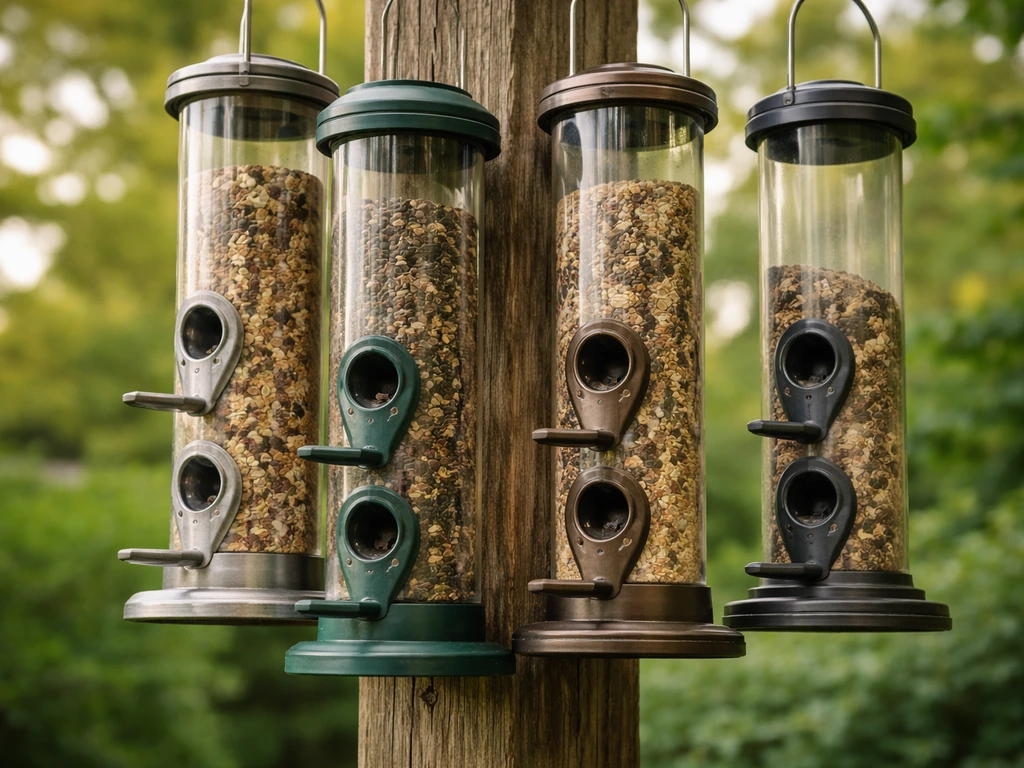
A copper top bird feeder is worth buying if you know what you're actually getting. If you're comparing options, this guide to the best copper bird feeders will help you choose a model that matches your weather and bird preferences. The short answer: the copper-colored roof signals weather protection, a cleaner seed tray, and often a more durable overall build. But "copper top" can mean real copper sheeting, a copper-finish steel roof, or painted plastic, depending on the brand.
Copper Top Bird Feeder Guide: Choose, Mount, and Maintain
Marcus Hendricks
20 Apr 2026
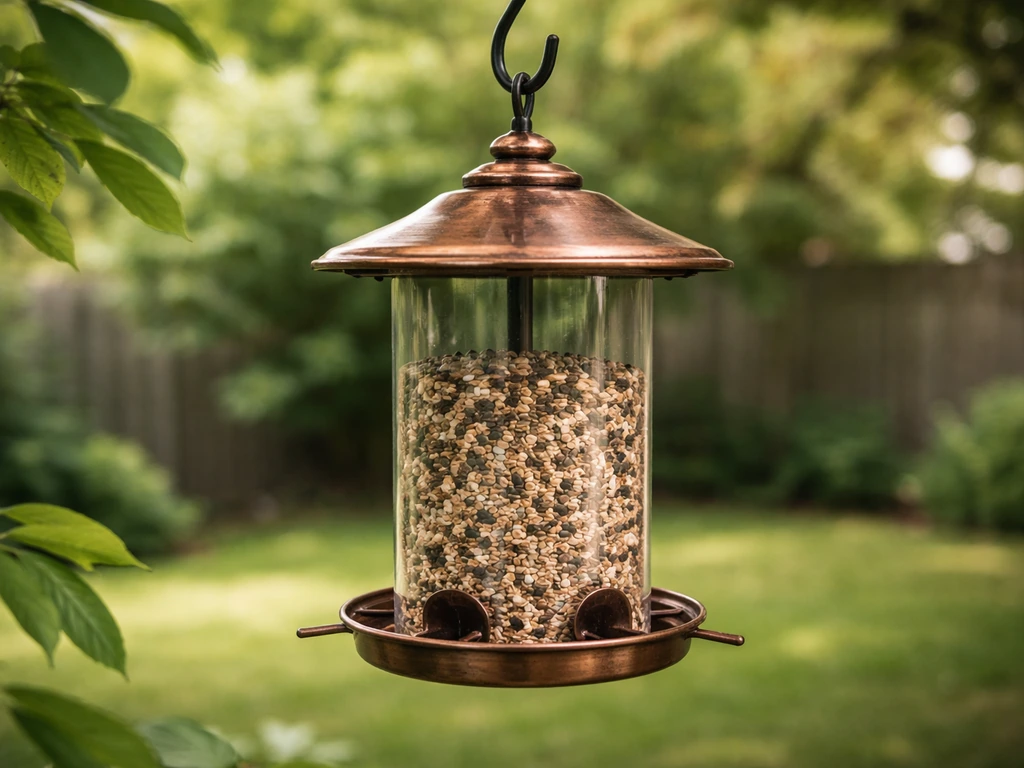
That distinction matters a lot for long-term performance. This guide walks you through what the top actually does, how to pick the right feeder type and size for your birds, where to hang or mount it, and how to keep it clean and pest-free season after season.
What "copper top" actually tells you about materials and weather
The term gets used loosely by manufacturers, so let's break it down. True copper roofs behave like copper does on old buildings: they develop a natural oxide-sulfate patina over time that actually seals the surface and resists further corrosion. That patina is protective, not a sign of failure. Real copper is genuinely long-lasting outdoors, but here's the catch: the copper is usually the last thing to fail. The screws, the wood body, the plastic seed ports, or the steel frame holding everything together will deteriorate first.
Most feeders sold as "copper top" use one of two alternatives. WoodLink's CopperTop® Chateau, for example, describes itself as a "classic copper finish" on a sturdy steel body. If you want to see how the WoodLink CopperTop® Chateau stacks up against the woodlink copper top bird feeder category, compare the materials and roof style first. That means a copper-colored coating over steel, not solid copper.
Still quite durable and rust-resistant when the finish is maintained, but it can chip or scratch over years of outdoor exposure. On the other end, some retailers openly state that the copper color is made from durable plastic, not metal at all. Plastic won't rust, but it can fade, warp in heat, and crack in hard freezes.
What does the roof actually do for the feeder? Functionally, a well-designed copper-style roof does three things: it sheds rain and snow off the seed tray, it blocks direct sun from heating seed and accelerating spoilage, and it gives the feeder a finished look that blends into a garden setting. What it does NOT automatically do is prevent water from leaking through the feed openings. One common failure point, seen in reviews of copper-finish feeders like the Perky-Pet Panorama, is water seeping in through the top fill hole and soaking the seed inside, causing it to clump and go bad. The roof style matters less than the assembly seal and port design.
| Roof Material | Durability | Corrosion Resistance | Weight | Cost Tier | Notes |
|---|---|---|---|---|---|
| Solid copper | Excellent (decades) | Excellent (patina seals surface) | Heavier | Premium | Underlying structure often fails first |
| Copper-finish steel | Good (5–10+ years) | Good if finish intact | Moderate | Mid-range | Can chip/scratch; WoodLink CopperTop® style |
| Copper-finish plastic | Moderate (3–7 years) | No rust risk, but fades/cracks | Light | Budget | Color fades in UV; brittle in hard freezes |
The practical takeaway: if you're buying for multi-year outdoor use in rain, snow, or intense sun, prioritize a copper-finish steel or solid copper roof over painted plastic. And regardless of roof material, check that the fill port has a tight seal or gasket, and that the tray has drainage holes at the bottom. More on that in the buying checklist section below.
Pick the right feeder type and seed capacity for your birds
Copper top feeders come in several configurations: hopper (barn-style), tube, platform/tray, and specialty types like thistle screens. If you want multiple perches and ports for several small-bird species, a best triple tube bird feeder can be a great step up from single-tube designs. The roof style is mostly aesthetic and weather-related; the feeder body design is what determines which birds show up and how many seeds you're hauling out every week.
Hopper feeders (the classic copper top look)
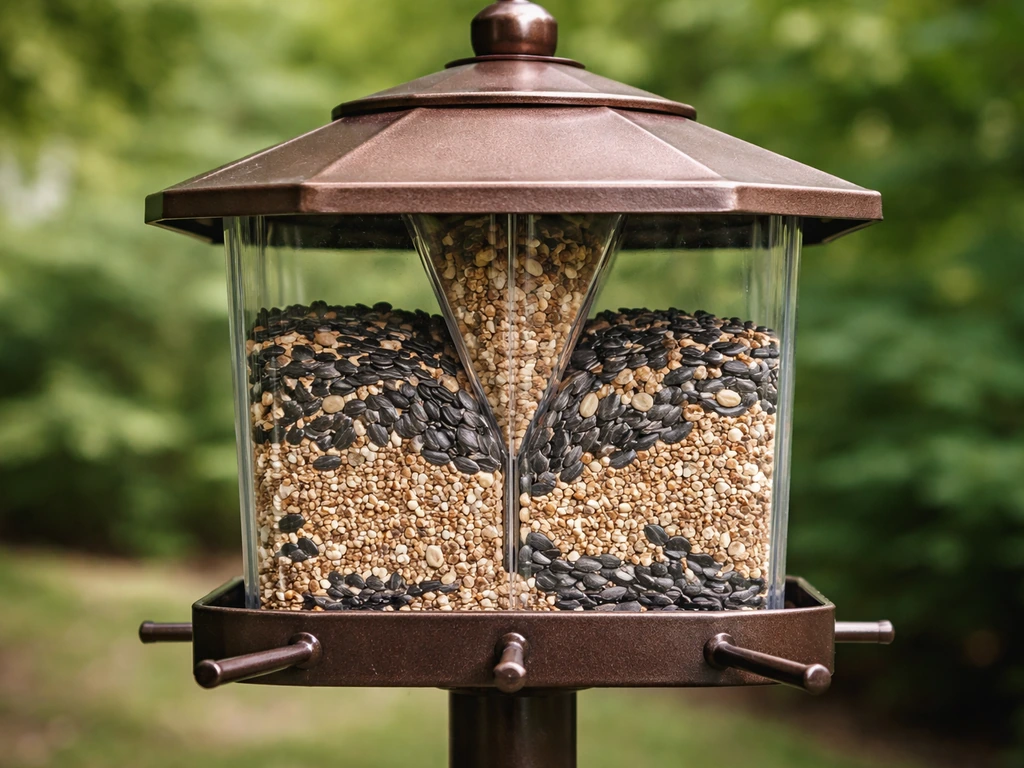
The WoodLink CopperTop® Chateau is a hopper-style feeder with a 7 lb seed capacity and a built-in no-waste seed saver baffle. Hopper feeders are the most versatile: they attract a wide range of birds including cardinals, chickadees, house finches, nuthatches, sparrows, and titmice. The enclosed hopper keeps seed dry longer than open trays, and a 7 lb capacity means you're refilling roughly once a week during active feeding seasons rather than every day or two.
If you want one feeder that does a solid job for a broad mix of backyard birds, a copper-top hopper is the right call. If you want the best metal bird feeder for a broad backyard mix, start with a copper-top hopper like this one and then dial in your seed choice.
Tube feeders with copper tops
Copper-top tube feeders (a hollow cylinder with multiple ports and perches) are better for targeting specific small birds: finches, chickadees, titmice, nuthatches, and sparrows. If you specifically want cylinder-style copper options, the best cylinder bird feeders can help you compare port counts, perches, and seed-capacity trade-offs. Port size matters here: smaller ports work for nyjer (thistle) seed targeting goldfinches and siskins; larger ports handle sunflower or mixed seed for a broader group.
The Woodlink Coppertop Thistle Screen Feeder, for instance, pairs a copper-accent design with a fine-mesh screen body and drainage holes at the bottom tray. If finches are your priority, a thistle-specific copper-top tube feeder is a sharper choice than a hopper. If you want a steady stream of seed without having it exposed like a tray, tube bird feeders are often the easiest option to keep fresh and consistent.
Platform feeders
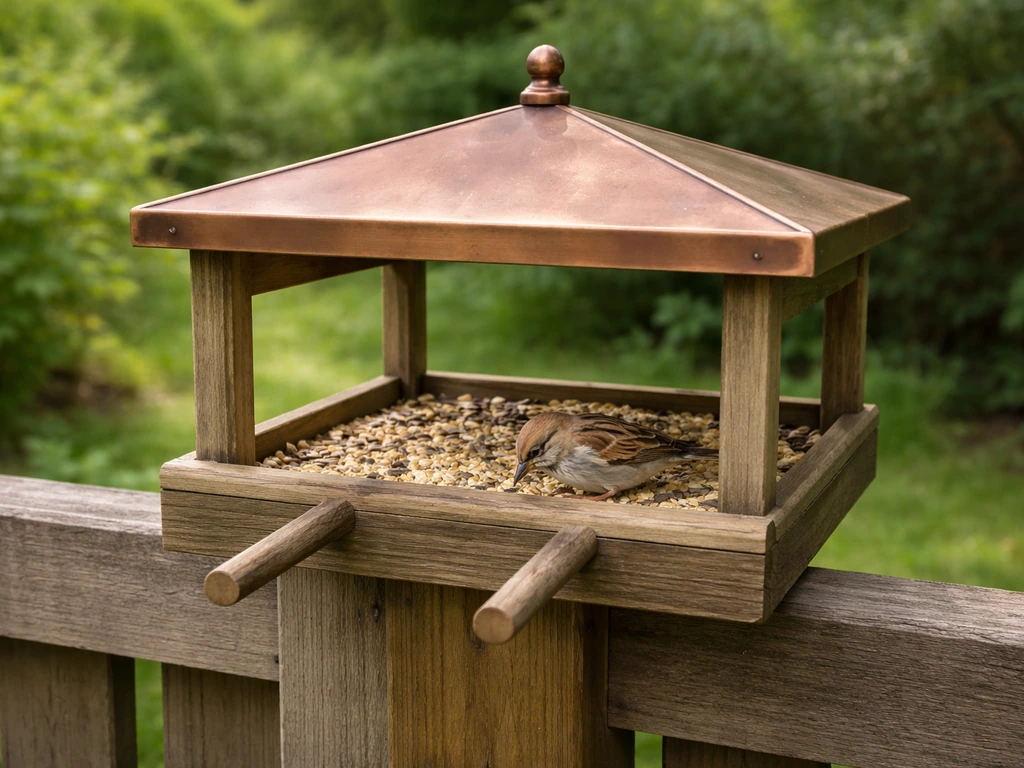
Platform or tray feeders attract the widest variety of birds, including ground-feeding species like juncos, towhees, doves, and larger birds that won't perch on a tube. The trade-off: open trays expose seed to rain and droppings faster than any other feeder type. A copper top helps shade and partially protect the tray, but you'll still need drainage holes and more frequent cleaning. If you're targeting doves or juncos alongside cardinals and sparrows, a platform feeder with a covered copper roof (gazebo-style) is the best match.
Suet feeders
Copper-top suet feeders are less common, but suet cages sometimes come with a protective top cover. Suet targets woodpeckers, nuthatches, chickadees, titmice, and jays. If you're feeding through winter specifically, pairing a suet feeder with your copper-top hopper covers the insectivore species (woodpeckers, nuthatches) that won't come to seed alone.
| Feeder Type | Best For | Seed Type | Capacity Range | Rain/Mess Exposure |
|---|---|---|---|---|
| Hopper | Cardinals, chickadees, finches, sparrows, nuthatches | Mixed seed, sunflower | 5–10 lbs | Low (enclosed) |
| Tube | Finches, chickadees, titmice, nuthatches | Nyjer, sunflower chips | 1–3 lbs | Low to moderate |
| Platform/tray | Widest variety including doves, juncos, towhees | Mixed seed, millet | 2–5 lbs | High (open tray) |
| Suet cage w/ cover | Woodpeckers, nuthatches, chickadees, jays | Suet cakes | 1–2 cakes | Low (solid cage) |
Gazebo vs. standalone placement: where to put it and how high
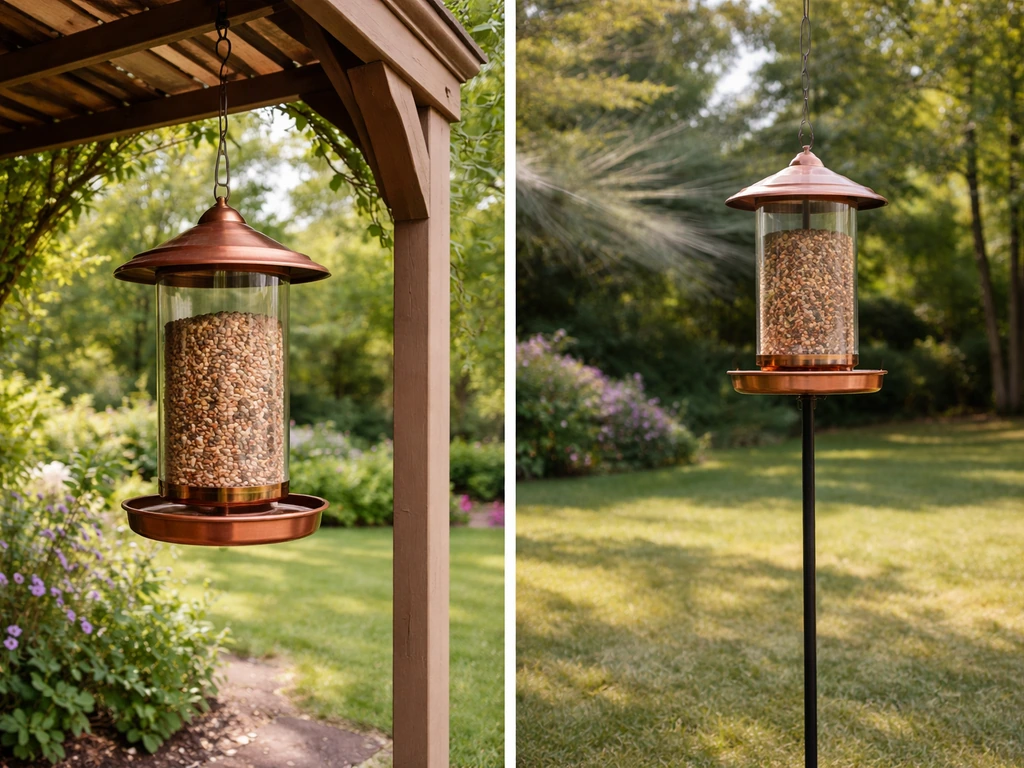
Copper top feeders show up in two main placement scenarios: hung inside or under a garden gazebo structure, or mounted on a standalone pole in the open yard. Both work, but they have different trade-offs for weather, predator access, and bird activity.
Mounting on a standalone pole
This is the setup I'd recommend for most backyards. A pole-mounted feeder in an open area gives birds clear sightlines (they feel safer), gives you a clean view for watching, and makes squirrel management much easier with a baffle. The feeder itself should hang so the bottom is at least 4 to 5 feet off the ground.
All About Birds (Cornell Lab of Ornithology) advises placing bird feeders near windows can be safer, recommending roughly 3 feet or closer to reduce the chances of window strikes within about 3 feet (or closer) helps because birds can’t build up enough speed. More importantly, the pole needs to be at least 8 to 10 feet away from trees, fences, rooftops, or anything a squirrel can use as a launch point.
Squirrels can jump further than most people expect, and that clearance gap is what makes baffles actually work.
Placing a feeder inside or under a gazebo
A garden gazebo gives extra rain and snow protection, which sounds like a win. But there are real trade-offs. Enclosed or semi-enclosed spaces reduce airflow around the feeder, which means seed and tray surfaces stay damp longer after rain. That speeds up mold growth. Gazebo structures also often touch or connect to fences, posts, or overhanging vines, giving squirrels easy climbing access right to your feeder. If you're hanging a copper-top feeder inside a gazebo, make sure the gazebo itself is isolated from climbing routes, and plan on cleaning the feeder more often because of the reduced airflow.
General placement rules that apply either way
- Position feeders within 3 feet of a window or more than 10 feet away to reduce window strike risk during bird takeoffs
- Keep feeders in partial shade to slow seed spoilage from direct sun heat
- Leave open ground clearance below the feeder so fallen seed doesn't pile up and attract rats or ground-feeding pests
- If using a hanging hook on a gazebo beam, confirm the hook and beam can support the feeder weight when wet and full (a 7 lb seed load plus feeder body can exceed 10–12 lbs total)
Buying checklist: what to look for before you order
Marketing language on bird feeder listings is genuinely confusing. Here's a practical checklist you can run against any copper-top feeder you're considering, based on the failure points that come up most often in real-world use.
- Roof material: Is it solid copper, copper-finish steel, or copper-painted plastic? Check the product specs, not just the photos. "Copper finish" or "copper color" usually means it is not metal.
- Roof overhang: Does the roof extend past the seed tray edges by at least an inch? A shallow overhang lets rain blow sideways onto the seed.
- Fill port seal: Is there a gasket, tight cap, or overlapping lip on the fill opening? This is where water ingress happens. Avoid designs where the fill hole sits flush and uncovered at the top.
- Drainage holes: The tray or base should have drainage holes so water doesn't pool. The Woodlink Coppertop Thistle Screen Feeder specifically includes drainage holes around the bottom tray as a design feature, and that detail matters.
- Seed capacity vs. your bird traffic: A 7 lb hopper like the WoodLink Chateau suits a medium-traffic yard well. A 1–2 lb tube feeder will need refilling every 2–3 days at a busy feeder station.
- Cleaning access: Can you open the roof, remove the tray, or disassemble the ports without tools? Feeders you can't easily clean will get moldy and stop attracting birds.
- Squirrel resistance: Does it include a weight-sensitive perch, a baffle, or a cage? "Squirrel resistant" in the product name (like WoodLink's CopperTop® Chateau Squirrel-Resistant) usually means there's a functional mechanism, not just a marketing label. Verify what mechanism it uses.
- Hanger or mount type: Is it pre-drilled for a pole mount, or hook-only? Make sure it matches how you plan to install it.
Attracting the birds you actually want
A copper-top feeder sitting empty or filled with the wrong seed is just a garden ornament. Here's how to match food to the species you're targeting.
Black-oil sunflower seed is the single best all-around seed for a hopper or tube feeder. It attracts cardinals, chickadees, titmice, nuthatches, house finches, goldfinches, and sparrows. If you can only stock one seed type, make it black-oil sunflower. For a platform feeder, add white proso millet to pull in juncos, doves, and towhees. For a thistle/nyjer tube, use straight nyjer seed to target goldfinches and siskins specifically.
If you want chickadees, titmice, wrens, and nuthatches showing up reliably through winter, mealworms (dried or live) are an excellent addition. You can offer them in a small dish feeder or a suet cage alongside your main copper-top feeder. These birds relish mealworms and will return consistently once they find a reliable source.
Avoid generic "wild bird mix" bags that contain filler seeds like milo (sorghum) or red millet. Most North American backyard birds ignore these, they just pile up under the feeder, attract rodents, and create a mess. Spend a little more on quality seed and you'll have less waste and more birds.
One setup tip: if you're installing the feeder fresh, give it 3 to 7 days before expecting regular bird activity. Birds scout new food sources on their normal foraging routes. If activity is slow, move the feeder closer to shrubs or trees (within reason for squirrel clearance) so birds have nearby cover to retreat to between feeding visits.
Cleaning, maintenance, and getting through winter
This is the part most people skip until there's a problem, and it's probably the most important section in this guide. A dirty feeder spreads salmonella and other bird diseases. A wet, moldy hopper will drive birds away faster than any squirrel could.
How often to clean
In warm weather, clean your feeder every 1 to 2 weeks. In wet or humid conditions, bump that up to weekly. In winter, you can stretch to every 2 to 3 weeks if temperatures are consistently below freezing and seed isn't clumping, but check the tray and ports every few days for ice buildup or seed freeze.
How to clean it properly
- Empty all remaining seed and dispose of it. Do not refill over old seed.
- Disassemble the feeder as much as the design allows: remove tray, ports, roof if possible.
- Scrub all surfaces with warm soapy water and a bottle brush or old toothbrush for ports.
- Soak the parts in a solution of 1 part bleach to 9 parts water for 10 minutes. This ratio is consistently recommended by Clemson HGIC, Wild Birds Unlimited, and All About Birds for effective salmonella control. Alternatively, a 4:1 hot water to vinegar mix works for a chemical-free option.
- Rinse all parts thoroughly with clean water.
- Allow everything to air dry completely before reassembling and refilling. Putting damp seed into a wet feeder is how mold starts.
Winter-specific care
Snow and ice are the two main winter enemies of any feeder. After a snowfall, clear snow off the roof and tray before it melts and soaks into the seed. Check the ports and perches for ice daily in hard freezes: frozen ports lock birds out entirely. A copper-finish steel feeder handles freeze-thaw cycles better than plastic, which can crack, but the real risk is water getting trapped inside the body and expanding when it freezes. Make sure drainage holes are clear and not packed with seed debris going into winter.
In very cold climates, switching to straight suet cakes through the deepest winter months makes maintenance easier: suet doesn't freeze solid like seed, doesn't clump, and provides high-calorie energy that birds need when temperatures drop hard. Keep your copper-top hopper going for the seed-eaters, but add a suet cage nearby for the woodpeckers and nuthatches.
Troubleshooting: squirrels, ants, wasps, and birds that won't show up
Squirrels
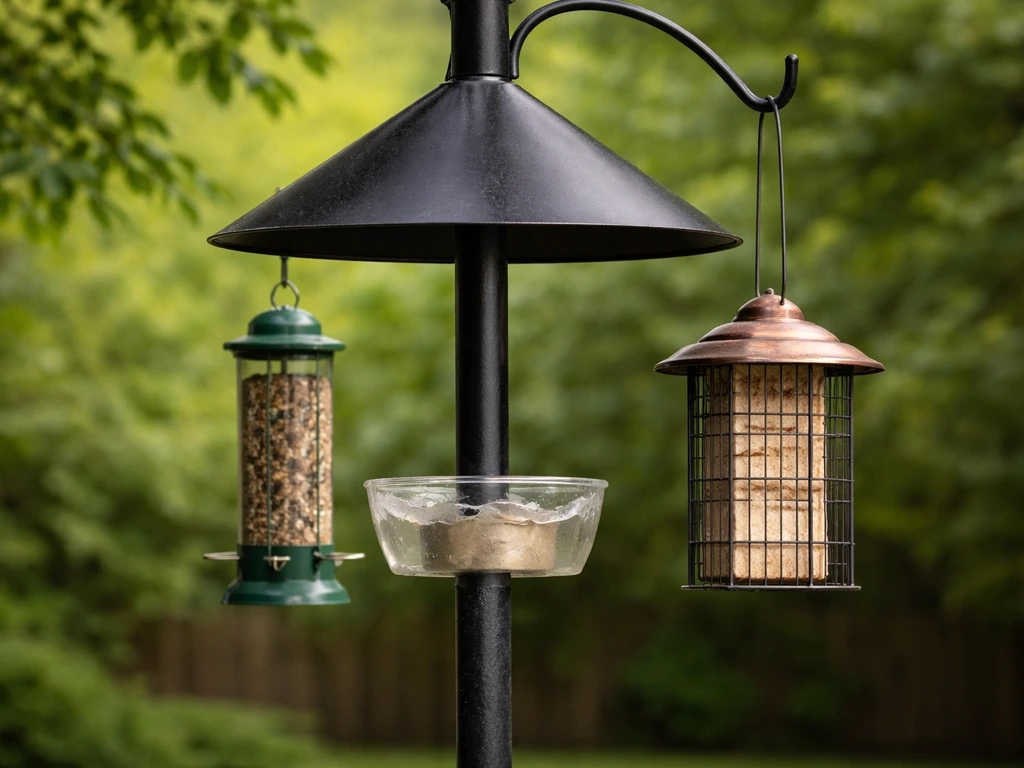
No feeder is truly 100% squirrel-proof, but a proper baffle setup comes close. The baffle needs to be at least 4 feet off the ground on the pole, and the entire pole needs to sit at least 8 to 10 feet away from any fence, tree, or structure a squirrel can jump from. If both conditions are met, a dome or torpedo baffle on the pole below the feeder will stop most squirrels. The WoodLink CopperTop® Chateau includes a squirrel-resistant design feature (weight-sensitive mechanism), which adds another layer of defense, but the placement math still applies.
Ants
Ants reach feeders by walking down the hanger wire or chain from above. The fix is an ant moat: a small water-filled cup that installs between the hanger and the feeder. Ants can't swim across it. First Nature and similar brands make simple ant barriers that hook above and below a water well, sitting between the feeder and whatever it hangs from. Fill the moat with water and refresh it weekly. It works reliably and costs a few dollars.
Wasps and bees
Wasps are attracted to sweet residue and exposed seed oils. Tube feeders with small feeding ports make it physically harder for wasps to enter, which is one practical advantage of tube-style copper-top feeders over open trays. For any feeder type, keeping the exterior clean of seed residue and sticky drips cuts wasp interest significantly. Avoid using cooking oil or grease on poles as a squirrel deterrent near sweet seeds, since it can attract insects.
Birds aren't using the feeder
If birds haven't found your feeder within a week, run through this checklist before assuming something is wrong with the feeder itself.
- Is it too far from cover? Birds want nearby shrubs or trees to retreat to between feeding. Move the feeder within 10–15 feet of a tree or shrub if possible.
- Is the seed fresh? Old or rancid seed is detectable to birds. Empty it, clean the feeder, and refill with fresh black-oil sunflower.
- Is there a cat or other predator loitering nearby? Even occasional predator presence will suppress bird activity for days.
- Is it too close to a window or high-traffic area of the house? Some birds need a settling-in period with low disturbance.
- Have you just installed it? Wait the full 7 days before worrying. Bird discovery is slower in winter when established foraging routes are set.
- Are the ports clogged or iced over? Check that seed can actually fall through and birds can reach it.
Seed getting wet inside the feeder
This is the copper-finish feeder's most common real-world failure mode. If seed is clumping or going moldy despite a good-looking roof, check the fill port seal first. U. S.
Fish & Wildlife Service window-collision guidance materials recommend placing feeders, bird baths, and houses no more than 3 feet from a window to help reduce bird-window strikes [place feeders, bird baths, and houses no more than 3 feet from a window](https://www. fws. gov/sites/default/files/documents/2025-01/01. 29.
2025-learn-more-about-bird-window-collisions-vyfwc. pdf). A loose or poorly fitted cap at the top of a hopper or tube allows rain in every time there's a downpour. Some feeders have a rubber gasket here; others rely on a snug-fitting cap.
If yours leaks, a strip of waterproof foam tape around the cap rim is a cheap DIY fix that actually works. Also confirm the tray drainage holes aren't blocked with seed husks, which is the second most common cause of wet seed accumulation.
FAQ
Does the copper top prevent rust and leaks for years, even if it gets scratched?
Yes, but only if you manage it like a roof, not a decorative item. If the copper top is a finish on steel, chips and scratches can expose the underlying metal, which can eventually rust around the damage. For best longevity, avoid scraping ice with tools, and after storms inspect the seams and screw points for lifting paint or rough edges where water can pool.
If my copper top bird feeder keeps getting wet seed, what part should I check first?
A copper top helps with rain shedding and sun shading, but it does not replace proper seals at the feed openings. If you see wet or clumped seed, focus on the fill port cap or gasket (top access points), then confirm the tray has true drainage holes that are not blocked by husks.
Are copper top feeders always better in rain than regular feeders?
Not necessarily. Hopper and tube styles usually do better in rain than open platform feeders, because the seed sits under cover and is less exposed to droppings. If you primarily want doves, juncos, or ground-feeding birds, use a platform or tray, but expect more frequent cleaning and quicker seed spoilage even with a copper-style roof.
How can I stop tube or hopper ports from freezing in winter?
Usually no. Winter ice is more dangerous than warm-weather soaking because ports and perches can freeze shut, locking birds out. Make a habit of checking ports daily during hard freezes, and make sure drainage holes are clear before cold snaps so water cannot get trapped inside and expand.
Which copper top material holds up best in extreme heat and freeze-thaw climates?
It depends on the roof material and how it was built. Plastic copper-finish tops may warp in heat and can crack in hard freezes, while copper-finish steel and solid copper handle temperature swings better. For regions with both high summer heat and deep winter freezes, prioritize steel with a well-maintained finish or true copper, and still inspect gaskets and seals each season.
What is the safest way to clean the copper top without shortening its lifespan?
If it is a copper-style finish on steel, there is a real risk of accelerated corrosion where water collects under chipped areas. Use gentle cleaning (soft brush, mild soap if needed), avoid abrasive pads on the roof, and dry off any trapped moisture after cleaning if your design has seams that can hold water.
Can I mix seeds in a copper top tube feeder, or will it cause waste and fewer birds?
Prefer seed that matches the port size and birds you want. For example, nyjer needs small holes to prevent waste, while sunflower or mixed seed works better with larger tube ports or hopper feed. If you switch seeds and birds stop coming, it is often a port size mismatch rather than a bird preference change.
How do I set up a copper top feeder to support multiple species without attracting rodents?
If your feeder design includes multiple small ports, feeding multiple bird types can work, but only if each port size matches the seed and target species. A common mistake is using a single seed for everything and ending up with crowded, messy seed piles. For mixed-species results, run sunflower in larger openings and use nyjer only in small-thistle ports (when the feeder design allows).
I’m considering hanging my copper top feeder inside a gazebo, what are the main risks?
Start with correct height and clearance, and use a baffle, even in the gazebo case. If a gazebo is semi-enclosed, airflow drops and surfaces stay damp longer, increasing mold risk. Also check that the gazebo does not create climb paths from nearby posts, posts, fences, or vines to the feeder location.
My copper top feeder is new, birds are not visiting yet. What should I do first?
If birds are slow to visit, move the feeder closer to nearby cover (shrubs or trees) while still keeping the squirrel clearance distance. Also allow a scout window of 3 to 7 days after setup, and avoid changing seed type repeatedly during that period because birds need consistency.
Will a copper top feeder attract fewer wasps than other feeders, and how do I prevent it?
It is possible, but wasps and other insects are often driven by sticky residue and exposed seed oils more than the roof itself. Keep exterior areas free of drips, wipe around feeding ports after use, and avoid adding sweet attractants near the feeder. Tube feeders can reduce entry because ports are smaller and more restrictive.
Should I change food in winter for a copper top hopper or tube feeder?
The correct approach is seasonal targeting, not a single seed forever. When temps drop, seed-eaters and insectivores often change behavior, so adding mealworms for winter activity or switching to suet for the deepest cold months can boost attendance. Keep suet separate from seed if possible, and place it close enough for birds to find quickly.
If the feeder looks fine but seed still clumps, what maintenance step usually fixes it?
Yes. Freshly installed feeders can look clean, but trapped moisture and debris can still happen if drainage is compromised. Make sure drainage holes are clear, ports are not blocked with husks, and the fill cap seals tightly, then keep cleaning intervals tighter in humid weather rather than assuming the roof alone is enough.
What placement distance matters most for squirrel control with a baffle?
A good baseline is 4 to 5 feet off the ground for accessibility, plus 8 to 10 feet of separation from trees, fences, rooftops, or anything a squirrel can use to jump. If those clearances are not achievable, prioritize baffle reliability rather than placement alone because squirrels will exploit the nearest launch point.
Next Article
Best Tube Bird Feeders: Top Picks, Buyer Guide, Setup Tips
Top tube bird feeders with picks and buyer guide by species, plus setup, seed choice, cleaning, and pest-proofing tips.