Tube bird feeders are the workhorses of the backyard feeding setup. They hold seed cleanly, limit waste, and naturally favor the small, acrobatic birds most people want to attract: goldfinches, chickadees, nuthatches, siskins, and redpolls. If you want a feeder that attracts those species specifically, keeps seed dry, and is genuinely manageable to maintain, a tube feeder is almost always the right call. The trick is picking the right one for your birds, your seed, and your backyard conditions rather than just grabbing whatever's on the shelf.
Best Tube Bird Feeders: Top Picks, Buyer Guide, Setup Tips
Marcus Hendricks
19 Apr 2026
What a tube feeder does best (and when to choose one)
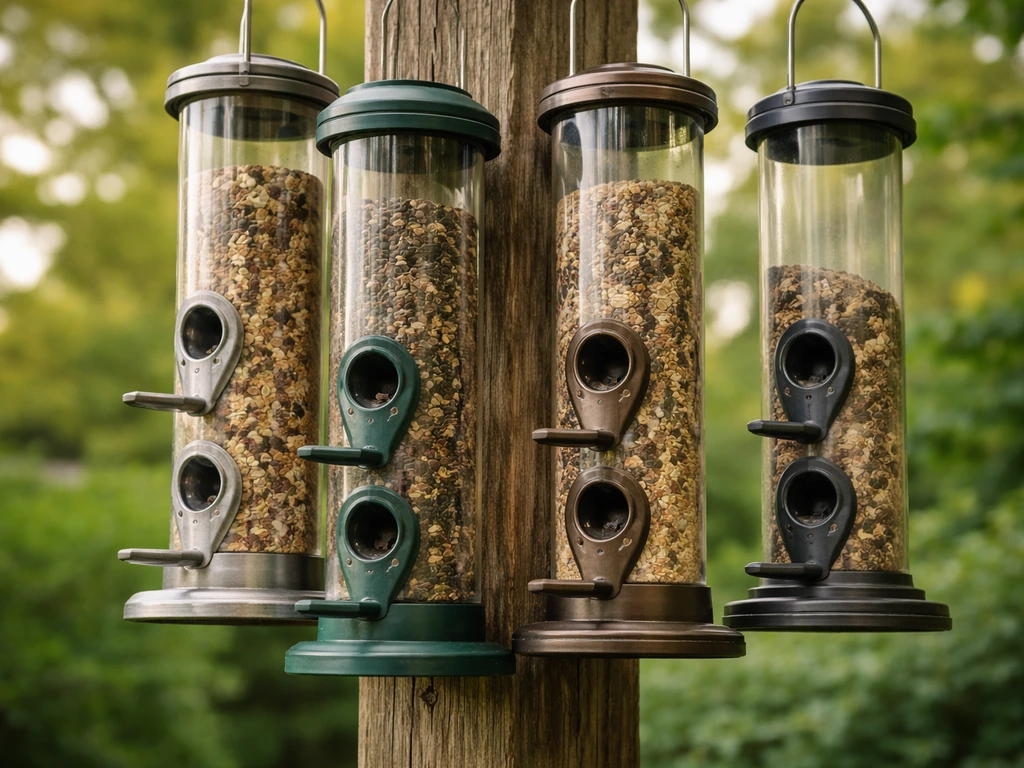
A tube feeder is exactly what it sounds like: a cylinder, usually clear polycarbonate or acrylic, with small feeding ports drilled along its length. Gravity feeds seed down to the ports, and birds perch on short pegs or wire rings to access the seed. That simple design does several things well. It keeps seed contained and relatively protected from rain. It meters seed out slowly, which reduces waste. And because the perches are short and the ports are small, it creates a natural filter that favors small, clingy birds over larger, pushier ones.
Compared to a hopper or platform feeder, a tube feeder is not the best choice if your goal is feeding cardinals, blue jays, or doves. Those birds prefer a stable, flat surface to land on. Larger tube feeders with longer perches can attract cardinals and sparrows, but if big birds are your priority, a hopper or platform will serve you better. Where tube feeders really shine is when you want to target finches, chickadees, titmice, and nuthatches, especially in a yard where starlings or house sparrows are a nuisance, since those birds have a harder time monopolizing a tube. If you're looking for the best cylinder bird feeders for finches and other small birds, focus on port size and short perches to discourage larger species.
Seed type matters a lot here. Tube feeders work best with a single seed type rather than a mixed blend. Mixed seed can jam ports and cause uneven feeding. Black oil sunflower seed is the most versatile choice and draws chickadees, nuthatches, finches, and even the occasional woodpecker. Nyjer (thistle) seed requires a dedicated thistle tube with much smaller ports, and it's the top pick for goldfinches and siskins specifically. If you're trying to do both, you'll want two separate feeders rather than one mixed feeder.
How to choose the best tube feeder: size, ports, perches, and seed fit
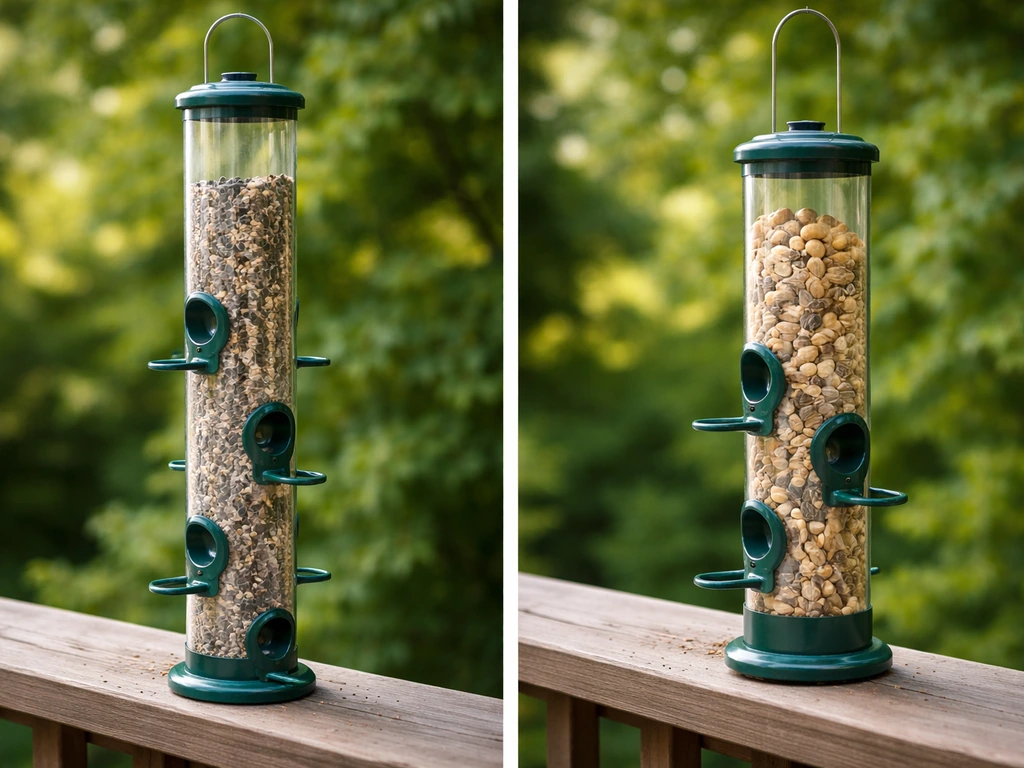
The four variables that actually determine whether a tube feeder works for your situation are tube length and capacity, number of ports, perch design, and seed compatibility. Getting these right is more important than brand name or price.
Tube length and seed capacity
Tube feeders range from small 6-port models holding under a quart of seed (like an 8-port thistle feeder at around 0.7 quarts) to large 12-port models that hold well over a pound of sunflower. A feeder like the Perky-Pet 2-in-1 holds about 1.25 lbs of seed, which works for a moderate-traffic yard. If you have heavy bird traffic or can't refill daily, go larger. If you have light traffic or are feeding only Nyjer, a smaller feeder is actually better because Nyjer goes stale quickly and you want to turn it over fast.
Number of ports and perch length
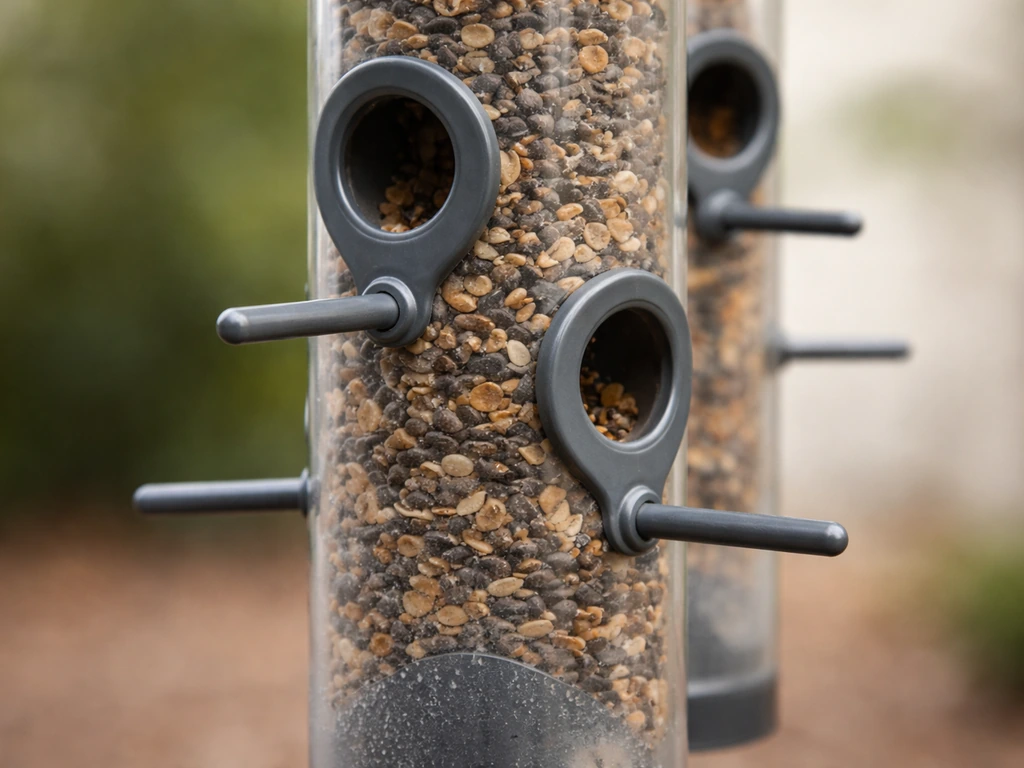
More ports mean more birds can feed simultaneously, which reduces crowding and competition. Six to eight ports is the practical sweet spot for most backyards. Perch length is the subtle variable most people overlook. Short perches (under an inch) effectively exclude blue jays, starlings, and larger sparrows. Longer perches (two inches or more) open the feeder up to cardinals and grosbeaks. If you specifically want to keep large birds off, look for feeders marketed to finches or small birds, and confirm the perch length before buying. Some tube feeders also offer ports above the perches rather than below, which clings-only birds like goldfinches handle easily but other species cannot.
Port size and seed match
Port size has to match your seed. Nyjer seed requires small, narrow ports specifically sized for thistle tubes. Standard sunflower ports are larger and will dump Nyjer seed too fast. Some feeders are designed as 2-in-1 and include interchangeable port covers for different seed types, which can be a good option if you want flexibility without buying two feeders. But if you know your seed, a feeder purpose-built for that seed will feed more cleanly and waste less.
Top features that matter most: durability, weather resistance, and cleaning
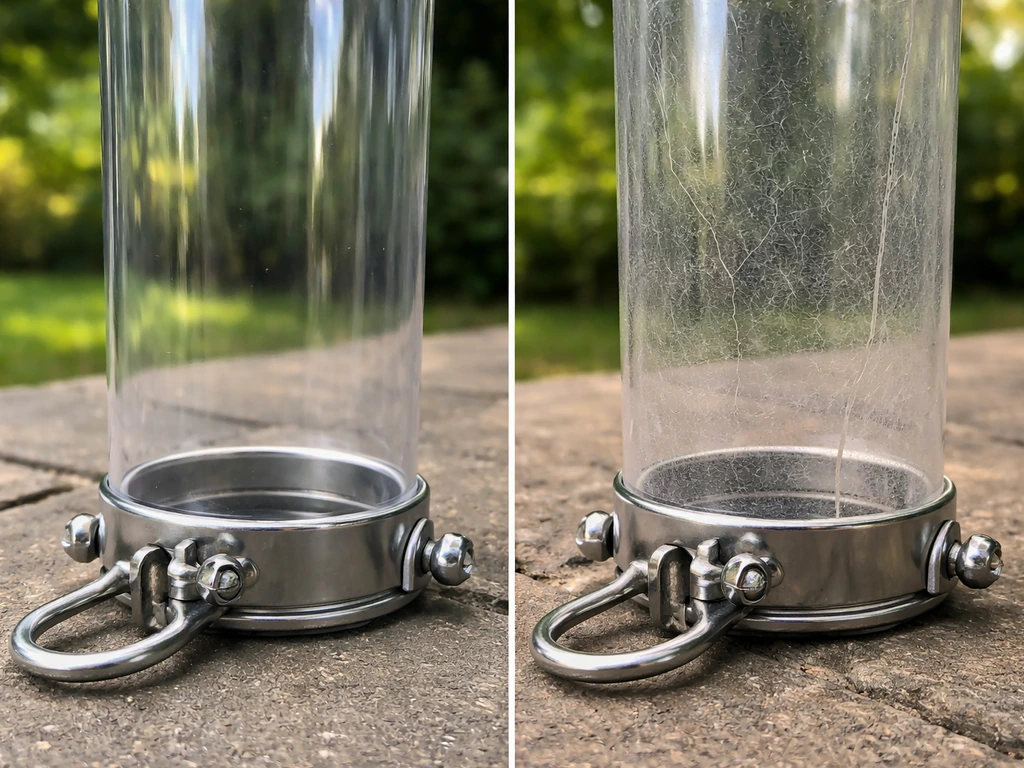
This is where the real long-term cost of a feeder lives. A cheap plastic tube feeder might cost $15 but crack after one winter. A well-built one using UV-stabilized polycarbonate and powder-coated metal hardware can last five to ten years in real outdoor conditions. Brands like Droll Yankees specifically use UV-stabilized polycarbonate tubes combined with powder-coated, rust-proof metal parts designed to handle years of sun, rain, snow, and squirrel abuse without cracking or fading. That's worth paying for if you're setting up a permanent feeding station.
UV stabilization is genuinely important. Untreated polycarbonate or acrylic yellows and becomes brittle after a season or two of direct sun exposure. Look for feeders that specifically state UV-stabilized construction. The tube will stay clear (so you can monitor seed levels) and the plastic won't crack from freeze-thaw cycles.
Cleaning ease should factor heavily into your decision, especially if you've dealt with moldy or clumped seed before. Tube feeders with removable bottoms and wide openings are much easier to clean than sealed tubes with only the top cap accessible. You also need to think about brush access: the interior of a tube feeder requires an extra-long bottle brush to scrub properly. Short brushes won't reach the bottom third of a 15-inch tube. Some feeders also come apart into more sections, which helps you clean the ports individually. If a feeder can't be fully disassembled, pass on it.
Pest and mess prevention: squirrels, rats, baffles, and seed waste control
Squirrels are the most common complaint with tube feeders. There are two legitimate approaches: weight-activated perches that close ports when a squirrel lands, and physical barriers like caged guards or pole-mounted baffles. Weight-activated designs, like those used by Droll Yankees, work mechanically: a squirrel's weight triggers a sleeve that slides down and covers the ports. These work well but rely on the squirrel actually landing on the perch rather than chewing through the tube body. That's why chew-proof construction matters alongside the mechanism.
Cage-style tube feeders (where the tube is surrounded by a metal grid) take a different approach: they let small birds through the cage openings while physically blocking larger animals. These work reliably against squirrels and also against starlings and large sparrows. The tradeoff is that cage feeders can be harder to clean and cost more upfront.
Pole mounting with a baffle is arguably the most reliable long-term strategy. Mount the baffle between 4 and 4.5 feet off the ground, and place the whole setup at least 8 feet away from any surface a squirrel can jump from: fences, trees, decks, or structures. A commonly cited rule of thumb is the 5-7-9 rule: feeder at least 5 feet off the ground, 7 feet from structures, and 9 feet from overhead objects like branches. No setup is 100% squirrel-proof, but a baffle plus good placement gets you very close.
Rats are a less-talked-about problem but a real one in suburban and urban yards. The main trigger is seed on the ground. Using a seed catcher tray under your tube feeder dramatically reduces spillage, and choosing a tube feeder with tight ports that don't dump seed when birds brush the perches helps. Don't leave seed on the ground overnight. If you're already seeing rats, temporarily take the feeder down for a week and clean the area thoroughly before reintroducing it.
Seed waste from tube feeders is usually lower than from platform or hopper feeders, but it's not zero. Birds will bill seed out while searching for preferred pieces. Using a single-seed tube (not a mix) almost eliminates this behavior because there's nothing to sort through. A no-mess or hulled sunflower option also reduces debris significantly, though hulled seed spoils faster in wet weather.
Best tube feeder picks by backyard scenario
Rather than a ranked list of products that may shift in availability, here's a decision framework based on the scenarios that actually matter. Use this to match a feeder type to your situation, then confirm current availability and reviews before buying.
| Scenario | Best feeder type | Seed to use | Key feature to prioritize |
|---|---|---|---|
| Small birds only (goldfinches, siskins, chickadees) | Nyjer/thistle tube, 6-8 ports, short perches | Nyjer (thistle) or fine sunflower chips | Small ports, quick seed turnover |
| Mixed small birds (chickadees, nuthatches, titmice) | Standard sunflower tube, 6-8 ports | Black oil sunflower seed | UV-stabilized tube, removable base for cleaning |
| Winter feeding in cold climates | Metal-reinforced tube with UV-stabilized polycarbonate | Black oil sunflower or safflower | Freeze-resistant construction, powder-coated hardware |
| Heavy squirrel pressure | Weight-activated or caged tube feeder on a pole with baffle | Black oil sunflower | Chew-proof body, weight-activated ports, or metal cage |
| High-traffic yard, frequent refills | Large-capacity tube (12+ ports, 2+ lbs) | Black oil sunflower | Wide fill opening, removable base, large capacity |
| Trying to also attract cardinals or grosbeaks | Large-diameter tube with longer perches (2+ inches) | Black oil sunflower or safflower | Longer perches, larger port diameter |
| Beginner setup, first feeder | Standard 6-port UV-stabilized polycarbonate tube | Black oil sunflower seed | Easy disassembly, accessible ports for cleaning |
If you want a single recommendation for the most common scenario (attracting chickadees, finches, and nuthatches with minimal fuss), a UV-stabilized polycarbonate tube with 6 to 8 ports, a removable base, powder-coated metal hardware, and a pole-mounted baffle setup is the combination that works reliably across seasons and climates. If you want the best metal bird feeder for your tube setup, prioritize UV-stabilized polycarbonate with powder-coated, rust-proof metal hardware. Fill it with black oil sunflower seed and you'll see birds within a day or two of setting it up.
If finches are your main target, a dedicated Nyjer thistle tube is a better choice than trying to compromise with a general-purpose feeder. Project FeederWatch notes that nyjer (thistle) is an imported seed that attracts finches including American Goldfinch, Pine Siskin, and Common Redpoll blank" rel="noopener noreferrer">a dedicated Nyjer thistle tube. Triple-tube designs (three tubes in one frame) are worth considering if you want to feed multiple seed types simultaneously without setting up separate poles. If you want the best triple tube bird feeder for offering different seeds in one spot, look for sturdy tubes with separate port control. Copper-accented and all-metal tube feeders are also worth exploring if longevity and aesthetics both matter to you. If you like the look of copper accents, a copper top bird feeder is a related option to consider for added style and long-term durability copper-accented and all-metal tube feeders.
Setup and placement for more birds
Placement makes or breaks a tube feeder's success. The most common mistake is hanging a feeder in a spot that feels convenient for the human but feels exposed and unsafe to birds. Birds need nearby cover: shrubs, trees, or dense plantings within 10 to 15 feet give birds a place to wait their turn and retreat quickly if a predator shows up. But don't place the feeder so close to dense cover that cats can use it as a hunting blind. A clear zone of about 10 feet between the feeder and ground-level cover is the practical balance.
Height matters. Most small songbirds prefer feeders hung between 5 and 7 feet off the ground. Too low and ground predators are a real threat. Too high and the feeder becomes harder for you to refill, which means you'll do it less often. For pole-mounted setups using a squirrel baffle, the 5-foot height for the feeder itself (with the baffle at 4 to 4.5 feet) hits both goals at once.
Hanging tube feeders from a branch or hook is fine, but pole mounting is more versatile. You can add a baffle, reposition the feeder seasonally, and install multiple feeders on one pole system. If you're hanging from a branch, make sure the branch is at least 5 feet off the ground and the feeder hangs several inches away from the branch itself to reduce squirrel drop-down access.
Shade is worth thinking about in summer. A feeder in full afternoon sun will heat seed and cause it to go rancid faster, especially hulled or oily seeds. Morning sun is fine. A location with dappled afternoon shade keeps seed fresher and birds more comfortable during hot months. In winter, a south-facing or sheltered spot away from prevailing winds helps birds conserve energy while feeding.
Maintenance and troubleshooting
Cleaning routine and how to do it right
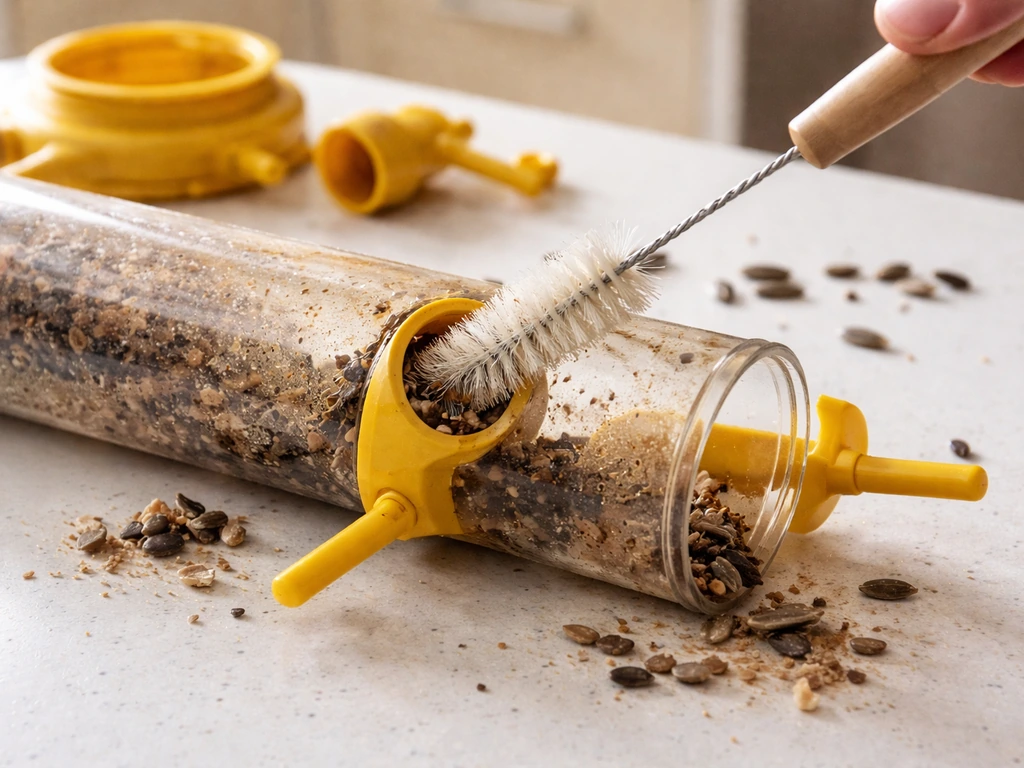
Clean your tube feeder at least once a month in mild weather and every two weeks in hot, humid conditions. The standard method: disassemble the feeder completely, then either run it through the dishwasher on a hot cycle, or hand-wash using a 1-to-9 bleach-to-water solution (one part bleach to nine parts water). Soak all parts for 15 to 20 minutes, scrub the tube interior with a long bottle brush to reach the bottom of the tube, rinse thoroughly, and let everything air dry completely before refilling. Putting a damp feeder back together and filling it is one of the fastest ways to grow mold.
The port openings are where debris and wet seed accumulate first. Use a small bottle brush or pipe cleaner to clear each port individually. If you're seeing blackened seed at the bottom of the tube, that's mold. Empty everything out, clean with the bleach solution, and consider switching to smaller seed fills so you turn over the seed faster.
Fixing clogs and uneven feeding
Clogs happen most often with Nyjer seed, which can clump in humidity, and with mixed seeds containing hulls that jam the ports. If birds are visiting but not eating from certain ports, the port is probably blocked. Take the feeder down, empty it, and clear each port with a thin brush or wooden skewer. Switching to hulled sunflower or single-seed fills (rather than mixes) almost eliminates this problem going forward.
Uneven feeding, where all birds cluster at the top ports and ignore the bottom ones, usually means the seed level has dropped below the bottom ports or the bottom ports are blocked. Shake the feeder gently to redistribute seed. If the feeder consistently has dead zones at the bottom, the tube may be too long for your traffic level. Either downsize the feeder or increase the frequency of your refills to keep seed at an active level.
Feeder lifespan and when to replace
A well-built UV-stabilized polycarbonate tube feeder with metal hardware should last five years or more with regular cleaning. Signs it's time to replace: the tube has turned yellow or cloudy and you can no longer see seed levels clearly, the plastic has hairline cracks (a vector for bacteria and moisture), port edges are chipped and leaving sharp edges that could injure birds, or metal parts are rusting through the coating. Small cosmetic rust can be cleaned off with a light scrub, but structural rust on the perches or port rings means the hardware is compromised. At that point, replacing is cheaper than the ongoing cleaning effort.
Investing in a better feeder upfront usually costs less over five years than replacing cheap feeders annually. If you're ready to step up from a basic plastic tube feeder, look at feeders with full metal construction or copper-topped designs, which offer longer outdoor lifespans and tend to hold up better through freeze-thaw cycles. If you're ready to step up from a basic plastic tube feeder, look at feeders with full metal construction or copper-topped designs, which offer longer outdoor lifespans and tend to hold up better through freeze-thaw cycles. Whatever you choose, the combination of the right seed, regular cleaning, and smart placement will do more for your bird activity than any single feeder feature. If you are choosing between materials for longevity and weather resistance, the best copper bird feeders are a useful adjacent option to compare alongside full metal tube designs.
FAQ
Can I use a tube feeder for mixed seed without clogging ports?
It can work, but mixed blends are the most common cause of uneven flow because hulls can jam small openings and birds can sort seed unevenly. If you want multiple species, use separate tube feeders for each seed type (for example, sunflower in one feeder and Nyjer in another) rather than one mix, and buy a tube with clearly labeled port size for your seed.
How do I tell whether my feeder’s port size matches my seed?
Nyjer tubes require much smaller, thistle-specific ports, and sunflower ports are typically too wide for reliable Nyjer flow. The quickest check is the manufacturer’s port or seed compatibility label, then confirm by running a short test: fill only half the tube and watch for consistent feeding from each port after 30 to 60 minutes.
Why are birds only feeding from the top ports (or ignoring the bottom ones)?
The usual causes are low seed level (seed falls below lower ports) or blocked bottom ports from clumped seed or wet debris. Gently shake the feeder to redistribute seed, then inspect and clear ports with a thin brush. If it keeps happening even when the tube is full, the tube may be too long for your traffic, so refill more frequently or choose a smaller-capacity model.
What’s the best way to prevent squirrels from learning the “weak spot” on my setup?
The baffle helps most when placement blocks the approach routes squirrels use. Keep the pole base out of reach (no nearby jumping points like fences, branches, or decks within the same jump range), and place the baffle at the recommended height. Also consider switching to a design that is chew-resistant around the tube and has a true port-blocking mechanism, not just a loose guard.
Do I need a seed catcher tray for a tube feeder, and how should I use it?
Yes, especially if you live in an area with rats. A tray reduces ground spillage so you can clean less and remove an attractant faster. Empty and rinse the tray regularly (daily or every other day when active), and never let spilled seed sit overnight.
Is dishwasher cleaning safe for all tube feeders?
Only if the manufacturer says it is. Many tube feeders tolerate dishwasher cleaning, but powder-coated hardware, rubber gaskets, and some plastics can degrade or warp in high heat. If you are unsure, use hand-washing with the bleach-to-water solution, and fully air dry all parts before reassembling to prevent trapped moisture.
How often should I clean a tube feeder in different climates?
In mild, dry weather, monthly cleaning is usually enough. In hot, humid climates, clean every two weeks or sooner if you notice dark buildup at ports, clumping, or a musty smell. If birds are still visiting but ports are not feeding evenly, clean immediately since blockages can form faster than the usual schedule.
What should I do if Nyjer seed keeps clumping and clogging?
Start by switching to a thistle-specific tube with correctly sized ports, then keep the feeder out of afternoon downpours and direct hot sun. In humid periods, refill smaller amounts more frequently so seed does not sit and clump. If clogs persist, clear ports with a thin brush and consider changing to hulled or alternative sunflower options for other species during peak humidity.
Why does my seed go rancid faster in summer?
Heat and direct afternoon sun accelerate spoilage, especially with oily or hulled sunflower. Use a placement strategy that gets morning light but has dappled shade during the hottest hours, and avoid locations where the feeder is baked by reflective surfaces like light-colored fences or walls.
What’s the safest feeder height for cats and ground predators?
Most small songbirds do best around 5 to 7 feet off the ground. Too low increases risk from ground predators, and too high often reduces your ability to refill and clean consistently, which can worsen mold and clogs. If you use a baffle, position the feeder and baffle together so the baffle blocks squirrel access without creating an easy cat launch point from nearby cover.
When should I replace a tube feeder instead of just cleaning it?
Replace when the tube becomes yellow or cloudy (you cannot monitor seed levels reliably), you see hairline cracks, port edges are chipped or sharp, or metal parts show coating failure that progresses to structural rust. Minor surface rust can sometimes be scrubbed, but if perch rings or port hardware are rusting through, cleaning will not solve the underlying weakness.
Can I add multiple seeds in one spot without sacrificing feeder performance?
Yes, but use a design that controls ports per seed type, such as a true triple-tube setup with separate tubes. Do not rely on a single mixed feeder if your goal is strong, consistent feeding, since seed mixing increases the chance of port jams and uneven flow. Separate seed tubes also make it easier to switch seed types seasonally.
Next Article
Best Bird Feeder for Baltimore Orioles: Buyer Guide
Choose the best bird feeder for Baltimore orioles: styles, features, placement tips, and fixes for heat, pests, and acce