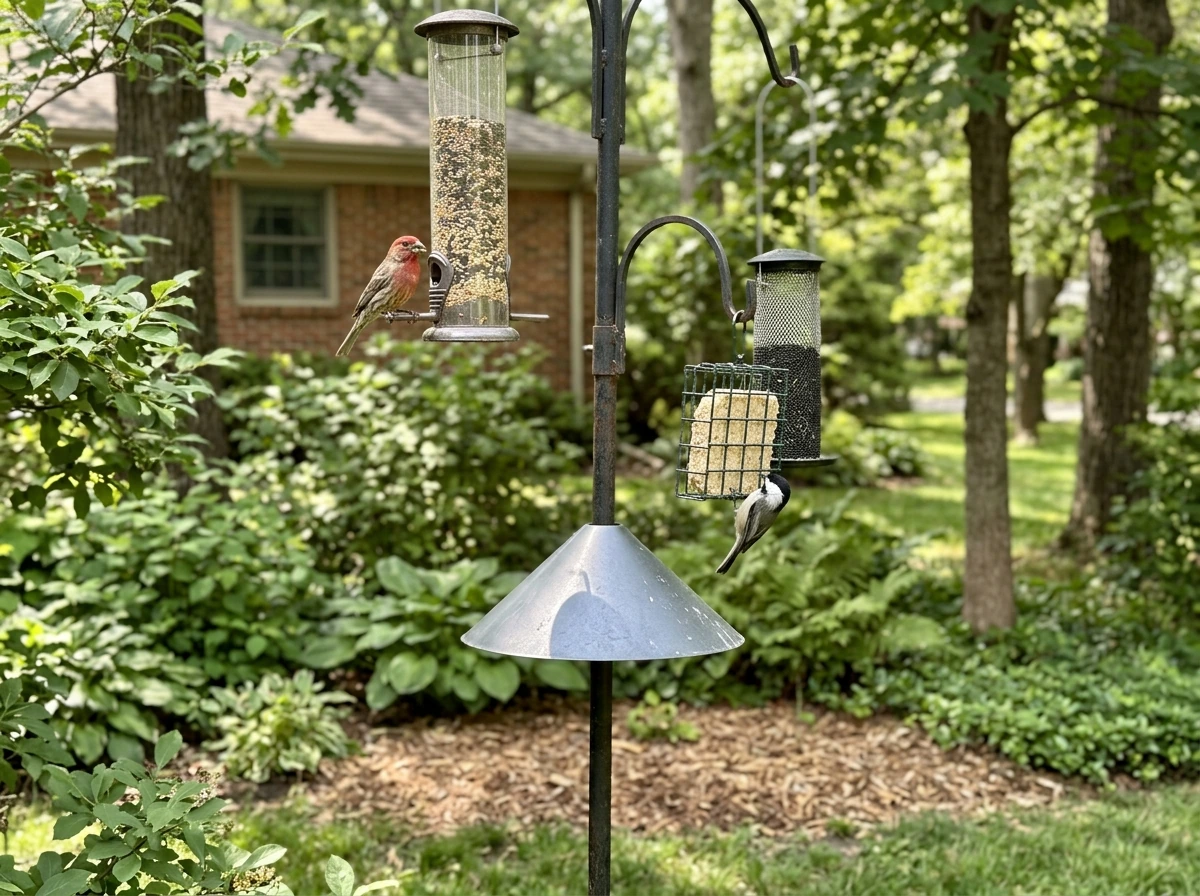
The best bird feeder for your yard is not a single product. It depends on which birds you want to attract, how much space you have, whether squirrels and rats are a real problem for you, and what you are willing to clean regularly. That said, if you want one honest starting recommendation: a pole-mounted tube feeder with metal ports and a cone-shaped baffle underneath is the most versatile, pest-resistant setup for most North American backyards. From there, you layer in additional feeder types based on your target birds. Here is how to work through the whole decision.
Bird Feeder Best Guide: Pick the Right Feeder Today
Marcus Hendricks
23 Mar 2026
What 'best' actually means for your yard
Before you buy anything, get honest about three things: which birds do you actually see or want to see, how much space do you have to work with, and what is your real tolerance for maintenance? These three factors determine everything else.
A small urban balcony calls for a window feeder or a single compact tube feeder. A half-acre suburban yard with mature trees can support four or five different feeder types at multiple heights, which will pull in dramatically more species. If you want to stay on top of seasonal timing and featured products, check suet bird feeder news alongside these setup tips. Audubon consistently recommends using feeders at different vertical levels because different birds feed at different heights: sparrows, juncos, and towhees prefer the ground; finches and cardinals tend to feed at shrub level; chickadees, titmice, and woodpeckers favor tree height. If you only put up one feeder at one height, you are automatically excluding a chunk of your local bird population.
Goals matter too. Some people want cardinals and nothing else. Others want the maximum number of species. Others are specifically chasing woodpeckers or trying to attract bluebirds. Each of those goals points to a different feeder type and placement strategy. Knowing your goal keeps you from buying five feeders you do not need.
Match your feeder type to the birds you want
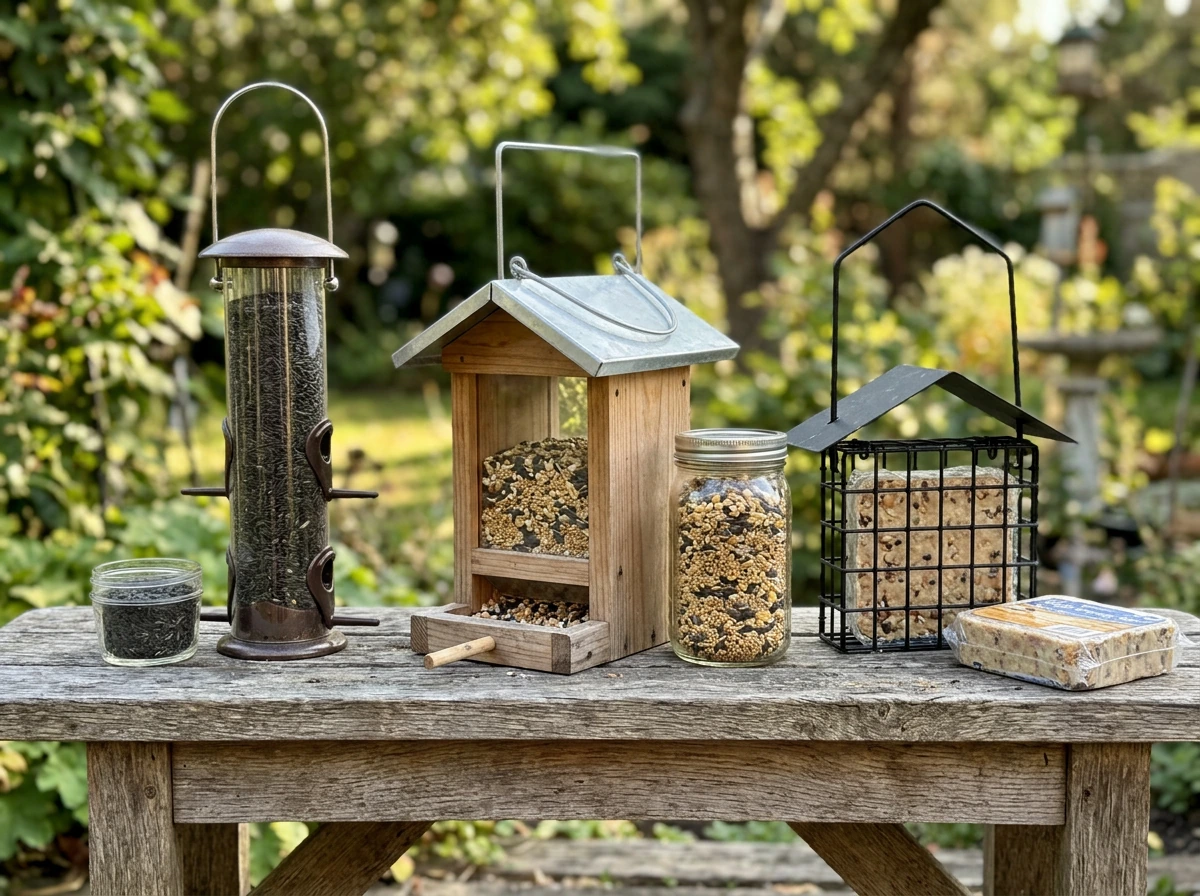
Feeder type is the single biggest variable in which birds show up. Here is a direct breakdown of what works for which species.
| Target Birds | Best Feeder Type | Notes |
|---|---|---|
| Finches (goldfinch, house finch) | Tube feeder | Nyjer/thistle seed in a small-port tube is ideal; standard tube works for mixed seed |
| Cardinals | Hopper or platform feeder | Cardinals prefer wide perches and open feeding areas; tube perches are too narrow |
| Chickadees, titmice | Tube or hopper feeder | Adapt well to most feeder types; prefer sunflower seed |
| Woodpeckers, nuthatches | Suet feeder or suet cage | Mount well off the ground; prefer clinging feeders with no perch |
| Hummingbirds | Nectar/hummingbird feeder | Red tube-style or basin feeders; must be cleaned every 3-5 days |
| Orioles | Oriole nectar or jelly feeder | Orange color and jelly ports matter; separate from hummingbird feeders |
| Bluebirds | Platform feeder with mealworms | Bluebirds rarely visit seed feeders; live or dried mealworms in an open tray |
| Blue jays | Hopper or platform feeder | Jays need space and eat peanuts, sunflower, and corn |
| Doves, sparrows, juncos | Ground-level platform or tray | Scatter feed on a low tray or ground; these birds rarely use elevated feeders |
Suet feeders deserve a specific note. They are one of the best investments for attracting woodpeckers, nuthatches, and chickadees, especially in fall and winter when those birds are actively seeking high-fat food. Mount them on the side of a tree or on a separate pole, well off the ground. If you want to go deeper on suet feeder options, that is a topic worth exploring on its own given how much variation there is in cage design and suet cake compatibility.
Hummingbird feeders sit in their own category entirely. The cleaning requirement is non-negotiable: nectar turns to mold quickly, and you need to wash and refill the feeder every three to five days, more often in hot weather. If you cannot commit to that cadence, a hummingbird feeder will do more harm than good.
Features that actually matter when you buy
Weatherproofing and durability
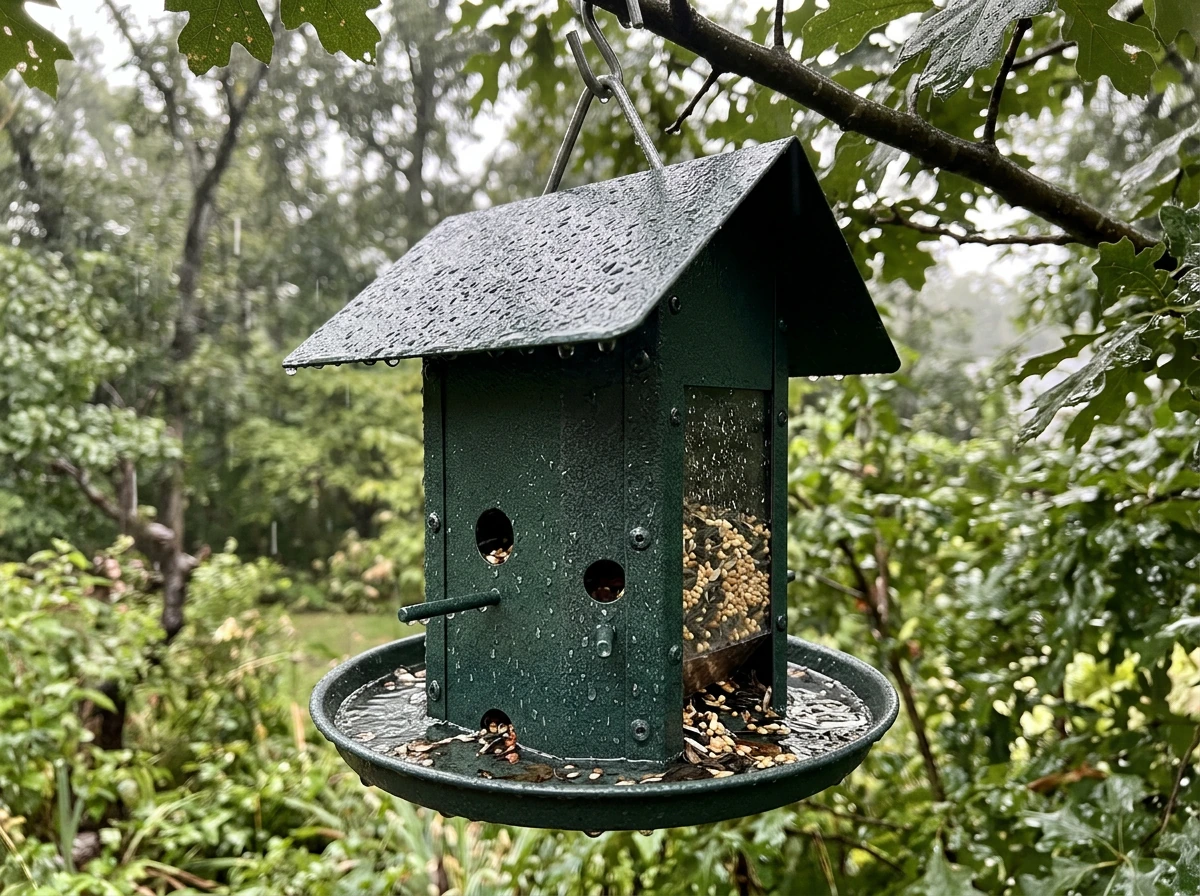
Cheap plastic feeders crack in UV sunlight within a season or two, and the seams leak when wet seed swells inside them. Look for UV-stabilized or recycled plastic, powder-coated metal components, or cedar/recycled wood construction. Roof overhangs matter more than people realize: a feeder with a wide, sloped roof keeps seed dry in rain and reduces mold. If you are in a wet or windy region, a fully enclosed hopper feeder with a roof will dramatically outperform an open platform in terms of seed freshness.
Pest resistance and squirrel-proofing
Let me be direct: there is no feeder that is completely squirrel-proof, and Audubon says the same. What you can do is make it significantly harder and less rewarding for squirrels. The two most effective strategies are weight-activated mechanisms and physical baffles.
Weight-activated feeders, like the Brome Squirrel Buster Standard, use a spring-loaded shroud that drops down and closes the seed ports when a squirrel (or rat) puts its weight on the feeder. The Brome model holds 1.3 lbs of seed across 4 ports, which is a reasonable capacity for a tube feeder, and it includes a ventilation system to keep seed fresher by letting humidity escape. The mechanism works as advertised in real-world testing, though it requires occasional cleaning to keep the shroud moving freely.
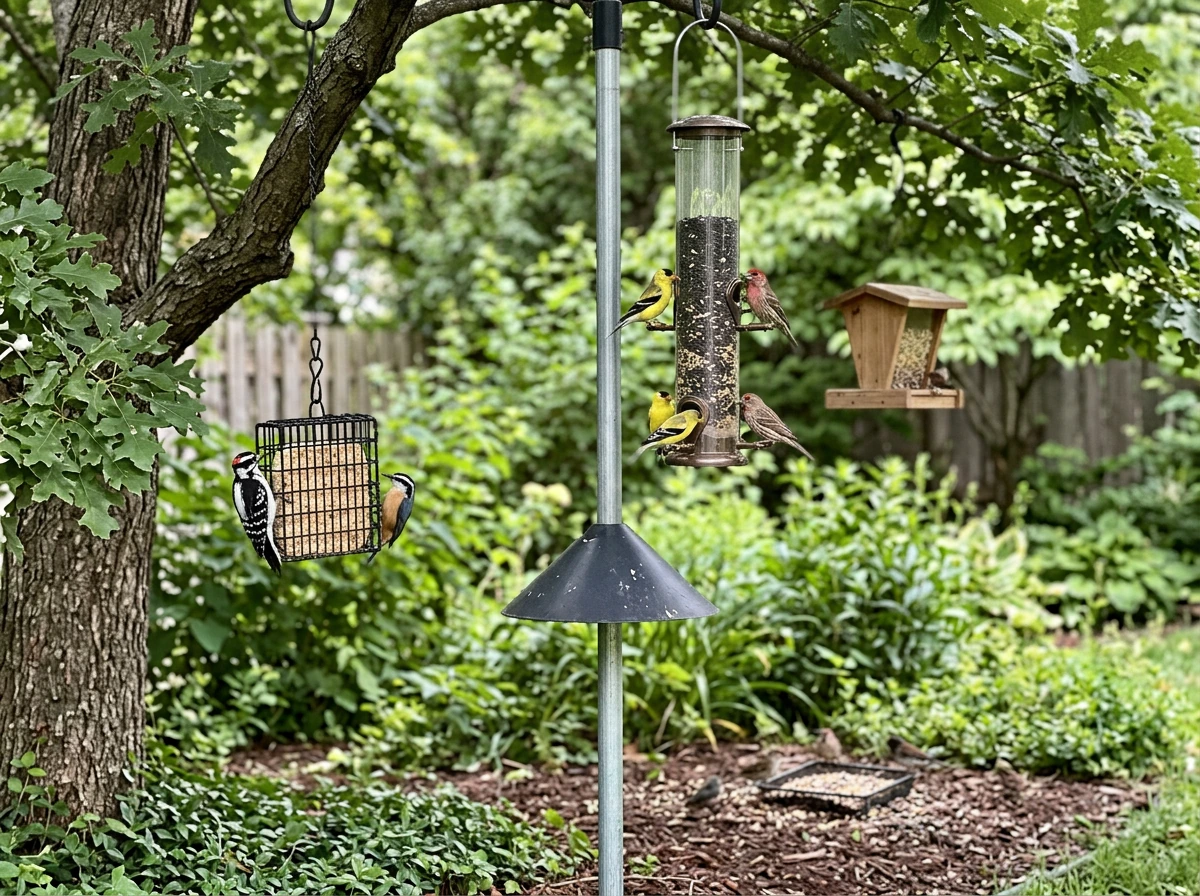
For pole-mounted feeders, a cone-shaped baffle installed below the feeder is the most reliable deterrent for climbing mammals. Audubon recommends the baffle be at least 17 inches in diameter, with the feeder positioned about five feet off the ground. Cornell Lab's FeederWatch adds that if squirrels are jumping from above (from a tree or fence), you may also need a tilting baffle at least 18 inches in diameter above the feeder. Metal feeding ports on tube feeders are another smart feature: squirrels will chew through plastic ports, but metal holds up.
If rats are a concern, the approach shifts slightly. Rats are attracted to spilled seed on the ground as much as the feeder itself. Using a seed tray catcher under the feeder and disposing of uneaten seed rather than letting it pile up on the ground makes a meaningful difference. Avoid scatter feeding on the ground entirely if rats are present in your area.
Ease of cleaning
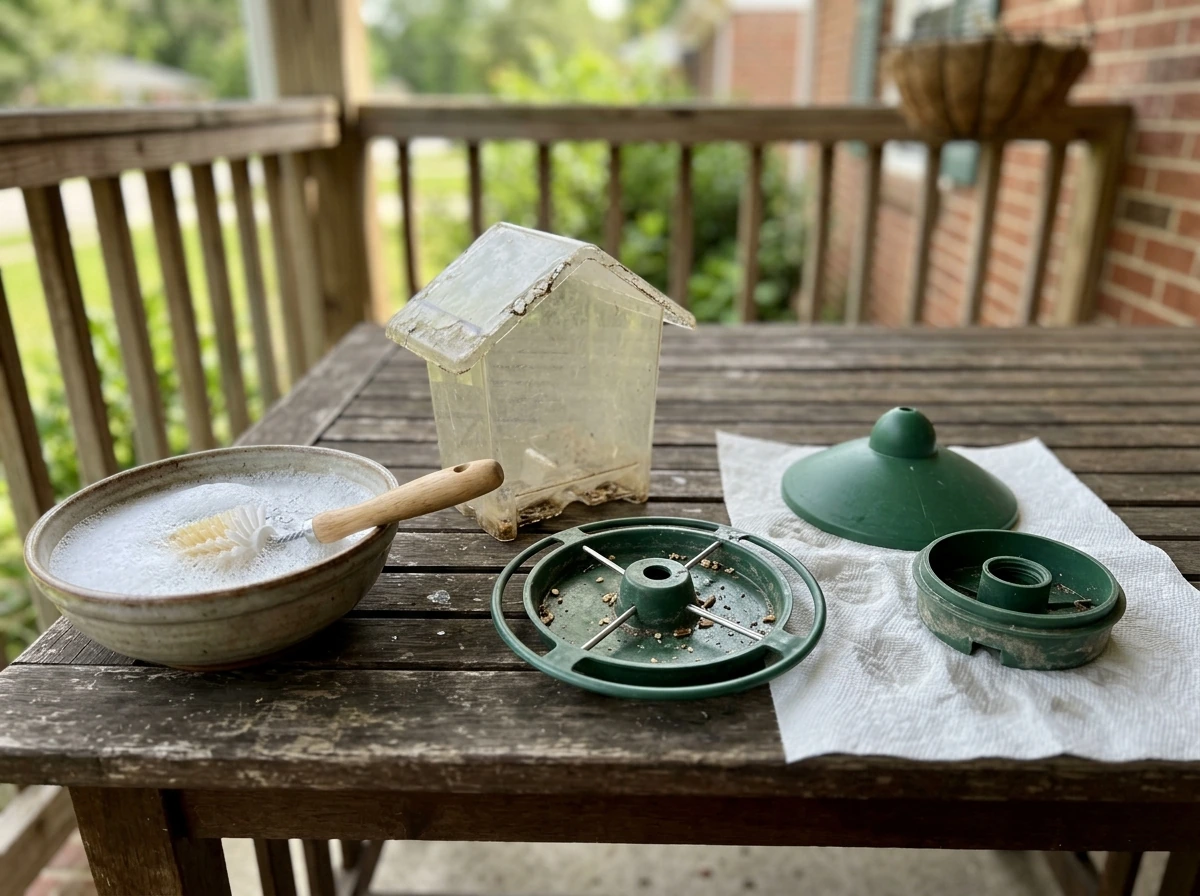
This is the feature most buyers underestimate. A feeder you cannot easily disassemble is a feeder you will not clean often enough. Look for feeders that come apart without tools, with wide openings you can reach inside. The cleaning standard is every two weeks minimum, using a 9:1 water-to-bleach solution, scrubbing out all debris, and letting the feeder dry completely before refilling. In hot or humid weather, clean more often. Skipping this step leads to mold, spoiled seed, and sick birds.
Smart cameras and solar power
Smart bird feeders with built-in cameras have become a real category in the last few years. They are genuinely fun for bird identification and watching, and the best models use AI to log species automatically. For the latest bird feeders news on new models and best practices, keep an eye on recent updates from reputable birding and gardening sources. The trade-offs are cost (usually $100 to $200 or more), dependency on WiFi, and the fact that the camera is often the first thing to fail or require updates. If bird identification and watching are your primary goals, they are worth considering. If you mostly just want to feed birds effectively, the camera adds complexity without improving outcomes for the birds. Solar-powered models can extend battery life but still need occasional charging in low-light winter months.
Top picks by use case and season
Best all-around backyard setup
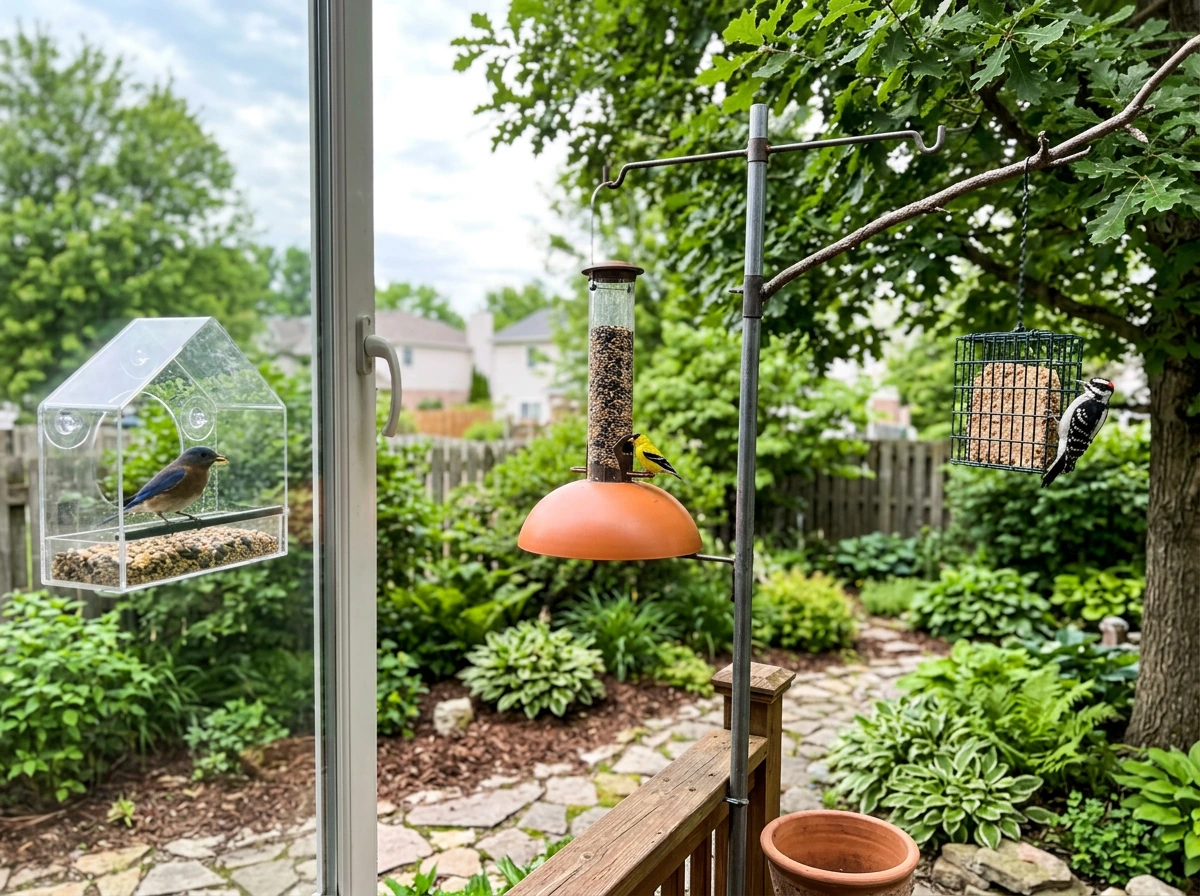
For most suburban yards, the most effective setup is a pole-mounted tube feeder with a baffle, plus a separate suet cage hung nearby. The tube feeder with metal ports handles finches, chickadees, and titmice. The suet cage brings in woodpeckers and nuthatches. Add a platform feeder at or near ground level and you cover doves, sparrows, and possibly cardinals. That three-feeder combination covers the widest range of common backyard species without requiring a lot of space.
Best for small spaces or apartments
Window feeders are the right call for balconies or small patios. They attach with suction cups and sit right at the glass, which means you get close-up views with minimal space required. They tend to attract chickadees, finches, and titmice quickly. Capacity is small, so you will refill more often, but that is an acceptable trade-off. Look for one with a removable tray for easy cleaning.
Winter feeding
Winter is actually the highest-value time to feed birds, especially if you rely on suet bird feeder news, since suet feeders become especially important when woodpeckers and nuthatches need the high fat content. Natural food sources are depleted, and your yard can become a reliable resource for resident species that stay through the cold months. Tube feeders with sunflower seed and nyjer work well year-round, but suet feeders become especially important in winter because woodpeckers and nuthatches need the high fat content. Audubon's winter guidance specifically recommends tube feeders with metal ports as the go-to winter option. Keep seed dry by choosing feeders with good roof coverage, and dispose of any wet or uneaten seed promptly rather than letting it sit and mold.
Migration season
Spring migration (roughly March through May) and fall migration (August through October, depending on your region) bring species through your yard that you will not see at other times of year. Orioles move through in spring and are attracted to orange halves and nectar feeders with orange elements. Warblers rarely visit seed feeders but may stop at water features. Having a variety of feeder types active during migration windows gives you the best shot at catching passing species.
Placement, setup, and fixing common problems
Placement is as important as feeder choice. A few rules that will make an immediate difference:
- Place feeders either within three feet of a window or more than 30 feet away. This prevents window collision: birds either recognize the glass as a barrier up close, or they have enough distance to avoid it if startled.
- Keep feeders near natural cover like shrubs or trees so birds can approach cautiously, but not so close that squirrels can jump directly from a branch onto the feeder. A 10-foot horizontal gap from any jumping point is a reasonable target.
- Mount pole-mounted feeders at about five feet off the ground with a cone baffle of at least 17 inches below the feeder.
- If squirrels are jumping from above, add a tilting baffle of at least 18 inches above the feeder on the pole.
- Do not place feeders directly over garden beds or patios you care about. Spilled seed, hulls, and bird droppings will accumulate underneath.
If birds are not visiting a new feeder, give it a week or two. Birds need time to find new food sources. You can speed up discovery by placing a small amount of seed on top of the feeder or on a nearby flat surface. If birds visit briefly and leave, the seed may be stale or moldy, or the feeder may feel unsafe due to too much open exposure. Add nearby cover if the feeder is in the middle of an open lawn.
If you have persistent pest problems beyond squirrels, specifically rats or raccoons, the most effective change is removing ground-level feeding entirely, switching to a pole-mounted weight-activated feeder, and cleaning up spilled seed daily. Hot pepper additives to seed are sometimes recommended, but results are inconsistent and they can irritate birds' eyes in high concentrations, so they are not a strategy I would lean on.
DIY and budget options vs. buying quality
DIY feeders are a legitimate option in specific situations: you want to introduce a child to bird feeding, you are testing a new location before committing to a proper setup, or you simply enjoy building things. A basic platform feeder made from scrap wood costs almost nothing and can be operational in an afternoon. The trade-offs are durability (untreated wood warps and rots in one to two seasons), pest resistance (none), and cleaning ease (rough wood harbors bacteria).
For a long-term backyard setup, buying quality pays off faster than most people expect. A $40 to $60 tube feeder with metal ports and a good roof will outlast three or four cheap plastic feeders, and it will keep seed cleaner and drier in the process. The one area where budget matters less is suet feeders: a basic wire suet cage does the job just as well as a $30 decorative cage, because woodpeckers and nuthatches care about the suet, not the cage design.
If budget is tight and you want to start somewhere practical, a single quality pole-mounted tube feeder with a baffle is the best single investment. It handles the most species, keeps seed cleaner than a platform, and is far more squirrel-resistant than anything without a baffle. Add feeders from there as budget allows.
How to compare feeders quickly before you buy
When you are looking at two or three feeders and trying to decide, run through this checklist. It takes about five minutes and will eliminate most poor choices.
- Does it match your target birds? Check the feeder type against the table above. A tube feeder will not serve cardinals well; a platform feeder will not work for woodpeckers.
- Are the seed ports and perches metal or plastic? Metal holds up to squirrel chewing; plastic does not. Reject any feeder that lists 'squirrel-resistant' as a feature but has plastic ports.
- Can you fully disassemble it for cleaning? If the description does not mention how it comes apart, search for photos or reviews specifically about cleaning. If it is a pain to clean, it will become a disease vector.
- What is the seed capacity? Match this to how often you want to refill. A 1 to 2 lb capacity works fine for most yards; larger hoppers (4+ lbs) are better for high-traffic setups where you travel frequently.
- Does it include or work with a baffle? If it is a pole-mounted feeder, check whether a baffle is included or which baffles are compatible. A package deal like the Audubon Classic Pole Mount (which includes a pole, baffle, and tube) simplifies the setup significantly.
- What do real reviews say about weather durability after one winter? Manufacturer photos show feeders looking pristine. Look for reviews from users in rainy or snowy climates and check for mentions of cracking, warping, or rust after a full season.
- Is the price in line with the materials? Below $20 for a tube feeder usually means thin plastic that will not last. Above $80 for a basic tube feeder without smart features is probably overpriced. The $30 to $60 range covers most well-made options.
One last thing worth knowing: you do not have to get this perfect on the first try. Start with one good feeder in a reasonable spot, watch which birds use it and which ones you want to attract but are not seeing, and add from there. The birds will tell you what is missing faster than any buying guide will.
FAQ
What’s the bird feeder best choice if I want one setup that works for the most species right away?
If you want your “best” feeder choice to work immediately, prioritize the features that directly affect seed quality and access: use a tube feeder with metal ports plus a baffle, then choose the seed type (sunflower for general finches, nyjer for finches if you have it available, and suet separately for woodpeckers). Keep at least one feeder at a different height than the others, because even a perfect feeder won’t attract birds that feed at ground, shrub, or canopy levels.
Can a squirrel baffle fail even when it looks properly installed?
Yes, but only if you treat it like a safety upgrade, not a decoration. If a baffle is too small for your pole height or your squirrels are coming from above (tree or fence access), they can climb onto the feeder line and bypass the protection. In that case, you may need a larger tilting baffle above the feeder, and you should also remove any seed sources on the ground near the pole.
What should I do first if birds visit briefly and then stop?
Not always. If birds are ignoring a feeder, it can be because the feeder feels unsafe (no nearby cover), the food has gone stale or moldy (wet seed or poor roof coverage), or the bird learning window is too short. Give it 1 to 2 weeks, then adjust one variable at a time, ideally adding nearby cover and improving protection from rain before changing the feeder type again.
How can I get birds to find a new feeder faster without attracting pests?
Try to separate “discovery” from “quality control.” Put a small amount of fresh seed on top of the feeder or a nearby flat spot for a day or two so birds notice the location, then stop relying on that extra food if you have rats. After that, keep the main feeder supplied with dry seed and focus on cleaning frequency, because mold or damp residue is a common reason feeders stop attracting birds.
Is every-two-weeks cleaning enough for all feeder types and climates?
Aim for a cleaning schedule tied to conditions, not a single calendar date. Every two weeks is a minimum baseline, but in hot or humid weather you should clean more often, especially for tube and hopper feeders where moisture can get trapped. Use a proper bleach solution, scrub debris thoroughly, and let the feeder dry completely before refilling so you do not restart mold growth.
What’s the most common mistake people make with hummingbird feeders?
For hummingbirds, the biggest “gotcha” is turnaround time. If your schedule means you cannot wash and refill every three to five days (more often in heat), the feeder can become a mold risk for visiting birds. If you travel often or want low maintenance, consider focusing on seed and suet feeders instead of hummingbirds.
How do I judge whether a feeder will actually be squirrel-resistant in my backyard?
Don’t assume a feeder that’s “squirrel-proof” online will work in your yard. Real-world effectiveness depends on pole height, baffle size, access from above, and how much spilled seed is available. The most reliable approach is combining a physical barrier (baffle or weight-activated shroud) with spill control (no ground scatter feeding, use a tray catcher, and remove uneaten seed).
Are window feeders worth it if I want low space but also want less maintenance?
Window feeders are easiest for close-up viewing, but they typically have lower capacity, so you will refill more frequently and clean more often to prevent sour feed. Choose a model with a removable tray so you can clean it quickly, and place it so birds have a clear line to safety from the window area.
Which change should I make if I’m only attracting birds that feed high up?
If you are missing ground-feeding birds (like sparrows or towhees), adding just a feeder at ground level or shrub level usually beats changing everything. Use placement variety first, then feeder variety. For example, keep the tube feeder for tree/shrub users, add suet for woodpeckers, and include a platform or ground-near option to cover species that prefer the lowest foraging areas.
Do smart camera feeders actually improve which birds I attract?
AI camera feeders can be useful for identification, but they are not the fastest path to “better feeding.” If your main goal is attracting birds reliably, the camera adds cost and potential failure points (updates, connectivity, battery behavior). A practical approach is to run a standard feeder for performance and add a camera feeder only if you want the extra watching and can maintain it.
How should my winter feeder plan differ from spring and summer?
Winter feeding can be the most productive time, but only if you keep the food dry and fat-rich where appropriate. Tube feeders with metal ports are a strong winter choice, and suet becomes especially valuable for woodpeckers and nuthatches. Also remove wet or uneaten seed promptly, because damp seed can quickly undo the benefits of winter feeding.
What’s a sensible feeder “upgrade path” if I’m starting with only one feeder?
Start simple: one high-quality pole-mounted tube feeder with a baffle, then add a suet cage nearby for woodpeckers and nuthatches. After that, add one more feeder category only if you are missing a feeding niche (ground, shrub, or canopy). Watching which birds show up, and which ones you want but do not see, guides the next purchase better than trying to cover every possibility at once.
Next Article
Common Bird Feeder Birds: Identify, Attract, and Fix Problems
Identify common feeder birds, match feeder and seed, place safely, prevent squirrels and rats, and adjust by season.