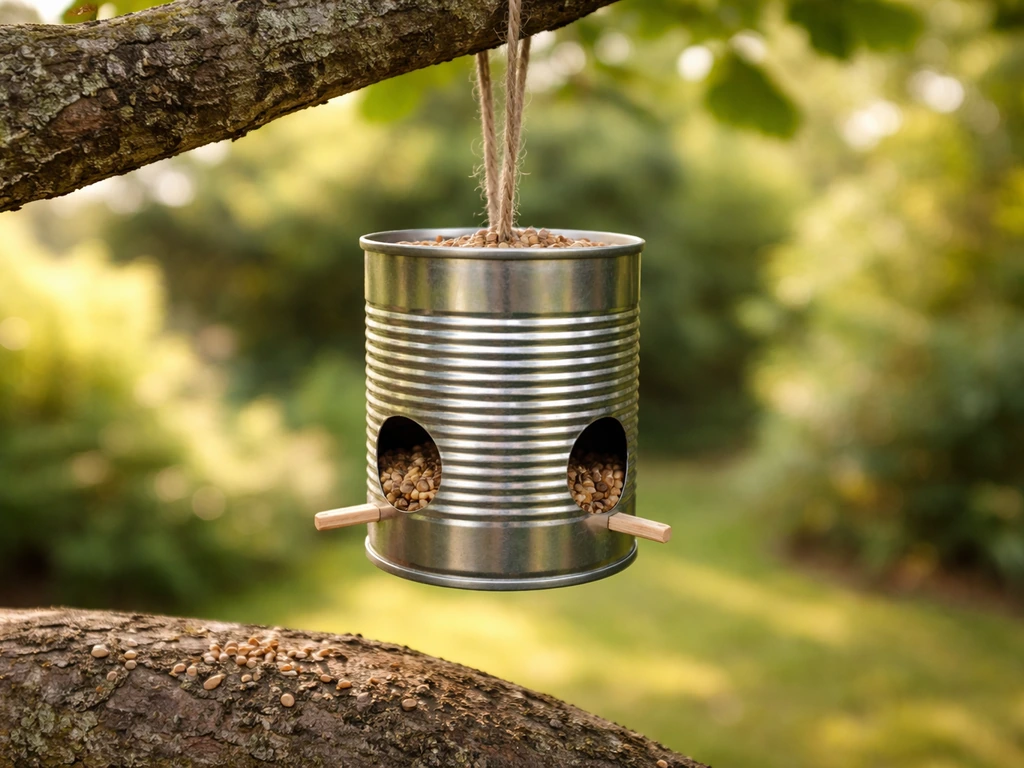
Bird feeder news in July 2026 breaks down into a few recurring categories: new or updated feeder products hitting the market, disease or recall alerts that affect what you should do at your feeders right now, pest and weather issues making the rounds, and seasonal bird activity shifts worth knowing about. If you searched for this today, the most useful thing I can tell you is: check your local wildlife agency's site for any active disease advisories (especially HPAI), clean your feeders on schedule, and match your feeder type to the birds you actually want to attract. Everything below gives you the context and the action steps to do exactly that.
Bird Feeders News: What It Means and What to Do Now
Marcus Hendricks
11 Jul 2026
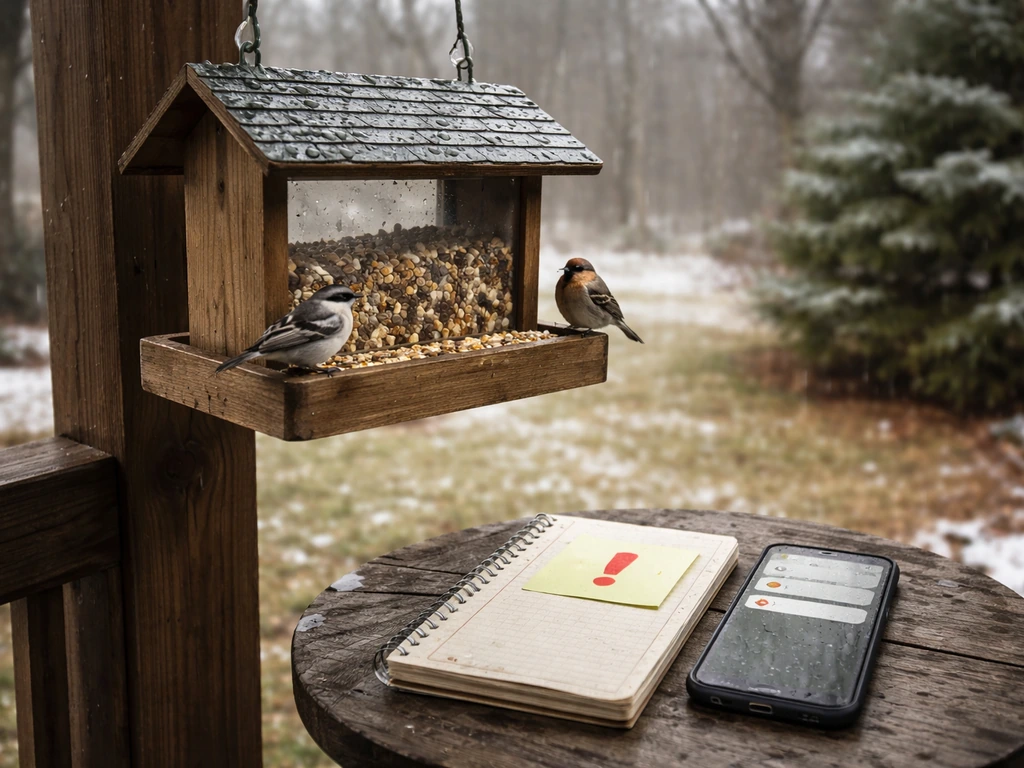
What 'bird feeder news' actually covers
When people search for bird feeder news, they're usually looking for one of four things, and it helps to know which one applies to you so you can act on it quickly.
- New or trending feeder products: smart camera feeders, solar-powered models, improved squirrel-proof designs, and new weatherproofing options regularly get coverage in birding media and gear publications.
- Safety and recall alerts: contaminated seed batches, feeders with mold-prone materials, or disease-related advisories from agencies like USDA APHIS or state wildlife departments (Virginia DWR, for example, has issued temporary 'remove your feeders' advisories during disease events in the past).
- Disease and wildlife health updates: HPAI (highly pathogenic avian influenza) detections in wild birds are tracked publicly by USDA APHIS with dates and locations, and outbreaks in your region directly affect whether you should be feeding at all.
- Pest, weather, and food issues: squirrel damage, ant infestations in hummingbird feeders, mold in wet seed, and freeze damage to feeders in winter all generate community discussion and guidance worth tracking.
Understanding which category the news you found falls into tells you how urgently to act. A recall or active disease advisory near your zip code means you act today. A new product launch means you research it against what you already have. A pest tip means you troubleshoot this weekend.
How to find and filter today's bird feeder news
The best sources for current, reliable bird feeder news are a short list. I check these regularly and they rarely steer me wrong.
- USDA APHIS wild bird HPAI detection table: updated regularly with dates and locations, this is the first place to check if you've heard anything about bird illness in your area. It's public, free, and searchable by state.
- Cornell Lab of Ornithology (All About Birds and Project FeederWatch): the most practical, science-backed guidance on cleaning schedules, feeder types, and bird behavior changes. Project FeederWatch data also shows you which species are being reported in your region right now.
- Your state or provincial wildlife agency website: Virginia DWR, for instance, has issued and then lifted feeder-removal advisories during disease events. Your local agency will do the same. Search '[your state] bird feeder advisory 2026.'
- Audubon Society news and local chapter updates: good for both product guidance and regional bird activity trends.
- Reputable birding subreddits (r/BirdBuddy, r/birding) and local Facebook birding groups: community reports on pest problems, feeder failures, and what's working in real backyards. Filter for recent posts before acting on advice.
- Tom's Guide, Wirecutter, and similar gear-review outlets: useful for product news and feeder comparisons, though always cross-check durability claims against user reviews.
For filtering, I apply a simple test: Is this from a wildlife agency, a university extension program, or a well-known birding organization? If yes, it's worth acting on. If it's from a feeder brand's own press release or a single Reddit post, treat it as a lead to verify, not a reason to change your setup immediately.
Seasonal feeding guidance for mid-July
It's mid-July, which means heat and humidity are the dominant concerns in most of the continental U.S. This is the time of year when feeders that seemed fine in April become genuine health hazards if you're not on top of cleaning. Hummingbirds are active and need the most attention: Audubon, the NWF, and the Smithsonian National Zoo all recommend cleaning hummingbird feeders every day or every other day in hot weather, and immediately whenever the feeder runs dry. Nectar ferments fast above 80°F, and mold can develop within 24 to 48 hours. If your hummingbird feeder is in direct sun, you're probably looking at daily changes.
For seed feeders in July, the main risks are moisture and heat causing seed to clump, ferment, or go moldy at the bottom of hopper and tube feeders. Dump and inspect your seed every few days. If you find wet or caked seed at the base, that's a problem regardless of what the news says about disease outbreaks, because moldy seed is harmful to birds on its own. Tube feeders with removable bases are much easier to keep clean in summer than hoppers with sealed bottoms.
Looking ahead to fall migration (which starts earlier than most people expect, sometimes in late July for shorebirds and certain warblers), platform feeders and suet feeders become increasingly important for attracting a wider range of migrants. Stay up to date on suet bird feeder news by checking reliable wildlife agency updates and recent cleaning or disease guidance before you refill. Now is a good time to assess whether your setup covers both nectar-feeding hummingbirds still moving through and the seed-eating birds that will start arriving in August and September.
Cleaning schedules: what the current guidance says
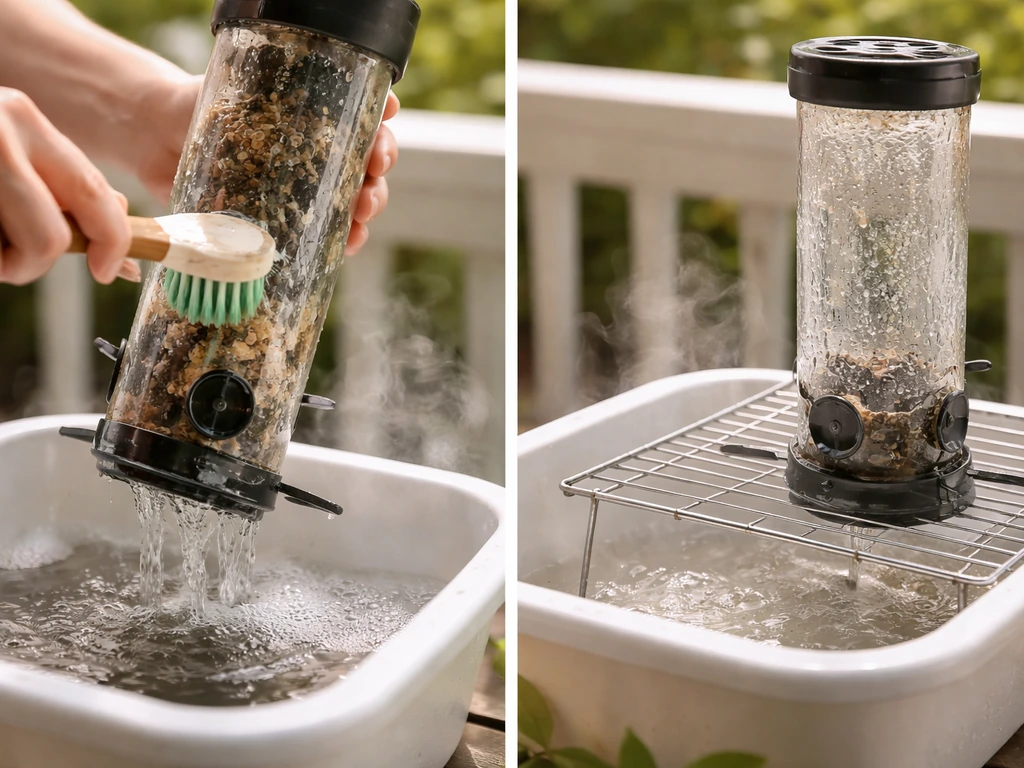
This is one area where the news has been consistent for years, and the current guidance is worth repeating clearly. Cornell Lab and U.S. Fish & Wildlife Service both recommend cleaning seed and suet feeders at least once every one to two weeks under normal conditions. In hot or wet weather, or if there are reports of sick birds or salmonella in your area, you clean more often. The disinfection method that wildlife agencies recommend is a diluted bleach solution: one part bleach to nine parts water, soak for 10 minutes after scrubbing, then rinse thoroughly and dry before refilling.
| Feeder Type | Normal Cleaning Interval | Hot/Wet Weather Interval | Disease Alert Interval |
|---|---|---|---|
| Hummingbird (nectar) | Every 2–3 days | Every 1–2 days or daily | Daily, or stop feeding |
| Seed (tube or hopper) | Every 1–2 weeks | Every 3–5 days | Increase frequency or pause |
| Suet | Every 1–2 weeks | Every 3–5 days | Increase frequency or pause |
| Platform/tray | Every 3–5 days | Every 1–2 days | Every day or stop feeding |
| Window feeder | Every 3–5 days | Every 1–2 days | Every day or stop feeding |
Platform feeders and window feeders need more frequent attention than tube feeders because they expose seed to rain and droppings more directly. If you're getting news about a disease event or salmonella outbreak in your region, the BTO recommends stopping feeding entirely for at least two weeks after the last sighting of an unwell bird. That's a real option and sometimes the right one.
Troubleshooting the problems making news right now
Pests: squirrels, ants, and unwanted wildlife
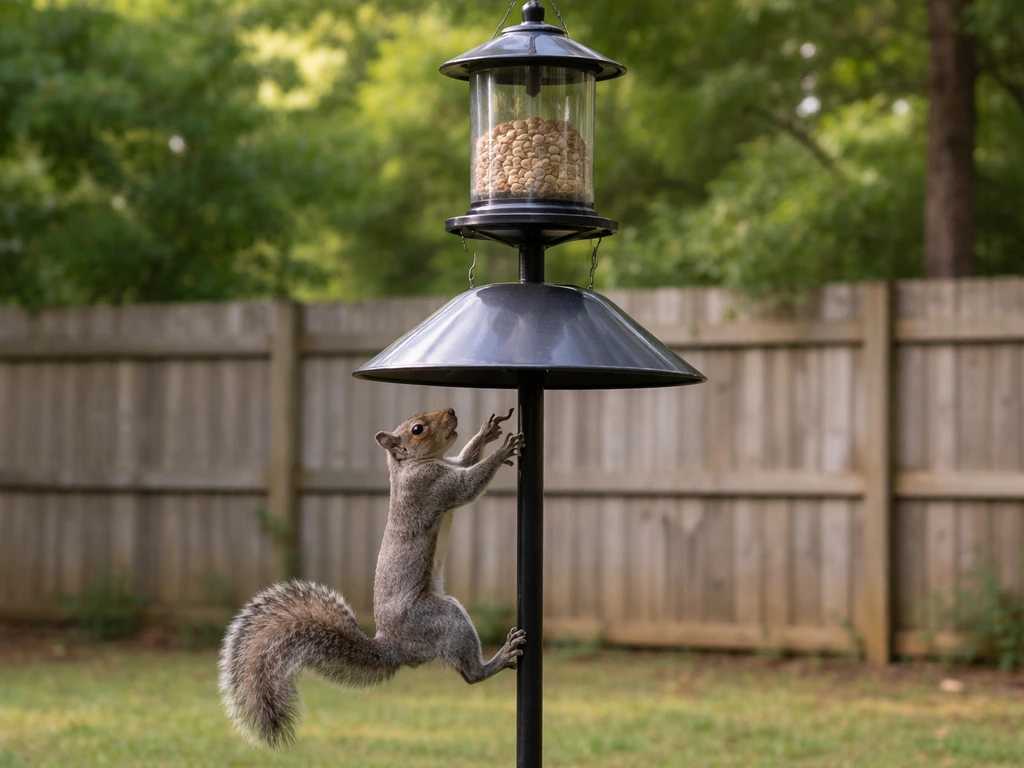
Squirrel-proofing remains one of the most searched bird feeder topics, and the core guidance hasn't changed much: pole-mounted feeders should sit about five feet off the ground with a cone-shaped baffle at least 17 inches in diameter below the feeder. Audubon describes weight-activated baffles that work by having a squirrel's body weight pull down a shroud to block the feeding ports. These work reasonably well in practice, but no setup is completely squirrel-proof if a squirrel is motivated enough. Placement matters just as much as the feeder design: keep feeders at least 10 feet away from trees, fences, or structures a squirrel can launch from.
Ants in hummingbird feeders are a specific and common July problem. The best solution is a moat (a water-filled cup that sits between the hanging hook and the feeder body), which many feeders now include as a built-in design feature. University of Maine Extension notes that ants that do get into nectar will drown and contaminate the sugar water, requiring an immediate full clean and refill. If your feeder doesn't have a built-in ant moat, you can buy an add-on moat for a few dollars and it makes a real difference.
Rats and other non-avian wildlife showing up at feeders is a recurring news topic. The U.S. Fish & Wildlife Service specifically warns that feeders can become 'buffets for other non-avian wildlife' and that poorly managed feeder stations can become disease-amplifying hotspots. Rat-proof feeders (typically tube designs with metal ports and weight-activated closures) and keeping the ground under feeders swept clean of fallen seed are the two most effective countermeasures.
Weather damage: heat, humidity, and storm season
July storm season in much of the U.S. means wind, heavy rain, and UV exposure are all working against your feeders. Plastic hoppers fade and crack after a season or two in direct sun. Metal feeders (powder-coated steel or aluminum) hold up much better but can get hot to the touch and may cause burns in birds that perch on them in intense heat, though this is rarely a serious problem in practice. Roof overhangs on hopper and platform feeders help keep seed dry after rain, which directly reduces mold risk. If a feeder is filling with water after rain, that's a design flaw worth addressing now, either by drilling small drainage holes in the base or replacing the feeder.
Food issues: bad seed, wrong mix, and nectar problems
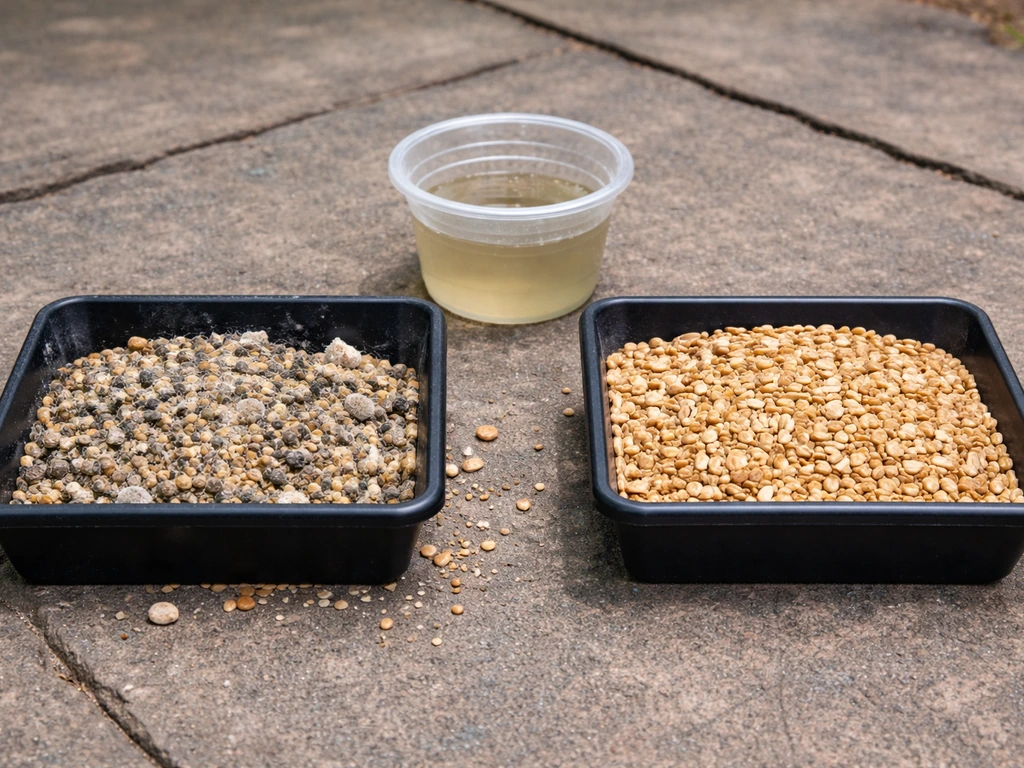
Seed quality problems occasionally make the news as product recalls, but the more common issue is seed that degrades in storage or in the feeder itself. Seed with a lot of filler (red milo, oat hulls, wheat) attracts fewer desirable birds and generates more waste on the ground, which then attracts pests. If your feeder activity seems low despite fresh seed, check whether the seed mix matches the birds you're targeting. If you want a shortcut, look for the bird feeder best match for the species you’re targeting, then prioritize easy cleaning and pest-proofing. Nyjer (thistle) for finches, black-oil sunflower for cardinals and chickadees, and safflower as a squirrel-deterrent option are the practical staples. For nectar, the standard is four parts water to one part plain white sugar, boiled and cooled. Red dye is unnecessary and potentially harmful.
Choosing the right feeder after reading the latest news
News about disease outbreaks, pest problems, or product updates should directly inform which feeder type you run. Here's how I think about feeder selection by species and situation, especially after reading something that suggests a change is needed. If you decide to swap your current setup, there are plenty of bird feeder alternatives like platform feeders, hummingbird-specific setups, or DIY stations to consider.
| Target Bird | Best Feeder Type | Key Feature to Prioritize | News-Driven Consideration |
|---|---|---|---|
| Cardinals, blue jays | Hopper or platform | Wide perches, covered roof | Platforms need more frequent cleaning; disease alerts favor hoppers |
| Finches (goldfinch, house finch) | Tube (nyjer or sunflower) | Small ports for nyjer; removable base for cleaning | Salmonella outbreaks most often linked to platform feeders with seed waste |
| Woodpeckers, nuthatches, chickadees | Suet cage, well off the ground | Sturdy wire cage, tail-prop design for larger woodpeckers | Suet melts in July heat; use no-melt suet cakes above 80°F |
| Hummingbirds | Nectar feeder with ant moat | Built-in moat, easy disassembly for cleaning | Daily or every-other-day cleaning is non-negotiable in summer |
| Orioles | Oriole feeder with jelly/orange cups | Wide platform, orange color for attraction | Clean jelly ports every 2–3 days; fermentation happens fast in heat |
| Doves, juncos, sparrows | Platform or ground tray | Low height, drainage holes | Higher disease/pest risk from ground placement; clean every 1–2 days |
| Bluebirds | Mealworm tray or enclosed feeder | Covered tray, small entrance to limit sparrow access | Freshness critical; live or refrigerated mealworms over dried in summer |
Smart camera feeders (like Bird Buddy and similar brands) have been getting consistent coverage because they make it easier to identify which species are visiting and spot unusual behavior that might indicate illness. They're genuinely useful tools and worth considering if you're trying to monitor a feeder station more closely in response to a local disease advisory. That said, they're a supplement to a well-maintained feeder, not a replacement for regular cleaning.
Audubon's guidance on feeder placement and type matching is worth noting here: table-style or platform feeders work well for ground-feeding birds, hopper and tube feeders suit shrub and treetop feeders like cardinals and finches, and suet feeders positioned well off the ground are best for woodpeckers, nuthatches, and chickadees. Getting this match right means less wasted seed and more of the birds you actually want to see.
Window feeders are a popular option that comes up often in product news. They work well for close-up viewing but do carry a higher window collision risk if not positioned carefully. Audubon recommends placing window decals no more than 2 to 4 inches apart to be effective, and external screens can further reduce collision risk if this is a problem in your yard.
Buy vs. DIY: how to decide after reading the news
If news about a product recall or a feeder design flaw has you wondering whether to replace what you have, the buy-vs-DIY question comes down to a few practical factors. DIY feeders (simple platform trays, PVC tube feeders, suet cages made from wire mesh) are genuinely effective and much cheaper. Their main limitation is that they typically lack pest-proofing hardware like weight-activated closures and metal ports, which are hard to replicate at home without specialized tools. If squirrels or rats are a documented problem in your yard, a quality commercial feeder with proven pest-proofing is worth the cost. If your main concern is disease hygiene, a DIY platform feeder that's dead easy to scrub down actually has an advantage over complex commercial hoppers with hard-to-reach corners.
For hummingbird feeders specifically, commercial designs with built-in ant moats and wide, dishwasher-safe components are worth buying rather than improvising, because the cleaning frequency is so high that convenience directly affects whether you'll actually keep up with it.
Your action checklist for today
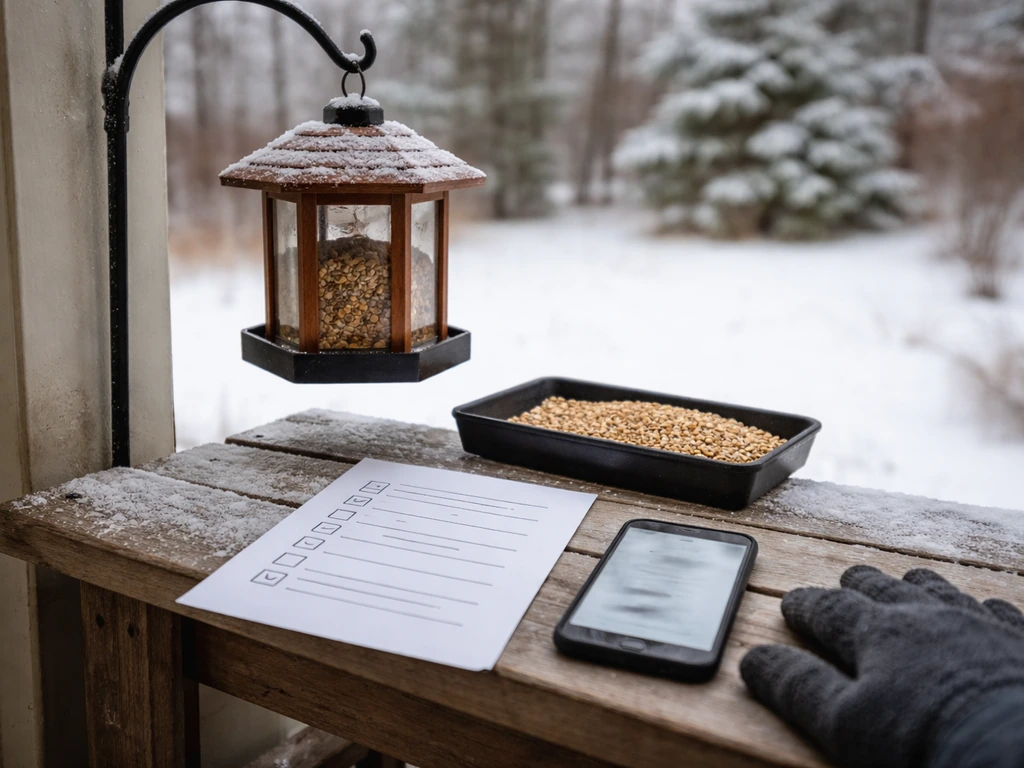
- Check USDA APHIS's HPAI wild bird detection table and your state wildlife agency's website for any active disease advisories in your region. If there's an active advisory, follow their guidance, which may mean removing feeders temporarily.
- Inspect every feeder you have right now: look for wet or clumped seed, mold, cracks, standing water, and ant activity. Remove and discard any compromised food immediately.
- Clean hummingbird feeders today if it's been more than two days since the last clean, especially if temperatures have been above 80°F. Use warm water and rinse multiple times; use a diluted bleach solution (1:9 bleach to water, 10-minute soak) if you suspect mold.
- Set a two-week deep-clean reminder for all seed and suet feeders (more frequent if you're in a wet or hot stretch). Mark it on your phone calendar now.
- Check your feeder placement: pole-mounted feeders should be about five feet high with a cone baffle at least 17 inches in diameter below, and at least 10 feet from any squirrel-launching point.
- Match your seed and feeder type to your target birds using the table above. Replace low-quality seed mixes with species-specific options (black-oil sunflower, nyjer, safflower).
- If you're dealing with ants in your hummingbird feeder, add a water-filled ant moat above the feeder. This is a $5 to $10 fix that works.
- Decide on the buy-vs-DIY question: if pests are your main problem, invest in a commercial pest-proof feeder. If hygiene and cleaning ease are the priority, a simple DIY platform or a commercial feeder with dishwasher-safe parts is the better choice.
- If you're thinking about adding a smart camera feeder, treat it as a monitoring upgrade to a well-maintained setup, not a replacement for regular cleaning and maintenance.
- Bookmark your top two or three news sources (USDA APHIS, Cornell Lab/Project FeederWatch, your state agency) and check them monthly or whenever you hear about a disease event or recall.
The core takeaway is that bird feeder news is almost always actionable. Whether it's a disease alert, a new feeder worth considering, or a pest problem trending in your region, the response follows the same pattern: check the source, assess your current setup against what the news recommends, clean what needs cleaning, adjust what needs adjusting, and keep your feeder types matched to the birds you want to attract. If you are trying to attract common bird feeder birds, start by choosing feeders that match the species that visit your yard birds you want to attract. You don't need to overhaul everything every time there's a new headline. You just need a solid baseline routine and the ability to respond quickly when something genuinely requires it.
FAQ
What should I do immediately if bird feeder news says there’s a local HPAI or salmonella concern?
If you suspect a disease event, do not just swap seed or clean one feeder. Remove all feeder types that are hard to sanitize quickly (platforms, hoppers with lots of ledges, and anything with standing residue), then disinfect and fully dry the remaining feeders before refilling. Also keep an eye on your bird bath, since droppings and dirty water can spread risk even when feeders look “clean.”
How can I tell if the bird feeder news I’m seeing is reliable enough to act on today?
Don’t overreact to brand announcements. A practical rule is to treat a recall or “new formula” claim as information only until you can confirm it through a wildlife agency, university extension, or a major birding organization. If the source is only a retailer or social post, verify the issue number, affected lot numbers (if listed), and the actual distribution area before changing your feeding routine.
My feeders look “clean” but seed still gets damp. What should I troubleshoot first?
If you’re cleaning on schedule but still see wet seed, the problem is usually drainage and placement, not just cleaning frequency. After rain, check whether water is pooling inside hoppers and at the base, then add drainage holes if the design allows, reposition the feeder to improve airflow, and keep seed trays off the ground so rainwater does not wick into the feed.
Should I stop feeding during hot, rainy weeks, or only change my cleaning routine?
Even with good cleaning, feeder downtime can matter. If weather is consistently wet or temperatures are extreme, consider temporarily removing higher-exposure feeders like platforms (more direct rain and droppings contact) and running only the easiest-to-maintain options until conditions stabilize. Reintroduce feeders once you can inspect and service daily or every other day.
If only part of the seed looks bad, can I salvage the rest?
For seed that’s clumped or moldy at the bottom, discard it even if the top looks fine. Mold spores and fermentation byproducts can contaminate the entire batch once moisture has moved upward, and leftover damp seed attracts pests. Next, clean the entire feeder pathway (ports/tube interior and base) and let the feeder dry completely before refilling.
Could bird feeder news about seed quality explain why fewer birds are visiting even when I refill?
Yes, feeder choice can create “silent” declines. If your goal is finches and you switched to a generic mix, birds may not land even if seed is fresh, because some mixes have too much filler and not enough of the right components. Confirm you have the right staple for your target birds (for example, black-oil sunflower for many common seed-eaters, nyjer for finches, safflower as a squirrel-reducing option) and that the ports opening size matches how birds feed.
What are the most common squirrel-proofing mistakes that still lead to raided feeders?
If squirrels are getting access, treat it like a placement and access problem, not only a product issue. Keep feeders away from launch points (trees, fences, railings), verify that baffles do not touch supports, and ensure the pole is smooth enough that climbing materials cannot create leverage. Weight-activated systems help, but they still fail when the feeder is too close to cover.
How do I avoid hummingbird feeder problems if I can’t clean every day?
For hummingbird feeders, the biggest edge case is “almost clean” plus leftover nectar film. After scrubbing, rinse thoroughly and dry, then re-mix nectar immediately before refilling. If your feeder sits in strong sun or you run it farther than daily schedule allows, simplify your setup (fewer feeders, better placement) rather than hoping longer intervals are okay.
If I already use an ant moat, why do ants still end up in the nectar?
For ant issues, a moat works best when the feeder is hung so nectar cannot bridge across the moat gap. If ants are still reaching nectar, re-check that the moat is filled to the proper level, that no debris blocks the moat opening, and that the hanging area is free of ant “bridges” like vines or loose cords. Then do a full clean and refill, because ants that reach nectar can contaminate it quickly.
Are DIY feeders always safer for disease hygiene than commercial feeders?
DIY feeders can be great for hygiene, but the failure mode is corners, seams, and hard-to-reach corners where residue builds. If you make or use a DIY station, design it so you can completely disassemble or access all surfaces for scrubbing, and use food-safe materials that tolerate repeated washing. If squirrels or rats are known locally, prioritize DIY designs that include real closure mechanisms rather than relying on “deterrent” shapes alone.
How should I use a smart camera feeder during a local disease advisory?
Smart camera feeders are helpful for spotting unusual behavior, but they should not change how often you clean. Use them to answer specific questions: are the same species returning daily, are there fewer active birds than expected, and are there visible abnormalities like lethargy. If you detect sick or dead birds near the station, shift into the disease-response steps (pause feeding if advised, clean-disinfect thoroughly, and remove nearby attractants like spilled seed).
What should I do if birds are colliding with my windows after putting up a window feeder?
Window feeders can be safe, but the collision risk depends heavily on visibility cues and placement height. If birds are hitting the glass, update the decals so they actually cover a meaningful pattern across the view (spacing matters), and consider adding an external screen that reduces reflections and creates a physical barrier. Also reposition so birds do not mistake reflections for open flight space.
Next Article
Bird Feeder Can Setup: DIY Fixes and Safe Selection Guide
DIY bird feeder can fixes, safe setup, and how to choose the right can-style feeder for finches, sparrows, suet