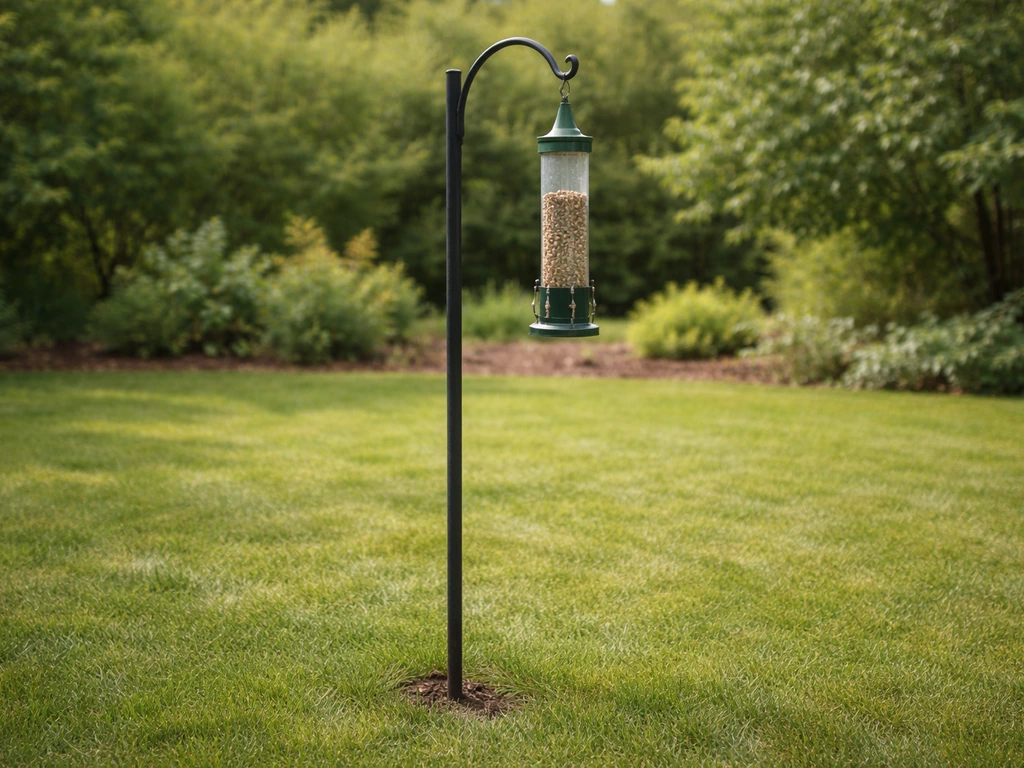
The best free-standing bird feeder with a weighted base is one that stays planted on the ground or low stand without tipping in wind, doesn't become a squirrel buffet, and matches the birds you're actually trying to attract. For most backyard setups, a heavy-base hopper or platform feeder weighing at least 5–8 lbs when empty (more with seed) is your most stable, versatile option. That weight, combined with a wide, low-profile base, keeps it grounded in gusts that would send a lightweight hanging feeder swinging wildly. If you're feeding finches or nuthatches specifically, a weighted-base tube feeder is the better match. Either way, knowing exactly what "weighted base" means in practice will save you from buying the wrong thing.
Best Free Standing Bird Feeder With Weighted Base Guide
Marcus Hendricks
30 May 2026
What 'Weighted Base' Actually Means (and Why It's Not All the Same)
Here's where people get confused, and it's worth spelling out clearly before you spend money. The phrase "weighted base" shows up in two very different contexts in the bird feeder world, and they are not the same thing.
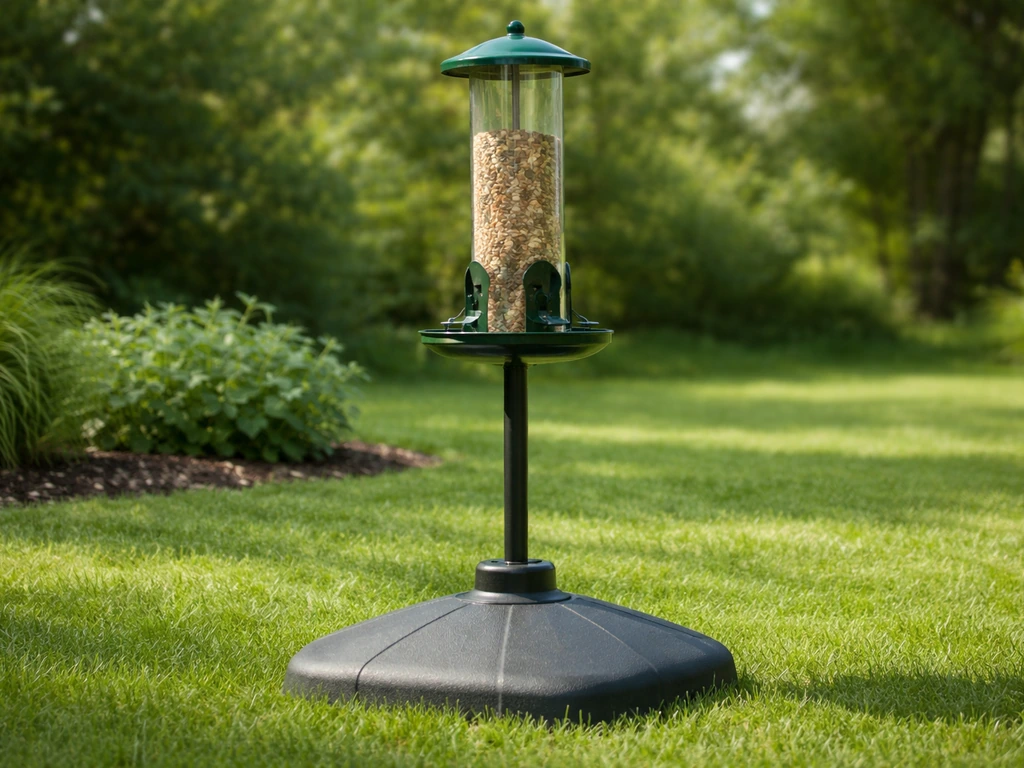
The first meaning is a ballast-style weighted base: a genuinely heavy bottom section, often filled with sand, cast iron, thick resin, or dense composite material, that lowers the feeder's center of gravity so it resists tipping. This is purely a physical stability feature. The heavier the base relative to the feeder's height and width, the harder it is for wind or a bumbling raccoon to knock it over. This is what most people searching for a "free-standing feeder with a weighted base" are actually looking for.
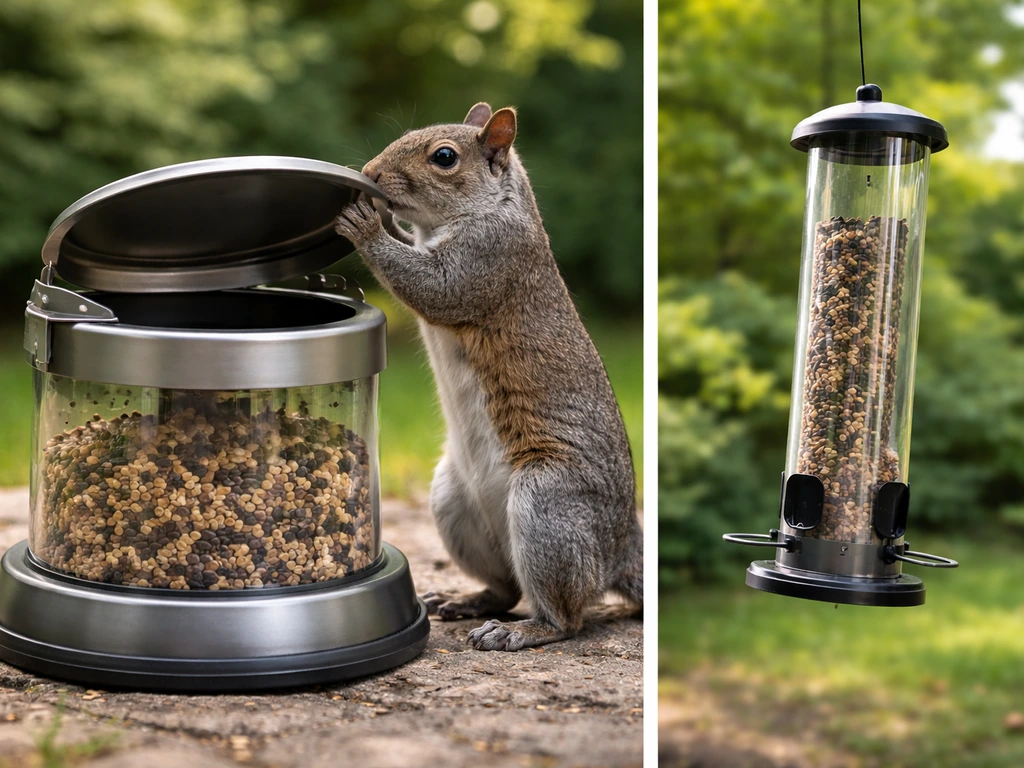
The second meaning is weight-activated (or weight-sensitive) squirrel-proofing: a mechanical system where the feeder's seed ports or shroud close automatically when an animal heavier than a songbird presses on the perch or mechanism. The Brome Squirrel Buster line is the best-known example of this design. When a squirrel lands and puts enough weight on the feeder, the shroud drops and blocks the ports. This is a pest-deterrent feature, not a stability feature. A weight-activated feeder isn't necessarily heavy or stable at its base.
You can find feeders that do both: a weight-activated port closure system mounted on a feeder with a genuinely heavy, stable base. But many listings use "weighted" loosely, so read the product specs carefully. Look for actual base weight in pounds, base diameter in inches, and whether the feeder can be staked or anchored to the ground. If a listing only mentions "weight-sensitive" without specifying base mass, you're likely looking at squirrel-proofing, not ballast stability.
Also worth clarifying: "free-standing" technically means the feeder supports itself without a hanging cord or a mounted pole arm. It sits on its own base on the ground or a low surface. This is different from a pole-mounted feeder on a shepherd's hook (which is still supported from above) or a hanging feeder on a bracket. True free-standing feeders rely entirely on their own weight and base footprint for stability, which is exactly why the weighted base matters so much.
Top Criteria for Picking the Right Feeder
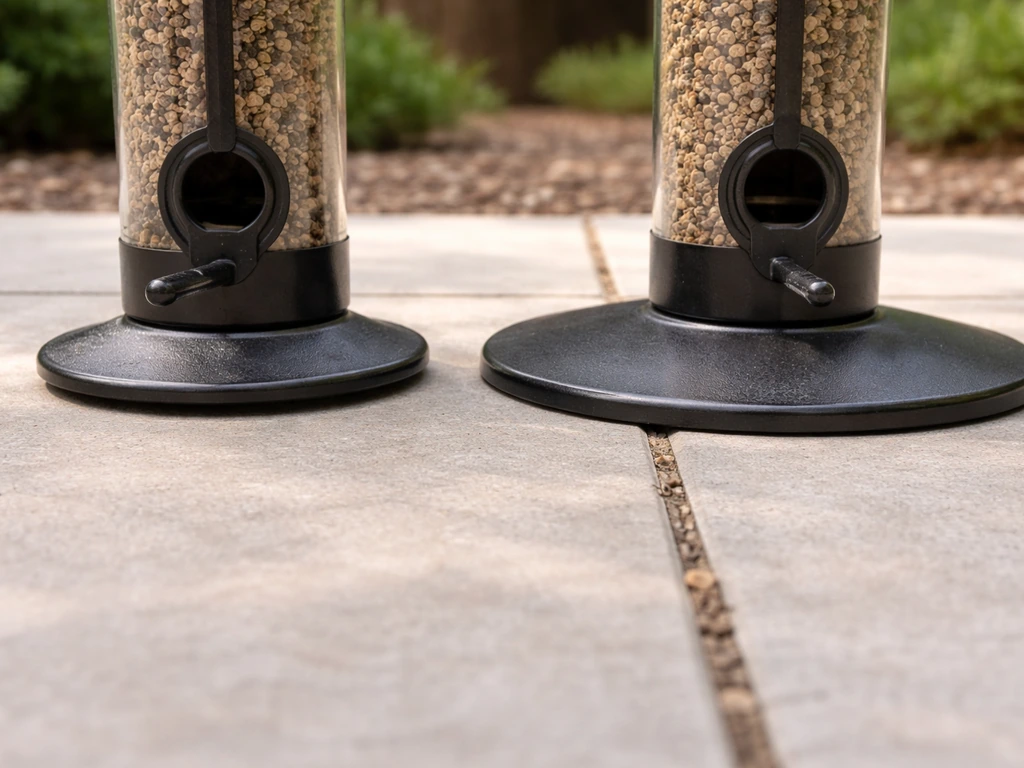
Once you understand what you're looking for, here are the specific things to evaluate before buying. Don't just go by photos or star ratings.
Base Weight and Footprint
Aim for a base that weighs at least 4–6 lbs on its own, before seed is added. A wide, flat base (12 inches or more in diameter) distributes the weight better and is much harder to tip than a narrow pedestal. Feeders with a base diameter under 8 inches on a tall stand are a bad idea in windy yards, regardless of how heavy the top reservoir is. Top-heaviness is actually a tipping risk, so the weight needs to be in the base, not the seed chamber.
Material and Construction
Cast iron, thick powder-coated steel, and dense composite resin are the most reliable base materials. Thin plastic bases crack in cold temperatures and warp in summer heat, which means they lose their shape and stability over time. For the feeder body itself, UV-resistant polycarbonate, recycled plastic, or cedar wood hold up well through seasons. Avoid anything described only as "heavy-duty plastic" without a UV-resistance or temperature rating.
Anchoring Options
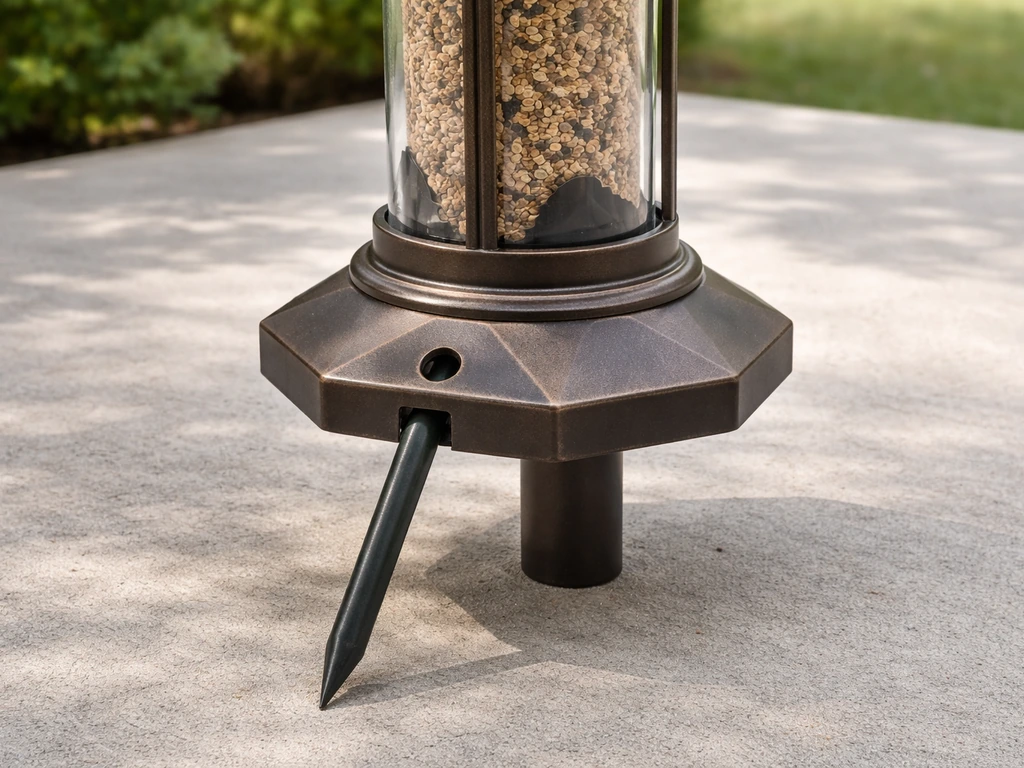
The best free-standing feeders give you the option to anchor them. Look for a ground stake port in the base, a pre-drilled mounting hole, or a design that allows you to place it on a patio slab and weigh the base down with an additional sandbag or decorative stone. If you're in a region with regular strong winds (20+ mph gusts), anchoring capability is non-negotiable.
Seed Capacity
Capacity is a quality-of-life issue. A feeder that holds 4–6 lbs of seed needs refilling every 2–4 days during peak feeding season. A 10–12 lb capacity feeder can go a week or more. Larger capacity means more dead seed sitting at the bottom if it isn't eaten quickly though, which increases mold risk. Match capacity to how many birds visit your yard, not just to how often you want to refill.
Cleaning Access
This is the one most people overlook until they're dealing with moldy seed. Look for a feeder that opens fully at the top or bottom, with no small corners or channels where wet seed can pack and hide. Removable trays, hinged lids, and smooth interior surfaces make a real difference. If you can't rinse it out with a garden hose and let it dry in 10 minutes, the design is working against you.
Matching the Feeder Type to the Birds You Want
Not every feeder type works equally well in a free-standing, weighted-base format. Here's how the main styles break down by bird species and what you're trading off with each.
| Feeder Type | Best For | Seed Type | Weighted Base Compatibility | Trade-offs |
|---|---|---|---|---|
| Hopper | Cardinals, blue jays, chickadees, mixed flocks | Black oil sunflower, safflower, mixed blend | Excellent — wide base supports heavy reservoir | Squirrels also love it; needs rain cover |
| Platform / Tray | Doves, sparrows, juncos, ground-feeding birds | Millet, sunflower, cracked corn | Best stability — low and wide by design | Seed exposed to rain and droppings; refill more often |
| Tube | Finches, nuthatches, chickadees | Nyjer (thistle), sunflower chips | Good — needs a stable base stand or ground mount | Narrower footprint; needs stake or wide base |
| Suet Cage | Woodpeckers, nuthatches, starlings | Suet cakes | Fair — usually mounted on pole, less common free-standing | Starlings can dominate; upside-down design helps |
Hopper Feeders: The Most Versatile Choice
For most people, a hopper feeder on a weighted-base stand hits the sweet spot. If you want the right setup, a well-chosen this is our happy place camper bird feeder can make it easier to keep your station stable and enjoyable all season. Cardinals, chickadees, blue jays, and house finches all use hoppers comfortably, and the enclosed seed reservoir protects against rain better than an open tray. The wider the base relative to the hopper height, the more stable it is. Look for models where the base is at least as wide as the hopper itself.
Platform Feeders: Best Raw Stability
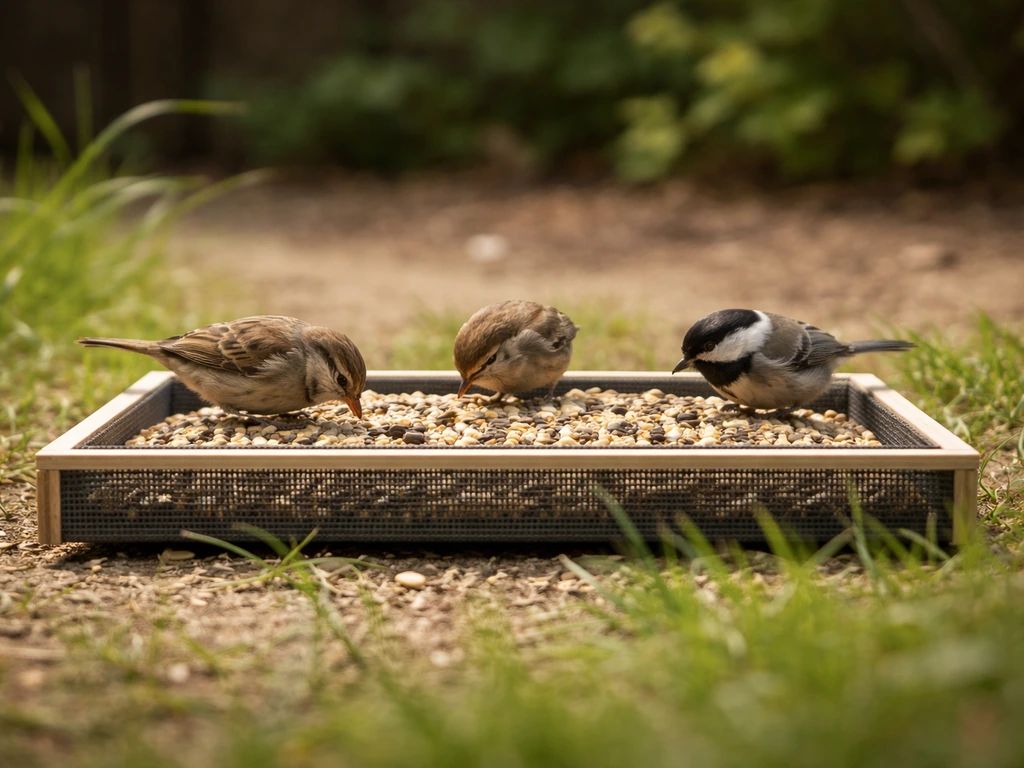
Platform and tray feeders are naturally low and wide, which makes them the most inherently stable design in wind. Ground-feeding birds like mourning doves, dark-eyed juncos, and white-throated sparrows love them. The tradeoff is that seed is completely exposed, so rain and bird droppings contaminate the seed fast. If you go this route, look for a platform with drainage holes and a mesh floor so wet seed falls through rather than pooling.
Tube Feeders: Great for Finches, Trickier to Stabilize
Tube feeders are naturally tall and narrow, which makes free-standing stability harder to achieve without a good base design. The best approach is a tube feeder sold as part of a complete system with a wide, heavy base or one that accepts a ground stake. Finches, nuthatches, and pine siskins are the primary users. If you're targeting goldfinches specifically, a Nyjer-specific tube with small ports is the right call.
Suet Feeders: Usually Pole-Mounted, But Options Exist
Suet feeders in a true free-standing format are less common, but you can find suet cage attachments for hopper-style feeder stands. Woodpeckers, nuthatches, and brown creepers are the big suet fans. The key consideration here is that suet melts in summer heat, so in warm months, switch to no-melt suet cakes or use a shaded spot. Upside-down suet feeders deter starlings, which can't cling inverted but woodpeckers can.
Weather, Seed Capacity, and Keeping Things Clean
Weather is the fastest way to ruin a feeder that looked great in the store. Rain turns seed into a moldy brick, UV exposure makes plastic brittle and discolored, and freeze-thaw cycles crack bases that weren't designed for it. Here's what actually matters.
Rain and Snow Protection
A good hopper feeder has an extended roof overhang of at least 2–3 inches past the seed tray on each side. This keeps the majority of rain and snow off the seed. For platform feeders, mesh floors or drainage holes are essential. In winter, check feeders after each snowfall and clear accumulated snow off the perches and seed tray so birds can still access the food. Wet seed left to sit even for 24–48 hours starts to mold, and moldy seed can make birds sick.
UV Resistance and Temperature Range
Look for feeders rated for UV resistance if you're in a sunny climate. Polycarbonate and recycled plastic hold up significantly better than standard ABS plastic, which yellows and cracks within a season or two. If you're in a cold climate, check that the base material is rated for freezing temperatures. Some resin composites become brittle below 0°F and can crack when a bird lands on a frozen perch.
Cleaning Routine That Actually Works
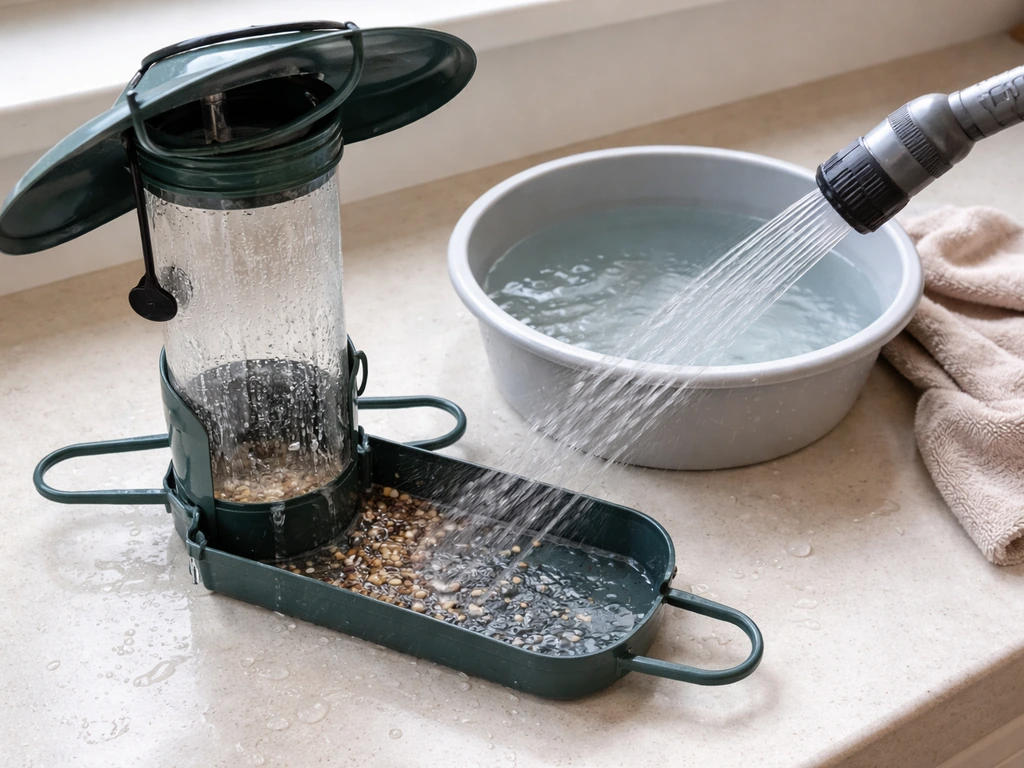
Clean your feeder at least once every two weeks during peak season, and once a week in wet or humid weather. The routine is simple: empty any remaining seed, rinse with a 9:1 water-to-bleach solution, scrub with a bottle brush, rinse thoroughly, and let it air dry completely before refilling. Never refill a damp feeder. Mold grows fast on wet sunflower seed, and a dirty feeder is one of the biggest risks to bird health at your station.
In winter, use black oil sunflower seed, safflower, or suet, all of which hold up better in cold and wet conditions than mixed blends with cracked corn, which absorbs moisture quickly and ferments. Nyjer seed for finches also stays relatively dry since the small port size limits how much gets exposed to air.
Pest-Proofing: Squirrels, Raccoons, and Wind Tipping
A weighted base helps with wind stability, but it doesn't automatically mean your feeder is pest-proof. If you want the best suction cup bird feeder, focus on models designed for smooth, vertical mounting and consistent grip a weighted base. These are related but separate problems that need separate solutions.
Squirrels
Squirrels are persistent, acrobatic, and heavy enough (1–2 lbs) to trigger weight-activated port closures. If your feeder has a weight-activated shroud mechanism, a squirrel landing on it will close the ports and block access to seed. This works well, but squirrels will often keep trying and can damage plastic perches or shrouds over time. A metal-ported feeder with a weight-activated shroud is more durable long-term than one with plastic components.
For free-standing feeders specifically, the challenge is that squirrels can approach from the ground rather than jumping from trees. A feeder that's too low (under 4 feet) is easy pickings. If possible, place your free-standing feeder at least 4–5 feet off the ground on a stand, and choose a model with a baffle built into the stand. A cone-shaped squirrel baffle mounted below the seed reservoir is one of the most effective deterrents available.
Raccoons
Raccoons are the real test of a weighted base. A 15–20 lb raccoon leaning on a feeder will tip almost anything that isn't anchored or genuinely heavy. If raccoons are in your area, anchor the base to the ground with a stake, or place the feeder on a concrete patio slab with additional weight added to the base. Raccoons are most active at night, so bringing the feeder in after dark is the simplest solution if you're not ready to invest in a fortified setup.
Wind Tipping
Strong wind is a physics problem: the taller and narrower the feeder, the more leverage the wind has to tip it. The fix is a combination of a heavy, wide base and a low center of gravity. Feeders under 24 inches tall with a base wider than their reservoir are significantly more stable than tall, narrow designs. In persistently windy areas, look for feeders with a ground stake port and use it. A 12-inch landscape stake through the base turns a tippable feeder into a planted one.
Setting It Up Today: Placement, Height, and Routine
Where you put the feeder matters as much as which feeder you choose. Get the placement wrong and you'll have fewer birds, more pests, and more feeder damage.
- Place the feeder within 3 feet of a window or more than 30 feet away from windows. This sounds counterintuitive, but feeders at 3 feet or closer cause birds to fly too slowly to injure themselves on impact. Beyond 30 feet, birds have enough space to avoid the glass. The danger zone is 4–30 feet, where birds gain enough speed to be injured in a window strike.
- Position the feeder 10–12 feet from shrubs or trees. Close enough for birds to retreat to cover quickly if a hawk appears, but far enough that squirrels can't use branches as a launch pad to the feeder.
- Set the seed tray or lowest perch at 4–5 feet off the ground. This puts it out of easy reach for ground-based pests and at a comfortable height for you to refill without straining.
- Face the feeder opening away from prevailing winds. If your yard gets regular northwest winds, orient the seed port or tray opening toward the southeast so wind doesn't blow seed out and rain doesn't blow in.
- Clean on a schedule. Pick a day of the week and make it a habit: empty, rinse, dry, refill. Two weeks maximum between cleanings in dry weather, one week in wet seasons.
For winter specifically, keep the feeder stocked consistently rather than letting it go empty. Birds that rely on your feeder through cold months have adjusted their foraging routes to include your yard. Running out of seed during a cold snap forces them to expend energy finding alternative sources at exactly the time they can least afford to. Suet is especially valuable in winter since it's a high-fat energy source that helps birds maintain body temperature overnight.
Alternatives and DIY If You Can't Find the Right Model
The market for true free-standing weighted-base feeders is smaller than hanging or pole-mounted options, so sometimes you can't find the exact combination of features you need off the shelf. Here are practical workarounds.
Build Your Own Weighted Base
If you find a feeder you love but its base isn't heavy enough, add your own ballast. Fill a wide plastic or ceramic planter base (12–16 inches in diameter) with quick-set concrete, let it cure, and press a short length of metal pipe into the center before it sets. Once hardened, you have a custom weighted base that accepts any feeder pole. Total cost is usually under $20 in materials. This DIY approach gives you full control over base weight and diameter, and you can size it specifically for your wind conditions.
Use a Weighted Base Stand with a Hanging Feeder
Some of the best feeder stands on the market are designed as free-standing units with a heavy base and a shepherd's hook or arm at the top. If you want a quick starting point, the best bird feeder stands focus on stability, weight, and easy anchoring so they hold up in wind and resist pests. Technically, the feeder itself hangs from the arm, but the system as a whole is free-standing and weighted. If you find a hanging feeder you love, pairing it with a quality weighted base stand is a legitimate and often superior solution to buying an integrated free-standing unit. A great option for many yards is the best hanging bird feeder paired with a heavy, weighted base stand for extra stability and less swinging hanging feeder. This approach also gives you the flexibility to swap feeders seasonally.
Platform Feeders as a Simple DIY
A platform feeder is genuinely easy to build. A 12x12 inch piece of exterior-grade cedar or redwood, sanded smooth, with 1/4-inch drainage holes drilled in the corners and a lip around the edge, mounted on a short post or cinder block, functions perfectly as a weighted-base platform feeder. Cedar is naturally rot-resistant and doesn't need treatment. Sand it once a year to keep the surface smooth and rinse it weekly. Mourning doves, juncos, and sparrows will use it within days of being placed.
When to Consider Other Feeder Styles
If stability and pest-proofing are your main goals but you're not tied to a free-standing format, a deck-mounted feeder or a pole-mounted feeder with a squirrel baffle system might actually serve you better. If you're set on a mounted option, the best deck mounted bird feeder can be a great way to keep seed steady while still attracting the species you want. Deck-mounted feeders anchor directly to a railing and eliminate tipping risk entirely. Hanging feeders on a baffled pole are arguably the most squirrel-resistant setup you can build. The free-standing weighted-base format is ideal when you don't have a good mounting surface, want to place the feeder in the middle of a lawn or garden bed, or want the aesthetic of a ground-level garden feature.
Whatever format you end up with, the core principles are the same: stable base, quality materials, appropriate seed for your target birds, consistent cleaning, and smart placement. A high quality bird feeder also depends on using a truly stable design with the right base weight and materials stable base. Get those right and you'll have an active, healthy feeding station through every season.
FAQ
How can I tell whether “weighted base” means ballast stability or squirrel-proofing?
If the listing only says “weighted base” but does not include the base weight in pounds and the base footprint (diameter), assume you might be looking at a weight-activated squirrel mechanism rather than ballast. A quick rule, measure the base width and check whether it is at least as wide as the seed reservoir, then confirm there is an anchoring option like a stake port or pre-drilled hole.
Can a feeder with a heavy top still tip even if the base is “weighted”?
Yes, if the base is heavy but the top is still too tall and narrow. For wind resistance, the center of gravity matters more than peak reservoir weight, so avoid models that sit on a tall skinny pedestal. Prefer feeders where the base width is wide and the overall height is under about 24 inches, then add anchoring if gusts are common.
What placement height works best for a ground-sitting weighted-base feeder?
Use the feeder’s intended perch height and local bird size as your guide, but for free-standing models, the main safety threshold is for squirrels. Place the feeder about 4 to 5 feet off the ground when possible, and look specifically for a built-in stand baffle under the reservoir rather than relying on the base alone.
Will a weight-activated squirrel feature stop squirrels permanently?
A weight-activated shroud can block access when a squirrel triggers it, but it does not fully prevent chewing or repeated attempts. If squirrels are persistent, prioritize metal-ported or metal components where the shroud contacts the feeder opening, because plastic perches and shrouds often wear out over time.
Will a weighted base eliminate raccoons and squirrels in every yard?
Not always, because many squirrel deterrents target top access but do not stop ground access. If raccoons or squirrels are active near the feeder, anchor the base with a stake (when designed for it) or add extra weight on a patio slab. For raccoons, bringing it in at night is often the simplest reliable control.
What’s the most common reason seed gets moldy on a stable weighted-base feeder?
Yes, if you don’t match seed type to the feeder’s exposure and drainage. Platforms expose seed to wetness, so choose platforms with drainage and mesh floors, and avoid leaving seed to sit during rainy stretches. For hopper feeders, keep an eye on how fully the top lid seals so rain does not load the tray area.
Do I need to worry about freezing damaging the “weighted” base material?
If you are feeding in freezing weather, confirm the base material rating before buying. Some dense composites and resins become brittle below 0°F, which can cause cracks that later weaken stability and leak points. Also clear snow from perches and the tray after each snowfall so birds can access food.
How often should I clean the feeder if the weather is humid or rainy?
During peak feeding, plan cleaning based on moisture, not just time. If you see damp or clumped sunflower seed, shorten your schedule to weekly or more, and never refill while any part of the feeder is damp. Air-dry fully, then restart with fresh seed to avoid mold cycling.
Which feeder type is usually best for finches versus larger backyard birds?
For finches, a tube feeder with smaller ports and a dry-tending seed like Nyjer helps limit exposed seed volume. If you want finches but the feeder is a hopper designed for larger birds, you may get less finch use. Choose tube style plus a complete heavy base or stake-compatible design for stability.
What are safe ways to add anchoring if my yard setup doesn’t match the manufacturer’s instructions?
If your yard does not offer a good mounting surface, you can still anchor a free-standing setup by using the base’s stake port or by weighing on a hard surface. Without an engineered stake option, avoid improvised straps that can tip the feeder when you tug them, instead use a compatible ground stake system or a designed base hole.
Next Article
Best Bird Feeder Stands: Buying Guide for Stand-Alone Setups
Choose the best bird feeder stands with stability, reach, weatherproofing, pest control, and easy cleaning for your yard