The type of bird feeder you should get depends on one thing first: which birds you actually want in your yard. A tube feeder filled with nyjer seed will pull in goldfinches and siskins all day, but a cardinal will never touch it. A hopper feeder loaded with black-oil sunflower seed is the single most versatile starting point for most backyards, attracting cardinals, chickadees, nuthatches, jays, and more. If you only want one recommendation before reading further, that's it. But if you want to attract specific species, set up multiple feeder types, or avoid squirrels and mess, the details below will help you get it right.
What Type of Bird Feeder Should I Get? Quick Guide
Marcus Hendricks
7 Jul 2026
Start with your goal: which birds do you want to attract?
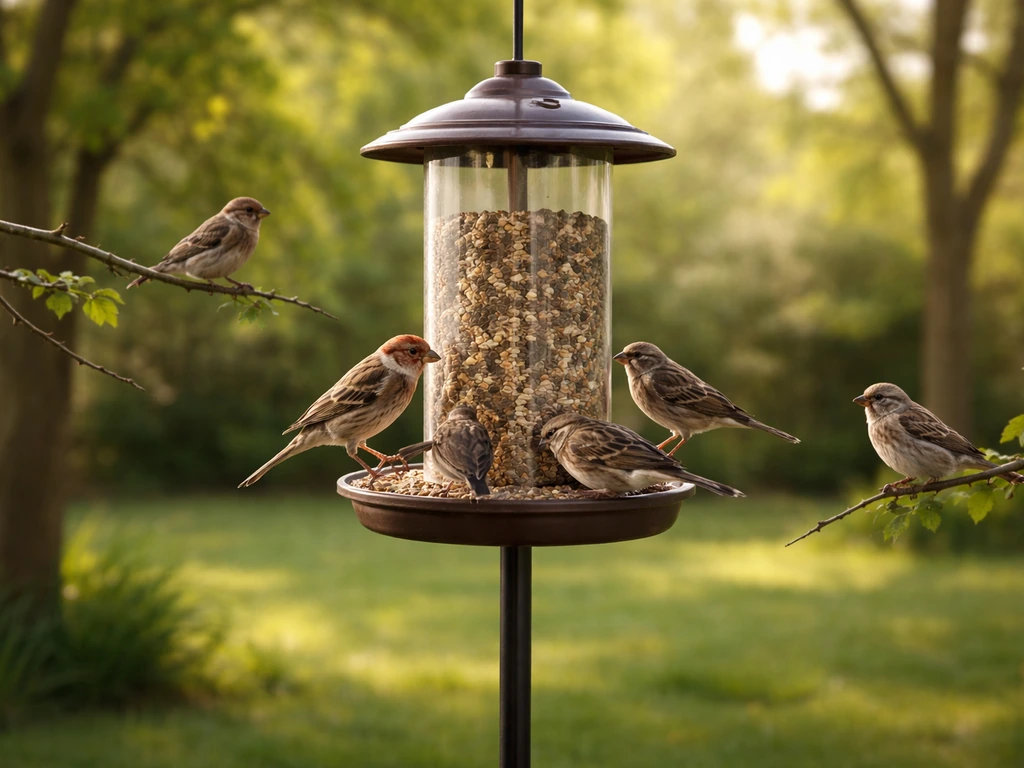
Before you buy anything, spend five minutes watching your yard and asking: what birds are already nearby, and which ones do you actually want to see up close? This matters more than any feeder feature. A beautifully built suet cage does nothing for finches. A nectar feeder does nothing for sparrows. Bird feeders are species-specific tools, and buying the wrong one means watching it sit empty for weeks.
Think about the habitat around your yard too. Wooded backyards with mature trees attract woodpeckers, nuthatches, and chickadees. Open lawns and garden borders tend to draw sparrows, doves, and juncos. Near water or wetland edges, you may see orioles and warblers passing through in migration. Your regional bird population also shifts by season. Winter is the best time to start feeding in most of North America because natural food is scarce and birds are actively searching for supplemental sources.
Once you know who you're feeding, you can match the feeder style to that bird's natural feeding behavior. That's where most beginners go wrong: they buy a feeder they like the look of, rather than one that fits how their target birds actually eat.
Choose the right feeder style by seed type and feeding behavior
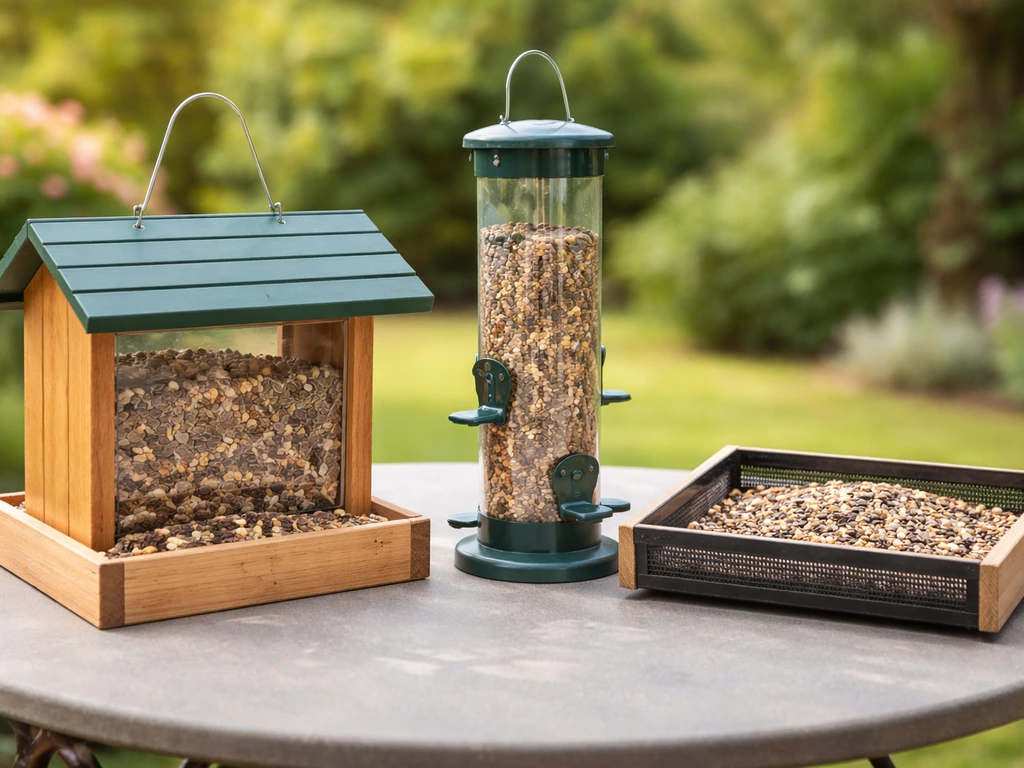
Every feeder style is designed around a specific food type and feeding behavior. Here's a plain-language breakdown of the main types and what they're actually good for.
Hopper feeders
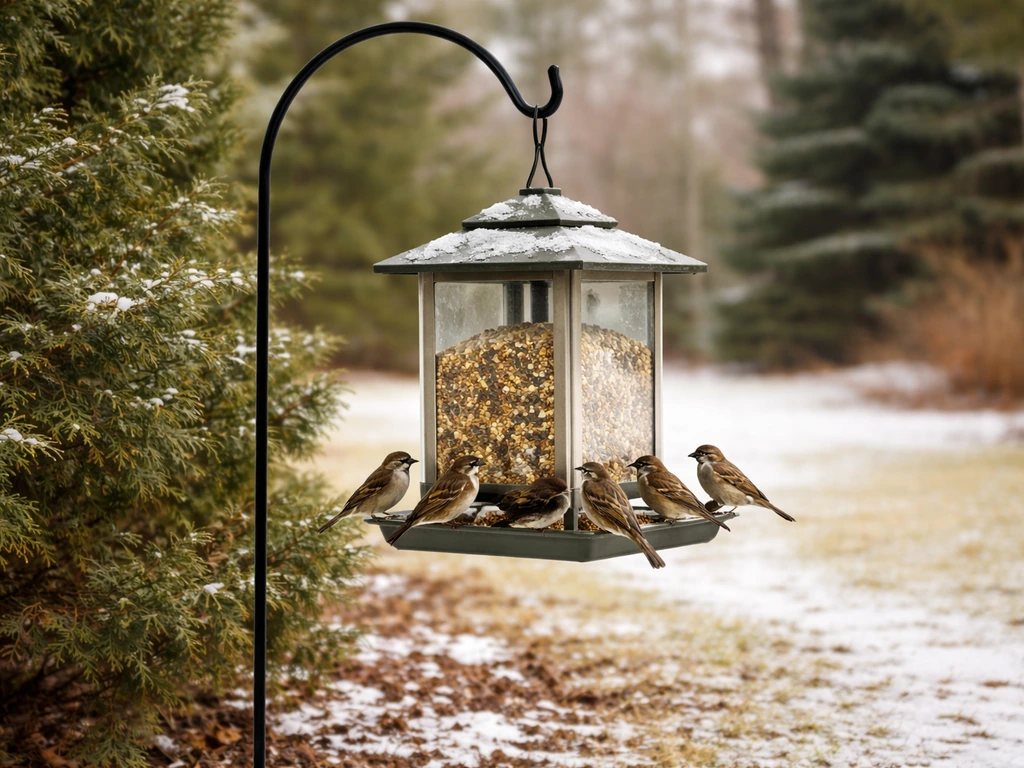
These are the classic house-shaped feeders with a roof and a central seed reservoir that gravity-feeds into a tray. They hold a lot of seed (often 3 to 8 lbs depending on the model), work with sunflower seeds, mixed seed blends, and safflower, and attract the widest variety of medium and large songbirds. Cardinals love them. So do blue jays, house finches, chickadees, and nuthatches. If you want one feeder that does the most work, a well-built hopper is usually it. The downside is that the seed can get wet and mold if the roof doesn't drain well, so look for sloped roofs with overhangs and drainage holes in the tray.
Tube feeders
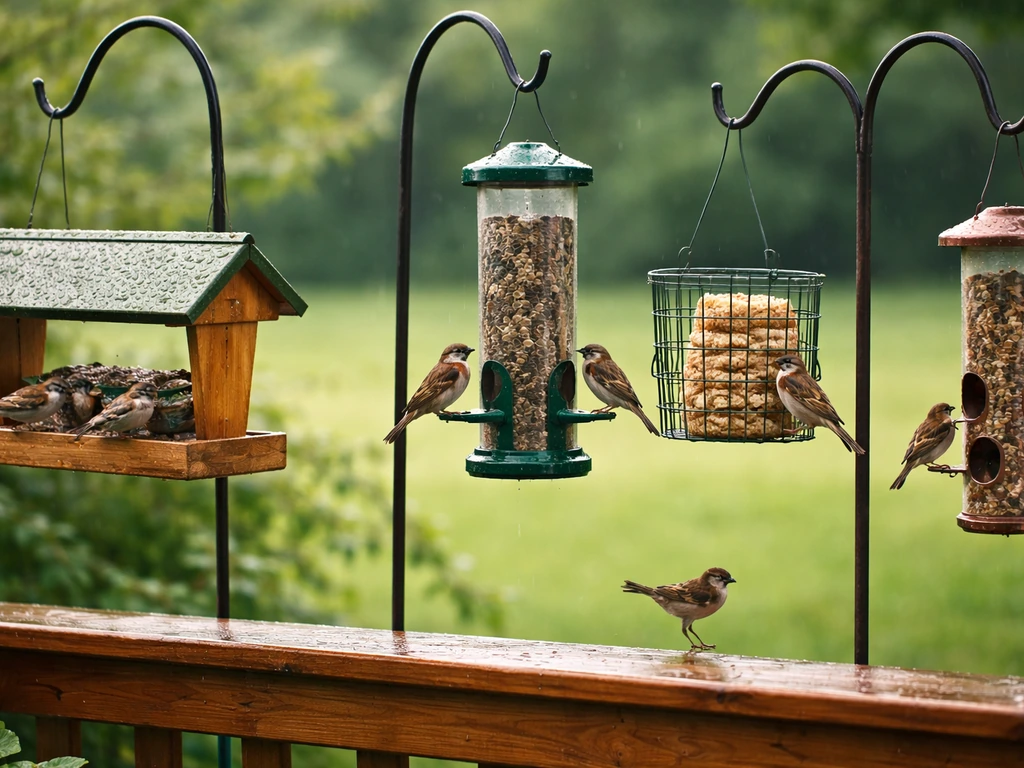
Tube feeders are long cylindrical feeders with multiple small ports and perches. They're designed for small seeds like nyjer (thistle) and sunflower chips, and they tend to attract smaller birds like American goldfinches, pine siskins, house finches, and redpolls. A narrower tube feeder with tiny ports is specifically designed for nyjer and keeps the seed dry and relatively inaccessible to larger birds and squirrels. Wider tube feeders with larger ports can handle sunflower seeds and attract a broader mix. Tube feeders are also easier to keep squirrel-resistant because of their narrow design and hanging style.
Platform and tray feeders
A platform feeder is essentially an open tray, and it's the most natural feeding surface you can offer. Many birds, including sparrows, doves, juncos, and towhees, prefer to feed on large flat surfaces and may not visit any type of elevated enclosed feeder at all. This is a real thing: ground-feeding birds are wired to eat from flat surfaces, and a tray feeder placed low or on the ground is the only type that reliably attracts them. The trade-off is exposure to rain, so look for mesh-bottomed trays that drain well. You can also just scatter seed directly on the ground, but a tray keeps things tidier and reduces seed-to-soil contact.
Suet feeders
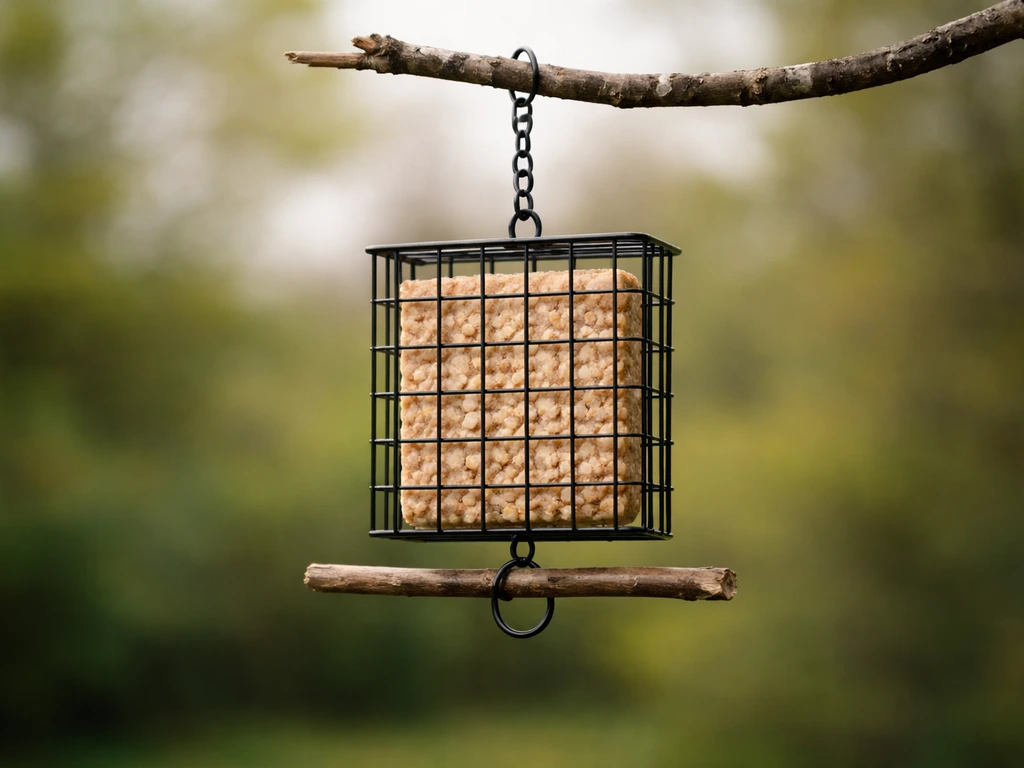
Suet feeders are simple wire-cage holders designed to hold suet cakes, a high-energy food made from rendered animal fat mixed with seeds, nuts, or insects. They're one of the best feeders for woodpeckers, nuthatches, brown creepers, and starlings (if you don't mind starlings). Rendered suet holds its shape up to about 90°F, so in summer you'll want to use "no-melt" suet formulas or switch to a different feeder type until temperatures drop. Tail-prop suet feeders (the kind with an extended bottom panel) specifically attract larger woodpeckers like Hairy and Pileated that brace their tails while feeding, while smaller cage designs tend to favor nuthatches and Downy Woodpeckers.
Nectar and hummingbird feeders
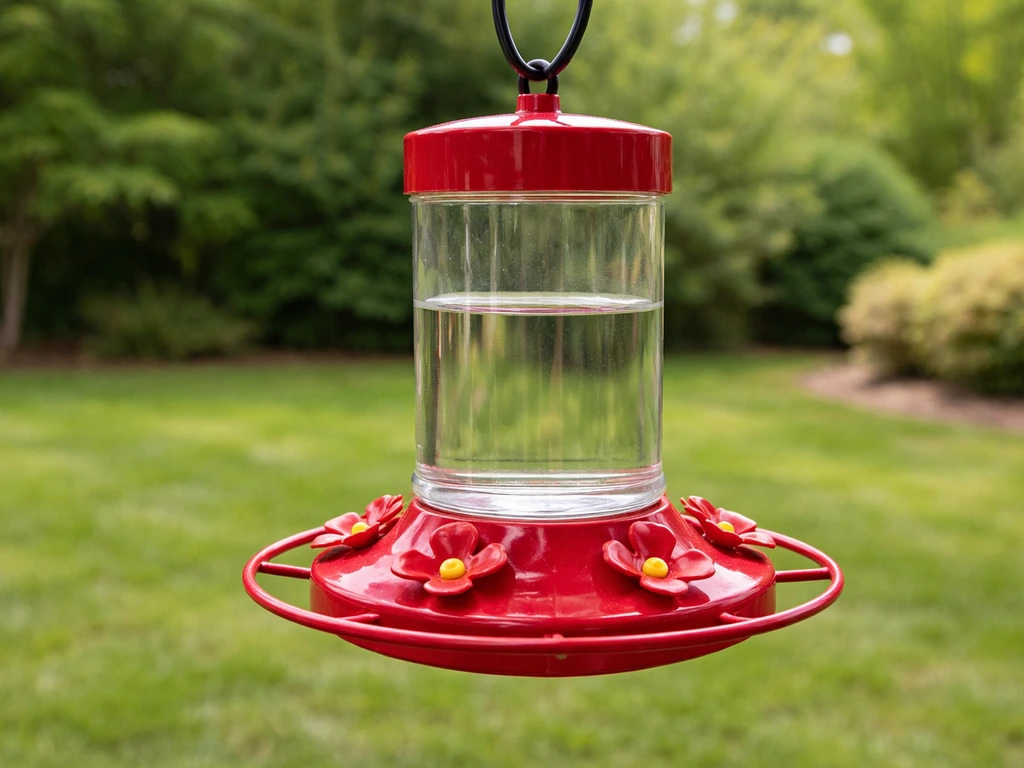
Hummingbird feeders hold a sugar-water solution (the standard ratio is 1 part white sugar to 4 parts water) and typically feature red flower-shaped ports that attract hummingbirds visually. Glass feeders like the Perky-Pet Red Mason Jar model hold up better in sun than cheap plastics that cloud and crack. If you want fewer refills, larger-capacity feeders like those in the 30 oz range are convenient for active yards, though they require more frequent cleaning since nectar spoils fast in heat. Nectar feeders need to be cleaned every 2 to 3 days in summer, not just weekly.
Oriole feeders
Orioles are attracted to nectar, fruit, and especially jelly. Dedicated oriole feeders typically have orange-colored ports (orioles are drawn to orange), wider feeding holes for jelly cups, and sometimes skewers or trays for orange halves. Baltimore Orioles are the most common target species in eastern North America, and they're predictably present during spring and early summer migration. blank" rel="noopener noreferrer">One note from Cornell Lab: if you're offering jelly, use a small amount at a time. Too much jelly can soil their feathers, which is actually harmful to them.
Window feeders
Window feeders mount directly on the glass with suction cups and let you watch birds from inches away. They tend to be smaller capacity and attract smaller birds like chickadees, nuthatches, and finches. They require more frequent refilling and cleaning, but the close-up views are genuinely worth it for a lot of people. If you're placing any feeder near a window, follow this rule: within 3 feet of the glass or more than 30 feet away. Anything in between gives birds enough speed to fatally collide with the window on takeoff.
Best feeder types by species: quick match guide
| Target Bird | Best Feeder Type | Best Seed or Food |
|---|---|---|
| Northern Cardinal | Hopper or large platform | Black-oil sunflower, safflower |
| American Goldfinch | Nyjer tube feeder | Nyjer (thistle), sunflower hearts |
| Downy/Hairy Woodpecker | Suet cage feeder | Suet cakes, peanuts |
| Pileated Woodpecker | Tail-prop suet feeder | Suet cakes, large peanut pieces |
| Black-capped Chickadee | Tube or hopper | Black-oil sunflower, sunflower hearts |
| White-breasted Nuthatch | Hopper, suet cage, or tube | Sunflower seeds, suet, peanuts |
| Blue Jay | Hopper or large platform | Sunflower seeds, peanuts in shell |
| Mourning Dove | Ground tray or low platform | Millet, milo, cracked corn |
| House Sparrow / Junco | Platform or ground scatter | White millet, mixed seed |
| Hummingbird | Nectar/hummingbird feeder | 1:4 sugar-water solution |
| Baltimore Oriole | Oriole feeder with jelly cup | Grape jelly, orange halves, nectar |
| Pine Siskin / Redpoll | Nyjer tube feeder | Nyjer, sunflower chips |
| Bluebird | Mealworm tray or platform | Live or dried mealworms |
If you're starting from scratch and want the most birds in the shortest time, buy a hopper feeder loaded with black-oil sunflower seed and hang it first. Then add a nyjer tube feeder and a suet cage once you see what's visiting. That three-feeder setup covers the majority of backyard songbird species across most of North America.
Feature check: weatherproofing, capacity, cleaning, and mounting
The feeder type gets you in the right ballpark, but the specific model you choose within that type makes a huge practical difference. To really nail your setup, use the rest of the guide to balance weatherproofing, capacity, cleaning, and mounting what makes a good bird feeder. Here's what to actually look at before buying.
Weatherproofing
For year-round outdoor use, you want a feeder made from UV-stable polycarbonate, powder-coated metal, or quality hardwood with a weatherproof finish. Cheap injection-molded plastic gets brittle and cracks within a season in direct sun or freezing temperatures. Metal ports and perches outlast plastic ones significantly. For winter feeding specifically, look for feeders with large roof overhangs to keep seed dry during snow and freezing rain. Wet seed molds fast and sick birds can pass disease through shared feeders, so drainage matters as much as the roof.
Capacity
Bigger isn't always better here. A large-capacity feeder is great if you have consistent heavy bird traffic, but if your yard is just getting started, a massive hopper that sits full for two weeks in summer is a recipe for moldy seed. Match capacity to your actual refill habits. For most beginners, a 3 to 5 lb hopper or a mid-sized tube feeder works better than an oversized reservoir. Hummingbird feeders are the exception in the other direction: a 30 oz capacity sounds like it would reduce work, but nectar spoils in 2 to 3 days in summer heat, so you're cleaning it that often regardless of whether it's empty.
Ease of cleaning
This is the most underrated feature and the one most buyers ignore until they've let a feeder go too long without cleaning. A feeder you can't easily disassemble is a feeder you won't clean regularly. For seed feeders, aim to clean every two weeks as a baseline, and more often in hot or humid weather. The standard disinfecting approach is either a 9:1 water-to-bleach solution (recommended by the National Wildlife Health Center via Audubon) or a 50/50 vinegar-and-water soak for about 15 minutes. Either way, the critical step is fully drying the feeder before refilling. Wet seed in a damp feeder is where disease and mold start.
Tube feeders with removable bases and hoppers with hinged roofs are much easier to clean than sealed units. Window feeders and nectar feeders need the most frequent attention. Before you buy, flip the feeder over in your hand (or look at photos carefully) and ask: can I get a brush into every corner?
Mounting options
Most feeders can hang from a hook or sit on a pole. Pole-mounted feeders give you more placement flexibility and make squirrel baffles much easier to add. A dedicated steel shepherd's hook or feeder pole with a built-in baffle system is the most squirrel-resistant setup available. Hanging feeders from tree branches or the eaves of a house works too, but gives squirrels far more access routes. Keep feeder placement at least 8 to 10 feet from solid structures like fences, trees, and buildings to reduce squirrel jumping distance.
Pest and mess control: squirrels, rats, and ground feeding
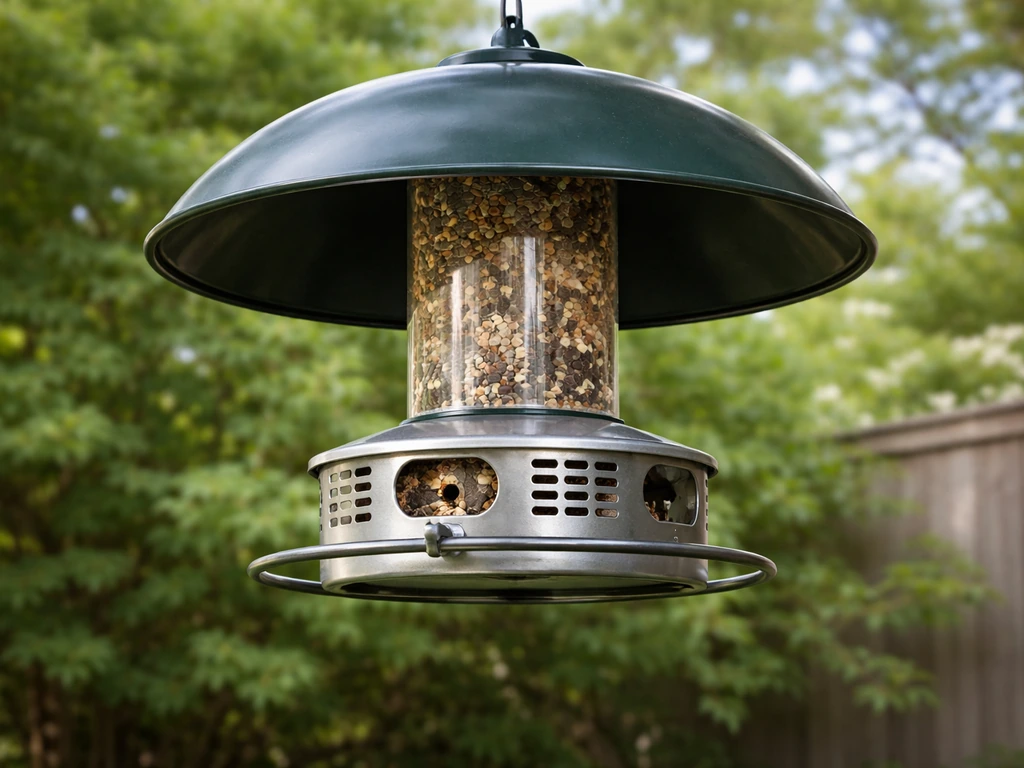
Squirrels and rats are the two biggest frustrations in backyard bird feeding, and the solutions are different for each.
Squirrels
The most effective squirrel deterrent is a weight-activated feeder like the Brome Squirrel Buster series. These use a spring-loaded shroud that drops over the feeding ports when a heavy animal (squirrel or large bird) lands on it, while lighter birds feed normally. The 1.3 lb Squirrel Buster Nut Feeder is a good example of this mechanism in action. A good baffle on the pole below the feeder is the backup layer. Use an inverted cone or stovepipe baffle, mounted high enough that a squirrel can't jump over it, and make sure the feeder itself is at least 8 to 10 feet from any structure a squirrel could launch from. Avoid mesh thistle bags, which squirrels can and will chew through.
Rats and rodents
Rats are attracted to seed that falls on the ground, not usually to the feeder itself. The single best deterrent is a tray or catch basin mounted under the feeder to collect fallen seed before it hits the ground. Sweep up ground litter regularly and avoid scattering millet or cracked corn directly on the ground unless you're specifically targeting doves and sparrows (and you're doing it in a way that limits overnight accumulation). Removing feeders temporarily if you see evidence of rat activity is sometimes the right call, especially in urban and suburban settings.
Managing mess and disease
Ground feeding under your feeders creates its own issues: seed hulls, feces, and wet seed can build up quickly and become a disease vector. One approach is to use no-waste seed blends (hulled seeds that don't leave shells) or to rake and clean the ground below feeders every week or two. If you see sick birds at your feeders, especially any signs of respiratory disease or unusual behavior, take the feeder down for at least a week and disinfect it before putting it back up. This is standard responsible practice recommended by wildlife agencies.
How to compare and actually choose from the "best bird feeders to buy"
Once you've decided on a feeder type, you'll find a lot of options at different price points. Here's how to cut through the noise. This buyer's guide walks you through how to choose the best bird feeders for your yard and the species you want to attract best bird feeders a buyer's guide.
For a first feeder, prioritize cleanability and build quality over every other feature. For more help with your first purchase, use this bird feeder buying guide to match feeder type, seed, and setup to the birds you want most. A $30 powder-coated metal hopper you can scrub clean and reassemble in two minutes will outlast a $20 plastic one with glued-together seams. Check that replacement parts are available (perches, ports, and trays wear out). Brand-name feeders from Brome, Droll Yankees, Perky-Pet's higher-end lines, and Woodlink tend to hold up better than generic imports.
Smart feeders with cameras, like Bird Buddy, are a genuine upgrade for people who want to identify visiting species and log bird activity without sitting by the window. The Bird Buddy's AI identification works without a subscription, though a premium subscription adds advanced features. Battery life is about a week under typical conditions, depending on visitor volume and how often you use live view, and you charge by detaching the camera module.
It's a fun tool, but it doesn't replace a good basic feeder setup: get the right feeder types first, then add a smart camera if you want to go deeper. If you plan to use a bird feeder aj worth option, focus on models that are easy to disassemble and clean, since that matters more than the brand name.
Solar-powered feeders are worth considering if you want to add lighting or heating elements (heated feeders are genuinely useful for keeping water and some suet-adjacent products from freezing in winter), but pure solar-heated seed feeders are still a niche product with mixed reviews. Don't pay a premium for solar just because it sounds good.
Quick decision guide
- Want the most bird variety with one feeder: hopper feeder, black-oil sunflower seed, pole-mounted with a baffle
- Want goldfinches and small finches: nyjer tube feeder, hung from a hook or shepherd's crook
- Want woodpeckers and nuthatches: suet cage feeder, mounted on a tree or pole near tree cover
- Want cardinals specifically: hopper or large platform, safflower or black-oil sunflower seed
- Want hummingbirds: dedicated nectar feeder, glass preferred, placed near flowering plants
- Want orioles: orange-colored oriole feeder with jelly cups and fruit skewers, available spring through summer
- Want doves and sparrows: low platform or tray feeder, white millet or mixed seed
- Tight on budget: a simple tube feeder plus sunflower seed covers a lot of ground for under $25
- Squirrels are a major problem: weight-activated feeder plus a pole baffle, feeder at least 8 to 10 feet from structures
- Want close-up window views: suction-cup window feeder, placed within 3 feet of the glass
What to buy first and what to add next
Start with one hopper feeder, one bag of black-oil sunflower seed, and a pole with a baffle. Get that set up and running, watch what birds visit for a week or two, then decide what to add. A nyjer tube feeder and a suet cage are the most logical next steps for expanding species variety. From there, a platform tray feeder low to the ground rounds out the ground-feeding species.
Accessories worth having early: a seed scoop, a small brush for cleaning ports, and a catch tray to reduce ground mess. Accessories like a seed scoop, a small cleaning brush, and a catch tray can make your feeders easier to manage and help keep mess under control Accessories worth having early. Place your first feeder at least 3 feet from a window, or more than 30 feet away, to avoid window strikes.
And clean it every two weeks from day one: it's the single habit that makes the biggest difference in long-term bird health and feeder performance.
FAQ
I want one feeder only, what type should I get first?
If you want the simplest “single feeder” option for the most species, get a hopper feeder stocked with black-oil sunflower seed. If your yard already has only small birds (or you mostly see finch-type visitors), a narrow tube feeder for nyjer will likely work better than a hopper, which larger birds may dominate.
What if I don’t know which birds will visit yet?
Don’t rely on a nectar or suet feeder if you are mainly seeing seed-eaters. Matching food to species matters, but also your local season does too, for example, orioles and some warblers show up seasonally, so you might need nectar or fruit feeders only during spring and early summer rather than year-round.
Which feeder type handles rain and snow best?
Choose based on what birds you want plus how your feeder will survive your weather. For wet climates or rainy regions, prioritize sloped roofs, drainage holes, and seed-tray designs (hopper and tube types). For very cold winters, prioritize roof overhang and wind stability, and plan to clean more often if moisture gets in.
What should I choose if squirrels keep taking over my feeders?
Tube feeders can be squirrel-resistant, but only if the ports are small enough for your target seed and the feeder is hung from a properly baffled setup. If squirrels are accessing your feeder via branches or nearby structures, switch to a weight-activated feeder and pole-mounted baffles rather than only changing the tube style.
How do I prevent rats if I switch feeder types but still see activity?
If rats are a concern, the feeder type alone is usually not the fix. Use a catch tray under the feeder to collect fallen seed, clean up ground litter regularly, and avoid leaving seed spill overnight. If you see active rat activity, temporarily removing feeders can be the quickest way to break the attraction loop.
Can a platform or ground feeder work for backyard birds that ignore enclosed feeders?
Yes, but it depends on the birds. Ground-level trays tend to bring in doves, sparrows, juncos, and towhees more reliably than enclosed styles. If you add a platform feeder, plan on more frequent cleanup and consider no-waste or hulled seed blends to reduce hull and feces buildup.
How often do I need to clean a hummingbird feeder versus seed feeders?
For hummingbirds, a hummingbird feeder is the only reliable choice, but in warm weather you still need a plan for spoilage. Larger-capacity feeders reduce refill frequency, yet you still must clean every 2 to 3 days in summer heat to prevent mold and bacterial growth in the nectar.
What cleaning schedule should I follow if I’m seeing no birds or only a few visitors?
For seed feeders, a good baseline is cleaning about every two weeks, but increase frequency in hot or humid weather, and always disinfect if you see sick birds. Nectar feeders and any jelly-based feeders generally need much more frequent attention than seed feeders because sugars spoil quickly.
What happens if I use suet during hot weather?
If you use suet in summer, the “no-melt” suet choice matters. If your suet is softening, dripping, or becoming messy, swap to a different feeder type until temperatures drop to avoid attracting unwanted pests and spreading contamination.
What is the safest distance from a window for feeder placement?
If you can only place feeders in one location, window placement rules become critical. Keep feeders either very close (within about 3 feet) or far away (more than 30 feet) so birds aren’t flying fast into the glass, and avoid mounting feeders in a “between” distance.
My feeder is new, why aren’t birds using it yet?
If your seed feeder holds seed but birds still don’t show up, check the food match first (for example, nyjer tube for finches, black-oil sunflower for many species) and then check moisture. Wet or moldy seed, poor drainage, and a feeder that’s too hidden or too close to unsafe structures can all reduce visits even with the right feeder type.
How do I troubleshoot a feeder that attracts birds at first but then stops?
If birds are arriving but not staying, the feeder model could be letting in weather or excluding the right sizes. Look for drainage for hoppers, appropriate port size for tubes, and stable mounting height. Also confirm you can disassemble and clean easily, because neglected feeders can stop attracting birds even if you initially chose correctly.