
The single best deer-proof bird feeder setup is a pole-mounted tube or hopper feeder filled with thistle or safflower seed, installed at least 6 to 7 feet off the ground on a smooth steel pole with a torpedo or stovepipe baffle mounted 4 to 5 feet up the pole, positioned at least 10 feet away from any tree, fence, or structure a deer could use to get closer. That combination stops the vast majority of deer intrusions without making life harder for the birds you actually want to feed.
Best Deer Proof Bird Feeder: Choose, Mount, and Setup
Marcus Hendricks
11 May 2026
What 'deer-proof' actually means in your backyard
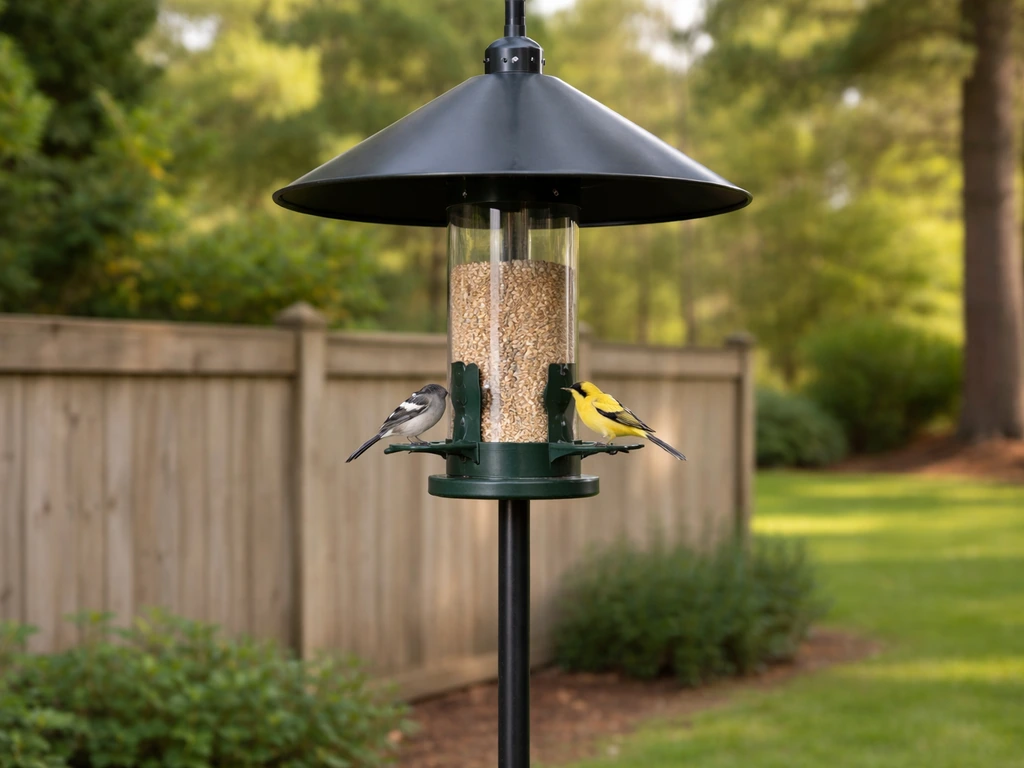
Deer interact with bird feeders in a few different ways, and knowing which problem you have changes what you need to fix. A deer that walks up and eats directly from a low platform feeder is a different challenge from one that noses a hanging feeder until seed spills, or a large buck that just body-checks a pole-mounted system until it falls over. Before you buy anything, figure out which of these is happening.
- Direct access: deer are tall enough to reach hanging or mounted feeders that sit below 6 feet. An adult white-tailed deer can comfortably reach about 6 feet, and a larger buck stretching up can push that to nearly 7 feet.
- Knock-and-scavenge: deer nudge or push a feeder until seed falls, then eat from the ground. This works even on feeders they can't reach directly.
- Pole tipping: deer lean or push against a pole-mounted feeder, destabilizing the whole setup.
- Spilled seed attraction: seed that falls to the ground draws deer even when the feeder itself is out of reach. This is one of the most overlooked entry points.
Research from K-State Extension found that properties with bird feeders are roughly twice as likely to be visited by deer compared to those without. That stat isn't a reason to stop feeding birds, but it is a useful reminder that feeders change the risk profile of your yard, and a solution that only addresses the feeder height while ignoring spilled seed is a half-measure.
blank" rel="noopener noreferrer">The Michigan DNR is direct about this: the most effective approach combines feeder design that physically blocks access with food choices that are less attractive to deer in the first place. Both levers matter, and you'll get the best results using them together.
Best feeder types for keeping deer out (and which birds they attract)
Not all feeder styles are equally easy to deer-proof. Some designs are inherently better suited to high mounting and narrow access, which works in your favor. Here's how the main categories stack up.
| Feeder Type | Deer Resistance | Best For (Birds) | Notes |
|---|---|---|---|
| Tube feeder | Excellent | Finches, chickadees, nuthatches, sparrows | Narrow ports make seed hard to spill; easy to mount high on a pole with a baffle |
| Hopper feeder | Good | Cardinals, blue jays, finches, woodpeckers | Larger seed capacity but more surface area for deer to push; needs a sturdy pole and baffle |
| Suet cage | Excellent | Woodpeckers, nuthatches, wrens, chickadees | Suet is unappealing to deer; easy to hang high; upside-down versions also deter starlings |
| Platform/tray feeder | Poor | Doves, sparrows, juncos, ground feeders | Low profile and open design makes deer access almost inevitable unless raised significantly |
| Window feeder | Excellent | Chickadees, nuthatches, finches | Attached directly to glass; completely inaccessible to deer by design |
| Hummingbird feeder | Excellent | Hummingbirds | Nectar is unattractive to deer; hanging placement keeps it out of reach easily |
Tube feeders are the sweet spot for most backyards. The small feeding ports limit the type of seed that works (primarily thistle/nyjer or safflower), and both of those seeds are far less attractive to deer than black-oil sunflower seed, cracked corn, or mixed seed blends. If you want to attract a wider range of birds including cardinals and jays, a hopper feeder works well too, just make sure the mounting system is robust enough to resist pushing.
Suet feeders deserve more credit in deer-proof discussions. Deer have essentially no interest in suet, so the problem solves itself on the food side. Mount a suet cage 6 feet up or higher and you can mostly forget about deer. For a deeper look at how to manage starling access while keeping other birds coming, see our guide to the best starling proof bird feeders starlings away.
To get the best dove proof bird feeders, look for feeder designs that block access at the ports while keeping perches and openings away from ground-feeding doves. As a bonus, an upside-down suet feeder also keeps starlings away, which is the same design logic the Michigan DNR highlights for pest-proofing: the animal's access mode determines the solution.
Platform feeders are the one style I'd avoid if deer pressure is your main problem. If you are shopping specifically for doves, the best bird feeder for doves is usually one that lets them feed comfortably without inviting deer access Platform feeders are the one style I'd avoid. They're great for doves and ground-feeding birds, but the open, low profile design is almost an invitation. If you love platform feeders, consider a raised version on a tall, baffled pole, though you lose a lot of the 'ground feeding' appeal for the birds that prefer them.
Mounting and placement: the numbers that actually matter
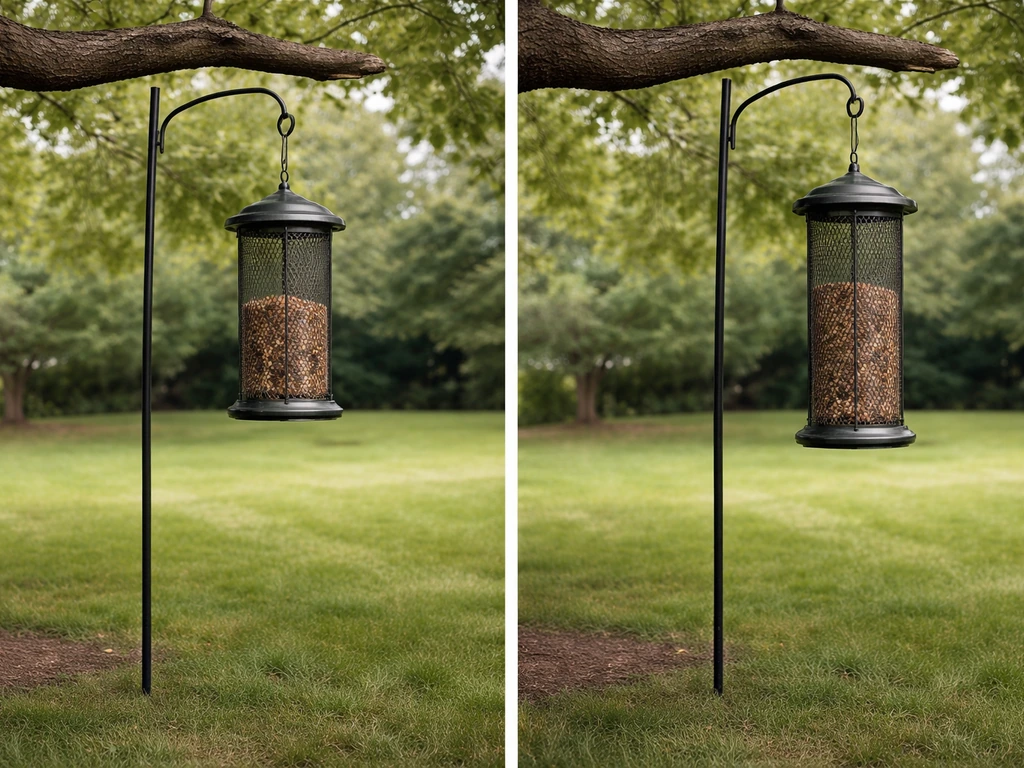
Height and clearance are where most people underestimate what they need. A feeder hanging at 5 feet feels high to a person but is well within reach of a large deer. The real target is a minimum of 6 feet from the ground to the bottom of the feeder, and 7 feet is better if you have big deer in your area. This isn't just about the deer not being able to reach the feeding ports directly: it's also about making it harder to nose or nudge the feeder and cause a seed spill.
Horizontal clearance matters just as much as height. Keep feeders at least 10 feet away from any tree trunk, fence line, deck railing, or other structure. This mirrors advice given for squirrel-proofing (the Squirrel Stopper product line recommends 10 to 12 feet of clearance for the same reason), and it applies even more strongly to deer, which can approach from any angle and press their body weight against a nearby structure to extend their reach.
- Choose a pole location at least 10 feet from trees, fences, and structures in every direction.
- Use a smooth metal pole (not wood, which deer can press against more easily). A 1-inch to 1.5-inch diameter steel shepherd's hook or dedicated feeder pole works well.
- Set the bottom of the feeder at 6 to 7 feet off the ground.
- Drive the pole at least 18 to 24 inches into the ground for stability against pushing and wind.
- Check that there's no low branch directly above the feeder that could let deer reach down from a hillside or slope.
One placement detail that often gets missed: yard topography. If your yard slopes and the feeder is on a slope, a deer standing uphill from the feeder effectively gains height. Always measure from the deer's potential standing position, not just flat ground.
Baffles and physical barriers that actually stop deer
A baffle is the mechanical component that makes a pole-mounted feeder reliably deer-proof, not just harder to reach. A good baffle on a well-placed pole is the difference between a feeder that deer occasionally still manage to access and one they genuinely can't get to.
Pole baffles
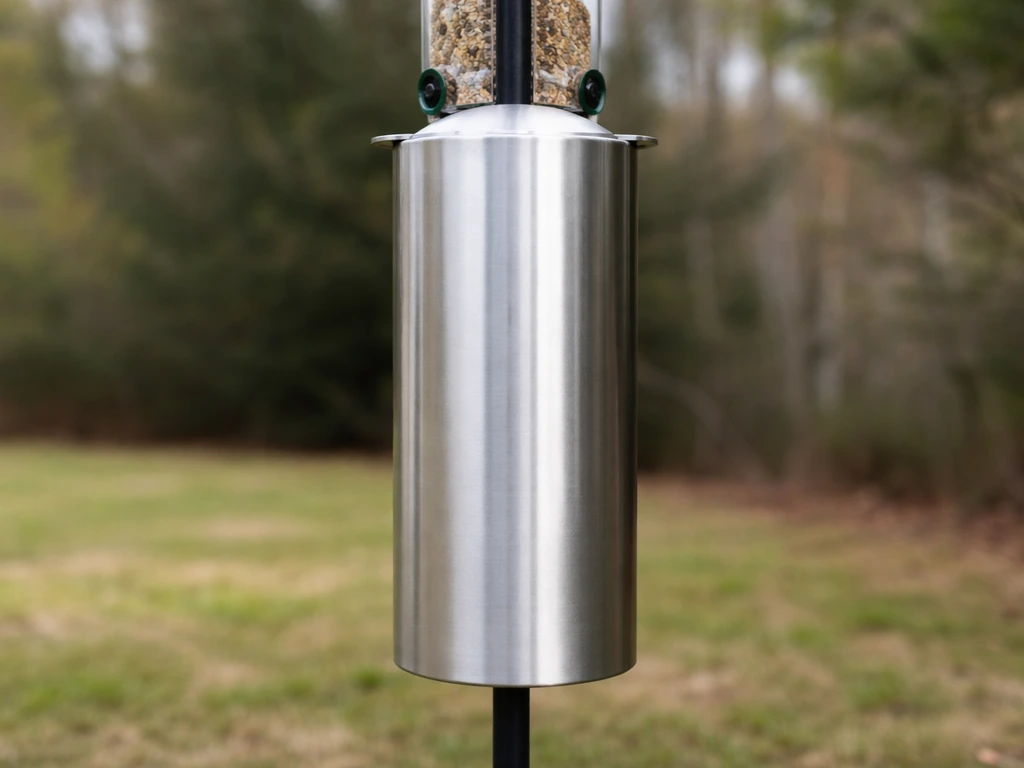
The most effective baffle for deer is a cylindrical torpedo or stovepipe style mounted on the pole itself. These are smooth metal cylinders that spin or tip when any animal tries to climb past them. For deer, the relevant function is different from squirrels: the baffle creates a large smooth surface that a deer's nose or snout can't grip, push past, or leverage.
Mount it at 4 to 5 feet up the pole, which puts it below where a deer would naturally try to push the feeder but above where it can simply bite or grab the pole. Products like the Woodlink baffle and the Squirrel Stopper Metal Standard Baffle fit poles from about half an inch to 2 inches in diameter and can be installed without removing the feeder.
Hanging feeder guards
If you prefer a hanging feeder over a pole-mounted one, a large dome or cone baffle mounted above the feeder on the hanging wire or chain creates a smooth surface that prevents a deer from pushing up into the feeder from below. A good rat-proof bird feeder can be designed with similar access-blocking ideas so seed stays protected from multiple pests. The Lee Valley-style tilting baffle concept works here: any weight or pressure on the dome causes it to tip, making it impossible for an animal to get purchase. For hanging feeders, make sure the hook or arm the feeder hangs from is at least 7 feet off the ground and anchored into something that can't be easily pushed.
Fencing as a last resort
If your deer pressure is severe, a physical fence around your feeding area is the most reliable option. Ask Extension experts note that true deer exclusion may require an 8-foot fence, and University of Maryland Extension research confirms that 8-foot fencing achieves near-complete deterrence. That's a significant investment for a bird feeder setup, but if deer are destroying multiple feeders repeatedly, it may make more sense than constantly replacing equipment. A smaller micro-exclosure, using the concept from UMN Extension, can also work: a 6-foot cage or pen around just the feeder pole area creates enough of an obstacle that deer perceive entry and exit as risky, even if they could theoretically jump it.
What to compare when choosing a feeder model
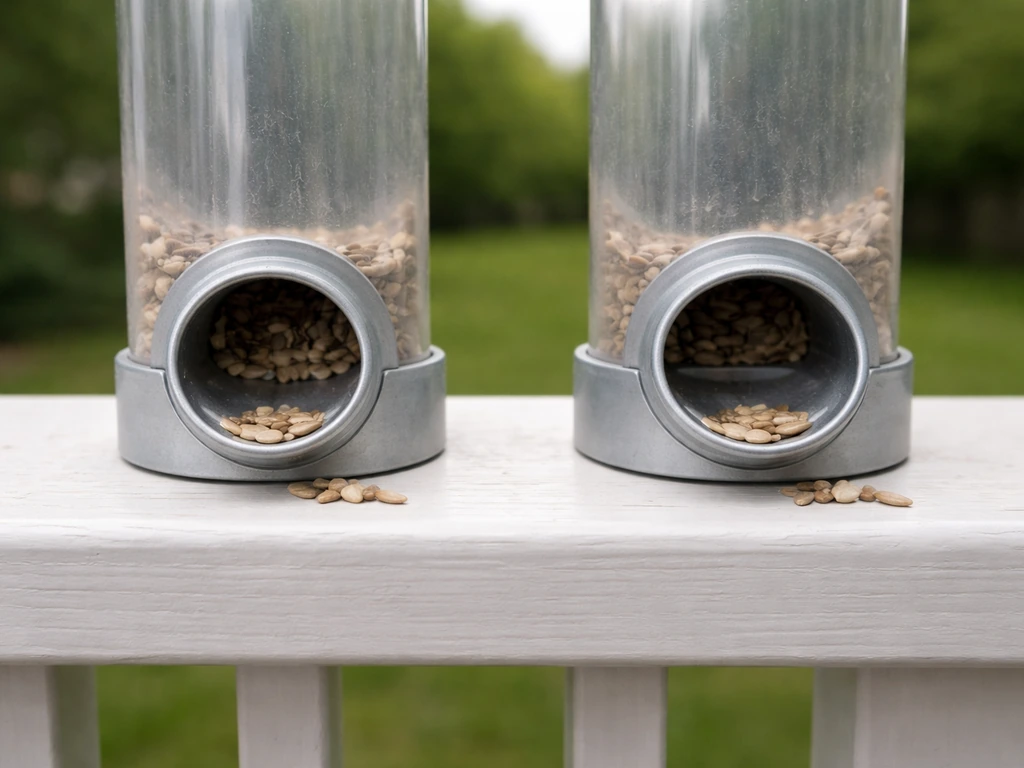
Once you've settled on a feeder type, here are the specific features worth checking before you buy. These matter both for deer resistance and for long-term usability.
- Port size and design: smaller ports mean less seed spills when the feeder is nudged. Tube feeders with small nyjer ports or safflower ports are significantly better than open hoppers from a spill-resistance standpoint.
- Build material: metal or heavy-duty UV-resistant polycarbonate holds up better than standard plastic when deer push against it. Look for feeders with metal frames or wire reinforcement, especially around the perch and port areas.
- Weight and stability: a heavier feeder resists being knocked around more than a lightweight one. If you're using a hopper, cast-iron or powder-coated steel construction makes a real difference.
- Pole compatibility: check that your feeder is designed to mount on a standard steel pole (most are, but some hanging-only feeders are harder to adapt). Systems like the Squirrel Stopper Denali combine a pole and baffle in one kit, which simplifies the setup.
- Weather and winter durability: feeders used year-round need drainage holes that don't freeze shut, materials that won't crack in sub-zero temperatures, and hardware that won't rust. In winter especially, a wet seed clog inside a feeder can be as much of a problem as a deer. Michigan Audubon specifically recommends thinking about seasonal performance when choosing feeders.
- Ease of cleaning: a feeder you can't easily clean will develop mold and clogs, which discourages birds and often leads to neglect. Tube feeders with removable bases and hoppers with hinged roofs are the easiest to maintain.
- Seed type compatibility: match the feeder to a seed type that is naturally less attractive to deer. Thistle/nyjer and safflower are your best options. Avoid mixed blends with millet and cracked corn if deer are a concern.
When deer still reach the feeder: troubleshooting
If you've mounted the feeder at 6 to 7 feet, installed a baffle, and positioned it 10 feet from structures, but deer are still getting to it, work through this checklist before assuming the setup can't work.
- Check the approach angle. Walk around the feeder from every direction and look for slopes, raised ground, or nearby structures that give deer a height advantage you didn't initially account for.
- Inspect the pole for stability. A pole that wobbles when you push it firmly with your hand will tip when a deer pushes it. Re-seat it deeper or add a ground anchor.
- Look for seed accumulation on the ground. Even a well-mounted feeder will draw deer nightly if seed is piling up underneath it. Switch to a no-mess or hulled seed blend, or place a catch tray that holds spilled seed rather than letting it fall.
- Check the baffle position. A baffle mounted too low (below 4 feet) may not intercept deer nose contact; too high and deer can grip the pole below it. Four to five feet is the right range for most setups.
- Consider the seed type. If you're still using black-oil sunflower seed or a mixed blend with corn and millet, switch to safflower or thistle. Deer will still occasionally investigate, but they're far less motivated to persist.
- Add a secondary deterrent around the pole base. A ring of deer-repellent granules or a motion-activated sprinkler nearby can discourage deer from approaching the area in the first place without affecting birds feeding above.
One thing worth acknowledging: if deer in your area are habituated to human presence and not easily spooked, mechanical exclusion (height, baffle, clearance) is more reliable than repellent-based approaches. Habituated deer often learn to ignore sprays and granules over time. Physical barriers don't have that problem.
DIY and low-cost fixes you can do today
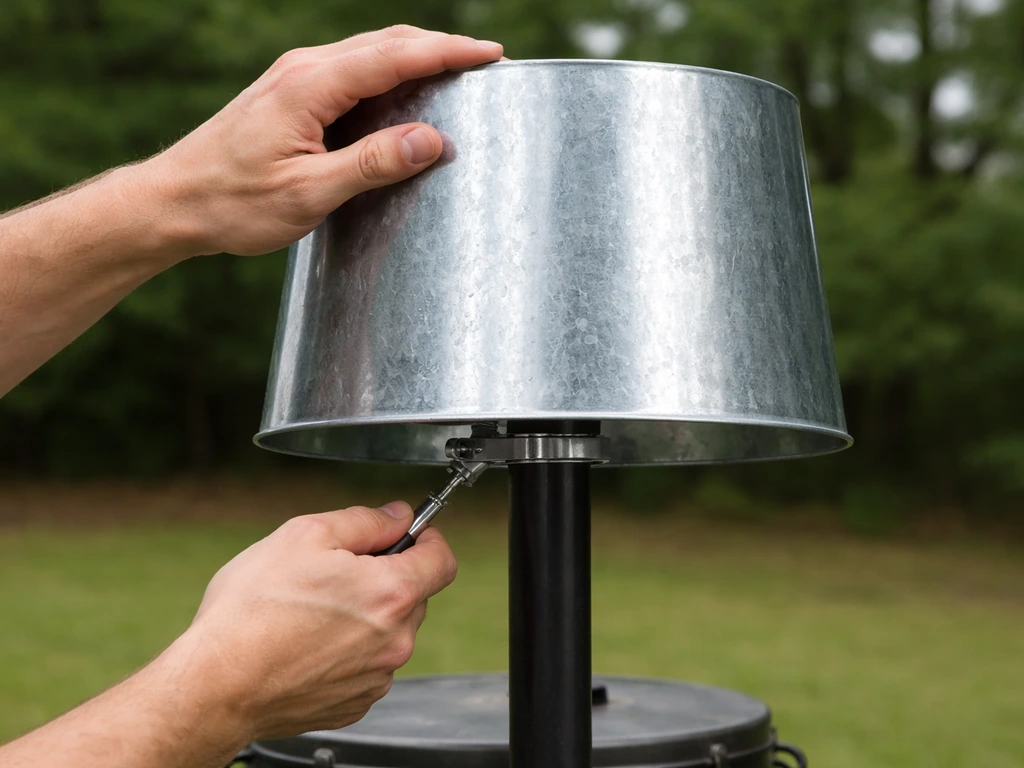
You don't need to buy a purpose-built deer-proof system to solve this problem. A lot of what makes a feeder deer-resistant comes down to basic physics and placement, which you can address with hardware-store materials.
- Build a simple stovepipe baffle using a 12-inch diameter galvanized metal duct pipe (about 18 to 24 inches long) drilled to fit over your existing pole. Smooth metal surface, zero footing for deer, total cost under $15.
- Raise an existing hanging feeder by replacing its wire or chain with a longer one and moving the hook to a higher anchor point. This is often the fastest zero-purchase fix available.
- Switch the seed first before changing anything else. Replacing black-oil sunflower with safflower costs nothing extra and immediately reduces deer interest. Many birds that eat sunflower will readily take safflower after a short adjustment period.
- Use a shepherd's hook extension to add 2 feet to an existing pole without replacing the whole system. These slip-on extensions are available at garden centers for a few dollars.
- Create a simple ground deterrent by placing a circle of chicken wire (12 inches wide, lying flat on the ground) around the base of the pole. Deer don't like stepping on the unstable surface; birds feeding from above aren't affected at all.
- Repurpose an old metal trash can lid as a DIY baffle by drilling a center hole to fit your pole and mounting it cone-side down at the 4-foot mark. It won't win any aesthetic awards, but it works.
A quick note on deer safety and being a responsible feeder
The goal here is exclusion, not harm. Every solution in this guide is aimed at making the feeder inaccessible, not at hurting deer or making your yard hostile to wildlife in general. USDA APHIS Wildlife Services specifically discourages intentionally feeding deer, partly because it habituates them to human spaces and increases the chance of conflict. Keeping deer away from your bird feeders is actually the more responsible outcome for the deer themselves, not just for your seed budget.
If deer are persistent visitors, avoid the temptation to supplement with corn or grain to 'give them something else to eat.' That approach almost always backfires, increasing the total deer pressure on your property rather than redirecting it. Stick to exclusion, and if you genuinely want to support local deer, contact your state wildlife agency for guidance that won't create conflict or dependency.
Seasonal considerations: winter feeding and year-round performance
Winter is when deer pressure on bird feeders peaks, for the same reason bird feeding is most important in winter: natural food sources are scarce. Birds need reliable access to high-calorie seed during cold months, and deer are also ranging more widely looking for food. That combination means your deer-proof setup needs to be most reliable in exactly the season when everything is harder to maintain. If you want the best no mess bird feeder, prioritize a deer-proof design that also prevents spilled seed from becoming an easy target deer-proof setup.
Choose feeders with drainage holes that won't ice over, metal components that won't crack in freezing temperatures, and seed types (like nyjer or safflower) that don't clump and freeze as badly as whole sunflower seeds. Suet feeders are particularly valuable in winter because the high fat content is exactly what cold birds need, and the food type keeps deer entirely uninterested. A suet cage mounted at 6 feet or higher on a smooth pole is arguably the easiest year-round deer-proof feeding solution you can set up. If you also want the best pigeon proof bird feeder, pair an inaccessible feeder design with the right port size and baffle so birds can feed without letting pigeons crowd in deer-proof feeding solution.
Check your baffle and pole hardware at the start of each winter season. Freeze-thaw cycles can loosen pole anchors and cause metal to contract in ways that affect baffle fit. A loose baffle that wobbles or slides down the pole is no longer doing its job. Ten minutes of inspection in October or November saves you from discovering the problem after deer have already discovered the vulnerability.
If you're also dealing with other wildlife issues alongside deer, many of the same pole mounting and baffle strategies apply across pest types. The same setup that stops deer from pushing over a feeder also addresses climbing pests, and seed type choices that discourage deer often reduce unwanted attention from other animals too.
FAQ
Can a “deer-proof” feeder still get seed spilled, and what should I do about that if deer are learning the mess?
Yes, deer can trigger spills by bumping the pole or reaching from an angle. Add a seed-management step: use a tray or skirt under the feeder that catches fallen seed but keeps it from becoming accessible on the ground, then clean up any spilled seed weekly (especially in winter).
What if my yard doesn’t have a place 10 feet away from trees or fences, how can I adjust the setup?
If you cannot reach 10 feet of clearance, prioritize the vertical defenses: mount higher (closer to 7 feet to the bottom of the feeder), use a full-length smooth baffle, and ensure the baffle extends far enough on both sides of the feeder so a deer cannot “work the gap” from a nearby structure.
How do I know whether the deer are biting the pole, pushing the feeder, or nosing at the ports?
Look for specific signs: pole chew marks suggest leverage on the pole, footprints and disturbed ground suggest body-checking and slipping, and seed scatter right under the ports suggests port access or nudge-induced spillage. Then fix the access path that matches the behavior, not just the height.
Are there any seed types that are more deer-attractive that I should avoid if I’m using a narrow-port tube or hopper feeder?
Avoid switching to mixed seed blends, cracked corn, or black-oil sunflower when your goal is “best deer proof bird feeder” behavior. Those mixes can attract deer even when ports are small, because fallen or accessible portions become a stronger incentive.
Does it help to use a deer repellent spray or granules if my baffle and mounting are already correct?
If deer are not newly exposed, repellents often lose effectiveness as deer habituate. Use repellents only as a temporary aid while you fine-tune placement, baffle fit, and seed cleanup, and do not rely on them as the primary solution.
What should I do if the baffle still allows access because of the pole diameter or mounting height mismatch?
Verify that the baffle fits your exact pole diameter range, then confirm the baffle is centered and secure (no gaps, no wobble). Even a small gap where a deer's nose can reach past the smooth surface can turn the baffle into a partial access point.
Can I mount a tube or hopper feeder on a thinner pole and still make it deer-resistant?
You can, but thinner poles are more likely to bend or wobble under repeated pushing. Choose a mounting kit that increases rigidity (braces, a heavier pole, or deeper anchoring), and re-check that the baffle alignment stays correct after tightening.
How high should I mount a hanging feeder if I also want to keep other animals from using the hanging hardware?
Hang the feeder so the hook or supporting arm is at least 7 feet off the ground and anchored firmly into something not easily pushed. If the support cable can be swung or pulled down, deer and other pests can use that motion to bring access within reach.
Is an 8-foot fence always necessary, or when does a micro-exclosure make more sense?
If deer keep repeatedly accessing despite correct height, baffle, and clearance, full exclusion may be the best long-term answer. A micro-exclosure (a 6-foot cage around the feeder pole area) is a good compromise when you want to protect just the feeding setup without fencing a large section of the yard.
How often should I inspect the setup beyond the start of winter?
Do a quick check after storms and heavy winds, and look for baffle shift, loose anchors, or seed pile-ups beneath the feeder. Winter freeze-thaw is a big driver, but mechanical movement from weather is the other common failure mode.
What’s the common mistake people make when they buy the “best deer proof bird feeder” but still lose to deer?
They focus on the feeder style and ignore the yard access route. The most frequent misses are placing the feeder too close to a boundary deer can use for leverage, skipping baffle installation or fit verification, and allowing spilled seed to accumulate under the feeder.
If I’m feeding suet in winter, how can I keep starlings from dominating without creating deer access?
Use a suet cage designed to block access at the ports and mount it high on a smooth pole. Avoid adding perches near the cage (even small ones), because any landing point can also become an access advantage for deer that learn the routine.