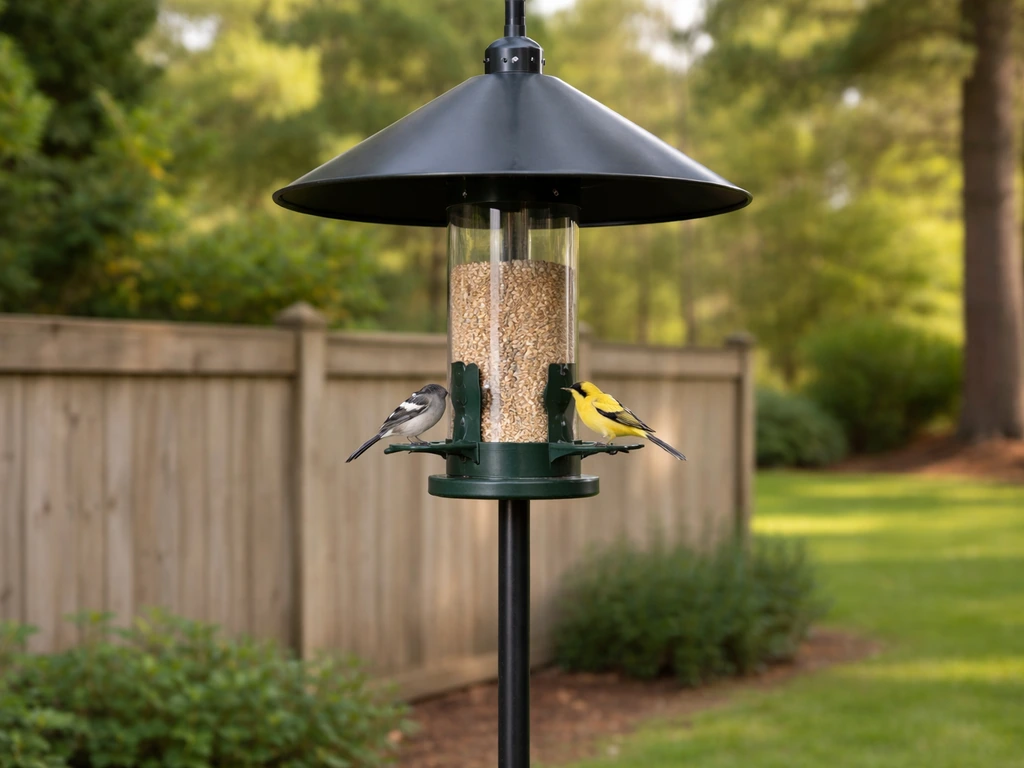
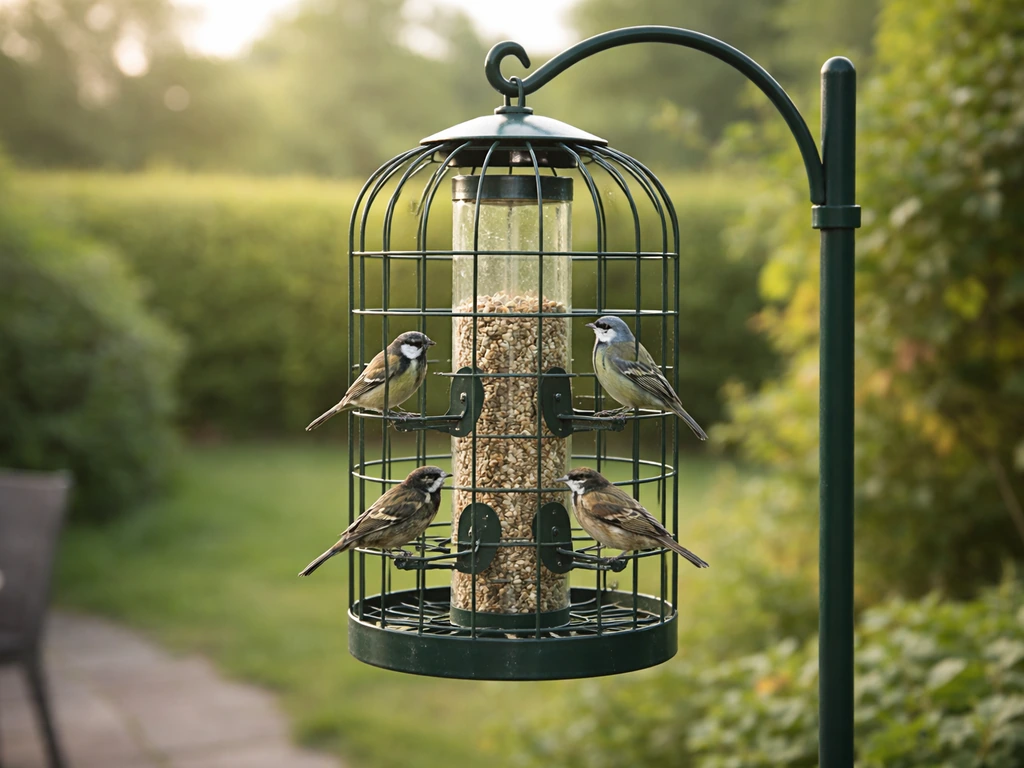
The best starling-proof bird feeders use one of three proven design strategies: a wire cage with openings no larger than 1.5 inches (which lets tits, finches, and sparrows squeeze through but physically blocks starlings), a weight-sensitive perch that closes off ports when a heavier bird lands, or a cling-only design that removes perches entirely so only birds that can grip the feeder body can feed. For UK gardens specifically, caged tube feeders and dedicated starling-resistant feeder sets from brands like A Little Bird Co. and Really Wild Bird Food are currently the most practical options available. The right choice depends on which birds you want to attract and how persistent your local starling flock is.
Best Starling Proof Bird Feeders UK Buying Guide

Marcus Hendricks
12 May 2026
Why starlings take over feeders and what 'starling-proof' really means
Starlings are genuinely impressive birds, but they are a disaster at a shared feeder. They are bold, they move in groups, and they are big enough (typically 75–90g) to out-compete almost everything else at a standard feeder. A flock of starlings can strip a full feeder in under 20 minutes. Once they find a reliable food source, they return every day and effectively drive off robins, blue tits, dunnocks, and sparrows that would otherwise be regulars.
The reason standard feeders fail is simple: most are designed to be welcoming. Wide perches, large ports, and open trays all suit a bird with a starling's body size and confident feeding style. A starling does not need to hover or cling delicately. It lands, it grips, it eats. So 'starling-proof' does not mean making a feeder physically impenetrable. It means redesigning the feeding experience so starlings cannot get a comfortable foothold or reach the seed. Every design approach tries to exploit the size and behavior difference between starlings and the smaller birds you actually want to feed.
Feeder design features that block starlings
There are four main design tools that work against starlings. Understanding each one helps you judge whether a feeder is genuinely starling-resistant or just marketed that way.
Wire cages and grid openings
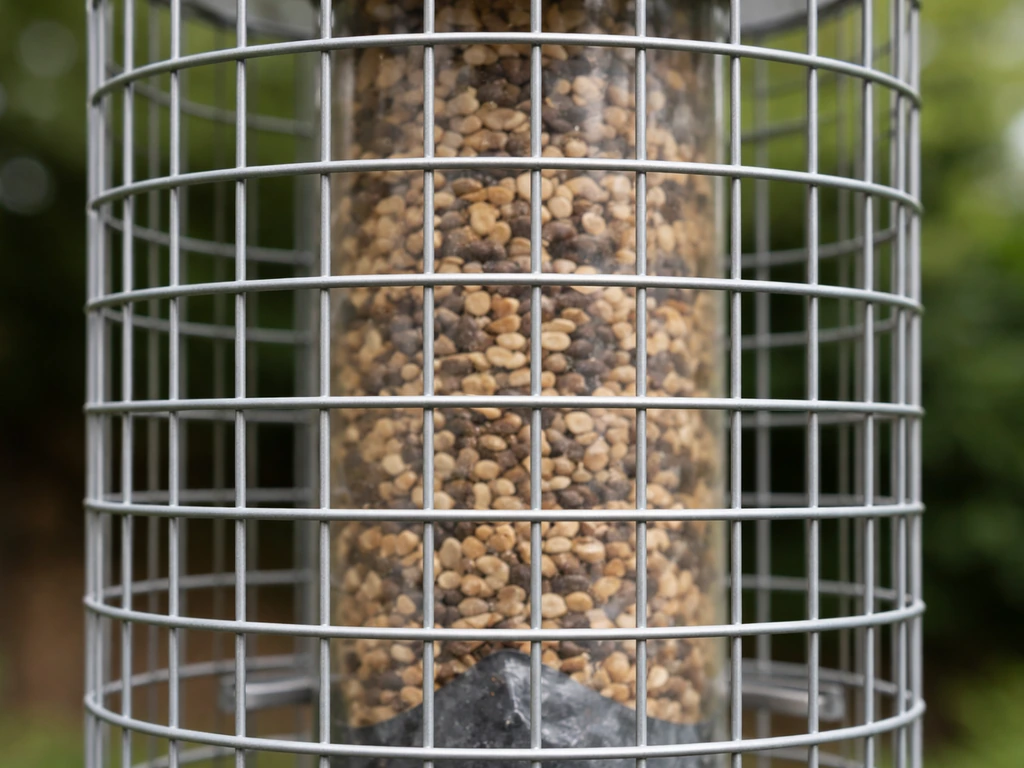
A metal cage surrounding a tube feeder is the most reliable passive method. The cage has grid openings of around 1.5 inches square, which is wide enough for a blue tit or sparrow to pass through and reach the feeding ports, but too small for a starling's body to enter. Woodlink's caged tube feeder, for example, uses a 1.5-inch grid that keeps seed ports fully enclosed behind the cage. The seed is inaccessible to any bird too large to fit through the mesh. This approach requires zero adjustment and works from day one.
Weight-sensitive perch mechanisms
Weight-sensitive feeders have a spring-loaded perch or shroud that closes off the seed ports when a bird above a certain weight lands on it. You can usually adjust the trigger weight. Set it right, and a 15g blue tit feeds freely while a 80g starling trips the mechanism and finds the ports closed. The catch is calibration. Set the threshold too high and starlings still feed. Set it too low and heavier desirable birds like greenfinches get blocked too. There is also a behavioral failure mode worth knowing: starlings sometimes learn to balance on the edge of the perch rather than fully committing their weight, keeping the port cracked open just enough to poke their beak in. If this happens, tightening the weight threshold (or switching to a caged feeder) is the fix.
Cling-only and perch-free designs
Some feeders are built specifically for birds that cling to a vertical surface rather than perch on a horizontal bar. Really Wild Bird Food's My Favourites feeder works on this principle: it is designed for small clinging birds like tits, wrens, sparrows, and finches, and its shape makes it genuinely difficult for a starling to get a foothold. Starlings can grip briefly but cannot stabilize themselves long enough to feed effectively. An overhanging rain-protecting roof also keeps seed dry, which is a practical bonus for UK weather.
Port size and seed type
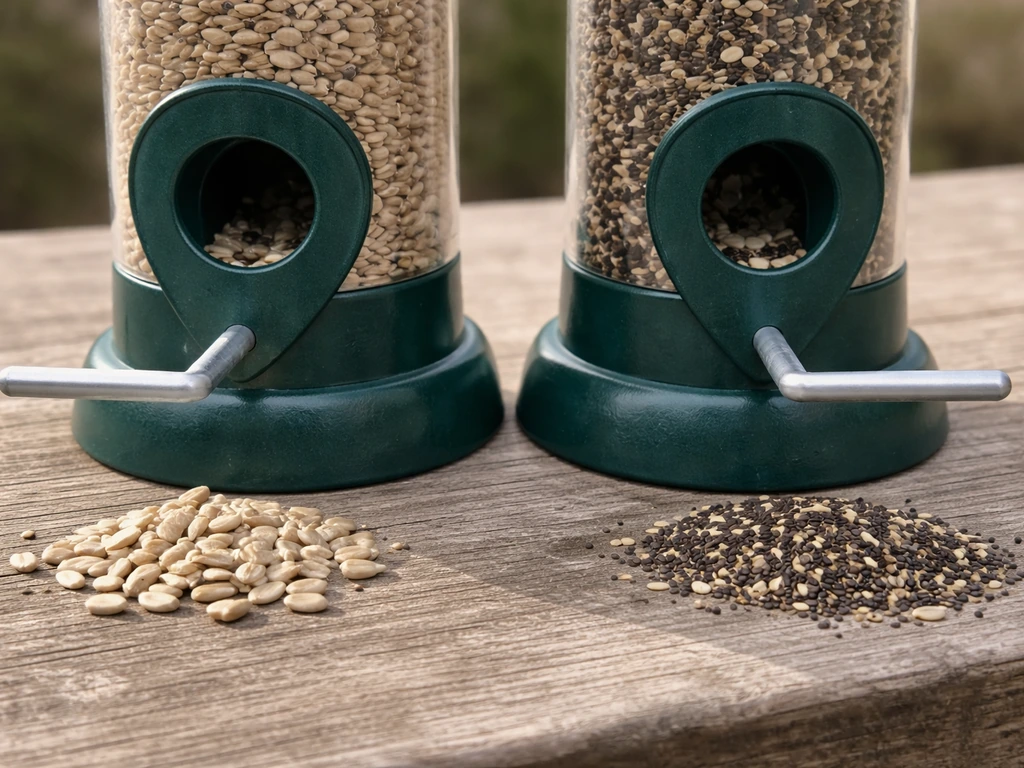
Port diameter matters. Tube feeders have multiple feeding ports, and the size of each port should match the seed being offered, as noted in Project FeederWatch's feeder design guidance. Project FeederWatch describes tube feeders as hollow cylinders with multiple feeding ports, and notes that port size varies depending on the seed being offered blank" rel="noopener noreferrer">Project FeederWatch's feeder design guidance. Narrow ports that dispense nyjer (thistle) seed, for instance, are naturally difficult for starlings to use because their beaks are not shaped for it. Sunflower hearts through a small port are manageable for a sparrow but awkward for a starling. Port size selection is a subtle but real layer of starling deterrence that works alongside cage or weight mechanisms.
Best feeder types for starling resistance
| Feeder type | Starling resistance | Best for | Main limitation |
|---|---|---|---|
| Caged tube feeder | High (passive, reliable) | Tits, finches, sparrows | Larger desirable birds (e.g. greenfinch) may also be excluded |
| Weight-sensitive feeder | Medium-high (needs calibration) | Mixed small bird gardens | Starlings can learn to game the perch; needs monitoring |
| Cling/perch-free feeder | Medium-high (behavioral deterrent) | Tits, wrens, small clinging birds | Does not work against very persistent or acrobatic starlings |
| Nyjer/thistle tube feeder | High (seed selectivity) | Goldfinches, siskins | Only suitable for nyjer seed; no use for general seed mixes |
| Hopper feeder | Low | Cardinals, jays, doves | Open access suits starlings perfectly; not recommended |
| Platform/tray feeder | Very low | Ground feeders, pigeons, doves | Completely open; starlings dominate by design |
| Suet feeder (standard) | Low | Woodpeckers, starlings unfortunately | Starlings are strong enough to cling to standard suet cages |
| Suet feeder (upside-down) | High | Woodpeckers, nuthatches | Starlings struggle to feed from below; very effective deterrent |
If you are starting fresh and want the single most reliable option, a caged tube feeder is the one to buy. If you are shopping for the best rat proof bird feeder, also consider a caged tube design since sturdy enclosures help block unwanted access in both cases. It does not depend on a starling making a mistake or being deterred by an unfamiliar shape. The cage physically prevents access, full stop. Upside-down suet feeders are a close second for anyone who specifically wants to attract woodpeckers or nuthatches without feeding starlings.
Hopper and platform feeders are essentially impossible to make starling-proof by design. If you use them, expect starlings. You can limit damage by only putting out small amounts of food at a time, but you cannot stop access. The same logic that makes pigeon-proof and grackle-proof feeders difficult applies here: open, flat feeding surfaces with no access restriction are inherently available to any bird bold enough to land on them.
UK buying guide: what to look for
The UK bird garden mix is different from North America, and it matters when you are choosing a feeder. Your regular visitors are likely blue tits, great tits, coal tits, house sparrows, chaffinches, goldfinches, and robins. Starlings are the primary bully species. Pigeons and feral doves are secondary nuisances. This means a cage with openings sized to exclude starlings (around 1. A caged tube feeder is also typically one of the best bird feeder options for doves because it limits access for larger bully birds. 5 inches) but admit tits and finches is the right specification for most UK gardens.
For UK-specific purchases, A Little Bird Co. offers a Starling Resistant Feeder Set and a Starling Resistant Feeder Defender Set (marketed under the Simon King Medusa Defender range) that are designed around the UK garden bird context. If you are specifically shopping for the best dove proof bird feeders, you will want models that exclude larger birds reliably, like these starling-resistant feeder sets. Really Wild Bird Food's My Favourites feeder is another UK-market product explicitly described as a starling-proof bird feeder. If you are also thinking about larger blackbirds like grackles, look for a similar caged-tube or port-restriction style so bigger birds cannot reach the seed starling-proof bird feeder. To keep birds safe from rats as well, choose bird feeders that are designed to be rat proof too starling-proof bird feeder. Both are available online and designed with UK weather in mind, which matters because a feeder that warps or rusts after one wet winter is not a long-term solution.
Here is what to check before buying any feeder marketed as starling-resistant in the UK:
- Cage or port opening size: look for a maximum of 1.5 inches for reliable starling exclusion
- Material quality: powder-coated steel or stainless steel cage over plastic mesh, which can crack in frost
- Weatherproofing: a roof or cover is important given UK rainfall; seed that gets wet clumps and blocks ports
- Ease of cleaning: a quick-release lid or removable base makes weekly cleaning realistic rather than theoretical
- Hanging compatibility: most UK garden feeders hang from a bracket or shepherd's hook, so check the hanging loop is robust
- Seed compatibility: confirm the feeder works with the seed you plan to use (nyjer, sunflower hearts, or mixed)
- Cage gap consistency: cheaper caged feeders sometimes have uneven grid spacing; check reviews for reports of starlings squeezing through
Avoid feeders that use plastic cages or cage sections clipped onto an existing tube feeder as an afterthought. They tend to loosen over time, and the gaps expand. A feeder built with the cage as a structural component from the start is always more reliable.
How to install and place feeders to prevent starling access
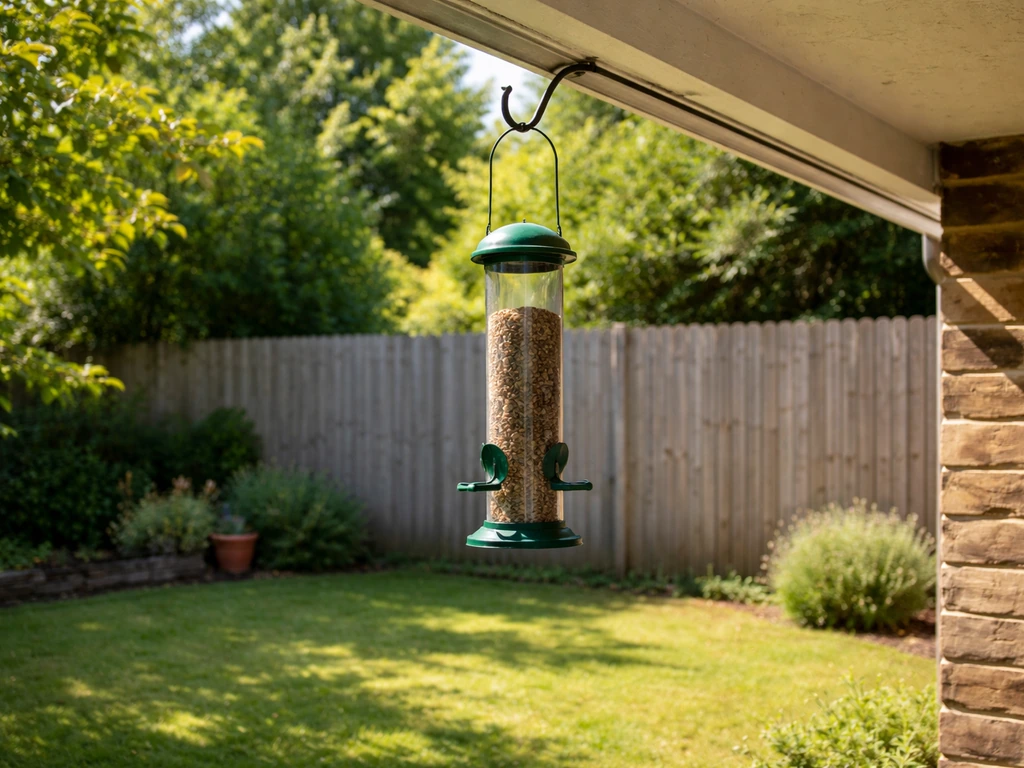
Even a well-designed starling-proof feeder can underperform if it is placed badly. Placement affects both whether starlings attempt to access it and whether smaller birds feel safe enough to use it.
- Hang feeders at least 1.5 to 2 metres off the ground on a smooth pole or branch. Starlings can approach from any direction, so height alone does not deter them, but it does keep the feeder away from ground-level disturbance.
- Position the feeder within 1 to 3 metres of dense shrubs or hedging. Small birds like tits and sparrows want nearby cover to retreat to between feeds. Without it, they use the feeder less confidently and starlings dominate by sheer persistence.
- Keep the feeder at least 3 metres from large trees with flat horizontal branches. Starlings use these as staging perches before approaching a feeder, and having a clear landing area close by makes it easier for them to queue and wait.
- Use a shepherd's hook or dedicated pole with a baffle below the feeder. A baffle does not stop flying starlings, but it prevents them from climbing up from below and adds a layer of protection against rats, which are a related pest problem.
- If you have multiple feeders, space them at least 2 to 3 metres apart. Starlings can dominate a single feeding station, but spreading resources makes it harder for one flock to control everything.
- Consider a feeding station with a built-in cage surround or defender attachment. Products like the Simon King Medusa Defender are designed to be added to hanging feeders as an access-restricting outer cage.
One placement detail that is often overlooked: avoid positioning feeders directly against a fence or wall with horizontal ledges. Starlings will perch on the ledge and reach sideways into the feeder rather than landing on it directly, which can defeat weight-sensitive mechanisms and even some caged designs if the cage does not extend fully around the seed ports.
Troubleshooting: why starling-proof feeders fail and how to fix it
If your feeder is supposed to be starling-resistant but starlings are still emptying it, run through this checklist before giving up on the feeder entirely.
They are gaming the weight mechanism
Starlings sometimes learn to balance on the very edge of a weight-sensitive perch, distributing their weight so the port stays partially open. The fix is to tighten the weight threshold to the minimum setting and see if they stop. If they continue, the feeder's mechanism may not be sensitive enough for the average starling in your garden, and switching to a caged design is the more reliable long-term solution.
Seed is spilling and becoming accessible
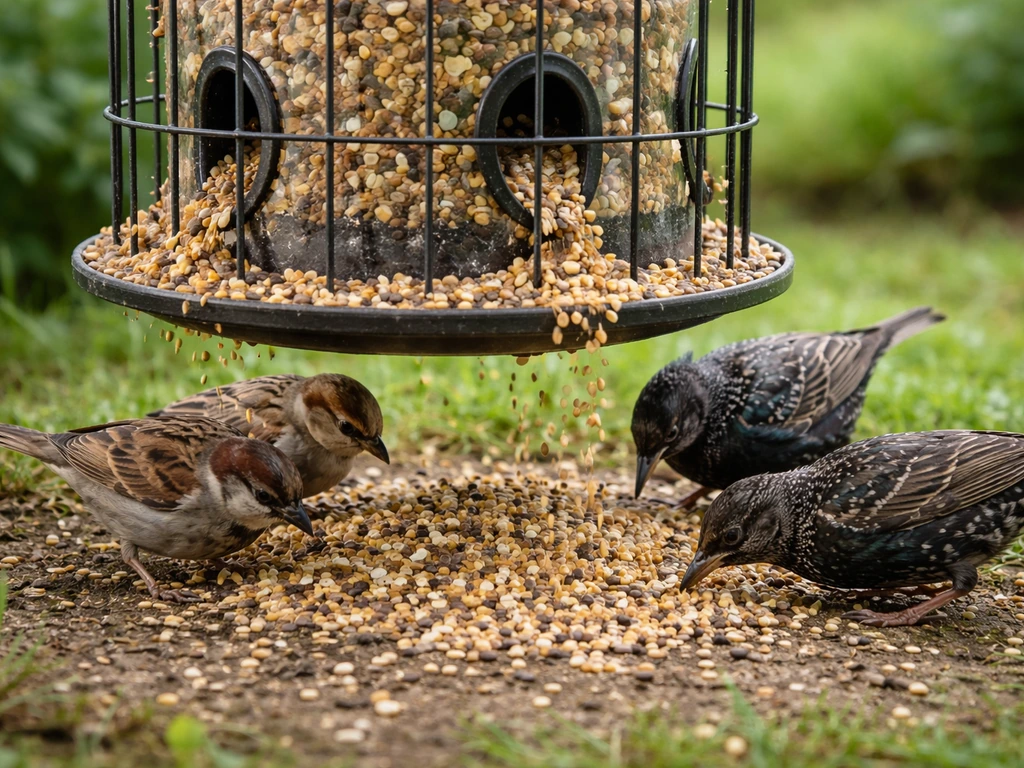
A common failure mode is that smaller birds knock seed out of ports while feeding, and the spillage lands on a tray or the ground where starlings hoover it up immediately. Even if the feeder itself is starling-resistant, you are effectively still feeding them. Remove any seed-catching tray from a caged feeder and switch to a no-mess seed mix (like sunflower hearts, which have no husks to discard). A no-mess bird feeder also helps you keep spillage under control, which is where starlings can start to exploit the mess best no mess bird feeder. Reducing spillage cuts off the secondary food source.
The cage gaps are too wide or uneven
If you have a budget caged feeder, measure the actual cage opening rather than relying on the product description. Some cheaper models have openings closer to 2 inches in practice, which is enough for a determined starling to force its head through and reach a port. If the cage is deforming, it needs replacing. This is a case where spending a bit more on a feeder with a solid welded steel cage is worth it from the start.
The seed type is too attractive
Peanuts, fat balls, and generic wild bird mixes are among the most attractive foods for starlings. Switching to nyjer seed or pure sunflower hearts reduces starling interest considerably because these foods are less appealing to them relative to tits and finches. This is not a complete solution on its own, but paired with a caged feeder, a less attractive seed dramatically reduces how often and how aggressively starlings attempt access.
Starlings have found a way around the cage
Check whether the cage extends fully around all seed ports and that there is no gap at the top or bottom where a starling can reach in from outside the cage. Some caged feeders have a cage that stops short of the lowest port, giving starlings access from below. If that is the design flaw, you can add a separate cage defender or switch to a feeder where the cage is a complete enclosure.
Seasonal tips and maintenance for ongoing starling control
Starling pressure is not constant through the year. In the UK, late autumn and winter bring the largest flocks because migrant starlings arrive from mainland Europe and join local populations. This is when your feeder defenses get the hardest test. In spring, flocks break up as birds pair off and nest. By summer, you will mostly see individual starlings or family groups, which are much easier to manage.
Winter (October to February)
This is peak starling season. If you are going to invest in a proper starling-proof setup, have it in place before October. Increase the frequency of cleaning because winter moisture causes mold in seed faster, and a clogged port is often the first sign of a problem. Check that cage fixings have not loosened in frost. In very cold spells, fat-based foods become more important for smaller birds, so consider an upside-down suet feeder as a second feeding point specifically for that purpose.
Spring (March to May)
Starling pressure drops, and this is a good time to do a thorough clean and inspection of your feeders. Check the cage for rust, deformation, or loose welds. Replace any feeder that has developed uneven cage gaps over the winter. Spring is also when you might start seeing juvenile starlings trying to learn to feed, and they tend to be less effective at getting past barriers than adults.
Summer (June to August)
Feeders get used less intensively in summer as natural food is abundant. You can reduce the amount of seed you put out to avoid waste and minimize ground spillage. If you stop feeding altogether in summer, consider a brief re-introduction period in September to remind local small birds that your garden is a reliable food source before winter pressure begins again.
Ongoing maintenance habits
- Clean feeders with a mild disinfectant solution at least every two weeks in winter, weekly in wet weather
- Check all cage fixings and hanging loops monthly for rust, loosening, or deformation
- Remove and discard any damp or clumped seed immediately rather than leaving it to block ports
- Rotate seed type seasonally: nyjer and sunflower hearts in winter, mixed seeds with lower starling appeal in summer
- Clear ground beneath feeders regularly to remove spillage that would attract starlings (and rats)
- If a feeder's cage has visibly deformed or rust has weakened the structure, replace it rather than trying to repair it
The most common reason a well-chosen feeder stops working over time is neglected maintenance rather than a design flaw. A rusted or loose cage gap that was 1.5 inches in October might be 2 inches by February. Checking the physical condition of the cage every few weeks is genuinely worth the two minutes it takes.
FAQ
What seed type should I use to stop starlings while still feeding tits and finches?
Start with sunflower hearts or nyjer (thistle) in a tube feeder with restricted ports. Avoid generic mixed wild bird seed, peanuts, and fat balls at the beginning, since starlings switch to those readily. If you already use a cage feeder, keep the cage ports supplied with the less-staling options to reduce how quickly starlings learn the routine.
Do I need a separate feeder for fat-based foods in winter if I have starling-proof tube feeders?
Often yes, because starlings target high-value fat quickly when they can access it. A good approach is to run your starling-proof tube feeder mainly with dry seeds, and add a second feeding point using an upside-down suet design meant for clingers (nuthatches, woodpeckers). This spreads food value across feeder types and reduces the temptation for starlings to focus on one station.
How often should I clean a caged tube feeder during peak starling season?
In UK winter, aim for more frequent checks, roughly every 1 to 2 weeks, and clean the feeding ports whenever you notice dampness or slow flow. Winter moisture causes mold faster than in summer, and a partially blocked port can look like “the feeder is failing” when it is actually just clogged.
Can starlings damage a caged tube feeder even if they cannot reach the seed?
Yes, mainly through wear and alignment changes. They can still peck at the cage, stress joints, and work at gaps if the cage is clipped on rather than built in. Inspect the cage and fixings after frosts and look specifically for expanded openings or any cage section that has shifted.
What’s the best placement to stop sideways access from starlings?
Keep the feeder so it cannot be reached from a horizontal ledge or perch on a nearby fence or wall. Ideally, mount it so starlings must land on the feeding zone rather than reach in from the side. If you have limited options, extend the cage fully around all ports and re-check the top and bottom for any entry gaps.
My weight-sensitive feeder trips, but starlings still get some seed. Why?
Two common causes are partial-weight balancing (starlings stay on the edge so the port stays slightly open) and calibration set too high. Tighten the trigger to the lowest setting first. If that does not stop them, the mechanism may not react quickly or precisely enough for local starlings, and switching to a fully caged design is usually the more reliable fix.
Should I put a seed-catching tray under a caged starling-proof feeder?
Avoid it. Trays turn any spilled seed into a secondary food source starlings can quickly exploit. If spillage happens, switch to no-mess seed choices like sunflower hearts and remove trays that catch husks or fragments where starlings can hoover them up.
How can I tell if the cage openings are actually small enough for my feeder?
Measure the actual grid opening size on arrival using a ruler or calipers, not just the marketing claim. Cheaper models may be closer to 2 inches in practice, which can allow a determined starling to force access. Also check whether the cage is deforming, since a gap that was tight at first can widen after moisture and cold.
Is it worth buying a starling-proof feeder if pigeons or feral doves visit too?
Yes, but choose your restriction style. A fully caged tube approach can limit access for larger birds too, not only starlings. If pigeons are frequent, consider a cage that encloses all ports completely, and confirm there are no entry routes from below where larger birds can reach into the lowest port area.
When is the best time to install a starling-proof setup in the UK?
Install and test it before October if possible. Late autumn and winter bring the heaviest starling pressure in the UK. During that period, check fixings more often, because frost and temperature swings can loosen parts and widen gaps.
Do starling-proof feeders work equally well in spring and summer?
They still work, but pressure drops and birds change behavior. In spring and summer, you may need less seed to avoid waste and spillage, and you can do a thorough inspection when flocks break up. Some people also reintroduce small amounts in September to re-train small birds before winter returns.
Next Article
Best Deer Proof Bird Feeder: Choose, Mount, and Setup
Learn how to pick and mount the best deer proof bird feeder with guards, height, and setup that keeps birds feeding.