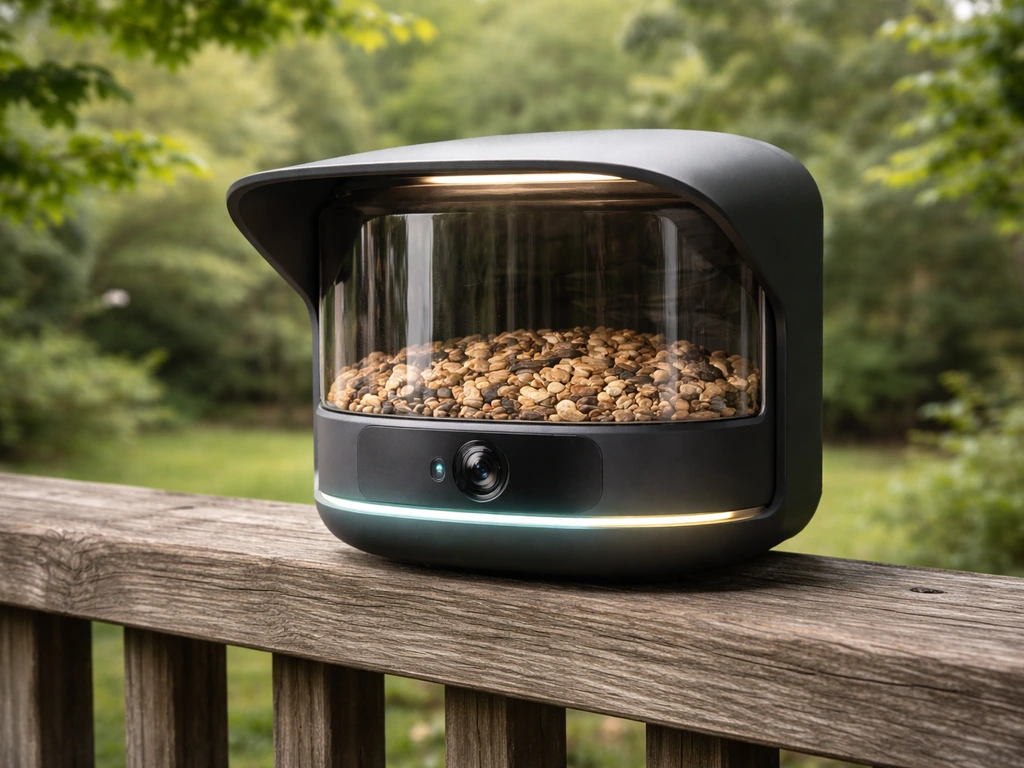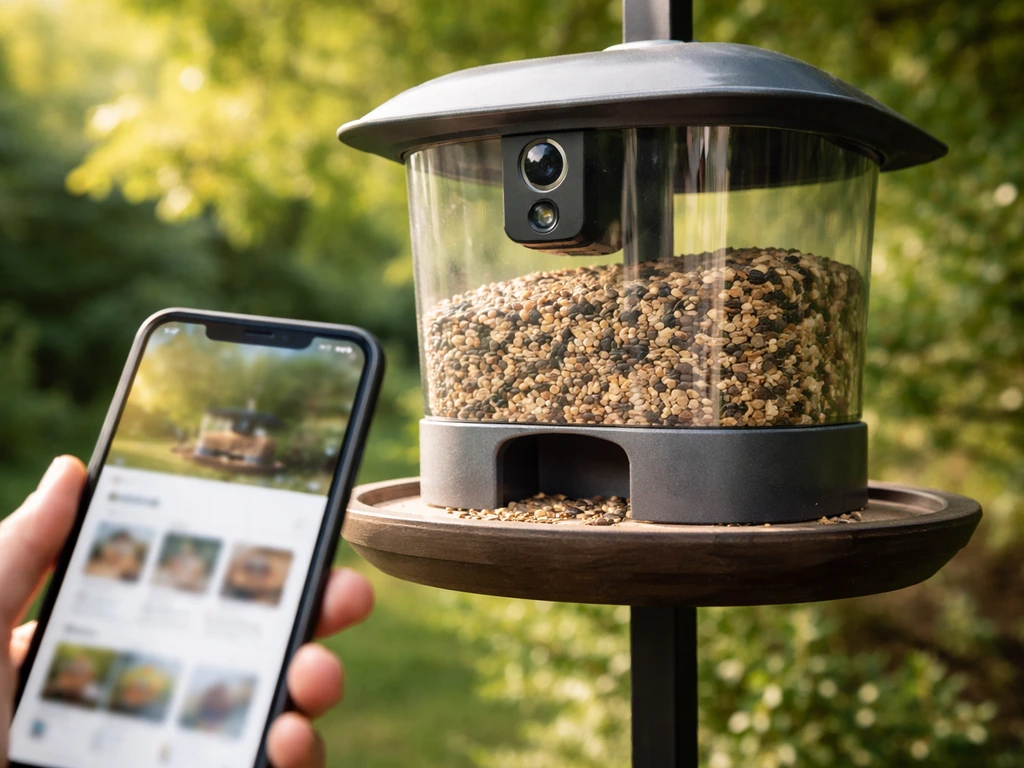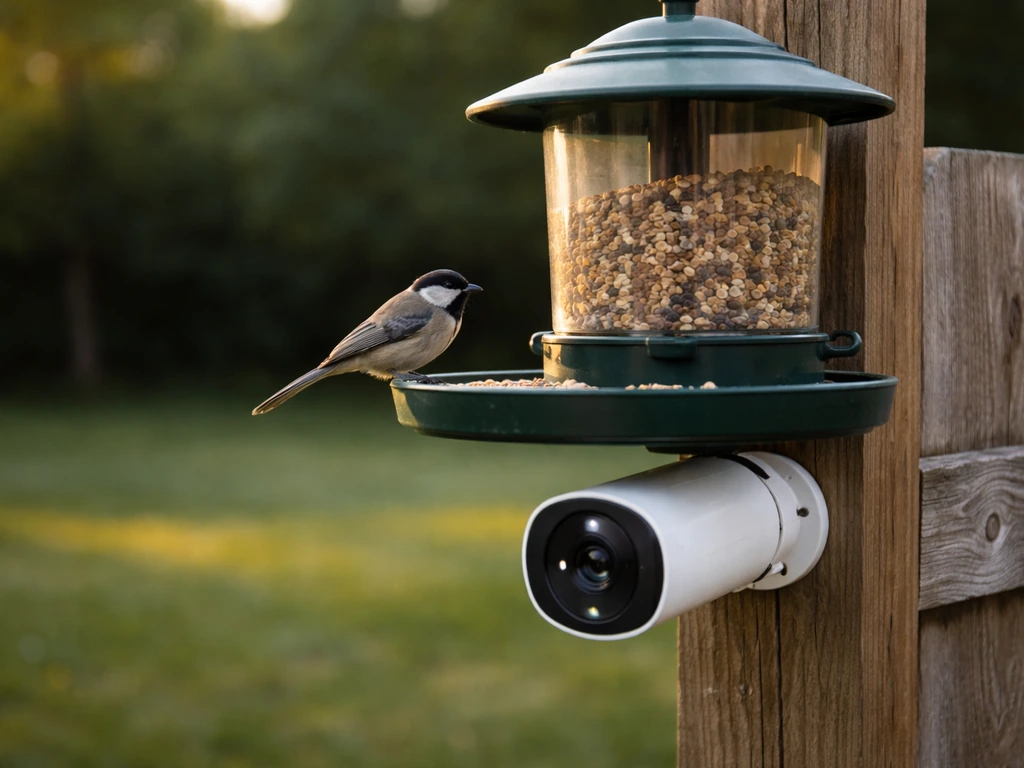
The best automatic bird feeder for most backyard setups is a large-capacity hopper or tube-style dispenser with a motorized or gravity-controlled port, weather-sealed construction, and some form of pest deterrent built in. If you also want to know which birds are visiting, a smart camera feeder like the Birdfy Feeder Metal 2 4K or BirdBuddy 2 layers AI identification and app notifications on top of that foundation. If you specifically want the best virtual bird feeder experience, prioritize a smart camera model with clear identification and reliable app notifications. But if you just want seed to flow reliably without you fussing over it every day, a well-built automatic dispenser with a 4-6 lb capacity, adjustable ports, and a tight-fitting lid will do the job better than anything fancy.
Best Automatic Bird Feeder 2026 Buyer’s Guide and Tips
What 'automatic' actually means on a bird feeder
The word gets used loosely, so it's worth being precise before you spend money. If you're specifically shopping for the best bluetooth bird feeder, you'll want to prioritize smart-camera and app features alongside the automatic dispensing type automatic feeder. In the bird feeder world, 'automatic' covers at least four different things, and knowing which one you actually want saves a lot of frustration.
- Gravity-fed dispensing: The simplest form. Seed flows down from a reservoir into a tray or port as birds eat it. No electronics, no timer, no moving parts. Reliable, cheap, and technically automatic in the sense that it refills the feeding area on its own.
- Timed or motorized dispensing: A motor or timer mechanism releases a set amount of seed at scheduled intervals. Common on feeders designed to limit access, reduce waste, or deter nocturnal pests by closing the port at night.
- Motorized pest-proofing: A weight-activated spinning or closing mechanism that shuts off seed access when a squirrel or large bird lands. The Squirrel Buster line is the most recognizable example. The motor reacts to weight, not a timer.
- Smart camera feeders: These combine a seed reservoir with a camera, onboard AI, Wi-Fi, and a companion app. They identify species, send you photo or video postcards, and some let you adjust settings remotely. BirdBuddy and Birdfy are the two dominant players here.
Most people searching for an automatic bird feeder want either reliable gravity-fed dispensing with pest control, or a smart camera setup. Those are genuinely different products at different price points. A gravity hopper runs $30 to $80. A smart camera feeder runs $130 to $250 or more. It's worth deciding which camp you're in before reading any further.
There's also a category worth mentioning: large-capacity self-filling feeders with weather-sealed hoppers. These aren't motorized or smart, but they hold enough seed (sometimes 10 lbs or more) that you only refill once a week. For busy households, that's the most useful kind of 'automatic' there is. Smart camera feeders with Wi-Fi connectivity are closely related to what you'd find covered under AI bird feeders and wifi bird feeders, but this guide keeps the focus on feeders where the automatic dispensing mechanism is the core feature, not just a bonus.
Match the feeder type to your birds and feeding style
Automatic dispensing doesn't work the same way across all feeder styles. Here's how the main types translate into real-world use.
Tube feeders with automatic ports
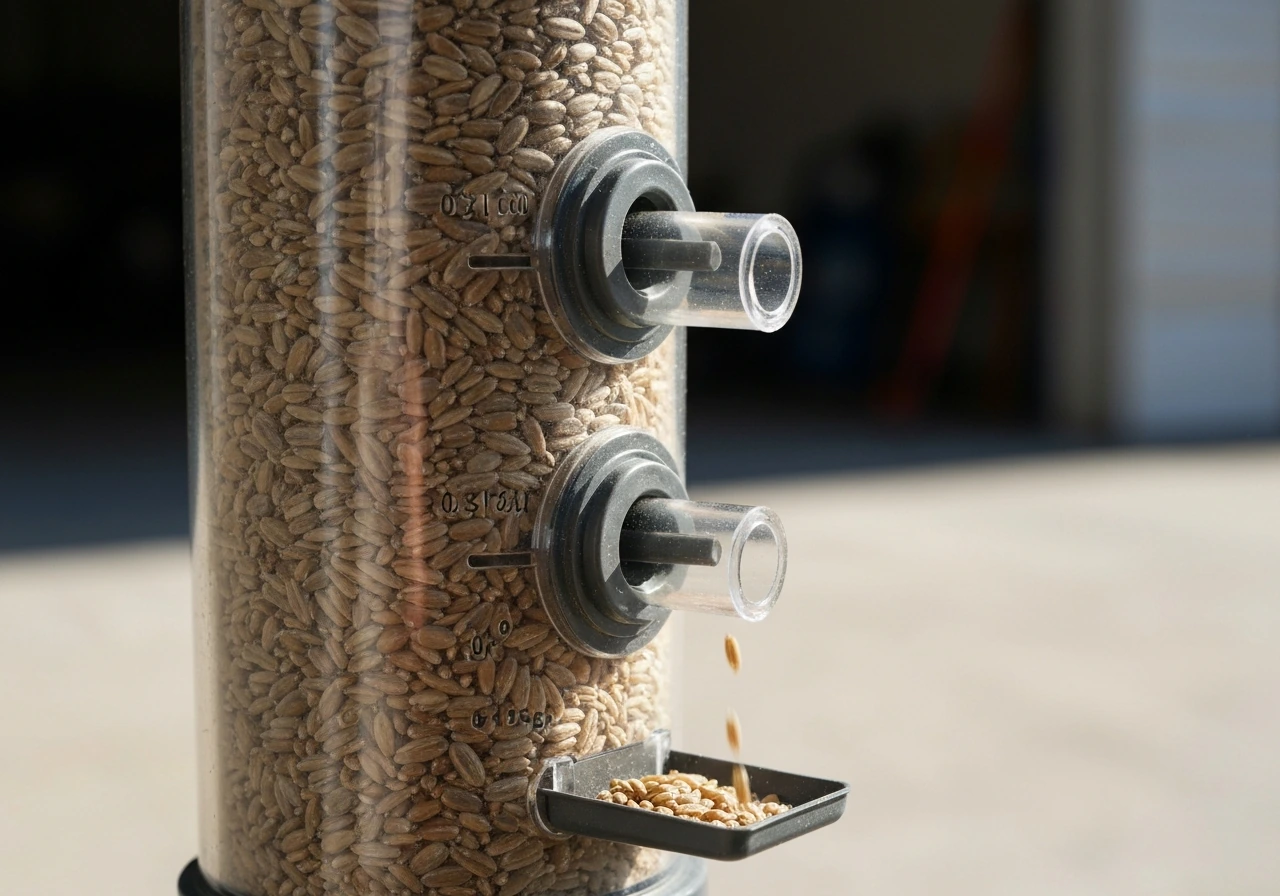
Tube feeders are the best all-around choice for most automatic setups. Seed stays dry in the enclosed tube, ports can be adjusted for different seed sizes, and many models include weight-sensitive mechanisms that close when a squirrel sits on the perch. They work well for finches, chickadees, nuthatches, and sparrows. If you want to target cardinals, look for a tube feeder with a wider tray attachment or built-in tray ring, since cardinals prefer a stable flat surface to perch on.
Hopper feeders
Hoppers hold more seed than tubes (typically 4 to 8 lbs) and gravity-feed into a tray below. They attract a wider variety of birds including cardinals, blue jays, doves, and woodpeckers. The downside is that the open tray can collect moisture and the seed at the bottom can go moldy if you don't clean it regularly. For an automatic hopper that stays reliable, look for one with a sloped bottom to encourage seed flow and drainage holes in the tray.
Smart camera feeders
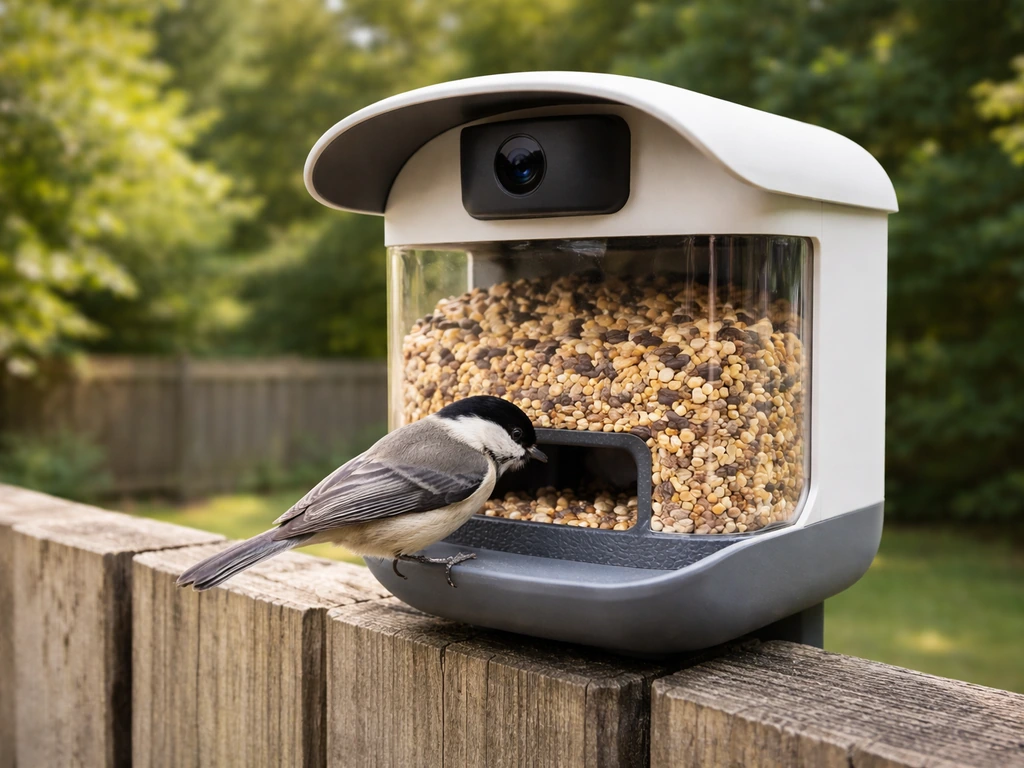
These are usually a hybrid tube or hopper body with a camera module mounted above or beside the seed port. blank" rel="noopener noreferrer">BirdBuddy 2 uses a 5MP camera sensor (with an optional 2K upgrade module) and is rated IP67 for weather resistance, operating between -5°F and 120°F. That IP67 rating means it can handle a genuine rain soaking, not just a light drizzle. The Birdfy Feeder Metal 2 4K pairs a 4K camera with a blank" rel="noopener noreferrer">9000mAh battery and a 2W integrated solar panel, designed so the solar keeps the battery topped up during daylight hours for continuous operation. Both feeders send bird identification alerts to your phone. If you want the overall best electronic bird feeder, focus on a smart camera model with reliable ID alerts, strong weather resistance, and a power setup that matches your climate. If species ID and photo sharing is important to you, either one is worth the investment.
Suet and specialty feeders
True 'automatic' suet feeders are rare because suet doesn't flow or dispense the way seed does. Most suet cages are manual. If you want to attract woodpeckers and nuthatches automatically, your best bet is to pair a large-capacity hopper with a separate cage-style suet feeder nearby rather than searching for an automatic suet dispenser. Similarly, platform feeders are almost always manual, though some smart camera feeders use a shallow tray design that mimics a platform.
Specs that actually matter when you're comparing feeders
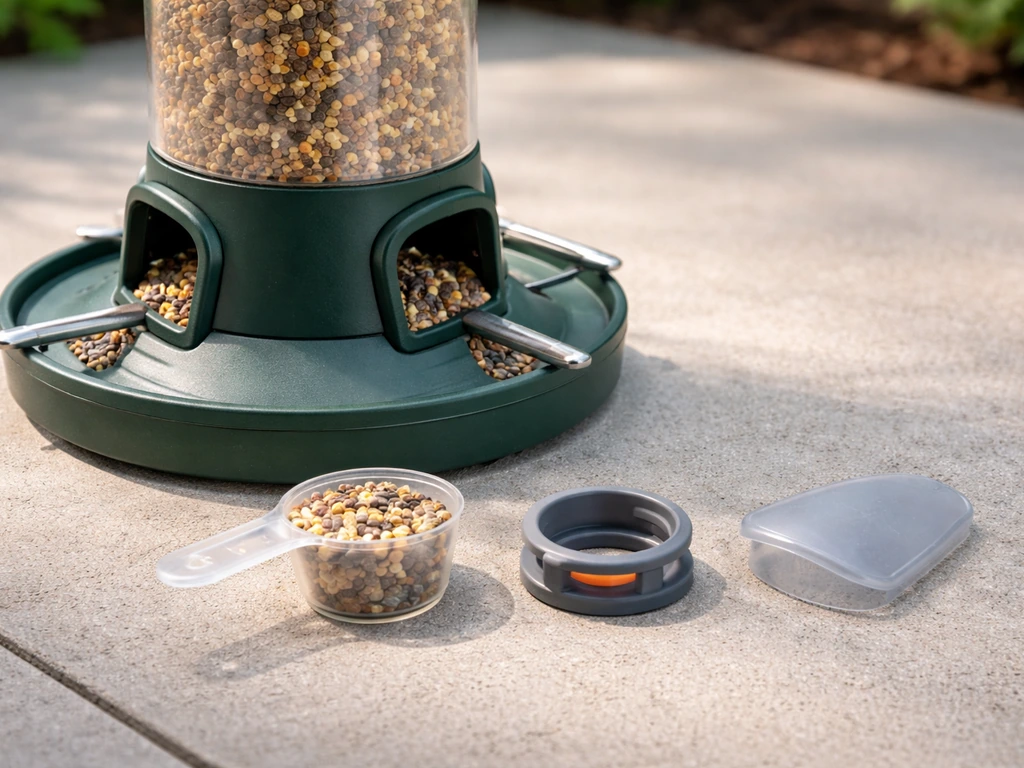
Marketing copy on bird feeder packaging can be vague. These are the specs I check first when evaluating any automatic feeder.
| Spec | What to Look For | What to Avoid |
|---|---|---|
| Capacity | 4 to 8 lbs for daily visitors; 8+ lbs if you have heavy traffic or don't want to refill often | Under 2 lbs unless it's a dedicated finch or nyjer feeder |
| Port size/adjustment | Adjustable ports or interchangeable inserts for different seed types (sunflower, safflower, nyjer) | Fixed tiny ports that clog with mixed seed |
| Dispensing mechanism | Gravity-fed with anti-jam slope, or weight-activated motorized closure | Simple flat-bottomed reservoirs with no flow guidance |
| Weatherproofing | UV-stable polycarbonate or powder-coated metal; drainage holes in trays; tight-sealing lid | Cheap plastic that cracks after one winter or open trays with no drainage |
| Ease of cleaning | Dishwasher-safe parts or wide-mouth opening for brush access | Sealed units you can't fully open or narrow tubes with ports you can't reach |
| Power (smart feeders) | Solar panel + large battery (9000mAh+); USB charging backup | Battery-only with no solar in a sunny yard—you'll replace batteries constantly |
One spec people overlook is port placement relative to the seed level. On cheap tube feeders, the lowest port sits right at the bottom of the tube. As seed depletes, the upper ports go dry before the feeder is actually empty, so birds stop visiting even though there's still seed in there. Better feeders stagger the ports to feed from different levels, or use a wide hopper that keeps seed at a consistent depth across the tray.
Weatherproofing and how to power your feeder
Weather is the number one killer of automatic feeders, both mechanically and in terms of seed quality. A feeder that lets water in will rot seed, jam motors, and corrode metal parts within a season. Here's how the main construction materials and power options stack up.
Construction materials
UV-stabilized polycarbonate plastic is the standard for tube feeders and holds up well through three to four seasons without cracking or fading. Powder-coated steel or aluminum is more durable long-term and handles freeze-thaw cycles better, though it costs more. Avoid feeders with unsealed wood elements in the reservoir itself: wood absorbs moisture, warps, and breeds mold. Wood is fine for decorative roofs or poles but not for the seed-holding parts.
Power options for motorized and smart feeders
- Solar only: Not reliable in cloudy climates or during short winter days. Only use solar-only models in consistently sunny regions.
- Solar plus battery backup: The best combination for outdoor use. The Birdfy Metal 2 4K's 2W solar panel paired with a 9000mAh battery is a good benchmark. On a sunny day, the panel maintains the battery; on cloudy days, the battery carries the load.
- Battery only: Fine for short-term use or in areas where solar isn't practical, but you'll be swapping AA or D-cell batteries every few weeks with heavy camera use.
- Plug-in (corded): Most reliable power source, but limits placement to within cord distance of an outlet. Works well for covered porch or eave mounting where weatherproofing the cord connection is manageable.
For cold climates, check the operating temperature range on any motorized or smart feeder before buying. BirdBuddy 2's -5°F lower limit covers most of the continental US winter, but if you're in Minnesota or the northern Rockies where temps drop to -20°F or colder, that's a meaningful limitation. Gravity-fed mechanical feeders have no such limit since there's nothing to freeze except the seed itself.
Keeping squirrels, rats, and raccoons out
Pest pressure is the main reason people look for automatic feeders in the first place, so this deserves a straight answer: no feeder design alone is truly squirrel-proof unless it combines a physical barrier with a weight-sensitive closure or a baffle on the mounting pole. The most effective systems use both.
Weight-activated closures
Feeders like the Squirrel Buster Plus use a spring-loaded shroud that drops over the seed ports when weight above a set threshold lands on the perch ring. You can adjust the weight threshold, which is useful if you're trying to exclude blue jays but allow smaller birds, or vice versa. This is genuinely effective against squirrels as long as the feeder is pole-mounted with a baffle rather than hung from a tree branch the squirrel can access from above.
Pole baffles and placement
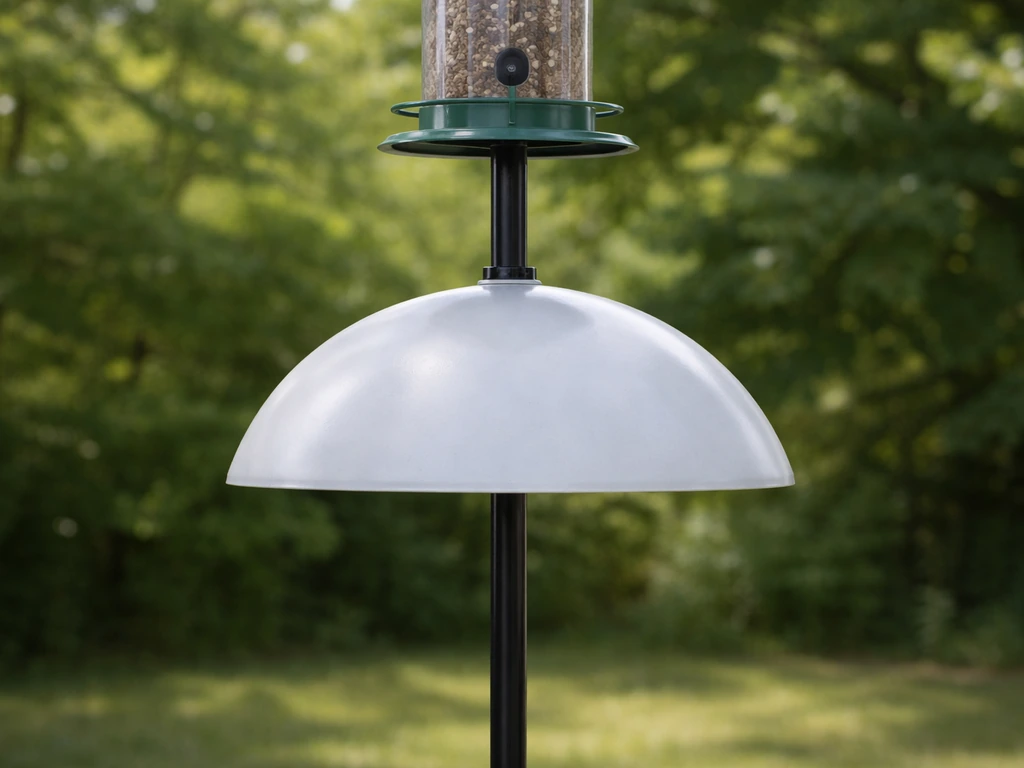
A smooth, domed or cylindrical baffle mounted on the pole below the feeder is more reliable than any feeder-level mechanism. Squirrels can't grip a smooth baffle surface and can't get above the feeder to bypass it if the pole is at least 10 feet from any tree, fence, or roof edge. Raccoons are heavier and stronger than squirrels, so metal baffles rated for raccoon pressure (usually heavier-gauge steel, 18 inches or wider in diameter) are worth the upgrade if you're in a suburban area with raccoon activity at night.
Rat-proofing
Rats are attracted more by spilled seed under the feeder than by the feeder itself. A tray with a mesh bottom or drainage holes reduces spillage. Switching from mixed seed (which birds toss around to find preferred seeds) to a no-waste blend or straight black-oil sunflower seed dramatically reduces ground litter. If you're seeing rat activity, adding a no-catch tray beneath the feeder and cleaning up fallen seed every day breaks the cycle faster than any feeder modification.
Placement and setup for more birds and fewer headaches
Even the best automatic feeder won't get visited if it's placed badly. Here are the placement rules that consistently make the biggest difference.
- Mount feeders 5 to 6 feet off the ground on a smooth pole with a baffle. This height is comfortable for most feeder birds and awkward for cats and raccoons.
- Keep feeders at least 3 feet from any window, or 30 feet or more from windows. The danger zone is 4 to 29 feet: birds that flush from the feeder at that distance can build up enough speed to fatally strike glass. At under 3 feet, they don't have room to accelerate.
- Position the feeder where birds have clear sightlines in at least two directions. A feeder surrounded by solid walls on three sides makes birds nervous. They prefer to be able to see predators approaching.
- Place the feeder within 10 to 15 feet of shrubs or trees for quick cover, but not so close that squirrels can leap from branches onto the feeder. That 10-foot clear zone around the pole is the key measurement.
- For smart camera feeders, orient the camera side toward your house so you get good viewing angles on your phone, and make sure it gets morning or afternoon light for solar charging rather than being shaded by a tree or overhang.
If you're targeting specific species, placement adjustments matter. Cardinals prefer feeders at 5 to 6 feet in open but sheltered spots. Finches tolerate high-mounted tube feeders (up to 8 feet). Ground-feeding doves do best with a low tray feeder set almost at ground level. Woodpeckers favor feeders or suet cages mounted directly on a tree trunk or post rather than hanging.
Troubleshooting the most common automatic feeder problems
Seed bridging and jams
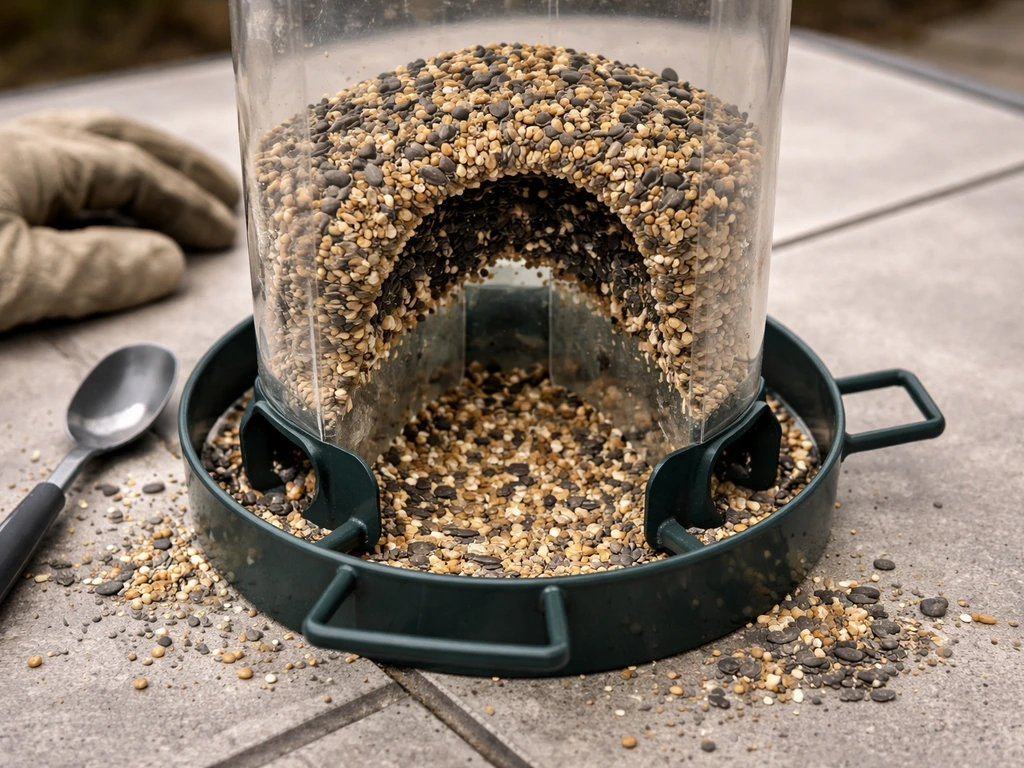
Bridging happens when seed clumps together inside the reservoir and forms an arch above the port, stopping flow even though there's still seed above. It's most common with nyjer (thistle) seed in humid climates and with mixed seed that includes dusty filler. The fix: tap the side of the feeder to break the bridge, then switch to a cleaner seed with fewer fines (the powdery bits that compact). A feeder with an anti-bridge agitator or a tapered hopper reduces this problem significantly.
Moisture and mold
Wet seed goes moldy fast and sick birds are a real consequence. Check the feeder after every significant rain. If the tray is holding water, drill additional drainage holes or switch to a mesh-bottom tray. Cleaning the feeder with a 1:9 bleach-to-water solution every two to four weeks, then rinsing and fully drying it before refilling, prevents mold from taking hold. In particularly wet seasons or climates, consider a weather guard: a wide dome baffle mounted above a hanging feeder that deflects rain before it reaches the ports.
Birds ignoring a new feeder
New feeders sometimes sit empty of visitors for days or weeks. Birds are creatures of habit and cautious about new objects in their territory. Speed up adoption by placing the feeder near an established feeder, scattering a small amount of seed on the ground below it, or temporarily taping a small pile of seed to the outside of the feeder so birds can find it without having to figure out the port mechanism. Once a few birds discover it, others follow quickly.
Motor or mechanism failures on smart feeders
The most common failure point on motorized feeders is seed debris getting into the mechanism. Rinse the area around any moving parts when you clean the feeder, and blow out any seed dust with a can of compressed air. On solar-powered smart feeders, check that the solar panel surface is clean: even a light film of dust or pollen can cut charging efficiency by 20 to 30 percent. If a smart feeder loses its Wi-Fi connection, most reset successfully by powering off, waiting 30 seconds, and reconnecting through the app. Persistent connectivity issues are usually a router range problem rather than a feeder fault.
Winter-specific issues
In freezing temperatures, seed can compact and freeze solid inside a feeder overnight. Using black-oil sunflower seed or safflower (both have lower moisture content than mixed seed) helps. For suet-style feeding in winter, a cage feeder with a weather guard on top keeps the suet dry and soft longer. On smart feeders with batteries, cold weather reduces battery performance noticeably: a feeder that lasts three weeks on a charge in summer might last ten days in January. Keep the battery above 20 percent charge going into a cold snap.
Best picks by use case
Here's where I cut to the actual recommendations. I've organized these by the situation most likely to drive your purchase, not by a ranked list that pretends one feeder is best for everyone.
Best overall automatic feeder for most backyards
A weight-activated tube or hopper feeder with a 5 to 6 lb capacity, adjustable ports, and UV-stable polycarbonate construction hits the sweet spot for most people. The Squirrel Buster Plus is the benchmark here: weight-adjustable shroud, easy disassembly for cleaning, and durable enough to last five or more years. Pair it with a steel pole and a raccoon-rated baffle and you have a genuinely hands-off feeding setup.
Best for bird watchers who want ID and photos
BirdBuddy 2 is the better choice if the app experience and community sharing matter to you: the IP67 rating and wide operating temperature range make it legitimately all-weather, and the optional 2K camera upgrade is worth it if you want sharp video postcards. Birdfy Metal 2 4K is the better choice if continuous off-grid power is the priority: the 9000mAh battery with the 2W solar panel means you're not hunting for outlets or replacing batteries. Both feeders do bird ID well. If you're also comparing which model works best for day-to-day convenience, look for the best ai bird feeder features like reliable species ID and steady power. Pick BirdBuddy 2 for the ecosystem and cold-weather reliability, Birdfy for the camera quality and solar independence.
Best for cardinals and larger birds
Cardinals need a wider perch and a tray, so a hopper-style automatic feeder with an open tray base is the right call. Look for a model with a 6 to 8 lb capacity, a roof that overhangs the tray to keep seed dry, and sturdy perch rods that won't flex under a cardinal's weight. Avoid tube feeders with tiny pegs as the only perch option.
Best for finches
A nyjer-specific tube feeder with small ports and multiple perches, mounted at 6 to 8 feet, is the standard setup. These don't need motors or cameras. The automatic element is simply the gravity-fed reservoir. Make sure the tube is transparent so you can see the seed level, and that you can fully disassemble the bottom for cleaning, since wet nyjer compacts badly.
Best for urban and high-pest-pressure yards
In urban settings with serious squirrel, rat, or raccoon pressure, the mechanism matters more than the capacity. A motorized weight-activated feeder on a squirrel-proof pole system (with a metal baffle) is the foundation. Add a no-waste seed blend to cut ground litter. If you're renting or can't install a permanent pole, a window-mounted version of a smart camera feeder keeps the feeder off the ground entirely and away from most pest access routes.
Best for cold and wet climates
Prioritize metal construction over plastic, a tight-sealing lid, and a feeder with drainage in the tray. For smart feeders in cold climates, BirdBuddy 2's -5°F operating range is a real differentiator. Go with black-oil sunflower seed year-round since it handles moisture better than mixed seed and appeals to the widest range of winter birds including chickadees, nuthatches, woodpeckers, and cardinals.
What to avoid
- Cheap plastic tube feeders with glued (non-removable) bases: you can't clean them properly and they crack in their second winter.
- Battery-only smart feeders in full-sun yards: solar charging is not optional, it's a maintenance reduction you'll appreciate quickly.
- Mixed seed in automatic feeders: birds pick out what they want and leave the rest to rot, jam ports, and attract rodents. Straight black-oil sunflower or a specific blend matched to your target birds is always better.
- Feeders hung directly from a tree branch in a squirrel-active yard: any weight-activated mechanism is defeated the moment a squirrel approaches from above.
- Very cheap automatic dispensers marketed as 'timed' feeders: most use low-quality timers and motors that fail within one season, especially in outdoor moisture conditions.
When an automatic feeder isn't the right answer
If you're on a tight budget, a simple gravity-fed hopper or tube feeder with a good pole and baffle will outperform a cheap automatic feeder every time. Spending $40 on a quality manual feeder and $25 on a proper baffle is more effective than spending $60 on a novelty automatic dispenser with a flimsy motor. Similarly, if your goal is purely to attract a single species like hummingbirds or orioles, a specialized nectar or jelly feeder designed for that bird will always beat a general-purpose automatic feeder regardless of how many features it has.
FAQ
How do I choose the right seed type for the best automatic bird feeder so it doesn’t jam or bridge?
Match your seed to the feeder’s port style. Tube feeders with narrow ports work best with smaller seeds, like finch blends or nyjer, while hoppers usually tolerate mixed seed better, provided the tray has drainage. If you see arching or stop-start flow, tap the feeder to break the bridge and switch to a cleaner blend with fewer dusty fines (powdery bits).
Do I need a smart camera feeder to prevent squirrels from getting the seed?
No. Species ID does not stop pests. The most reliable deterrence comes from a pole-mounted barrier system (weight-sensitive closure at the ports plus a smooth baffle on the pole). A smart camera feeder can be harder to squirrel-proof if it’s mounted where a squirrel can reach from nearby rails, trees, or roof edges.
What’s the best mounting height for a feeder to reduce pest access and still attract the birds I want?
Typical success ranges depend on species and the feeder style, but a practical rule is to place the feeder so the pole baffle is at least 10 feet from any jump-off point like tree limbs, fences, or roof edges. If you want cardinals, set closer to 5 to 6 feet in a sheltered-open spot, while finches often do well higher with tube feeders up to about 8 feet.
How often should I clean an automatic bird feeder to prevent mold and motor issues?
Check and rinse after significant rain, and plan a deeper clean every 2 to 4 weeks. For bleach sanitizing, use a dilute bleach-to-water mix, rinse thoroughly, then dry fully before refilling. For motorized models, also clear seed dust around moving parts so debris does not build up inside the mechanism.
What should I do if my automatic feeder runs but birds stop visiting before the seed is actually gone?
This usually indicates port placement relative to the seed level. On some tube models, the lowest port sits too close to the bottom, so upper ports go dry first, leaving remaining seed unused. Look for staggered ports or designs that keep a consistent seed depth across the dispensing area.
How can I tell whether the problem is seed moisture versus a mechanical fault?
If seed near the ports looks clumped, damp, or smells stale, suspect moisture and bridging or tray water. If seed looks fine but dispensing stops, inspect for debris around the port or moving parts, then confirm the feeder is level and the lid is sealing. Weather-sealed lids and tray drainage reduce moisture-related false failures.
Are solar-powered smart feeders reliable in winter or cloudy regions?
They can be, but performance depends on charging conditions. A solar panel can lose efficiency when it’s dirty, dusty, or shaded, which can reduce runtime noticeably in cold seasons. Keep the panel clean, and if you expect extended low-sun periods, consider whether your model has a battery capacity that can handle winter dips, or plan for extra charging opportunities.
What should I do if my smart camera feeder loses Wi-Fi or won’t reconnect?
Most reconnections succeed with a simple cycle, power off, wait about 30 seconds, then reconnect through the app. If it keeps happening, it’s often not the feeder, it’s router range or signal strength at the mounting location. Test Wi-Fi reception near the feeder spot before assuming hardware failure.
How do I reduce rat activity under an automatic feeder?
Rats are attracted to spilled seed. Use a tray with drainage or a mesh-bottom/no-catch approach to limit ground litter, and switch to a no-waste seed blend or straight black-oil sunflower seed, which birds toss less. Cleaning fallen seed daily breaks the attract-and-return cycle faster than feeder-level tweaks.
Can I use an automatic feeder for suet or nectar, or do I need different hardware?
Seed-style automatic dispensing does not translate well to suet, because suet does not flow like seed. True automatic suet dispensers are uncommon, and most cages are manual. For hummingbirds or orioles, use a nectar or jelly feeder designed for that food, since bird-specific nutrition and feeder geometry matter more than general “automatic” features.
What’s the easiest way to help birds adopt a new feeder faster?
Add it near an existing feeder, scatter a small amount of seed on the ground below, or temporarily place a small external seed pile so birds can discover the food without figuring out the ports. Once a few birds begin using it consistently, activity usually ramps up quickly as others follow.
How do I prevent freezing-related dispensing problems in very cold climates?
In freezing conditions, seed can compact and solidify. Using lower-moisture seed options like black-oil sunflower or safflower helps, and cold-weather runtime depends on battery capacity for smart feeders. For motorized or smart units, check the operating temperature rating, and keep the battery above roughly 20% before a cold snap.