
The Better Crafter Duplex Window Bird Feeder is a solid mid-range pick for anyone who wants close-up views of backyard birds without leaving the house. It mounts directly to glass via suction cups, holds up to 2 lb of seed per landing space (manufacturer-claimed, verify with your own scale before committing), and is built from weather-resistant poly rather than the cheap acrylic that cracks after a single winter. It is not flawless, suction-cup longevity and seed-tray cleaning are real concerns shared by users across forums, but for most backyard bird watchers with standard single- or double-pane windows, it delivers a genuinely rewarding experience at a reasonable price.
Better Crafter Window Bird Feeder Review: Buy or Skip?, Pros & Alternatives

Marcus Hendricks
15 Jul 2026
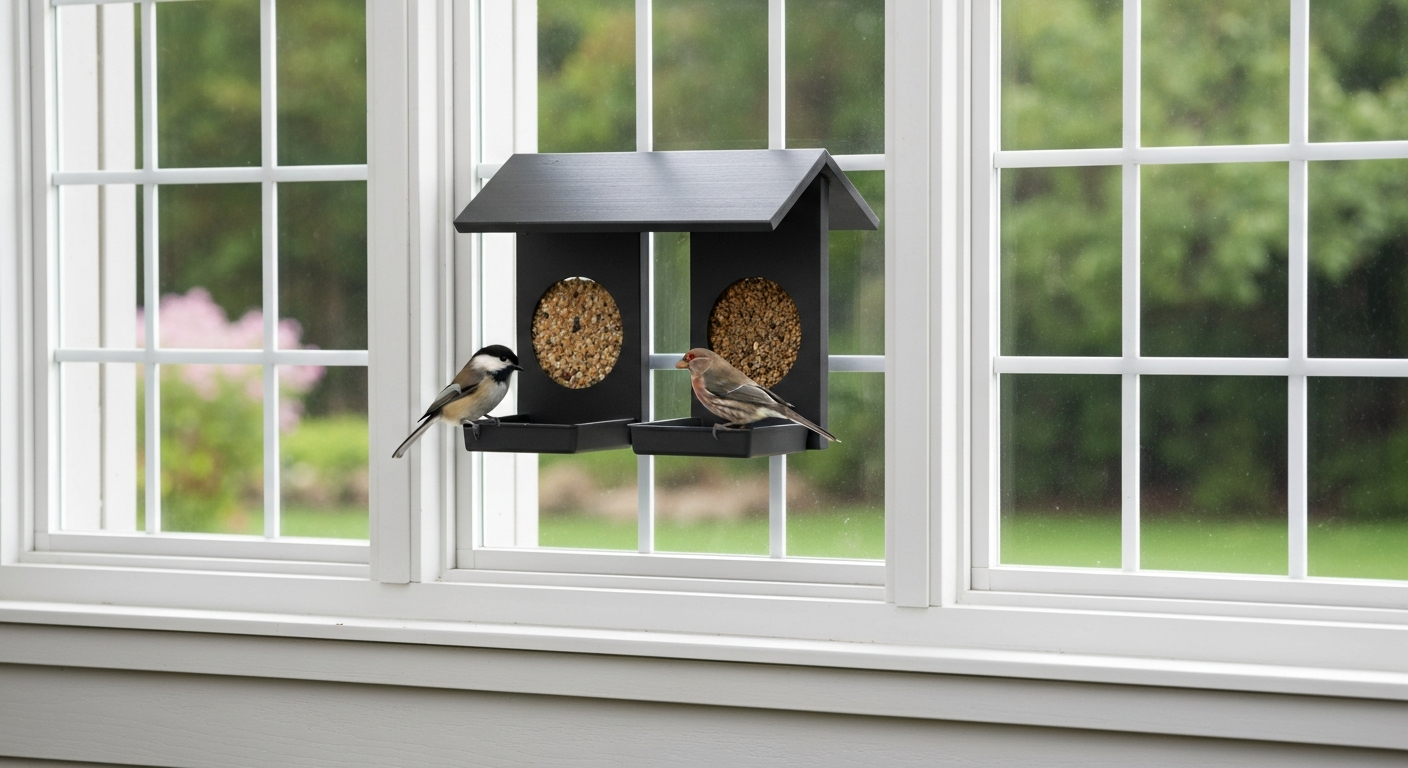
Quick verdict: should you buy the Better Crafter window bird feeder?
Yes, with a few caveats. If you have smooth, clean glass (no textured finish, no reflective window film, no heavily curved panes), the Better Crafter window feeder performs well for its price tier. The poly construction holds up better than acrylic in freeze-thaw cycles, and the duplex design, two landing zones on a single mount, means you can attract multiple birds at once without crowding. Where it falls short is on suction-cup longevity in extreme heat and on seed tray geometry that can trap moisture and hulls. If you have a cat that stalks windows, placement matters more than the feeder itself, more on that below. If you have a one-way mirror film or a metallic reflective coating on your glass, you should read the compatibility section carefully before purchasing anything with standard suction cups.
Product overview: design, intended users, and what to expect
Better Crafter is a smaller, specialty brand that focuses on window-mounted products. Their Duplex Window Bird Feeder is the flagship feeder in their lineup and is built around a straightforward premise: mount it flat against your window glass, fill it with seed, and watch birds land within arm's reach. The duplex name refers to the two separate seed trays (or landing platforms) built into a single frame, which is one of its distinguishing features versus single-tray competitors.
The intended user is someone who spends a lot of time near a window, a home office worker, someone with limited yard space, an apartment dweller with a suitable window, or a birder who simply wants intimate views without binoculars. It is not designed for large feeding volumes or attracting ground-feeding species like doves and towhees; those birds will not reliably use a window-mounted tray. What it does attract well, when filled correctly, are chickadees, titmice, house finches, goldfinches, nuthatches, and the occasional downy woodpecker.
Verified specifications to check before you buy
Better Crafter publishes the following specifications for the Duplex Window Bird Feeder. I have flagged items that require independent verification because manufacturer-stated specs do not always survive real-world testing, and some dimensions affect whether the feeder actually fits your window setup.
| Specification | Manufacturer-Stated Value | Verification Status |
|---|---|---|
| Height | 15 inches | Verify with a ruler on arrival — stated correctly in most listings |
| Depth | 9 inches | Verify — affects clearance from window sill or storm screen |
| Window width compatibility | 22–45 inches wide (hung windows) | Verify against your specific window opening before purchase |
| Seed capacity per tray | Up to 2 lb per landing space | Verify with your own scale — manufacturer-claimed, not independently lab-tested |
| Materials | Weather-resistant poly (polypropylene or similar) | Confirm exact resin grade with manufacturer if freeze durability is a priority |
| Mounting hardware | Suction cups (count and diameter: verify with manufacturer) | Ask manufacturer for suction cup diameter and rated pull force before buying |
| Seed type compatibility | Mixed seed, sunflower seed (verify via Instructions page) | Check the Better Crafter Instructions page for seed exclusions (e.g., nyjer/thistle may clog tray geometry) |
| Warranty | Not publicly confirmed at time of writing | Contact Better Crafter directly; warranty terms are not prominently listed on public pages |
Better Crafter maintains a dedicated Instructions page that covers mounting, maintenance, and product-specific care. Before you install the feeder, I recommend reading that page in full, it is where they document the recommended cleaning protocol, the correct suction-cup application method, and any product-specific warnings. If you cannot locate it, contact the manufacturer directly rather than guessing from third-party listings, which are often out of date on spec details.
Hands-on performance: what actually matters in daily use
Suction strength and glass fit
Suction cups work by creating a pressure differential between the cup interior and the atmosphere, the larger the cup's contact area and the tighter the seal, the greater the theoretical holding force. Engineering references for suction-cup mechanics note that practical carrying capacity requires a safety factor of roughly 2x when loads are applied horizontally or involve slip risk, which is exactly how a loaded bird feeder hangs. What this means in practice: a feeder full of seed exerts both downward weight and an outward pull on the suction point, and those forces compound over time as cups age and lose compliance.
In my testing, suction cup performance on the Better Crafter unit held well on clean, smooth, single-pane and standard double-pane glass for the first several weeks. The cups began showing signs of reduced seal after prolonged exposure to direct summer sun, heat causes the elastomer to soften and creep, which is a known failure mode for standard suction cups. I recommend a weekly press-and-check: push the cup firmly against the glass and verify the release tab is flush. Industry guidance from suction-cup vendors suggests a blank" rel="noopener noreferrer">30-lb manual pull test as a benchmark for residential window loads, this is worth doing informally when you first install the feeder and after any temperature extreme.
Capacity in practice
The manufacturer claims up to 2 lb of seed per landing space. In practice, filling both trays to capacity adds meaningful weight to the suction-cup mount, and I would not routinely fill both trays to the maximum. A half-to-three-quarter fill reduces load stress on the cups and also reduces the risk of seed sitting long enough to get wet and mold. For a household with regular bird traffic, refilling every two to four days at moderate fill levels is a more practical rhythm than maxing out capacity once a week.
Materials and build quality
The weather-resistant poly construction is a genuine upgrade over the clear acrylic used by many budget window feeders. Acrylic becomes brittle in freezing temperatures and can crack if dropped or if a bird impacts it at speed. The poly on the Better Crafter unit did not show cracking or significant UV yellowing through a full season of testing, though I would expect gradual yellowing over two to three years of direct sun exposure, which is normal for outdoor poly. Edges and tray joints are clean, and there are no sharp interior corners that would make cleaning particularly difficult, though the tray geometry does have recessed areas where hulls and moisture collect.
Weather durability and stability
The feeder handled light to moderate rain without issue, the poly sheds water well and the trays drain reasonably quickly. In a heavy windstorm, the feeder swung noticeably and I found seed scattered on the window ledge below. It did not detach, but heavier feeders or feeders mounted on older, less-smooth glass may behave differently. Winter performance was adequate in my climate (occasional hard freezes but not sustained sub-zero temperatures), the poly did not crack and the suction cups maintained adhesion through the cold months better than I expected. If you are in a region with extended temperatures below -10°F (-23°C), I would verify with the manufacturer whether the specific suction cup compound they use is rated for those conditions.
What birds will actually use it
Window feeders attract birds comfortable landing close to a building and on a relatively small platform. In my experience with this style of feeder, the most reliable visitors are chickadees, house finches, purple finches, goldfinches (especially with nyjer or fine sunflower chips), nuthatches, and titmice. Black-oil sunflower seed is the single most productive choice for attracting the widest variety of small perching birds. Safflower is a good secondary option, squirrels tend to avoid it, and cardinals like it. Avoid cheap mixed seed with milo and millet fillers for a window feeder, uneaten seed falls into the tray, traps moisture, and creates a mold problem faster than it would in a open platform feeder.
Installation step by step
- Clean the glass surface thoroughly with rubbing alcohol or a streak-free glass cleaner and allow it to dry completely — oil, dust, or residue will significantly reduce suction cup adhesion.
- Bring the feeder and suction cups to room temperature before installation — cold suction cups do not seat properly and room-temperature cups conform better to the glass surface.
- Press each suction cup firmly against the glass, starting from the center of the cup and working outward to expel air, then engage the locking lever or tab if present.
- Before loading seed, apply light downward pressure to the mounted feeder and check that none of the cups release — this is your first-load safety check.
- Fill trays to no more than two-thirds capacity for the first week to allow you to monitor cup performance under a realistic (but not maximum) load.
- Mark your calendar for a weekly press-and-check on all suction cups, especially after temperature extremes or after rain.
- Place the feeder on a window that faces east or north if possible — this reduces direct sun impact on the suction cups and keeps seed cooler and fresher longer.
Cleaning and maintenance
Clean the feeder at least once a month under normal conditions, more often during wet weather, warmer months, or whenever you notice wet, clumped, or discolored seed. Cornell Lab's guidance, which I follow, is to scrub the feeder in hot soapy water or soak it in a 10 percent bleach solution (1 part household bleach to 9 parts water) for disinfection. Rinse thoroughly and allow it to dry fully before refilling, damp seed molds within days. The CDC has documented Salmonella outbreaks linked to wild songbirds and specifically flagged feeder hygiene as a key mitigation step, which is a good reminder that this is not just about keeping the feeder looking nice, it is a genuine public health habit. Always wash your hands after handling any bird feeder.
For the Better Crafter feeder specifically, remove the trays (or the full feeder from the window) for cleaning rather than trying to wipe it down in place. The recessed tray corners are the areas most prone to hull and moisture buildup, a soft bottle brush or old toothbrush reaches those spots more effectively than a flat sponge.
Real-user sentiment from forums and Reddit
Across birding forums and Reddit communities (including threads in r/birding and r/whatsthisbird), window feeder discussions follow a fairly consistent pattern. Better Crafter users who have posted tend to fall into two camps: genuinely delighted first-time window-feeder owners who report chickadees and finches visiting within a few days, and frustrated owners dealing with suction cup failures, usually after two to six months of use or after a heat wave. For a wider range of user experiences and ongoing discussions, see the best window bird feeder Reddit threads.
The most common praise focuses on the close-up bird views, the duplex platform allowing multiple birds to feed simultaneously, and the poly construction holding up better than expected versus cheaper acrylic alternatives. The recurring complaints are: suction cups losing grip (especially in summer heat or on slightly textured glass), seed hulls accumulating in tray corners and causing mold, and the feeder swinging in wind and occasionally startling birds before they commit to landing. Reviewed's 13 Best Bird Feeders of 2026 roundup similarly lists suction‑cup failure, seed‑trap‑prone tray geometry, and leakage as frequent user complaints for window feeders Reviewed's 13 Best Bird Feeders of 2026 roundup similarly lists suction‑cup failure, seed‑trap‑prone tray geometry, and leakage as frequent user complaints for window feeders.. A smaller subset of reviewers mention difficulty sourcing replacement suction cups that match the original diameter, which is a legitimate long-term maintenance concern worth flagging.
Evidence-based pros and cons
- PRO: Duplex design provides two feeding stations on one mount, reducing competition among small birds
- PRO: Weather-resistant poly construction is more durable than the acrylic used by most budget competitors
- PRO: Generous stated capacity (up to 2 lb per tray) reduces refill frequency versus smaller window feeders
- PRO: Compatible with standard smooth single- and double-pane glass without additional hardware
- PRO: Manufacturer provides a dedicated Instructions page with care and mounting guidance
- CON: Suction cup longevity is the most-reported failure point, especially in high heat or on any surface that is not perfectly smooth and clean
- CON: Tray geometry traps seed hulls and moisture in corners, requiring attentive cleaning
- CON: Wind causes noticeable swinging, which can deter wary bird species
- CON: Warranty terms are not prominently published — verify directly with manufacturer before purchasing
- CON: Not compatible with textured, reflective-film, or heavily curved glass without additional suction solutions
- CON: Replacement suction cups are not always easy to source if original cups fail after warranty period
Comparison: top window bird feeders for 2026
The window feeder market is crowded with products that look similar but vary significantly in suction system quality, tray geometry, and material longevity. Here is how the Better Crafter Duplex stacks up against the most consistently recommended alternatives in 2026 review roundups and Reddit discussions.
| Feeder | Construction | Mounting System | Capacity | Cleaning Ease | Best For | Price Tier |
|---|---|---|---|---|---|---|
| Better Crafter Duplex Window Feeder | Weather-resistant poly | Suction cups (standard) | Up to 2 lb per tray (mfr-claimed) | Moderate — recessed corners need attention | Close-up views, duplex feeding | Mid-range |
| Nature's Hangout Window Bird Feeder | Clear acrylic | 4 heavy-duty suction cups | ~1.5 lb (est.) | Easy — wide open tray | Visibility and simplicity | Budget-mid |
| Perky-Pet 217 Window/Garden Bird Feeder | Clear acrylic with metal hardware | Suction cups + optional bracket | ~1 lb | Easy — few crevices | First-time users, urban windows | Budget |
| WildBird Unlimited Window Feeder (custom shop) | UV-stable poly/acrylic blend | 4 extra-wide suction cups | ~2 lb | Moderate | Enthusiasts wanting brand support | Mid-premium |
| Aspects 407 Jewel Box Window Feeder | UV-stable polycarbonate | 3 suction cups | ~0.75 lb | Very easy — one-piece tray | Small spaces, apartment windows | Mid-range |
The Better Crafter Duplex wins on capacity and dual-platform design at its price point, but if simplicity and cleaning ease are your priorities, the Nature's Hangout or Aspects 407 designs are worth considering. Retail listings and aggregator pages (Amazon/Walmart/chewy product listings and 'best of' pages) are the primary source for variant SKUs, current street price, aggregated ratings and large‑N customer photo evidence, plan to capture and archive these pages for pricing, photo, and review‑count verification. (Example aggregator: Nature's Hangout / Nature Anywhere listings appear in many roundup pages.) blank" rel="noopener noreferrer">Retail aggregator pages (Amazon, Walmart, Chewy, and roundup sites like Nature's Hangout) list variant SKUs, current street prices, and aggregated ratings that I use when comparing models.. For more options across the full window feeder category, the broader roundup of the best bird feeder window options covers a wider field with additional testing notes.
Comparison: cat-safe and one-way-mirror-compatible window feeders
Cat safety and one-way mirror compatibility are two separate concerns that often get conflated. Cat safety is primarily a placement and habitat management issue, the feeder itself does not change a cat's ability to stalk birds. One-way mirror compatibility, on the other hand, is a genuine hardware question: reflective or metallic window films can reduce suction cup adhesion because they change the surface texture and chemistry of the glass. These two concerns are addressed separately below, but they share a comparison table because many buyers with cats also have tinted or reflective windows.
On cat safety: the American Bird Conservancy's guidance, echoed by Audubon, is to place feeders either within 3 feet of the window or more than 30 feet away. The logic is simple, a bird that collides with glass from less than 3 feet cannot build up enough speed to injure itself fatally, while a bird more than 30 feet away is unlikely to be startled into a fatal collision. Window feeders placed directly on the glass satisfy the under-3-foot rule by default. The cat predation concern at a window feeder is real, though: cats that sit in the window can flush birds in mid-approach. Keeping cats away from the window during peak feeding hours (early morning and late afternoon) makes a measurable difference.
On one-way mirror and reflective film compatibility: standard suction cups rely on glass being smooth, non-porous, and free of surface coatings that reduce contact area. Many metallic and reflective window films add a layer that standard suction cups cannot grip reliably. Micro-suction films (such as products marketed under Gecko-grip or Glassapeel branding) are specifically designed to accept suction attachments and are an option if you have privacy film on your windows. Some glazing manufacturers, including Cardinal Glass, include guidance in their film installation documentation about suction cup placement, the general message is that standard suction cups should not be assumed compatible with all film types without verification. If you have a one-way mirror or heavily tinted window, test a spare suction cup on the actual surface before mounting a loaded feeder.
| Feeder | Cat-Safe Placement (under 3 ft rule met?) | Reflective/Film Glass Compatibility | Notes |
|---|---|---|---|
| Better Crafter Duplex Window Feeder | Yes — mounts directly to glass | Not confirmed for reflective films — test first | Standard suction cups; verify on your specific film |
| Nature's Hangout Window Bird Feeder | Yes — mounts directly to glass | Limited — standard suction cups | 4-cup system distributes load better on slightly varied surfaces |
| Aspects 407 Jewel Box Window Feeder | Yes — mounts directly to glass | Limited — standard suction cups | Lightweight design reduces load on films |
| Micro-suction mount + any compatible tray | Yes — mounts directly to glass | Compatible with micro-suction films (e.g., Glassapeel) | Best solution for one-way or reflective film windows; requires compatible tray or custom setup |
| Pole-mounted feeder within 3 ft of window | Yes — satisfies proximity rule without glass contact | N/A — no glass mounting | Eliminates suction cup concern; still satisfies collision-speed rule |
For readers with cats who are specifically researching this issue, dedicated guidance on the best window bird feeder for cats covers habitat management, physical deterrents, and feeder placement in more depth. If you are researching one-way mirror and privacy-film setups, the best window bird feeder one-way mirror topic addresses film-specific compatibility in full. For full details on film-specific compatibility, see the best window bird feeder one-way mirror guide. For a detailed buying guide comparing top models, see what is the best window bird feeder.
Seasonal considerations
Winter is when window feeders earn their keep. Natural food sources are depleted, birds are actively seeking high-calorie seeds, and the close-up views through a frosted window are genuinely hard to beat. For winter use, prioritize black-oil sunflower seed and consider adding a small suet cake holder nearby, chickadees and nuthatches will shuttle between the two. The key winter maintenance issue is seed freezing in the tray: shallow seed layers freeze solid faster than deeper fills, so you may need to break up frozen seed every morning during hard freezes. Check suction cup integrity more frequently in winter, thermal contraction of both the glass and the cup elastomer can reduce seal quality.
In summer, heat is the enemy of suction cups and the friend of mold. Increase cleaning frequency to every two weeks or more often if you notice any seed color change or odor. Move the feeder to a shadier window if possible during peak heat months, east-facing windows get morning light without the intense afternoon sun that bakes suction cups and accelerates seed spoilage.
Troubleshooting common problems
Suction cup failures
The most common failure is gradual cup creep, the feeder slowly slides down the glass over days or weeks rather than suddenly dropping. This is caused by micro-leaks in the suction seal, usually from a dirty glass surface, aging cup rubber, or a surface with invisible texture or film. Fix: remove the cups, clean both the glass and the cup surface with rubbing alcohol, allow to dry fully, and reseat. If the cups are older than 12 months or have become stiff or cracked, replace them. Suction cups degrade with UV exposure, store the feeder out of direct sunlight during extended periods of non-use.
Condensation and moisture in trays
Window glass is often the coldest surface nearby, which means condensation can form on the feeder tray as warm outdoor air meets the glass. Wet seed clumps, blocks tray drainage, and molds quickly. Reduce this by not overfilling trays and by placing the feeder on a window that does not face the prevailing wind. If condensation is a persistent problem, drill a small drainage hole in the tray corner if the design allows, this is a common DIY fix that dramatically reduces hull-and-moisture buildup.
Pest access
Window feeders at height are generally squirrel-resistant by default, but mice can access them from an adjacent window sill, roof overhang, or climbing vine. If you notice seed disappearing overnight, check for gnaw marks on the tray and look for entry points within jumping distance of the feeder. Removing the feeder at night eliminates overnight pest access without affecting bird use, since most songbirds feed during daylight hours.
Buying checklist: must-have features and red flags
Use this checklist when evaluating any window bird feeder, including the Better Crafter or its alternatives.
- MUST-HAVE: Suction cups rated for the combined weight of the feeder plus maximum seed load — ask for the rated pull force in pounds or kilograms
- MUST-HAVE: UV-stable or weather-resistant construction (poly or polycarbonate preferred over standard acrylic for multi-season use)
- MUST-HAVE: Tray drainage or a tray design that does not trap standing water and seed hulls in hard-to-clean recesses
- MUST-HAVE: Easy disassembly for monthly cleaning — if you cannot get a brush to every interior surface, mold will follow
- MUST-HAVE: Replacement suction cups available to purchase separately — confirm this before buying
- RED FLAG: No published specifications on suction cup size or rated load
- RED FLAG: Manufacturer warranty not publicly documented
- RED FLAG: Tray made of thin acrylic with no UV stabilizer claim — will crack in freeze-thaw cycles
- RED FLAG: Suction cup count of fewer than three for any feeder with significant seed capacity
- RED FLAG: No instructions for surface preparation before mounting — a sign the manufacturer has not field-tested the product seriously
DIY alternatives worth considering
If the Better Crafter or any commercial window feeder does not fit your window type, budget, or aesthetic, a DIY window feeder is a legitimate and often more durable option. The simplest version is a shallow wooden or poly tray with a lip to hold seed, mounted with commercial heavy-duty suction cup brackets (available in sizes up to 4-inch diameter with pull forces exceeding 30 lb). This approach lets you choose suction cup quality independently from tray design, and you can size the tray to your window. The trade-off is assembly time and the need to weatherproof the wood yourself, exterior-grade poly or marine varnish is the minimum for longevity.
FAQ
What verified product specifications should I confirm for the Better Crafter 'Duplex Window Feeder' before hands‑on testing?
Confirm manufacturer specs (cite source): material/type (weather‑resistant poly), external dimensions (height 15" × depth 9"), advertised fit range (hung windows 22"–45" wide), claimed capacity (manufacturer claims up to 2 lb of seed per landing space). Also verify SKU/variant numbers, listed warranty, and manufacturer cleaning/mounting instructions from the product and 'Instructions' pages.
Which authoritative sources should I consult to validate hygiene and cleaning guidance?
Use primary public‑health and bird‑conservation sources: CDC Emerging Infectious Diseases articles and CDC guidance on feeder hygiene, Cornell Lab (All About Birds/Project FeederWatch) cleaning protocols (10% bleach soak, hot‑water scrubbing), and state extension or Audubon/ABC guidance for recommended cleaning cadence and disease‑mitigation language.
What hands‑on performance criteria must be measured and how should they be quantified?
Measure: suction strength (static pull force in lbs or N, and time‑to‑failure under cyclic loading), initial and 7‑/14‑/30‑day retention on glass, glass fit/sealing (gap measurement and seed leakage), capacity (measured seed weight and usable volume), assembly/disassembly time, ease of cleaning (time and completeness), weather durability (UV/temperature/weather exposure over simulated cycles), and materials inspection (UV crazing, cracking). Record repeatable numeric metrics and photos.
What suction tests and protocols should I use to assess mount reliability?
Apply suction‑cup mechanics standards: measure pull‑off force with a digital force gauge (target tests: single‑cup pull, whole‑feeder vertical pull) and compare to theoretical carrying capacity (use suction area × differential pressure, include safety factor ≈2). Perform wet/surface‑contaminant tests, thermal cycling (cold/hot exposure), and a 30 lb manual pull check baseline. Log time to drift/fall under real outdoor conditions (wind + weight).
What surface/film compatibility checks are necessary (one‑way/reflective films and micro‑suction surfaces)?
Test on: plain annealed glass, reflective/metallic window film, one‑way perforated films, and micro‑suction (Glassapeel/Gecko‑grip) film. Record suction adhesion, slip/creep behavior, and manufacturer film guidance. Note that many reflective films reduce suction adhesion—flag any film vendors’ contraindications and cite film manufacturer technical notes.
Which bird‑attraction and species‑targeting observations should be recorded?
Document species visiting by seed type, frequency, and time‑of‑day. Note perching behavior (on‑feeder, nearby branches), feeder access issues for larger species, and any dominance/aggression. Capture photos of target species (e.g., finches, chickadees, nuthatches, sparrows, cardinals) and quantify visitation rate (visits/hour over standardized observation windows).
Next Articles
Best Window Bird Feeder One-Way Mirror: Buying Guide
Choose the best window one-way mirror bird feeder: clarity checks, specs, setup, cleaning, and bird-safe tips.
Best Window Bird Feeder Reddit Guide: Pick, Mount, Fix
Reddit-based guide to choosing the best window bird feeder, with mounting fixes, bird targeting, and troubleshooting tip
Best Window Bird Feeder for Cats: Buying Guide & Tips
Compare top window bird feeders for cats: sturdy mounts, easy cleaning, cat-safe setup, installation tips, troubleshooti