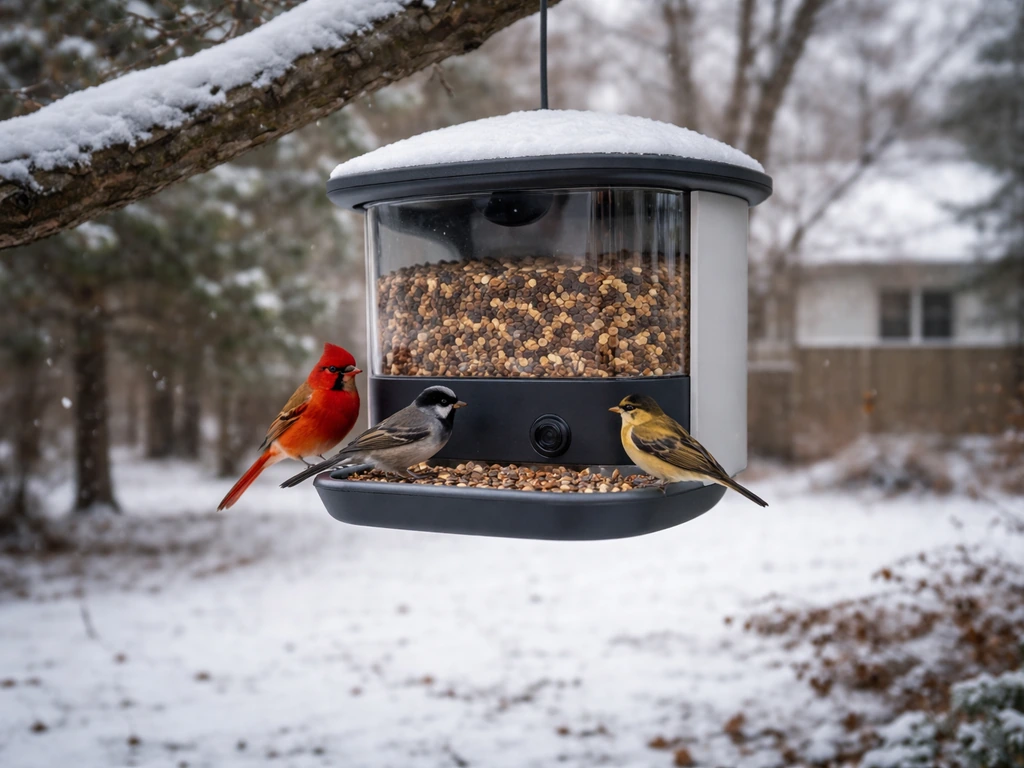
The Vinguys bird feeder is a smart camera feeder, not a traditional tube or hopper. It combines a seed compartment with a built-in AI camera that identifies visiting birds in real time, sending alerts to your phone. There are three versions: the standard V-Feeder (plastic housing), the V-Metal (metal housing for added durability), and the V-Feeder Bamboo (bamboo/wood aesthetic). Vinguys describes its “V-Metal (Metal)” option as the “V-Metal Smart Metal Bird Feeder with Camera.
Vinguys Bird Feeder Review: Performance, Cleaning, and Pros/Cons
Marcus Hendricks
8 Jun 2026
” V-Metal (metal housing for added durability). All three share the same core concept. If you're looking for a basic seed feeder under $30, this isn't it.
But if you want to watch, record, and identify backyard birds without sitting at a window all day, the Vinguys lineup is genuinely worth a serious look in 2026.
What the Vinguys feeder actually is
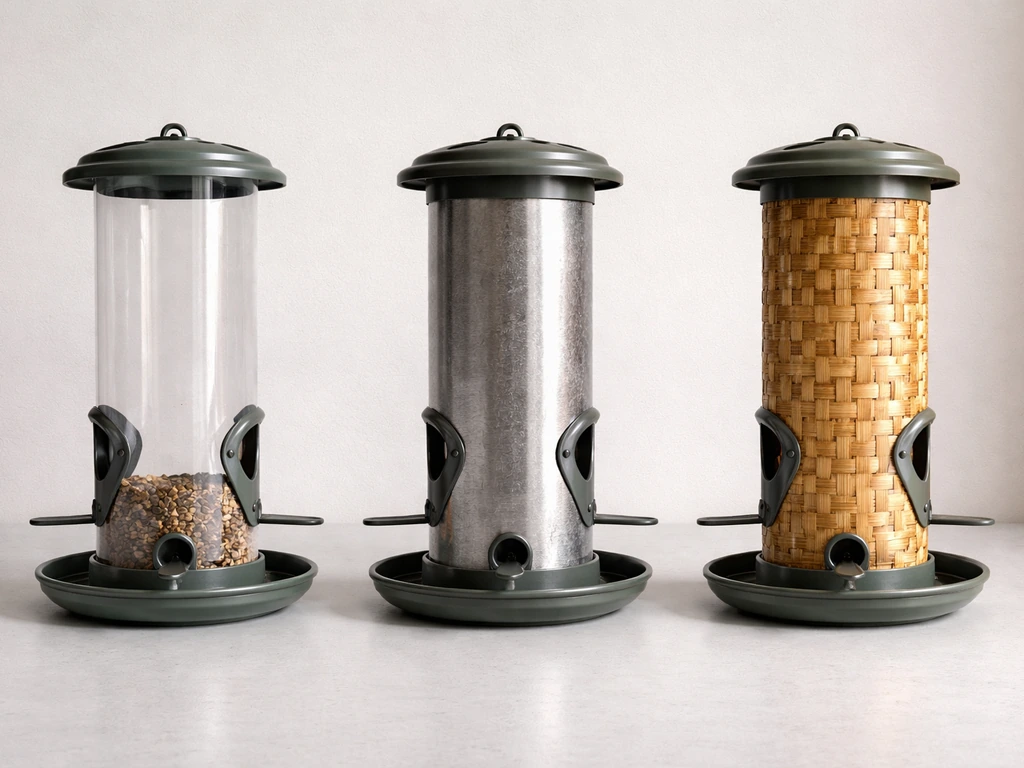
Vinguys markets three variants under the "V-Feeder" name. The standard V-Feeder uses a plastic shell, the V-Metal swaps that for a more rugged metal housing, and the V-Feeder Bamboo goes for a natural aesthetic with bamboo-and-wood construction. What unites all three is the internal "granary" compartment, which is a sealed seed chamber rather than an open tube or tray. Seed flows out through small ports near the perch area, which is a deliberate design choice to reduce waste and limit access for pests. Each version has a wide-angle camera mounted into the body, Wi-Fi connectivity, and an app that pairs with your phone to deliver live video and species identification alerts.
These feeders are designed to attract small to medium perching birds: sparrows, finches, chickadees, nuthatches, titmice, and similar backyard regulars. The perch size and port design aren't really built for larger birds like blue jays or doves, and the feeder won't work for suet, nectar, or fruit. It's a seed-only smart feeder, and you should go in with that expectation clearly set.
Build quality and materials: which version holds up?
The standard plastic V-Feeder is the entry point, and it shows. The plastic feels solid enough on the shelf but is the version most likely to show UV yellowing or light cracking after a year of direct sun exposure. It's fine for a covered porch or a shaded spot in the yard, but I'd be cautious hanging it in full southern exposure through summer and then asking it to survive a hard freeze.
The V-Metal is a meaningfully different product. The metal housing resists impact, doesn't yellow, and holds up far better in temperature swings. If you're in a climate with real winters or genuine summer heat, the metal variant is the one to buy. The trade-off is weight: it's heavier, so your mounting point matters. A flimsy shepherd's hook might wobble, which can affect camera stability and the quality of your footage.
The Bamboo version occupies an interesting middle ground. It looks genuinely attractive, which matters if the feeder is visible from a kitchen window or patio. Real bamboo is naturally moisture-resistant and doesn't crack the way cheap wood does, but it's not impervious. Any bamboo product left in sustained rain without proper sealing will eventually show wear. Vinguys treats the bamboo housing, but after the second or third season you should inspect the joints and wood surface for softening.
Across all three, the camera module and electronics appear to be the same unit. The lens is protected behind a recessed housing to limit direct rain exposure. Connectivity is 2.4 GHz Wi-Fi only, so if your router is on the far side of the house and the feeder is at the back fence, you may get a spotty signal.
Seed capacity, refilling, and cleaning
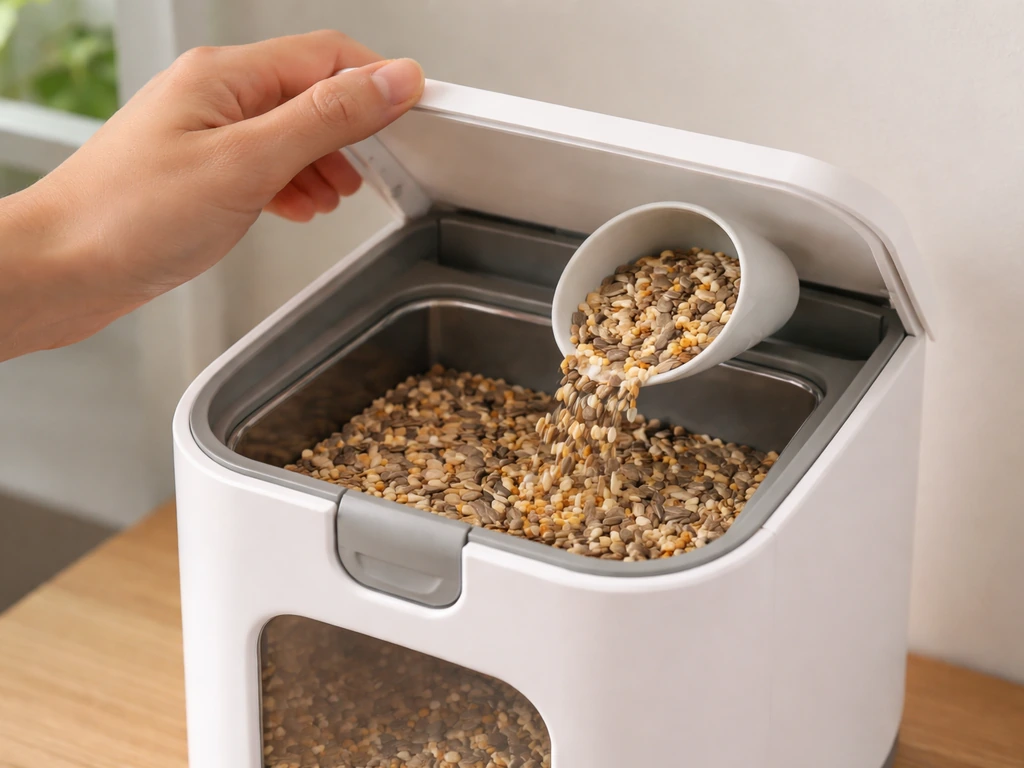
The granary compartment holds a moderate amount of seed. It's not a large-hopper feeder meant to go two weeks between fills. In my experience with comparable smart feeders, a busy feeder location will need a refill every three to five days during peak activity, maybe every seven to ten days in quieter spots. The sealed compartment design does a decent job of keeping moisture out of the seed, which is genuinely useful: wet seed goes moldy fast and can sicken birds. This is one area where the Vinguys design has a real advantage over open platform feeders.
Refilling is straightforward. The top or back panel opens to access the seed chamber, and you pour in fresh seed without having to disassemble anything. That said, the compartment opening is narrow enough that chunky seed mixes with large sunflower shells can be awkward to pour cleanly. Black-oil sunflower seed and safflower run through it easily. Avoid mixes with a lot of large chunks or peanuts in the shell.
Cleaning requires a bit more effort than refilling. The granary design means seed residue and husks collect inside the chamber and need to be flushed out with warm water. Vinguys' own manual calls for periodic cleaning, and I'd recommend doing a proper rinse every two to three weeks in warm weather and once a month in winter when bird activity naturally slows. The camera module should not be submerged or soaked. Use a damp cloth on the lens and housing exterior. Don't skip cleaning just because the feeder looks fine on the outside: old seed residue is the number one source of bacteria and mold in any feeder.
Bird activity: what species show up and what to expect
In a typical suburban or semi-rural backyard in the eastern or central US, you can realistically expect house sparrows, house finches, chickadees, titmice, and white-breasted nuthatches to be your regulars. Goldfinches will visit if you use a nyjer/thistle blend, though the standard port design is optimized more for sunflower than nyjer. Dark-eyed juncos and song sparrows show up at ground level more often than at the perch, but they'll take scattered seed that falls.
The AI species identification is the real draw here. The app logs each visit with a photo and species name, and the accuracy on common birds like chickadees and cardinals is solid. Less common or regionally specific species sometimes get misidentified, which is worth knowing if you're chasing a life list count. Cardinals do visit, but males in particular can be skittish about smaller perches. Don't expect the feeder to become a cardinal magnet unless you supplement with a separate platform or hopper with larger perching space.
In spring and fall migration, you may get brief visits from warblers or other transient species that are passing through but don't typically visit feeders. The camera earns its keep during these periods: you'll catch birds you'd otherwise completely miss. Summer brings juveniles and nesting birds actively foraging, which makes for great footage. Winter is where consistent seed availability really counts, and this feeder holds up reasonably well in that role, with some caveats covered below.
Weather durability and winter performance
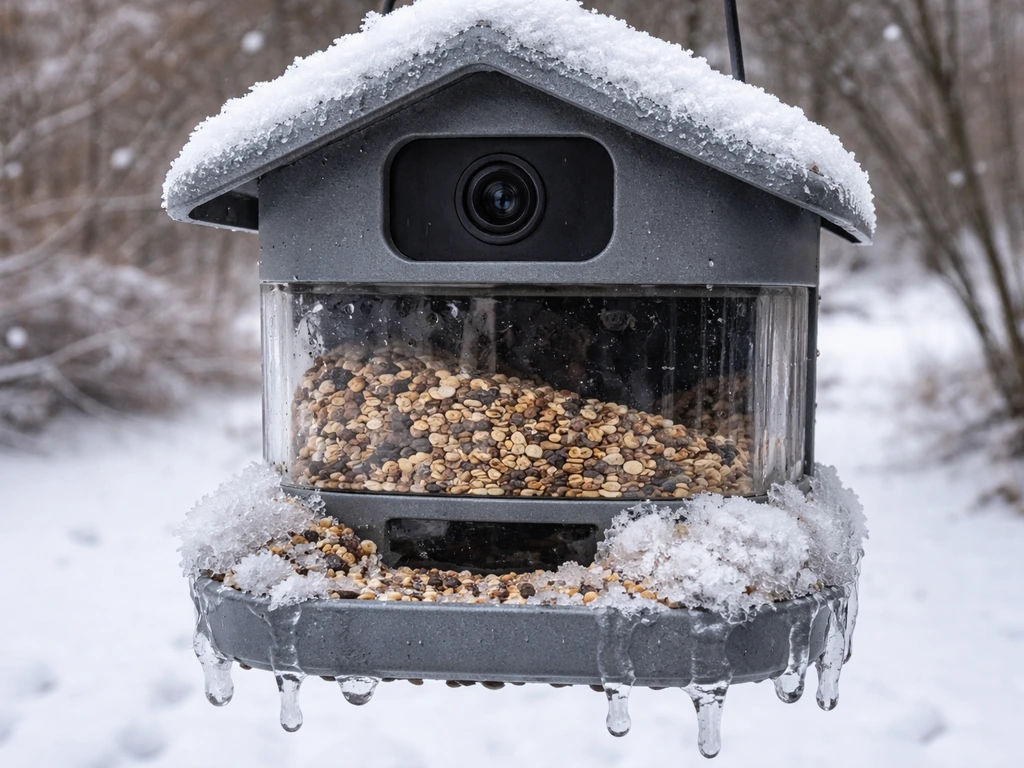
This is where the choice of variant matters most. The V-Metal handles cold temperatures and ice buildup significantly better than the plastic version. Plastic can become brittle in sustained sub-freezing temps, and the latch or access panel mechanism is the most vulnerable point. I've seen similar plastic smart feeders develop hairline cracks at the hinge points after a hard freeze-thaw cycle.
The camera and electronics do carry some weather resistance, and the recessed lens design helps during light rain. But this is not a fully waterproof device in the IPX7 sense. Heavy driving rain or a situation where the feeder is taking direct water spray will eventually cause problems. Position it under a tree canopy or add a weather guard dome above it if you're in a consistently wet climate.
In winter, the sealed granary compartment earns points because it limits snow intrusion into the seed. Open platform feeders fill with snow and become useless until you go out and clear them. The Vinguys design largely avoids that problem. The bigger winter concern is the Wi-Fi module: extremely cold temperatures (consistently below 0°F / -18°C) can affect battery-powered electronics and reduce connectivity reliability. If you're in Minnesota or northern New England, check that your specific model's operating temperature range covers your actual low temps.
For snow and ice, the Bamboo version is the one I'd be most cautious with. Wood and bamboo expand and contract with humidity and temperature changes, and sustained freezing rain or ice loading on the housing can stress the joints over time. The V-Metal is the winter pick.
Pest control: squirrels, rats, and wasps
Let's be direct: the Vinguys feeder is not a squirrel-proof feeder by design. It doesn't have a weight-activated closing mechanism like a Yankee Flipper, and it doesn't have a cage surround. If you want a true squirrel-resistant design, Yankee Flipper bird feeder models are often the benchmark people compare against smart feeders like this one.
The sealed granary compartment does limit how much seed squirrels can extract in one raid compared to an open platform, but a determined squirrel will absolutely work on it. Your best bet is mounting strategy: use a baffle on a pole mount, keep it away from tree branches and fences (the standard 10-foot clearance from launch points applies), and position it on a smooth pole a squirrel can't grip.
Rats are attracted to any spilled seed on the ground more than to the feeder itself. The granary design does reduce scattered seed compared to open hoppers, which is genuinely helpful. Keep the area under the feeder raked clean, and switch to no-waste seed blends (hulled sunflower, shelled peanuts) to reduce debris.
Wasps can be a seasonal nuisance, particularly in late summer. They're drawn to the sweet smell of fermented or wet seed. Keeping the feeder clean and dry, and doing a weekly inspection during August and September, is the most effective deterrent. There's no chemical solution I'd recommend using near a bird feeder.
The camera is actually useful for pest monitoring. You'll get alerts when something is at the feeder, and you can see overnight whether rats or raccoons have been visiting without having to set up a separate trail camera. That's a genuinely practical benefit beyond birdwatching.
How it compares to other smart feeders
Vinguys sits in a crowded field of AI camera feeders. Competitors like Netvue, FeatherSnap, Coolfly, and Harymor all offer similar core functionality: camera, app, species ID, live view. If you are also comparing FeatherSnap, it helps to look at how each brand handles species accuracy, app reliability, and housing durability for your climate. The differences come down to camera resolution, AI accuracy on less common species, app stability, and housing durability.
If you’re specifically looking for a practical onlyfly bird feeder review style comparison, this is the kind of feature set and setup you should evaluate. If you want a practical, real-world onlyfly bird feeder review style comparison, focus on how well the setup, app, and camera alerts hold up in everyday yard conditions. Vinguys distinguishes itself with the three-variant approach (plastic, metal, bamboo), which means you can choose a housing that matches your climate and aesthetic rather than accepting a one-size-fits-all plastic body.
| Feature | Vinguys V-Feeder (Plastic) | Vinguys V-Metal | Vinguys Bamboo | Typical Competitor (plastic smart feeder) |
|---|---|---|---|---|
| Housing material | Plastic | Metal | Bamboo/wood | Plastic |
| Winter durability | Moderate | High | Moderate | Moderate |
| Squirrel resistance | Low (no mechanism) | Low (no mechanism) | Low (no mechanism) | Low (no mechanism) |
| Aesthetic | Functional | Modern/sleek | Natural/organic | Functional |
| Best climate | Mild, shaded | Cold or hot | Mild, low rain | Mild |
| Seed design | Sealed granary | Sealed granary | Sealed granary | Varies |
| Camera/AI included | Yes | Yes | Yes | Yes |
Who should buy the Vinguys feeder, and who should skip it
Buy the Vinguys V-Feeder if you want a connected smart feeder that logs bird visits, sends you species ID alerts, and lets you watch your backyard wildlife without being physically present. It's a strong choice for people who travel, work from home and want passive entertainment with their coffee, or are genuinely interested in building a personal bird observation log. If you're trying to decide between variants: go plastic only if you're in a mild climate with a sheltered hanging spot, go bamboo if aesthetics matter most and your climate is temperate, and go V-Metal if you want long-term durability and you have real winters.
Skip it if your main goal is attracting the widest variety of birds possible, including large species like blue jays, cardinals, or mourning doves. You'll have better results with a large hopper or platform feeder in that case. Also skip it if squirrel pressure in your yard is severe and you don't have a solid pole-and-baffle setup ready, because the feeder itself provides no squirrel resistance on its own. And if budget is the primary concern, a quality traditional feeder at a fraction of the price will feed more birds more reliably, even if it won't send you a notification when a pine warbler shows up.
The Vinguys feeder is best understood as a bird-watching tool that also dispenses seed, not a high-capacity feeding station that happens to have a camera. Once you approach it that way, it delivers on its promise. For anyone serious about smart feeder technology in 2026, it's a legitimate contender worth putting on a short list alongside alternatives like Netvue and FeatherSnap, with the V-Metal variant being the standout pick for most backyards. If you want to compare other smart-feeder makers beyond Vinguys, these netvue bird feeder reviews are a useful next read.
If you enjoy reading droll yankee bird feeder reviews, you may find the Vinguys comparisons and standout value-by-variant angle especially useful. If you want more buying guidance, check out coolfly bird feeder reviews to compare smart-feeder features and real-world performance Netvue and FeatherSnap. If you are also comparing other brands, our Netvue bird feeder reviews break down how their smart identification and reliability stack up against Vinguys.
FAQ
Is the Vinguys bird feeder good for nyjer/thistle seed or mostly sunflower-based blends?
If you want to use the feeder for nyjer or other very fine seeds, expect more clogging or inconsistent flow than with black-oil sunflower or safflower. The small ports are designed around typical shell and hull profiles, so test with a small batch first, then switch only if you see steady dispensing at perches.
Can I hose down the Vinguys feeder to clean it?
No. This model should be treated as splash-resistant, not washable like a traditional feeder. For the granary, warm water rinses are recommended on the seed chamber, but the camera module itself should only be wiped with a damp cloth, not soaked or submerged.
What’s the best mounting setup to get clearer camera footage and better species ID?
Mount it with a stable pole (not a flimsy shepherd’s hook) and keep the camera facing a clear line of sight to the perch area. Wobble shows up as blurry footage and poorer species recognition, so tighten all hardware and avoid mount points that sway in wind.
Why won’t my Vinguys connect when I set up the app, and is it 2.4 GHz only?
If your router supports only newer settings like separate SSIDs for 2.4 GHz and 5 GHz, make sure the feeder pairs to the 2.4 GHz network specifically. Also try to place the feeder within reasonable signal strength, since the unit cannot use 5 GHz Wi-Fi.
How accurate is the species identification when birds are in shadow or only visit for a second?
Yes, but the species log is only as good as the lighting and angle. If the bird is mostly backlit (sun behind the bird) or perched very briefly, misidentifications become more likely, so consider adjusting placement to avoid strong glare on the lens.
Which Vinguys variant holds up best in freezing weather, including latch and access issues?
During winter, go with the V-Metal if you regularly see sustained sub-freezing temps. The plastic variant is more vulnerable to latch or access panel cracking after freeze-thaw cycles, and cold can also affect connectivity reliability on battery-powered electronics.
Is the Vinguys feeder actually squirrel-proof, or what should I do if squirrels keep at it?
Squirrels will eventually learn how to get seed from a sealed granary if they can reach and manipulate the perch area. Use a proper baffle and mount on a smooth pole at least 10 feet from launch points, and keep branches and nearby surfaces away from the feeder.
What’s the best way to prevent wasps from taking over the feeder in late summer?
Wasps are usually triggered by poor maintenance patterns, like wet seed, residue build-up, or leaving the feeder untouched during late summer. Plan on weekly inspection in August and September, and refill only when seed is fresh and the chamber is clean and dry.
Will blue jays and mourning doves use the Vinguys feeder?
You generally should not rely on it for big birds. The perch and port design are aimed at small to medium perching species, so larger birds like blue jays or doves may be unable to land comfortably or may not trigger reliable dispensing.
What foods can I put in the Vinguys feeder besides regular birdseed?
No. It is seed-only, and using the wrong food types can lead to both poor dispensing and contamination. Stick to dry seeds (for example black-oil sunflower, safflower, or compatible blends) and do not try suet, nectar, or fruit.
Does using the feeder increase my chances of seeing rare birds, or are there limits?
If your goal is a life list, the feeder is best for building consistency, but some rare visitors will still be missed because they do not always perch at the same spot or long enough for the camera to capture clear features. Use it as a logging tool alongside additional feeding locations with different perch sizes if you want broader coverage.