The best suction cup bird feeders for most setups are clear-tray seed feeders with four heavy-duty suction cups, like the Nature's Way Clear View or the Droll Yankees Observer, both holding around 2 cups of seed and built from UV-stabilized plastic. If you're feeding hummingbirds, the Birds Choice Window Mount Hummingbird Feeder (3.5 oz nectar) is the right style. For woodpeckers and nuthatches, a suction-mounted suet holder like the Songbird Essentials Red Suet Window Feeder does the job. Which one you actually need depends on your glass surface, the birds in your yard, and how seriously you want to deal with maintenance. This guide walks through all of it. This is our happy place camper bird feeder is designed to be an easy, comforting addition to your setup when you want cheerful, reliable feeding at home.
Best Suction Cup Bird Feeder: Choose, Mount, Fix Problems

What a suction cup bird feeder is (and when it actually makes sense)
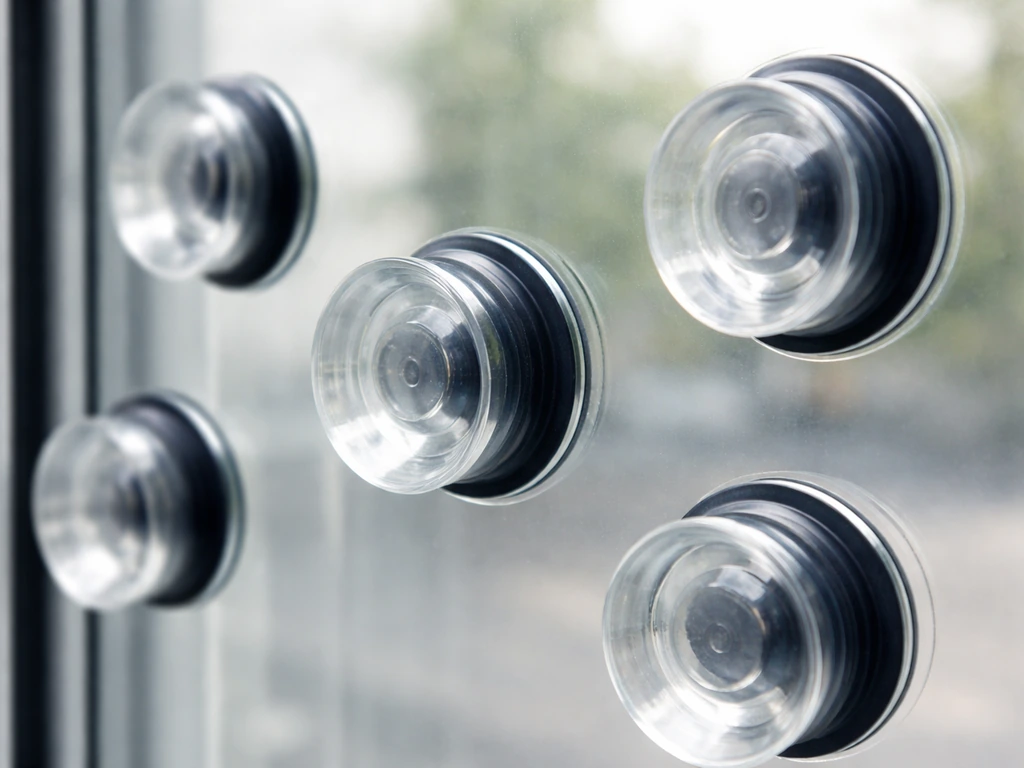
A suction cup bird feeder mounts directly to glass or another smooth surface by pressing rubber or silicone cups against the surface and squeezing out the air underneath, creating a low-pressure seal that holds the feeder in place. There's no permanent hardware, no drilling, and no need for a pole or rail. The feeder stays put because atmospheric pressure outside the cup is greater than the near-vacuum inside it. It's a simple mechanical principle, but it has real limits.
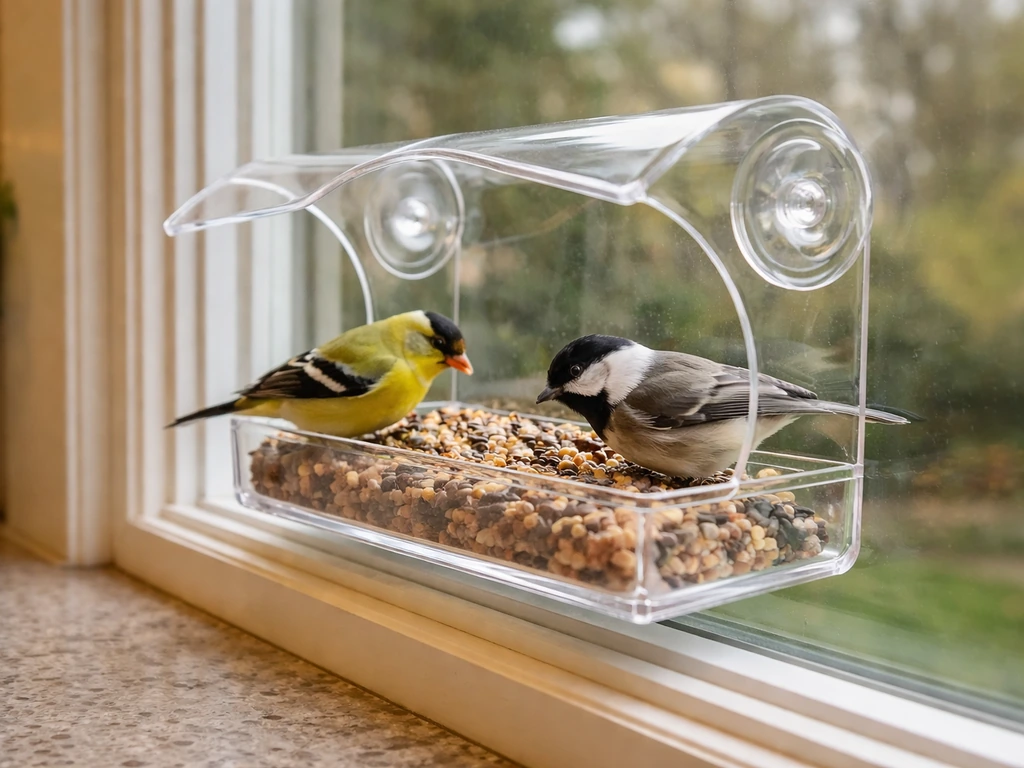
These feeders are genuinely excellent in certain situations: apartments or condos where you can't install a pole or mount hardware, small balconies with no railing, renters who can't modify anything, anyone who wants a close-up window view of birds from inside, or households where yard space is just not available. They're also a smart pick for people who want to attract smaller birds like chickadees, titmice, finches, or hummingbirds right to the glass.
Where they don't work well: large, heavy birds like blue jays and doves can destabilize lighter suction feeders through landing impact. Very windy exposures accelerate seal degradation. Textured, painted, or dirty surfaces break the seal entirely. And if you're hoping to offer a large volume of seed without frequent refills, the small capacity of window feeders (typically half a pound to two cups of seed) will frustrate you. For high-volume feeding, a hanging or pole-mounted feeder is a better fit. For many yards, choosing the best hanging bird feeder can solve the capacity limits of small window feeders while still keeping food accessible.
How to pick the right suction cup feeder
Suction cup count and cup size
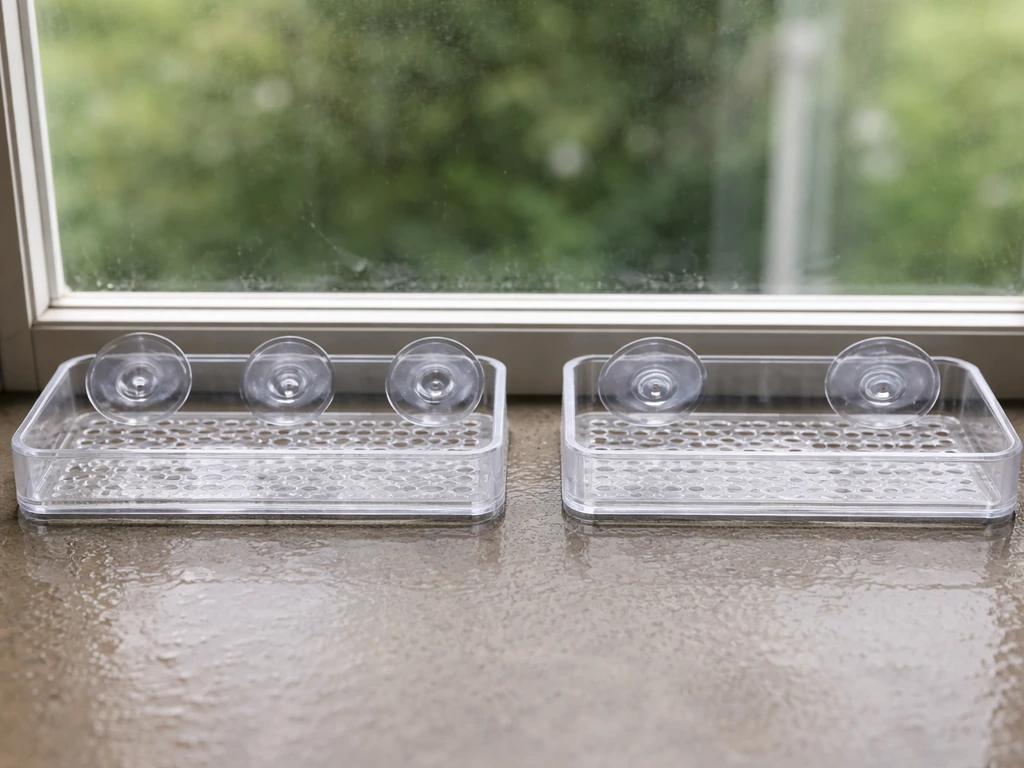
More cups means better load distribution and more forgiveness if one cup loses its seal slightly. Two-cup designs like the Songbird Essentials suet feeder work fine for light suet holders, but for seed trays with a full load of feed, four cups (as on the Nature's Way Clear View) is more stable. Cup diameter also matters: 2.5-inch replacement cups are common in the market and represent a good baseline for holding power. Thicker, softer silicone cups generally outperform stiff plastic ones, and UV-protected cups last significantly longer before becoming brittle.
Material and build quality
Look for UV-stable polycarbonate or UV-stabilized plastic in the feeder body. Both the Lee Valley window feeder and the Droll Yankees Observer specifically use blank" rel="noopener noreferrer">UV-stabilized construction, which matters because direct sun exposure degrades cheaper plastics within a single season, causing warping and cracking. blank" rel="noopener noreferrer">Drainage holes in the seed tray are not optional in practice: without them, rainwater pools in the tray and accelerates mold. Lee Valley's feeder has drainage holes in its catch tray; Nature's Hangout's design specifically promotes this feature too.
Food type and feeder style
Match the feeder to the food you plan to offer, because these are not interchangeable. A seed tray feeder holds mixed seed or sunflower seeds and works for chickadees, sparrows, finches, and titmice. A suction-mounted suet cage is purpose-built for suet cakes and draws woodpeckers, nuthatches, and jays. A small nectar cup feeder with flower-shaped ports is for hummingbirds only, and those need to be cleaned every one to two days in warm weather because sugar water ferments fast and mold is a real health risk to the birds. Don't try to put nectar in a seed tray or seeds in a nectar cup.
Capacity and ease of cleaning
Most window-mounted seed feeders hold between half a pound and two cups of seed. That's enough for a few days of feeding by small birds, which is fine for window feeders since you're refilling frequently anyway. What matters more is how easy the feeder is to take apart and clean. Look for removable trays (Nature's Way's Clear View has this), or designs like the Birds Choice hummingbird feeder where keyholes on the back let you lift the nectar cup off without pulling the suction cups off the glass. The less effort cleaning takes, the more often you'll actually do it.
Getting the installation right so it doesn't fall
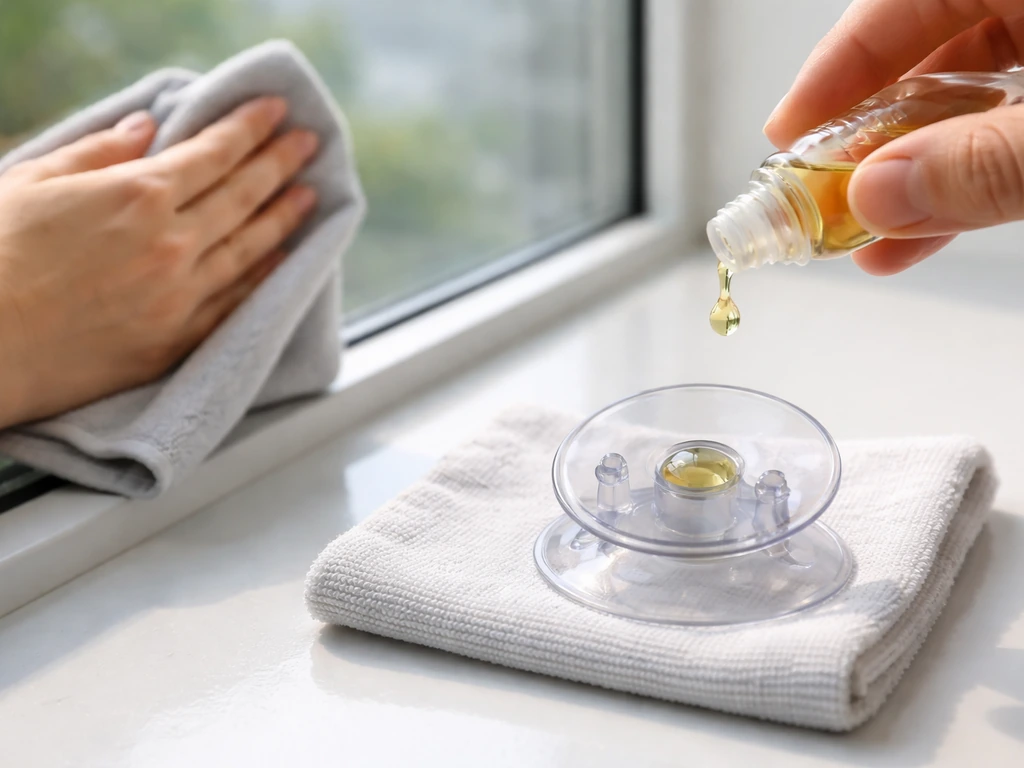
The number one cause of suction cup feeders falling is a bad surface preparation, not a bad feeder. Before you stick anything to the glass, clean the window thoroughly with glass cleaner and let it dry completely. Any oil, dust, or film on the glass prevents a proper vacuum seal. Then clean the suction cups themselves, because residue on the cup face does the same thing.
After cleaning, apply a tiny drop of olive oil or vegetable oil to the face of each suction cup before pressing it to the glass. This sounds counterintuitive but it helps the cup form a tighter, longer-lasting seal by filling microscopic gaps at the cup edge. Perky-Pet specifically recommends this step in their Observer Window Feeder instructions. Press each cup firmly from the center outward to push out any trapped air, then press the button or lever on the cup if it has one.
Where you place the feeder on the window matters for safety as well as stability. The research from Cornell Lab and the U.S. Fish and Wildlife Service is consistent on this: mount the feeder within 3 feet of the glass, ideally directly on it. Birds approaching a feeder stuck to the glass don't have enough room to build lethal speed, which dramatically reduces window collision injuries and deaths. Placing a feeder 10 to 20 feet from a window is actually more dangerous than placing it right on the glass.
Re-seat the cups every few weeks even if the feeder seems solid. Suction seals slowly leak air over time, especially with temperature swings. You don't have to remove the whole feeder: just press each cup firmly against the glass again. If a cup has gone stiff, yellowed, or cracked, replace it. Replacement cups from brands like Songbird Essentials, Nature Anywhere, and Kettle Moraine Woodworking are sold cheaply and are worth keeping on hand.
Which birds to target and how to match the food
Suction cup window feeders are best suited to smaller, lighter birds. If you need a sturdier setup for larger birds, a best free standing bird feeder with a weighted base can keep the feeder stable without relying on suction best free standing bird feeder with weighted base. That's partly a physics constraint (lighter birds don't destabilize the feeder on landing) and partly because window feeding is a close-up experience, and small species tend to be less skittish at close range.
| Bird Species | Best Feeder Style | Food to Use |
|---|---|---|
| Black-capped and Carolina Chickadees | Seed tray or hopper | Black-oil sunflower seeds |
| House Finches, Goldfinches | Seed tray | Nyjer or mixed finch blend |
| Tufted Titmouse | Seed tray | Sunflower seeds or safflower |
| Hummingbirds | Nectar cup with ports | 1 part white sugar to 4 parts water, no dye |
| Downy Woodpecker, Nuthatch | Suet holder | Suet cake, no-melt formula in summer |
| House Sparrow, Junco | Open seed tray | Mixed seed or millet |
Larger species like cardinals, blue jays, and doves are not good targets for suction cup feeders. Their weight and landing impact can shift or dislodge a window-mounted feeder, and they tend to feel exposed perching directly on a window. If those are your target birds, a hanging feeder or pole-mounted platform is a better match. Hummingbirds specifically do very well with window-mounted nectar feeders because they hover rather than land hard, and the close viewing experience is one of the best you can get with this feeder type.
Keeping the feeder clean and weather-resistant
Routine cleaning
Clean seed feeders at least once a week with hot water and a bottle brush. For a deeper clean, use a solution of 9 parts water to 1 part bleach, rinse thoroughly, and let the feeder dry completely before refilling. This is the standard recommended by All About Birds and PetMD, and it applies to suction window feeders just as much as any other style. The key difference with window feeders is that the small tray size means wet or spoiled seed builds up faster and more visibly, so you'll probably catch problems earlier than with a larger hopper feeder.
Hummingbird feeders need more frequent attention
Nectar feeders need to be refreshed every one to two days in warm weather. National Zoo and Smithsonian guidance also recommends changing hummingbird sugar water every other day and thoroughly cleaning the feeder each time to prevent harmful mold growth change nectar every other day and thoroughly clean each time. In heat above 80 degrees, change the nectar daily. Sugar water ferments and grows bacteria and mold quickly, which can harm or kill hummingbirds. The Smithsonian National Zoo and All About Birds both emphasize this. There's also no need for red food dye in nectar: plain white sugar and water at a 1:4 ratio is correct. Do not use honey, brown sugar, or artificial sweeteners.
Rain, UV, and winter freezing
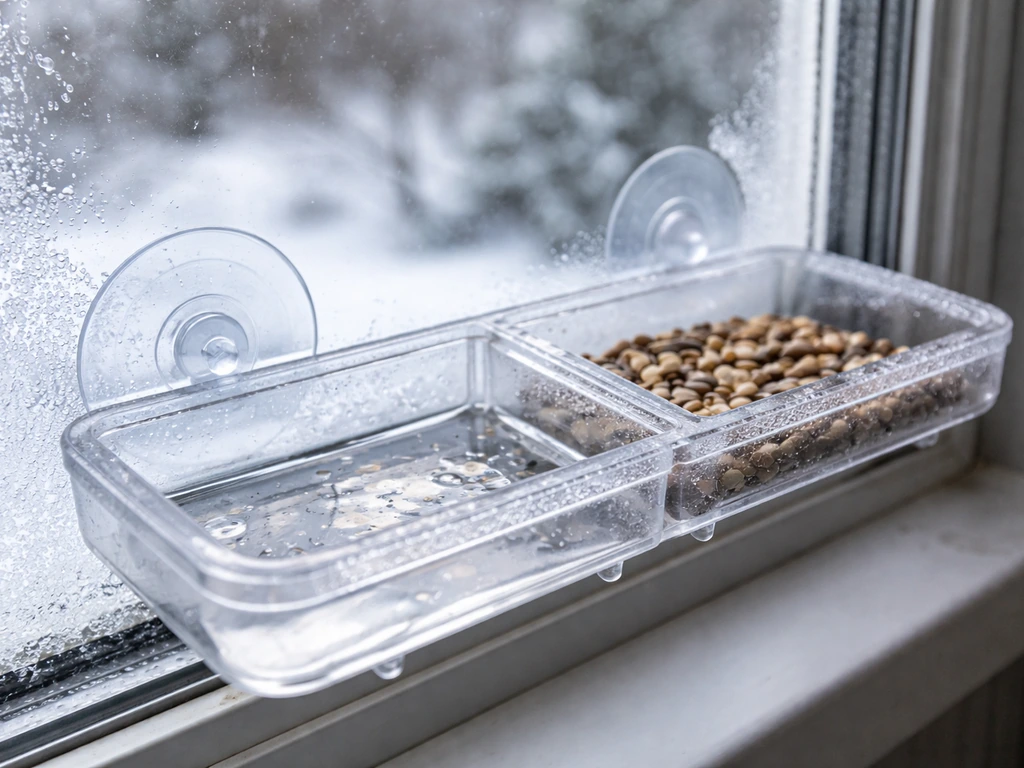
Rain is manageable if the feeder has drainage holes in the tray, which lets pooled water escape before it soaks the seed. Feeders without drainage will need you to dump wet seed after every rain event, which is a real maintenance burden. UV exposure is a slower problem: cheaper clear plastics yellow and become brittle after a full season of direct sun, which also degrades the suction cups themselves. UV-stabilized materials (polycarbonate rather than standard acrylic or polyethylene) last several seasons with normal care.
Winter is the hardest season for suction cup feeders. Cold temperatures cause rubber and silicone cups to stiffen and lose their conformability, which breaks the seal. Freezing moisture trapped between the cup and the glass can shatter the seal entirely and the feeder drops, sometimes with seed still in it. During sustained freezes, check your feeder's cups more frequently and re-seat them. Bringing the feeder inside overnight during hard freezes and remounting it in the morning is a practical solution. Some birders switch to a hopper or tube feeder on a stand during deep winter for exactly this reason.
Troubleshooting the most common problems
The feeder keeps falling
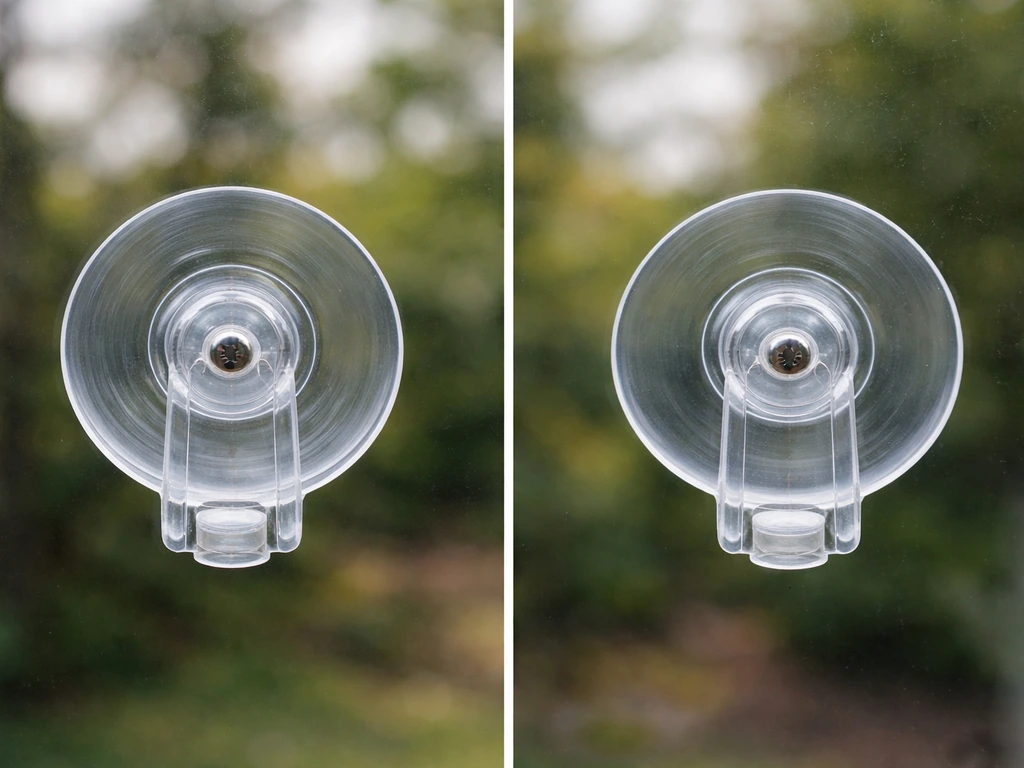
Almost always a surface or cup condition problem. If you're comparing options, looking for the best bird feeder ever often comes down to choosing a model that seals securely, drains well, and is easy to keep clean surface or cup condition problem. Clean the glass and cups again, apply a thin film of oil to the cup face, and press each cup firmly with even pressure. If the cups are hard, yellowed, or cracked, they've lost their elasticity and no amount of cleaning will fix that: replace them. Also check that you're mounting on actual glass, not a textured window film, a painted surface, or frosted glass. Those surfaces break the vacuum seal and suction cups simply don't work reliably on them.
Birds aren't using it
New feeders often take one to four weeks before birds discover them, especially if birds aren't already accustomed to that window. Placement helps: mount the feeder on a window that faces trees, shrubs, or other cover within about 10 feet so birds have a safe approach and retreat route. If birds are visiting other feeders in your yard but ignoring the window feeder, try putting a small amount of food on the tray's edge or sprinkling seed near the window on a ledge or sill to create a visual cue. Also make sure you're offering the right food: a sunflower-only feeder won't draw finches used to nyjer, and a plain tray won't draw hummingbirds.
Mold, wet seed, and spills
Window feeders are small, which means wet or spoiled seed becomes a problem faster than in a large hopper. Don't overfill: put in only what birds will eat in two to three days. After rain, check and replace wet seed immediately. If mold keeps returning despite cleaning, the drainage holes in your tray may be clogged: clear them with a toothpick or thin brush. For seed spills on the window, a quick wipe prevents staining and deters ants.
Ants and wasps at nectar feeders
Ants are the most common pest issue with window-mounted hummingbird feeders because there's no pole to install an ant moat on. The best solution is to keep the feeder and the surrounding window frame clean of nectar drips, and to look for a hummingbird feeder with a built-in ant guard or moat above the nectar cup. Wasps are attracted by the same sugar: feeder ports with smaller openings (sized for hummingbird bills, not wasp bodies) reduce wasp access. If hummingbirds stop visiting, check for ants or wasps before assuming a placement problem.
Squirrels
Suction cup window feeders are actually less squirrel-prone than pole or hanging feeders, because squirrels have to cling to the glass to reach them, which most find unstable. That said, determined squirrels can still reach a window feeder from a nearby ledge, roof edge, or window frame. Positioning the feeder away from any adjacent surface they can launch from is your main defense. There's no practical way to add a baffle to a suction-mounted feeder.
Top suction cup feeder types and which one to buy
| Feeder | Cups/Capacity | Best For | Key Strengths |
|---|---|---|---|
| Nature's Way Clear View Window Feeder | 4 suction cups, 2-cup seed | Seed-eating small birds | Removable tray, side-mounted cups, easy refill |
| Droll Yankees Observer Window Feeder | 3 suction cups, ~2 cups / 0.5 lb seed | All-round seed feeder | UV-stabilized, open sides, clear viewing |
| Lee Valley Window Bird Feeder | Multiple suction cups, 3/4-qt hopper + catch tray | Slightly higher-capacity seed feeding | UV-stable polycarbonate, drainage holes, tough build |
| Birds Choice Window Mount Hummingbird Feeder | Suction cups, 3.5 oz nectar | Hummingbirds | Keyhole removal, polycarbonate cup, easy swap |
| Songbird Essentials Red Suet Window Feeder | 2 suction cups | Woodpeckers, nuthatches, chickadees | Simple, easy to disinfect, suet-specific design |
For most people starting out: go with the Nature's Way Clear View or the Droll Yankees Observer for seed. Both have proven suction performance, UV-stable construction, and are widely available with replacement parts. A high quality bird feeder can also make it easier to attract more birds while keeping cleaning and maintenance simple. If hummingbirds are your goal, the Birds Choice window mount is the most practical option given its keyhole removal system that lets you clean without re-mounting the cups every time. If you specifically want to attract woodpeckers to a window, the Songbird Essentials suet feeder is the simplest route.
When suction cups just won't work: alternatives and workarounds
Some windows and surfaces genuinely won't hold a suction feeder reliably, no matter what you do. Textured glass, older single-pane windows with surface irregularities, painted frames, or frosted privacy glass all break the vacuum seal. If you've tried cleaning, re-oiling, and replacing the cups and it still falls, accept that suction isn't the right mount for that surface and pivot to something else.
The most flexible alternative for renters or small spaces is a railing-mount feeder, which clamps to a balcony rail without any hardware or adhesives. Deck-mounted feeders that attach to a rail are a close sibling category to window feeders and worth comparing if you have any kind of balcony edge to work with. If you have a balcony rail or deck edge, a deck mounted bird feeder is often the most convenient alternative to suction mounting. A bird feeder stand with a weighted base is another option for anyone with a small outdoor space: no wall attachment needed, and you can move it. If you have a yard, a dedicated bird feeder stand gives you much more flexibility on placement, species targeting, and feeder size than any window mount can.
For a DIY fix on problem windows, a tension-mounted window shelf (the kind sold for plants) can hold a lightweight tray feeder without suction cups or drilling. Command strips rated for outdoor use are another temporary option for very light feeders, though they're not reusable and won't hold in rain over time. Neither is as reliable as a proper suction mount on clean glass, but both beat a feeder that falls every week.
The bottom line: suction cup feeders are a legitimate and practical option for a specific set of setups, particularly apartments, balconies, and close-up window viewing. Get the surface prep right, choose a feeder with UV-stable materials and four cups for seed or a purpose-built style for nectar or suet, match the food to the birds you want, and clean it consistently. Do those things and a window-mounted feeder will reward you with some of the best close-up bird watching you can get from inside your own home. For people feeding from a distance instead of mounting to glass, the best bird feeder stands can help keep feeders secure and at the right height.
FAQ
Can I use the same suction cups again if my feeder keeps falling?
Yes. If the cup face is clean and you press evenly from the center outward, you can reuse suction cups, but only if they are still elastic (not yellow, stiff, or cracked). If a cup falls after re-seating, treat it as a cup-wear signal, replace the cups, and re-clean both the glass and the cup faces before remounting.
What should I do if my window seems clean but suction still fails?
If you mount on glass but the feeder still drops, check for invisible barriers like interior storm windows, removable window films, hard water spots, or a thin layer of condensation residue. Even “clean” glass can have oily film, so wipe with an alcohol-based cleaner and let it fully dry before applying the small oil film to the cup faces.
Is it safe to use olive oil on suction cups, and can it get into the food?
Do not. Oil can be left as a micro-thin film on the suction cup face only, it should not drip into the seed tray or nectar cup. If any oil reaches the food area, wipe it off and do a full clean, because oil residue can attract dirt and make spoilage harder to notice.
My feeder moves when birds land on it. Is that normal?
Try a lower-impact placement first, mount within the recommended near-window area, and confirm the feeder is level and fully seated on all cups. If the feeder shifts when birds land, it is usually because the feeder is under-cupped for the load, the cups are aging, or the bird is too heavy for the suction style, in which case switch to a hanging or weighted-base option.
How full should I fill a best suction cup bird feeder to prevent spoilage?
It is not the suction failure that matters most, it is the feeder capacity versus refill timing. For window feeders, keep seed volume small enough that you can empty and refresh after rain or within about 2 to 3 days, otherwise wet seed cycles into mold even if the tray drains.
What is the right cleaning schedule for nectar feeders, and what if hummingbirds stop coming?
For nectar, warm-weather cleaning is the deciding factor. Refresh every 1 to 2 days (daily when it is above 80°F), and after each refill, rinse the cup thoroughly, not just top off. If hummingbirds stop visiting, check for cloudy residue or fermented smell, then deep-clean with a thorough rinse and complete drying.
Can I mix foods, like putting seeds in a nectar window feeder or nectar in a seed tray?
Yes, but only if you match the cup-to-food design. Use a seed tray feeder for seed only, and a purpose-built nectar feeder for nectar only. Mixing is a major health risk, and even small cross-contamination can cause spoilage patterns that are hard to control.
How often should I re-seat suction cups, and does weather change that?
Slight leakage is normal over time, temperature swings make seals relax, and sun exposure accelerates cup aging. Re-seat every few weeks during the season, and in winter and summer extremes, inspect more often and plan on cup replacement before the cups go stiff.
What should I do if drainage holes exist but I still find mold after rain?
If your window feeder is a drain-hole design, clear clogged drainage with a thin brush or toothpick, then dump and fully replace any wet seed or any seed that smells stale. If you repeatedly get mold even with good drainage, reduce the fill amount and clean more frequently rather than trying to “save” spoiled seed.
How do I handle ants or wasps around a suction-mounted hummingbird feeder?
If ants persist, focus on preventing nectar drips around the rim and window frame, and use an ant-guard or moat-style nectar feeder if you are not already. Also check the nectar level and port design, feeder ports that better match hummingbird bills reduce wasp access, and smaller openings can reduce other insects too.
What are the non-obvious surface types that suction cup feeders cannot handle?
Textured, frosted, painted, or film-covered surfaces often defeat suction even with perfect prep. If it still falls after cleaning, oiling, and cup replacement, assume the surface is not compatible and switch mounts rather than continuing to fight the seal.
Are suction cup bird feeders actually squirrel-proof?
Yes, squirrels can still access suction feeders if they can launch from a nearby ledge, roof edge, or adjacent structure. The practical fix is repositioning so there is no safe launch point within reach, and keeping the feeder away from surfaces that give them leverage.
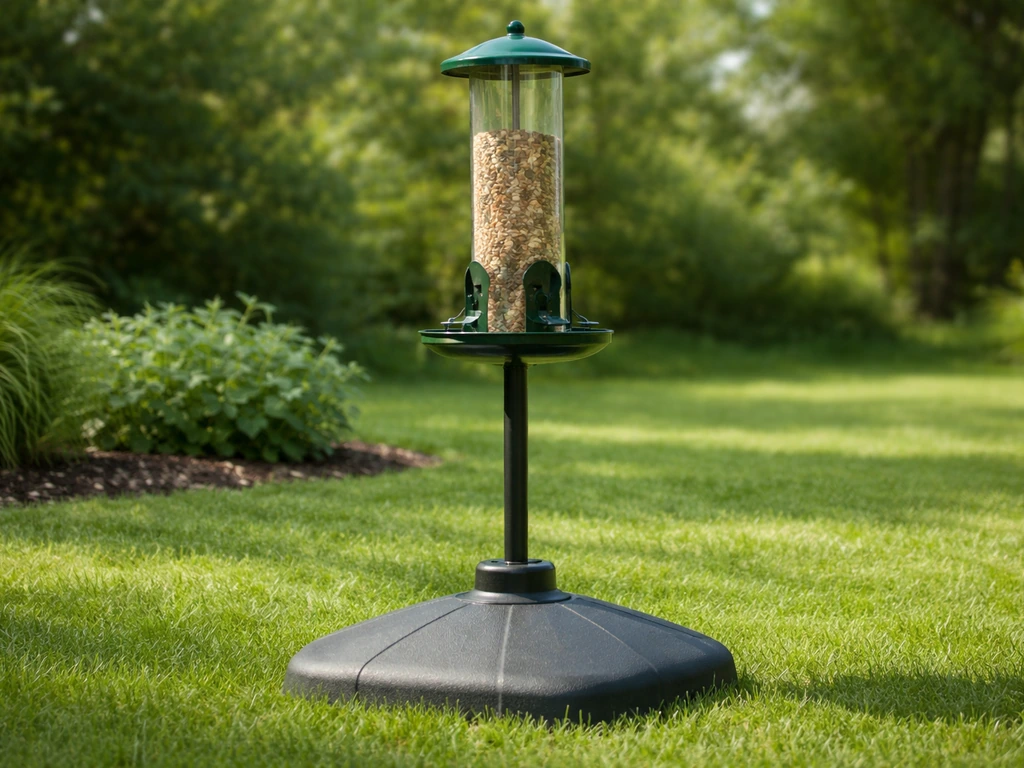
Compare the best free standing bird feeders with weighted bases for stability, pest resistance, seed fit, and easy upkee
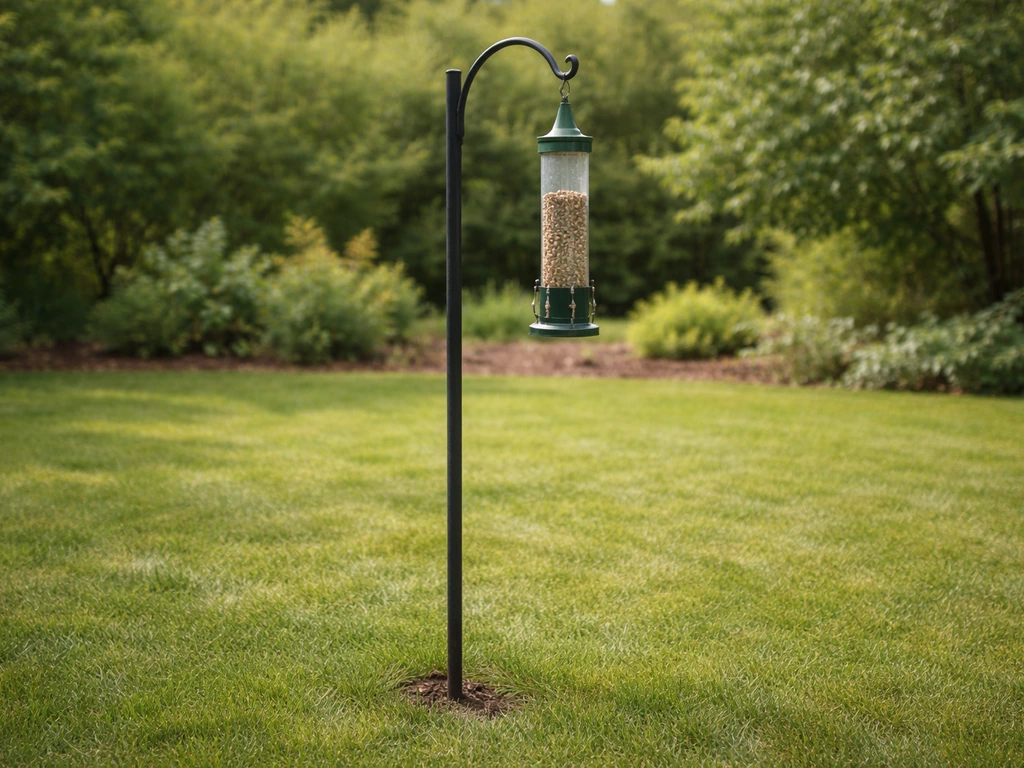
Choose the best bird feeder stands with stability, reach, weatherproofing, pest control, and easy cleaning for your yard
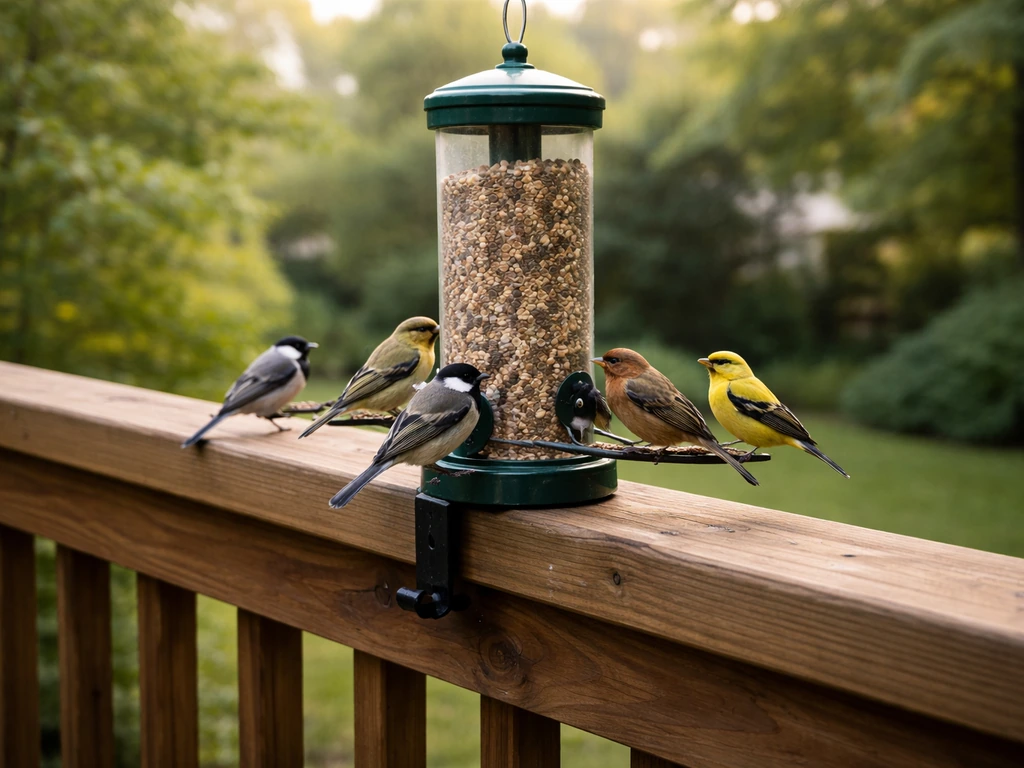
Choose the best deck mounted bird feeder by bird type, yard setup, seed fit, weather durability, and pest-proofing.