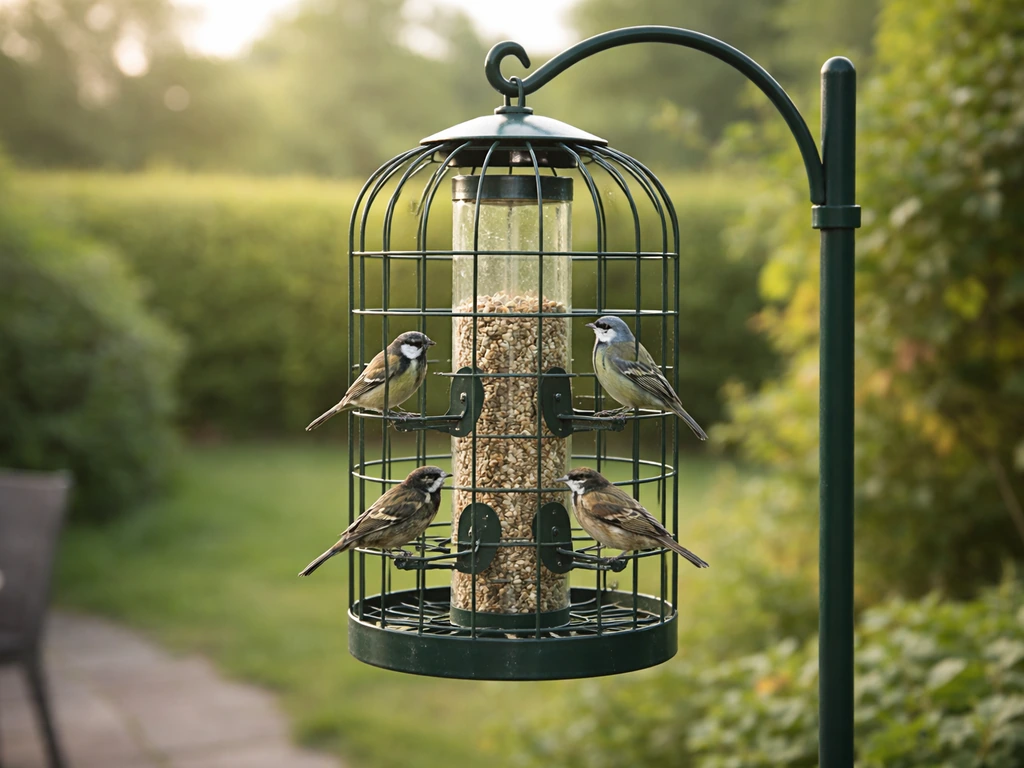
The best rat-proof bird feeders for UK gardens combine a weight-activated or caged enclosure design, a metal or hard resin body that rats can't chew through, and a pole-mounted setup at least 1.5 metres off the ground with a baffle below. No feeder is 100% rat-proof on its own, but the right combination of feeder design, placement, and seed management will stop rats in the vast majority of gardens. If you want a single recommendation to start with, the Squirrel Buster Plus on a smooth metal pole with a cone baffle is the most proven setup for UK conditions right now. To stop starlings without creating an easy food source for rats, look for the best starling proof bird feeders with enclosed or well-shrouded access ports.
Best Rat Proof Bird Feeder UK: Top Picks and How to Install
Marcus Hendricks
21 May 2026
What 'rat-proof' actually means in practice
Here's something the marketing rarely tells you: the RSPB themselves say it's not possible to make anything fully 'squirrel-proof', and the same logic applies to rats. What you can realistically achieve is making your setup difficult enough that rats move on to easier food sources. Rats are more persistent and more capable than squirrels in several ways. They can chew through soft plastic and thin wood, they can climb smooth poles better than most people expect, they're active at night when you're not watching, and unlike squirrels, they're happy to eat whatever falls on the ground. Squirrels are daytime nibblers; rats are nocturnal opportunists. That distinction matters when you're choosing a feeder and planning your setup.
Most feeders fail because of gaps, not because the main body gets breached. Rats are slimmer than you think (a rat can squeeze through a 25mm gap), so any feeder with wide port openings, loose-fitting components, or a tray that collects spillage beneath it becomes a free meal. The other common failure point is the pole or hanging setup itself. A feeder hanging from a branch on a string is basically a welcome sign. And a feeder on a wooden post gives rats a textured surface to grip and climb. Understanding those failure modes is more useful than any product label.
Which feeder types actually resist rodents
Not all feeder styles are equally suited to rodent resistance. Here's how the main types stack up in a real UK garden context.
Tube feeders
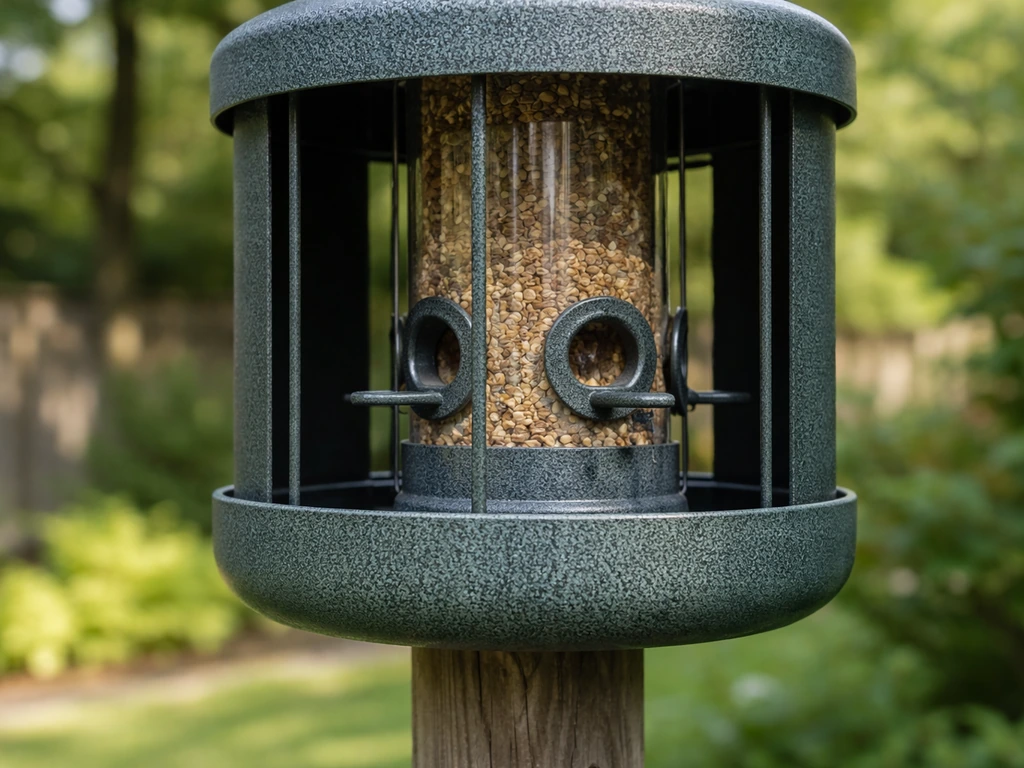
Enclosed tube feeders with small, weight-activated ports are the gold standard for rodent resistance. Designs like the Squirrel Buster Plus use a spring-loaded outer shroud that drops to cover the ports under the weight of a squirrel or rat, while light birds (finches, tits, sparrows) can feed freely. The tube itself is made from RoxResin, a hard composite material that rats find difficult to chew through, unlike polycarbonate or thin plastic. The enclosed design also means very little seed is exposed to the air or accessible from outside the ports. This is the feeder type I'd recommend first for most UK gardens.
Caged feeders
A caged feeder is a standard tube or seed feeder surrounded by a metal cage with gaps sized to let small birds through (typically 45-55mm) but exclude squirrels and rats. They're widely available in the UK and work well as long as the cage gaps are genuinely small enough. The tradeoff is that they also exclude larger birds you might want to attract, like woodpeckers or nuthatches. For gardens where the main goal is keeping rodents out while feeding tits, sparrows, and finches, they're a cost-effective and robust option.
Suet feeders
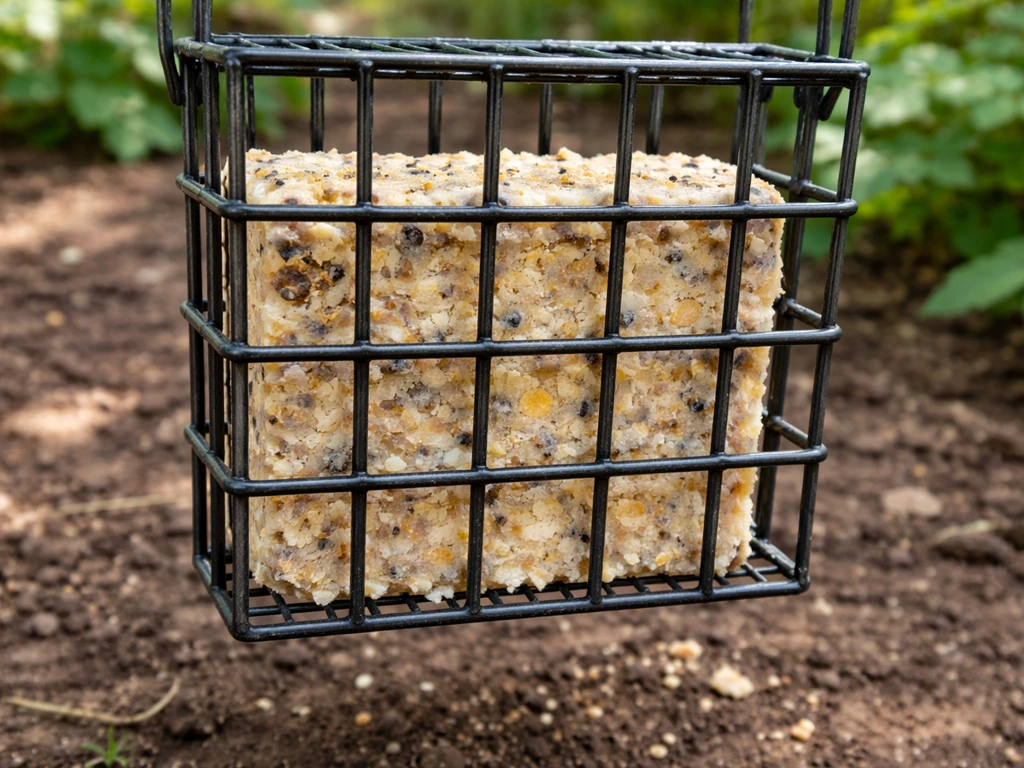
Suet cakes in a metal cage feeder are less attractive to rats than loose seed because there's minimal spillage. Rats are primarily after seed, grain, and peanuts. A metal suet cage with no tray, hung on a smooth wire at least 1.5 metres from any wall or fence, is one of the lower-risk feeding options. The RSPB actually suggests continuing fat balls and suet during the warmer months (May to October) when they advise pausing seed and peanut feeders, partly because suet produces less debris.
Hopper and platform feeders
Hopper feeders and open platform/table feeders are the worst options if you have a rat problem. A similar approach is needed for the best deer proof bird feeder, where design and placement also determine whether animals can access the feed. Open surfaces, flat trays, and wide seed access are essentially designed for ground-feeding rats. The RSPB specifically advises against feeders with flat surfaces, including bird tables and trays, if rodents are a concern. If you're dealing with an active rat issue, remove any platform feeder from your garden immediately. You can always reintroduce it later once the situation is under control, and when you do, pair it with a sturdy baffle on the pole.
Features that actually stop rats (what to look for when buying)
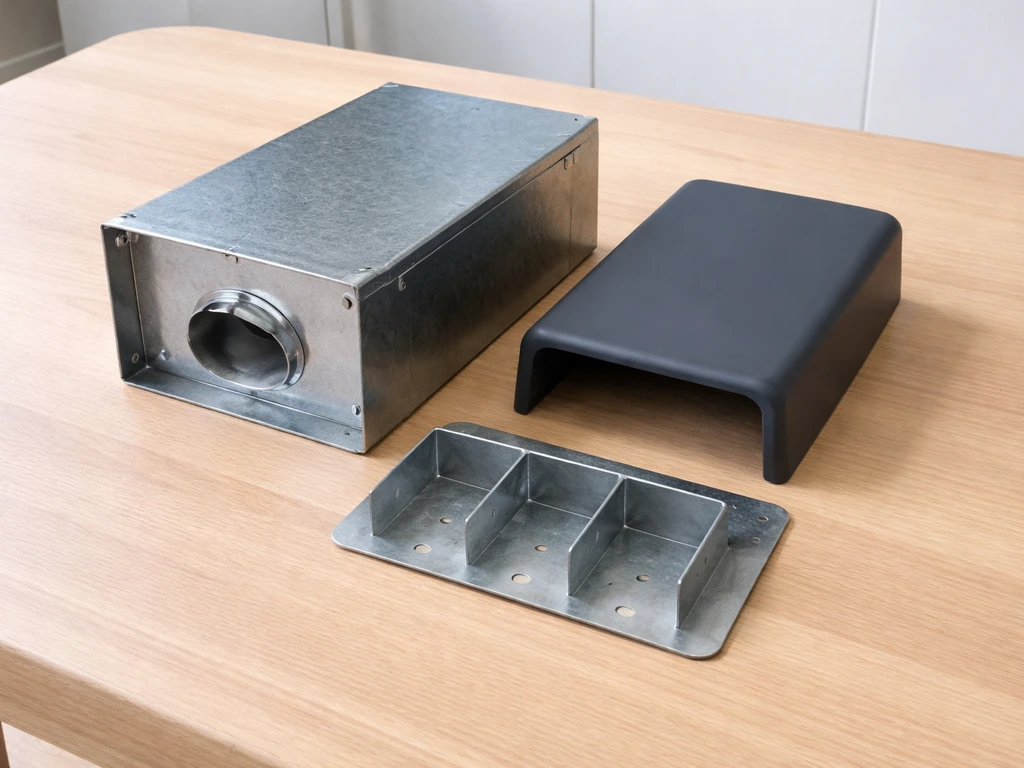
| Feature | Why it matters | What to look for |
|---|---|---|
| Chew-resistant material | Rats can gnaw through thin plastic in minutes | Metal body or hard resin (e.g., RoxResin); avoid thin polycarbonate |
| Weight-activated closure | Closes ports under pest weight, opens for small birds | Spring tension adjustable for different bird sizes; test with ~200g weight |
| Small port gaps | Limits seed exposure and access points | Ports no wider than needed for target seed type; no gaps over 25mm |
| No catch tray (or removable tray) | Trays collect spilled seed directly under feeder | Either no tray, or a tray you clean daily and keep dry |
| Metal pole compatibility | Smooth metal poles prevent climbing | Feeder with pole mount or hook compatible with standard 22-25mm metal tube poles |
| Baffle fitting | Prevents rats climbing the pole | Squirrel/rat baffle that fits your pole diameter; free-swinging cone design |
One thing worth checking before you buy: does the feeder have any plastic components at the base or around the ports that rats could use as a foothold to gnaw at? Even a feeder with a metal body can fail if the port surrounds are soft plastic. The Roamwild PestOff 2.0 is another UK-available option with individually spring-loaded ports rather than a single weight-activated shroud, which means each port closes independently. That's useful if you have mixed visitors because the closure threshold per port is more precise.
Top picks by setup for UK gardens
Rather than just listing products, it's more useful to match a feeder to your actual situation. Here's how I'd approach it by scenario.
| Setup / Scenario | Recommended feeder type | Specific option to look at | Notes |
|---|---|---|---|
| Standard garden, pole-mounted, mixed small birds | Weight-activated tube feeder | Squirrel Buster Plus | Best all-round choice; durable RoxResin; adjustable weight threshold |
| Budget-conscious, mostly tits and sparrows | Caged tube feeder | Metal caged seed feeder (45mm gap cage) | Less expensive; excludes larger birds too; check cage gap size carefully |
| Mainly suet/fat feeders, low-spill priority | Metal suet cage, no tray | Standard metal suet cage on smooth pole | Low rat interest; RSPB-recommended for May-Oct; minimal debris |
| Peanut feeding for woodpeckers/nuthatches | Caged peanut feeder | Metal mesh peanut feeder with cage surround | Avoid wide mesh; use cage with max 45mm gap |
| Nyjer/thistle seed for goldfinches | Nyjer tube with small ports | Roamwild PestOff Nyjer version or standard nyjer tube with cage | Nyjer seed is less attractive to rats; tiny ports help naturally |
| Already have a rat problem, need quick fix | Remove current feeder temporarily | Switch to suet-only on smooth pole with baffle while addressing infestation | Stop seed feeding until rats are gone per council guidance |
If you're feeding birds that need a larger perch or open access, like doves or larger thrushes, the reality is that those feeding styles are inherently harder to rat-proof. You'd be managing via placement and cleanup rather than feeder design alone in those cases.
Placement and installation: this matters as much as the feeder itself
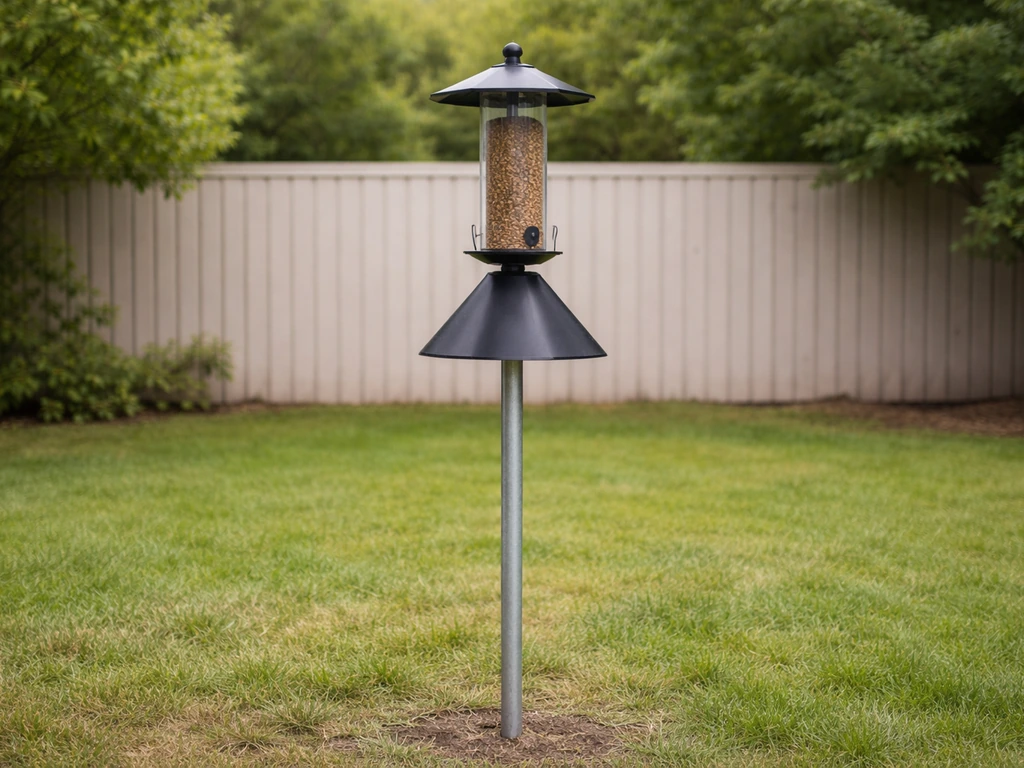
I'll be honest: I've seen people buy the best feeder on the market and still have rats within a week, purely because of where they put it. A good “no mess” bird feeder can help minimise spill and make your daily cleanup easier, which reduces the chances of attracting rats best no mess bird feeder. Placement is at least half the battle. Here are the rules that actually make a difference.
- Mount on a smooth metal pole, minimum 1.5 metres tall, ideally 1.8 metres. Rough wooden posts and textured plastic poles give rats grip points to climb.
- Fit a baffle below the feeder, about 1 metre up the pole. The baffle should be a free-swinging cone (metal or hard plastic) so it wobbles and tips when a rat tries to use it. A fixed cone is less effective because rats can grip a static surface.
- Keep the feeder at least 2 metres away from any fence, wall, shed, or overhanging branch. Rats can jump horizontally and will launch from a nearby structure rather than climbing the pole.
- Don't hang feeders from trees unless the branch is completely clear of any structures and you can rig a smooth wire with a baffle above the feeder. Most hanging setups in UK gardens are not set up this way.
- If you use a ground guard or debris catcher beneath the feeder, position it on a hard surface you can hose down daily, not directly on soil or grass where hulls and seed can build up unnoticed.
- Move the feeder's exact position every week or two. The RSPB recommends this anyway to reduce disease risk from droppings accumulating under one spot, and it also disrupts rat foraging patterns.
Seed choice, spill control, and daily maintenance
The feeder and pole setup stops rats from getting into the feed directly. But what falls on the ground is a separate problem, and it's just as important. Spilled seeds and hulls are described by multiple UK councils as a primary rat attractant, and the honest truth is that every feeder spills something. North Lanarkshire Council also notes that rats can be attracted by “spilled seeds and hulls” and recommends clearing and cleaning feeders and feeding areas regularly to prevent old food build-up Spilled seeds and hulls are described by multiple UK councils as a primary rat attractant. Here's how to manage it.
- Use no-mess seed mixes (de-husked sunflower hearts, straight nyjer, or kibbled peanuts). Husked seeds like black sunflower or millet leave hulls on the ground that are just as attractive to rats as the seed itself.
- Clean up any spilled seed every single day. Wirral Council is explicit about this: daily cleanup is not optional if rats are a concern.
- Don't overfill the feeder. Only put in what the birds will eat in a day, especially during warmer months. Stale, damp seed in the feeder is also a disease risk.
- Follow the RSPB's seasonal guidance: pause seed and peanut feeders between 1 May and 31 October if rats are a concern, and continue only with suet or mealworm during that period.
- If you use a catch tray, keep it dry and clean it daily. A wet tray full of seed is worse than no tray at all.
- Store your seed in a metal bin with a clip-top lid, not a plastic sack in a shed. Rats will find stored seed as quickly as they find feeders.
Rats still getting in? How to troubleshoot
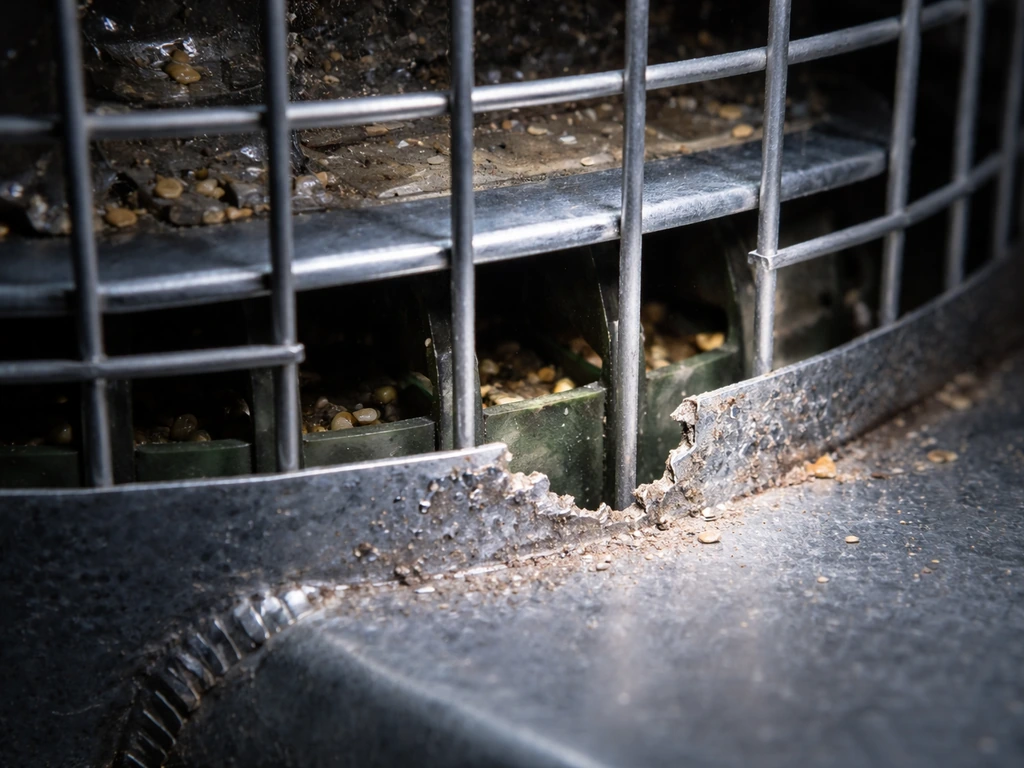
If you've got the right feeder, a smooth pole, a baffle, and you're cleaning up daily, but you're still seeing rats, work through this checklist before assuming the feeder itself is the problem.
- Check the gap between the feeder's ports and the outer cage/shroud. If a rat is gnawing at the feeder body itself, the weight mechanism may not be triggered properly. Increase the spring tension if adjustable, or check for damage.
- Look for entry points from above. If the feeder is hanging and there's any structure within two metres (including dense ivy or a trellis), rats may be jumping down onto the feeder rather than climbing up the pole.
- Inspect the baffle. A fixed, non-swinging baffle is much easier for rats to grip and bypass. It should wobble freely when you push it.
- Check if the pole has any rust, bolts, fixings, or cable ties on it below the feeder. Any protrusion gives rats a grip point.
- Temporarily stop all feeding for one to two weeks. Multiple UK councils, including Test Valley Borough Council and Wirral Council, recommend this if rats are present. It removes the attractant while you address the underlying issue.
- If the problem persists or you suspect a nest nearby, contact a pest control professional. North Kesteven District Council specifically states that a professional is the safest option if you believe there's an infestation, not just feeder changes alone.
DIY options and modifications worth trying
Not everyone wants to buy a premium feeder upfront, and there are some genuinely useful DIY approaches that can improve an existing setup without spending much.
Make or buy a cone baffle
A metal cone baffle fitted to a smooth metal pole is one of the highest-impact upgrades you can make. North Kesteven District Council describes them as slippery cone-shaped pieces (plastic or metal) that attach to the pole and prevent any animal from climbing over them. You can buy these from most UK garden centres or online for around £10-20, or make one from a sheet of galvanised metal. The key is that it must be free-swinging on the pole, not bolted tightly, so it tilts when a rat attempts to climb it.
Add a cage around an existing feeder
If you already have a tube feeder you like, you can buy a cage surround separately and retrofit it. Look for a cage with around 45mm gaps for small birds, or 55mm if you want nuthatches or great spotted woodpeckers to get through. Make sure the cage sits close to the feeder body with no more than a centimetre of gap between the cage and the ports, otherwise rats will grip the cage and reach the ports through the gaps.
Switch to ground-free feeding temporarily
If you're in the middle of an active rat problem and don't want to stop feeding entirely, switching exclusively to a metal suet cage on a smooth pole with a baffle is a practical interim step. Suet produces almost no debris, rats show less interest in it than seed, and it still provides valuable fat and calories for garden birds. You can reintroduce seed feeders once the situation is resolved.
When to accept you need to change feeder type
If you're feeding pigeons, doves, or other ground-feeding birds and you have a persistent rat problem, the honest answer is that some feeder types are simply incompatible with effective rodent management. Open feeders and ground feeding attract rats by design. It's worth reading up on pigeon-proof or dove-proof feeder designs if those are your target birds, as those setups have their own dedicated solutions that manage access and spillage differently. If you specifically need a best pigeon proof bird feeder, prioritize enclosed tube styles with narrow, weight-activated ports and strict spill control pigeon-proof or dove-proof feeder designs. If you're targeting doves as well, choosing the best dove-proof bird feeders for your setup can dramatically reduce access for rats pigeon-proof or dove-proof feeder designs.
Your practical next steps after reading this
Here's what I'd do in the first week if I were starting from scratch or resetting after a rat problem. If grackles are also visiting your feeder, choose a best grackle proof bird feeder and pair it with a proper baffle and strict cleanup routine.
- If rats are currently active: stop all feeding immediately for at least one to two weeks and tidy up the feeding area completely.
- Choose your feeder: weight-activated tube (Squirrel Buster Plus) for the best all-round rodent resistance, or a caged tube feeder if budget is a constraint.
- Set up on a smooth metal pole, minimum 1.5m, with a free-swinging cone baffle fitted around 1 metre up.
- Position the pole at least 2 metres from any fence, wall, or overhanging structure.
- Switch to a no-mess seed mix (sunflower hearts or nyjer) to reduce hull litter.
- Clean the area beneath the feeder daily for the first two weeks and observe. If you see no rat activity after seven days, your setup is working.
- If rats return despite all of the above, call a pest control professional rather than continuing to adjust the feeder.
FAQ
What should I feed during an active rat problem if I cannot stop feeding immediately?
If rats are already taking feed, switch to a metal suet cage feeder (no tray) for a couple of weeks while you remove any open platform or hopper feeders. Then, only reintroduce seed once you have had several nights with no activity and your daily cleanup has eliminated ground spillage.
How do I position the baffle so rats cannot reach the ports from the side?
A baffle should be positioned so there is no solid “path” from the rat to the feeder ports, including from nearby fences or dense shrubbery. Aim for a smooth pole with the baffle placed below the lowest access point, and keep a clear zone on all sides, especially near corners and under overhanging branches.
How often do I need to clean up spilled seed to stop rats from returning?
Clean up on a strict schedule at first, ideally daily during a new setup or after rat sightings. Use a sieve or handheld scoop to remove hulls and any fallen seed, and do not leave “a little” for birds to find, because rats will exploit that same availability.
Does the time of day I refill or check feeders affect rat activity?
Yes, timing can matter. Rats are nocturnal, so check after dusk when possible, and consider temporary daytime adjustments like reducing how much seed you put out. If you are refilling early in the morning and leaving a full tray of seed/hulls all day, you can end up increasing night-time opportunity.
What other household or garden items can keep rats coming even if my feeder is rat-proof?
Even with the best rat-proof feeder, rats can still be attracted by other food sources. Remove or secure pet food, fallen fruit, compost that is accessible, and any birdseed stored in reachable containers, since rats quickly shift to the easiest option if bird feeding is only one part of the buffet.
How do I tell when my feeder has developed gaps or weaknesses that rats can exploit?
If birds are pecking at the ports, rats may also have better access because port edges get widened or components loosen over time. Inspect monthly for wobble, bent metal, worn plastic around port surrounds, and gaps that appear as the feeder ages, then tighten or replace any degraded parts.
What cage gap sizes are safer for rats, and how do they affect the birds you can attract?
For cage-style feeders, the gap size matters. If you size the cage for small birds too generously, rats can squeeze through. Conversely, if gaps are too tight, larger birds may not feed, which can increase frustration for you but also reduces how long seed is left exposed at the port openings.
Can rats bypass a baffle by climbing nearby structures, and how close is too close?
Avoid setups where the feeder is close enough to be reached by climbing from a fence, wall, tree trunk, or lattice. If any adjacent surface is within the rat’s reach, rats can bypass the baffle by climbing higher first, then dropping onto the feeder area or accessing through side openings.
What pole mounting mistakes make rat-proof feeders fail even when the feeder itself is solid?
Yes. A smooth pole, correct height, and a baffle are important, but rat-proof performance also depends on how the pole is mounted. If the pole base is loose or there are gaps at ground level, rats can investigate and gnaw around the mounting area to reach access points or destabilize the setup.
My new enclosed tube feeder stopped working quickly, what are the most likely reasons?
If you see new rat signs after switching to an enclosed tube, the most common causes are spillage beneath the feeder, a baffle that is not free-swinging, or a small but usable gap around the port surrounds or cage surround. Confirm there is no tray collecting seed, reduce your daily seed quantity, and verify the baffle can tilt when pressure is applied.
Can I attract pigeons or doves without making my feeder more rat-friendly?
Most rat-proof feeders are designed for feeding birds that can use narrow ports or enclosed access. If you need to attract ground-feeding birds like pigeons or doves, those feeder styles often conflict with effective rodent management, so you may need to choose dedicated designs for those birds instead of trying to “rat-proof” a platform feeder.
Next Article
Best Starling Proof Bird Feeders UK Buying Guide
UK guide to the best starling proof bird feeders: pick port sizes, designs, seed and setup to stop starlings.