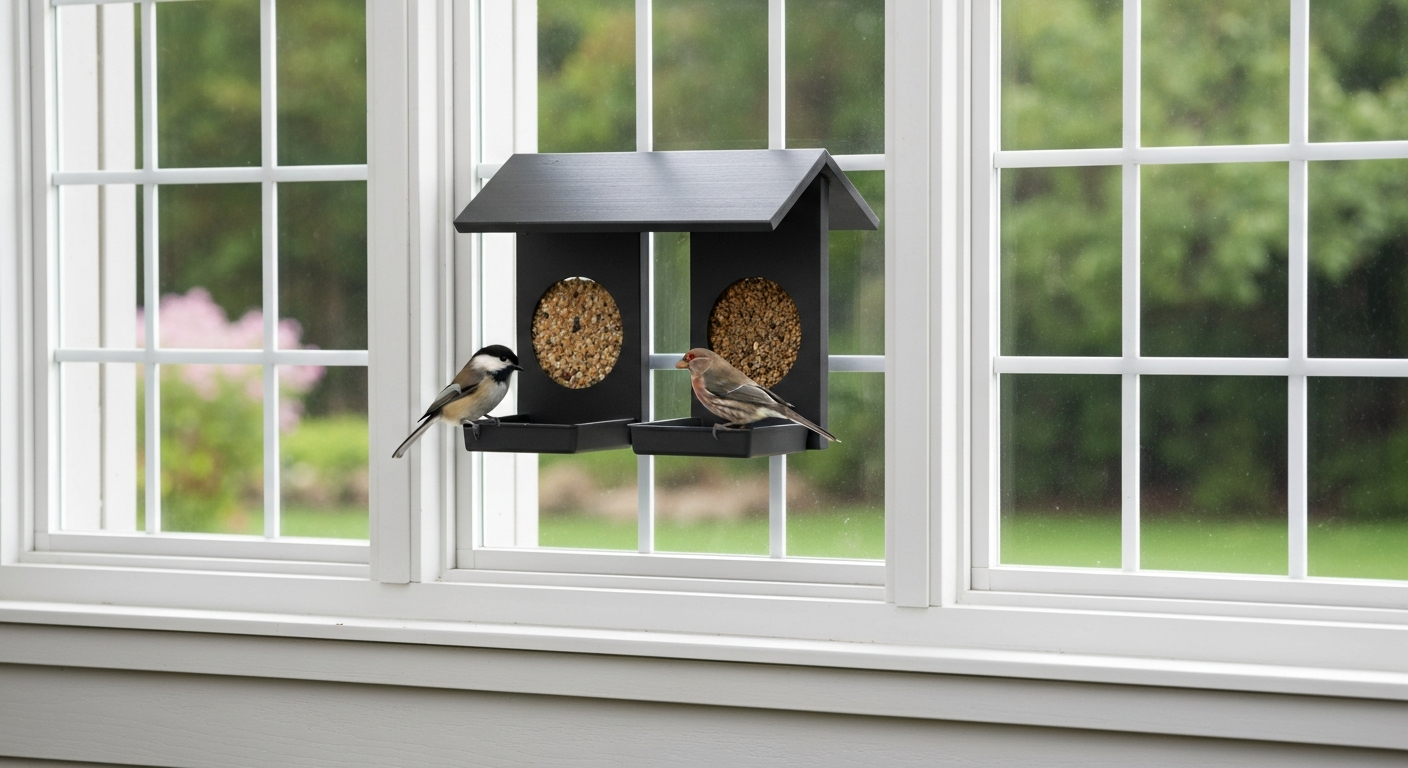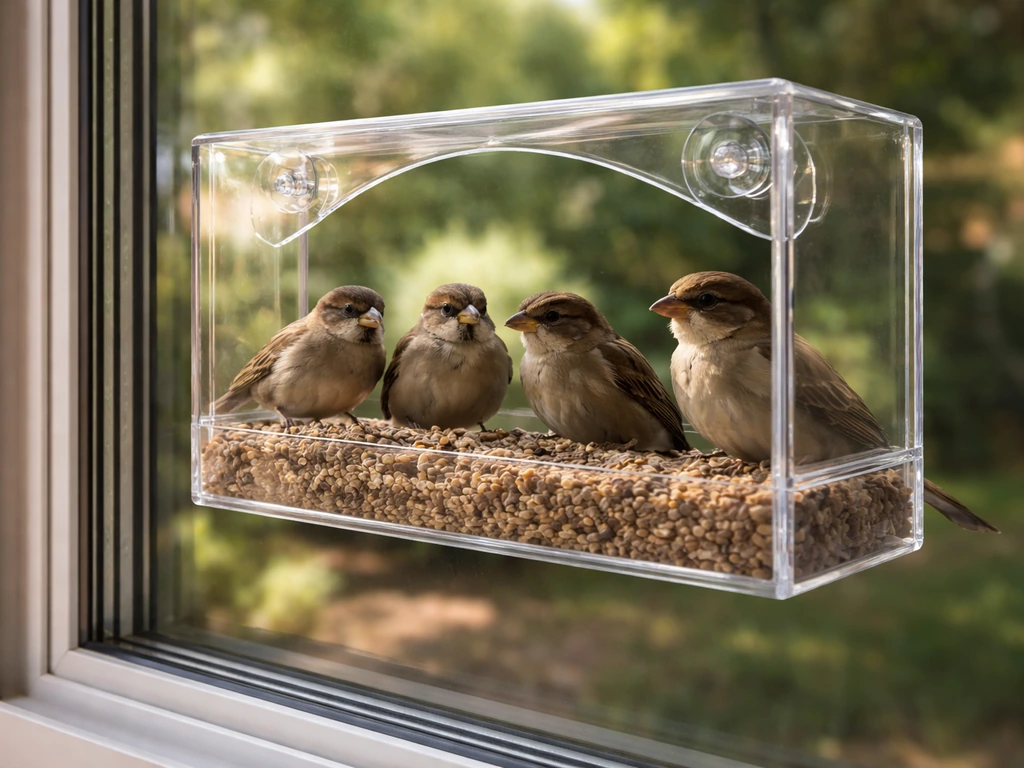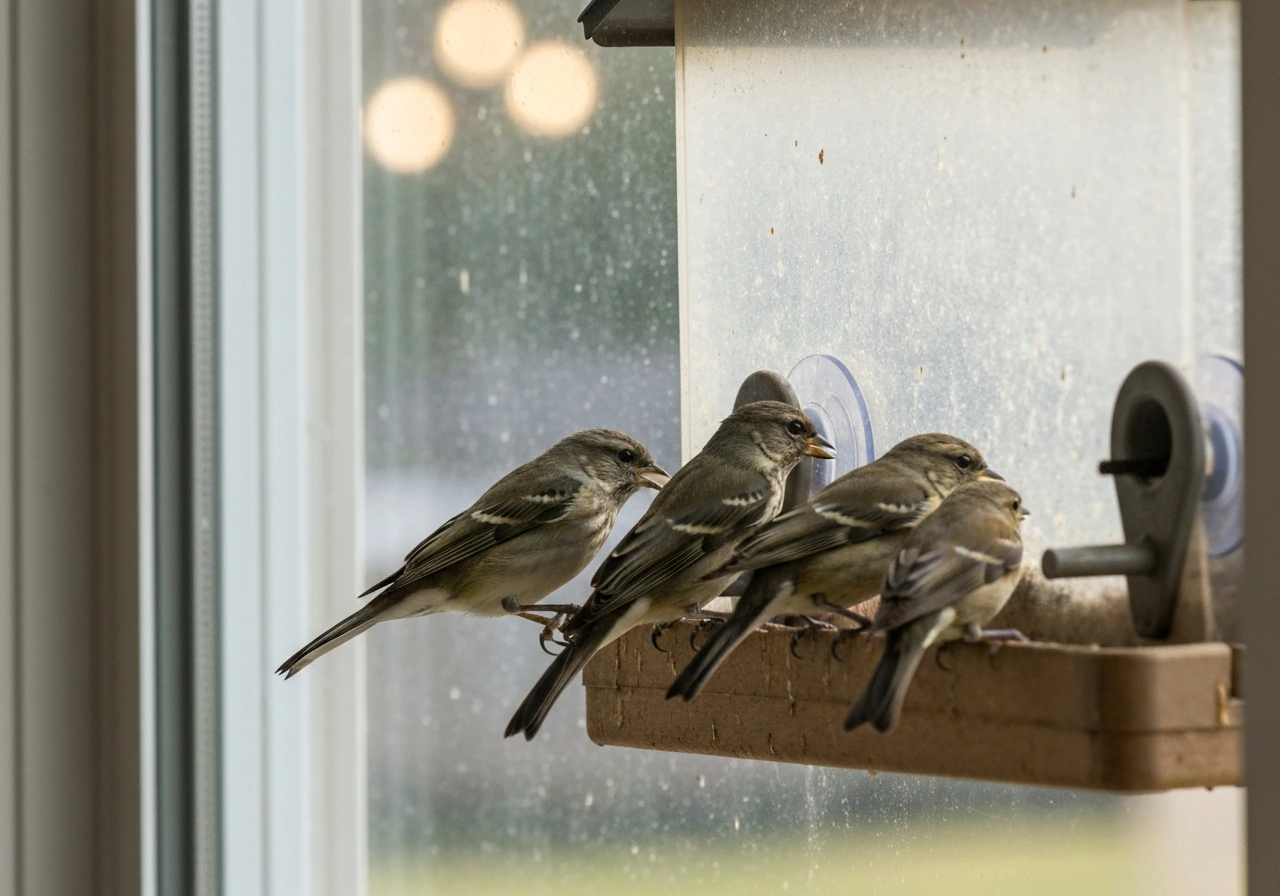
The best window bird feeder for most people is the Nature's Hangout Window Bird Feeder. It uses four strong suction cups, includes a removable seed tray with drain holes, and gives you a clear, close-up view of visiting birds from just inches away. It holds black-oil sunflower seed well, cleans up in minutes, and costs around $20 to $25, making it the easiest recommendation I can give to anyone starting out. That said, the right feeder depends on whether you're dealing with curious cats, a bad suction surface, large birds like cardinals or jays, or you want stealth viewing or a built-in camera mount, so there's more to unpack below. For a full comparison of top models and mounting tips, see our guide to the best bird feeder window.
What Is the Best Window Bird Feeder: Top Picks & Guide 2026!

Marcus Hendricks
25 Jul 2026
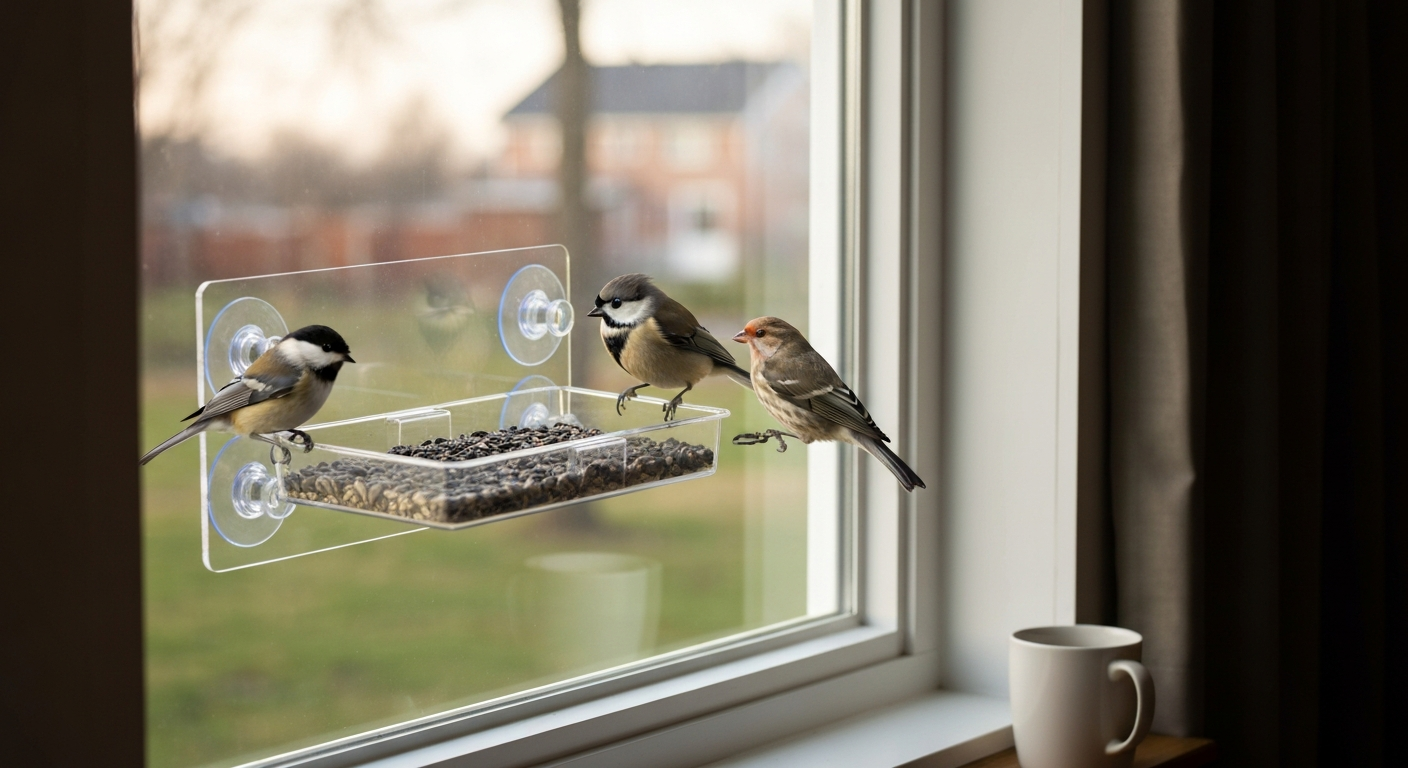
Top picks at a glance
| Use Case | Recommended Pick | Why It Works | Approx. Price |
|---|---|---|---|
| Best overall | Nature's Hangout Window Bird Feeder | 4 suction cups, drain tray, clear acrylic, easy clean | $20–$25 |
| Best for cat-heavy yards | Perky-Pet Clear Window Feeder (4-cup) | High mount position limits ground cat access; clear sides for monitoring | $15–$22 |
| Best one-way/stealth viewing | Droll Yankees Observer Window Feeder | 3-cup mount bar, positions feeder flush to glass for close viewing | $25–$35 |
| Best suction-cup model | Nature's Hangout (4-cup version) | Redundant cup count, cleanable cups, proven hold time in user reports | $20–$25 |
| Best for large birds (cardinals, jays) | Better Crafter Duplex Window Feeder | Two landing levels, wider tray, Amish-made wood/acrylic build | $45–$65 |
| Budget pick | Style Selections Plastic Window Feeder (Lowe's) | Under $12, works for basic sunflower seed viewing | $8–$12 |
| Premium pick | Better Crafter Duplex Window Feeder | 180-degree viewing, handcrafted, longer-lived build materials | $45–$65 |
A quick note on the cat-specific and one-way mirror variants: if you share a home with indoor cats who press against the glass or you want birds to visit without seeing you move around inside, those topics get their own deeper treatment elsewhere on this site. If you need a model that reduces cat interference, see our guide to the best window bird feeder for cats for tailored recommendations. See our guide to the best window bird feeder one-way mirror for detailed options and installation tips. The feeder choices above are the best starting points based on mounting reliability, build quality, and real-world user feedback.
What to think about before you buy
Window feeders sit in a unique niche. They're not just about attracting birds; they're about watching them from two feet away while you drink your morning coffee. That means the viewing panel matters as much as the seed capacity, and the mounting system matters more than almost anything else because a feeder that falls repeatedly will stop being used.
Price-wise, expect to pay $10 to $15 for a basic plastic suction-cup feeder, $20 to $30 for a reliable mid-range acrylic model with a proper tray and drain holes, and $40 to $70 for a premium handcrafted or specialty feeder like the Better Crafter Duplex. Beyond $70, you're generally paying for camera integration or decorative elements rather than meaningfully better bird attraction.
- Window surface matters: smooth, clean glass holds suction cups; textured, frosted, or screen-covered windows often don't work with suction mounts
- Seed tray depth and drain holes reduce mold and soggy seed, especially in rain or humid climates
- Feeder height on the window affects which birds visit: higher positions favor chickadees, titmice, and finches; lower positions can attract sparrows and juncos
- If you have cats, the feeder position and glass clarity both matter for their enrichment value, but so does your ability to monitor bird behavior for stress signs
- Cleaning frequency is non-negotiable: window feeders need washing every 1 to 2 weeks, more in humid summer conditions
Mounting methods: what actually holds up
This is where window feeders succeed or fail, and it's the single most common complaint you'll find in retailer reviews at Lowe's, Home Depot, and Walmart, and in Reddit communities like r/birdfeeding. For more community-sourced recommendations and user experiences, check best window bird feeder reddit. Let's break down each method honestly.
Suction cups
Most window feeders use suction cups, and they work well when you follow the right prep steps. Clean the glass thoroughly with rubbing alcohol or glass cleaner and let it dry completely. Then warm the suction cups under warm (not boiling) water for 30 seconds before pressing them firmly onto the glass. Some users, and even Perky-Pet's own instructions, mention rubbing a very small amount of cooking oil on the cup rim to improve initial adhesion. blank" rel="noopener noreferrer">Example Perky‑Pet feeder instructions/manual (parts & mounting guidance) include suction cup prep, cup care tips, and list replacement suction cup and hanger parts, which is useful when checking maintenance steps and parts availability. The Droll Yankees Observer ships with a mounting bar that uses three suction cups distributed across a wider span, which reduces torque on any single cup. Nature's Hangout uses four individual cups, which gives you redundancy: even if one cup begins to lose grip, the other three hold while you notice and fix it. Single-cup feeders are the weakest option and not worth buying.
Clamp mounts
Clamp-style feeders grip the top of an open window or the window frame itself. They're more stable than suction cups in cold weather, when glass can be damp or slightly condensed, and they don't require a perfectly smooth glass surface. The trade-off is that your window needs to be open (at least partially), which creates a gap for insects and weather. Some clamp feeders also obscure part of the window view. I find clamp mounts most useful for older homes with wood-framed windows and slightly rough or painted glass where suction cups simply won't bond.
Rail mounts
Rail or sill mounts rest on a window ledge or balcony railing and don't require adhesion to glass at all. They're the most stable option physically, and they work on any surface. The downside is that they put the feeder lower and farther from the glass, reducing the close-up viewing experience that makes window feeders special. They also give ground predators easier access. If you live in an apartment with a wide ledge or railing, a rail-mounted feeder is worth considering for reliability, but it's closer in practice to a small platform feeder than a true window feeder.
Balcony and railing mounts
Purpose-built balcony rail clamps hold the feeder a few inches out from your railing. These work well for apartment dwellers where drilling into walls is prohibited. The viewing experience is more of a side-on observation than an up-close window view, but it beats nothing and can attract a good range of urban birds like house finches, sparrows, and even mourning doves. Many balcony feeders cross over with the platform feeder category.
| Mount Type | Stability | Works on Textured Glass | Window Stays Closed | Best For |
|---|---|---|---|---|
| Suction cup (3–4 cups) | Good | No | Yes | Most homes, smooth glass |
| Suction cup (1–2 cups) | Poor | No | Yes | Avoid for anything over 0.5 lb |
| Clamp (window frame) | Very good | Yes | No (partly open) | Older homes, rough glass |
| Rail/sill | Excellent | Yes | Yes | Wide ledges, balconies |
| Balcony railing clamp | Very good | Yes | Yes | Apartments, no drilling |
Materials: what the feeder body is actually made of
Clear window feeders are made from one of three main materials: standard plastic (often polystyrene or similar), acrylic (PMMA), or polycarbonate. Each has real trade-offs in outdoor longevity and bird safety.
Acrylic (PMMA) is my preference for window feeders. It retains optical clarity better than uncoated polycarbonate over years of UV exposure, and it's less likely to yellow or haze, which matters when viewing is the whole point. Polycarbonate is tougher and more shatter-resistant, which is useful if your feeder takes regular falls, but it requires UV-stabilized or UV-coated grades for outdoor use, and cheaper polycarbonate feeders often skip that treatment. Basic plastic (polystyrene or ABS) is the least expensive and also the least durable: it tends to crack or craze within a season or two, especially after falls, and it yellows faster. For a $10 feeder, that's an acceptable trade-off. For anything you're investing $25 or more in, look for acrylic or UV-stabilized polycarbonate.
Wood feeders like the Better Crafter Duplex offer a very different character. The wood frame provides structural rigidity without relying entirely on plastic panels, and they look beautiful. The maintenance trade-off is real: wood absorbs moisture and needs regular inspection for rot at joints, especially around the seed tray floor. Better Crafter's Amish-made construction uses pine or similar woods with acrylic panels for viewing, and their mounting and cleaning instructions are detailed and honest about upkeep. For details on design and care, see the better crafter window bird feeder. For a long-term installation on a single window you care about, a quality wood-and-acrylic feeder is worth the extra money.
- Acrylic: best optical clarity long-term, good UV resistance, can crack on hard impacts but holds up well with normal use
- Polycarbonate: toughest material, but must be UV-stabilized or it yellows quickly; check product specs before buying
- Standard plastic: fine for budget feeders under $15, expect to replace within 1–2 seasons
- Wood/acrylic hybrid: most attractive, best for large-bird tray width, requires the most maintenance
- Metal components (frames, trays): rust-resistant stainless or powder-coated steel is ideal; bare steel will rust within a season in wet climates
Capacity, seed types, and which birds show up
Window feeders are small by design. Most hold between 0.5 lb and 1 lb of seed, and that's fine: the goal is close viewing, not bulk feeding. You'll refill more often than with a hopper feeder, but that keeps seed fresh and reduces mold risk, which matters more in a window feeder's tray design than in a large covered hopper.
Black-oil sunflower seed is the single best all-around seed to put in a window feeder. The Cornell Lab of Ornithology consistently recommends it as the default seed for attracting the widest variety of backyard birds, and I've found that true in practice: chickadees, titmice, house finches, cardinals, nuthatches, and downy woodpeckers all visit a sunflower-filled window feeder regularly. Hulled sunflower (no shell) is a cleaner option that produces less waste under the window, which matters if you're on an apartment balcony or don't want to sweep the sill constantly.
Nyjer (thistle) seed requires a very different feeder design: fine mesh or narrow ports that prevent the tiny seeds from pouring out. Most standard window feeders aren't built for nyjer, so if goldfinches and pine siskins are your target, look specifically for a window feeder designed with mesh sides or very small ports. Standard tray-style window feeders waste nyjer seed quickly.
| Food Type | Compatible Feeder Design | Birds Attracted | Notes |
|---|---|---|---|
| Black-oil sunflower | Tray, tube, or open hopper | Chickadees, cardinals, titmice, finches, nuthatches | Best all-around; use hulled to reduce shell mess |
| Nyjer (thistle) | Fine mesh or narrow-port only | American goldfinch, pine siskin, redpoll | Most standard window trays waste this seed |
| Suet | Suet cage or suet pocket attachment | Downy and hairy woodpeckers, nuthatches, chickadees | Few window feeders include suet pockets; some do |
| Mealworms | Open tray or dish | Eastern bluebird, robins, catbirds | Fresh or dried; not all window feeders have deep enough trays |
| Nectar (sugar water) | Specialized hummingbird window feeder (small ports) | Ruby-throated hummingbird | Needs separate design; must be cleaned every 2–3 days in heat |
| Mixed seed | Open tray | Sparrows, juncos, doves (if tray is wide enough) | Often attracts house sparrows more than desirable species |
The Better Crafter Duplex feeder's two-level design is worth mentioning here because the wider tray accommodates larger birds like northern cardinals and blue jays that struggle to perch on narrow-ledge feeders. Most acrylic suction-cup window feeders have perch ledges that are 1 to 2 inches wide, which works for small to medium birds but discourages larger species. If cardinals are a priority, a feeder with at least a 3-inch tray depth and a landing ledge wide enough for a cardinal (roughly 3 to 4 inches) is what to look for.
Feature comparison: the details that actually matter
One-way and stealth viewing
One-way mirror window feeders use a reflective film on the inside of the glass so birds see their reflection or a neutral surface rather than a human face moving around. This can meaningfully increase how long and how comfortably birds stay at the feeder, particularly for shy species like wrens or warblers passing through. The Droll Yankees Observer design positions the feeder right against the glass to minimize the distance between you and the bird, and some users add one-way window film to the adjacent glass pane for added stealth. Dedicated one-way mirror window feeders are a specific niche worth exploring in more depth if that's your priority.
Camera-ready mounts
If you want to photograph or record feeder visitors, the feeder's position relative to the window and your interior lighting both matter more than any specific 'camera-ready' label. That said, some feeders are designed with a flat glass back panel that sits flush with the window, which gives you a cleaner, unobstructed shooting angle from inside. The Droll Yankees Observer and similar flush-mount designs work best for photography. For smartphone photographers, a basic suction-cup phone mount positioned next to the feeder works well. Avoid feeders with opaque side walls if photography is a goal.
Weatherproofing
Window feeders are exposed to full weather on three sides and need to handle rain, wind, and winter cold. Drain holes in the seed tray are not optional: without them, seed becomes a wet, moldy clump within 24 hours of rain. I check for at least two drain holes on any tray before recommending a feeder. In winter, suction cups can lose grip as glass chills and contracts slightly; warming cups before remounting and checking adhesion after the first hard freeze is a habit worth building. Suet pockets, when present, are usually mesh or wire-framed and hold up fine in cold but can develop ice accumulation that blocks bird access; a quick tap to break ice loose is usually all that's needed.
Squirrel and rat resistance
Window feeders mounted high on a second-story or upper window are largely self-squirrel-proofing by placement. Ground-floor or first-story window feeders are a different story. Squirrels can and do learn to climb glass (or hang from window frames) to reach feeders. Rats, which are more active at night, are attracted by fallen seed under the window more than the feeder itself. Practical mitigation: use a feeder with a deep enough tray that seed doesn't spill easily, use hulled sunflower to minimize shell debris on the ground, and consider taking the feeder in at dusk if rats are a confirmed problem in your area. There's no truly squirrel-proof suction-cup window feeder; the physics of a lightweight mounting system don't allow for a baffle. Placing the feeder on a window that faces away from trees or overhead structures helps significantly.
Brand notes: Better Crafter, Perky-Pet, Droll Yankees and others
Better Crafter is a small Amish-based manufacturer that makes the Duplex Window Feeder and a few related products. Their feeders are genuinely handcrafted, use real wood frames with acrylic panels, and come with detailed mounting and cleaning instructions. The 180-degree viewing angle and two-level landing design set them apart from mass-market feeders. Expect to pay $45 to $65 and to do a little more maintenance than you would with an all-plastic feeder. Warranty terms are limited but the build quality means these feeders generally outlast three cycles of cheap plastic alternatives. They're best for people who've committed to a specific window location and want a feeder that looks as good from the outside as it works from the inside.
Perky-Pet is the most widely distributed window feeder brand in the US and their products are sold at Home Depot, Walmart, and most garden centers. Their Clear Window Bird Feeder uses four suction cups and has a simple open tray design. The instructions are thorough about surface prep and cup care, and replacement parts (including suction cups) are generally available. Build quality is mid-range: the acrylic or plastic panels hold up for one to two seasons under normal conditions but can crack after falls. At $15 to $22, they're easy to replace and the widespread availability is a genuine advantage.
Droll Yankees has a stronger reputation for build quality than most mass-market brands. Their Observer window feeder uses a three-cup mounting bar rather than individual cups, which distributes load more evenly and reduces the risk of a single-cup failure causing a drop. They provide clear disassembly instructions and replacement hanger/cup parts are available directly. Expect the feeder to hold up for two to four seasons with proper care.
Nature's Hangout is a smaller brand that has built a strong following based on customer service and a simple, functional design. Their four-suction-cup feeder with removable slide-out tray is the one I reach for first when recommending to a first-time buyer. The drain holes and easy tray removal make cleaning fast, which means people actually do it regularly.
Budget brands at Lowe's and Walmart (like the Style Selections line) are acceptable as a starting point but consistent consumer complaints center on suction-cup failure, cracking after falls, and mold in trays without adequate drainage. Buy them knowing you may replace within a season, and use the experience to figure out what you want from a longer-term feeder.
Installation, window strike prevention, and cat safety
One concern worth taking seriously: feeders mounted very close to glass (within 3 feet) are actually safer from a bird-strike perspective than feeders mounted 10 to 30 feet from a window. At very close range, a bird that does flush can't build up enough speed to cause serious injury on impact. The dangerous zone is a feeder placed far enough from the window that birds fly toward the glass reflection at full speed. This is one of the genuine safety advantages of a window feeder over a yard pole feeder.
- Clean the glass with alcohol-based cleaner and let it dry fully before mounting
- Warm suction cups under warm water for 30 seconds, press firmly and hold for 10 to 15 seconds per cup
- Apply a very small amount of cooking oil to the rim of each cup if your glass is slightly textured or if previous attempts have failed
- Check all cups by gently pulling on the feeder before loading with seed
- Fill the tray no more than two-thirds full to keep weight within the suction assembly's rating
- After cold nights or a freeze, recheck cup adhesion before adding fresh seed
- Position the feeder at a height your cats can see clearly if enrichment is the goal, but above a level they can physically reach by jumping at the glass
Cleaning and seasonal maintenance
The single biggest hygiene risk with window feeders is a wet, moldy seed tray sitting against warm glass in summer. Mold at a bird feeder is a genuine health risk to visiting birds, not just an aesthetic problem. My minimum standard is a full tray wash every 10 to 14 days in spring and fall, every 7 days in summer, and a thorough inspection (and rinse) after any significant rain. In winter, the cold slows mold but wet seed can freeze into a solid plug that blocks access entirely; a quick tap and a refill with fresh dry seed solves it.
- Remove the seed tray and empty any remaining seed
- Wash tray and any removable panels in warm water with a small amount of dish soap or a 9:1 water-to-bleach solution
- Scrub drain holes with a small brush to clear debris
- Rinse thoroughly and let dry completely before reattaching
- Wipe down the glass where the feeder mounts to remove seed residue and bio-film
- Re-inspect suction cups for cracks, hardening, or deformation and replace any that feel stiff
- In winter, bring the tray inside overnight if temperatures will drop below 20°F (-7°C) to prevent a frozen seed block
For seasonal transitions, I swap out mixed seed in late summer and switch to fresh black-oil sunflower in September as migration begins; the broader range of passing species makes the extra investment worthwhile. In early spring, I give the entire feeder a deep clean before the first breeding season arrivals, because a moldy feeder from winter can deter birds at exactly the moment they're forming territory habits near your home.
Troubleshooting: what goes wrong and how to fix it
Suction cup failure is far and away the most common problem, and Reddit threads on r/birdfeeding and r/birding are full of people who've thrown out feeders because of it when the fix was usually simple. Cold glass, dirty glass, or stiff old cups are responsible for 90% of failures. Replace cups after one season if they've hardened; they cost pennies and the difference in holding power is dramatic. If you're on a ground-floor window and the feeder keeps coming down in wind, the load from a full tray may be exceeding what the cups can handle: switch to a multi-cup design and don't overfill.
- Cups keep falling: clean glass with alcohol, warm cups in hot water, and apply a thin film of oil to cup rim before mounting
- Seed gets wet and clumps: check drain holes are clear; switch to hulled sunflower which dries faster than seed in shell
- Mold appearing quickly: increase cleaning frequency; consider a feeder with a raised tray floor that allows air circulation under seed
- No birds visiting after 2 weeks: switch to black-oil sunflower if you aren't already; check that the feeder is visible from a perching tree or shrub nearby
- Large birds avoiding the feeder: the landing ledge may be too narrow; consider a wider-tray design or the Better Crafter Duplex
- Squirrels reaching the feeder: move to a higher window or a window facing away from trees; no lightweight suction feeder can be truly baffled
- Feeder cracked after a fall: acrylic and polycarbonate feeders often survive falls intact; standard plastic usually cracks; inspect the tray and cups and replace cracked components before remounting
DIY window feeders and simple modifications
A basic DIY window feeder can be built from a shallow plastic container (like a deli container lid), four heavy-duty suction hooks (available at any hardware store for under $5), and some craft wire or zip ties. Drill or melt small drain holes in the base, attach the hooks to the corners, and you have a functional seed tray that mounts to any smooth window. It won't be as clean-looking as a commercial feeder, but it works and costs about $3 to make. This is a good option for kids' projects, for testing a window location before committing to a purchase, or for people who want a feeder in an unusual size or shape.
Simple modifications to existing feeders that I've found genuinely useful: adding a small piece of window screen mesh to a drain hole prevents seed from blocking the hole; wrapping a strip of foam weather stripping under the mounting bar reduces vibration that can slowly walk suction cups loose; and applying a strip of UV-resistant clear window film to the interior glass directly behind the feeder creates a partial one-way mirror effect without buying a specialty feeder. None of these require tools or special skills and all make a real difference in longevity and bird behavior.
Maintenance and testing checklist
Before buying any window feeder, run through this quick evaluation. It takes about five minutes with the product listing or the feeder in hand and saves a lot of frustration later.
- Count the suction cups: accept nothing with fewer than three; four is better
- Check for drain holes in the seed tray: minimum two, ideally four
- Confirm the tray is removable or slides out for cleaning without tools
- Check the stated material: look for 'acrylic' or 'UV-stabilized polycarbonate'; avoid unlabeled 'plastic'
- Measure the landing ledge width against the birds you want to attract: under 2 inches limits you to small birds; 3 to 4 inches accommodates cardinals
- Look for available replacement suction cups from the manufacturer
- Check that the seed capacity matches your refill tolerance: under 0.5 lb means daily refills with heavy traffic
- For winter use: confirm there are no deep crevices where ice will accumulate and block seed access
FAQ
Short answer / top pick — which window bird feeder is best overall and why?
Best overall: a well‑made suction or clamp window feeder with a removable seed tray, multiple strong suction cups or a clamp option, and UV‑stable acrylic construction. Rationale: these designs combine close-up viewing, easy cleaning, and broad species appeal when filled with black‑oil sunflower (the Cornell Lab–recommended all‑around seed). Look for models from established brands (Perky‑Pet, Droll Yankees) or vetted small makers (Better Crafter) that supply replaceable suction/clamp parts and clear cleaning instructions.
What are the primary buying criteria I should use when choosing a window feeder?
Key criteria: mounting method (suction, clamp, rail) matched to your window type and risk tolerance; material (UV‑stable acrylic for clarity vs polycarbonate for impact resistance); seed/food compatibility (tray vs narrow‑port for nyjer); capacity (small to limit spoilage vs larger for frequent use); drain/vent design for hygiene; predator/pest resistance (squirrel/rat‑resistant features); camera mounts or one‑way/stealth options for photography; replaceable parts and manufacturer support. Expect tradeoffs: suction models are easiest and lowest‑impact but can fail; clamps are more secure but require sill clearance or partial opening.
How do the mounting methods compare — suction cups, clamps, and rail mounts?
Suction cups: easiest to install and remove; best for renters/apartments; performance depends on clean/dry glass, temperature and quality of cups—many manufacturers supply multiple cups. Common failure modes: adhesion loss and falls; user hacks (warm water, light oil on cup rim) can improve hold. Clamps: secure under wind and for heavier feeders; require window sill or partial opening and may let cold air in. Rail mounts: very secure on balcony rails or deck rails; not suitable for sealed windows. Testing needs: bench pull‑off strength, cyclical temperature tests, and field hold‑time trials to judge real reliability.
Which materials are best for visibility, durability and weathering?
Acrylic (PMMA): excellent clarity and resistance to long‑term UV yellowing (when UV‑stabilized); easier to scratch than polycarbonate. Polycarbonate: higher impact resistance (better if drops likely) but usually needs UV stabilization or coatings to avoid yellowing. Metals (mounts/brackets): stainless or powder‑coated steel resist corrosion. Look for products specifying UV‑stable acrylic or UV‑stabilized polycarbonate; ASTM accelerated UV/weathering guidance (e.g., G154) is the standard for lab durability benchmarking.
What feeder designs attract which species and what seed should I use?
Tray/clear platform window feeders with hulled or black‑oil sunflower attract the broadest variety (finches, sparrows, chickadees, grosbeaks). Narrow‑port or mesh feeders with nyjer attract finches (goldfinch, siskin). Suet/cake holders attract woodpeckers, nuthatches and starlings (larger birds), but require heavier or clamped/rail mounts. Use black‑oil sunflower as the default seed (Cornell Lab recommended). Avoid oversized mixed seed in tiny tray feeders to reduce waste and mold.
What key features should photographers, parents and apartment dwellers prioritize?
Photographers: camera‑ready mounts (threaded holes or flat tops), low‑reflection/one‑way viewing options, sturdy clamps to reduce vibration, and removable trays for quick access. Parents: safety (secure mounts, no glass hazards), easy cleaning, and feeders positioned to limit window strikes (see safety steps). Apartment dwellers: suction models or compact clamp options, smaller capacities to reduce spoilage, and feeders with good drain holes to prevent mess inside. One‑way/stealth feeders trade reduced reflection for dimmer viewing and sometimes higher cost.